AP Stats Final Review (Ch. 1-6)
 Studied by 5 people
 Call Kai
 Learn
Learn Practice Test
 Spaced Repetition
 Match
Match Flashcards
 Knowt Play
1/85

Earn XP
Description and Tags
Goal for final: 73.57%
Name | Mastery | Learn | Test | Matching | Spaced | Call with Kai |
|---|
No analytics yet
Send a link to your students to track their progress
86 Terms
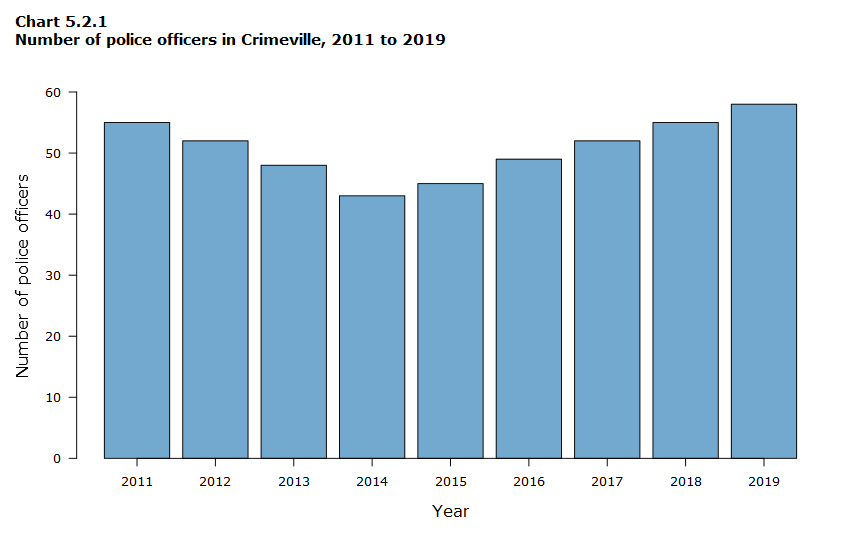
Bar graph
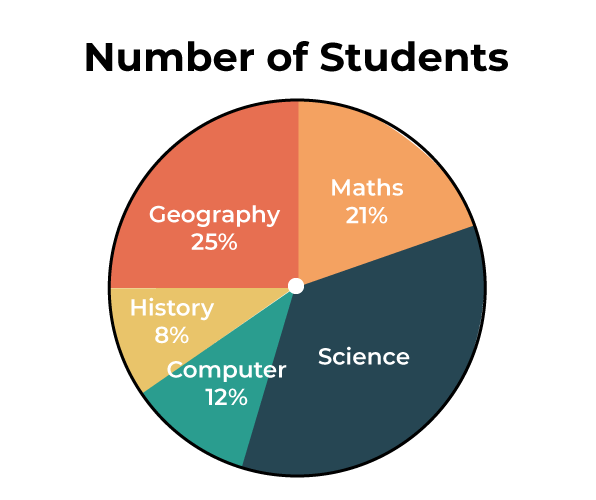
Pie chart
3 ways that a graph can be misleading
violating the area principle
the vertical axis doesn’t start with zero
uses pictures
Categorical variables are displayed…
in a bar graph or pie chart
Quantitative variables are displayed…
in a dotplot, stemplot, or histogram

Stemplot
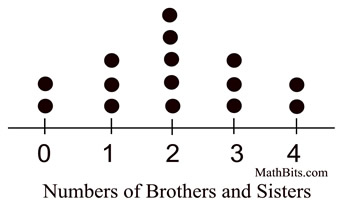
dotplot
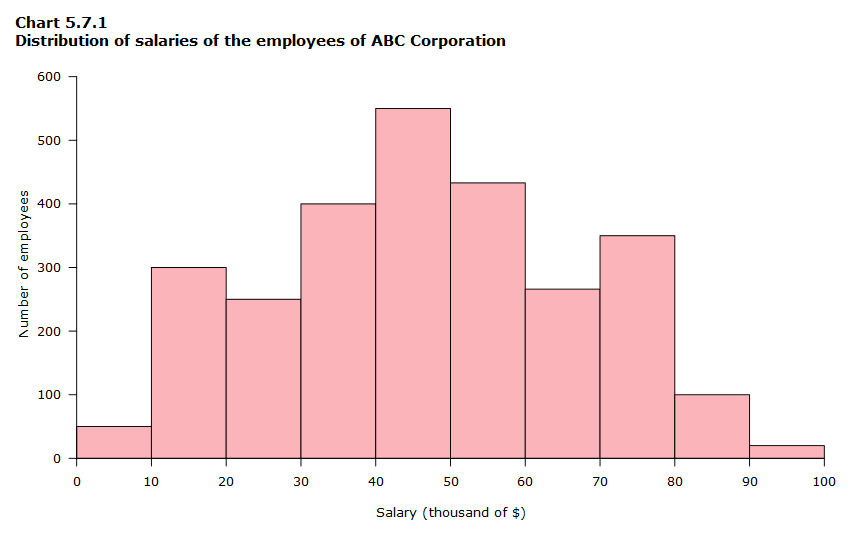
histogram
First S in SOCS
Shape
O in SOCS
Outlier
C in SOCS
Center
Second S in SOCS
Spread
If we are finding the CENTER in a APPROXIMATELY SYMMETRICAL distribution…
we use the mean
If we are finding the CENTER in a SKEWED distribution…
we use the median
If we are finding the SPREAD in a APPROXIMATELY SYMMETRICAL distribution…
we use the standard deviation
If we are finding the SPREAD in a SKEWED distribution…
we use the IQR
Identifying outliers in a distribution
1.5IQR
Lower bound for outliers
Q1 - 1.5IQR
Upper bound for outliers
Q3 + 1.5IQR

boxplot
Variance equals…
st. dev.²
Standard deviation equals…
√variance
Interpreting the standard deviation
The (context) typically varies (sx) from the mean of x
z-score formula
(x - mean) ÷ st. dev.
Interpreting the z-score
(Context) is (z-score) standard deviations (above/below) the mean (context)
Adding/subtracting a constant…
affects the center
Multiplying/dividing by a constant…
affects center AND spread
Empirical rule
68-95-99.7
Normal distribution on a calculator
normalcdf(lower, upper, µ, σ)
Z-score on a calculator
invNorm(area to the left, µ, σ)
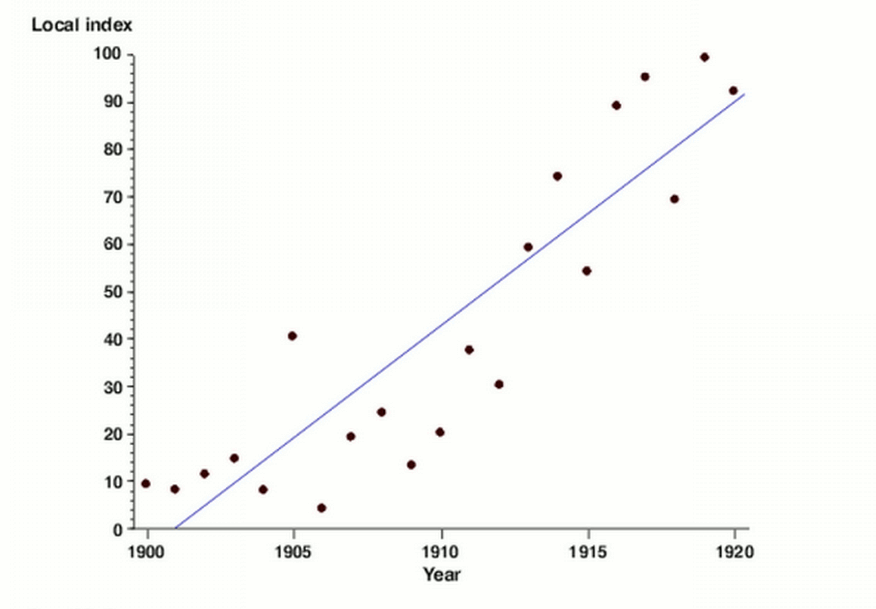
Scatterplot
D in DOFS
Direction (positive/negative)
O in DOFS
Outlier
F in DOFS
Form (linear/curved/none)
S in DOFS
Strength (strong/moderate/weak)
When describing a scatterplot…
you MUST interpret the Direction
Interpreting the correlation
There is a (weak/moderate/strong), (positive/negative) linear relationship between x and y. (DOFS without O)
LSRL formula
y^ = a + bx (prediction)
Interpreting the slope of LSRL
For every 1 (unit) increase in x, our model predicts an (increase/decrease) of (b units) in the y
Interpreting the y-intercept of LSRL
If x is 0 (units), our model predicts a y value of (a units)
residual formula
Actual - Predicted
Interpreting the residual
The actual y is (amount) (higher/lower) than predicted based on x
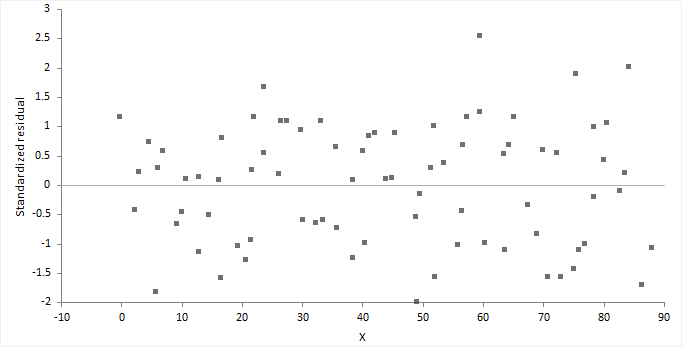
Residual plot
A linear model is appropriate…
if the residual plot shows random scatter
Interpreting the standard deviation of residual (s)
If we use this model to predict y from x, our predictions will typically be off by about (s units of y)
Interpreting the coefficient of determination (r²)
(r²)% of the variation in y is due to x
convenience sample
choosing individuals from the population who are easy to reach
voluntary sample
people decide whether to join the sample in response to an open invitation
undercoverage
occurs BEFORE the sample is chosen
nonresponse
occurs AFTER the sample is chose
response bias
a pattern of incorrect responses
wording of questions
questions that can influence someone’s answer
Choosing SRS with Technology (simple random sample)
Label (context)
randIntNoRep(lower, upper, n)
Choosing SRS with Table D (simple random sample)
Label (context)
Moving horizontally from left to right picking n digit numbers, skip numbers outside range and repeats until you get x numbers.
stratified random sample
splitting the population into sub-groups (strata)
Describing stratified random sample
Label x1 1-n, …
x1: randIntNoRep(lower, upper, n)
x2: randIntNoRep(lower, upper, n)
cluster sample
classifying the population into groups of individuals that are located near each other
Describing cluster sample
Same as describing SRS
systematic random sample
randomly selecting one of the first k individuals and choosing every kth individual
k in systematic random sample
population ÷ sample
Describing systematic random sample
Label (context) in x1, …
k = population ÷ sample
randInt(lower, upper(k), n) to pick first individual , then every kth individual thereafter
observational study
observing the individuals and measuring responses
experiment
imposing treatment on individuals and measuring responses
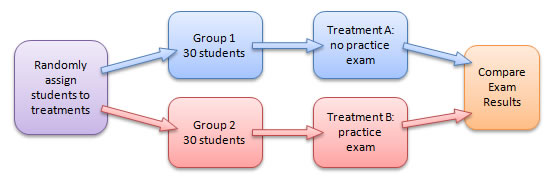
Completely randomized design
Inference about population
individuals were randomly selected
Inference about cause and effect
individuals randomly assigned to groups
Interpreting probability as a long run frequency
If many, many (context) are randomly chosen, about x% of them (context)
Performing a simulation
State, Plan, Do, Conclude
State
What is the probability that…
Planning a simulation
Label (context). Find # different n digit numbers from (line) moving horizontally from left to right in Table D and record (context). Skip numbers that repeat within a simulation or are outside the range).
Do
I will perform many repetitions of this simulation
Conclude
In our simulation, about n% (context). There is convincing evidence that…
Mutually exclusive
P(A and B) = 0
Complement rule
P(Ac) = 1 - P(A)
Addition rule for mutually exclusive
P(A or B) = P(A) + P(B)
Conditional probability formula
P(A l B) = P(A and B) / P(B)
General multiplication rule
P(A and B) = P(A) x P(B l A)
Use tree diagram if…
given conditional probabilities
given sequences of events
given lots of percents
Use two-way table if
given counts of people
Multiplication rule for independent events
P(A and B) = P(A) x P(B)
The 2 requirements for probability in Ch. 6
Every probability is a number between 0 and 1
The sum of the probabilities is 1
The meaning of P(X ≥/≤ n)
Probability that (context) is at least/most n
Mean (expected value) of a Discrete Random Variable Formula
µ(x) = E(x) = xipi+…
Standard deviation of a Discrete Random Variable Formula
σ(x) = √(xi - µx)² pi
Multiplying/dividing by constant
affects the mean and st. dev. of the distribution
Adding/subtracting a constant
affects the mean of the distribution
 Note
Note  Flashcards (105)