Abrahamic Religions + Medieval Period
0.0(0)
 Studied by 1 person
 Call Kai
 Learn
Learn Practice Test
 Spaced Repetition
 Match
Match Flashcards
 Knowt Play
Card Sorting
1/29

Earn XP
Description and Tags
Last updated 12:16 AM on 10/11/22
Name | Mastery | Learn | Test | Matching | Spaced | Call with Kai |
|---|
No analytics yet
Send a link to your students to track their progress
30 Terms
1
New cards
Monotheism
The belief in one God.
2
New cards
Hebrew Bible
The teachings of Judaism. Also known as the Old Testament.
3
New cards
Jesus of Nazareth
Jesus Chrust. A religious leader and preacher who was Jewish.
4
New cards
New Testament
The collection of books of the Gospels, Acts of the Apostles, the Pauline and other epistles, and Revelation; composed soon after Christ's death. Tells the story of Jesus and early days of Christianity. Written in Greek by Paul.
5
New cards
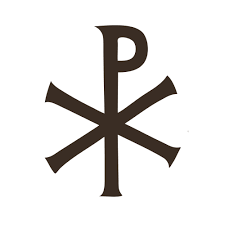
Chi-Ro (X + P)
One of the crosses that was used in ancient times.
6
New cards
Edict of Milan
Allows people to worship any gods they wanted to worship. Passed in 313 AD.
7
New cards
Edict of Thessalonica
Only one legal religion allowed which was Christianity. 380 AD.
8
New cards
Council of Nicaea
First council in the history of the Constantine Church.
9
New cards
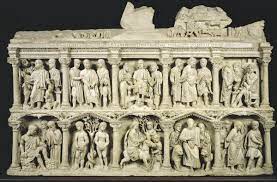
Sarcophagus of Junius Bassus
Shows the ten scene of the Bible. Has marble relief. Shows the decline of naturalism, but an increase in didactic art.
10
New cards
San Vitale
a) Emperor Justinian and his Courtiers
b) Empress Theodora and Retinue
a) Emperor Justinian and his Courtiers
b) Empress Theodora and Retinue
Located in Ravenna. Square Floor plant.
a) Mosaic. Byzantine Style: haloes and elongated bodies.
b)Mosaic panel that is located in the Basilica di San Vitale. Byzantine style: haloes and elongated bodies.
a) Mosaic. Byzantine Style: haloes and elongated bodies.
b)Mosaic panel that is located in the Basilica di San Vitale. Byzantine style: haloes and elongated bodies.
11
New cards
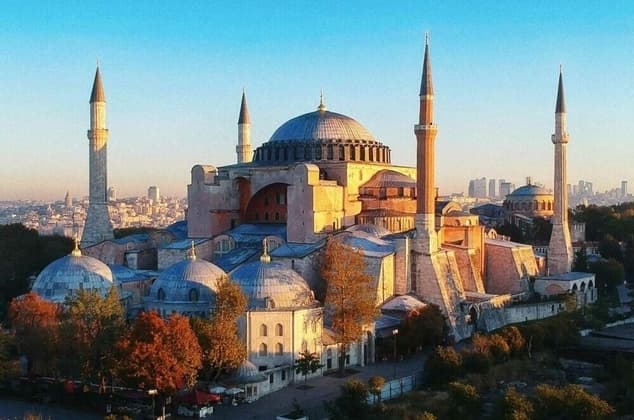
Hagia Sophia, Constantinople
IN present-day Istanbul. Square floor plan.
12
New cards
Muhammad
Founder of Islam. A holy prophet.
13
New cards
Qur'an
Religious text of Islam
14
New cards
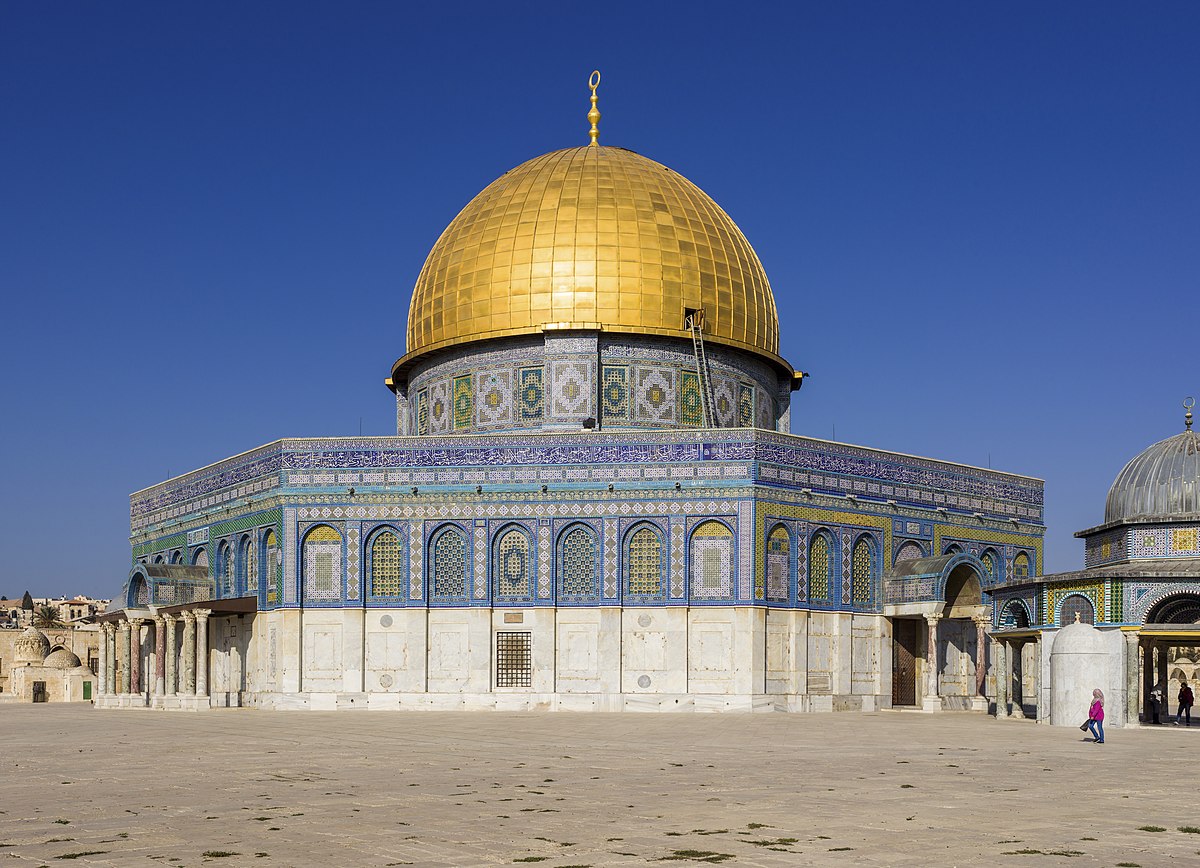
Dome of the Rock
An Islamic shrine located on the Temple Mount in the Old City of Jerusalem. Spot where Muhammad ascended into heaven.
15
New cards
St. Augustine
Wrote "The City of God". Augustine of Hippo. Adopted classical though to Christian teaching.
16
New cards
Monasticism
Conducted in a community under a common rule and characterized by celibacy and poverty and obedience.
17
New cards
Feudalism
The social system that developed in Europe in the 8th century. People who fought and worked for nobles were protected by them and they gave them protection and land in return.
18
New cards
Charlemagne
Holy Roman Emperor. United western and central Europe. Founded the Carolingian Empire.
19
New cards
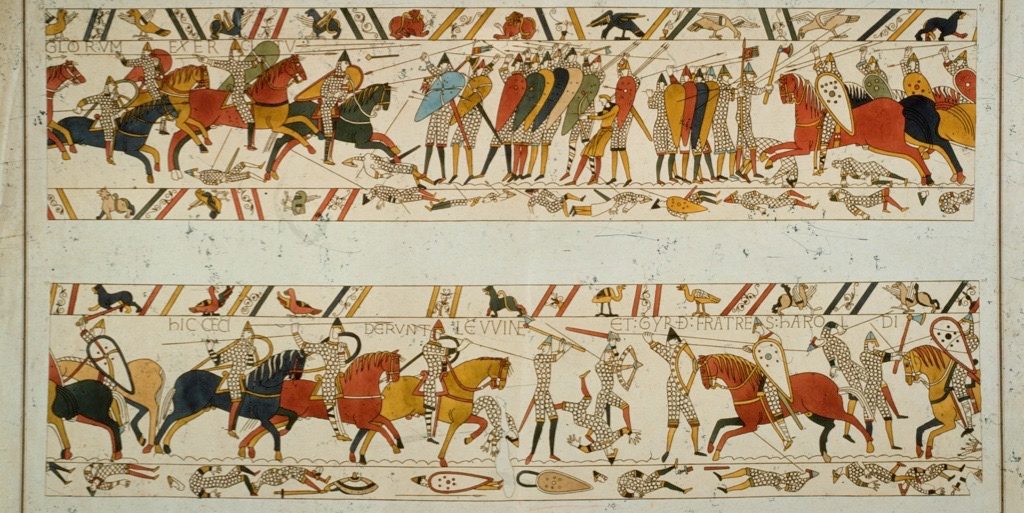
Bayeux Tapestry
Am embroidered cloth that shows the events of the Norman conquest of England in 1066 led by William Duke of Normandy.
20
New cards
Song of Roland
Epic poetry based on French military leader Roland at the battle of Roncevaux in 778 AD.
21
New cards
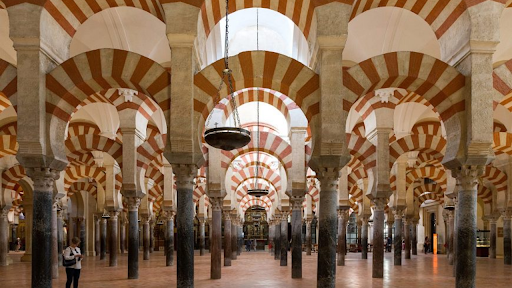
Great Mosque of Cordoba
Used for religious purposes. One of the oldest structures still standing from the time of the Muslims.
22
New cards
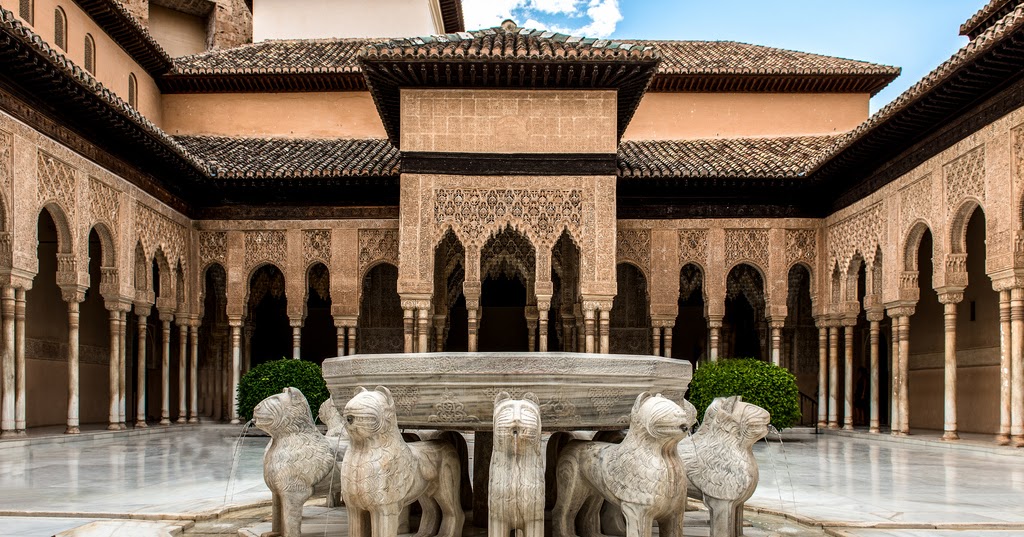
Court of the Lions, Alhambra
Hustorical palace for the ruler and his harem.
23
New cards
Romanesque vs. Gothic Architecture
Romanesque: Rounded arches, barrel vaulted ceiling, thick walls (Buttresses), and high windows.
Gothic: Pointed arches, ribbed vaults, flying buttresses, and stained glass.
Gothic: Pointed arches, ribbed vaults, flying buttresses, and stained glass.
24
New cards
Square vs. Cruciform Floor Plan
Square floor plan: Shape of a square with four columns in the center.
Cruciform floor plan: Narthex (Vestibule leading to the church entrance), nave (central hallway of the church), transept (Area at the end of the nave that formed the Latin cross), Apse (Semicircular space holding the altar).
Cruciform floor plan: Narthex (Vestibule leading to the church entrance), nave (central hallway of the church), transept (Area at the end of the nave that formed the Latin cross), Apse (Semicircular space holding the altar).
25
New cards
St. Thomas Aquinas
Brought back Christian religion with Aristotle philosophy. "Reason does not destroy faith, but perfects it."
26
New cards
Guido d'Arezzo
Created the musical staff which served for musical notation.
27
New cards
Gregorian chant/ Plantchant
Created by Pope Gregory. He was visited bu the Holy Spirit which came in the form of a dove, and he wrote down the melody he had heard. Over 3,000 cant (melody/song)
a) A capella: Without instruments, only the voice. Sung in latin.
a) A capella: Without instruments, only the voice. Sung in latin.
28
New cards
Monophony vs. Polyphony
Monophony: One melody/musical element at a time.
Polyphony: Multiple melodies/musical elements at a time.
a) Alleluia: Vidimus Stellam- "Praise the Lord, we saw his star. Monophonic.
b) Alleluia: Pasca Nostrum- "Easter Anthems" Polyphonic.
Polyphony: Multiple melodies/musical elements at a time.
a) Alleluia: Vidimus Stellam- "Praise the Lord, we saw his star. Monophonic.
b) Alleluia: Pasca Nostrum- "Easter Anthems" Polyphonic.
29
New cards
Dante's Divine Comedy
3 part poem. Written in his native tongue (vernacular) which was Italian. Written by Dante Alighieri.
30
New cards
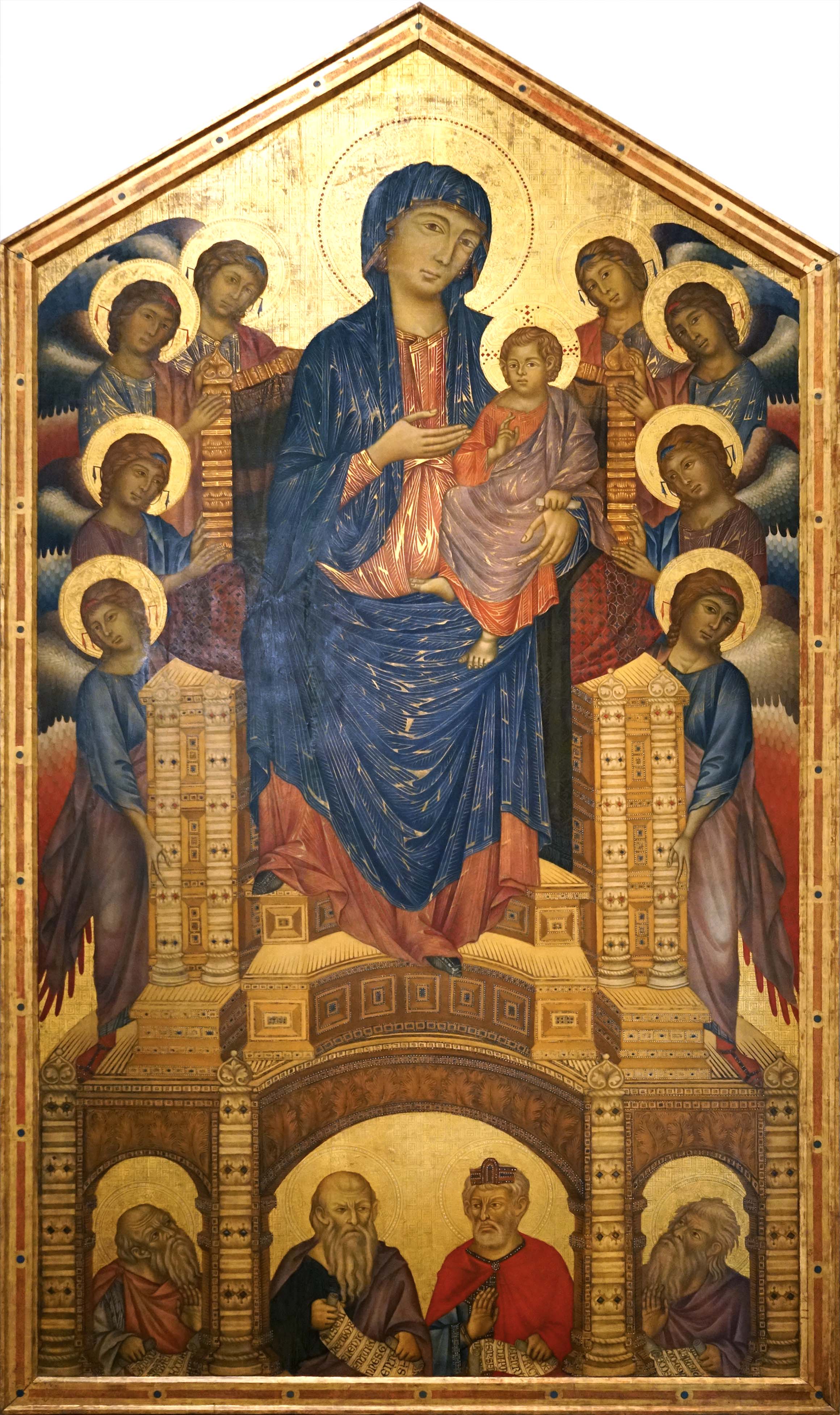
Cimabue's Madonna Enthroned
Tempera on wood. Has haloes and golden background which are Byzantine characteristics/ Creates the illusion of space. Made by Giotto.
 Note
Note  Flashcards (97)