behavioural, emotional and cognitive characteristics of OCD
 Call Kai
 Learn
Learn Practice Test
 Spaced Repetition
 Match
Match Flashcards
 Knowt Play
1/17

There's no tags or description
Looks like no tags are added yet.
Name | Mastery | Learn | Test | Matching | Spaced | Call with Kai |
|---|
No analytics yet
Send a link to your students to track their progress
18 Terms
define OCD
characterised by either obsessions (recurring thoughts/images and/or compulsions e.g. handwashing
what does OCD stand for?
obsessive compulsive disorder
define obsessive
a persistent thought, idea, impulse or image that is experienced repeatedly, feels intrusive and causes anxiety
define compulsion
a repetitive and rigid behaviour or mental act that a person feels driven to preform in order to reduce anxiety
DSM-5 categories of OCD
hoarding disorder - the compulsive gathering of possessions and the inability to part with anything, regardless of its value
Trichotillomania - compulsive hair pulling
how are obsessions and compulsions are connected?
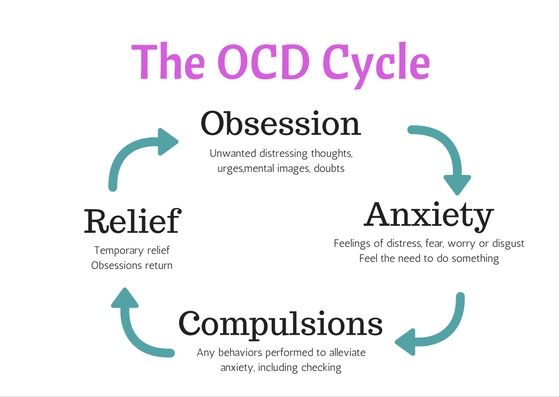

what are the three types of behavioural characteristics of OCD?
compulsions are repetitive
compulsions reduce anxiety
avoidance
Behavioural characteristics - OCD
compulsions are repetitive
people with OCD feel compelled to repeat behaviour e.g. handwashing
Behavioural characteristics - OCD
compulsions reduce anxiety
compulsive behaviours are preformed in attempt to manage the anxiety produced by obsessions e.g. compulsive handwashing is a response to the obsessive fear of germs
Behavioural characteristics - OCD
Avoidance
reduces anxiety by keeping away from situations that cause it e.g. people who wash compulsively may avoid coming in contact with germs
what are the three emotional characteristics of OCD?
anxiety and distress
accompanying depression
guilt and disgust
Emotional characteristics - OCD
anxiety and distress
OCD is regarded as unpleasant due to the powerful anxiety that accompanies both obsessions and compulsions
thoughts are unpleasant and frightening
compulsions create anxiety
Emotional characteristics - OCD
accompanying depression
OCD is often accompanied by depression - anxiety can be accompanied by low mood
compulsive behaviour brings temporary relief from anxiety
Emotional characteristics - OCD#
guilt and disgust
OCD is accompanied by irrational guilt (e.g. related to minor moral issues) and disgust (e.g. about dirt or in relation to yourself)
what are the three cognitive characteristics of OCD?
obsessive thoughts
cognitive coping strategies
insight into excessive anxiety
cognitive characteristics - OCD
obsessive thoughts
most people with OCD have intrusive thoughts (thoughts that recur over and over again) - these are always unpleasant
cognitive characteristics - OCD
cognitive coping strategies
obsessions are the major cognitive aspect of OCD
people respond to OCD by adopting cognitive strategies to deal with the obsessions e.g. a religious person tormented by guilt may respond by praying/meditating
cognitive coping strategies help manage anxiety but it can distract them from everyday tasks
cognitive characteristics - OCD
insight into excessive anxiety
People with OCD are aware that their compulsions and obsessions are not rational
they experience catastrophic thoughts about worse-case scenarios
they tend to be hypervigilant
Explore top notes

Explore top flashcards
