Small Animal Parasites (need to know)
 Call Kai
 Learn
Learn Practice Test
 Spaced Repetition
 Match
Match Flashcards
 Knowt Play
1/125

There's no tags or description
Looks like no tags are added yet.
Name | Mastery | Learn | Test | Matching | Spaced | Call with Kai |
|---|
No analytics yet
Send a link to your students to track their progress
126 Terms
Nematodes
GI- Toxocara spp., Ancylostoma spp., Trichuris spp.
Circulatory- Dirifilaria sp.
Respiratory- Eucoleus sp.
Urogenital- Dioctophyma sp.
Toxocara canis life cycle
Eggs passed, ingested by host, egg hatches (larva enters blood), larva migrates (lungs, cross placenta, mammary glands)
Toxocara canis typical location
Small intestine
Toxocara canis prepatent period
21-35 days
Toxocara cati prepatent period
8 weeks
Ways toxocara cati infect
Eggs ingested or paratenic host eaten (mouse)
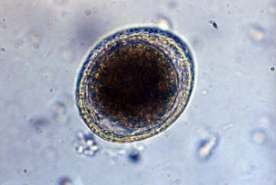
Toxocara canis egg
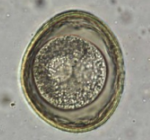
Toxocara cati egg
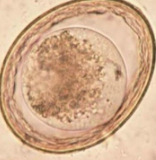
Toxascaris leonina egg
Human aberrant host infection (roundworm)
Ingestion of eggs- contaminated soil or eggs on hair (petting dogs/puppies)
Human aberrant host larva locations (roundworm)
Hepatic, cardiac (can be fatal and can cause cardiac arrhythmia), pulmonary, ocular (vision problems, blindness)
Hookworms
Ancylostoma caninum, Ancylostoma tubaeforme (feline), Ancylostoma braziliense (canine and feline), uncinaria stenocephala (canine)
Locations of hookworms
Small intestine- attaches to mucosa (cuts into tissue, blood feeders- secrete anticoagulant), changes during sites (continued hemorrhage)
Life cycle of hookworms
Female and male adjacent attachment sites (continuous copulation and egg production), eggs pass (embryonate- hatch to L1, L2 to L3- L3 infective), ingested/skin penetration- migrates through tissues (lungs- coughed up and swallowed), intestines (maturation)
Hookworms transmission
Ingestion, penetration,transplacental, transmammary
Hookworms zoonotic potential
Cutaneous larval migrations (creeping eruption, ground itch)
Human aberrant host (Ancylostoma braziliense)- L3 skin penetration from contaminated soil, migration only (life cycle not completed)
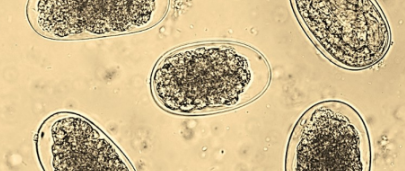
Hookworm egg
Trichuris vulpis
Whipworm
Anterior (head)- thin section; posterior (reproduction)- thick section, visible in bowel lumen
Feed on blood
Trichuris vulpis location
Cecum/colon- head threads through mucosa and perforates small vessels
Trchuris vulpis eggs
Passed q3 days, matures to L1/L2 stage (infective), extremely resistant (viable for years)
Trichuris vulpis life cycle
Adult in cecum/colon (eggs passed q3 days), larvates in environment, eggs ingested (hatches), matures (small/large intestine), attaches (cecum/colon)
Trichuris vulpis transmission
Ingestion of eggs (viable for years)
Trichuris vulpis diagnosis
Fecal floatation (longer term, don’t float well)
Trichuris vulpis egg
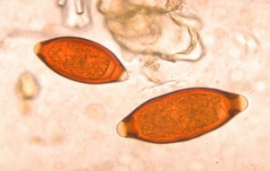
Dirofilaria immitus hosts
Canine- definitive host
Feline/ferret- non infection source
Human- incidental host
Heartworm location
Right ventricle/pulmonary arteries (adults, reproductive in canine)
Aberrant sites- subcutaneous, eyes, CNS, lungs
Heartworm microfilariae
Baby worms, no eggs
Heartworm life cycle
Adults (copulate), microfilaria (float in blood), intermediate host (female mosquito- matures and takes blood meal where larva enters the puncture site), migration (larval development- L4 to L5; heart; aberrant sites)
Heartworm prepatent period
6 months
Heartworm transmission
Intermediate host- mosquito (>30 species)
Heartworm diagnosis
Must differentiate from Acanthocheilonema reconditum (Knott’s test- blunt head hooked tail, not features of heartworm), ELISA (antigen/antibody)
Microfilariae identification- evaluate Buffy coat of hematocrit tube, modified Knott’s test (2% formalin/centrifuge), blood saline prep (microfilaremic)
Dirofilaria immitus
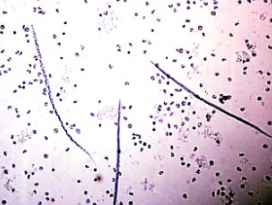
Eucoleus host
Canine and feline
Eucoleus location
Large airways (treaded through mucosa), nasal cavity/frontal sinus
Eucoleus life cycle
Eggs laid in mucosa (slowly enter lumen), coughed up, swallowed (passed in feces), larva become infectious- still within egg (~40 days), egg ingested (hatch in small bowel, penetrate/enter vessels), migrate to lungs (penetrate into alveoli, migrate to large airways)
Eucoleus prepatent period
~40 days
Eucoleus transmission
Ingestion of ova
Eucoleus diagnosis
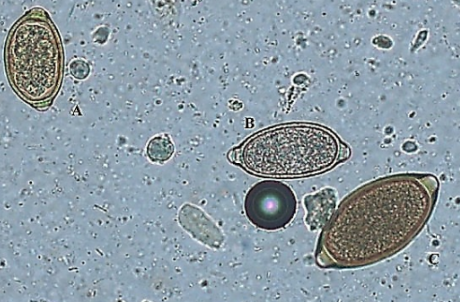
Fecal flotation, sputum smear (maybe if coughed up), similar to Trichuris spp. (slightly smaller, more barrel shaped, lighter color, rough surface)
Eucoleus zoonotic potential
Eucoleus aerophilus (especially), ingestion of infective ova
Eucoleus spp. egg
A & B
Dioctophyma renale (kidney worm)
Largest parasitic nematode, canine host
Dioctophyma renale location
Usually right kidney, aberrant sites (peritoneum)
Dioctophyma renale life cycle
Eggs in urine (embryonate in water), intermediate host (annelid worm, mature to infective), worn might be eaten by paratenic host, definitive host (eats paratenic/intermediate)
Dioctophyma renale prepatent period
~18 weeks
Dioctophyma renale diagnosis
Urine sediment
Dioctophyma renale zoonotic potential
Human- incidental host, ingest paratenic host (undercooked)
Dioctophyma renale egg
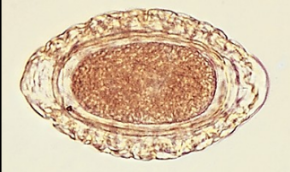
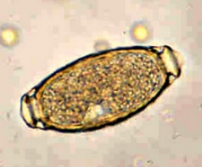
Pearsonema spp. egg
Cestodes
True tapeworms- Dipylidium caninum, Taenia spp., Echinococcus spp.
Pseudotapeworms- Spirometra sp.
Unarmed scolex
No hooks
Dipylidium caninum hosts
Definitive- canine and feline
Intermediate host- flea/louse
Dipylidium caninum life cycle
Indirect
Proglottid passed/disintegrates (eggs released), ingested by intermediate larva- egg hatches (hexacanth in hemocoel, matures to cysticercoid), definitive eats intermediate (by biting themselves and accidentally eating the flea)- matures to adult, attaches to small intestine (armed scolex)
Dipylidium caninum diagnosis
Fecal floatation, segment squash
Dipylidium caninum zoonotic
Ingestion of egg
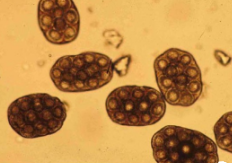
Dipylidium caninum egg
Taenia pisiformis hosts
Definitive- canine
Intermediate- usually rabbit
Taenia pisiformis life cycle
Indirect
Proglottid passed/disintegrates (eggs released), ingested by intermediate larva- egg hatches (hexacanth in portal veins- migrates to viscera, matures to cysticercus- Cysticercus pisiformis), definitive eats intermediate- matures to adult, attaches to small intestine (armed scolex)
Taenia pisiformis diagnosis
Fecal floatation, segment squash
Taenia hydatigena hosts
Definitive- canine
Intermediate- ruminants
Taenia hydatigena life cycle
Indirect
Proglottid passed/disintegrates (eggs released), ingested by intermediate larva (eating grass with eggs)- egg hatches (hexacanth in portal veins- migrates to viscera, matures to cysticercus- Cysticercus tenuicollis), definitive eats intermediate- matures to adult, attaches to small intestine (armed scolex)
Taenia hydatigena diagnosis
Fecal floatation, segment squash
Taenia ovis hosts
Definitive- canine
Intermediate- ruminants
Taenia ovis life cycle
Indirect
Proglottid passed/disintegrates (eggs released), ingested by intermediate larva- egg hatches (hexacanth in portal veins- migrates to skeletal muscle, matures to cysticercus- Cysticercus ovis), definitive eats intermediate- matures to adult, attaches to small intestine (armed scolex)
Taenia ovis diagnosis
Fecal floatation, segment squash
Taenia pisiformis egg
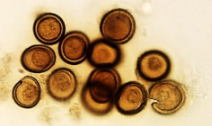
Taenia hydatigena egg
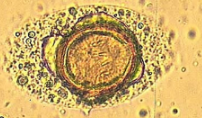
Taenia ovis egg
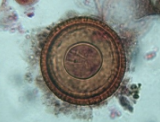
Hydatid tapeworms
Reportable to federal government (Echinococcus)
Echinococcus granulosus hosts
Definitive- canine
Intermediate- any kind of herbivore (sheep!), human
Echinococcus granulosus life cycle
Indirect
Proglottid/eggs passed, ingested by intermediate host, egg hatches, larva forms- hydatid cyst in organs (uniocular- 1 big chamber, multiple protoscolices), definitive eats hydatid cyst- 1 protoscolex (1 adult, attaches to small intestine, armed scolex)
Echinococcus zoonotic potential
Extreme (ingest eggs), reportable
Protoscolices
Before scolex (head)
Echinococcus multilocularis hosts
Definitive- feline, fox
Intermediate- small rodents, human
Echinococcus multilocularis life cycle
Indirect
Proglottid/eggs passed, ingested by intermediate host, egg hatches, larva forms- hydatid cyst in organs (multilocular, multiple protoscolices, very invasive- they go everywhere), definitive eats hydatid cyst- 1 protoscolex (1 adult, attaches to small intestine, armed scolex)
Echinococcus spp. diagnosis
In definitive host
Eggs on fecal floatation (taeniid eggs, not definitive), adult identification (only way to know)- from GI tract, purge and then go through it work a fine tooth comb, ELISA
Echinococcus spp. prevention
Essential
Vaccinate sheep, treat at risk dogs (around dead sheep or those who’ve had it before), no risky feeding
Echinococcus spp.
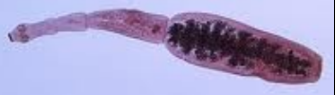
Echinococcus spp. egg
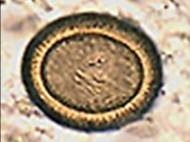
Spirometra spp. hosts
Definitive- canine, feline
Intermediate- aquatic crustacean (copepod); fish, reptile, frog
Spirometra spp. life cycle
Indirect
Unembryonated eggs passed (embryonate in environment, hatch in water- coracidia released), ingested by copepod (develops to procercoid), ingested by fish/reptile/amphibian (develops to plerocercoid), ingested by definitive
Spirometra spp. diagnosis
Fecal floatation, operculated egg (like fluke egg)
Spirometra spp. zoonotic potential
Human ingestion- undercooked fish, copepods in water
Sparganosis- many tissues (can be anywhere, larval stage, >20 years inside abnormal host)
Spirometra spp. egg
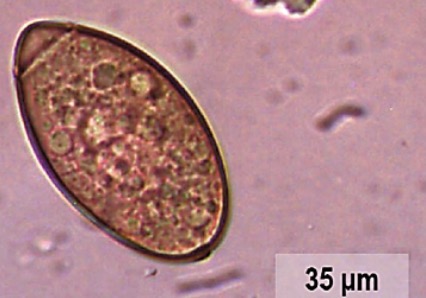
Spirometra spp.

Trematodes
GI- Nanophyetus salmincola
Respiratory- Paragonimus kellicotti
Nanophyetus salmincola (salmon poisoning fluke) hosts
Definitive- canine, other carnivores
1st intermediate- fresh water snail
2nd intermediate- salmon
Nanophyetus salmincola
Smallest fluke (0.5-1.1 mm), essentially non-pathogenic (Rickettsial vector- carried by fluke, salmon poisoning)
Nanophyetus salmincola life cycle
Indirect
Adult in small intestine, egg passed, hatches (Miracidium), entry into snail, mature to cercaria (released into water), penetrate into salmonid fish (mature to metacercaria), fish eaten by definitive, matures to adult
Nanophyetus salmincola diagnosis
Fecal floatation
Nanophyetus salmincola zoonotic
Ingestion of undercooked fish
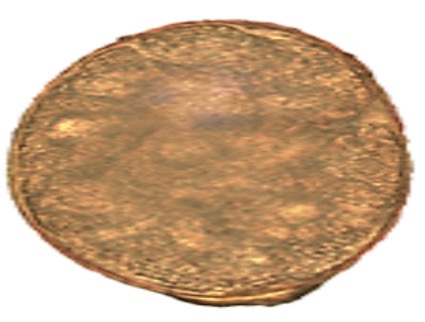
Nanophyetus salmincola egg
Paragonimus kellicotti (lung fluke) hosts
Definitive- canine/feline (carnivores)
Intermediate- operculated snail (1st), crustaceans (2nd, crayfish)
Paragonimus kellicotti pathology
Pulmonary damage (cystic nodules)
Paragonimus kellicotti diagnosis
Fecal floatation, fecal sedimentation (eggs will sink), transtracheal wash, radiography
Paragonimus kellicotti life cycle
Indirect
Eggs coughed up and swallowed (by definitive), eggs hatch, miracidium, penetrates snail, matures to cercaria, exits snail, infects crustacean, encysts in tissues, crustacean eaten by definitive, digestive enzymes breakdown, immature flukes released, migrate to lungs
Paragonimus kellicotti zoonotic
Ingest undercooked crustacean
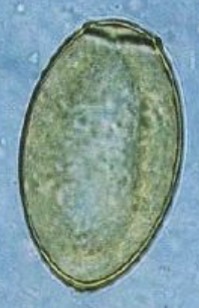
Paragonimus kellicotti egg
Protozoa
GI- Giardia spp., Cystoisospora spp., Toxoplasma gondii
Circulatory- Babesia canis, Cytauxzoan felis
Giardia duodenalis species complex
A-G

