Module 6 Juries
 Studied by 0 people
 Call Kai
 Learn
Learn Practice Test
 Spaced Repetition
 Match
Match Flashcards
 Knowt Play
1/47

Earn XP
Description and Tags
for Forensic Psychology: PSYO2444
Name | Mastery | Learn | Test | Matching | Spaced |
|---|
No study sessions yet.
48 Terms
Summary offence (Minor)
Processed by provincial court (Example: breach of probation)
Indictable offence (Serious)
Less serious (Judge only) and highly serious cases (Judge and jury). For others, it is the accused's choice.
Hybrid offence
Crown chooses summary vs indictable rules
Civil Juries
6-8 members involved in 15% of trials. Duty is to apply a “balance of probabilities” standard.
Criminal Juries
12 members involved in 10-15% of trials. Duty is to apply a "beyond a reasonable doubt" standard.
Jury Duty
Mandatory for eligible citizens
Juries act
The selection process and eligibility criteria varies between provinces/territories
Jury Summons
Official notice for community members to report for jury duty
Jury Eligibility
Must be a Canadian citizen, 18+ years old, and live in the province that submitted the summons.
Jury Ineligibility for NS
Certain education/careers (Law school, police, member of house of commons, senate, armed forces) or convicted of an indictable offense with a sentence of 2+ years.
Personal Exemptions from Jury duty
Financial hardships, health issues.
Peremptory Challenge
A challenge without cause; eliminated in 2019 by Bill C-75 after R. v. Stanley, 2018.
Challenge for a cause
Lawyers and judges have limited information about prospective jurors; Lawyers not allowed to interrogate jurors.
Jury Representativeness
Any possible eligible person has the opportunity to serve; achieved through randomness.
Jury Impartiality
No connection to the defendant; must set aside biases, prejudices, attitudes, and ignore inadmissible evidence.
Most common Pre-trial Publicity (PTP)
Negative Pre-trial Publicity (PTP)
Type of PTP impacts, attitudes and verdicts
Negative/Positive defendant: When the defendant is more likely to be found guilty and less credible, while Positive-defendant is the opposite; Negative victim: When the blame of the crime is shifted onto the victim instead of the accused.
Which PTP reduces bias
Mixed Pre-trial Publicity (PTP)
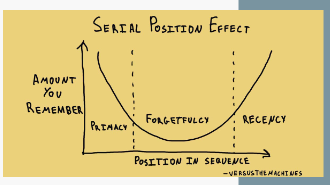
Serial position effect
People are more likely to remember early and recent information, showing how the order of information matters.
Story model
When the jury turns information (Reports, evidence, testimonies) into a story since it is how information is naturally understood.
Emotional silence
Emotionally intense information is more memorable and influential.
What are the methods of mitigating threats/maintaining impartiality?
Publication ban, Change of venue, Adjournment, Challenge for cause, and move to judge only.
Publication Ban
Method for maintaining impartiality/mitigating threats by preventing media from publishing certain information.
Change of Venue
Method for maintaining impartiality/mitigating threats by moving the trial location.
Adjournment
Method for maintaining impartiality/mitigating threats by delaying the trial.
Challenge for cause
Method for maintaining impartiality/mitigating threats by having a judge allow lawyers to challenge jurors if there is a reason to believe that the jury pool may contain people who are not able to set their biases aside; during the jury selection process.
What are the four methodologies used to study juror and jury behaviour?
Post-trial interviews, Archives, Field studies, and Simulations.
Post-trial Interviews
Methodology to study juries; is not possible in Canada because of the criminal code: Jurors forbidden by law from disclosing content of deliberations; high external validity but unreliability of jurors’ accounts, and lack of cause and effect.
Archival Records
Methodology to study juries using recorded information (trial transcripts, police interviews); high external validity, but lacks inability to establish cause and effect, is restricted to data available, and does not have control over collection methods.
Field Studies
Methodology to study juries by observing real trials; high external validity, but permission from courts may be difficult, includes small samples, and variables of interest cannot be controlled.
Simulation (Mock Trials)
Methodology to study juries using simulated trials and render verdicts where factors of interest can be manipulated; high internal validity (cause and effect relationships), but fake cases = low stakes, typically includes undergraduate students, and generalizability to the real world is questionable.
Comprehension Aids
Jurors can take notes to facilitate memory and comprehension (helpful with limited downsides) and ask witnesses questions with approval of the judge (neither harmful nor helpful); are decided by the judge within each trial.
Backfire Effect
Jurors may pay more attention to evidence after being told to disregard it.
Decision-Making: Mathematical Models
Weight is assigned to each piece of evidence based on importance and strength of evidence; limited evidence supports it; jurors instead do not update their prior beliefs in light of new evidence.
Decision-Making: Explanation Models / Story Model
Jurors interpret evidence, make causal connections, and create a story of the case; individual differences influence its process, but the criteria for evaluating stories involve: Coverage, coherence, and uniqueness.
The different type of jurors (or decision-makers)
Believer, Doubter, Muller, and Puzzler.
Believer
Quickly accepts one side’s story; forms an opinion early and sticks with it.
Doubter
Skeptical and cautious; questions evidence and is slow to commit.
Muller
Tries to actively weigh and integrate both sides; combines pieces of evidence into a coherent story.
Puzzler
Struggles to form a clear story; finds the evidence confusing or conflicting.
Extralegal factors studied in relation to juror decision-making/predicting verdicts
Demographics, Personality, Defendant characteristics, Victim characteristics, Beliefs and attitudes, Evidentiary factors.
Juror decision-making/predicting verdicts: Juror Demographics
Small, inconsistent relation with verdicts (Gender, race, age).
Black sheep effect
When evidence is weak: race similarity leads to leniency, but when evidence is strong: race similarity leads to punitiveness.
Juror decision-making/predicting verdicts: Personality traits
Authoritarianism (Rigid thinking) and Dogmatism (Closed-minded); Positive relationship between authoritarianism and guilt judgments.
Juror decision-making/predicting verdicts: Attitudes
Ranges of topics/issues (drunk driving, sexual assault, child abuse, capital punishment) without sufficient investigation; Exception is attitudes toward capital punishment, where death-qualified jurors are more likely to vote for conviction.
Juror decision-making/predicting verdicts: Defendant Characteristics
Includes: Gender, Age, Prior criminal record, and attractiveness; often interacts with victim characteristics, but characteristics that don’t fit common stereotypes similar to the type of offender are more noticeable. Overall, there is a small relationship between attractiveness and verdict.
Juror decision-making/predicting verdicts: Victim Characteristics
Particularly salient in cases of sexual assault; Pre-1985, sexual history could be used to infer credibility; Mid-1990s, inquiry into history at judge’s discretion; Mock jurors who heard about sexual history (v. no history) were: Less likely to find alleged victim credible, more likely to find her blameworthy, and more likely to find defendant not guilty.
CSI Effect
Watching crime-related shows (Example: CSI) causes jurors to acquit defendants when no scientific evidence is present.
 Note
Note  Flashcards (76)