Animal figures, human figures and votive offerings - Homeric World
 Studied by 0 people
 Call Kai
 Learn
Learn Practice Test
 Spaced Repetition
 Match
Match Flashcards
 Knowt Play
1/12

Earn XP
Description and Tags
Name | Mastery | Learn | Test | Matching | Spaced | Call with Kai |
|---|
No analytics yet
Send a link to your students to track their progress
13 Terms
What types of clay figurines were found and where ?
Many clay figurines of animals and humans have been found in private houses and tombs in Mycenae.
What were these figurines used for ?
some were toys ( found in children’s tombs )
Some believed to have religious significance :
used in worship
offerings to gods to fulfil a prayer.
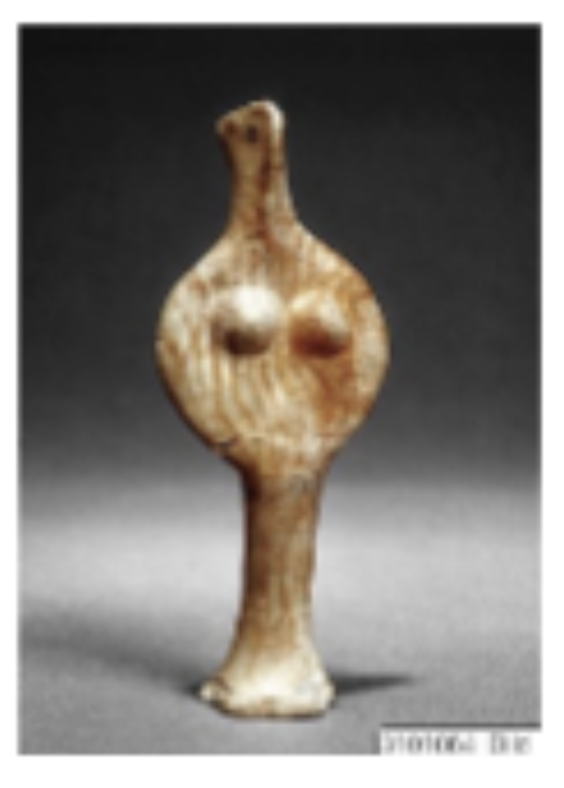
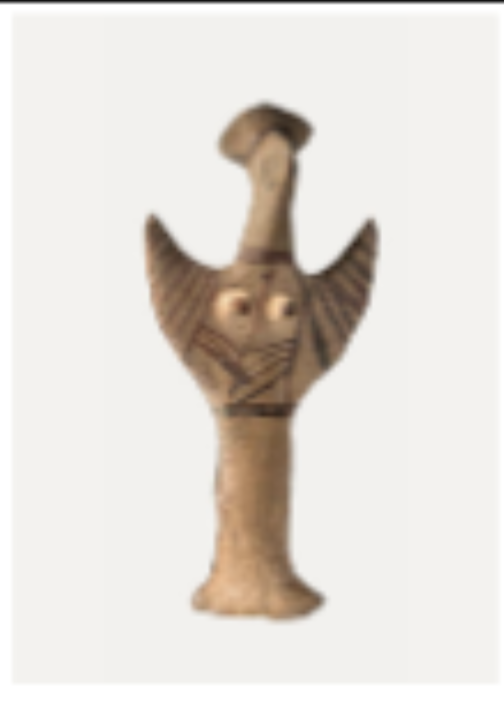
Phi figurines ϕ
Date : 13th century BC
Location : Mycenae
Material : Clay
Significance :
evidence of religion
votive worship
female goddess ( breasts ) - prominent breast shape suggests god of fertility ?
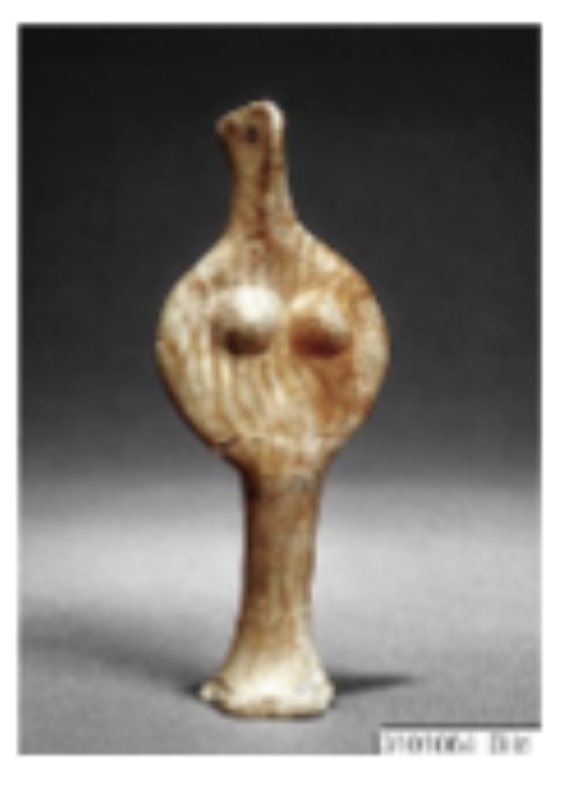
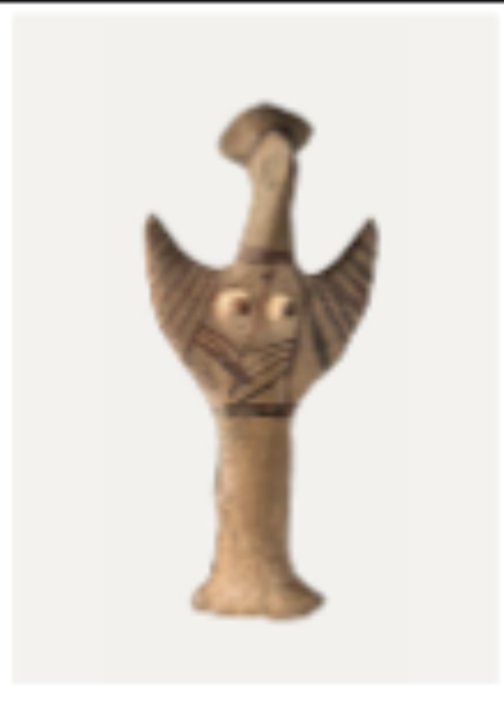
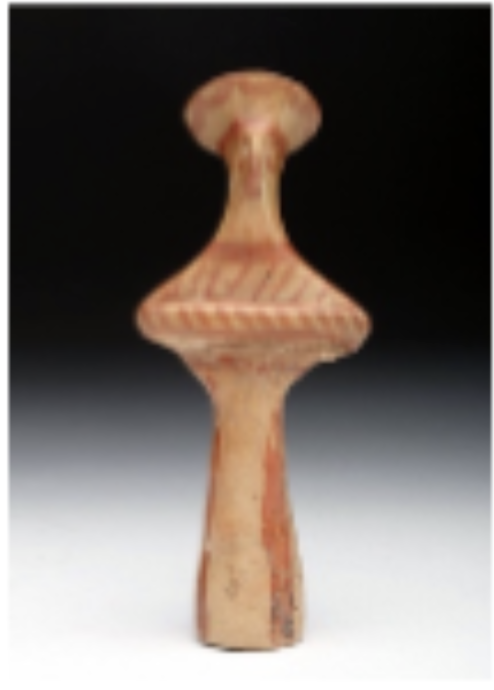
Psi figurines ψ
Date :13th century BC
Location : Mycenae
Material : Clay
Significance
evidence of religion
votive worship - offering
female goddess - breasts
Tau figurines τ
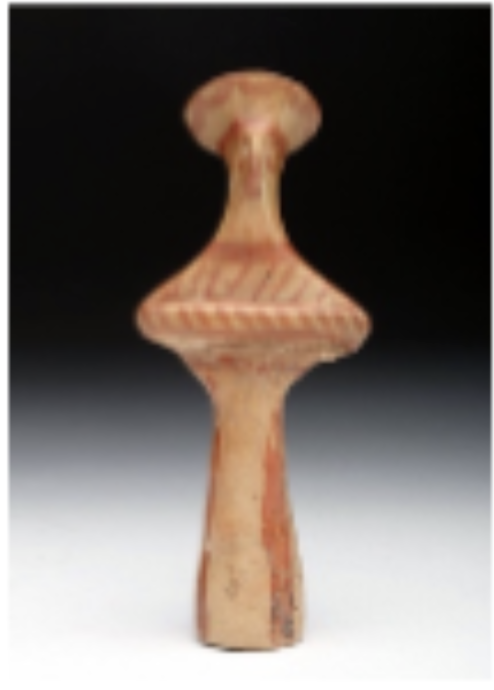
Date : 13th century BC
Location : Mycenae
Material : Clay
Significance :
evidence of religion
votive worship
male god
unsure of what it represents
offering ?
holding basket
What does the material they are made ( clay ) tell us about how common these figurines was ?
They might have been imported from Crete in the Minoan age
Clay is cheap :
there are thousands of these figurines found
suggests mass repetition of worshipping and beliefs ( evidence of cult practice, religion )
What did animal figurines show ?
Animal figures include numerous coiled snakes and miniature pottery cattle which both have religious significance.
Cattle :
depictions of a type of proto-Greek sacrifice ?
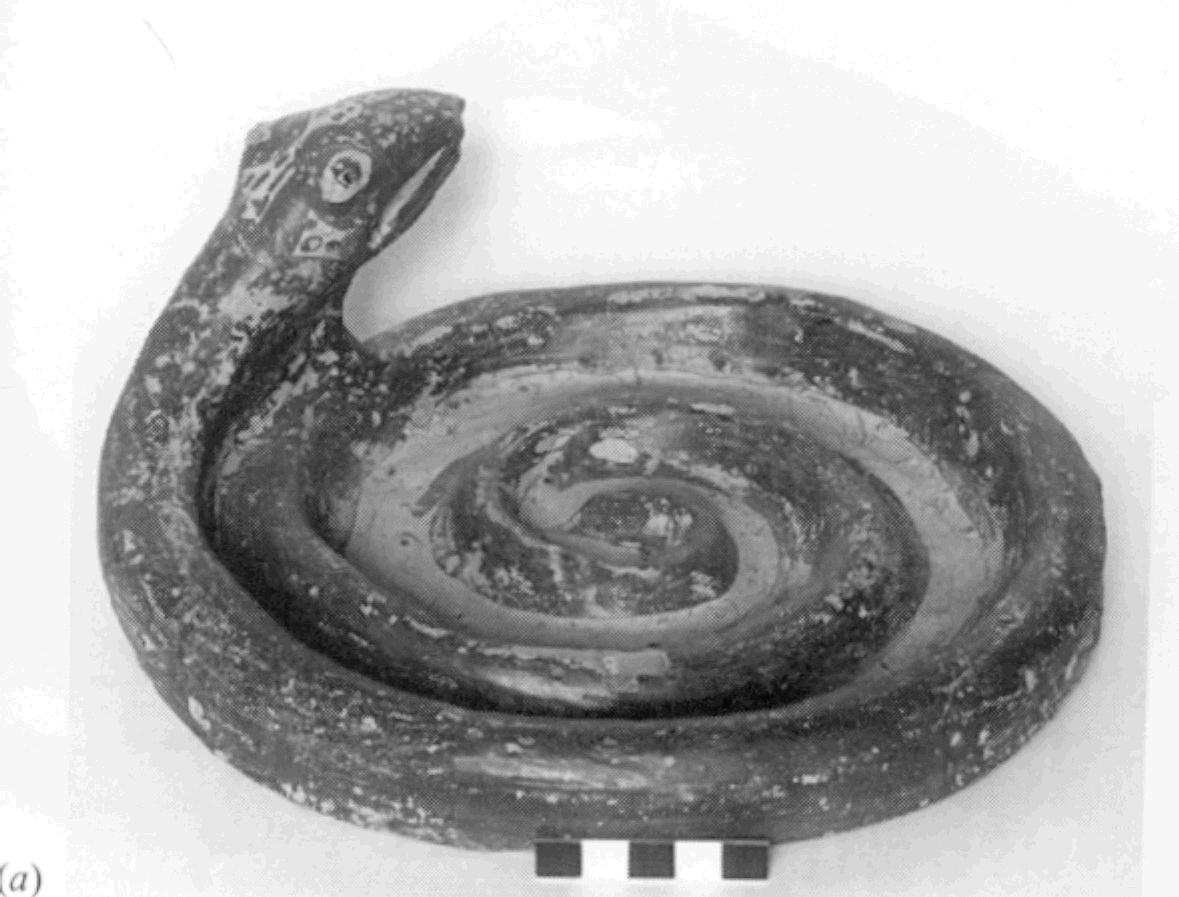
Snake - chthonic goddess figurine
Date : 13th century BC
Location : Mycenae
Material : Clay
Significance :
evidence of religion
belief in afterlife/underworld
Snake is a representation of a chthonic goddess
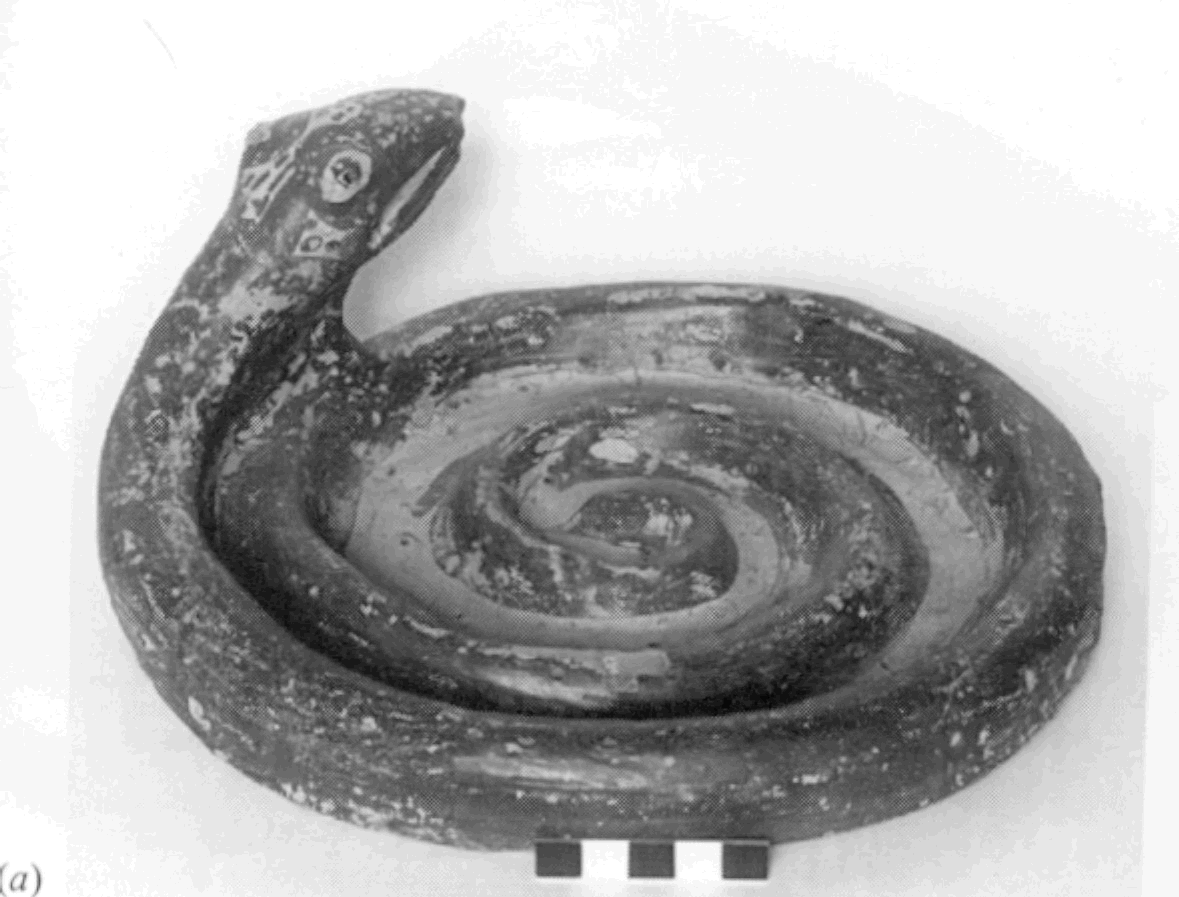
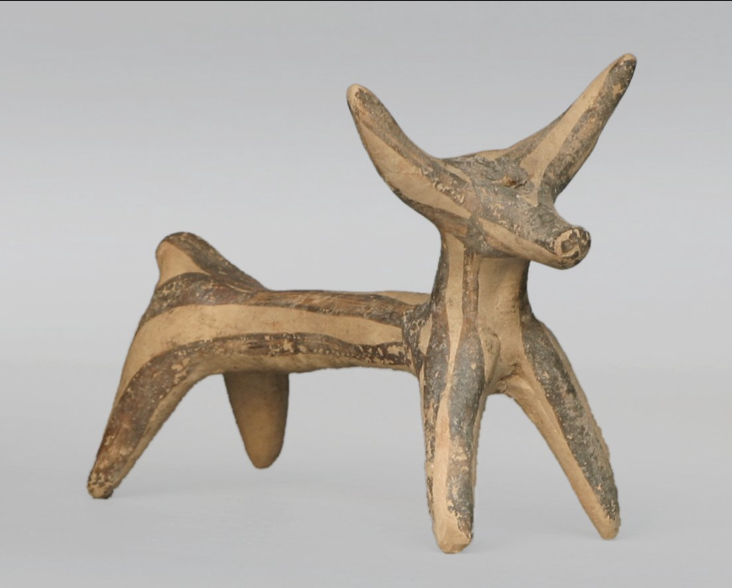
Bull figurine
Evidence of early sacrifice and what was sacrificed perhaps
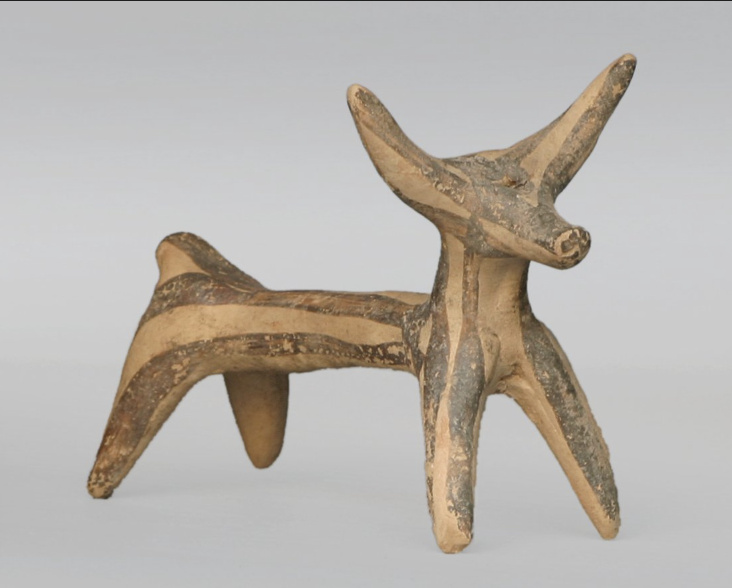
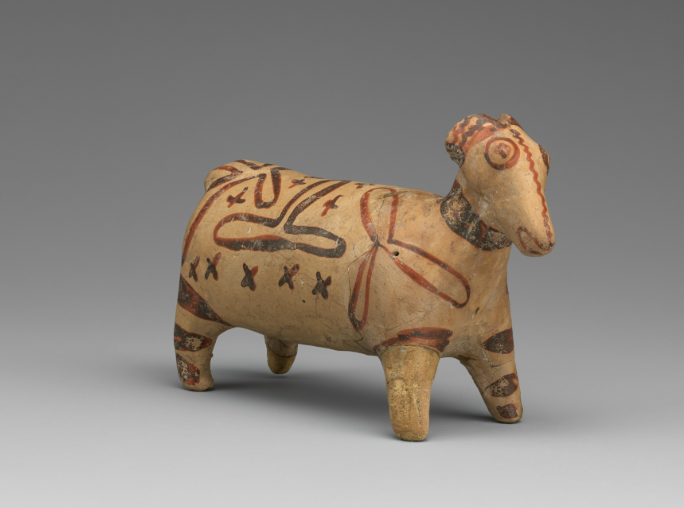
Sheep
Sheep - perhaps object of sacrifice ? unsure though
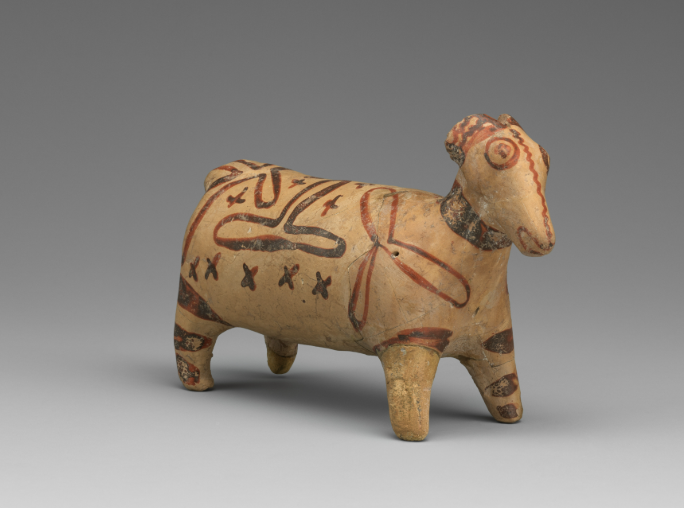
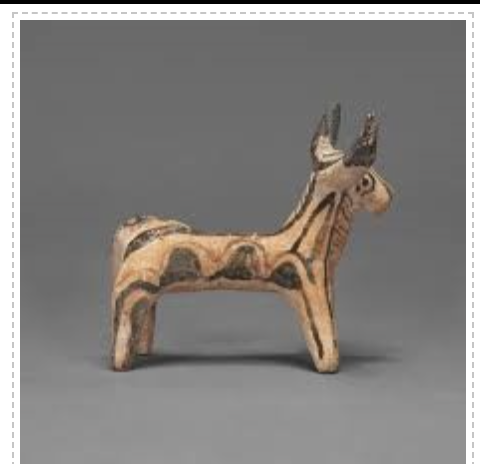
Bull
evidence of early sacrifice again ?
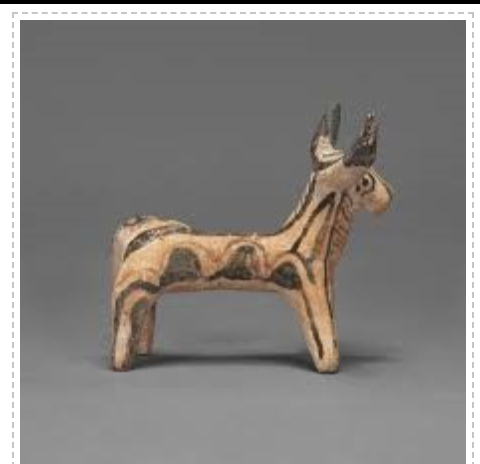
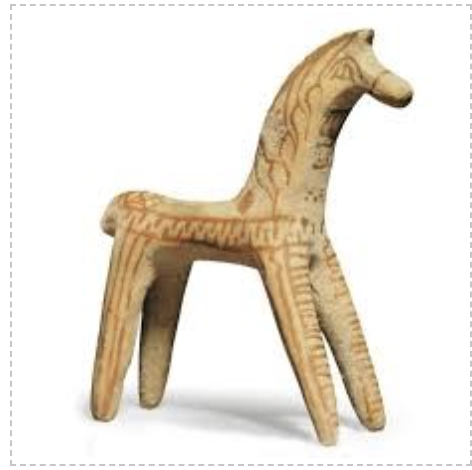
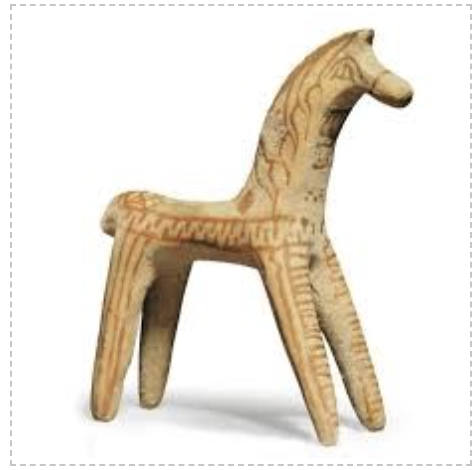
Horse
Horse
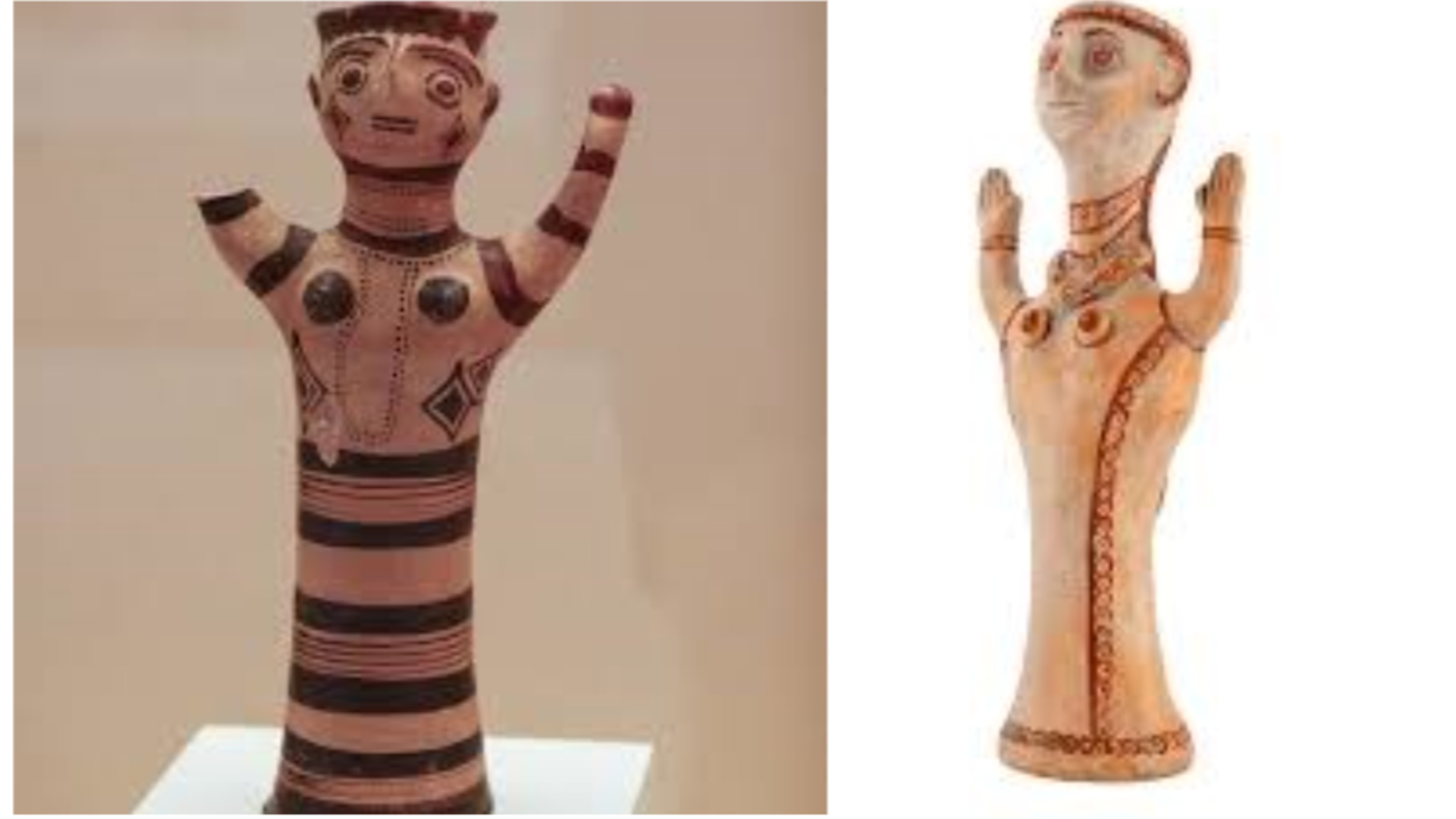
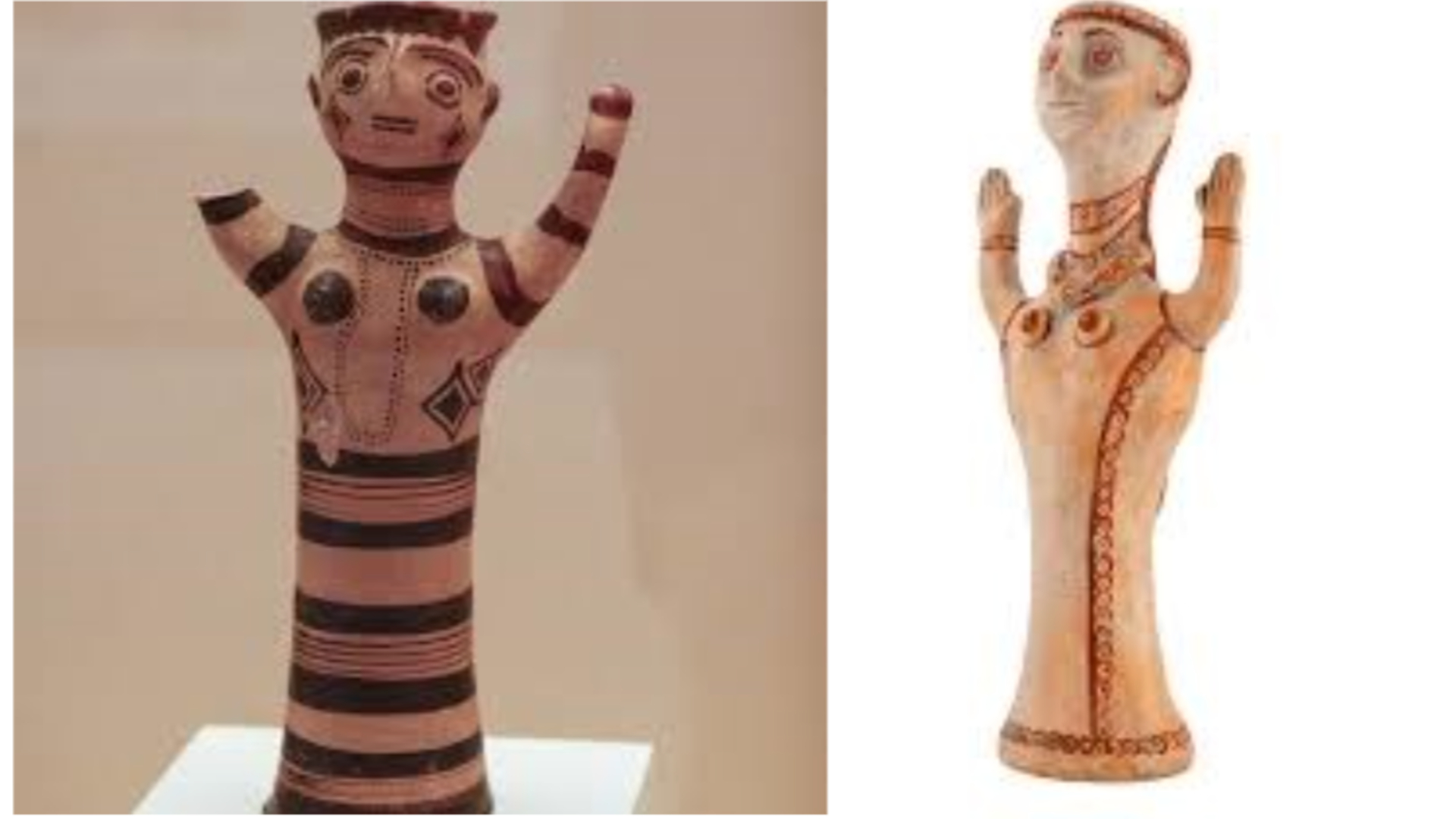
Female human figures
praying
offering
holding hands out
evidence of religion
cult worship perhaps
forms of worship - actions