Chapter 28- Pregnancy and Fetal Development
 Call Kai
 Learn
Learn Practice Test
 Spaced Repetition
 Match
Match Flashcards
 Knowt Play
1/35

There's no tags or description
Looks like no tags are added yet.
Name | Mastery | Learn | Test | Matching | Spaced | Call with Kai |
|---|
No analytics yet
Send a link to your students to track their progress
36 Terms
capacitation
change that sperm go through to be able to fertilize the egg
acrosome reaction in fertilization
Release of digestive enzymes that allows it to penetrate the zona pellucida of the egg
blocks to polyspermy
shedding all sperm binding receptors
zona reaction- granules release ZIP enzymes to destroy sperm binding receptors
formation of the zygote
the male and female pronuclei fuse to form a diploid zygote
role of hCG in fertilization and early pregnancy
maintains the corpus luteum, which continues to produce progesterone to maintain the uterine lining (stops menstruation)
cleavage in the embryonic period
multicellular structure called morula is made
implantation
trophoblast (cytotrophoblast and syncytiotrophoblast) implants on the uterine wall
Gastrulation
Formation of the three primary germ layers—ectoderm, mesoderm, and endoderm
decidua capularis
seals off the baby
decidua basalis
area where nutrients are exchanged
Chorion
outermost layer of the fetal membrane
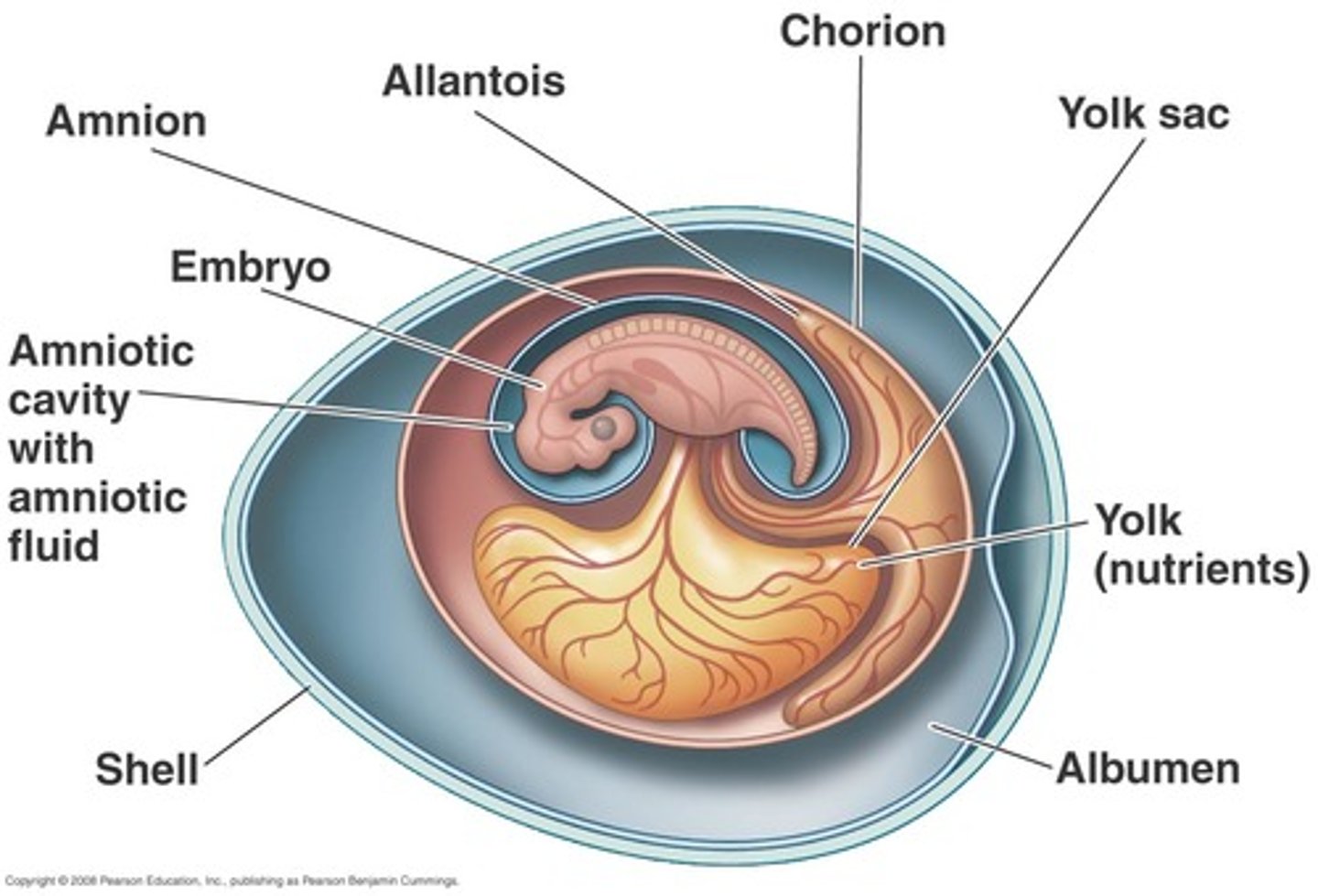
morphogenesis
The process by which an organism takes shape and the differentiated cells occupy their appropriate locations.
germ layers
ectoderm, mesoderm, endoderm
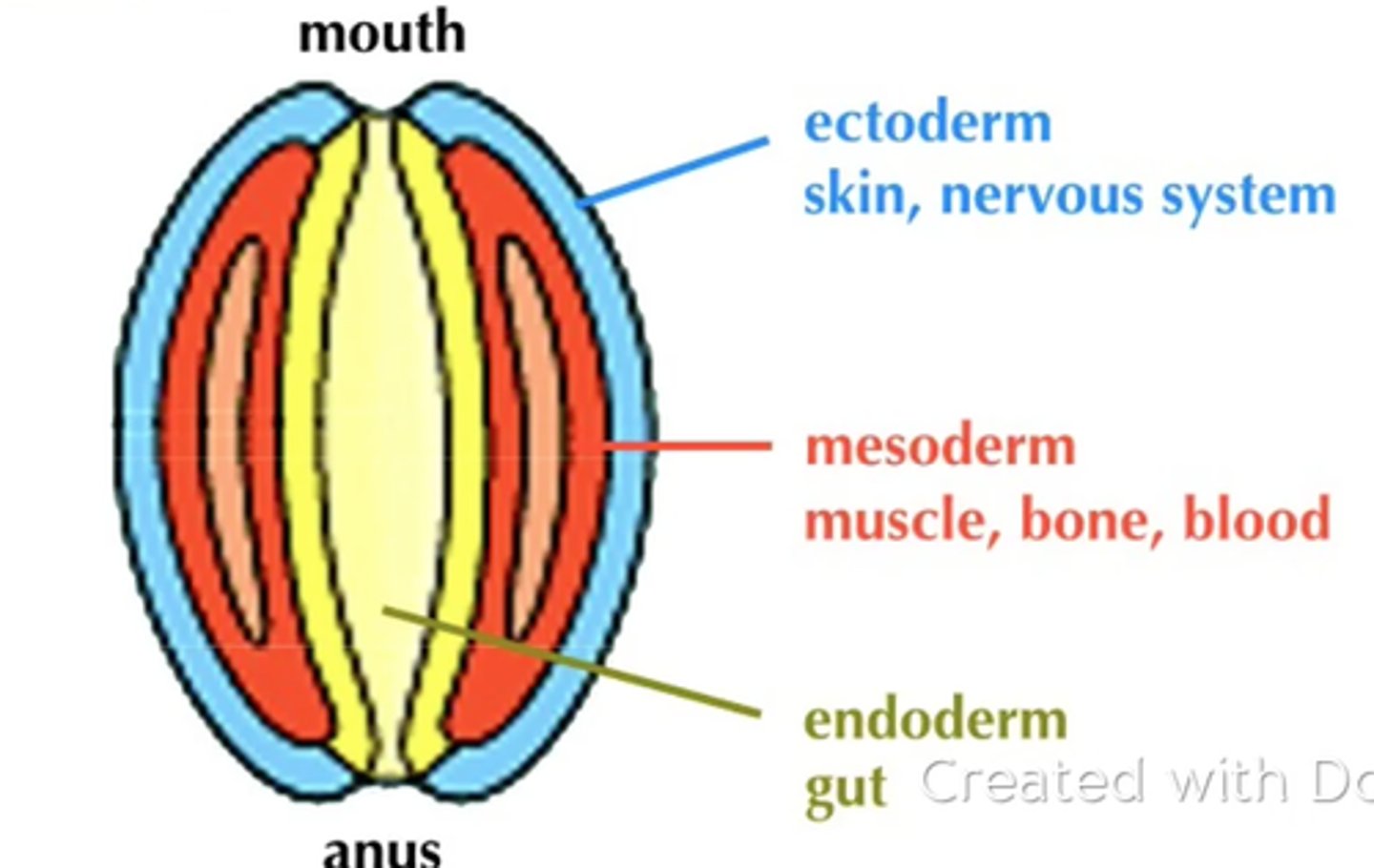
ectoderm
the outer germ layer that develops into skin and nervous tissue
mesoderm
middle germ layer; develops into muscles, and much of the circulatory, reproductive, and excretory systems
Endoderm
innermost germ layer; develops into the linings of the digestive tract and much of the respiratory system
Amnion
surrounds the membrane and contains amniotic fluid
Yolk sac
a specialized structure that leads to the digestive tract of a developing organism and provides it with food during early development
Allantois
involved in early fluid exchange between the embryo and the yolk sac
Cervical Dilation
Cervix opens to 10 cm during labor.
Expulsion
fetus moves through birth canal
Placental Delivery
expulsion of the placenta, the third and final stage of labor
hormonal control in Parturition
CRH leads to cortisol release which leads to an increase in estrogen to prepare uterus
oxytocin arrives and contractions start
prolactin
stimulates milk production
Oxytocin
triggers milk ejection
suckling
stimulates receptors in the nipple so milk can be released
Umbilical arteries
carry deoxygenated blood from the fetus to the placenta
Umbilical vein
delivers oxygenated blood from the placenta to the fetus
Ductus venosus
connects the umbilical vein to the inferior vena cava, bypassing the liver
foramen ovale
allows blood to flow from right to left atrium, bypassing lungs
Ductus arteriosus
connects pulmonary artery to aorta to bypass lungs
cardiovascular changes that occur at birth
lungs inflate
foramen ovale, ductus venous close
blood flows to lungs
relaxin
Hormone that relaxes pelvic ligaments and softens the cervix to prepare for childbirth
Progesterone
Maintains the uterine lining, prevents uterine contractions, and supports pregnancy.
Positive feedback in labor
Uterine contractions stimulate oxytocin release, which strengthens contractions, causing more oxytocin release until birth occurs.
Breast anatomy in lactation
Mammary glands contain lobes made of alveoli that produce milk; ducts carry milk to the nipple

