Chapter 5: Viruses

0.0(0)
Studied by 5 people
call kaiCall Kai
learnLearn
examPractice Test
spaced repetitionSpaced Repetition
heart puzzleMatch
flashcardsFlashcards
GameKnowt Play
Card Sorting

1/41

encourage image

There's no tags or description

Looks like no tags are added yet.

Last updated 8:29 PM on 3/28/26
Name
Mastery
Learn
Test
Matching
Spaced
Call with Kai

No analytics yet

Send a link to your students to track their progress

42 Terms

1
New cards

What is a virus?

  • History of virology.

  • Viral diseases have plagued humans since before we even knew what they were (smallpox in Egypt).

  • It began as a science in late 1800s, when infectious tobacco mosaic virus was isolated in a filtered, bacteria-free fluid by Ivanovski, then Beijerinck.
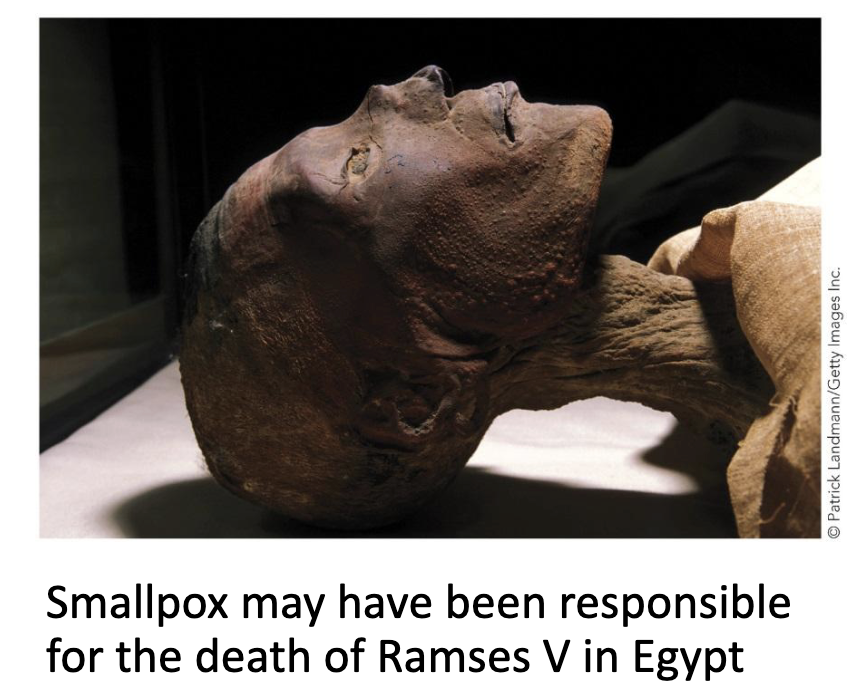
<ul><li><p>History of virology.</p></li><li><p>Viral diseases have plagued humans since before we even knew what they were (<strong><em>smallpox</em></strong> in Egypt).</p></li><li><p>It began as a science in late <strong><em>1800s</em></strong>, when infectious <strong><em>tobacco mosaic virus</em></strong> was isolated in a filtered, bacteria-free fluid by <strong><em>Ivanovski</em></strong>, then <strong><em>Beijerinck</em></strong>.</p></li></ul><p></p>
2
New cards

Who is Walter Reed and his contribution to virology?

  • Walter Reed showed in 1901 that a human disease, yellow fever, was caused by a virus transmitted by mosquitoes.
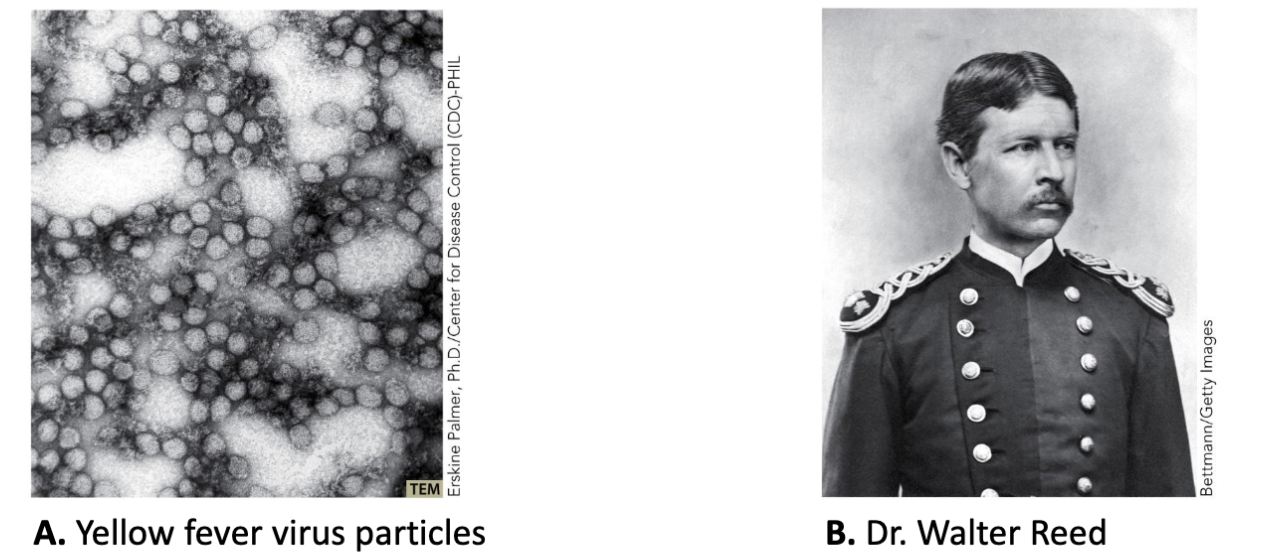
<ul><li><p><strong><em>Walter Reed </em></strong>showed in 1901 that a human disease, <strong><em>yellow fever,</em></strong> was caused by a virus transmitted by <strong><em>mosquitoes</em></strong>.</p></li></ul><p></p>
3
New cards

What is the structure of viruses?

Viruses are

  • Intracellular obligate parasites

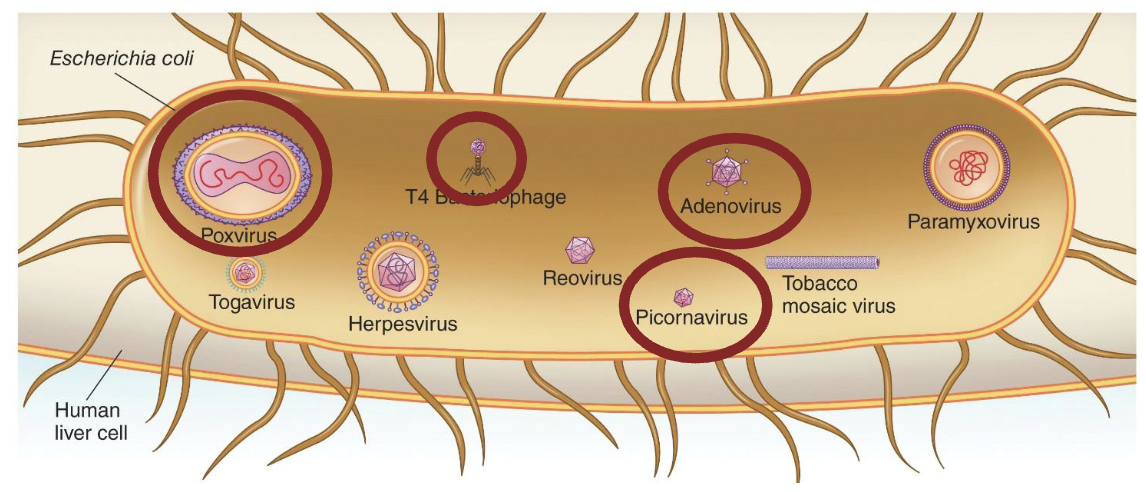
  • Typically between 10 and 100 nm

  • Genomes of DNA or RNA are typically between a few thousand to 200,000 nucleotides in length.

  • Smallest size: Picornavirus

  • Largest size: Poxvirus

  • Complex shape: T4 Bacteriophage, Adenovirus
<p>Viruses are</p><ul><li><p><strong><em>Intracellular obligate parasites</em></strong></p></li><li><p>Typically between <strong><em>10</em></strong> and <strong><em>100</em></strong> nm</p></li><li><p>Genomes of <strong><em>DNA</em></strong> or <strong><em>RNA</em></strong> are typically between a <strong><em>few thousand</em></strong> to <strong><em>200,000</em></strong> nucleotides in length.</p></li><li><p>Smallest size: Picornavirus</p></li><li><p>Largest size: Poxvirus </p></li><li><p>Complex shape: T4 Bacteriophage, Adenovirus</p></li></ul><p></p>
4
New cards

What are the exceptions to the small size of viruses?

  • CroV virus of marine single-celled organisms has a 730k bp genome!

  • Megavirus chilensis (a virus of amoebas) has a genome over 1.2 megabase pairs, encodes 1,200 proteins!

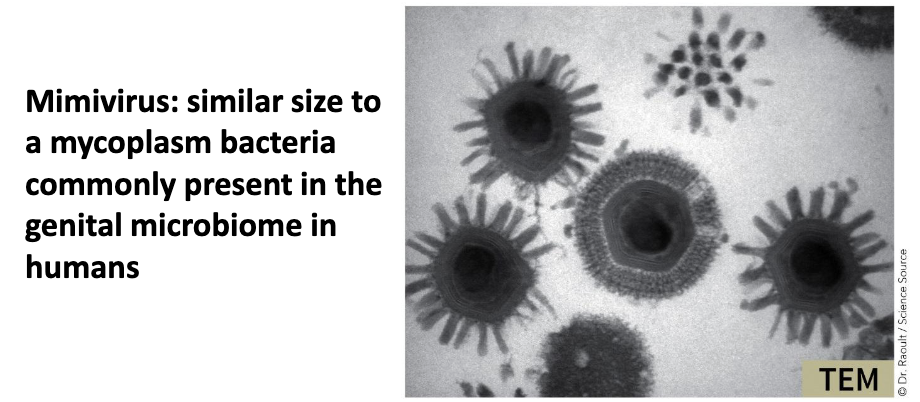
  • Mimivirus (a dsDNA virus of amoebas) can be 400 nm in diameter, with a 1.2 megabase pair genome coding for 979 proteins!

  • Minivirus: similar size to a mycoplasm bacteria commonly present in the genital microbiome in humans
<ul><li><p><strong><em>CroV virus</em></strong> of marine single-celled organisms has a <strong><em>730k</em></strong> bp genome!</p></li><li><p><em>Megavirus chilensis</em> (a virus of <strong><em>amoebas</em></strong>) has a genome over <strong><em>1.2</em></strong> megabase pairs, encodes <strong><em>1,200</em></strong> proteins!</p></li><li><p>Mimivirus (<strong><em>a dsDNA virus</em></strong> of amoebas) can be <strong><em>400</em></strong> nm in diameter, with a <strong><em>1.2 </em></strong>megabase pair genome coding for <strong><em>979 </em></strong>proteins!</p></li><li><p><strong>Minivirus</strong>: similar size to a mycoplasm bacteria commonly present in the genital microbiome in humans</p></li></ul><p></p>
5
New cards

What is the structure of viruses?

  • Single or double-stranded DNA or RNA

  • Protein shell (capsid) around genome composed of many capsomere proteins

  • Capsid and genome together = nucleocapsid

    • Possible envelope (plasma membrane around capsid)

6
New cards

What are the sizes and structural features of selected viruses?

  • Focus on genetic material (ssRNA vs. dsRNA), variation in genome size and size
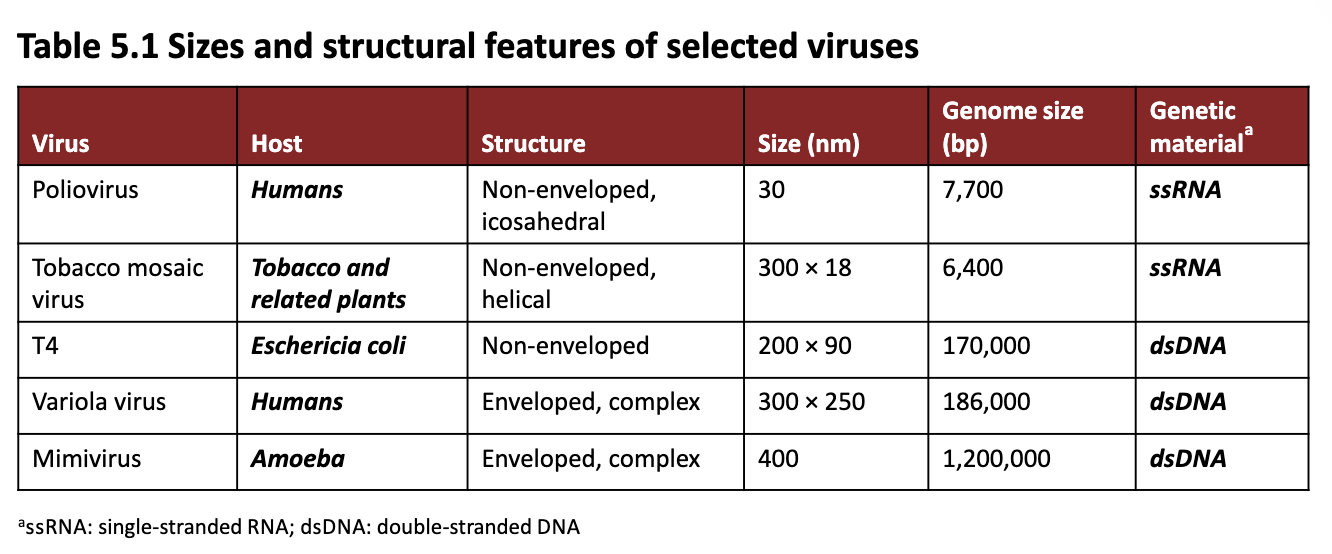
<ul><li><p>Focus on genetic material (ssRNA vs. dsRNA), variation in genome size and size</p></li></ul><p></p>
7
New cards

What is the symmetry of virus structure?

Structure of viruses: Symmetry

  • Capsids often exhibit either helical or icosahedral shapes.
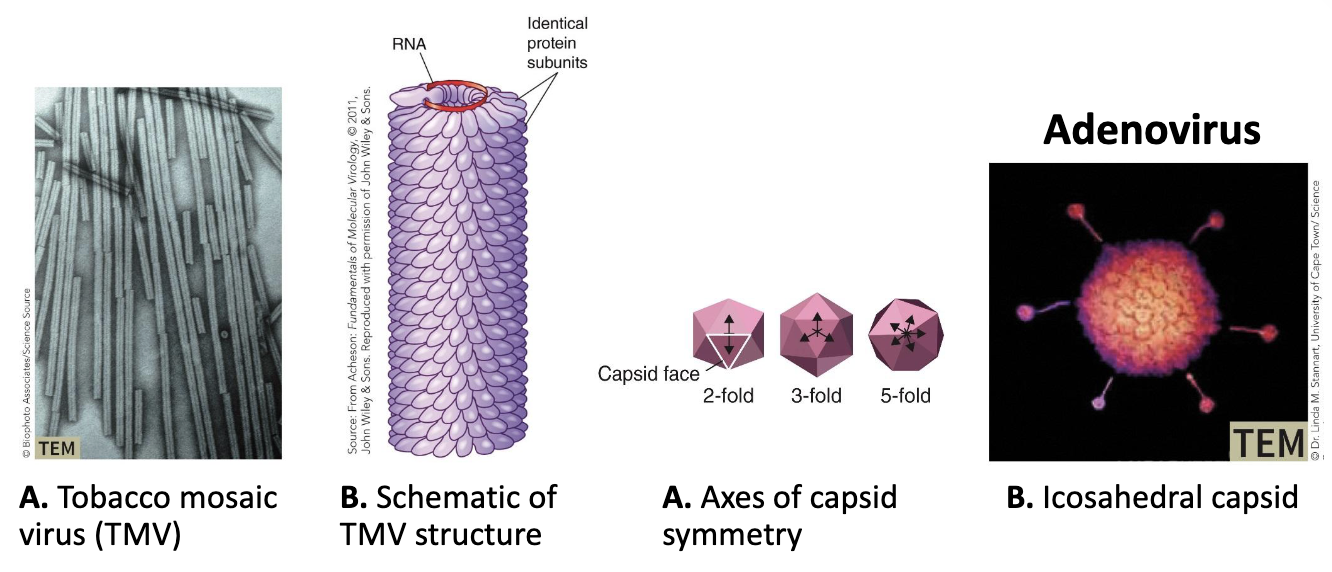
<p>Structure of viruses: Symmetry</p><ul><li><p>Capsids often exhibit either <strong><em>helical</em></strong> or <strong><em>icosahedral</em></strong> shapes.</p></li></ul><p></p>
8
New cards

What other shapes can viral capsids take on?

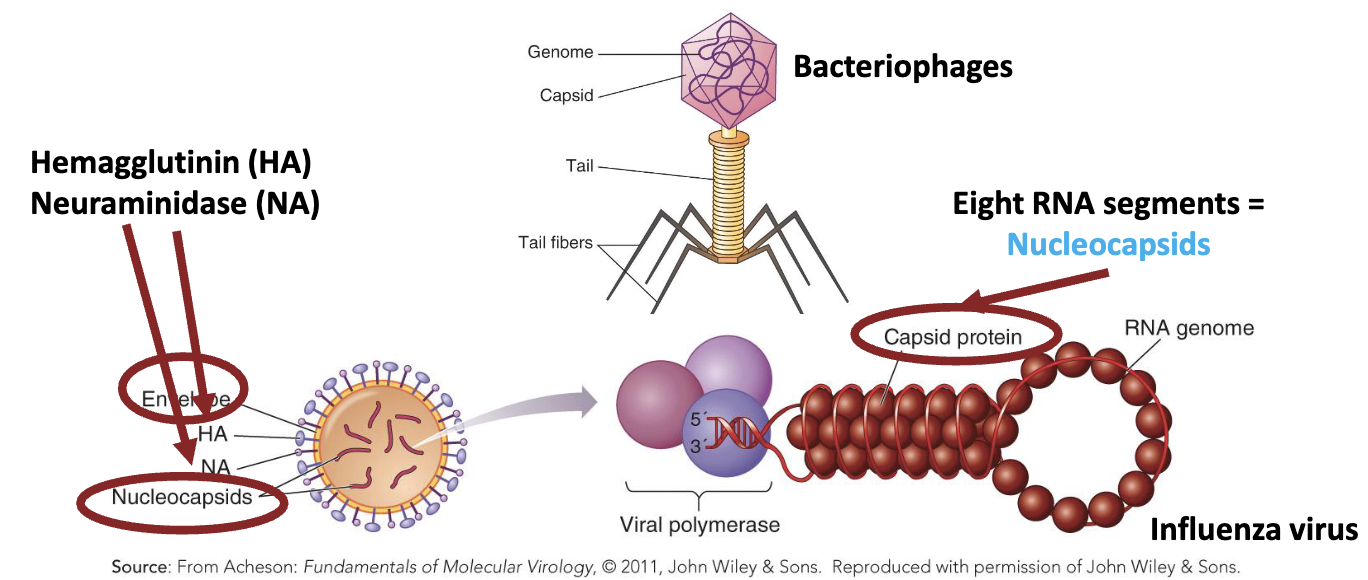
  • Viral capsids can sometimes take on irregular or complex shapes.

  • Bacteriophages: Tail fibres facilitate binding to host cells

  • Influenza virus:

    • Eight RNA segments = Nucleocapsids

    • Cell envelope

    • Hemagglutinin (HA)

    • Neuraminidase (NA)

<ul><li><p>Viral <strong>capsids</strong> can sometimes take on <strong><em>irregular</em></strong> or <strong><em>complex</em></strong> shapes.</p></li><li><p>Bacteriophages: Tail fibres facilitate binding to host cells</p></li><li><p>Influenza virus: </p><ul><li><p>Eight RNA segments = Nucleocapsids</p></li><li><p>Cell envelope</p></li><li><p>Hemagglutinin (HA)</p></li><li><p>Neuraminidase (NA)</p></li></ul></li></ul><p></p>
9
New cards

What is the structure of viral envelopes?

  • If a plasma membrane surrounds the nucleocapsid, the virus is “enveloped.”

    • Influenza, HIV

  • If there is no plasma membrane, the virus is “naked.” (non-enveloped)
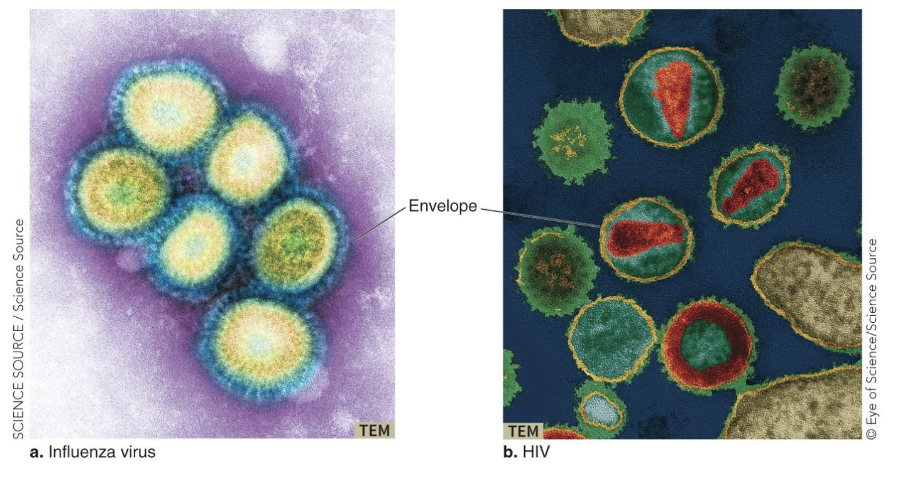
<ul><li><p>If a plasma membrane surrounds the <strong><em>nucleocapsid</em></strong>, the virus is <strong><em>“enveloped.”</em></strong></p><ul><li><p>Influenza, HIV</p></li></ul></li><li><p>If there is no plasma membrane, the virus is “<strong><em>naked.” (non-enveloped</em></strong>)</p></li></ul><p></p>
10
New cards

What is the replication cycle for viruses?

  • Briefly, a virus must

    • Stick to a host cell (adhere)

    • Get into the cell (penetrate) and release its genome (uncoat)

    • Express its genes to make proteins (synthesis)

    • Replicate its genome (synthesis)

    • Put everything together (assembly) and get the new virus particles out (exit)
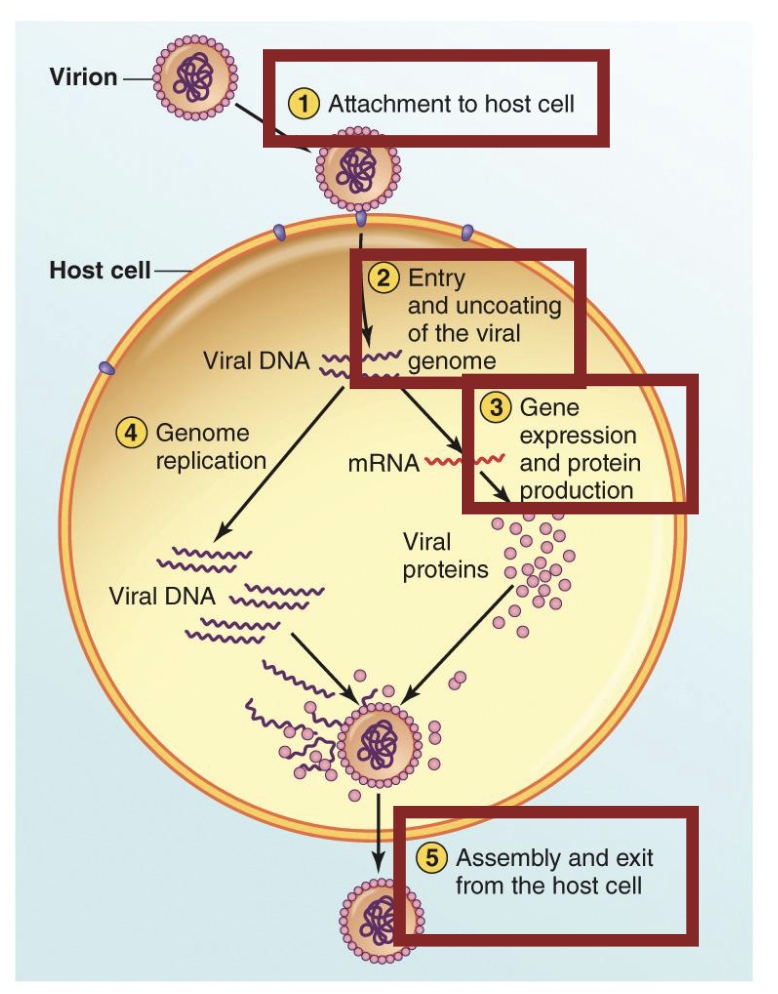
<ul><li><p><em>Briefly, a virus must</em></p><ul><li><p>Stick to a host cell (<strong><em>adhere</em></strong>)</p></li><li><p>Get into the cell (<strong><em>penetrate</em></strong>) and release its genome (<strong><em>uncoat</em></strong>)</p></li><li><p>Express its genes to make proteins (<strong><em>synthesis</em></strong>)</p></li><li><p>Replicate its genome (<strong><em>synthesis</em></strong>)</p></li><li><p>Put everything together (<strong><em>assembly</em></strong>) and get the new virus particles out (<strong><em>exit</em></strong>)</p></li></ul></li></ul><p></p>
11
New cards

What is the entry stage for viral replication?

  • Entry is arguably the most important part in the viral replication cycle.

  • Mechanisms for entry vary depending on the host cell.

    • Animal viruses don’t have to contend with a cell wall structure.

    • Plant, fungal, and bacterial viruses do.

12
New cards

What is the entry into animal cells?

  • Non-enveloped: Endocytosis

  • Enveloped (HIV): Membrane fusion

  • Enveloped (Influenza A): Endocytosis → Fusion (envelop and vesicle membrane)
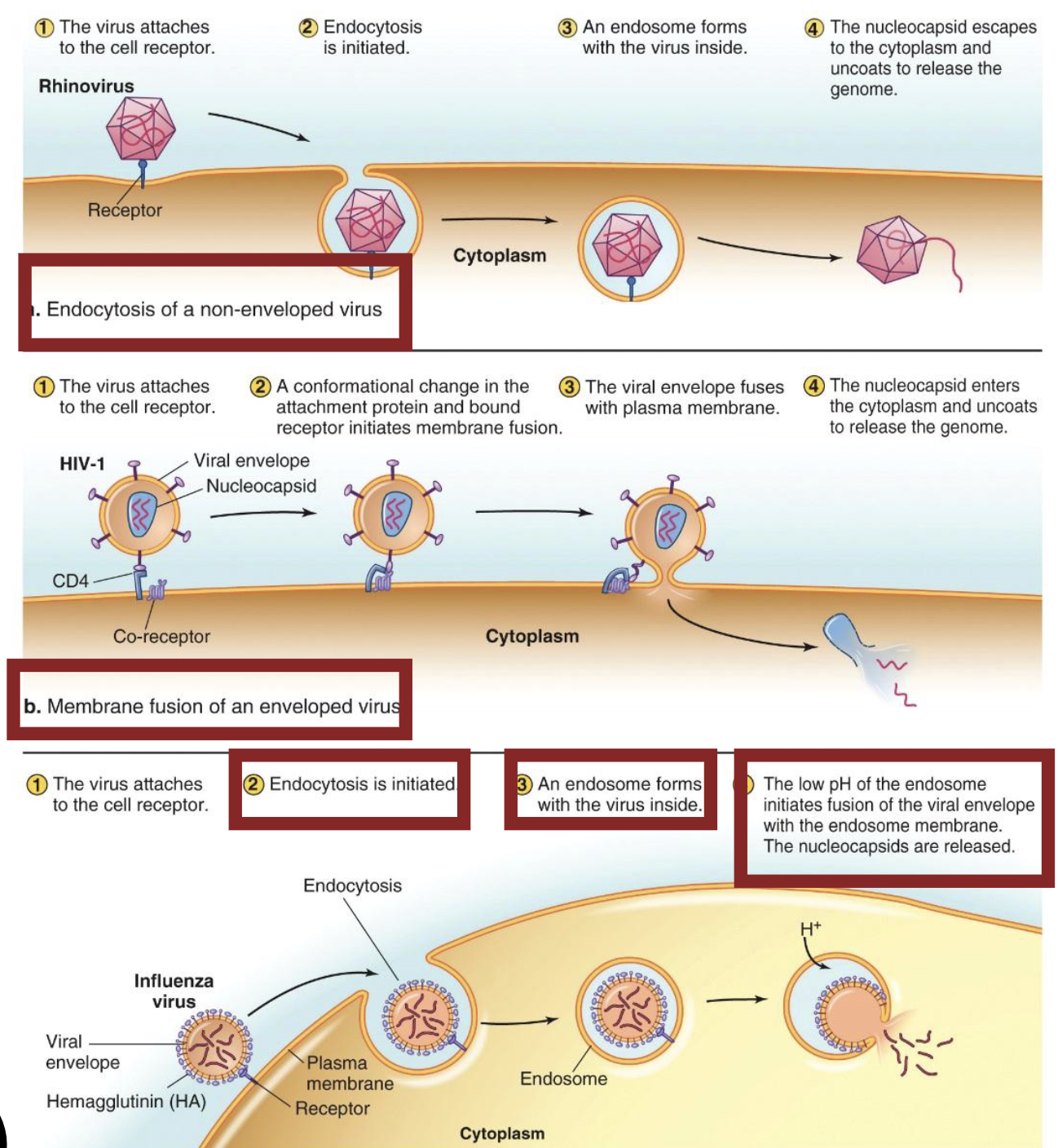
<ul><li><p><strong>Non-enveloped: </strong>Endocytosis</p></li><li><p><strong>Enveloped (HIV): </strong>Membrane fusion</p></li><li><p><strong>Enveloped (Influenza A):</strong> Endocytosis → Fusion (envelop and vesicle membrane)</p></li></ul><p></p>
13
New cards

What is the entry into plant cells?

  • Often depends on some damage to the plant tissues to open a spot in the cell wall

    • Insects feeding on plants

    • Wind damage

    • Hail/rain damage

    • Fire damage

    • Human-induced damage

14
New cards

What is the entry into bacteria?

  1. Tail fibres attach to receptors

  2. Conformational change in tail fibers bring base of the tail in contact with host cell surface

  3. Rearrangement of tail proteins allows inner core tube proteins to extend down into cell wall

  4. Contact with the plasma membrane initiates transfer of DNA through a pore formed in the lipid bilayer
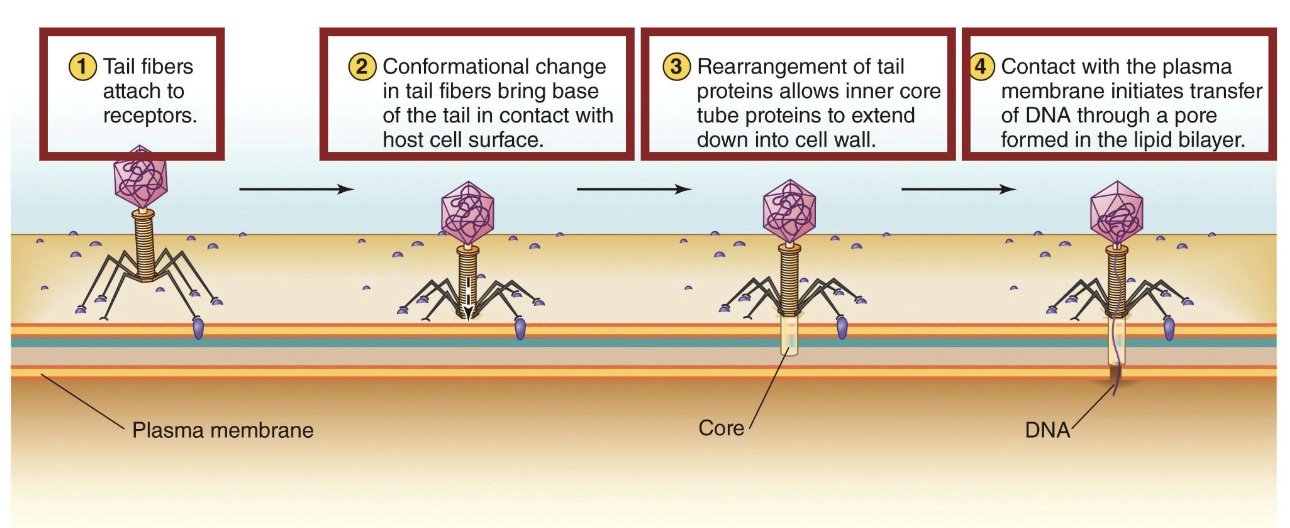
<ol><li><p>Tail fibres attach to receptors</p></li><li><p>Conformational change in tail fibers bring base of the tail in contact with host cell surface</p></li><li><p>Rearrangement of tail proteins allows inner core tube proteins to extend down into cell wall</p></li><li><p>Contact with the plasma membrane initiates transfer of DNA through a pore formed in the lipid bilayer</p></li></ol><p></p>
15
New cards

How did viruses originate?

  • The evolutionary history of viruses isn’t very clear, but three hypotheses have emerged:

    • Coevolution

    • Regressive

    • Progressive

16
New cards

What is the coevolution hypothesis?

  • Viruses evolved along with their host cells.

    • This could explain the origin of many RNA viruses.

    • There is little supporting evidence as of yet.

17
New cards

What is the regressive hypothesis?

Viruses are cells that lost some of the replicative and metabolic traits over time.

  • Examples of this phenomenon exist in the biological world.

  • This doesn’t adequately explain origins of RNA viruses.

18
New cards

What is the progressive hypothesis?

  • Existing genetic elements gradually gained the ability to move from cell to cell.

  • Evidence in the form of transposons (for DNA viruses) and retrotransposons (for retroviruses)
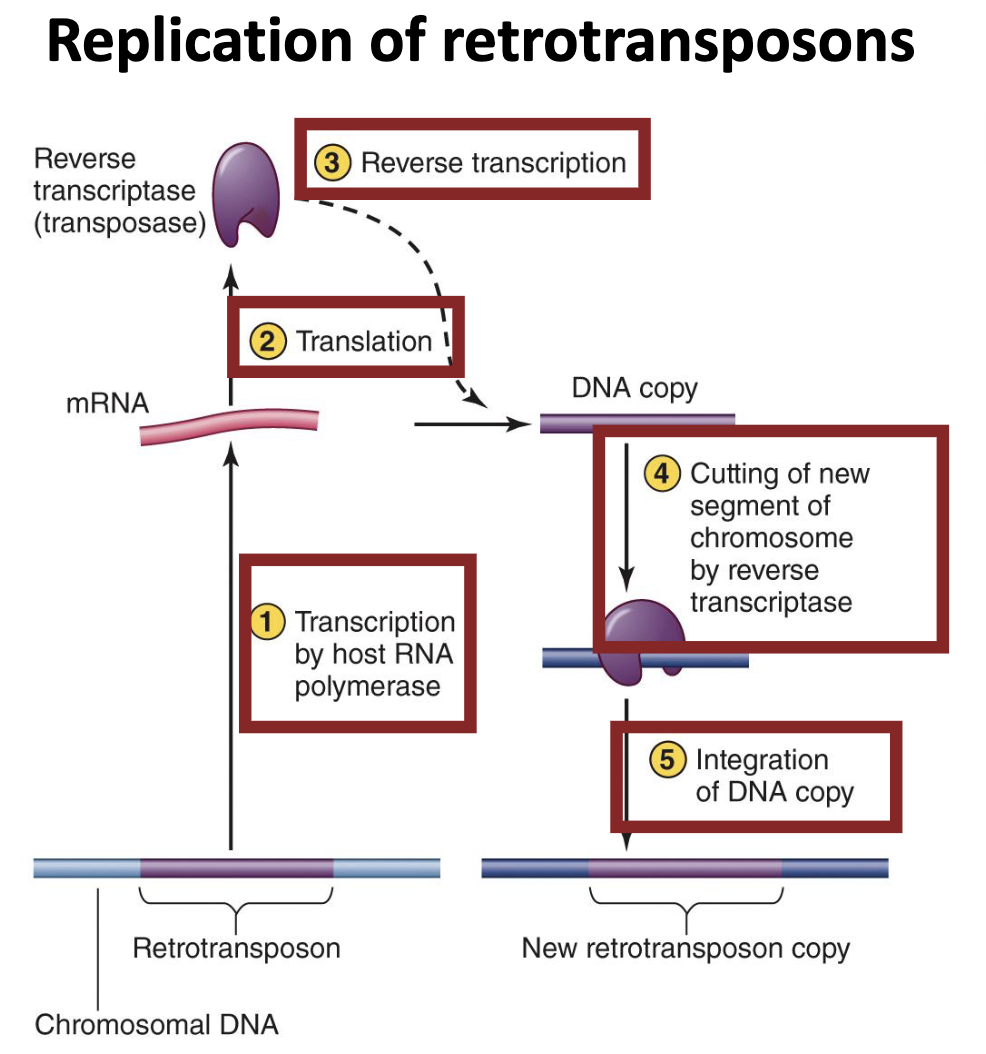
<ul><li><p>Existing genetic elements gradually gained the ability to <strong><em>move from cell to cell.</em></strong></p></li><li><p>Evidence in the form of <strong><em>transposons</em></strong> (for DNA viruses) and <strong><em>retrotransposons</em></strong> (for retroviruses)</p></li></ul><p></p>
19
New cards

How can we grow and quantify viruses?

  • Viruses are much trickier to work with than bacteria.

  • They are very small.

  • They only replicate within appropriate host cells.

  • Because of these traits, various strategies are used to amplify and quantify viruses

20
New cards

What are the types of bacteriophages?

  • Viral cultivation : Two types of bacteriophages

    • Lytic: Phages will replicate in and burst open (lyse) the host cells.

    • Lysogenic: Phages can integrate their genome into the host cell genome (becoming a prophage) and be replicated each time the host cell replicates

21
New cards

What are the steps of turbid → clear media?

  1. A small volume of susceptible bacterial host cells is added to the phage sample

  2. The mixture is added to molten nutrient agar and quickly mixed

  3. The agar mixture is poured onto a nutrient agar base and allowed to solidify

  4. Plaques appear after sufficient incubation.
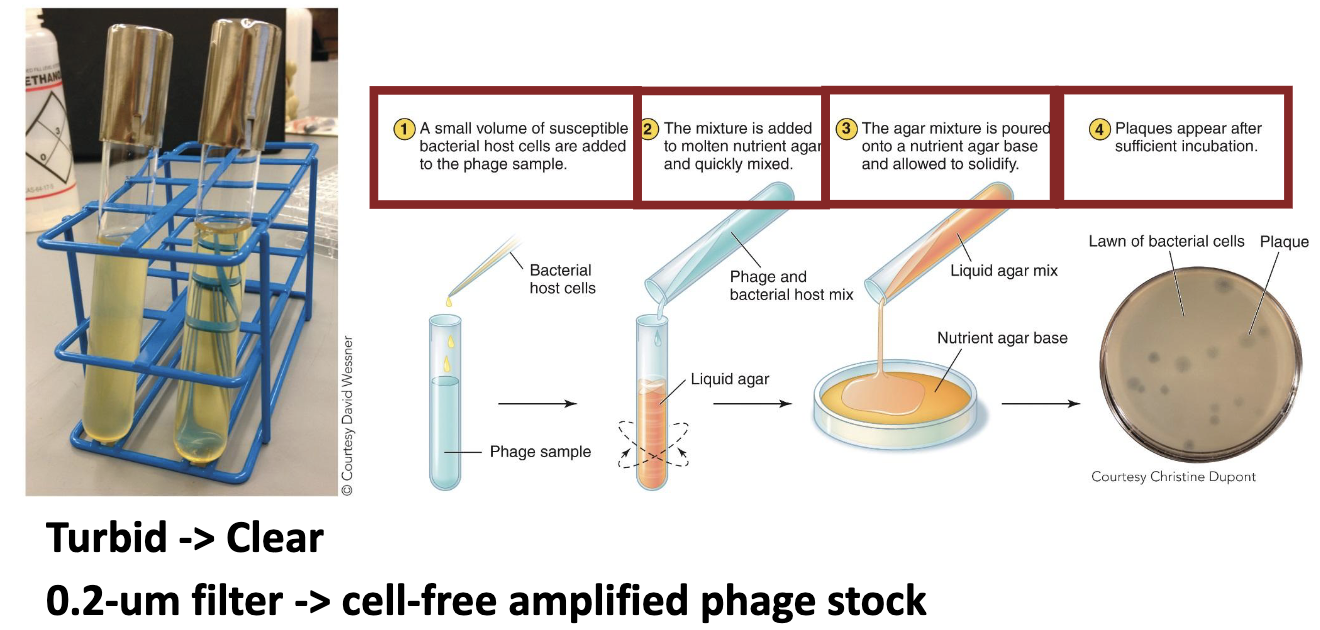
<ol><li><p>A small volume of susceptible bacterial host cells is added to the phage sample</p></li><li><p>The mixture is added to molten nutrient agar and quickly mixed</p></li><li><p>The agar mixture is poured onto a nutrient agar base and allowed to solidify</p></li><li><p>Plaques appear after sufficient incubation.</p></li></ol><p></p>
22
New cards

What is viral cultivation for animal viruses?

  • Tissue culture of host cells must be used to grow the targets for the viruses.

  • These cultures must be kept sterile and bacteria-free (see Toolbox 5.1).

    • These methods have only been in place since the 1950s.

    • Modern virology couldn’t exist without these tools.

    • Many of these tools developed from the first human cell line, known as HeLa cells (named after the woman they were originally isolated from, Henrietta Lacks).

      • Henrietta Lacks: The 'immortal' cells that changed the world - BBC REEL
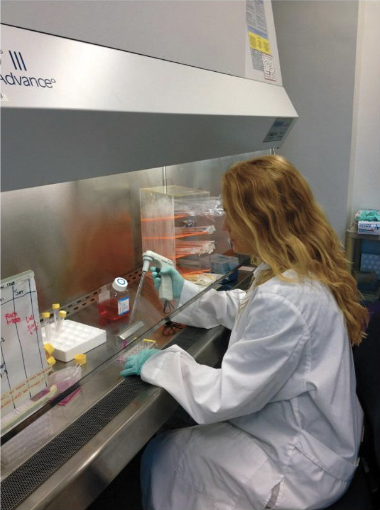
<ul><li><p>Tissue culture of host cells must be used to <strong><em>grow the targets for the viruses.</em></strong></p></li><li><p>These cultures must be <strong><em>kept sterile</em></strong> and <strong><em>bacteria-free</em></strong> (see Toolbox 5.1).</p><ul><li><p>These methods have only been in place since the <strong><em>1950s</em></strong>.</p></li><li><p>Modern virology couldn’t exist without these tools.</p></li><li><p>Many of these tools developed from the first human cell line, known as <strong>HeLa cells</strong> (named after the woman they were originally isolated from, <strong><em>Henrietta Lacks</em></strong>).</p><ul><li><p>Henrietta Lacks: The 'immortal' cells that changed the world - BBC REEL</p></li></ul></li></ul></li></ul><p></p>
23
New cards

What are the differences in the tissue culture?

  • Tissue culture of host cells must be used to grow the targets for the viruses.

    • Cytopathic effects (CPE) can be observed in virally infected cultured cells (ex: fused cells = syncytia)
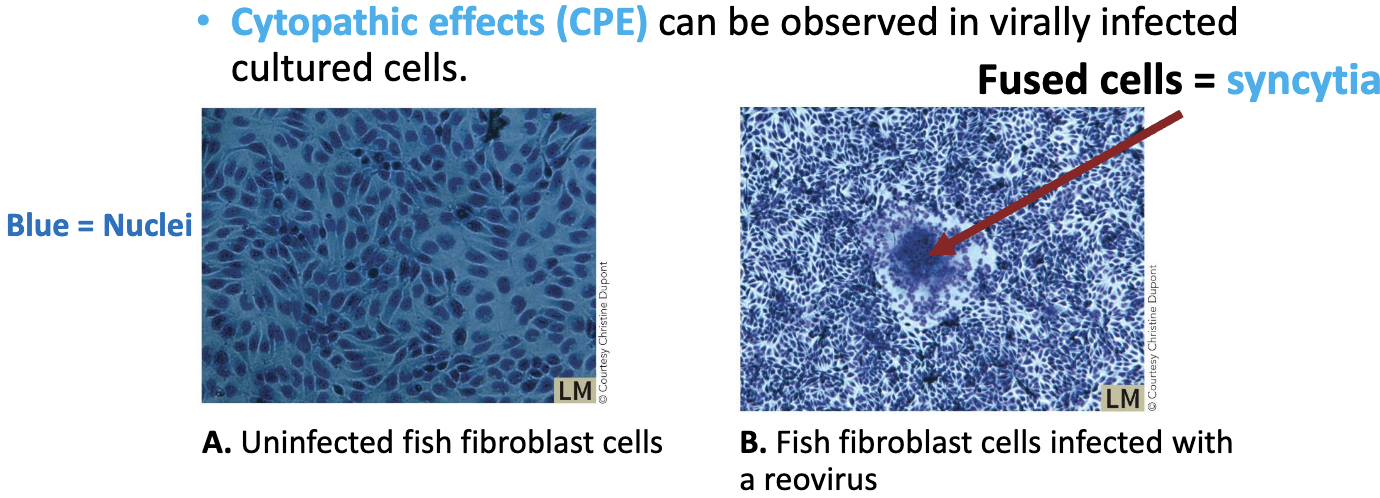
<ul><li><p>Tissue culture of <strong><em>host cells</em></strong> must be used to grow the targets for the viruses.</p><ul><li><p><strong>Cytopathic effects (CPE)</strong> can be observed in virally infected cultured cells (ex: fused cells = syncytia)</p></li></ul></li></ul><p></p>
24
New cards

What is viral purification?

  • This usually begins with simple filtration to remove large cells and cellular debris.

  • Then viruses can be purified and concentrated with differential centrifugation (seen below) or gradient centrifugation.
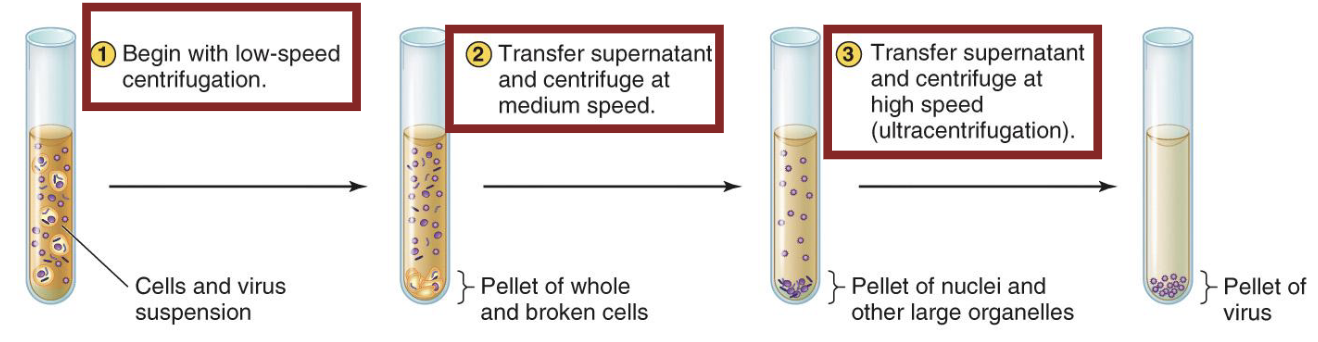
<ul><li><p>This usually begins with simple filtration to remove <strong><em>large cells and cellular debris.</em></strong></p></li><li><p>Then viruses can be purified and concentrated with <strong>differential centrifugation</strong> (seen below) or<strong> gradient centrifugation.</strong></p></li></ul><p></p>
25
New cards

What is gradient centrifugation?

  • Depends on different densities of viral components and particles

  • Each piece of different density will settle into a different area (“band”) of a density gradient after centrifugation (see the Mini-Paper in this chapter for an example of this useful technique).
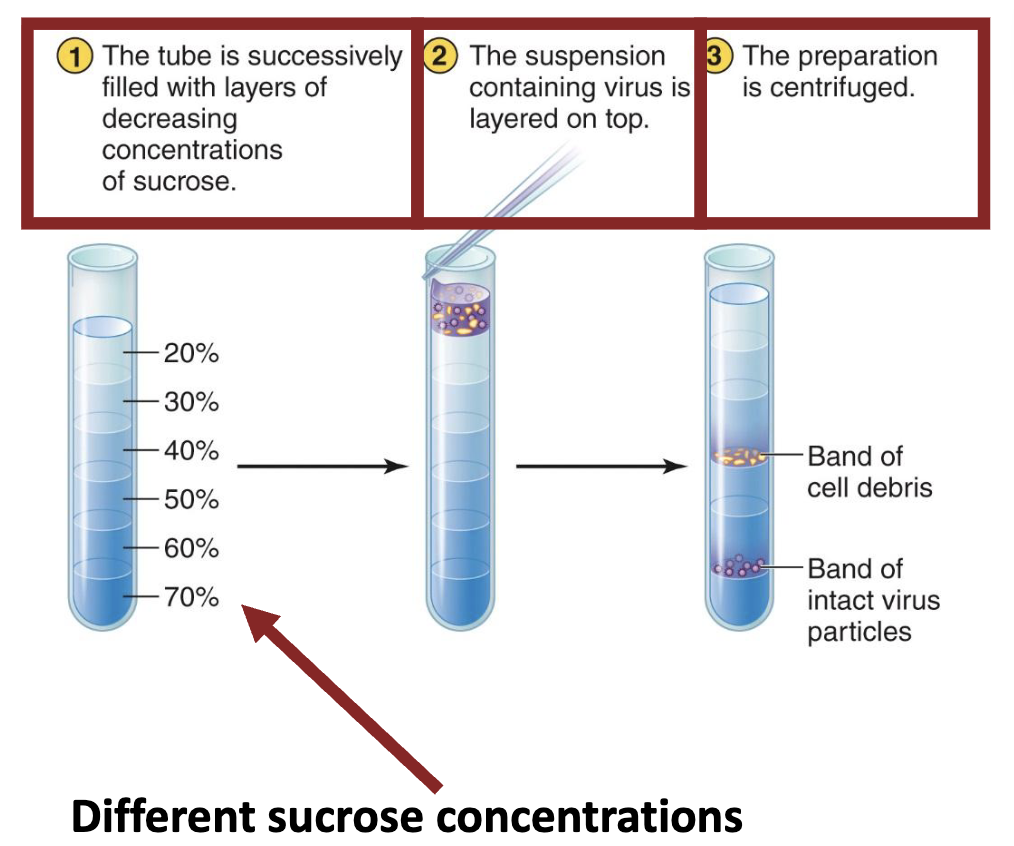
<ul><li><p>Depends on different <strong><em>densities</em></strong> of viral components and particles</p></li><li><p>Each piece of different density will settle into a different area (<strong><em>“band”</em></strong>) of a density gradient after centrifugation (see the Mini-Paper in this chapter for an example of this useful technique).</p></li></ul><p></p>
26
New cards

What is viral quantification?

  • Not easy or straightforward

  • Usually measured as a titer, or concentration of a virus preparation

  • Methods include

    • Direct count

    • Hemagglutination assay

    • Plaque assay

    • Endpoint assays

27
New cards

What is Direct Count?

Viral quantification: Direct count

  • An electron microscope can be used to visualize a known volume of material, counting viruses within it and scaling up to determine titer.

  • Not easy!

    • Requires an expensive, specialized microscope

    • Doesn’t differentiate between infectious and noninfectious viral particles

28
New cards

What is Hemagglutination assay?

Viral quantification: Hemagglutination assay

  • Exploits trait of some viruses to stick to red blood cells (RBCs), causing them to form a gel mat (shield)

  • Pros: Cheap, easy, fast; no microscope needed

  • Cons: Some viruses won’t do this; doesn’t differentiate viable/nonviable viruses; doesn’t give a virus number
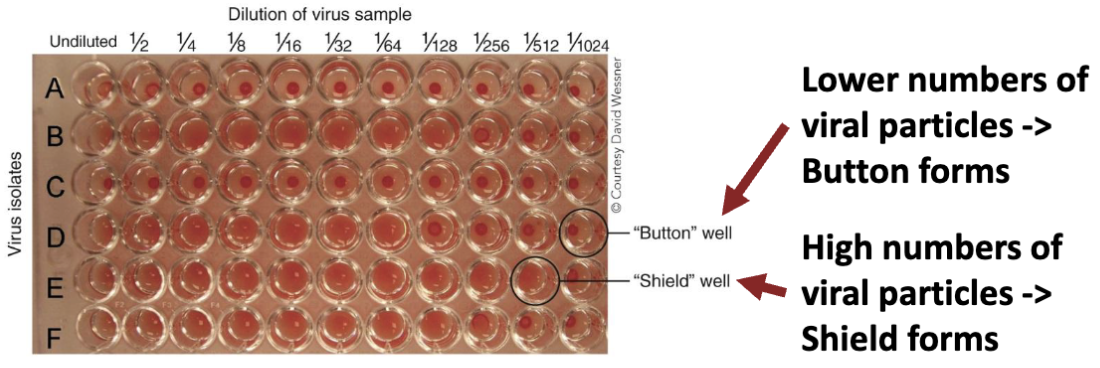
<p>Viral quantification: <strong><em>Hemagglutination assay</em></strong></p><ul><li><p>Exploits trait of <strong><em>some viruses</em></strong> to stick to red blood cells (RBCs), causing them to form a gel mat (<strong><em>shield</em></strong>)</p></li><li><p>Pros: <strong><em>Cheap, easy, fast;</em></strong> no microscope needed</p></li><li><p>Cons: Some viruses won’t do this; doesn’t differentiate <strong><em>viable/nonviable viruses</em></strong>; doesn’t give a virus <strong><em>number</em></strong></p></li></ul><p></p>
29
New cards

What is Plaque assay?

Viral quantification: Plaque assay

  • This is useful in phages and plant viruses.

  • Virus is diluted and placed on target cells.

  • Plaques are counted to determine plaque-forming unit (PFU) titer of original suspension.
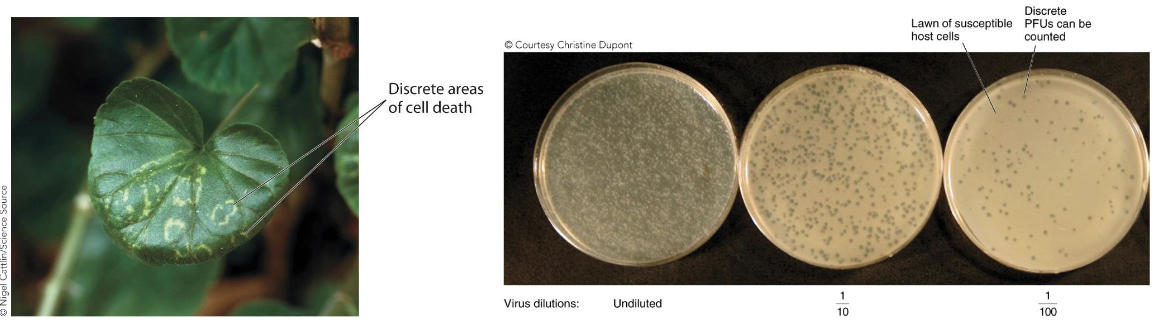
<p>Viral quantification: <strong><em>Plaque assay</em></strong></p><ul><li><p>This is useful in <strong><em>phages</em></strong> and <strong><em>plant viruses.</em></strong></p></li><li><p>Virus is diluted and placed on <strong><em>target cells.</em></strong></p></li><li><p>Plaques are counted to determine <strong><em>plaque-forming unit (PFU) </em></strong>titer of original suspension.</p></li></ul><p></p>
30
New cards

What is Endpoint assays?

Viral quantification: Endpoint assays

  • Tissue culture infectious dose 50 (TCID50): Amount of virus needed to induce a CPE in 50% of cultured cells

  • Lethal dose 50 (LD50): Amount of virus needed to kill 50% of test animal subjects
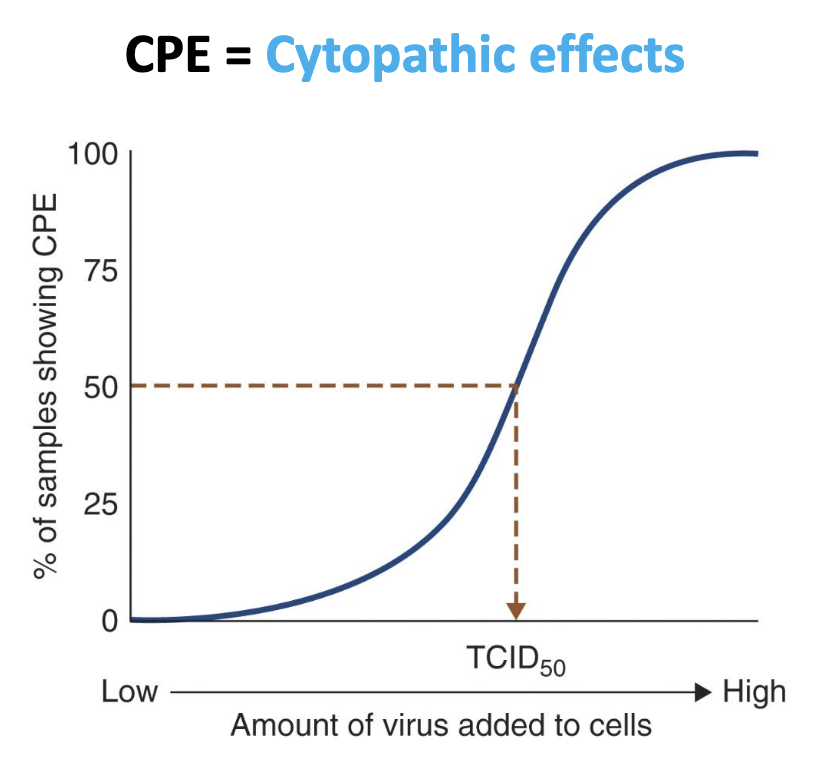
<p>Viral quantification: <strong><em>Endpoint assays</em></strong></p><ul><li><p><strong><em>Tissue culture infectious dose 50 (TCID50): </em></strong>Amount of virus needed to induce a CPE in 50% of cultured cells</p></li><li><p><strong><em>Lethal dose 50 (LD50): </em></strong>Amount of virus needed to kill 50% of test animal subjects</p></li></ul><p></p>
31
New cards

What are different types of viruses?

Virus names:

  • Historically, quite varied!

    • Simple letter/number combinations (T4 phage)

    • Organism(s) they infect (tobacco mosaic virus)

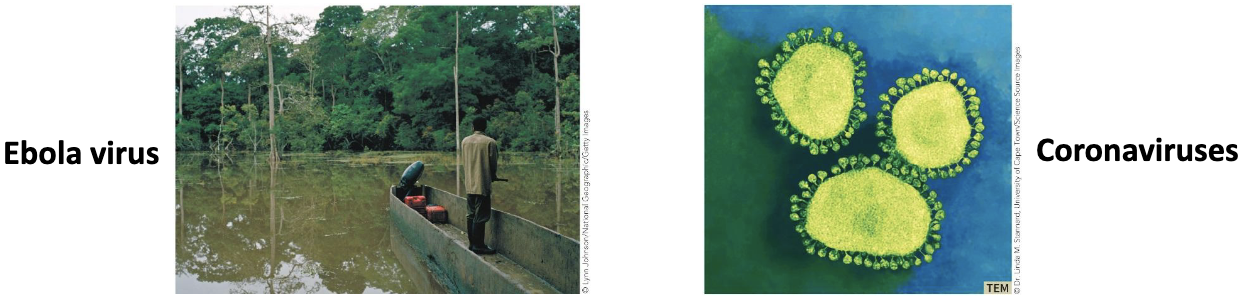
    • Location of discovery (Ebola River, Zaire)

    • Appearance (coronavirus, “crown”)

    • Disease caused (hepatitis viruses

<p>Virus names:</p><ul><li><p>Historically, quite varied!</p><ul><li><p>Simple letter/number combinations (<strong><em>T4 phage</em></strong>)</p></li><li><p>Organism(s) they infect (<strong><em>tobacco mosaic virus</em></strong>)</p></li><li><p>Location of discovery (<strong><em>Ebola River</em></strong>, Zaire)</p></li><li><p>Appearance (<strong><em>coronavirus</em></strong>, “crown”)</p></li><li><p>Disease caused (<strong><em>hepatitis</em></strong> viruses</p></li></ul></li></ul><p></p>
32
New cards

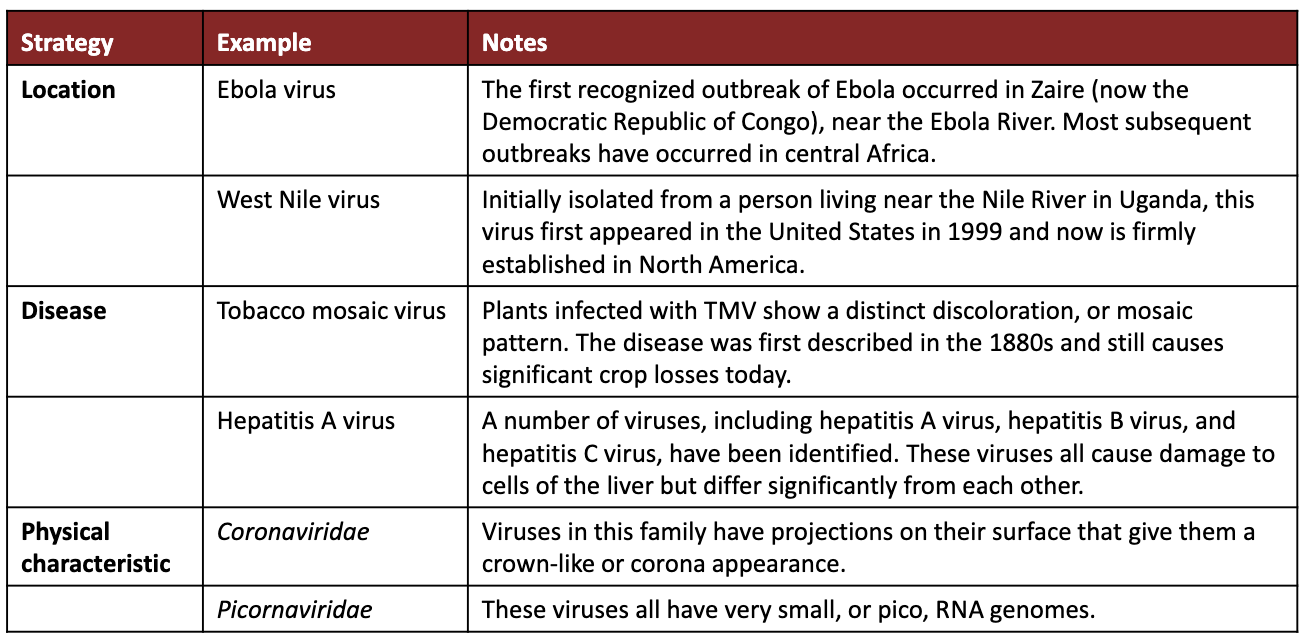
What are the different strategies used to name viruses?

  • Location

  • Disease

  • Physical characteristic

<ul><li><p>Location</p></li><li><p>Disease</p></li><li><p>Physical characteristic</p></li></ul><p></p>
33
New cards

What is the ICTV classification scheme?

Viral classification

  • ICTV = International Committee on Taxonomy of Viruses

  • Classify viruses based on Order, Family, Subfamily, Genus, and Species

Because all viruses do not possess a common gene, a universal classification scheme is problematic

34
New cards

What is the Baltimore classification system?

  • Developed by Nobel laureate David Baltimore

  • Based around mRNA production methods

  • Separates viruses into seven classes

35
New cards

What do members within a family share?

Members within a family (suffix -viridae): share virion structure, genome organization, transcription/translation strategies
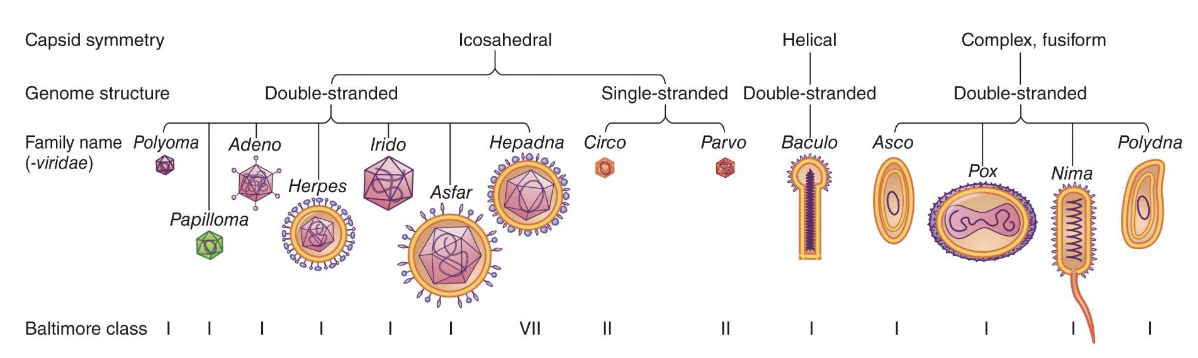
<p>Members within a family (suffix -viridae): share virion structure, genome organization, transcription/translation strategies</p>
36
New cards

What is the criterion to define a species?

Criteria to define species: host range, cell and tissue tropism (infection ability), pathogenicity, antigenicity, nucleic acid sequence relatedness
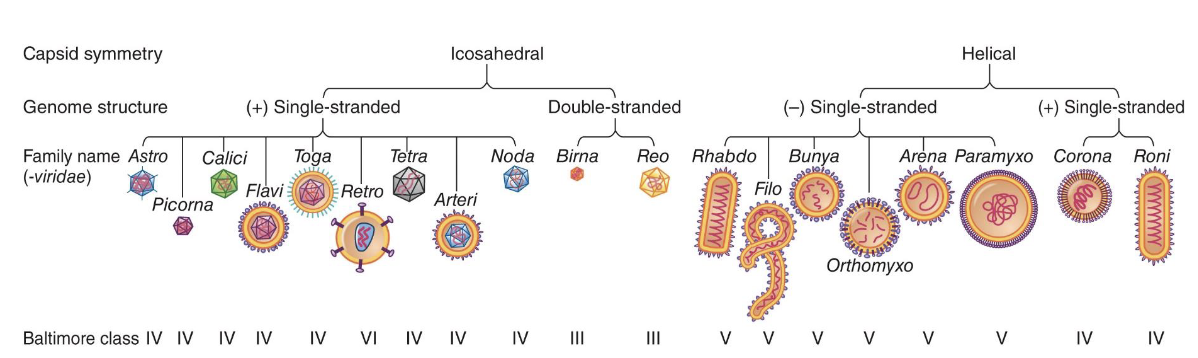
<p>Criteria to define species: host range, cell and tissue tropism (infection ability), pathogenicity, antigenicity, nucleic acid sequence relatedness</p>
37
New cards

What is Electron microscopy?

Virus identification

  • The first step in identification rests on visual observation of viral morphology (not infallible)
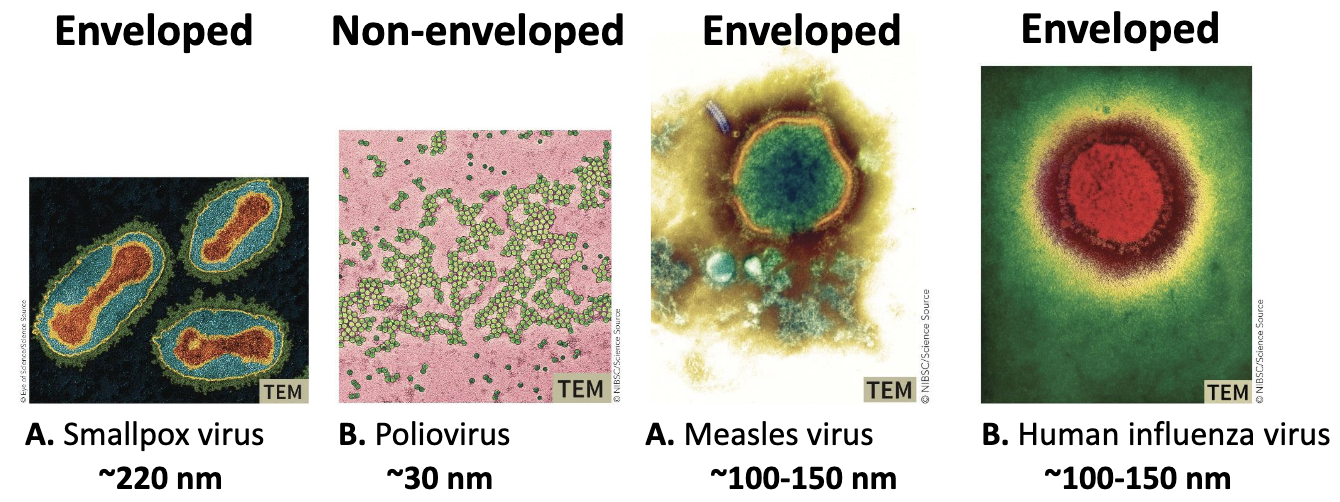
<p>Virus identification</p><ul><li><p>The first step in identification rests on <strong><em>visual observation</em></strong> of viral morphology (not infallible)</p></li></ul><p></p>
38
New cards

What is Nucleic acid analysis?

  • Polymerase chain reaction (PCR) and reverse- transcriptase PCR (R T-PCR, see Toolbox 5.2)

    • Can be used to identify viruses by genome sequence

    • Can be used to study viral evolution patterns
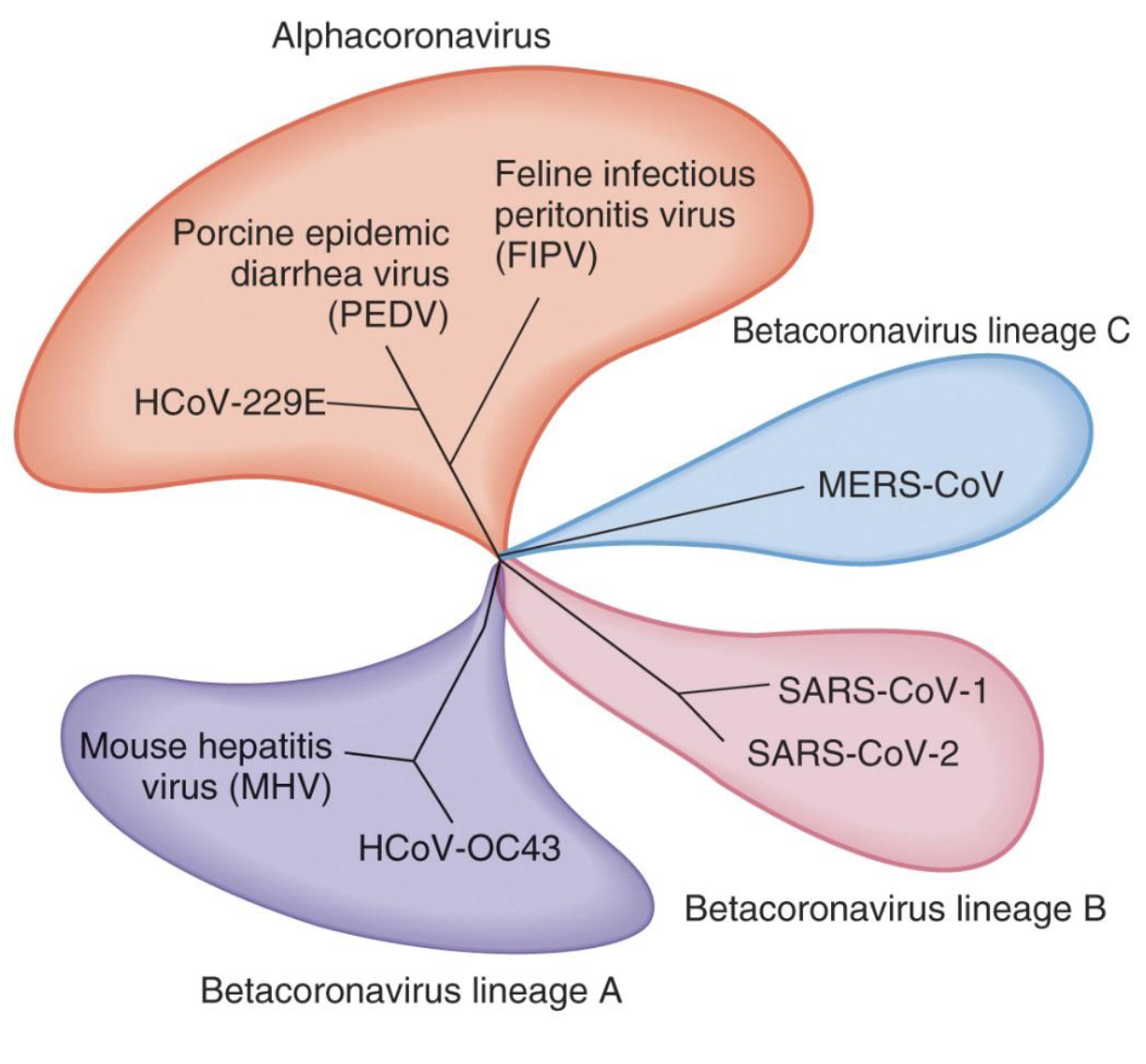
<ul><li><p><strong><em>Polymerase chain reaction (PCR)</em></strong> and <strong><em>reverse- transcriptase PCR</em></strong> (R T-PCR, see Toolbox 5.2)</p><ul><li><p>Can be used to identify viruses by <strong><em>genome sequence</em></strong></p></li><li><p>Can be used to study viral <strong><em>evolution patterns</em></strong></p></li></ul></li></ul><p></p>
39
New cards

What is RT-PCR?

A side note on RT-PCR:

  • This method is incredibly useful.

  • It is an adaptation of the PCR method discussed in Chapter 1.

  • It uses an enzyme discovered in viruses in the 1970s by Baltimore and Temin.

    • This enzyme takes RNA and converts it into DNA.

    • DNA is more stable than RNA.

    • DNA can then be amplified using the PCR process.

  • This method allows scientists to study the RNA molecules produced by cells and viruses infecting them.

40
New cards

How does RT-PCR work?

  • RNA is isolated.

  • Primer, RT, nucleotides are added.

  • RT makes a complementary DNA copy of the RNA.

  • Sample is heated to denature strands and inactivate RT.

  • Primers, Taq pol, and nucleotides are added.

  • Taq pol makes a second DNA strand.

  • Further PCR cycles can amplify the amount of DNA produced.
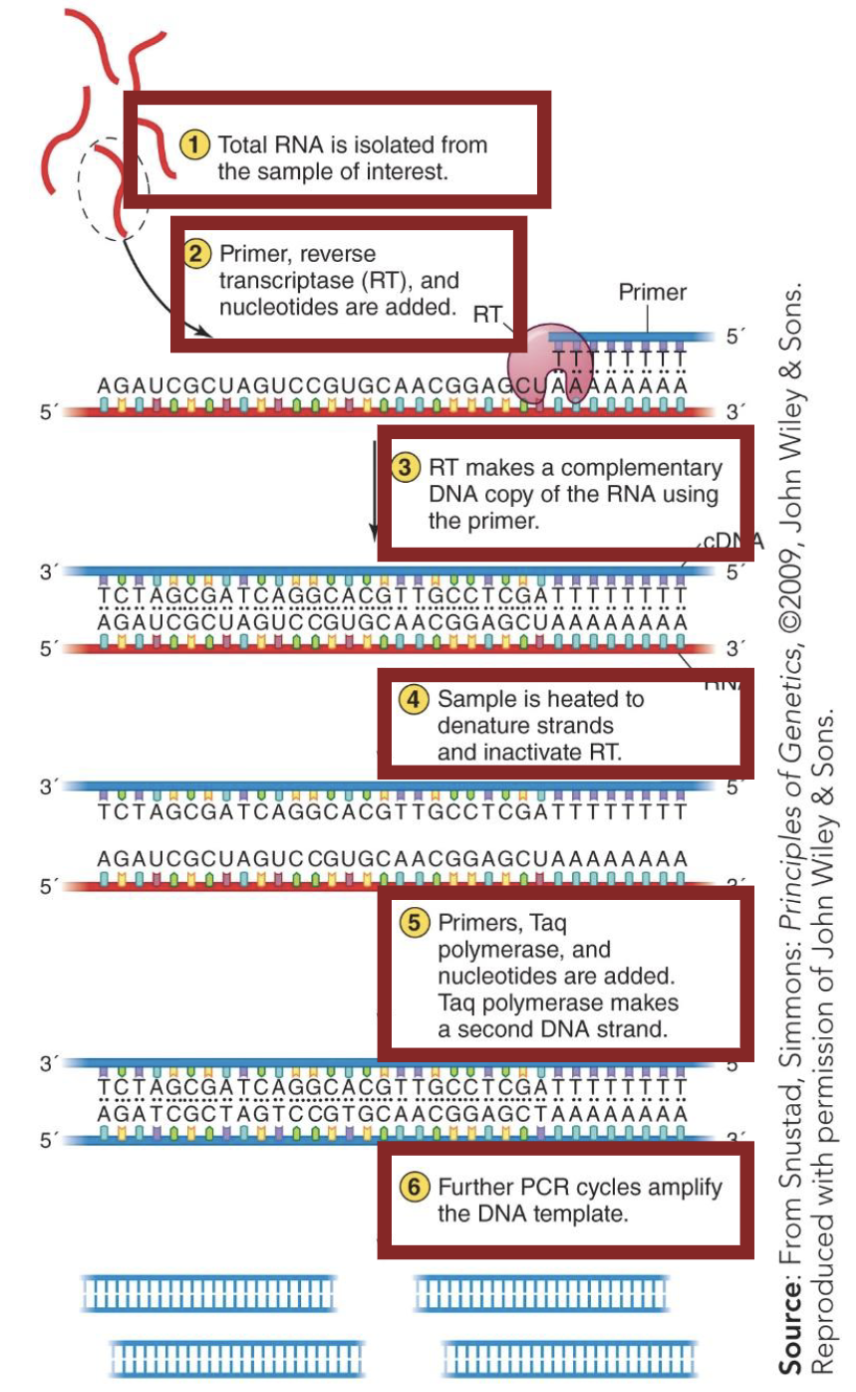
<ul><li><p>RNA is <strong><em>isolated</em></strong>.</p></li><li><p><strong><em>Primer, RT, nucleotides</em></strong> are added.</p></li><li><p>RT makes a <strong><em>complementary DNA copy</em></strong> of the RNA.</p></li><li><p>Sample is heated to <strong><em>denature strands </em></strong>and <strong><em>inactivate RT.</em></strong></p></li><li><p><strong><em>Primers, Taq pol, and nucleotides</em></strong> are added.</p></li><li><p>Taq pol makes a <strong><em>second DNA strand.</em></strong></p></li><li><p>Further PCR cycles can <strong><em>amplify</em></strong> the amount of DNA produced.</p></li></ul><p></p>
41
New cards

What’s next for virology?

  • Unsurprisingly, virology and medicine are closely involved.

  • Virology examines cancer-causing oncoviruses.

  • Virology examines cancer-destroying oncolytic viruses.

  • Viruses can even be exploited to deliver working copies of genes to replace damaged versions (gene therapy, experimental)
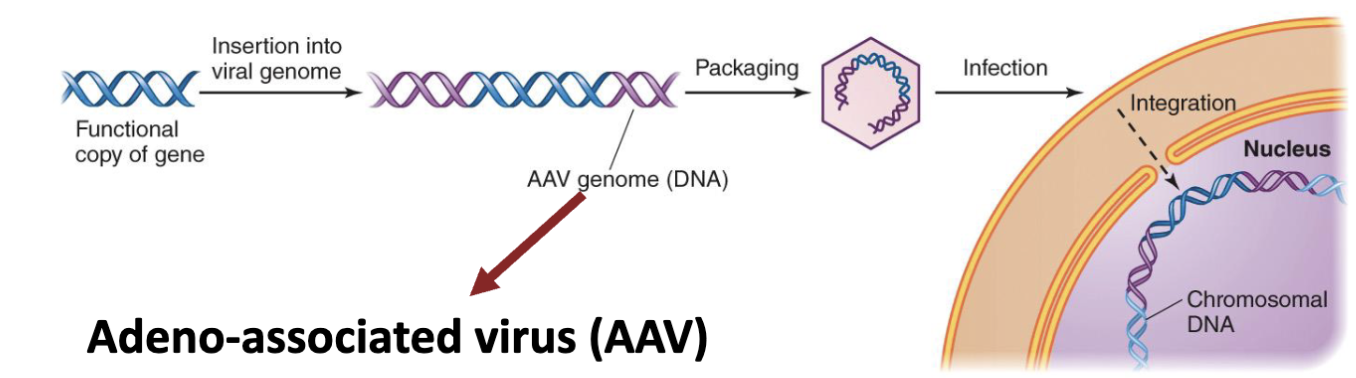
<ul><li><p>Unsurprisingly, virology and medicine are closely involved.</p></li><li><p>Virology examines cancer-causing <strong><em>oncoviruses</em></strong>.</p></li><li><p>Virology examines cancer-destroying <strong><em>oncolytic viruses</em></strong>.</p></li><li><p>Viruses can even be exploited to <strong><em>deliver working copies</em></strong> of genes to replace damaged versions (<strong><em>gene therapy,</em></strong> experimental)</p></li></ul><p></p>
42
New cards

How are virology and medicine linked?

Unsurprisingly, virology and medicine are closely involved.

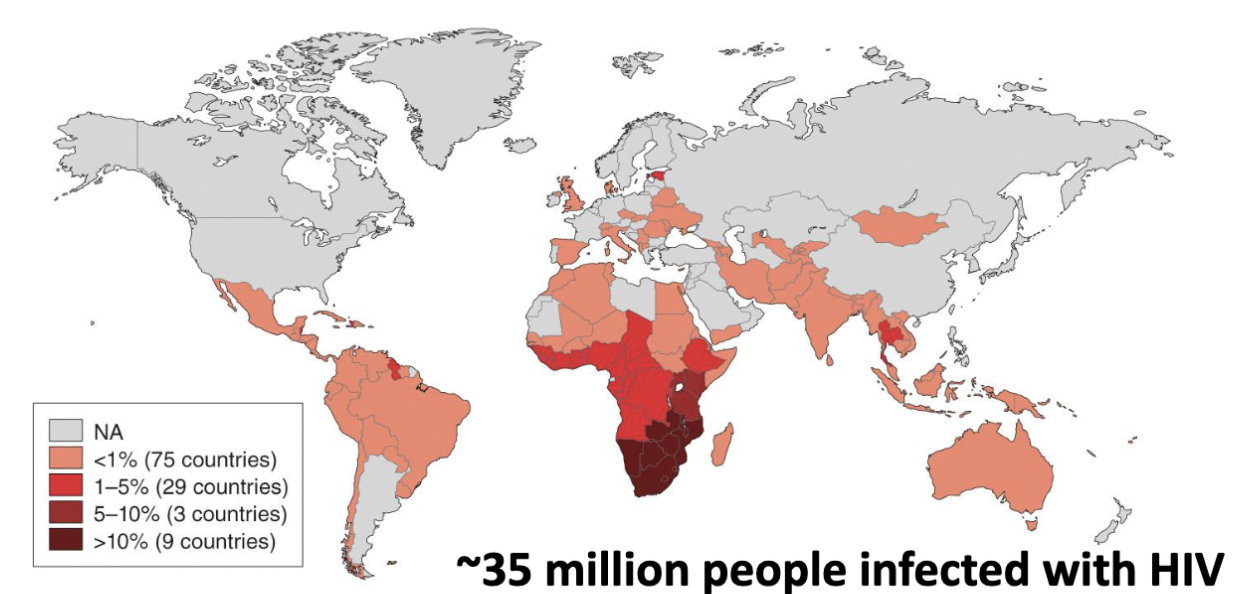
  • Virology continues to be involved in examination of new and emerging global diseases (e.g., HIV)

  • ~35 million people infected with HIV

<p>Unsurprisingly, virology and medicine are closely involved.</p><ul><li><p>Virology continues to be involved in examination of <strong><em>new and emerging global diseases (e.g., HIV)</em></strong></p></li><li><p>~35 million people infected with HIV</p></li></ul><p></p>

Explore top flashcards

flashcards
Physics 3LC Final review
63
Updated 663d ago
0.0(0)
flashcards
Physiology- Cardiology
306
Updated 1250d ago
0.0(0)
flashcards
Ethics Module 1-5
53
Updated 742d ago
0.0(0)
flashcards
Deutsch 4: Literatur
30
Updated 1158d ago
0.0(0)
flashcards
ap world - box notes 24-42
57
Updated 932d ago
0.0(0)
flashcards
Concept 2-Cell Transport
31
Updated 466d ago
0.0(0)
flashcards
Geology Vocabulary
30
Updated 314d ago
0.0(0)
flashcards
History FINALS
157
Updated 1024d ago
0.0(0)
flashcards
Physics 3LC Final review
63
Updated 663d ago
0.0(0)
flashcards
Physiology- Cardiology
306
Updated 1250d ago
0.0(0)
flashcards
Ethics Module 1-5
53
Updated 742d ago
0.0(0)
flashcards
Deutsch 4: Literatur
30
Updated 1158d ago
0.0(0)
flashcards
ap world - box notes 24-42
57
Updated 932d ago
0.0(0)
flashcards
Concept 2-Cell Transport
31
Updated 466d ago
0.0(0)
flashcards
Geology Vocabulary
30
Updated 314d ago
0.0(0)
flashcards
History FINALS
157
Updated 1024d ago
0.0(0)