AP Modern World History Unit 1, 1200-1450

0.0(0)
studied byStudied by 1 person
call kaiCall Kai
learnLearn
examPractice Test
spaced repetitionSpaced Repetition
heart puzzleMatch
flashcardsFlashcards
GameKnowt Play
Card Sorting

1/68

encourage image

There's no tags or description

Looks like no tags are added yet.

Last updated 3:52 AM on 9/22/25
Name
Mastery
Learn
Test
Matching
Spaced
Call with Kai

No analytics yet

Send a link to your students to track their progress

69 Terms

1
New cards

Patriarchy

a system of society in which men hold the power
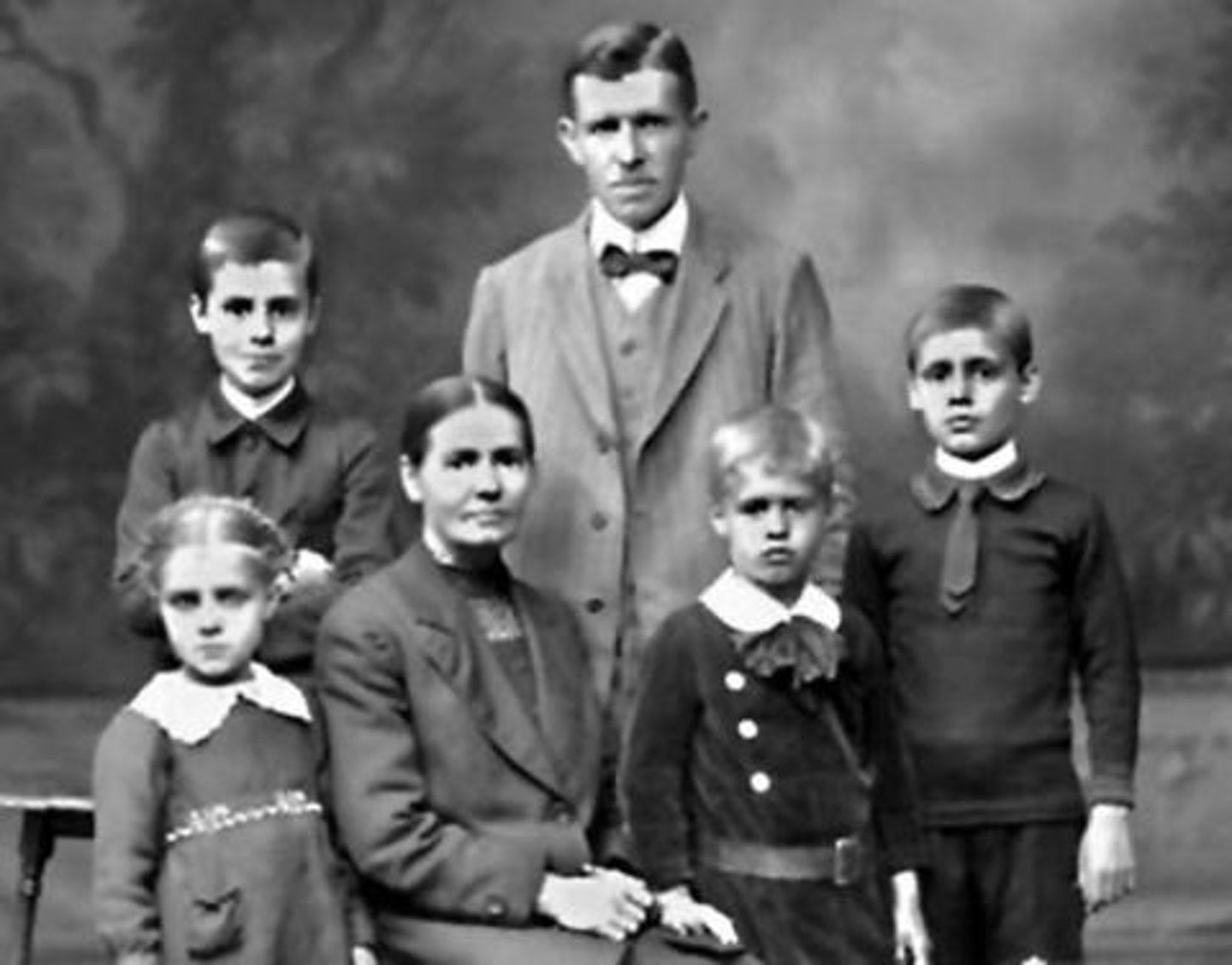
<p>a system of society in which men hold the power</p>
2
New cards

Social Stratifcation

a system by which a society ranks categories of people in a hierarchy
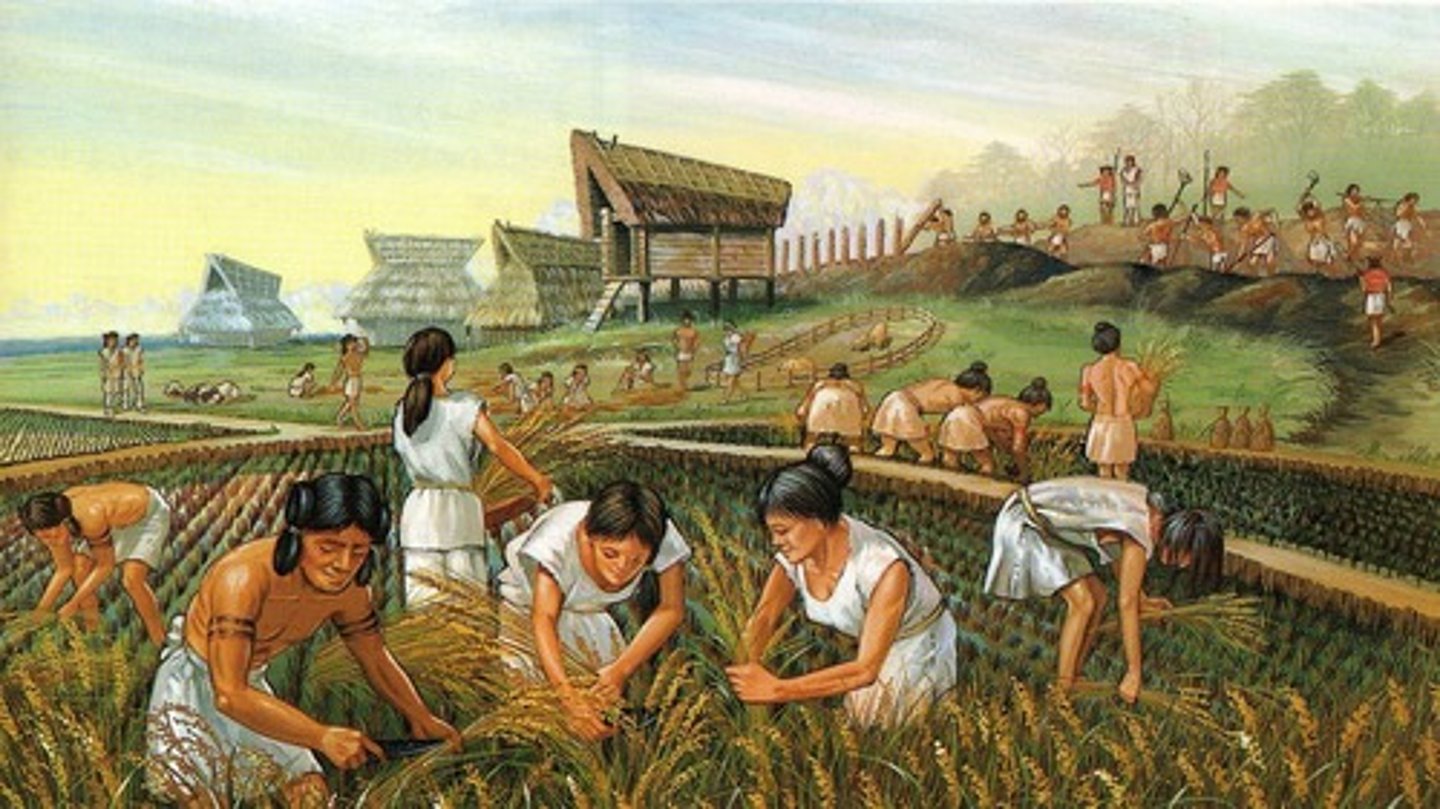
<p>a system by which a society ranks categories of people in a hierarchy</p>
3
New cards

Monotheism

belief in one god

4
New cards

Polytheism

belief in more than one god

5
New cards

Shamanism

The practice of identifying special individuals (shamans) who will interact with spirits for the benefit of the community.

6
New cards

Animism

The belief that bodies of water, animals, trees, and other natural objects have souls

7
New cards

Judaism

A religion with a belief in one god. It originated with Abraham and the Hebrew people. Developed written scriptures and an ethical code (Torah, 10 Commandments) over time.

8
New cards

Vedas

Ancient Sanskrit writings that are the earliest sacred texts of Hinduism.

9
New cards

Hinduism

A religion and philosophy developed in ancient India, characterized by a belief in reincarnation and a supreme being who takes many forms

10
New cards

Monasticism

A way of life in which men and women withdraw from the rest of the world in order to devote themselves to their faith (as monks and nuns)

11
New cards

legtimacy

the popular acceptance of an authority, like a King or ruler

12
New cards

Diasporic communities

immigrants who have relocated from their ancestral homelands and retain their distinct cultural identities as ethnic minority groups in their new locations

13
New cards

Caste System

a set of rigid social categories that determined not only a person's occupation, but also his or her position in society in Hinduism
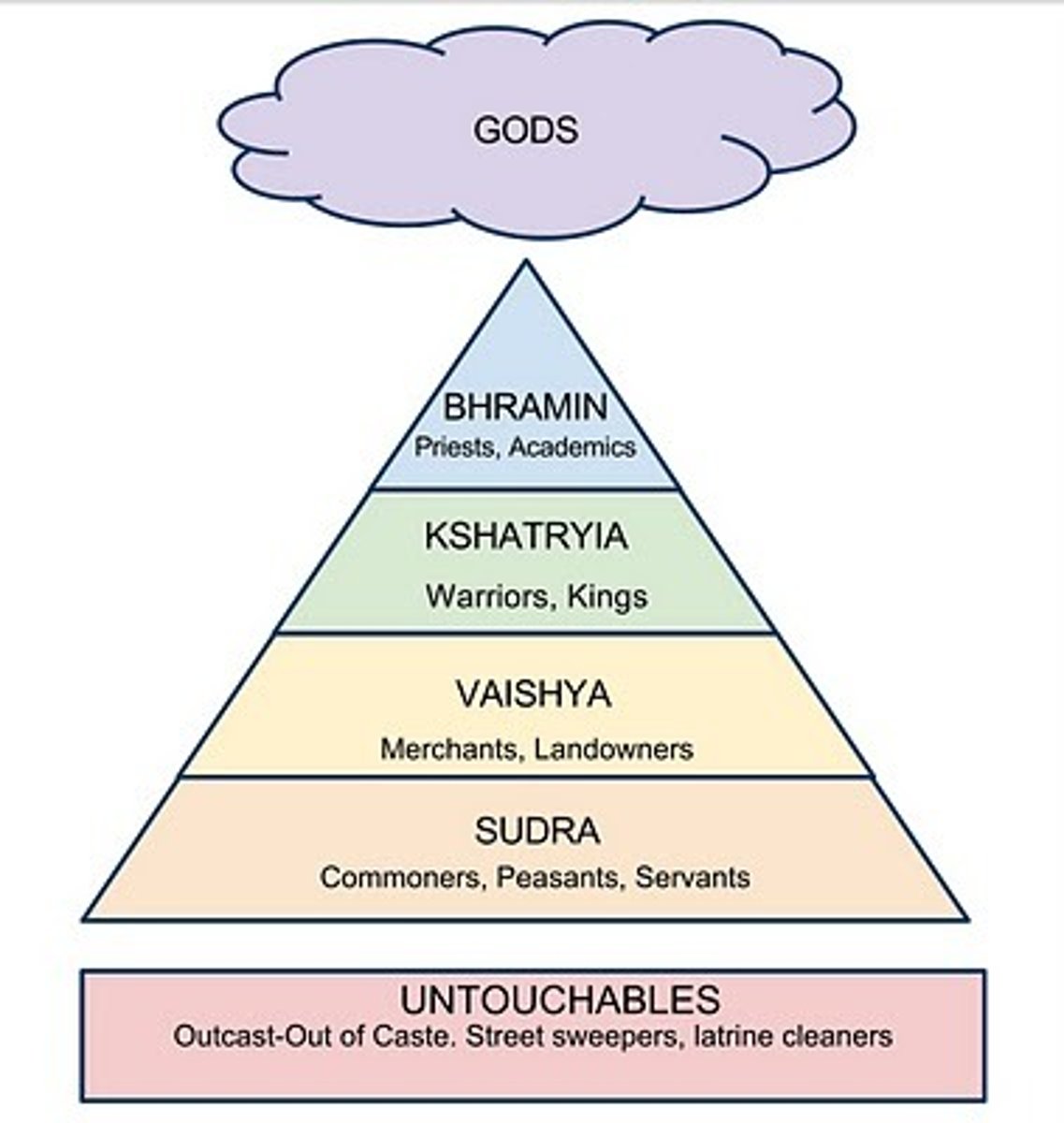
<p>a set of rigid social categories that determined not only a person's occupation, but also his or her position in society in Hinduism</p>
14
New cards

Mandate of Heaven

an ancient Chinese belief and philosophical idea that tiān (heaven) granted emperors the right to rule based on their ability to govern well and fairly.
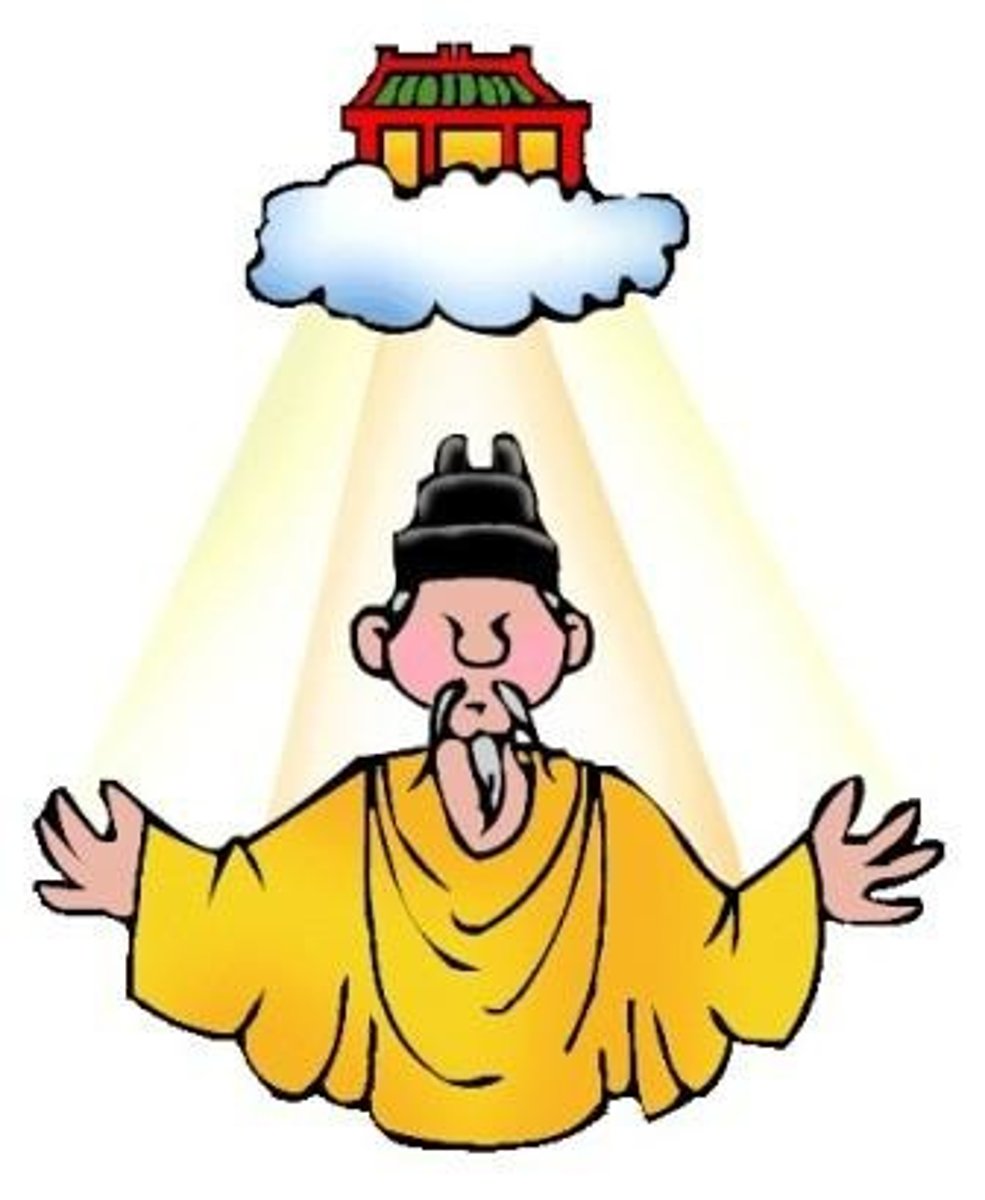
<p>an ancient Chinese belief and philosophical idea that tiān (heaven) granted emperors the right to rule based on their ability to govern well and fairly.</p>
15
New cards

Reincarnation

the rebirth of a soul in a new body.

16
New cards

Eightfold Path

In Buddhism, the path to nirvana. Comprises eight aspects in which an aspirant must become practiced: right views, intention, speech, action, livelihood, effort, mindfulness, and concentration.

17
New cards

Confucianism

A philosophy that adheres to the teachings of the Chinese philosopher Confucius. It shows the way to ensure a stable government and an orderly society and stresses a moral code of conduct.
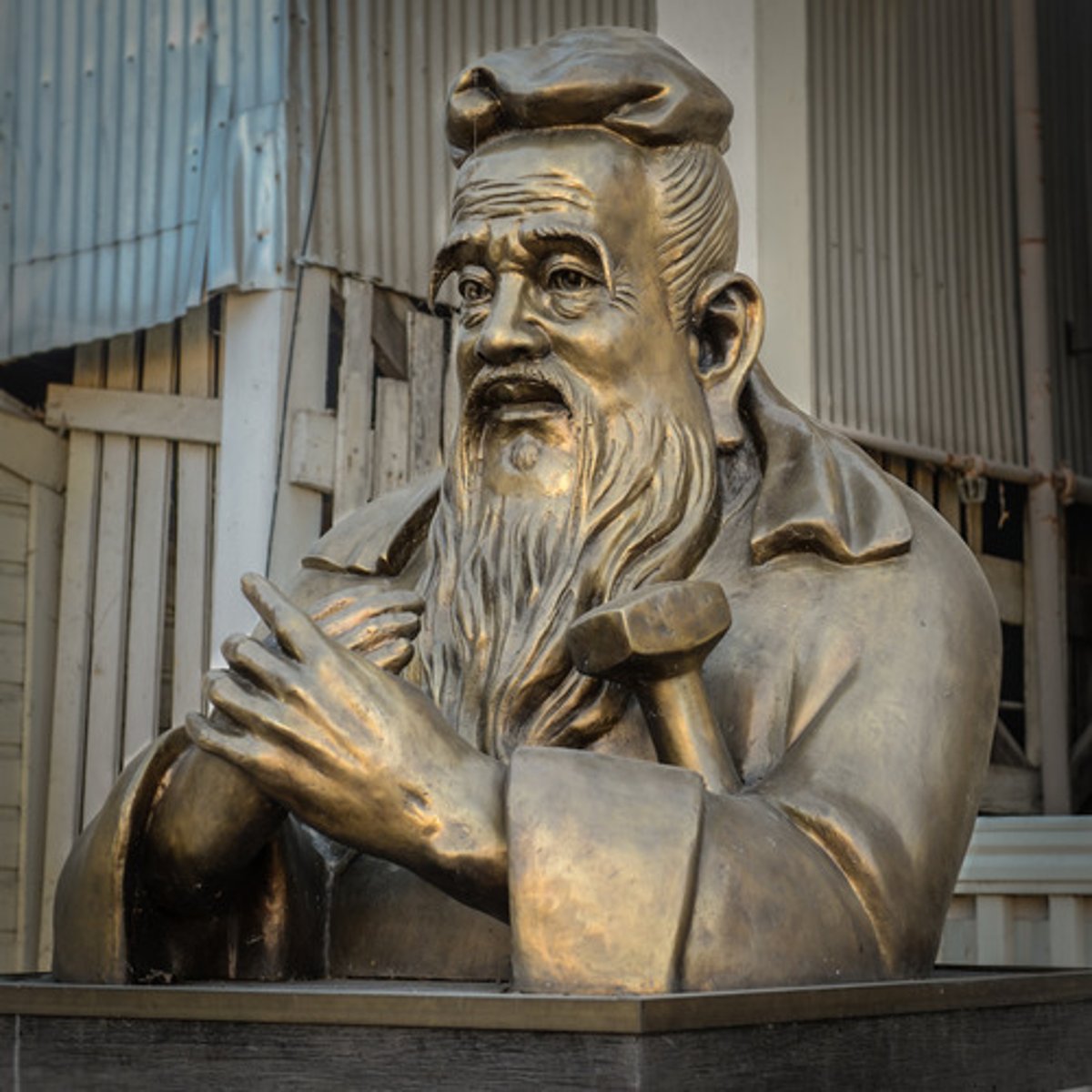
<p>A philosophy that adheres to the teachings of the Chinese philosopher Confucius. It shows the way to ensure a stable government and an orderly society and stresses a moral code of conduct.</p>
18
New cards

Buddhism

the teaching of Buddha that emphasizes that life is filled with suffering caused by desire and that suffering ceases when desire ceases. Through right conduct, wisdom and meditation one can end the cycle of rebirth and reach Enlightenment.
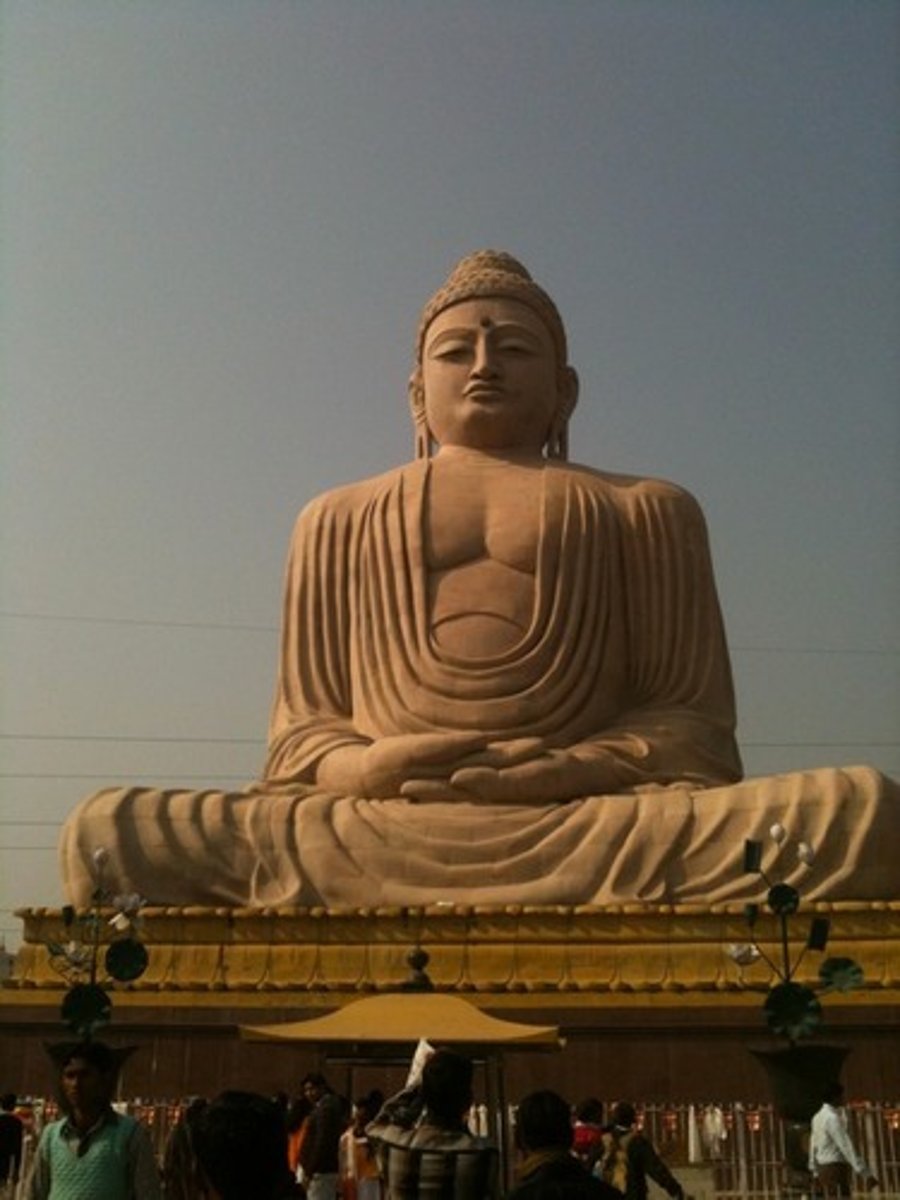
<p>the teaching of Buddha that emphasizes that life is filled with suffering caused by desire and that suffering ceases when desire ceases. Through right conduct, wisdom and meditation one can end the cycle of rebirth and reach Enlightenment.</p>
19
New cards

Christianity

A monotheistic system of beliefs and practices based on the Old Testament and the teachings of Jesus as embodied in the New Testament, emphasizing the role of Jesus as savior.

20
New cards

State

a nation or territory considered as an organized political community under one government.

21
New cards

Siddhartha Gautama (The Buddha)

Means "Enlightened One." He is said to have renounced his worldly possessions and taught of a way to overcome suffering.

22
New cards

filial piety

In Confucian thought, one of the virtues to be cultivated, a love and respect for one's parents and ancestors.

23
New cards

ancestor veneration

Veneration of the dead or ancestors is based on the beliefs that the dead have a continued existence, and may possess the ability to influence the fortune of the living

24
New cards

syncretic religion

Combines two religious traditions into something distinctly new, while containing traits of both

25
New cards

Conscript labor

unpaid forced labor usually by lower classes, forced upon them by the government like a tax (China and Inca used this)

26
New cards

tribute system

payment made by one nation to another in acknowledgment of submission, notably used by Aztec and Chinese dynasties

27
New cards

Bureaucracy

A system of managing government through departments run by appointed officials

28
New cards

Missionaries

people who work to spread their religious beliefs

29
New cards

Srivijaya

A Malay kingdom that dominated the Straits of Malacca between 600 and 1075 CE. It amassed wealth and power by control of trade routes, and had a strong Buddhist foundation.
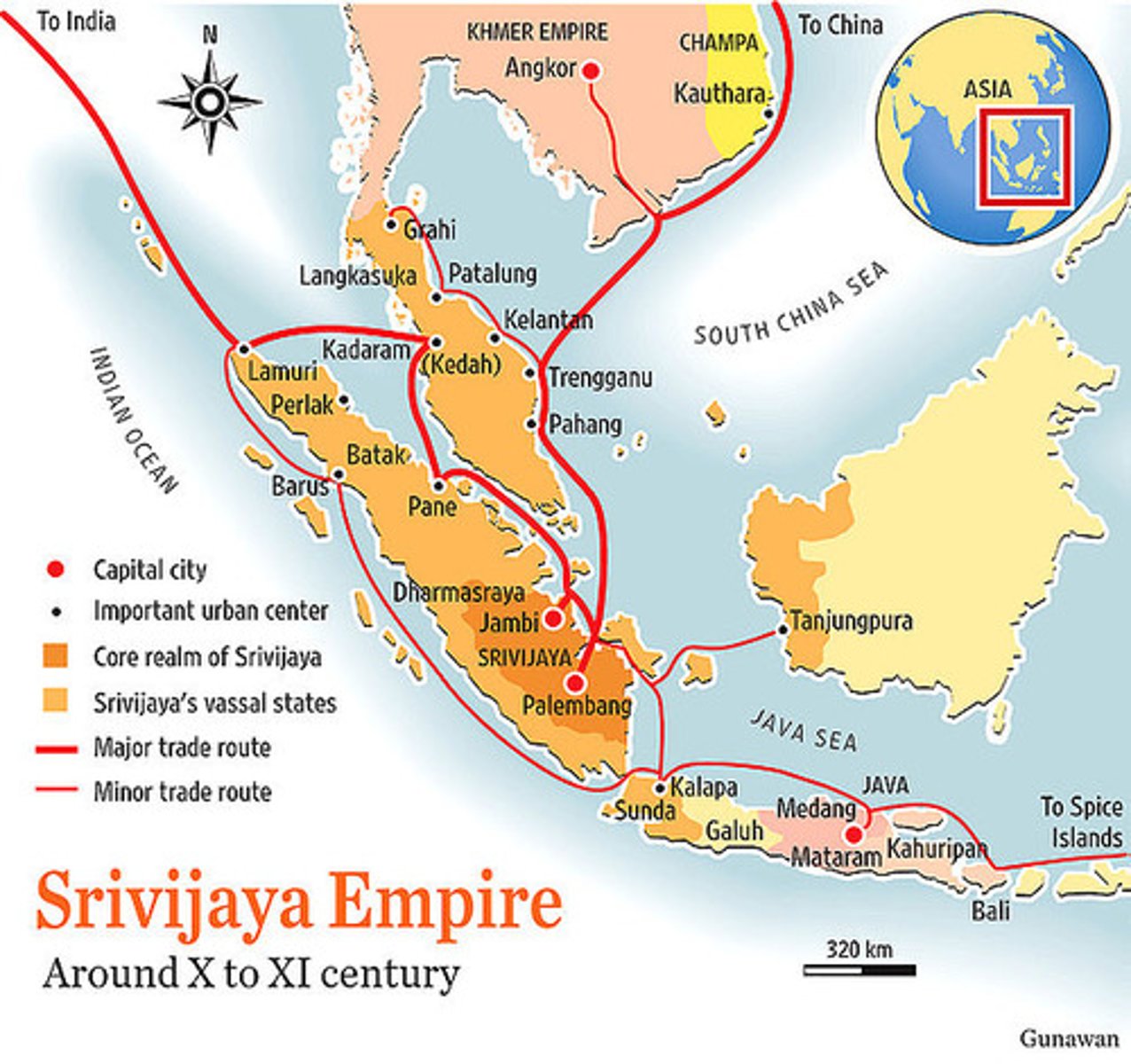
<p>A Malay kingdom that dominated the Straits of Malacca between 600 and 1075 CE. It amassed wealth and power by control of trade routes, and had a strong Buddhist foundation.</p>
30
New cards

Great Zimbabwe

City, now in ruins (in the modern African country of Zimbabwe), whose many stone structures were built between about 1250 and 1450, when it was a trading center and the capital of a large state.
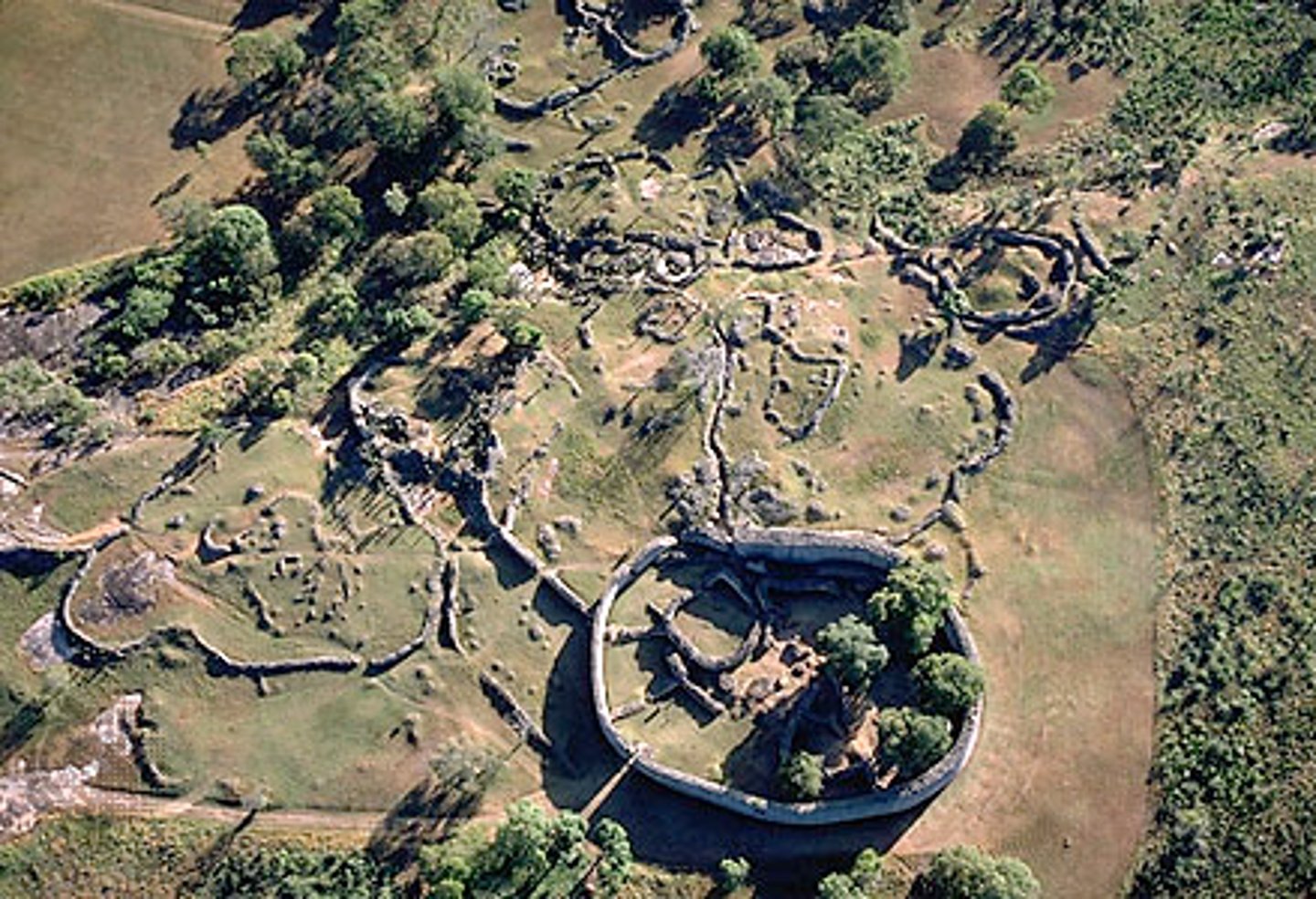
<p>City, now in ruins (in the modern African country of Zimbabwe), whose many stone structures were built between about 1250 and 1450, when it was a trading center and the capital of a large state.</p>
31
New cards

Mali Empire

Capitalizing on the Saharan trade routes, Mali traded gold & salt. Embraced Islam as well, notably under Mansa Musa.
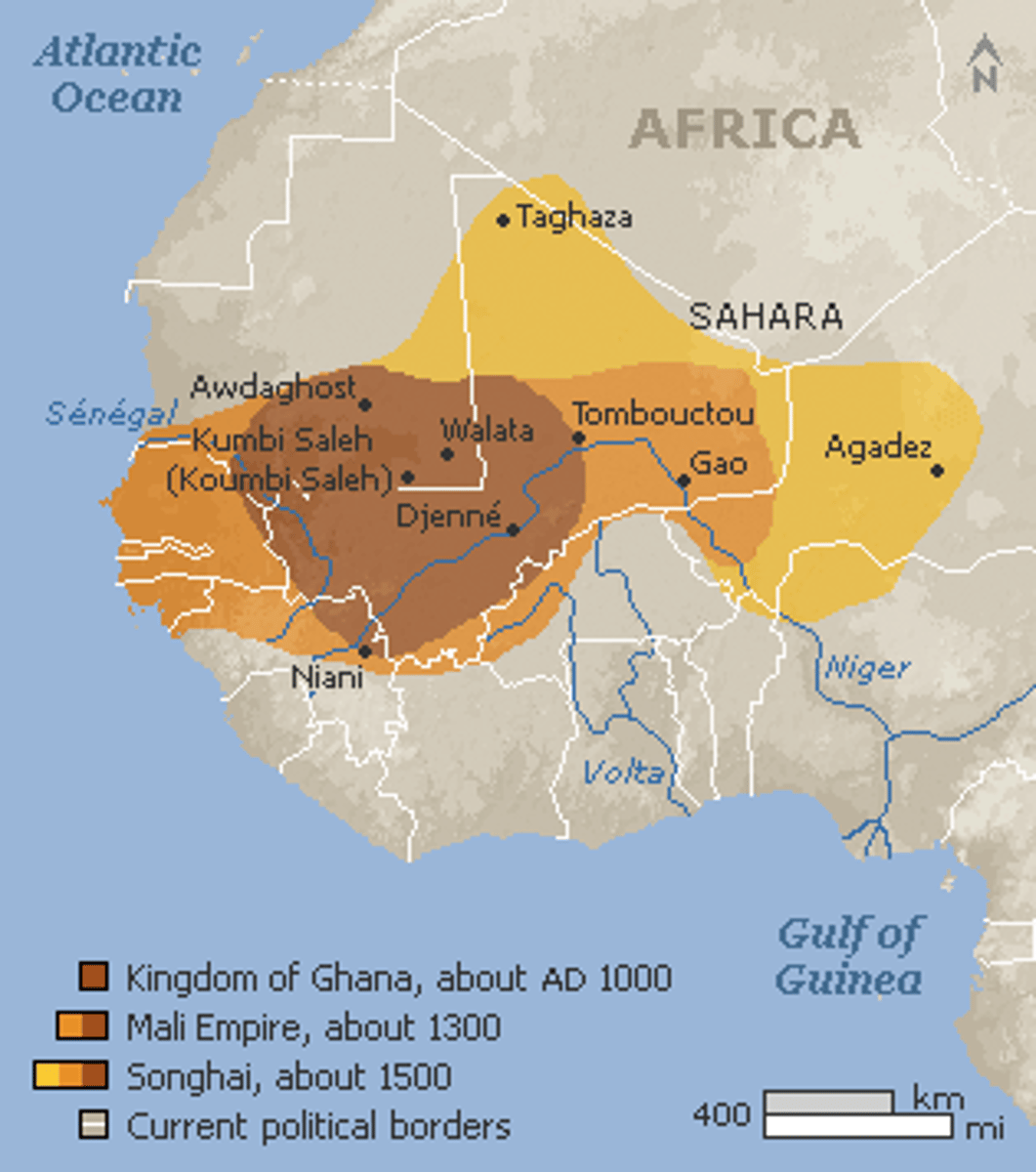
<p>Capitalizing on the Saharan trade routes, Mali traded gold &amp; salt. Embraced Islam as well, notably under Mansa Musa.</p>
32
New cards

Song dynasty

During this Chinese dynasty (960 - 1279 CE) China saw many important inventions. There was a magnetic compass; paper money; gun powder; moveable type printing. Mass produced goods for trade on the Indian Ocean, experienced great urbanization, population increase, and embraced Neo-Confucianism.
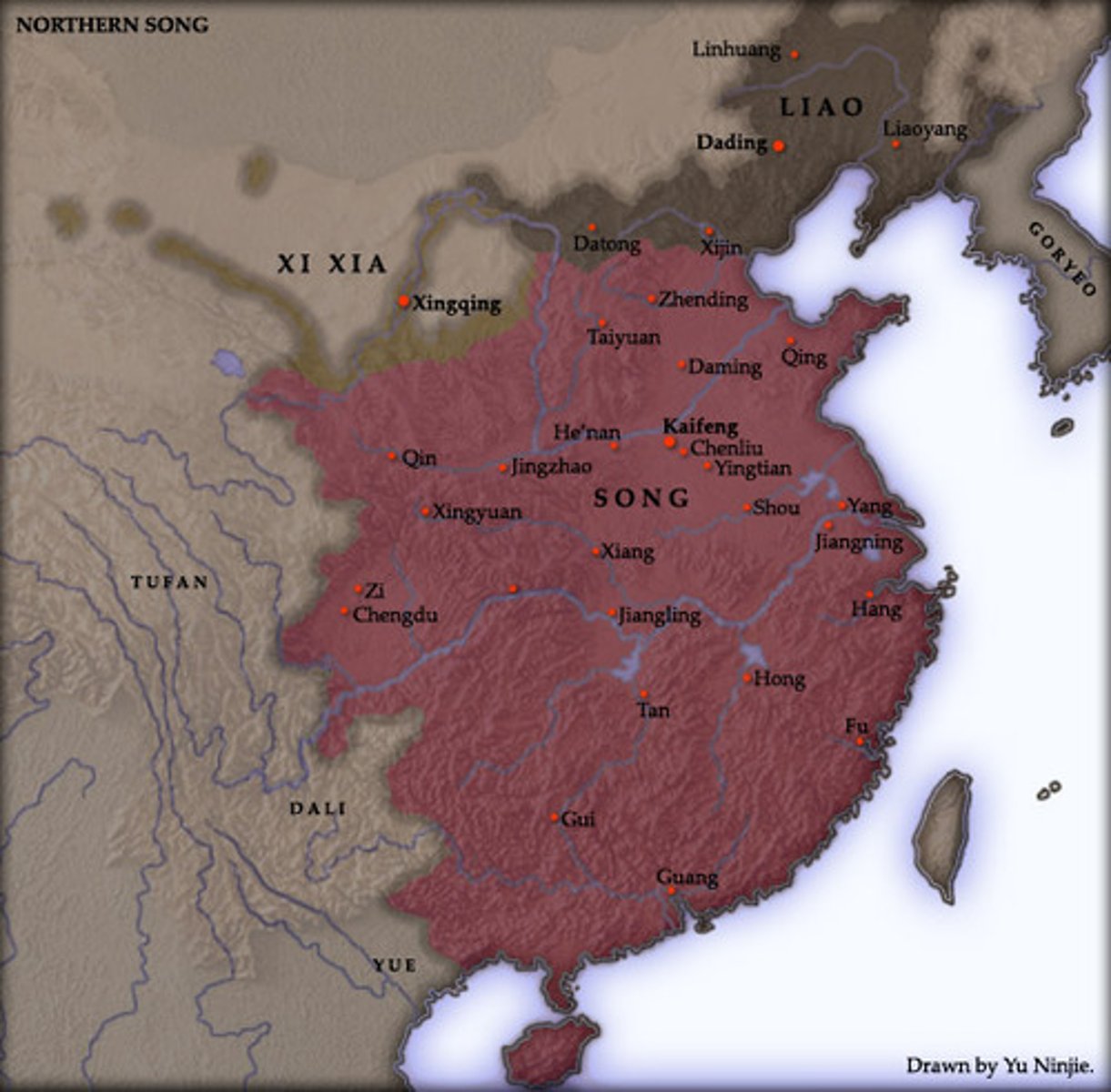
<p>During this Chinese dynasty (960 - 1279 CE) China saw many important inventions. There was a magnetic compass; paper money; gun powder; moveable type printing. Mass produced goods for trade on the Indian Ocean, experienced great urbanization, population increase, and embraced Neo-Confucianism.</p>
33
New cards

Hangzhou

Capital of later Song dynasty; located near East China Sea; permitted overseas trading; population exceeded 1 million.
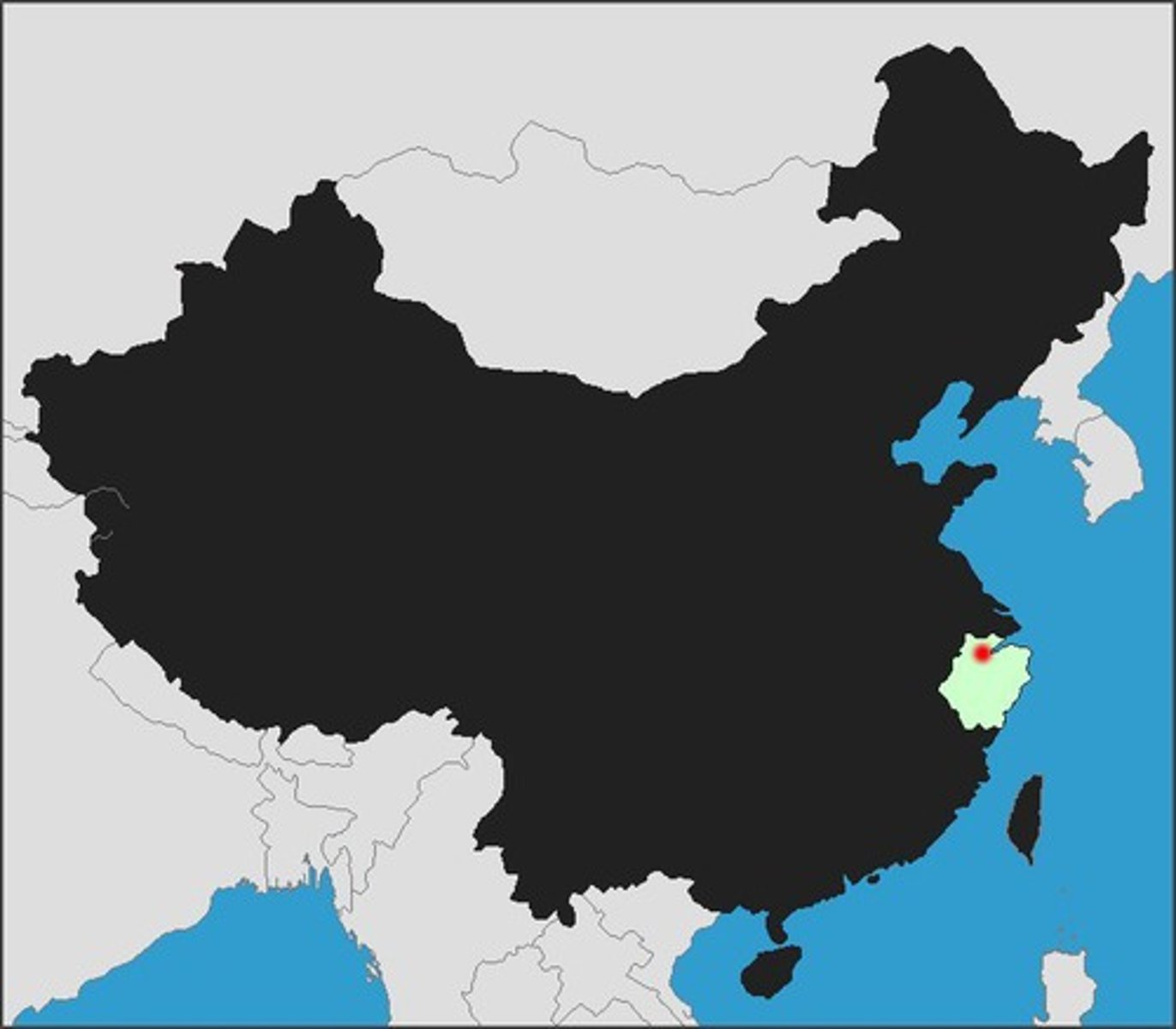
<p>Capital of later Song dynasty; located near East China Sea; permitted overseas trading; population exceeded 1 million.</p>
34
New cards

foot binding

Becoming prominent during the Song dynasty, practice in Chinese society to mutilate women's feet in order to make them smaller; produced pain and restricted women's movement; made it easier to confine women to the household.

<p>Becoming prominent during the Song dynasty, practice in Chinese society to mutilate women's feet in order to make them smaller; produced pain and restricted women's movement; made it easier to confine women to the household.</p>
35
New cards

Chinese influence on Japan

Centralized government; Confucian ideals; architecture (pagodas); Buddhism spread

36
New cards

Quran

The holy book of Islam

37
New cards

umma

The community of all Muslims. A major change where in Arabia traditionally kinship rather than faith had determined membership in a community.
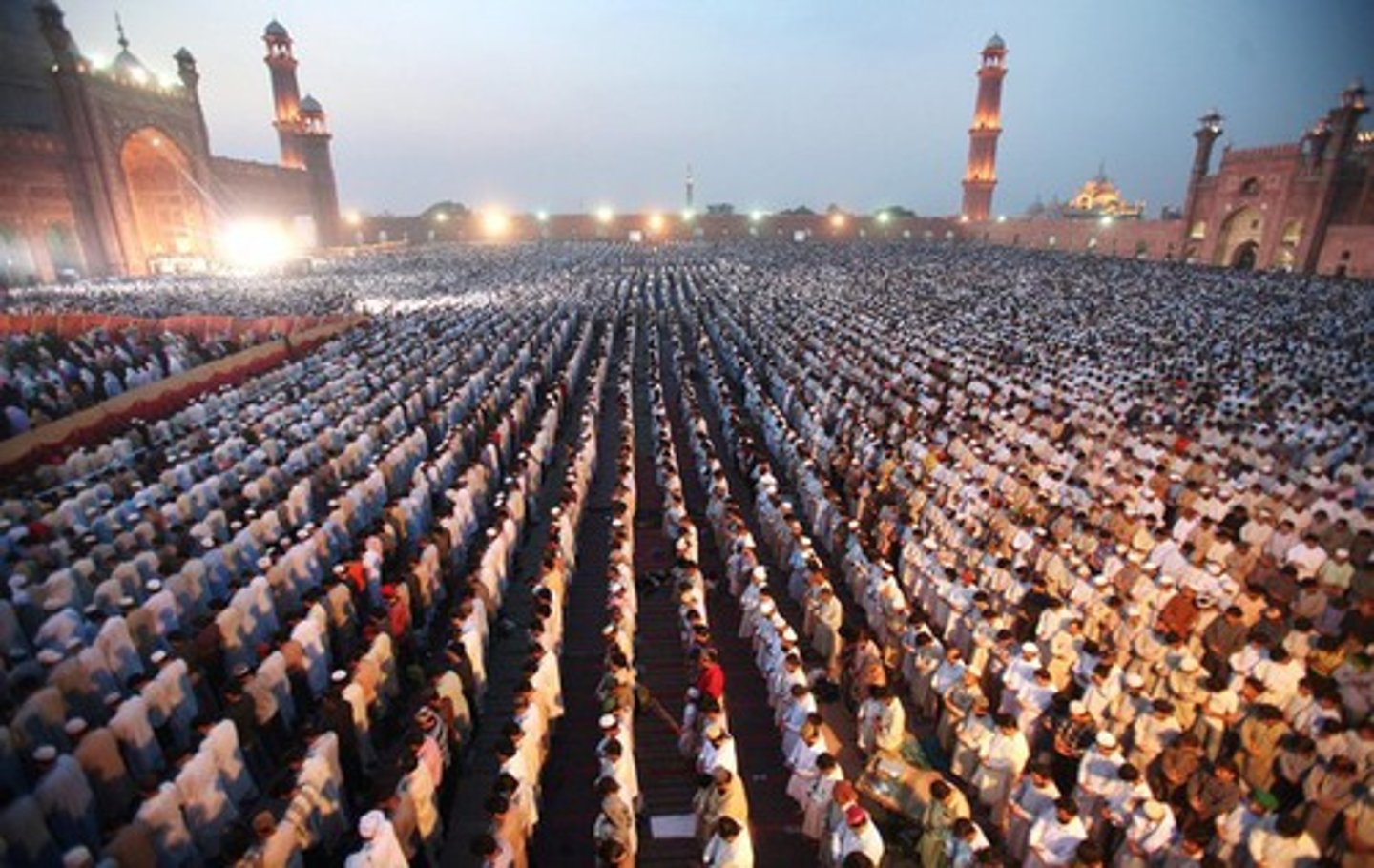
<p>The community of all Muslims. A major change where in Arabia traditionally kinship rather than faith had determined membership in a community.</p>
38
New cards

Pillars of Islam

The five core practices required of Muslims: a profession of faith, regular prayer, charitable giving, fasting during Ramadan, and a pilgrimage to Mecca (if physically and financially possible).
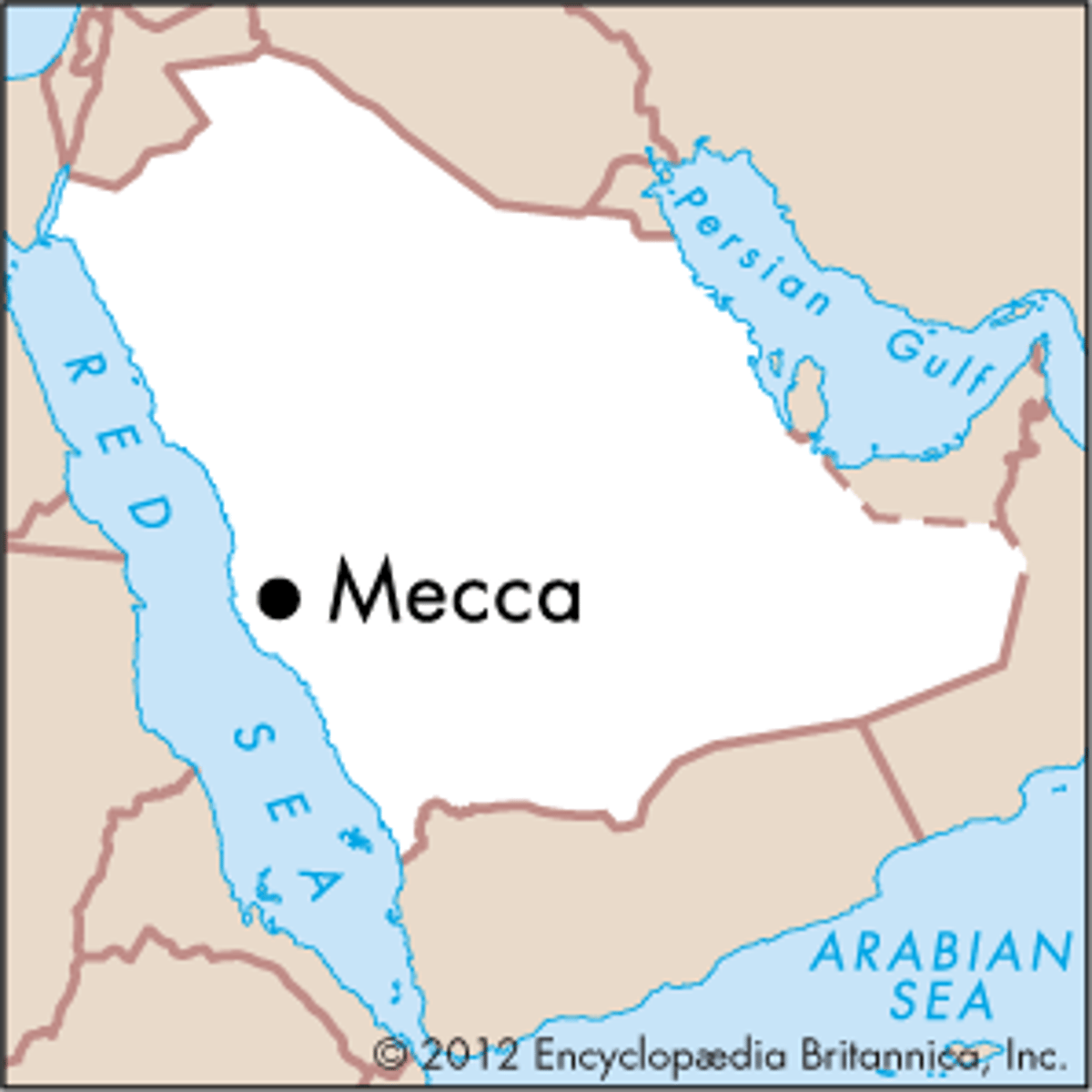
<p>The five core practices required of Muslims: a profession of faith, regular prayer, charitable giving, fasting during Ramadan, and a pilgrimage to Mecca (if physically and financially possible).</p>
39
New cards

sharia

Body of Islamic law that includes interpretation of the Quran and applies Islamic principles to everyday life

40
New cards

jizya

the extra tax paid by Christians and Jews who lived in Muslim communities

41
New cards

Caliphates

(661-1258CE) The Islamic caliphate that established a capital at Damascus, then later Baghdad. Conquered North Africa, the Iberian Pennisula, and the Middle East. Had an extensive bureaucracy and encouraged long-distance trade.
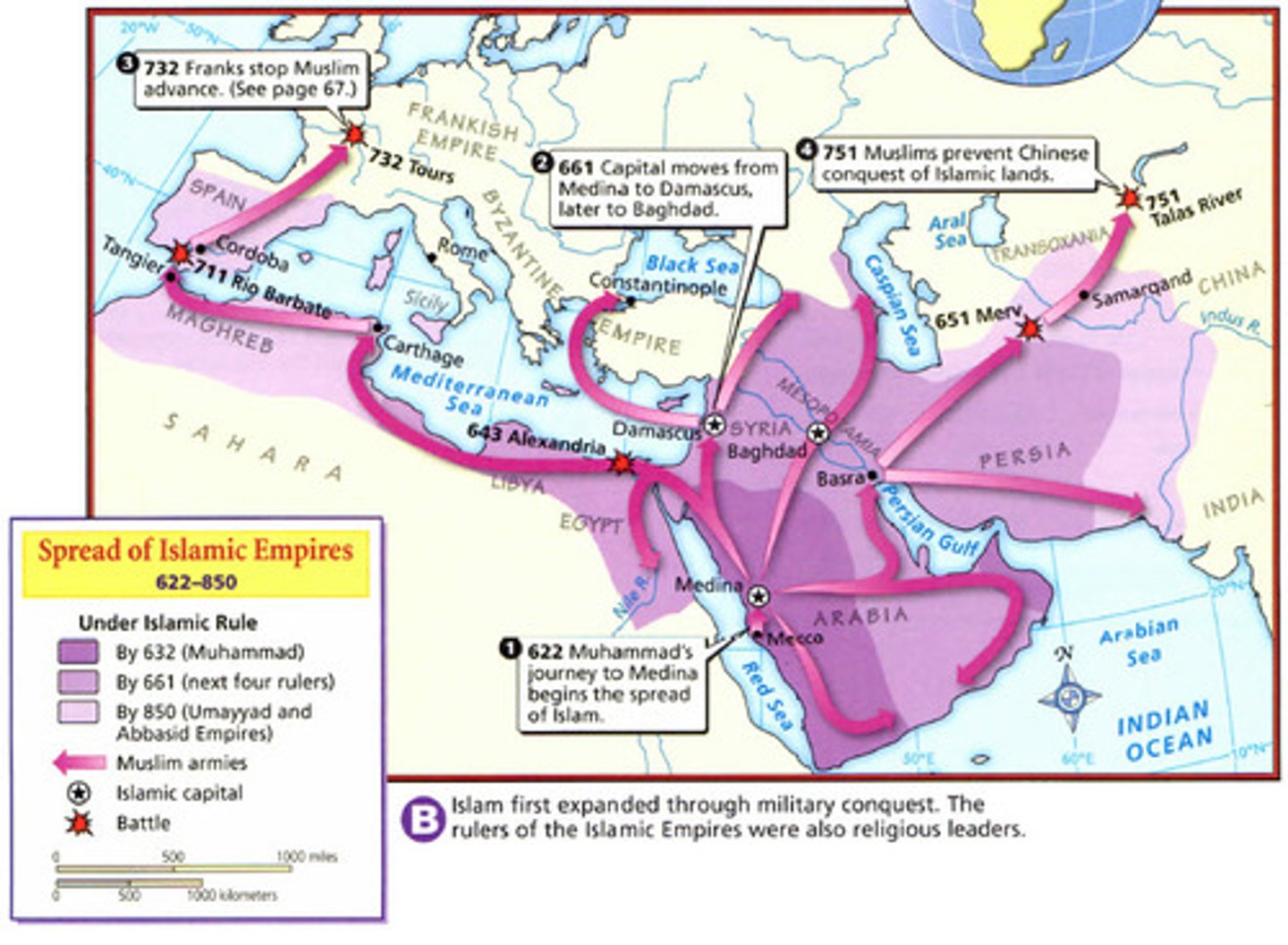
<p>(661-1258CE) The Islamic caliphate that established a capital at Damascus, then later Baghdad. Conquered North Africa, the Iberian Pennisula, and the Middle East. Had an extensive bureaucracy and encouraged long-distance trade.</p>
42
New cards

House of Wisdom

Combination library, academy, and translation center in Baghdad established in the 800s.
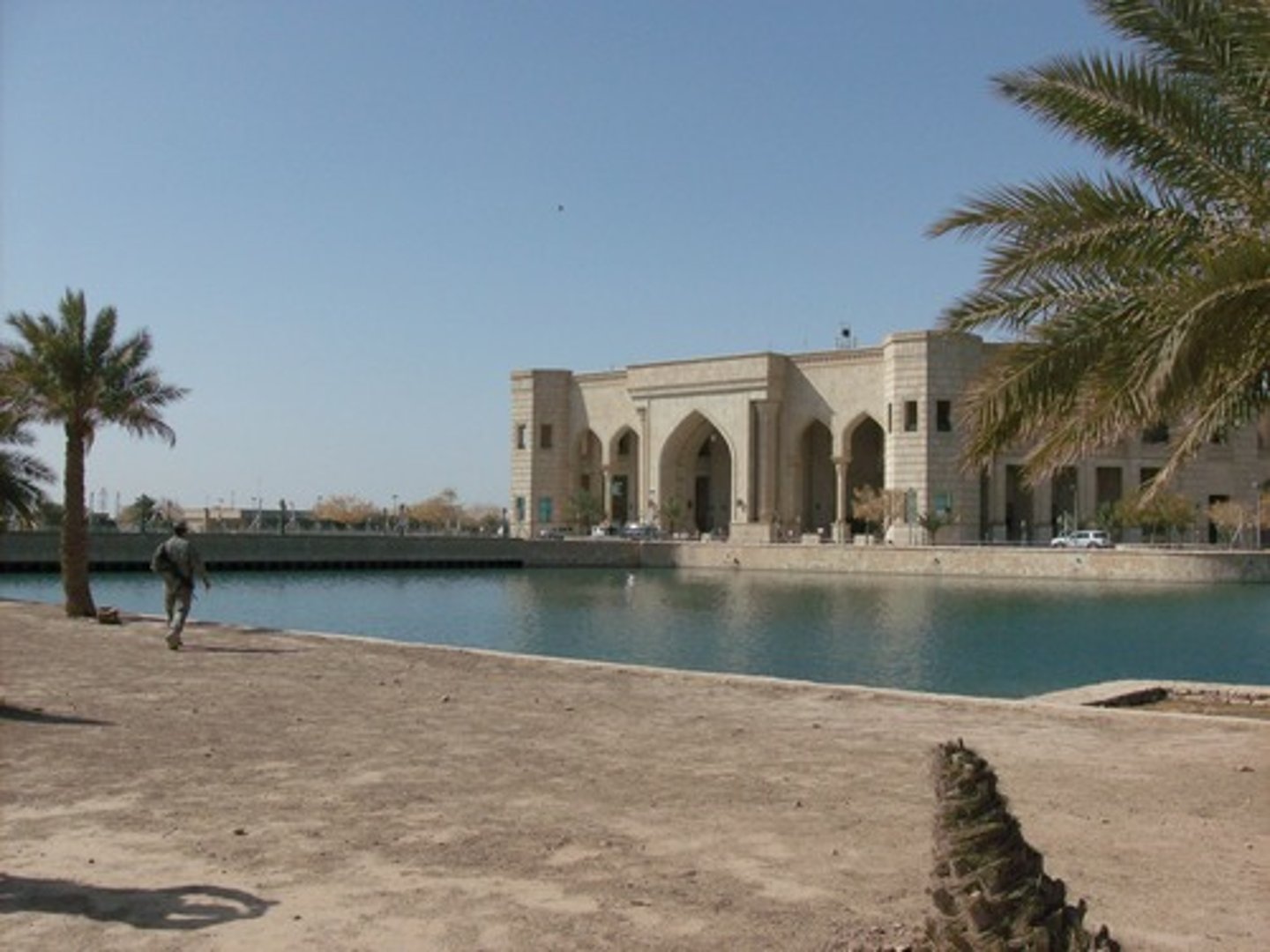
<p>Combination library, academy, and translation center in Baghdad established in the 800s.</p>
43
New cards

Serfdom

A type of labor used in in feudal Europe in which the laborers work the land in return for protection but they are bound to the land and are not allowed to leave or to pursue a new occupation.

44
New cards

Feudal Europe

Western Europe was far removed from the growing world trade routes, but coastlines and river systems facilitated internal exchange. Decentralized kingships were established over powerful lords, with manors dominating political and economic life.
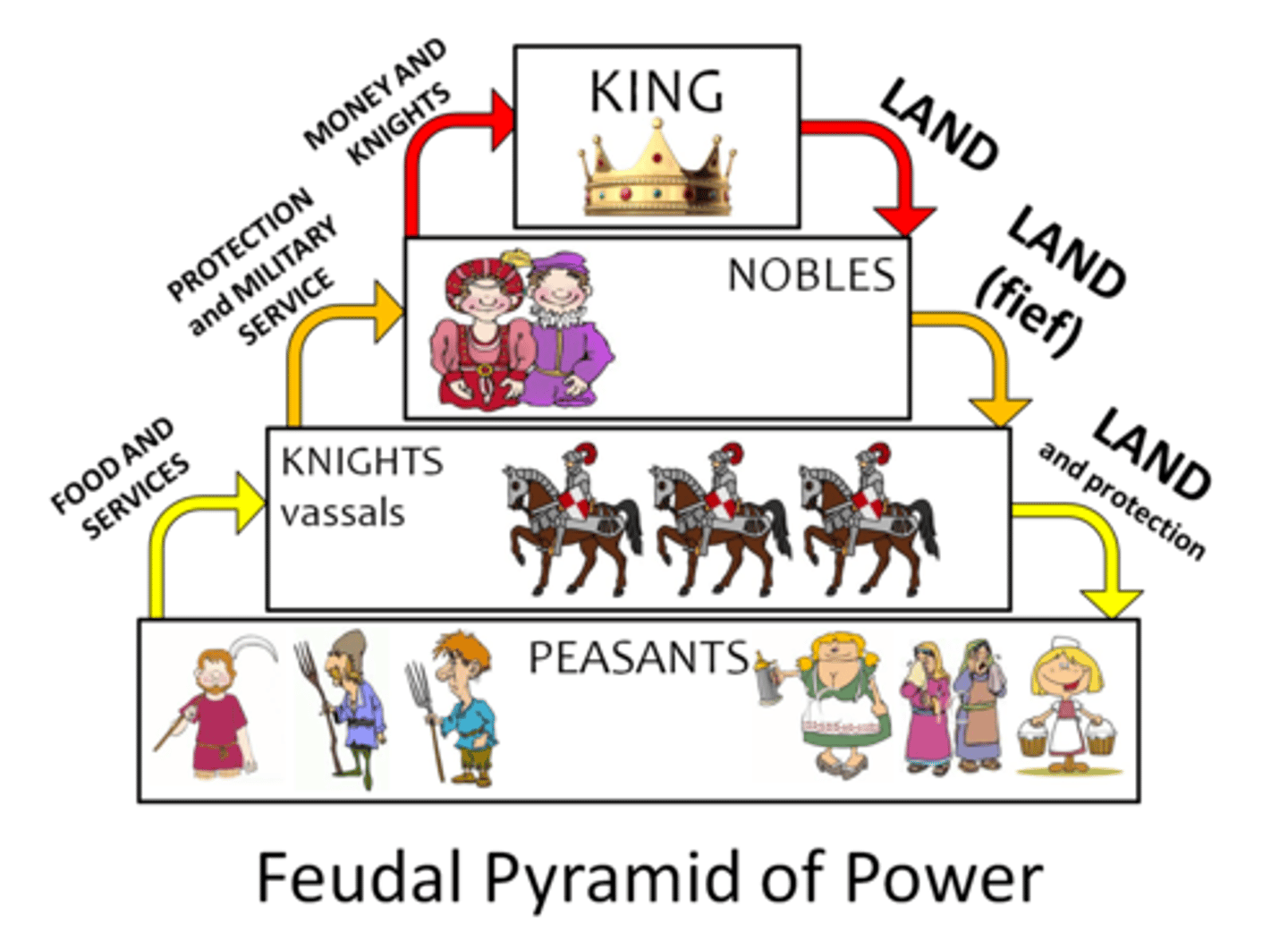
<p>Western Europe was far removed from the growing world trade routes, but coastlines and river systems facilitated internal exchange. Decentralized kingships were established over powerful lords, with manors dominating political and economic life.</p>
45
New cards

Crusades

Armed pilgrimages to the Holy Land by Christians determined to recover Jerusalem from Muslim rule. The Crusades brought an end to western Europe's centuries of intellectual and cultural isolation.
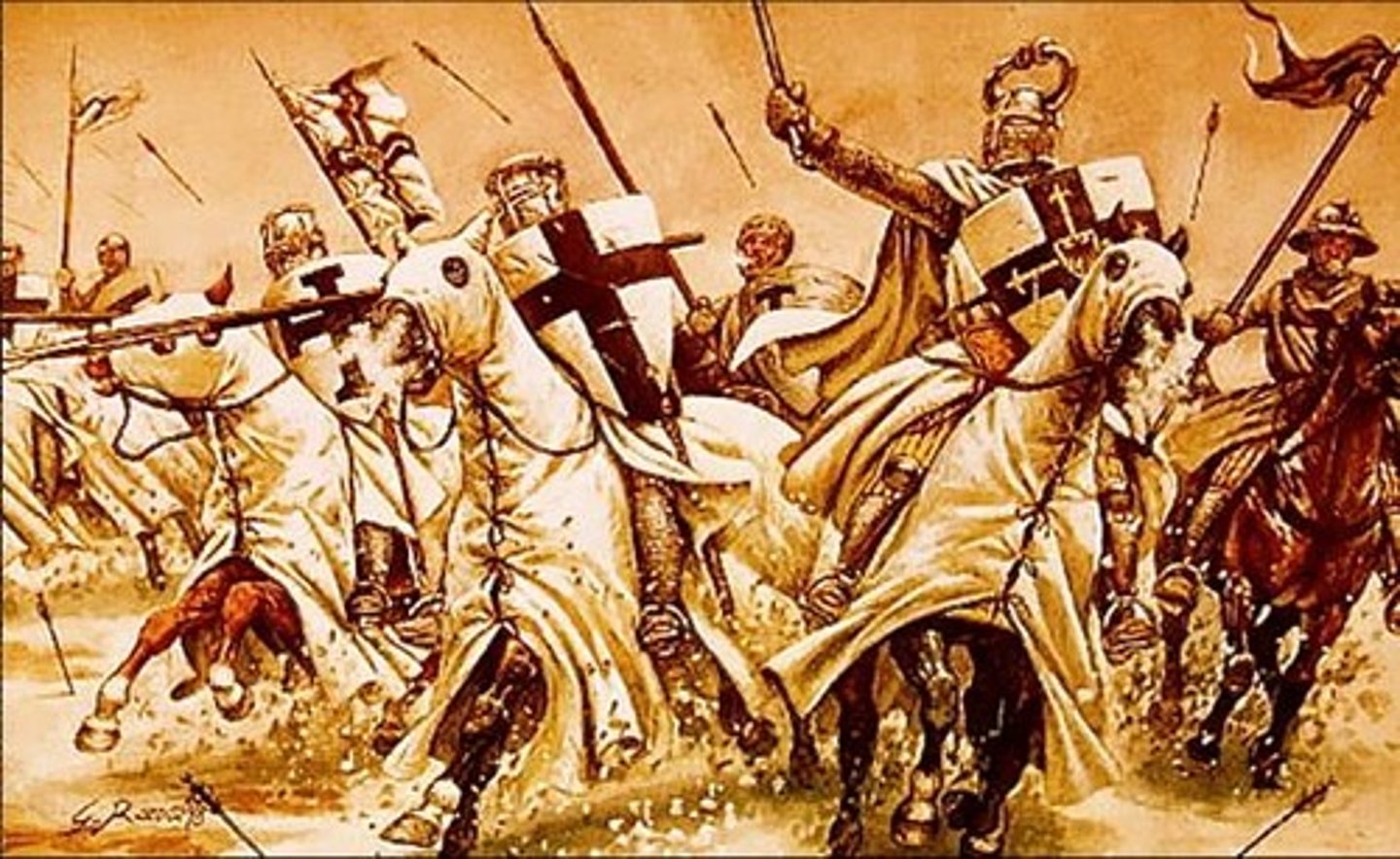
<p>Armed pilgrimages to the Holy Land by Christians determined to recover Jerusalem from Muslim rule. The Crusades brought an end to western Europe's centuries of intellectual and cultural isolation.</p>
46
New cards

Inca

Largest and most powerful Andean empire. Controlled the Pacific coast of South America from Ecuador to Chile from its capital of Cuzco. Built a strong network of roads, and relied on the mita system.
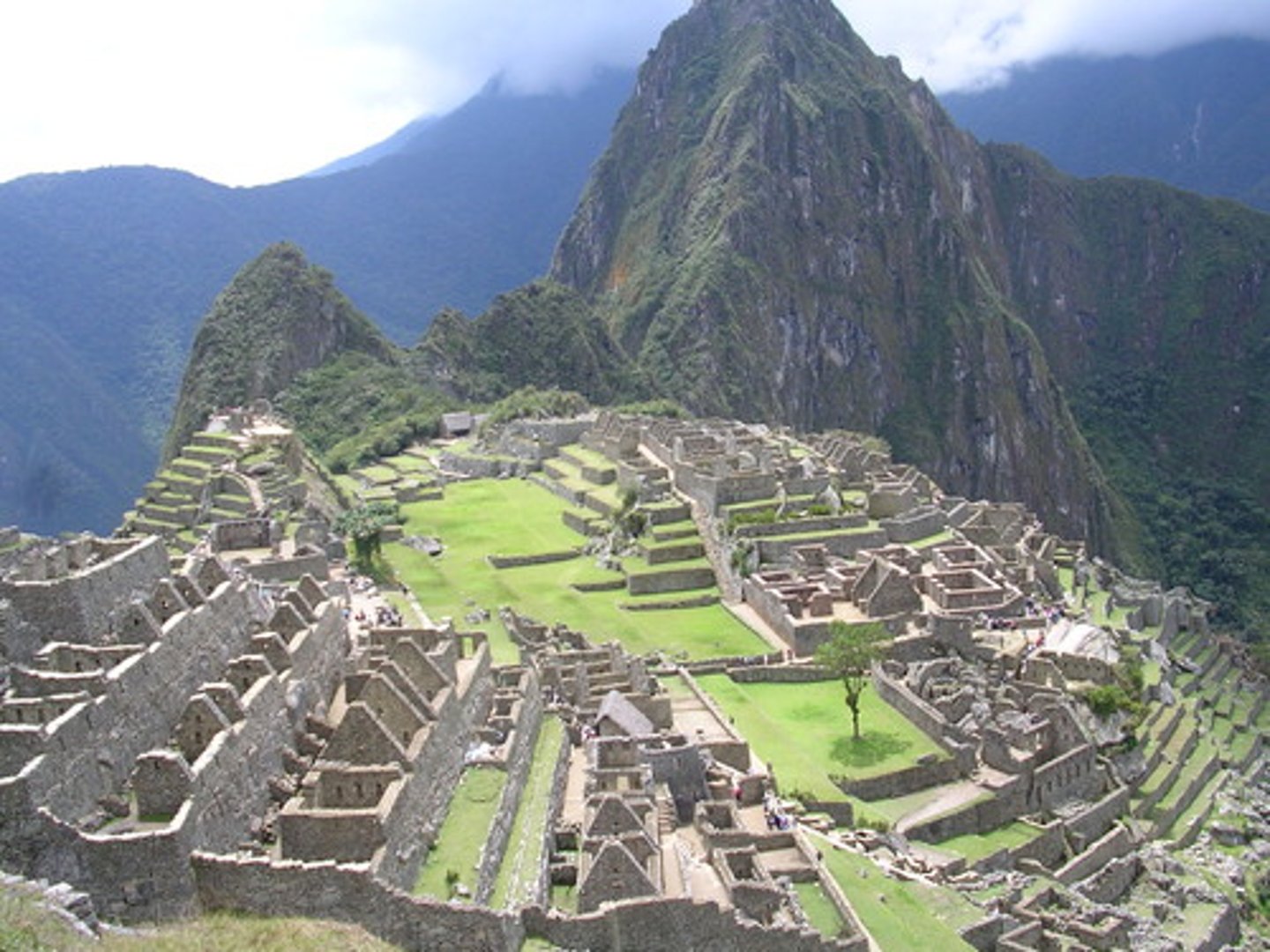
<p>Largest and most powerful Andean empire. Controlled the Pacific coast of South America from Ecuador to Chile from its capital of Cuzco. Built a strong network of roads, and relied on the mita system.</p>
47
New cards

Syncretism

Religious syncretism exhibits blending of two or more religious belief systems into a new system
<p>Religious syncretism exhibits blending of two or more religious belief systems into a new system</p>
48
New cards

Mita System

Incan system for payment of taxes with labor

49
New cards

Grand Canal

The 1,100-mile waterway linking the Yellow and the Yangzi Rivers, facilitating trade and movement. It was expanded during the Song Empire.

50
New cards

Allyu

in Incan society, a small community or family group whose members worked together for the common good

51
New cards

Fedualism

System where kings give land to nobles in exchange for service (as found in Western Europe)

52
New cards

Arabic

Language of the Islamic civilization; facilitated trade.

53
New cards

Quipu

An arrangement of knotted strings on a cord, used by the Inca to record numerical information.

54
New cards

Champa Rice

Quick-maturing rice that can allow two harvests in one growing season. It was later sent to China as a tribute gift by the Champa state (in Vietnam) and resulted in population increase under the Song.

55
New cards

moveable type

blocks of metal or wood, each bearing a single character, that can be arranged to make up a page for printing. Improved on by the Song Dynasty (from Korea) and disseminated agricultural and Confucian ideas.

56
New cards

Seljuk Turks

nomadic Turks from Asia who conquered Baghdad in 1055 and allowed the caliph to remain only as a religious leader, leading to the increasing fragmentation of the Caliphate (but the promotion of science, learning, and trade in the empire remained.)

57
New cards

Sufism

An Islamic mystical tradition that desired a personal union with God, active missionaries and greatly contributed to the spread of Islam

58
New cards

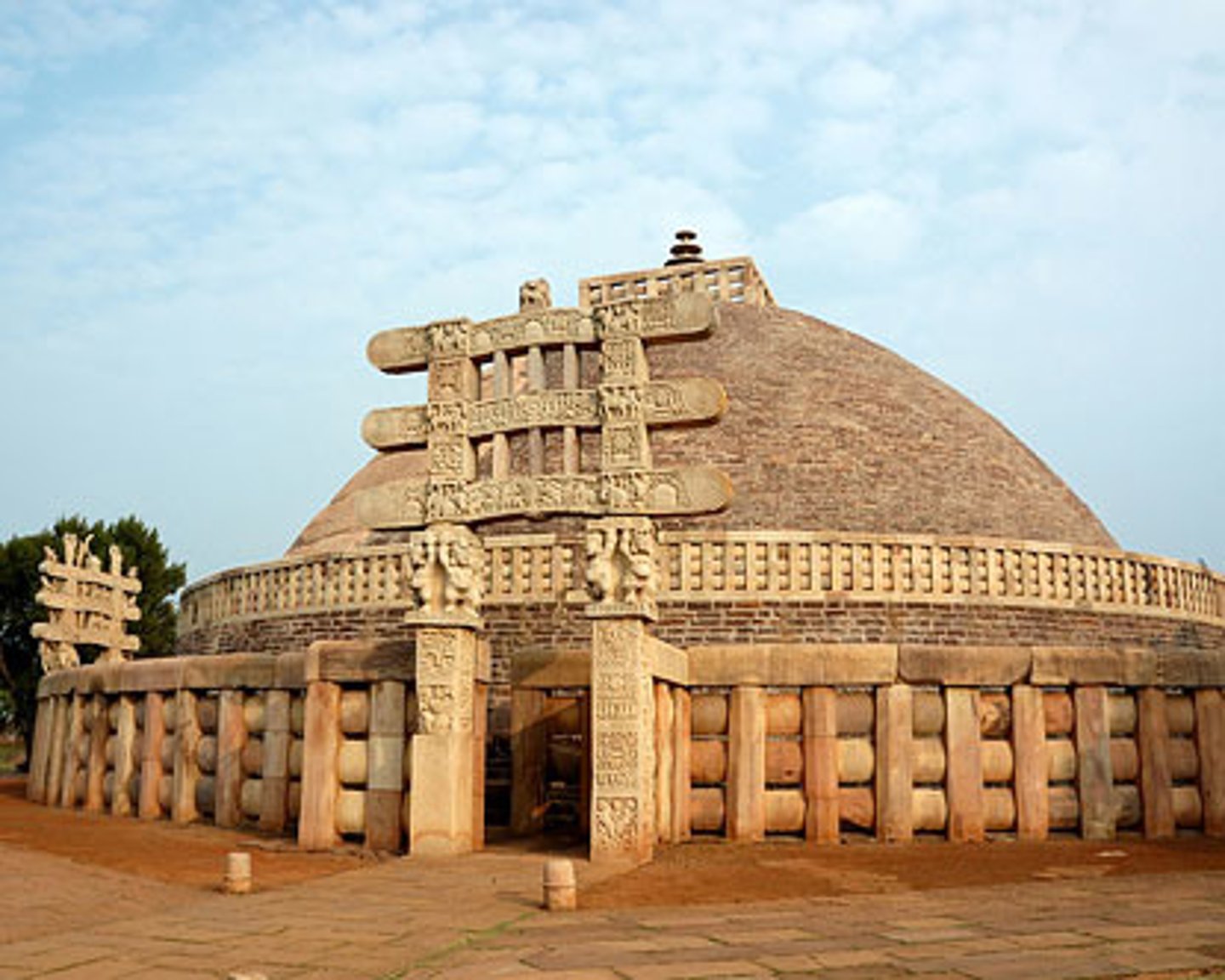
Stupas

a dome-shaped structure erected as a Buddhist shrine.
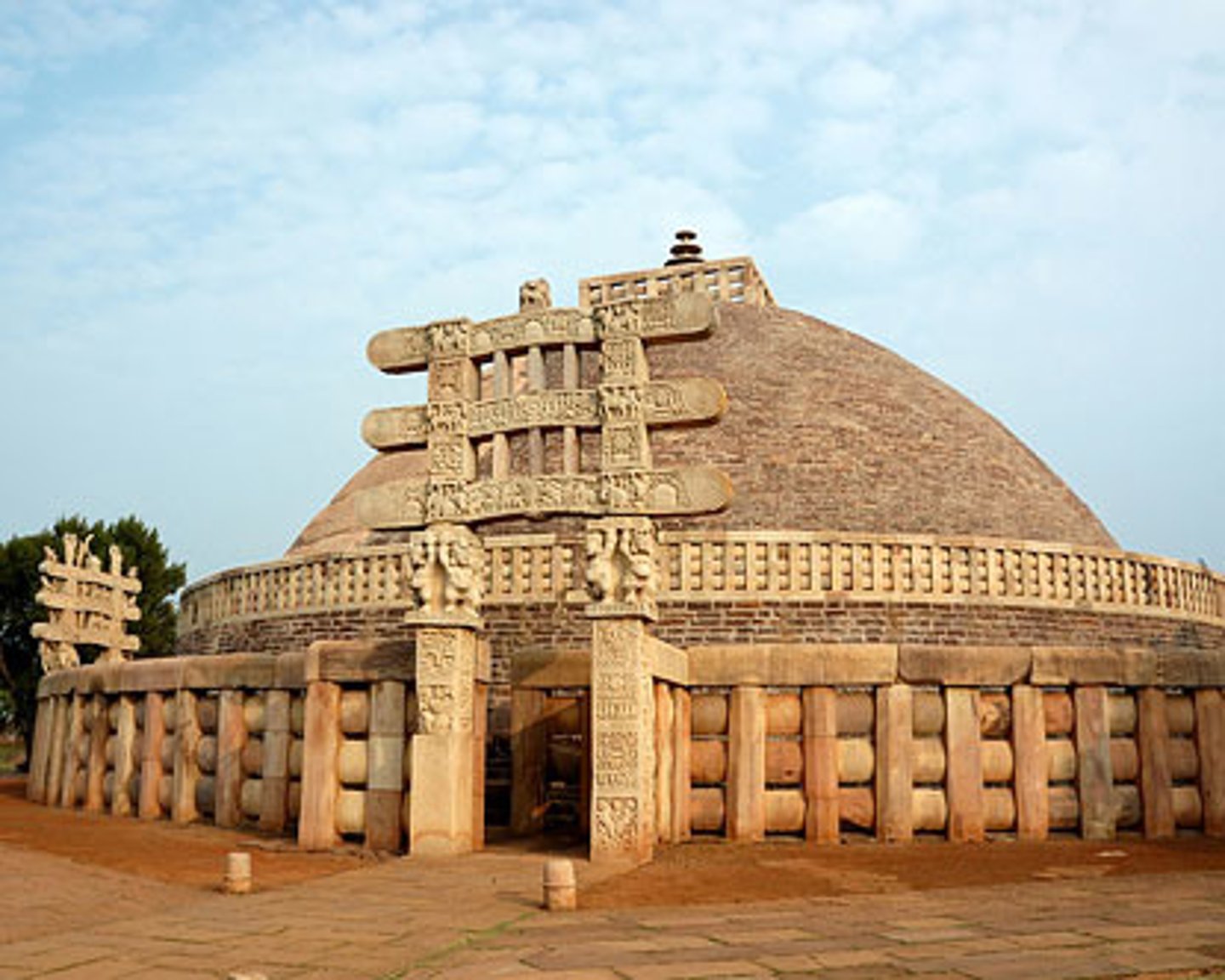
<p>a dome-shaped structure erected as a Buddhist shrine.</p>
59
New cards

Centralized

power concentrated in the center, especially political power concentrated in the hands of one leader or government

60
New cards

Decentralized

governmental power is spread among more than one person or group (Ex: Feudal Europe or Maya City-States)

61
New cards

Maya

Mesoamerican civilization--never unified into a single empire, but rather collection of city-states. Major contributions were in mathematics, astronomy, and development of the calendar.

62
New cards

Aztecs

Also known as Mexica, they created a powerful empire in central Mexico (1325-1521 C.E.). They forced defeated peoples to provide goods and labor as tribute and POWs were used as slaves and sacrifices

63
New cards

llamas and alpacas

Animals used for food and labor by the Inca

64
New cards

Chinampas

floating farming islands made by the Aztec

65
New cards

Ethiopia

A Christian kingdom that developed in eastern Africa

66
New cards

Manorialism

An economic system based on the manor and lands including a village and surrounding acreage which were administered by a lord. It developed in Feudal Europe to increase agricultural production.

67
New cards

Dharma

the religious and moral duties of an individual (in Hindu and Buddhist beliefs)

68
New cards

Civil Service Exam

In Imperial China, it was an exam based on Confucian teachings that was used to select people for various government service jobs in the nationwide administrative bureaucracy.

69
New cards

Dar al-Islam

an Arabic term that means the "house of Islam" and that refers to lands under Islamic rule

Explore top notes

Imperialism Rise in Nationalism • During the French and Industrial Revolution, nationalism continued to inspire nations to increase their political and economic power. • Nationalism became the ideal force in the political, economic, and cultural life in the world, becoming the first universal ideology-organizing all people into a nation state. Nationalism Defined • The strong belief that the interest of a particular nation-state is of primary importance. o Nation-State – a state where the vast majority shares the same culture and is conscious of it. It is an ideal in which cultural boundaries match up with political ones. • As an ideology, it is based on the idea that the individual’s loyalty and devotion to the nation-state surpass other individual/group interests. • Exalting one nation’s belief above all others and placing primary emphasis on promotion of its culture and interests, excluding the interests of others. Changing the World through a Nationalistic Vision • The French Revolution significantly changed the political world and how countries govern. • The Industrial Revolution significantly changed the economic world. • The Age of Imperialism (1870-1914) dramatically changed the political, economic, and social world. What is Imperialism? • Imperialism- The policy of extending the rule of authority of an empire or nation over foreign countries, or of acquiring and holding colonies and dependencies. Power and influence are done through diplomacy or military force. Reasons for Imperialism • There are 5 main motives for empires to seek to expand their rule over other countries or territories: 1. Exploratory • Imperial nations wanted to explore territory unknown to them. • The main purpose for this exploration of new lands was for resource acquisition, medical or scientific research. o Charles Darwin • Other reasons: o Cartography (map making) o Adventure 2. Ethnocentric • Europeans acted on the concept of ethnocentrism o Ethnocentrism- the belief that one race or nation is superior to others. • Ethnocentrism developed out of Charles Darwin’s “survival of the fittest” theory. Philosophers used the theory to explain why there were superior races and inferior races. o This became known as Social Darwinism. • Most imperial nations believed that their cultural values or beliefs were superior to other nations or groups. • Believed imperial conquest would bring successful culture to inferior people. 3. Religious • Imperial expansion promoted a religious movement of people setting out to convert new members of conquered territories. • With the belief that Christianity was superior, missionaries believed it was their duty to spread Christianity to the world. • Christian missionaries established churches, and in doing so, they spread Western culture values as well. • Typically, missionaries spread the imperial nation's language through education and religious interactions. 4. Political • Patriotism and Nationalism helped spur our imperial growth, thus creating competition against other supremacies. • It was a matter of national pride, respect, and security. • Furthermore, European rivalry spurred nations for imperial conquest. Since land equaled power, the more land a country could acquire the more prestige they could wield across the globe. • Empires wanted strategic territory to ensure access for their navies and armies around the world. • The empire believed they must expand, thus they needed to be defended. 5. Economic • With the Industrial Revolution taking place during the same time, governments and private companies contributed to find ways to maximize profits. • Imperialized countries provided European factories and markets with natural resources (old and new) to manufacture products. • Trading posts were strategically placed around imperialized countries to maximize and increase profits. o Such places as the Suez Canal in Egypt which was controlled by the British provided strategic choke hold over many European powers. o Imperial powers competed over the best potential locations for resources, markets, and trade. History of Imperialism • Ancient Imperialism 600 BCE-500 CE o Roman Empire, Ancient China, Greek Empire, Persian Empire, Babylonian Empire. • Middle Age Imperialism (Age of Colonialism-1400-1800s) o Great Britain, Spain, Portugal, France, Netherlands (Dutch), Russia. • Age of Imperialism 1870-1914 o Great Britain, Spain, Portugal, France, Germany, Belgium, Italy, Japan, United States, Ottoman Empire, Russia. • Current Imperialism...? o U.S. Military intervention (i.e. Middle East) o Russia’s Invasion of Ukraine. Imperialism Colonialism • Refers to political or economic control, either legally or illegally. • Refers to where one nation assumes control over the other. • Creating an empire, expanding into neighboring regions and expanding the dominance far outside its borders. • Where a country conquers and rules over other regions for exploiting resources from the conquered country for the conqueror's benefit. • Foreign government controls/governs a territory without significant settlement. • Foreign government controls/governs the territory from within the land being colonized. • Little to no new settlement established on fresh territory. • Movement to settle to fresh territory. Age of Colonialism WHEN? • Started around the late 1400s and ended around the late 1700s/early 1800s. WHY? • Primary Reason: European countries, wished to find a direct trade route to Asia (China & India) and the East Indies. o Quicker and relatively more effective than land routes over Asia. • Secondary Reason: Empire expansion (land power) WHO? • Countries involved: Great Britain, France, Spain, the Dutch & Portugal. • Individuals’ knowns as Mercantilists believed that maintaining imperialized territory and colonizing the region could serve as a source of wealth, while personal motives by rulers, explorers, and missionaries could therefore promote their own agenda. o This agenda being “Glory, God and Gold”. Mercantilism • Mercantilism was a popular and main economic system for many European nations during the 16th to 18th centuries. • The main goal was to increase a nation’s wealth by promoting government rule of a nation’s economy for the purpose of enhancing state power at the expense of rival national power. • It was the economic counterpart of political absolutism. Why did mercantilists want colonies? • Mercantilists believed that a country must have an excess of exports over imports. • By colonizing territory, it provided the nation with indispensable wealth of precious raw materials. • Therefore, the claimed territory served as a market and supplier of raw materials for the mother country. Which, in time, provided an excess of exports for the nation and thus created wealth. o Development of Trading Companies to support this economic system. Hudson Bay Company – (1670). Controlled primarily North America. o Dutch East Indie Trading Company (1682) o East Indian Trading Company (1600) o Royal African Trade Company (1672) WHERE? • European nations begun to colonize the America, India and the East Indies to create a direct trade route. • Great Britain was the leading power in India, Australia and North America, South Africa. • Spain colonized central and South America. • French held Louisiana, coastal land of Africa and French Guinea. • The Dutch built an empire in the East Indies. • The Portuguese was able to take control of present-day Brazil and the southern tip of South America and Japan. Age of Colonialism • As countries started to imperialize these regions, eventually the concept of colonization took hold: • This is what makes the Age of Colonialism extremely different! End of Colonialism • By 1800, colonialism became less popular • Why? o Revolutions (Spain, France & American) o The Napoleonic Wars o Struggle for nationalism and democracy. o Exhausted all money and energy to supervise their colonies. Waiting to wake again • Imperialism would stay quiet for close to 50 years before Great Britain and France’s economies revitalized. • The outbreak of the Industrial Revolution only encouraged and revitalized European nations to begin their conquest for new territory and resources. Age of Imperialism THE SCRAMBLE FOR AFRICA 1870-1914 Conditions Prior to Imperialism of Africa  European interest in exploiting Africa was minimal.  Their economic interests & profit in Africa primarily came through coastal trade that took place during the 1500-1700s.  The slave trade became the main source of European profit.  Furthermore, disease, political instability, lack of transportation and unpredictable climate all discouraged Europeans from seeking territory. Slave Trade & the Trans-Atlantic Slave Voyages  Forced labor was not uncommon during the 13-17th Centuries. Africans and Europeans had been trading goods and people across the Mediteranea for centuries.  This all changed from 1526 to 1867, as a new system of slavery was introduced that became highly “commercialized, racialized and inherited”  By 1690, the America and West Indies saw approximately 30,000 African people shipped from Africa. A century later, that number grew to 85,000 people per year.  By 1867, approximately 12.5 million people (about twice the population of Arizona) left Africa in a slave ship. What Changed? 1. End of the Slave Trade- Left a need for trade between Europe and Africa. 2. Innovation in technology- The steam engine and iron hulled boats allowed Europe 3. Discovery of new raw materials- Explorers located vast raw materials and resources and this only spurred imperialism with Europe in the wake of the Industrial Revolution. 4. Politics- Unification of Germany and Italy left little room to expand in Europe. Germany and Italy both needed raw materials to “catch up” with Britain and France so they looked to Africa. The Scramble for Africa  The scramble started in 1870.  Although some coastal land had previously been acquired before 1870, the need for territory quickly accelerated as European countries looked t get deeper into Africa.  Within 20 years, nearly all continents were placed under imperialistic rule. Who was Involved?  Great Britain  France  Germany  Italy  Portugal  Belgium  Spain (kind) Violent Affairs  Violence broke out multiple times when European nations looked to claim the same territory.  Germ Chancellor. Otto van Bismarck. Attempted to avert the possibility of violence against the European powers.  In 1884, Bismarck organized a conference in Berlin for the European nations. The Berlin Conference (1884-85)  The conference looked to set ground rules for future annexation of African territory by European Nations.  Annexation is the forcible acquisition and assertion of legal title over one state’s territory by another state, usually following military occupation of the territory.  From a distant perspective, it looked like it would reduce tensions among European nations and avert war.  At the heart of the meeting, these European countries negotiated their claims to African territory, made it official and then mapped their regions.  Furthermore, the leaders agreed to allow free trade among imperialized territory and some homework for negotiating future European claims in Africa was established. Further Path  After the conference, european powers continued to expand their claims in Africa so that by 1900. 90% of the African territory had been claimed. A Turn towards Colonization?  Upon the imperialization of African territory, European nations and little interest in African land unless it produced economic wealth.  Therefore, European governments put little effort and expertise into these imperialized regions.  In most cases, this emat a form of indirect rule. Thus, governing the natin without sufficient settlement and government from within the mother country. Some Exceptions  There were some exemptions through in Africa as colonization was a necessary for some regions i n Africa.  Some regions where diamonds and gold were present. Government looked to protectorate the regions and establish rule and settlement in the regions.  Protectorates: A state controlled and protected by another state for defense against aggression and other law violations. Would  Some examples include South Africa, Botswana, Zimbabwe and Congo. Conclusion  Although it may appear that the Berlin Conference averted war amid the African Scramble, imperialism eventually brought the world into worldwide conflict.  With the continued desire to create an empire by European nations. World War 1 would break out which can be linked to this quest at imperialism.
Updated 490d ago
note Note
Imperialism Rise in Nationalism • During the French and Industrial Revolution, nationalism continued to inspire nations to increase their political and economic power. • Nationalism became the ideal force in the political, economic, and cultural life in the world, becoming the first universal ideology-organizing all people into a nation state. Nationalism Defined • The strong belief that the interest of a particular nation-state is of primary importance. o Nation-State – a state where the vast majority shares the same culture and is conscious of it. It is an ideal in which cultural boundaries match up with political ones. • As an ideology, it is based on the idea that the individual’s loyalty and devotion to the nation-state surpass other individual/group interests. • Exalting one nation’s belief above all others and placing primary emphasis on promotion of its culture and interests, excluding the interests of others. Changing the World through a Nationalistic Vision • The French Revolution significantly changed the political world and how countries govern. • The Industrial Revolution significantly changed the economic world. • The Age of Imperialism (1870-1914) dramatically changed the political, economic, and social world. What is Imperialism? • Imperialism- The policy of extending the rule of authority of an empire or nation over foreign countries, or of acquiring and holding colonies and dependencies. Power and influence are done through diplomacy or military force. Reasons for Imperialism • There are 5 main motives for empires to seek to expand their rule over other countries or territories: 1. Exploratory • Imperial nations wanted to explore territory unknown to them. • The main purpose for this exploration of new lands was for resource acquisition, medical or scientific research. o Charles Darwin • Other reasons: o Cartography (map making) o Adventure 2. Ethnocentric • Europeans acted on the concept of ethnocentrism o Ethnocentrism- the belief that one race or nation is superior to others. • Ethnocentrism developed out of Charles Darwin’s “survival of the fittest” theory. Philosophers used the theory to explain why there were superior races and inferior races. o This became known as Social Darwinism. • Most imperial nations believed that their cultural values or beliefs were superior to other nations or groups. • Believed imperial conquest would bring successful culture to inferior people. 3. Religious • Imperial expansion promoted a religious movement of people setting out to convert new members of conquered territories. • With the belief that Christianity was superior, missionaries believed it was their duty to spread Christianity to the world. • Christian missionaries established churches, and in doing so, they spread Western culture values as well. • Typically, missionaries spread the imperial nation's language through education and religious interactions. 4. Political • Patriotism and Nationalism helped spur our imperial growth, thus creating competition against other supremacies. • It was a matter of national pride, respect, and security. • Furthermore, European rivalry spurred nations for imperial conquest. Since land equaled power, the more land a country could acquire the more prestige they could wield across the globe. • Empires wanted strategic territory to ensure access for their navies and armies around the world. • The empire believed they must expand, thus they needed to be defended. 5. Economic • With the Industrial Revolution taking place during the same time, governments and private companies contributed to find ways to maximize profits. • Imperialized countries provided European factories and markets with natural resources (old and new) to manufacture products. • Trading posts were strategically placed around imperialized countries to maximize and increase profits. o Such places as the Suez Canal in Egypt which was controlled by the British provided strategic choke hold over many European powers. o Imperial powers competed over the best potential locations for resources, markets, and trade. History of Imperialism • Ancient Imperialism 600 BCE-500 CE o Roman Empire, Ancient China, Greek Empire, Persian Empire, Babylonian Empire. • Middle Age Imperialism (Age of Colonialism-1400-1800s) o Great Britain, Spain, Portugal, France, Netherlands (Dutch), Russia. • Age of Imperialism 1870-1914 o Great Britain, Spain, Portugal, France, Germany, Belgium, Italy, Japan, United States, Ottoman Empire, Russia. • Current Imperialism...? o U.S. Military intervention (i.e. Middle East) o Russia’s Invasion of Ukraine. Imperialism Colonialism • Refers to political or economic control, either legally or illegally. • Refers to where one nation assumes control over the other. • Creating an empire, expanding into neighboring regions and expanding the dominance far outside its borders. • Where a country conquers and rules over other regions for exploiting resources from the conquered country for the conqueror's benefit. • Foreign government controls/governs a territory without significant settlement. • Foreign government controls/governs the territory from within the land being colonized. • Little to no new settlement established on fresh territory. • Movement to settle to fresh territory. Age of Colonialism WHEN? • Started around the late 1400s and ended around the late 1700s/early 1800s. WHY? • Primary Reason: European countries, wished to find a direct trade route to Asia (China & India) and the East Indies. o Quicker and relatively more effective than land routes over Asia. • Secondary Reason: Empire expansion (land power) WHO? • Countries involved: Great Britain, France, Spain, the Dutch & Portugal. • Individuals’ knowns as Mercantilists believed that maintaining imperialized territory and colonizing the region could serve as a source of wealth, while personal motives by rulers, explorers, and missionaries could therefore promote their own agenda. o This agenda being “Glory, God and Gold”. Mercantilism • Mercantilism was a popular and main economic system for many European nations during the 16th to 18th centuries. • The main goal was to increase a nation’s wealth by promoting government rule of a nation’s economy for the purpose of enhancing state power at the expense of rival national power. • It was the economic counterpart of political absolutism. Why did mercantilists want colonies? • Mercantilists believed that a country must have an excess of exports over imports. • By colonizing territory, it provided the nation with indispensable wealth of precious raw materials. • Therefore, the claimed territory served as a market and supplier of raw materials for the mother country. Which, in time, provided an excess of exports for the nation and thus created wealth. o Development of Trading Companies to support this economic system. Hudson Bay Company – (1670). Controlled primarily North America. o Dutch East Indie Trading Company (1682) o East Indian Trading Company (1600) o Royal African Trade Company (1672) WHERE? • European nations begun to colonize the America, India and the East Indies to create a direct trade route. • Great Britain was the leading power in India, Australia and North America, South Africa. • Spain colonized central and South America. • French held Louisiana, coastal land of Africa and French Guinea. • The Dutch built an empire in the East Indies. • The Portuguese was able to take control of present-day Brazil and the southern tip of South America and Japan. Age of Colonialism • As countries started to imperialize these regions, eventually the concept of colonization took hold: • This is what makes the Age of Colonialism extremely different! End of Colonialism • By 1800, colonialism became less popular • Why? o Revolutions (Spain, France & American) o The Napoleonic Wars o Struggle for nationalism and democracy. o Exhausted all money and energy to supervise their colonies. Waiting to wake again • Imperialism would stay quiet for close to 50 years before Great Britain and France’s economies revitalized. • The outbreak of the Industrial Revolution only encouraged and revitalized European nations to begin their conquest for new territory and resources. Age of Imperialism THE SCRAMBLE FOR AFRICA 1870-1914 Conditions Prior to Imperialism of Africa  European interest in exploiting Africa was minimal.  Their economic interests & profit in Africa primarily came through coastal trade that took place during the 1500-1700s.  The slave trade became the main source of European profit.  Furthermore, disease, political instability, lack of transportation and unpredictable climate all discouraged Europeans from seeking territory. Slave Trade & the Trans-Atlantic Slave Voyages  Forced labor was not uncommon during the 13-17th Centuries. Africans and Europeans had been trading goods and people across the Mediteranea for centuries.  This all changed from 1526 to 1867, as a new system of slavery was introduced that became highly “commercialized, racialized and inherited”  By 1690, the America and West Indies saw approximately 30,000 African people shipped from Africa. A century later, that number grew to 85,000 people per year.  By 1867, approximately 12.5 million people (about twice the population of Arizona) left Africa in a slave ship. What Changed? 1. End of the Slave Trade- Left a need for trade between Europe and Africa. 2. Innovation in technology- The steam engine and iron hulled boats allowed Europe 3. Discovery of new raw materials- Explorers located vast raw materials and resources and this only spurred imperialism with Europe in the wake of the Industrial Revolution. 4. Politics- Unification of Germany and Italy left little room to expand in Europe. Germany and Italy both needed raw materials to “catch up” with Britain and France so they looked to Africa. The Scramble for Africa  The scramble started in 1870.  Although some coastal land had previously been acquired before 1870, the need for territory quickly accelerated as European countries looked t get deeper into Africa.  Within 20 years, nearly all continents were placed under imperialistic rule. Who was Involved?  Great Britain  France  Germany  Italy  Portugal  Belgium  Spain (kind) Violent Affairs  Violence broke out multiple times when European nations looked to claim the same territory.  Germ Chancellor. Otto van Bismarck. Attempted to avert the possibility of violence against the European powers.  In 1884, Bismarck organized a conference in Berlin for the European nations. The Berlin Conference (1884-85)  The conference looked to set ground rules for future annexation of African territory by European Nations.  Annexation is the forcible acquisition and assertion of legal title over one state’s territory by another state, usually following military occupation of the territory.  From a distant perspective, it looked like it would reduce tensions among European nations and avert war.  At the heart of the meeting, these European countries negotiated their claims to African territory, made it official and then mapped their regions.  Furthermore, the leaders agreed to allow free trade among imperialized territory and some homework for negotiating future European claims in Africa was established. Further Path  After the conference, european powers continued to expand their claims in Africa so that by 1900. 90% of the African territory had been claimed. A Turn towards Colonization?  Upon the imperialization of African territory, European nations and little interest in African land unless it produced economic wealth.  Therefore, European governments put little effort and expertise into these imperialized regions.  In most cases, this emat a form of indirect rule. Thus, governing the natin without sufficient settlement and government from within the mother country. Some Exceptions  There were some exemptions through in Africa as colonization was a necessary for some regions i n Africa.  Some regions where diamonds and gold were present. Government looked to protectorate the regions and establish rule and settlement in the regions.  Protectorates: A state controlled and protected by another state for defense against aggression and other law violations. Would  Some examples include South Africa, Botswana, Zimbabwe and Congo. Conclusion  Although it may appear that the Berlin Conference averted war amid the African Scramble, imperialism eventually brought the world into worldwide conflict.  With the continued desire to create an empire by European nations. World War 1 would break out which can be linked to this quest at imperialism.
Updated 490d ago
note Note

Explore top flashcards

Unit 5: Genetics
Updated 375d ago
flashcards Flashcards (29)
La familia
Updated 784d ago
flashcards Flashcards (38)
CMS III Final: EM
Updated 255d ago
flashcards Flashcards (212)
2b: Cell structure
Updated 1171d ago
flashcards Flashcards (30)
deelsteppen
Updated 1065d ago
flashcards Flashcards (87)
PSYC 14
Updated 148d ago
flashcards Flashcards (64)
Unit 5: Genetics
Updated 375d ago
flashcards Flashcards (29)
La familia
Updated 784d ago
flashcards Flashcards (38)
CMS III Final: EM
Updated 255d ago
flashcards Flashcards (212)
2b: Cell structure
Updated 1171d ago
flashcards Flashcards (30)
deelsteppen
Updated 1065d ago
flashcards Flashcards (87)
PSYC 14
Updated 148d ago
flashcards Flashcards (64)