Learning: Exam 4
 Call Kai
 Learn
Learn Practice Test
 Spaced Repetition
 Match
Match Flashcards
 Knowt Play
1/24

There's no tags or description
Looks like no tags are added yet.
Name | Mastery | Learn | Test | Matching | Spaced | Call with Kai |
|---|
No analytics yet
Send a link to your students to track their progress
25 Terms
Choice
the distribution of behavior among alternative sources of reinforcement
Preference
when several schedules of reinforcement are available concurrently, one alternative may be chosen more frequently than others
How is choice studied in the lab?
setting up 2 schedules of reinforcement that are concurrent
Concurrent
available at the same time
Schedules function independently of each other
Problem with concurrent schedule
Indiscriminate switching
Switching may be reinforced accidentally
How to prevent indiscriminate switching
Change Over Delay (COD)
Change Over Delay (COD) as a procedure
control procedure to stop rapid switching between concurrent alternatives
Change Over Delay… what is required
After switching to a new alternative, a brief time is required before a response can be reinforced
Which type of schedule is preferred for concurrent schedules
variable interval
Experimental Procedures to Study Choice
Arrange 2 or more concurrently available schedules of reinforcement
Program interval schedules on each alternative
Use variable rather than fixed-interval schedules
Organism unable to discriminate time to reinforcement
Must respond on both alternatives - switching doesn’t always result in reinforcement
Operant behavior sensitive to the rate of reinforcement on each alternative
Require a COD in order to stop frequent alternation between or among schedules
Matching Law
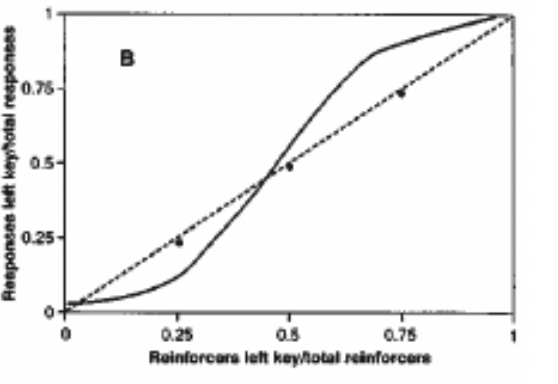
the proportion of behavior allocated across alternatives will equal (match) the proportion of reinforcement available across those alternatives
Hernstein’s Equation in words
Relative rate of behavior on key A equals relative rate of reinforcement from key A… same for key B
Hernstein’s Equation (actual equation)
IV: relative rate of reinforcement
DV: relative rate of response
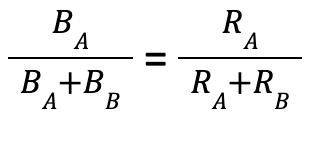
Hernsteins equation example
Only have to calculate one side of the equation because they are EQUAL
Alternative 1 = 20 reinforcers/hour (calculated below)
Alternative 2 = 10 reinforcers/hour
The proportion of alternative 1 is for reinforcement so 67% of behavior should be allocated to alternative 1
And 33% of behavior will be allocated to alternative 2
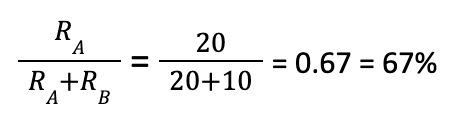
In order to calculate matching law you need the
rate of reinforcment
example of converting to rate of reinforcement
Lever 1 = VI 15s food
Lever 2 = VI 30s food
15s food means the animal is getting 4 pellets a minute and 30s food means the animal is getting 2 pellets a minute, so…
Lever 1 = 4 pellets/minute
Lever 2 = 2 pellets/minute
Perfect matching occurs when…
On concurrent VI VI with COD of a few seconds
When target behavior is same on both schedules
Same effort is required on both schedules
Individual has no spontaneous preference for either schedule
Departures from Matching
bias
undermatching
overmatching
bias
unknown asymmetry
preference for one alternative
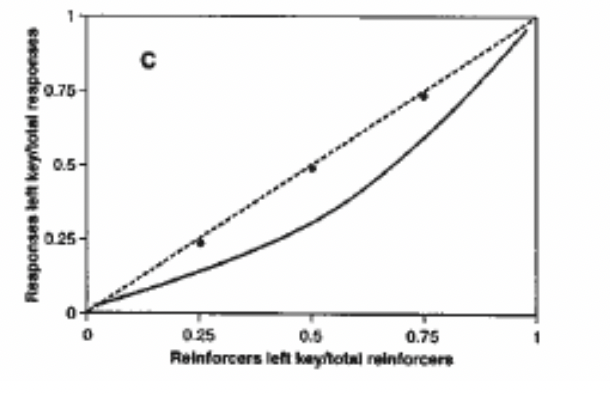
undermatching
changes in response ratio are less than changes in reinforcement ratio
response proportions less sensitive to changes in reinforcement proportions
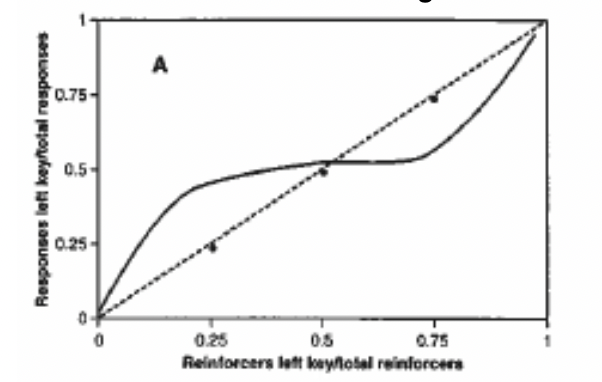
overmatching
changes in response ratio are greater than changes in reinforcement ratio
response proportions are more extreme than reinforcement proportions
extensions of matching law
time: matching time on an alternative
alternative: matching on more than 2 alternatives
social: matching in a social situation
Significance of matching
we are constantly presented with choices
matching allows us to predict that outcome of those choices
choices for smaller sooner reinforcer over the larger more delayed reinforcer
choices for larger more delayed reinforcer over the smaller sooner reinforcer

