UKMLA: Neurology
 Studied by 0 people
 Call Kai
 Learn
Learn Practice Test
 Spaced Repetition
 Match
Match Flashcards
 Knowt Play
1/33

There's no tags or description
Looks like no tags are added yet.
Name | Mastery | Learn | Test | Matching | Spaced | Call with Kai |
|---|
No analytics yet
Send a link to your students to track their progress
34 Terms
Bell’s Palsy: What is it?
Bell’s palsy is an idiopathic syndrome that causes damage to the facial nerve leading to a lower motor neuron facial palsy
It can occur at any age, with a peak incidence in the age group of 15-45 years.
Bell’s Palsy: What are the clinical features?
Acute onset of unilateral lower motor neuron facial weakness
Forehead is NOT spared→ if spared, it is more likely to be stroke
Hyperacusis
Altered taste
Dry eyes and mouth
Loss of taste in anterior 2/3 of tongue (Facial nerve VII supplies this)
Bell’s Palsy: What is the investigation?
Diagnosis is mainly clinical
Otoscopy, FBC, ESR, CRP, Viral serology for HSV-1, EBV or VZV as varicella zoster is more associated with Ramsay-hunt syndrome
Imaging
Bell’s Palsy: What is the management?
All patients presenting within 72 hours of the onset of symptoms should be administered oral steroids → prednisone 50mg 1x a day for 10 days after which the dose is tapered.
Ocular lubricants for dry eyes
Eye patch to prevent corneal exposure
Aciclovir may be given too
70-80% will recover!!!
Bell’s Palsy: What are the managements of other palsy’s?
Corticosteroids for Bell's Palsy
Antiviral agents for Ramsay Hunt syndrome.
Antibiotics for Lyme disease and basal meningitis
Erb’s Palsy: Which nerve roots are damaged?
C5-C6 nerve roots→ due to child birth
Klumpke’s Palsy: Which nerve roots are damaged?
C8-T1 nerve roots → due to axillary radiotherapy e.g. for breast cancer
Erb’s Palsy: What are the clinical features?
Dermatomal sensory loss in the C5-6 distribution
"Waiter's tip" sign: Characterised by shoulder adduction, elbow extension, forearm pronation, and wrist flexion.
Klumpke’s Palsy: What are the clinical features?
Dermatomal sensory loss in the C8-T1 distribution
Weakness of the SMALL intrinsic muscles of the hand
Potential ipsilateral Horner's syndrome if T1 involvement occurs→ ptosis of eyes
Brachial Plexus Injury: What is the investigation?
EMG (nerve) and MRI studies
Brachial Plexus Injury: What is the management?
Physiotherapy
NSAIDS and analgesia
Nerve graft surgery after watchful waiting
Headaches: What are cluster headaches?
Severe unilateral headache due to trigeminal nerve activation→ common in middle-aged men
Headaches: What are the risk factors for cluster headaches?
Risk factors include:
Male gender
Age more than 30
Alcohol consumption
Prior brain surgery or trauma
Family history
Headaches: What are the symptoms of cluster headaches?
Severe pain
Patient’s rock or sway to distract from pain
15 minutes - 3 hours duration
Occurs up to 8 times a day
Most patients will have attacks for weeks to months then have remission for a number of months to years
Patients may also express suicidal ideation during the attacks
Lacrimation
Nasal congestion
Red eye + eye pain
Headaches: What is the management of cluster headaches?
Acute→ 100% oxygen therapy + subcutaneous or nasal sumatriptan
Prevention→ verapamil, topirimate and lithium
Headaches: What is the most common type of primary headache disorder?
Tension headaches
Headaches: What is the classification of tension headaches?
Infrequent→ less than 1 day of headache per month
Frequent→ 10 episodes in 15 days, for longer than 3 months
Chronic→ more than 10 episodes in 15 days, for longer than 3 months
Headaches: What are the features of tension headaches?
Bilateral, non-pulsatile pain
Tight, pressure sensation
Scalp is tender
Headaches: What is the management of tension headaches?
Analgesia
Stress management
Massages and relaxation
Headaches: What are migraines?
A headache characterised by unilateral, pulsating pain and aura→ visual or sensory changes
Lasts 4-72 hours
Headaches: What are the symptoms of migraines?
Aura afterwards
Unilateral, throbbing pain
Photophobia
Phonophobia
Nausea and/or vomiting
Headaches: How can triggers for migraines be tracked?
Headache diary
Headaches: What is the management of migraines?
Avoid triggers e.g. sleep on time and eat good food
Triptans→ contraindicated in patients with iscahemic heart disease
Anti-emetics → metoclopramide
Females of child-bearing age shouldn’t take COCP due to risk of stroke
Headaches: What are the contraindications for sumatriptan?
Contraindicated in patients with ischaemic heart disease
Headaches: Which drug is used for the prophylaxis of cluster headaches?
Verapamil
Headaches: Which drug is used for the prophylaxis of migraines?
Propanol → NOT FOR ASTHMATICS
Topiramate
Amityrptyline→ FOR WOMEN WHO CAN CONCIEVE, NOT FOR PEOPLE WITH DIAVETES
Headaches: Which drug is used for the prophylaxis of migraines in adolescents or asthmatics?
Topiramate
Headaches: Which drug is used for the prophylaxis of migraines in women on child-bearing age?
Amitriptyline (as topiramate is teratogenic)
Headaches: What is the complication of regular migraine medications?
Medication overuse headaches if you use the medication more than 10-15 days a month
Headaches: What is the acute management of a migraine?
Ibuprofen 400mg, aspirin 900mg or paracetamol 1g
Ocular Palsy: What are the signs of third nerve palsy?
Down and out pupils
Ptosis
Fixed pupil dilation
Aneurysm in circle of Willis
Commonly caused by diabetes
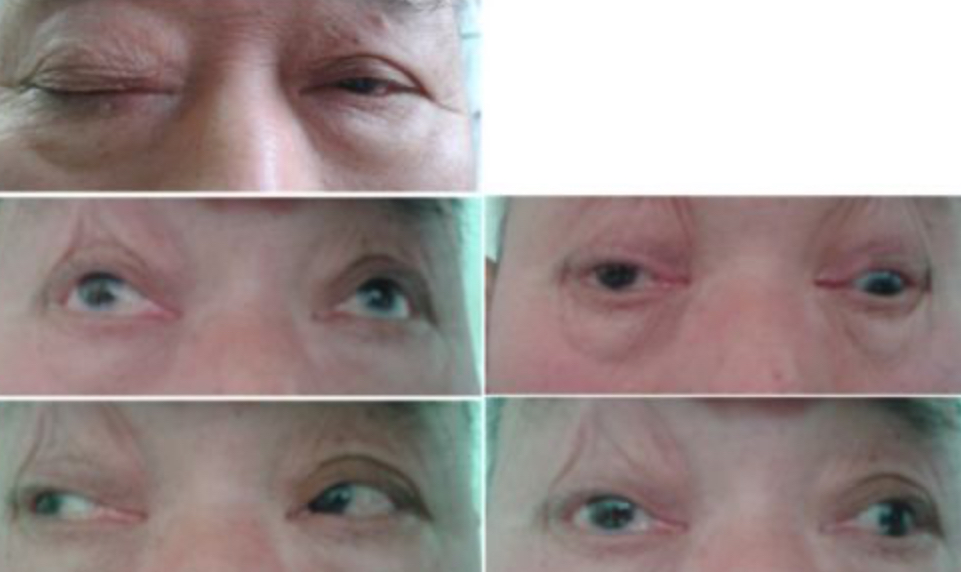
Ocular Palsy: What are the signs of fourth nerve palsy?
Paralysis of trochlear nerve which controls superior oblique muscle causes:
Upwards and inwards pupil
Head tilt
Double vision in the vertical plane
Trochlear nerve palsy is caused by diabetes and ocular trauma
Ocular Palsy: What are the signs of sixth nerve palsy?
The eye fails to ABduct due to paralysis of the abducens nerve. It may be medially deviated at rest, and diplopia worsens when the patient is asked to look horizontally away from the midline on the side of the lesion
Ocular Palsy: What is the management?
Prismatic glasses for diplopia
Strabismus surgery
Spontaneous recovery is also possible!!
 Note
Note  Flashcards (24)