Ecology Biomes

0.0(0)
studied byStudied by 1 person
0.0(0)
call with kaiCall with Kai
learnLearn
examPractice Test
spaced repetitionSpaced Repetition
heart puzzleMatch
flashcardsFlashcards
GameKnowt Play
Card Sorting

1/3

flashcard set

Earn XP

Description and Tags

Chapter 2

Study Analytics
Name
Mastery
Learn
Test
Matching
Spaced
Call with Kai

No study sessions yet.

4 Terms

1
New cards

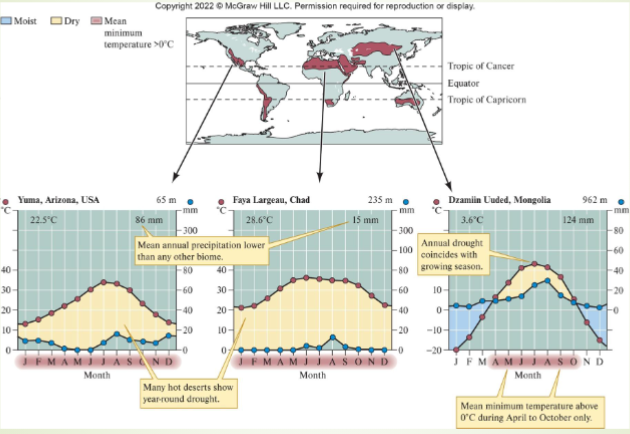
desert

  • major bands at 30°N and 30°S latitude

    • occupy about 20% of earth’s land surface

  • water loss usually exceeds precipitation

  • soil usually extremely low in organic matter

  • plant cover ranges from sparse to absent

  • animal abundance low, but biodiversity may be high

    • strong behavioral adaptations

  • humans tend to concentrate in oases and river valleys

  • described as dry/arid

<ul><li><p>major bands at 30<span>°N and 30°S latitude</span></p><ul><li><p>occupy about 20% of earth’s land surface</p></li></ul></li><li><p>water loss usually exceeds precipitation</p></li><li><p>soil usually extremely low in organic matter</p></li><li><p>plant cover ranges from sparse to absent</p></li><li><p>animal abundance low, but biodiversity may be high</p><ul><li><p>strong behavioral adaptations</p></li></ul></li><li><p>humans tend to concentrate in oases and river valleys</p></li><li><p>described as dry/arid</p></li></ul><p></p>
2
New cards

tundra

  • covers most of lands north of Arctic Circle

  • climate typically cold and dry with short summers

    • 200 to 600mm precipitation annually

  • low decomposition rates

  • dominated by perennial herbaceous plants

  • supports high numbers of native mammals

  • human intrusion historically low, but now increasing

  • described as cold, bare, by arctic/antarctic
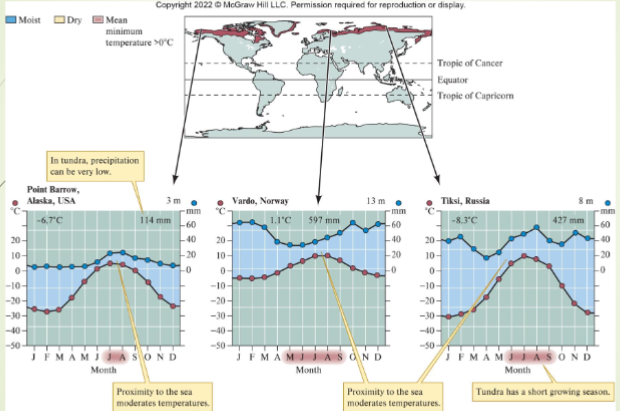
<ul><li><p>covers most of lands north of Arctic Circle</p></li><li><p>climate typically cold and dry with short summers</p><ul><li><p>200 to 600mm precipitation annually</p></li></ul></li><li><p>low decomposition rates</p></li><li><p>dominated by perennial herbaceous plants</p></li><li><p>supports high numbers of native mammals </p></li><li><p>human intrusion historically low, but now increasing</p></li><li><p>described as cold, bare, by arctic/antarctic</p></li></ul><p></p>
3
New cards

tropical rainforest

  • most occur within 10° latitude of equator

  • little temperature variation between months

  • annual rainfall of 2,000 to 4,000mm relatively evenly distributed

    • quickly reaches soil nutrients

    • mycorrhizae help gather nutrients

  • organisms add vertical dimension

  • harbor staple foods and medicines for world’s human populations - increasingly exploited

  • described as wet, humid, hot, bio-productive, diverse
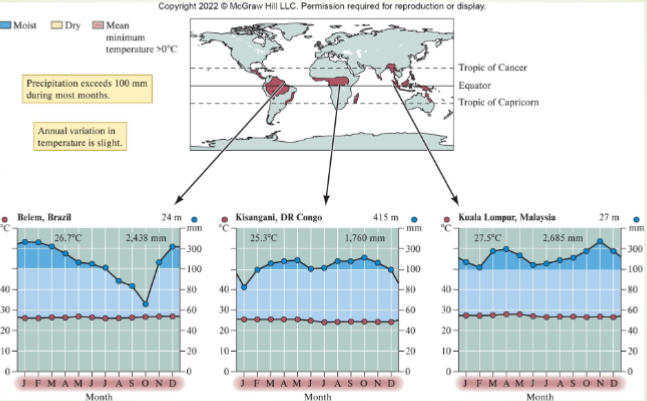
<ul><li><p>most occur within 10<span>° latitude of equator</span></p></li><li><p><span>little temperature variation between months</span></p></li><li><p><span>annual rainfall of 2,000 to 4,000mm relatively evenly distributed</span></p><ul><li><p>quickly reaches soil nutrients</p></li><li><p>mycorrhizae help gather nutrients</p></li></ul></li><li><p>organisms add vertical dimension</p></li><li><p>harbor staple foods and medicines for world’s human populations - increasingly exploited</p></li><li><p>described as wet, humid, hot, bio-productive, diverse</p></li></ul><p></p>
4
New cards

biomes

major divisions of the terrestrial environment