Early American Architecture & Interior Styles (16th–18th Century)
 Call Kai
 Learn
Learn Practice Test
 Spaced Repetition
 Match
Match Flashcards
 Knowt Play
1/25

There's no tags or description
Looks like no tags are added yet.
Name | Mastery | Learn | Test | Matching | Spaced | Call with Kai |
|---|
No analytics yet
Send a link to your students to track their progress
26 Terms
Colonial America Key Characteristics
- vernacular architecture (built using local materials and traditions)
- functional structures rather than decorative designs
- gradual shift toward more refined European architectural styles in the 1700s
Jamestown
- Early colonial buildings used basic construction methods
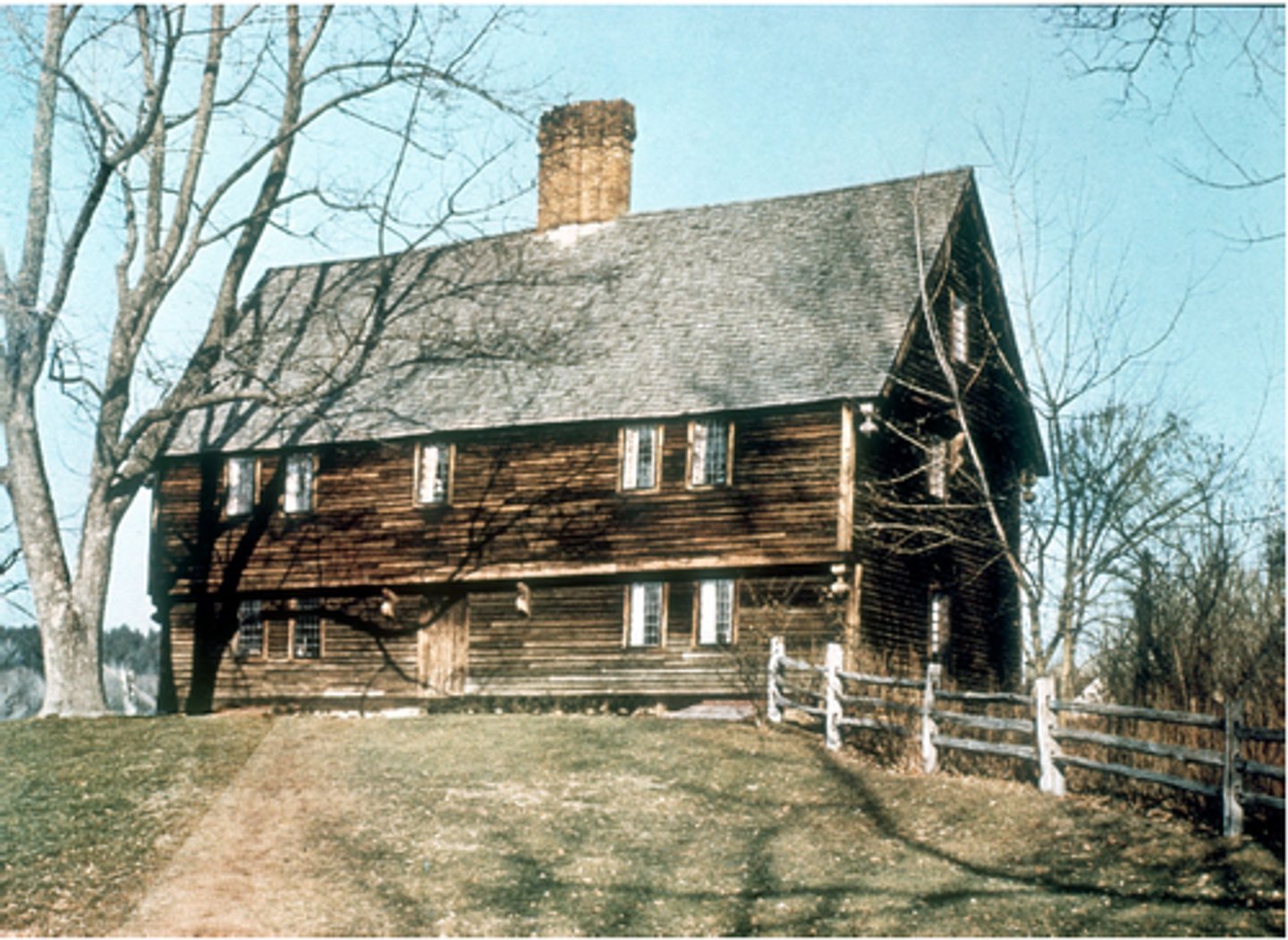
Stick and Mud Construction
• Also called half-timber construction.
• Wooden frame with spaces filled with mud or clay
• Common in early English settlements
Clapboard Construction
• Wooden siding boards overlapping horizontally.
• Nails were hand-forged
• Roofs were originally wood shingles, often replaced later (ex. tin roofs added in the 20th century)
Why These Construction Methods Were Used
• Limited skilled labor
• Abundant timber
• Need for fast construction
Jacobean Style Influence (Early 1600s)
During the time of King James I of England, furniture styles from England influenced the American colonies
Jacobean Style Influence's Characteristics
• Heavy, solid wood furniture
• Rectilinear (boxy) shapes
• Decorative carving
Ex: Brewster Chair, Wainscot Chair
Georgian Style in America (18th Century)
By the 1700s, American design began reflecting English Georgian style, which emphasized symmetry and order
Georgian Architecture Characteristics
• Symmetrical layouts
• Balanced window placement
• Formal rooms
• Central hall plans
Georgian Interior Features
• Plastered walls
• Paneled walls
• Often only one wall fully paneled
• Dado (decorative lower wall panel)
• Decorative furniture influenced by Chippendale style
• Portrait paintings
Williamsburg, Virginia
• Capital of Virginia 1699-1799.
• Important center of Georgian architecture in America
Governor's Palace
• Designed by Alexander Spotswood.
• Additional wing added by Richard Taliferro (1749)
Governor's Palace's Architectural Features
-Double-Pile Floor Plan
• Two rooms deep
• Central hallway dividing rooms
Governor's Palace's Interior Furnishings
Interior Furnishings
• Pie-crust tables
• Chippendale chairs
• Fire screens
Georgian House Plans Key Features
• Symmetrical layouts.
• Fireplaces located strategically for heating.
• Balanced room arrangements
Ex: Jonathan Hamilton House (1785), Maine
Georgian homes often emphasized
• Order
• Proportion
• Classical inspiration
Late Georgian & Neo-Palladian Style
Key Characteristics
• Classical symmetry
• Columns and pediments
• Inspired by Roman and Renaissance architecture
Regional Architectural Styles
American architecture began developing regional differences due to culture, climate, and colonial influences
Southern Colonial Influences
• Spanish
• French
- These influences created distinct architectural styles along the Gulf Coast
Creole Architecture
Ex: Destrehan Plantation (c. 1790), Louisiana
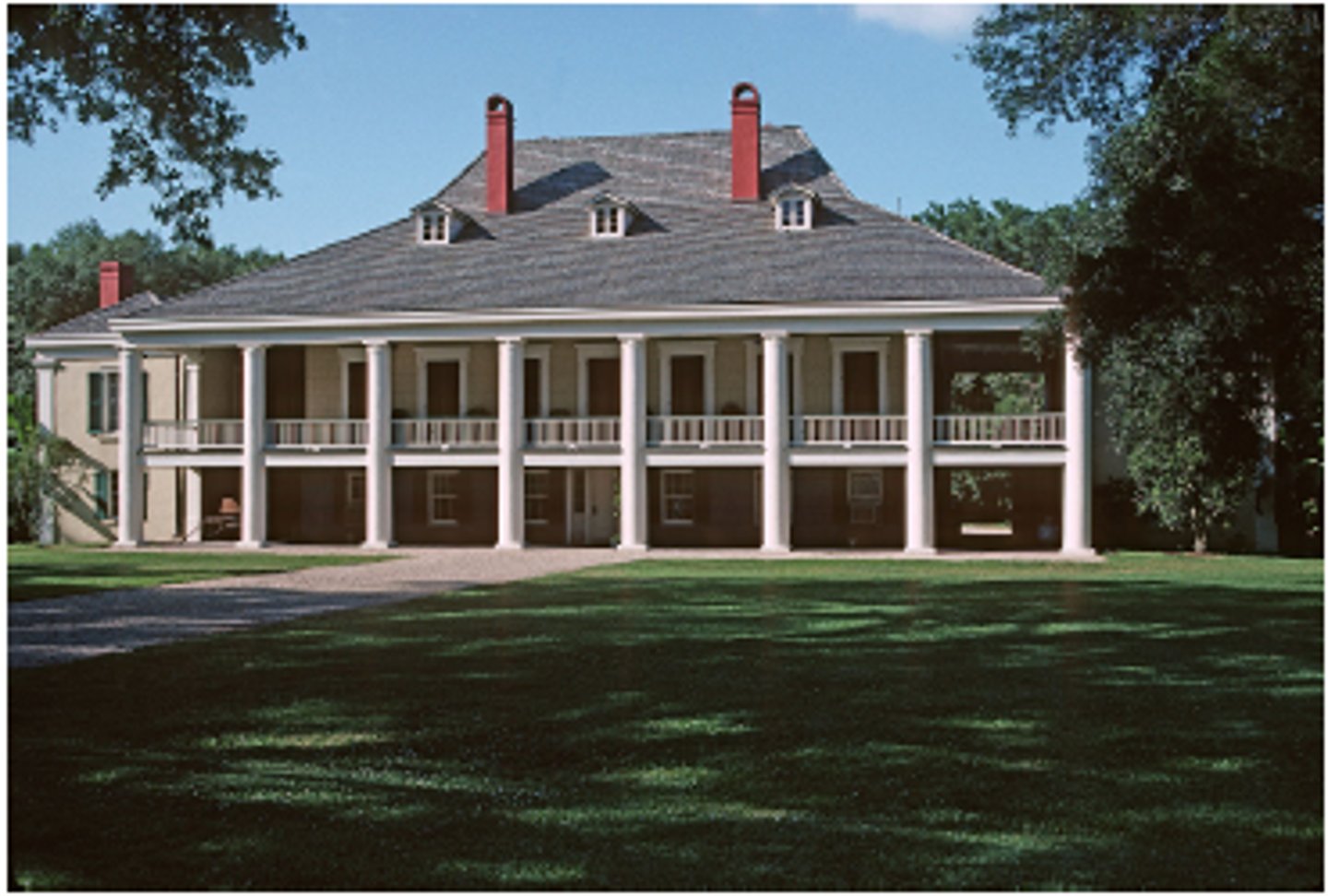
Creole Architecture's Characteristics
• Raised houses (to protect from flooding)
• Wide porches
• Adapted for hot climates
Creole Architecture's Historical Context
• Built during Spanish rule in Louisiana.
• Plantation economy based on indigo and sugarcane
Creole Architecture's Significance
• One of the oldest documented homes in the lower Mississippi Valley
• Listed on the National Register of Historic Places
Raised Bayou Houses
Characteristics
• Elevated structures
• Built for flood protection
• Often included outbuildings for plantation workers
Palladian Influence in America
- Drayton Hall (Charleston, South Carolina, 1738-1742)
- One of the earliest examples of Palladian architecture in America
- Inspired by Villa Cornaro in Italy by Andrea Palladio (1551)
American Palladian Characteristics
• Symmetry
• Classical proportions
• Central block with wings
• Temple-like elements

