Encounters of African Art - Quizz 1
 Studied by 0 people
 Call Kai
 Learn
Learn Practice Test
 Spaced Repetition
 Match
Match Flashcards
 Knowt Play
1/26

Earn XP
Description and Tags
Images to learn
Name | Mastery | Learn | Test | Matching | Spaced | Call with Kai |
|---|
No analytics yet
Send a link to your students to track their progress
27 Terms
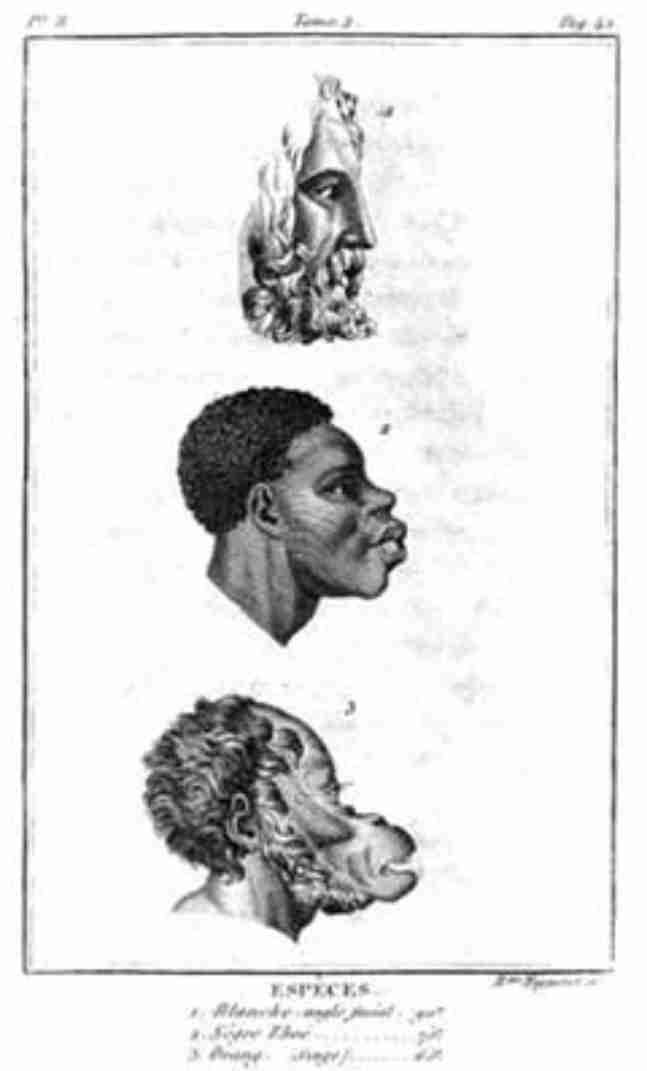
Drawing of the heads of an Ibo African man with a pronounced prognathism and an orangutan found in Histoire Naturelle du Genre Humain by Julien Joseph Virey
→ reflexes this ideas, EU writing and creating theory to make African seem less evolve nad tribal – EU being superior to those tribes // Colonization → want to reorganize the lands, transformation of those lands so it doesn't recall religion or ruling prior to colonization
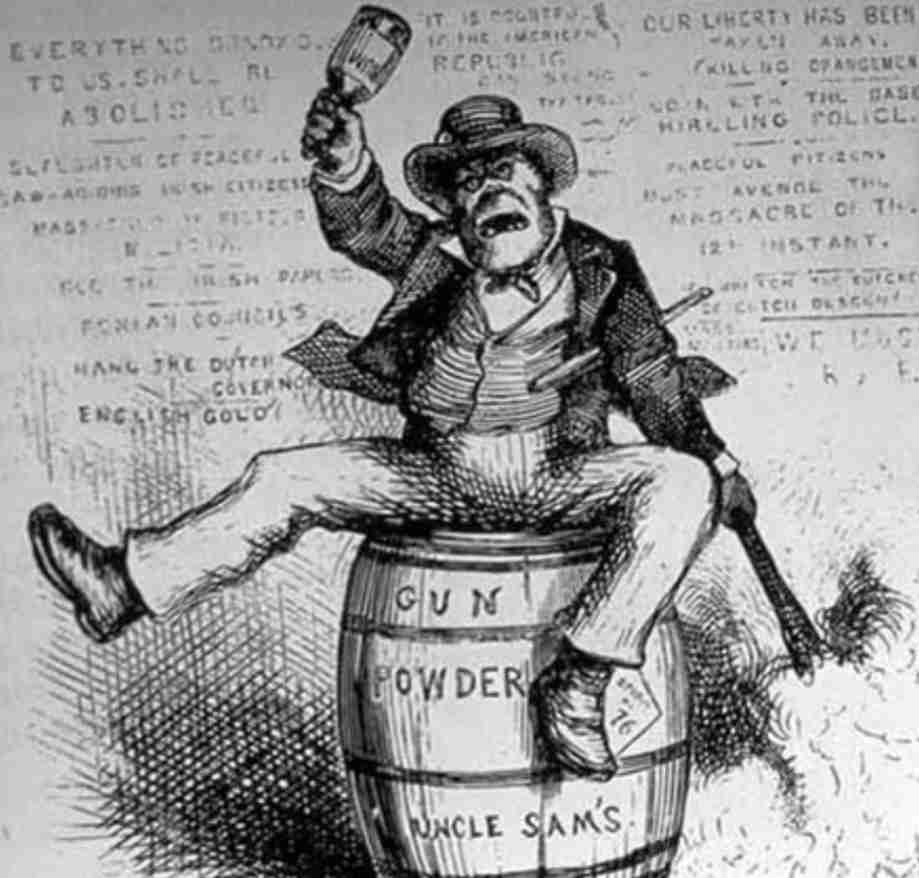
Thomas Nast, “The Usual Irish Way of Doing Things”, from Harper’s Weekly, 1871
→ to remind use those theories affected people from Eu as well — here, Irish with the face of an Ape
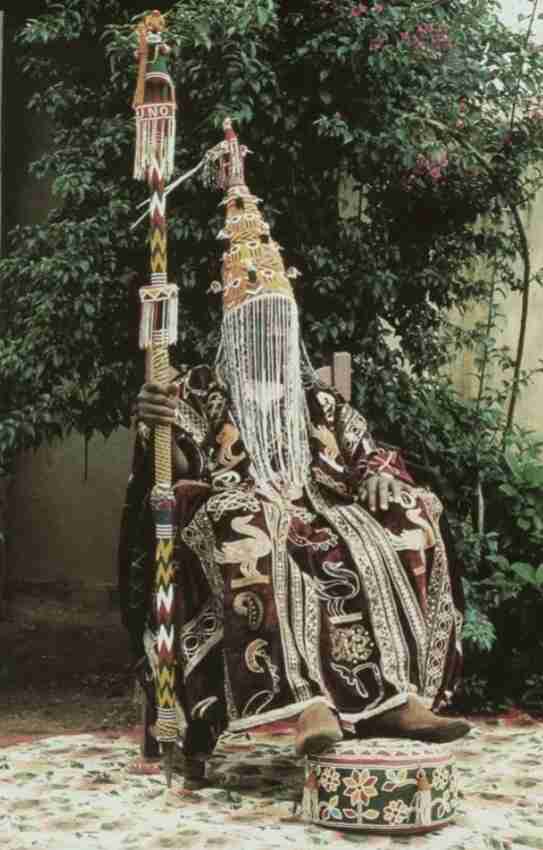
Ruler of Orangun-Ila, Airowayoye I, in beaded crown and other regalia, Yoruba, Nigeria, 1977
→ gave us the ides of the regalia (crown in a cone shape [intellect, beauty] made of glass beads that were also used in construction of temples so the king was seen as sacred – representation of faces of the royal lineage – bird at the very top, hocking bird symbolic of royalty and refers to the Great Mothers of Yoruba society – frange protecting the face of the king, obscuring his identity and protects the viewers of his powerful ease) + (scepter with representation of past ruler at the top) + (ground around king covered and feet placed on foot rest) wore the regalia for important events – after colonization no political power that they once had so started wearing them a lot more
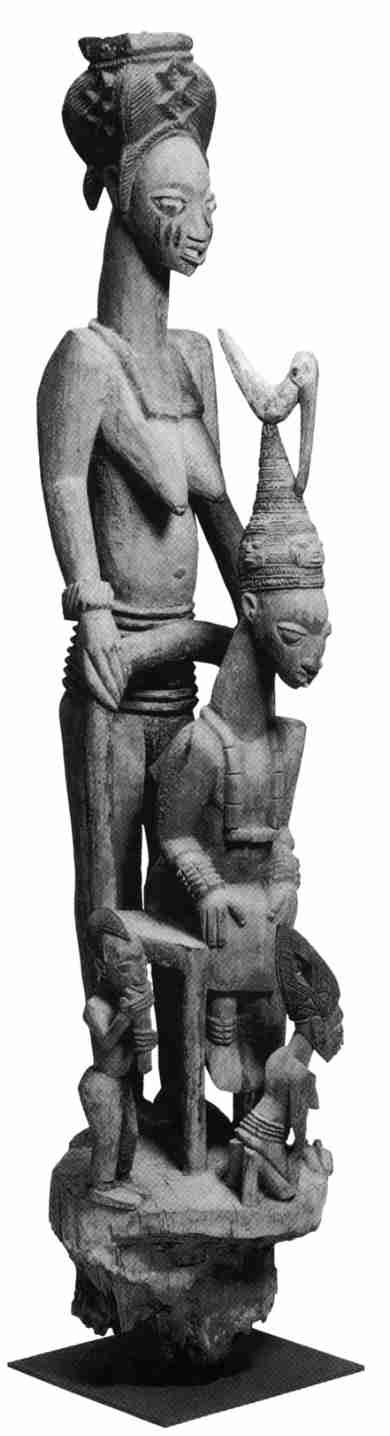
Olowe of Ise, Sculpture from the palace of Ikere, Yoruba, 1910 - 14
→ roof support from that palace – architecture in palace were rectangular featuring interior courtyards // Features a king and his senior wifes and in front of him attendances – senior wife bigger than king – she must have made a cultural impact – made during colonization
Nudity of the women emphasis that women were seen as pure
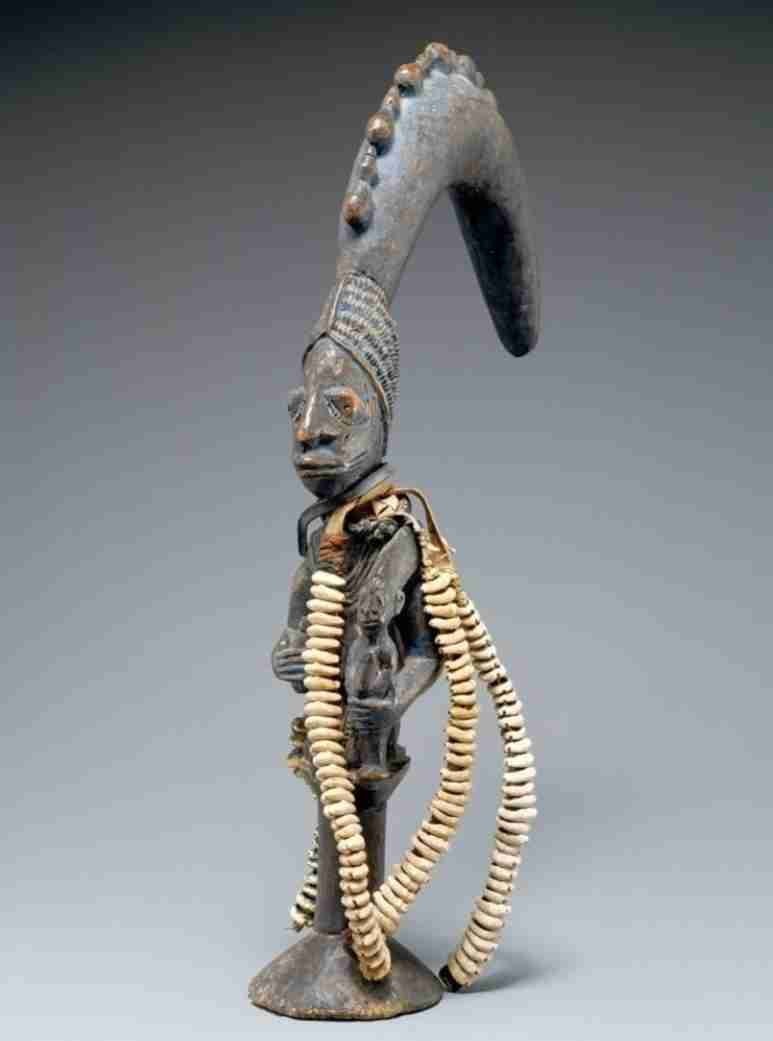
Artist unknown, Eshu Figure, Yoruba, 19th century
→ eshu also very important part of the Ifa divination system – most commun for he is represented in – headdress calabash bord filled with powder used in divination system and also what eshu use to help the people who prays for him – body of Eshu depicted as a child cause associated with mis shifted – cowria’s collar (currency in different part of Africa)
body appears quite small but somewhat adult looking face, long headdress with calabash girls that stored the white powder used by the babalawo → often depicted with this headdress or elaborate ear style, cowrie shells used as a form of currency and often use in divinatio
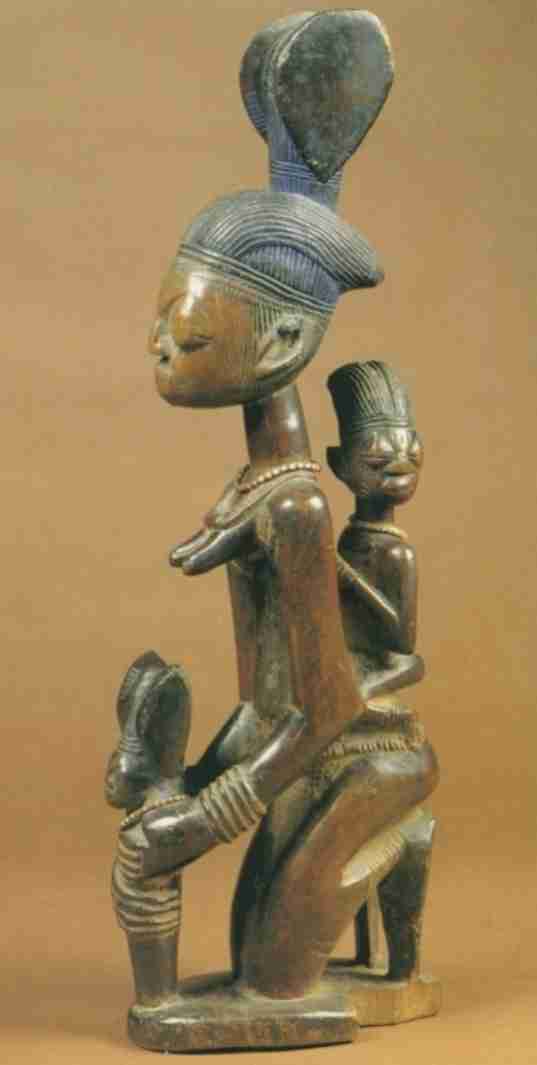
Artist unknown, Shango Shrine Figure holding Dance staff, Yoruba, 19th century
→ figure seen in shnago temple – female nude devote kneeling in respect to Shango – as double axe balancing on her head to simbolize Shango’s calmness in facing danger – child on her back
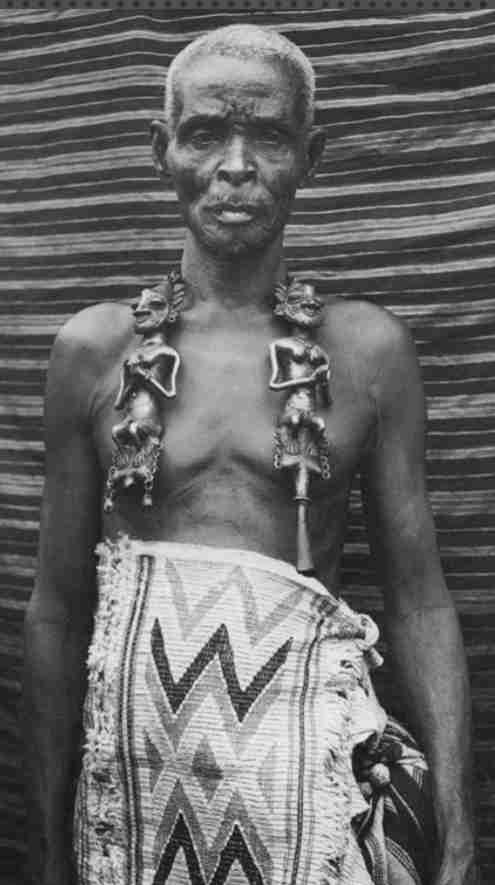
Ogboni Society elder with paired brass sculptures, Yoruba, 1949 - 50
→ elder form that society (society of 30 wise elders very powerful) cause king didn't have absolute power cause the Ogboni would have a say in ruling – judging cases // Ogboni means wisdom and number 30
Different levels/rank in society → here elder with collar of bronze sculptor of a man and woman (this male/female pair speak to share important of both male and woman governing the Yoruba civilization)
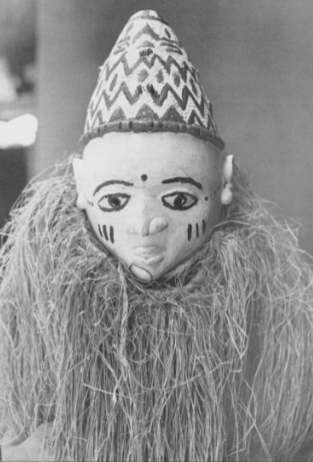
Arabi Ajigbale, Yoruba
→ first to perform and is a mean for ceremonial cleansing where the Efe ceremony takes places
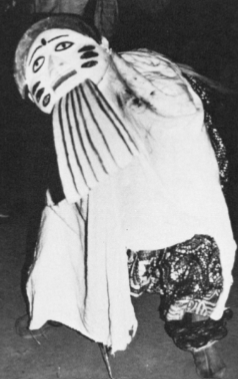
Bearded Great Mother, Iyanta, Yoruba
→ begins her performance — representation of the Great Mother
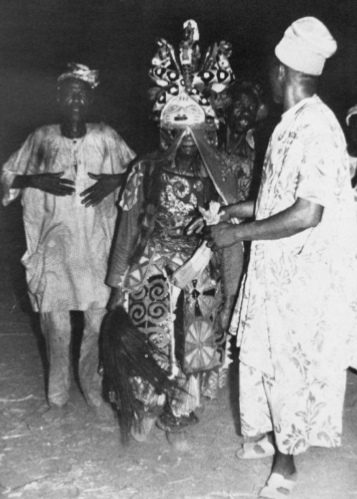
Oro Efe, Yoruba
→ ceremony is based of – accompanied by flute player – honors different deities and ancestors + the Great Mother
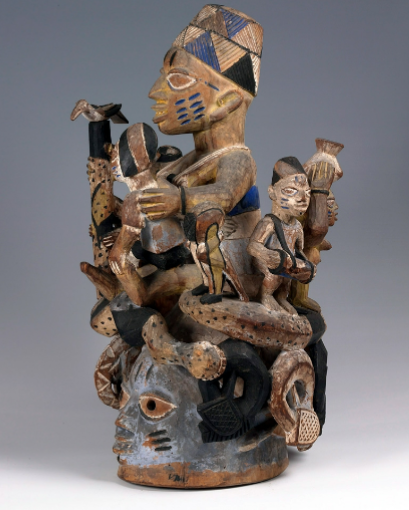
Gelede Mask featuring Role Recognition
→ featuring gender rules recognition
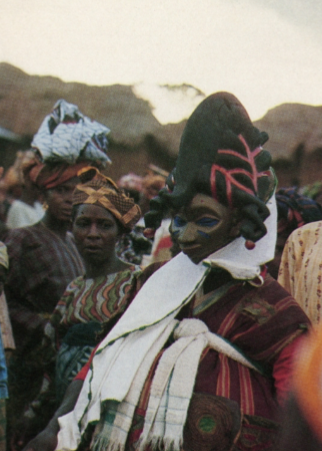
Gelede Mask of Ridicule
→ criticize antisocial element in society – here sex workers or people of rival kingdom (prior to colonization)
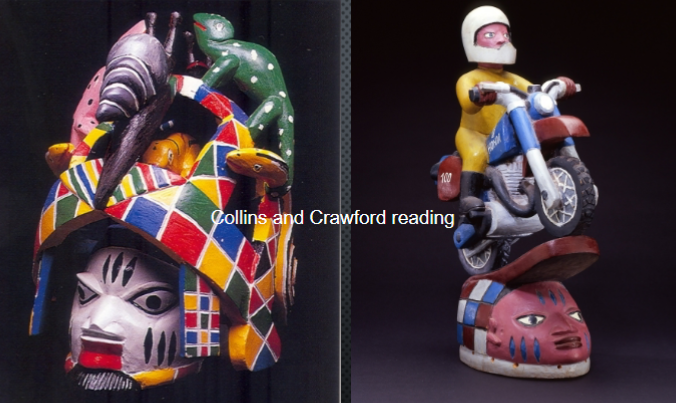
Gelede Masks of Cosmological Forces
→ animals
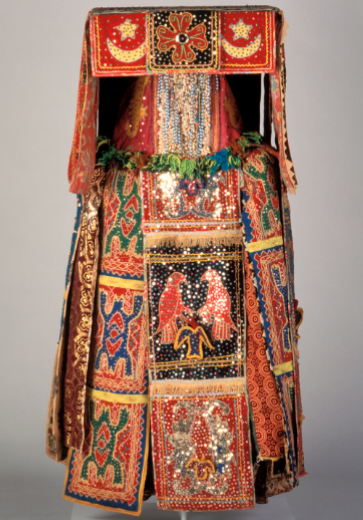
Idomole Egungun, Yoruba
→ costume – Idomole really translate to what pleases the eyes – box like structure at the very top of the costume (croissant moon and moon representing islma beliefs) — lets place to Alubata egungun
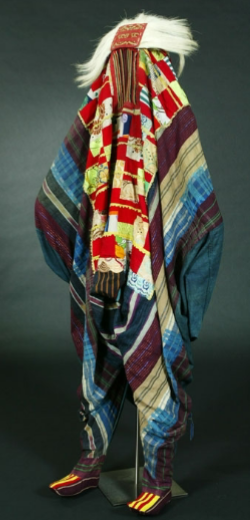
Alubata Egungun
→ highest ranking in Egungun masquerade – means the one who plays the drum – frange echoes the importance of the Colombus monkey
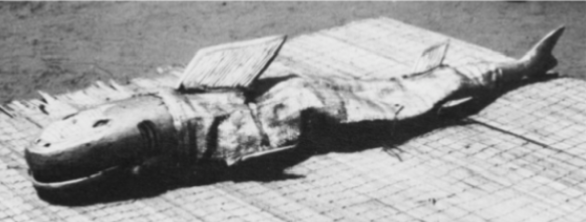
Onidan Fish, Yoruba
→ refers to any costume that highly regarded animals – here, a mud fish
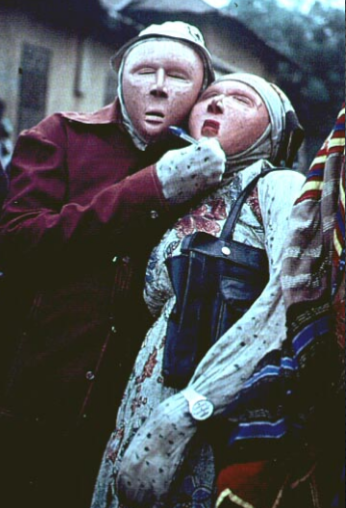
Onidan of Europeans, Yoruba
→ social commentary
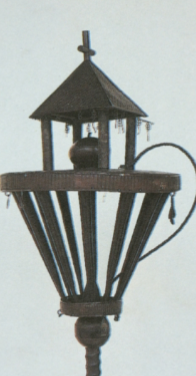
Artist Unknown, Memorial Sculpture in the form of a House, Fon, 19th century
→ Asen sculpture dedicated to king Huegbadja – usually found in Diejo – representing a object hat representing the deceased – the higher the pole the higher the status of the person + material plays important meanings in social rank
Symbol at very top, Dahomey sign for the meeting of religious forces + calabash that represents king Huegbadja rulership + cord represented that he is the father of the royal lineage
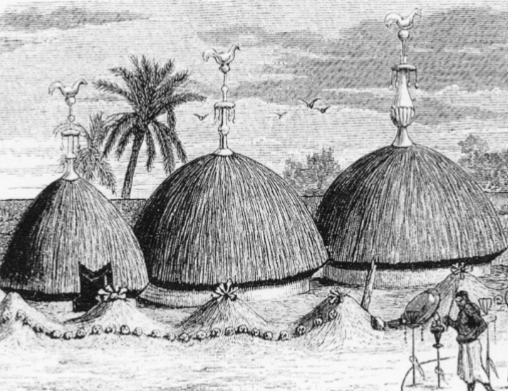
Royal Diejo (House for the soul), Fon, 1874
→ related to king Agaja (son of king Huegbadja) – to house the soul of the king once he dies
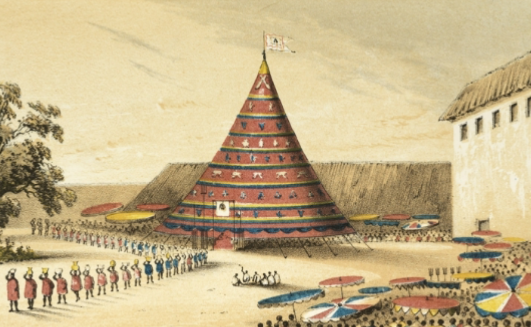
Frederick E. Forbes, Parade of King’s Wealth during Huetanu Ceremonies, Fon, 1851
→ introduced by Agaja’s to parade the King’s wealth – very tall tent in the palace ground
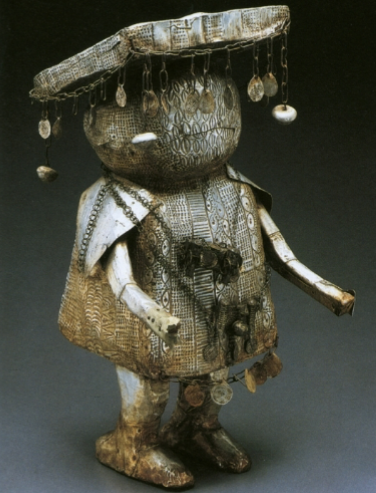
Artist Unknown, Sculpture of a man with fins, Fon, 19th - 20th century
→ associated with Tegbesu – contribution to religion – representation of the female/male priest wearing lots of coins + head piece + artist doesn't want particular gender so face doesn't have much details – religion related to the spring
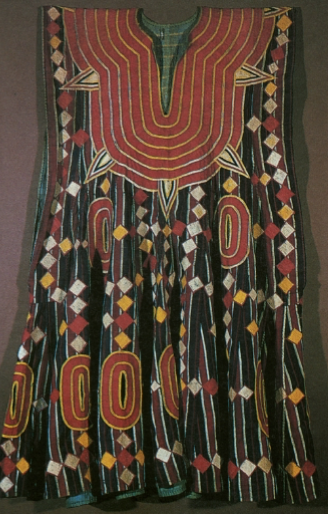
Artist Unknown, Royal War Tunic, Fon, 19th century
→ war tunic, also called Kansawu – created for the king and male/female military leaders – red predominant color, have association with royalty being a royals colors (makes us think of death) + golds rings (number of rings around the neck tells u the rank of the military leader) + triangular shapes mimicked the claws of leopard (leopard symbolic of royal power)
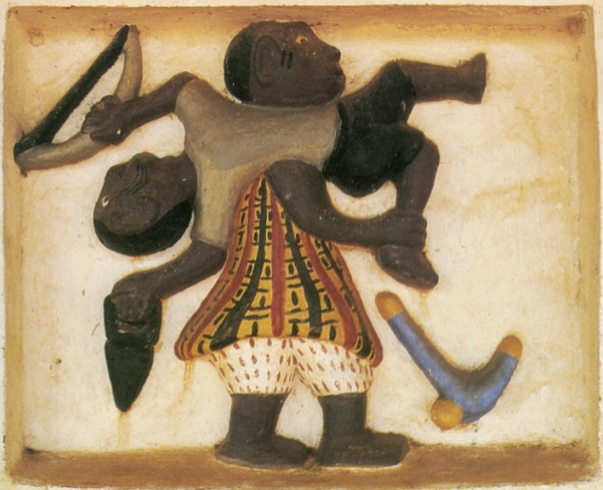
Artist unknown, Earthen Bas-relief, Fon, 19th century
→ One of several bas relief commissioned by King Guezo – placed in reception hall of his palace where important event took place – portrays political figures and warriors of the kingdoms – gender equality (woman seen as stronger than men in different ways, there was female warriors as much valued as male warrior) – here, a female warrior carrying a body of a defeated Yoruba’s warriors ⇒ the artists conveys her to express the power of the Dohomey’s kingdom by the war’s tunics and use of bright colors (for her clothes and weaponry) that clashes with the tern colors of the body + she carrying the body on her shoulders by its ankles since she’s so strong + seems bigger than the man (express that you really shouldn't mess with their army) – showcases the female warriors
Female warriors = historically important figures
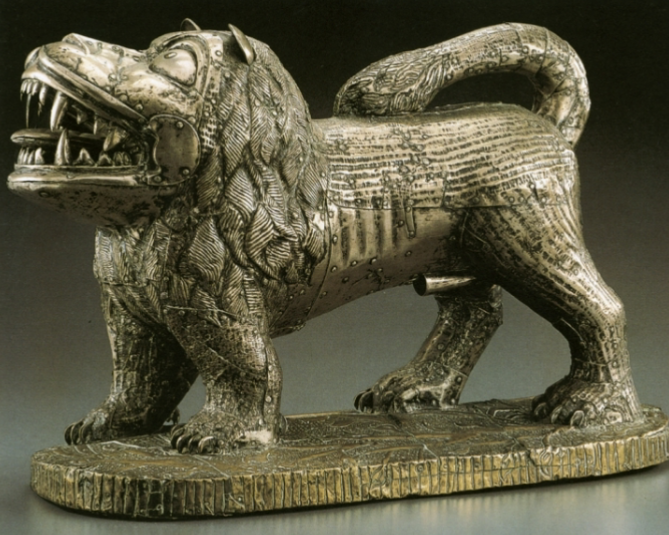
Artist unknown, Lion Representing King Glele, Fon, 19th century
→ elements of it from Baroque (Europe) – divination system (similar to Yoruba religion) the rulers were assigned a divination sign, was featured in his jewelry – wooden structure created and than the artist hammered sheet silver on the structure – we can see the details (fur, head…) – sculptures suggest some movement
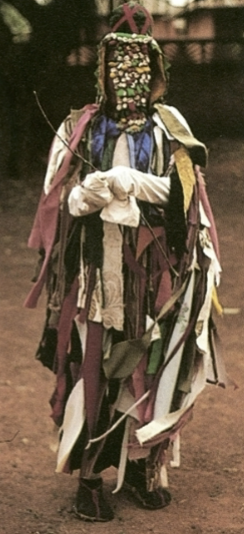
Photograph of Kutito Performer,
Fon, 1986
→ From Dahomey Kutito Masquerad (honoring ancestor like Egungun) = long, finn strips of textile and when perform the strips light and moving as the dancing acquired – French Pierrot character influence actual costume of the masquerade Pierrot Grenade from 2006
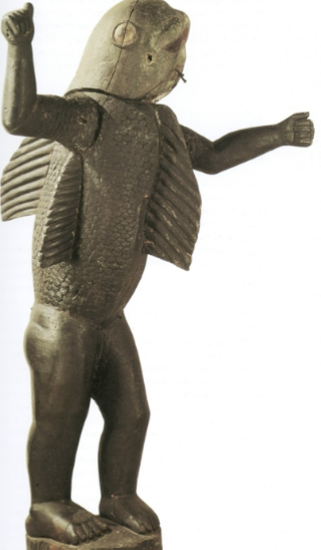
Sosa Adede, Sculpture of a
Man-Shark dedicated to
King Bejanzin, Fon,
Late 19th century
→ head looks more like adorable dolphin other than terrifying shark – tried to express the king power and his threat the the french power within the kingdom – showing that the king will fight for his kingdom and his people (as he did with Glele) – shows scales = taking shark’s attributes and merging it to human attributes // European influence
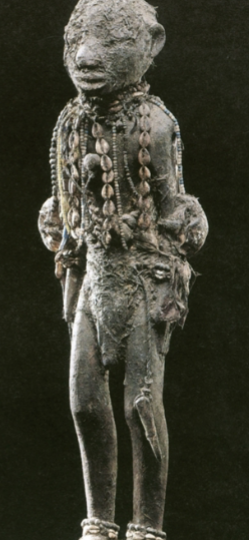
Artist unknown, Bocio Sculpture,
Fon, 19th – 20th century
→ attracted well being into owners life – magnets to negative elements, energy so that only good fortune could be attracted to the owner – embodies what the owner doesn’t want in his life (danger, aggression, violence) – Bocio figures usually emphasis restriction and mutedness) made out of ropes, palm trees, glass beads, earth,
A surrogate to the owner being with similar elements of the owner
 Note
Note  Flashcards (21)