Art in 1900s Final
 Studied by 0 people
 Call with Kai
 Learn
Learn Practice Test
 Spaced Repetition
 Match
Match Flashcards
 Knowt Play
1/20

There's no tags or description
Looks like no tags are added yet.
Name | Mastery | Learn | Test | Matching | Spaced | Call with Kai |
|---|
No study sessions yet.
21 Terms
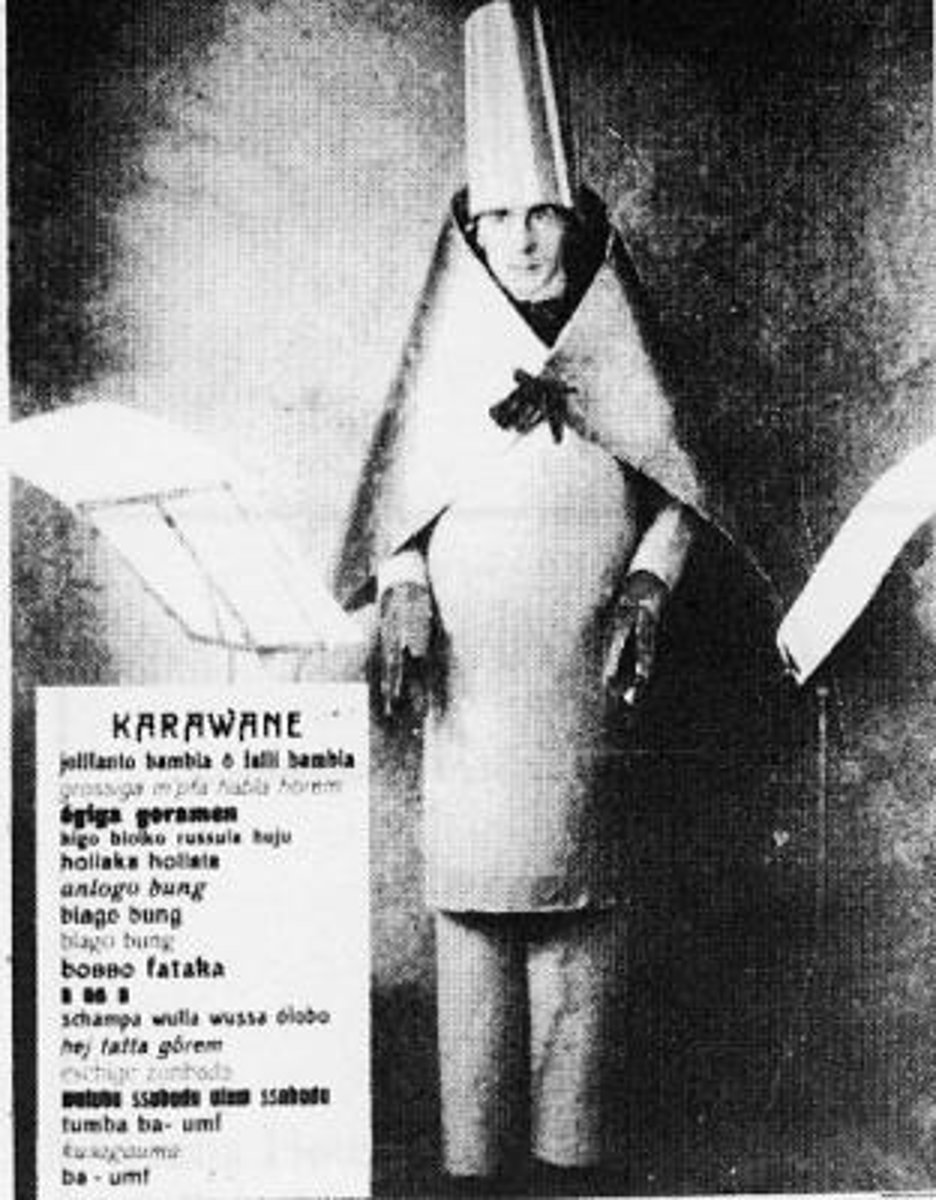
Karawane, 1916
Hugo Ball
Dada
Centers the idea of nonsense as a response to the world
Performance piece; Ball refers to himself as an elephant-lobster mixture in a pope-like manner and then recites a nonsensical poem
Brings audience together through experiences the strangeness all at once
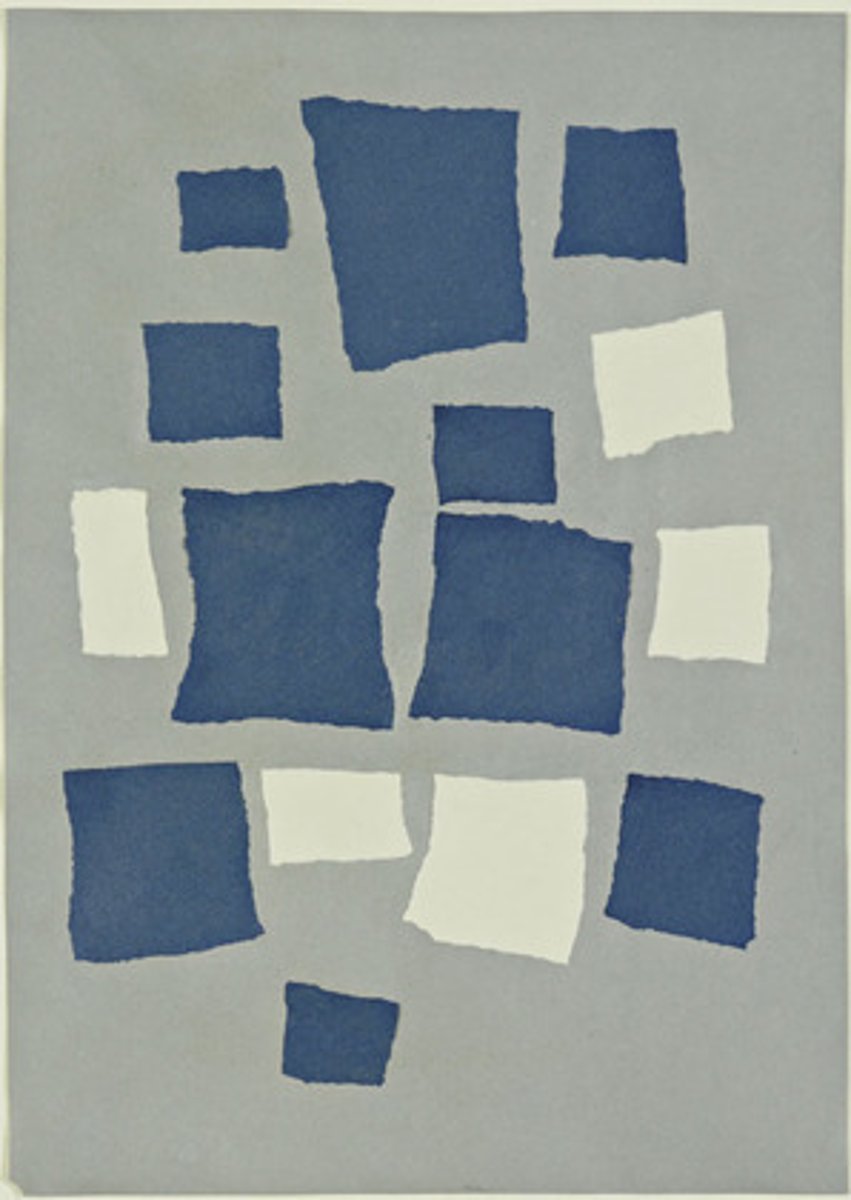
Collage Arranged According to the Laws of Chance, 1916-17
Jean Arp
Dada
Collages made through chance and not his own hand; cuts up construction paper and throws them down onto another paper
Conversation brought around about artists removing themselves from the art
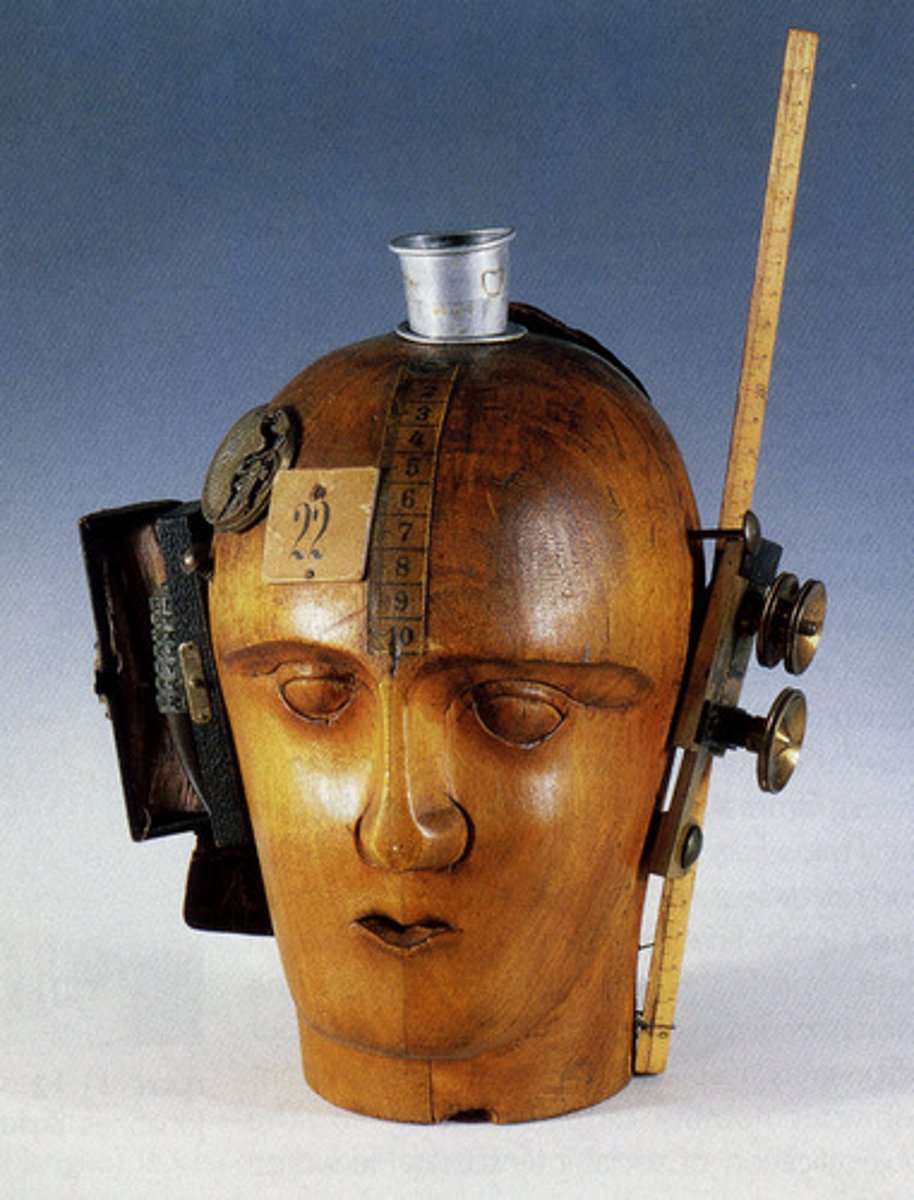
The Spirit of Our Time (Mechanical Head), 1919
Raoul Hausmann
Berlin Dada
Dada assemblage of object (like a collage but 3D); mass produced mannequin head with various time stamps from that era -- ie. yarn, protractor, tape measure
Conversation on how rationality & technology was at the forefront of everyone's mind at the time
Wood represents hard-headedness
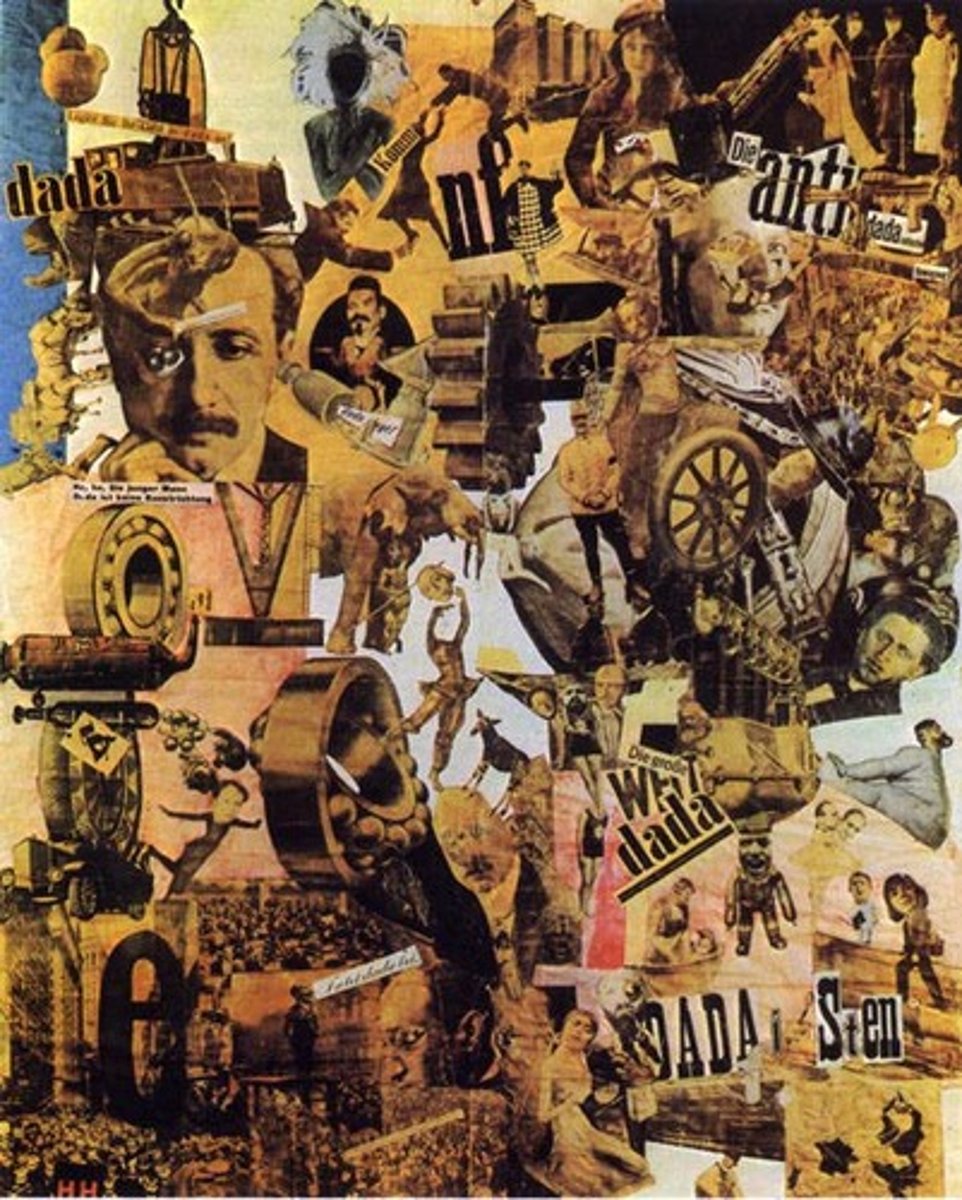
Cut with the Kitchen Knife Dada Through the Last Weimar Beer-Belly Cultural Epoch in Germany, 1919-20
Hannah Hoch
Berlin Dada
4 quadrants represented
Top left = figures who rejected pure bureaucracy & aligned with Dada
Top right = anti dada movement
Bottom left = call to join dada
Bottom right = Images of dada artists comedically placed
Kollwitz (female artist associated with the movement of "the New Woman") placed in the center; also contained map of countries where women could vote
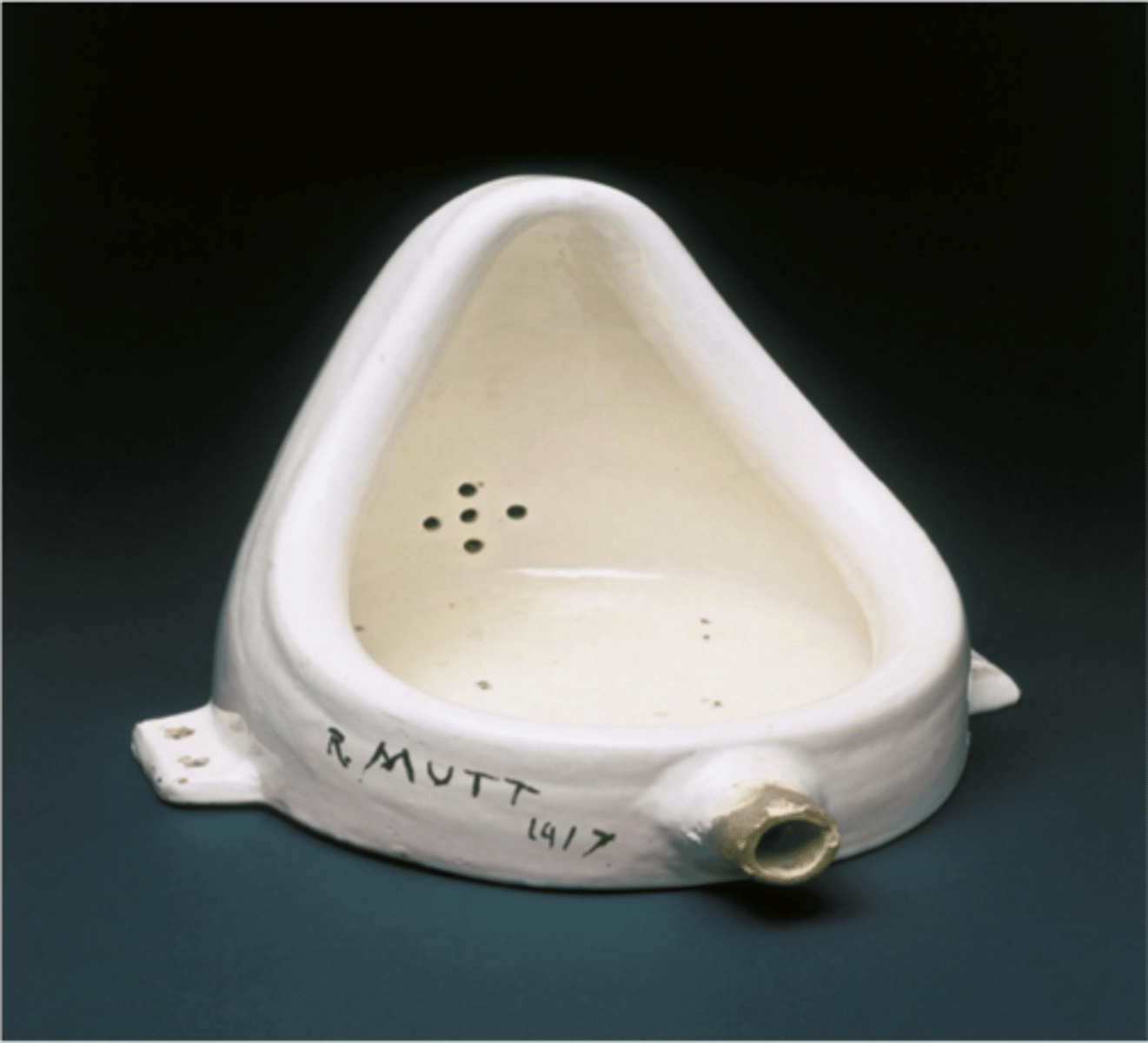
Fountain, 1917
Marcel Duchamp
Dada
Sat on jury for an exhibition that stated it would accept any artist and piece; applied under pseudonym and became the only piece rejected
Dealt with ideas of beauty and pushed back against centuries of sculpturing
Created conversation of value around the piece and similar types of "art"
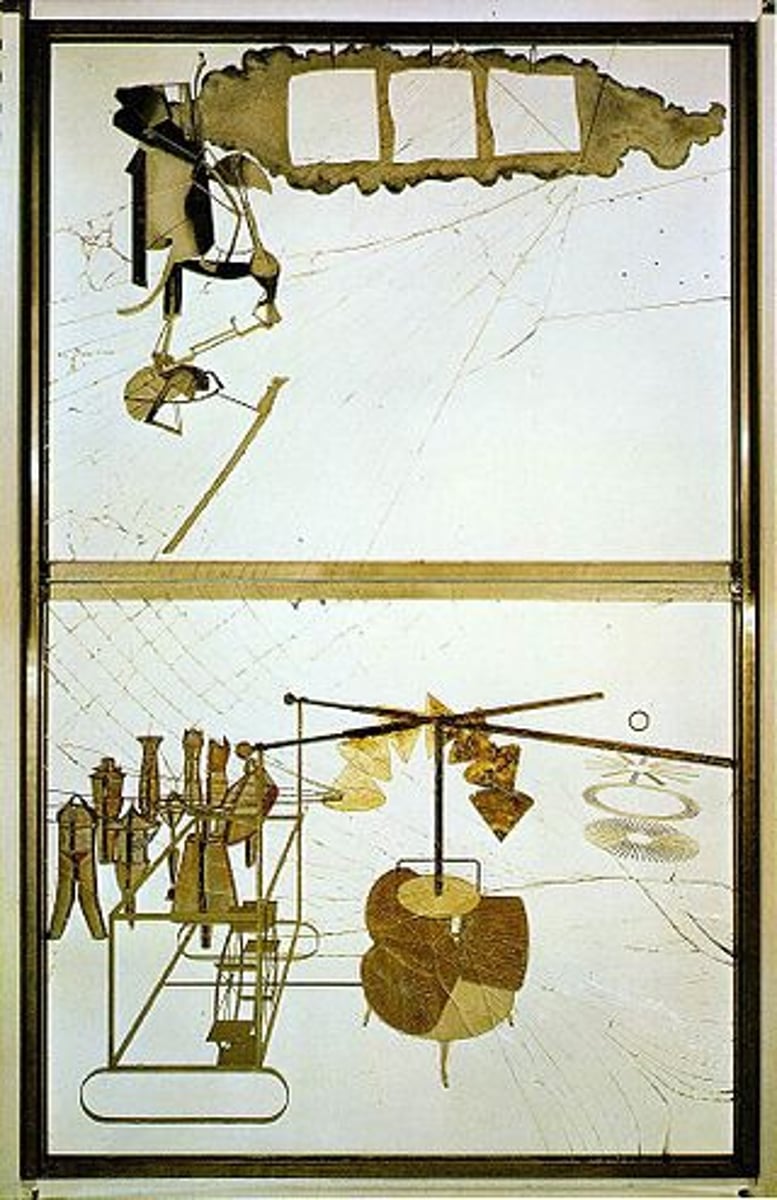
The Bride Stripped Bare by Her Bachelors, Even (The Large Glass), 1915-23
Marcel Duchamp
Dada
Pushing back against traditions of painting and sculpture
Submitted to Brooklyn Museum, broke upon returning & transformed into true final piece according to Duchamp
Bachelors constantly grind chocolate grinder and shoot toward the bride's pistons/nets -- they shoot their shots but cannot reach her; play on ejaculation
Machine is frustrated because it cannot reach its masturbatory desires; epicenter of the irrational: love & lust make you crazy
Glass means you can see behind the piece and introduces chance through a constantly changing environment
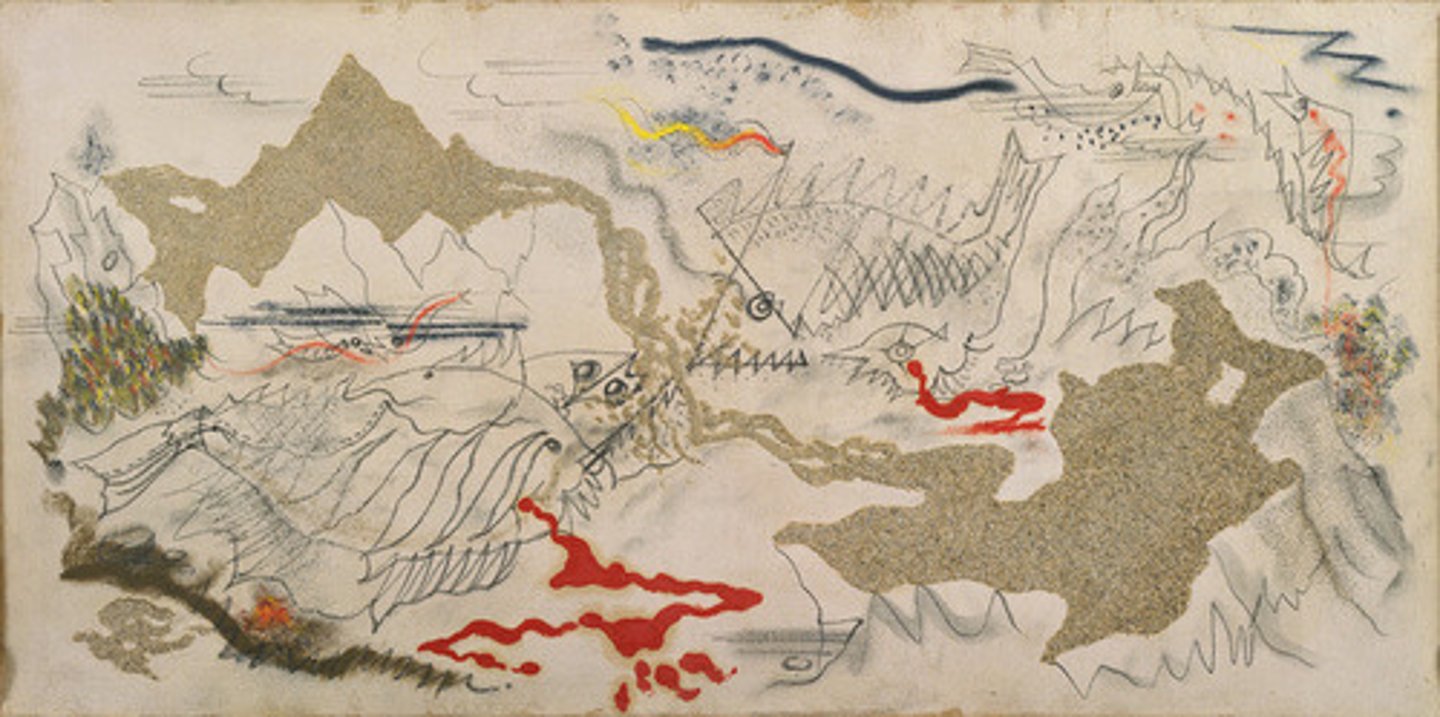
Battle of Fishes, 1926
Andre Masson
Surrealism
Freehand drawings where he scribbled, poured glew, and threw sand on top; decided what the scribble looked like afterwarn and then elaborated --> he saw aggressive-looking fish and gave them teeth
Psychedelic expression after WWI
The Tilled Field, 1923
Joan Miro
Surrealism
Depicts a stylized view of his family's farm; poetic metaphor that expresses his idyllic conception of his homeland
Cubism, imaginary

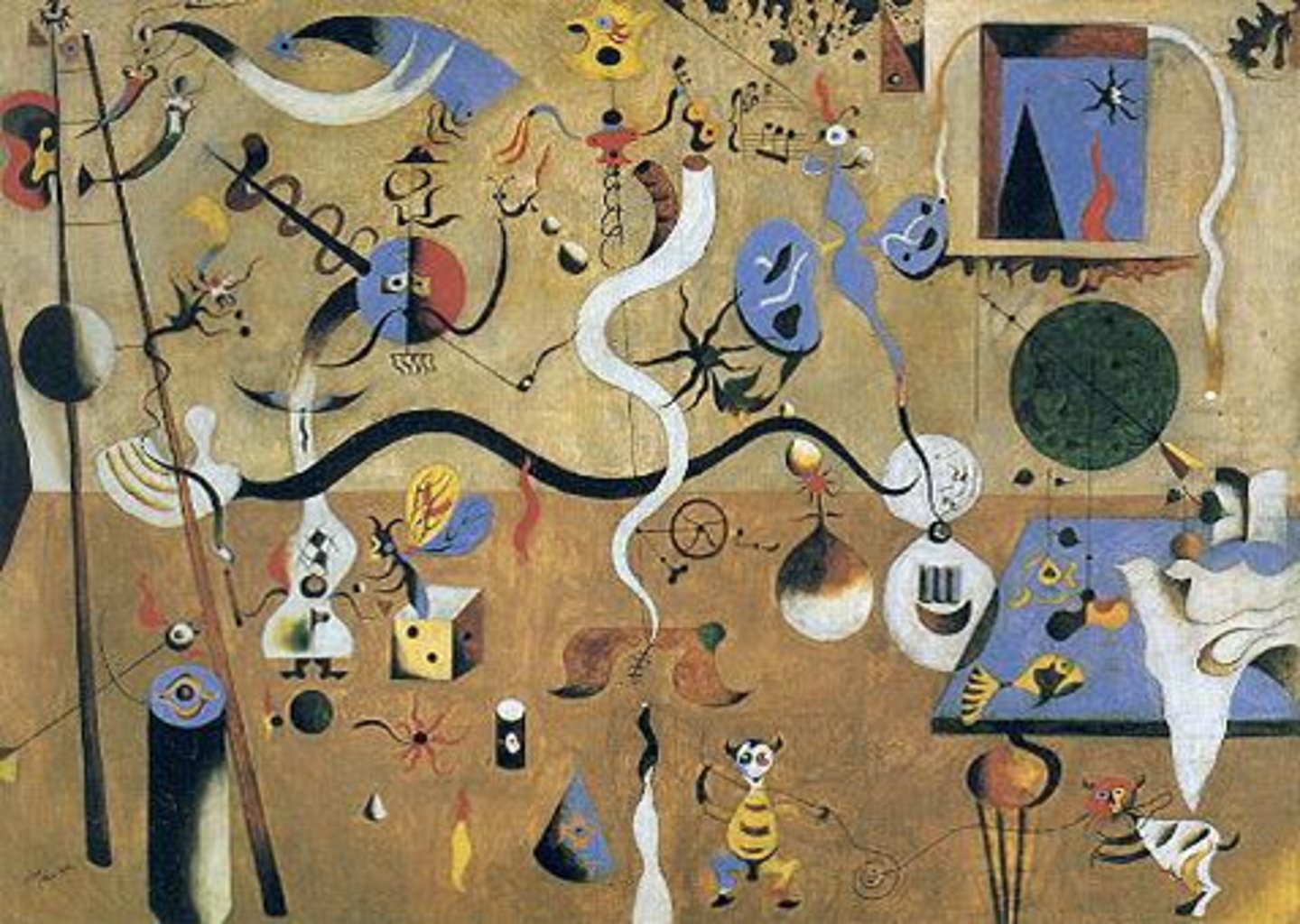
Carnival of Harlequin, 1924-25
Joan Miro
Surrealism
Dark & muted color palette
Jester is seen with half red and blue circle-- appears worried and upset. He is slumped over w/ mustache askew and worried eyes. Represents how Miro felt about himself,, he was a starving artist
Automatism
Combination of many things that don't belong (juxtaposition) in upward structure
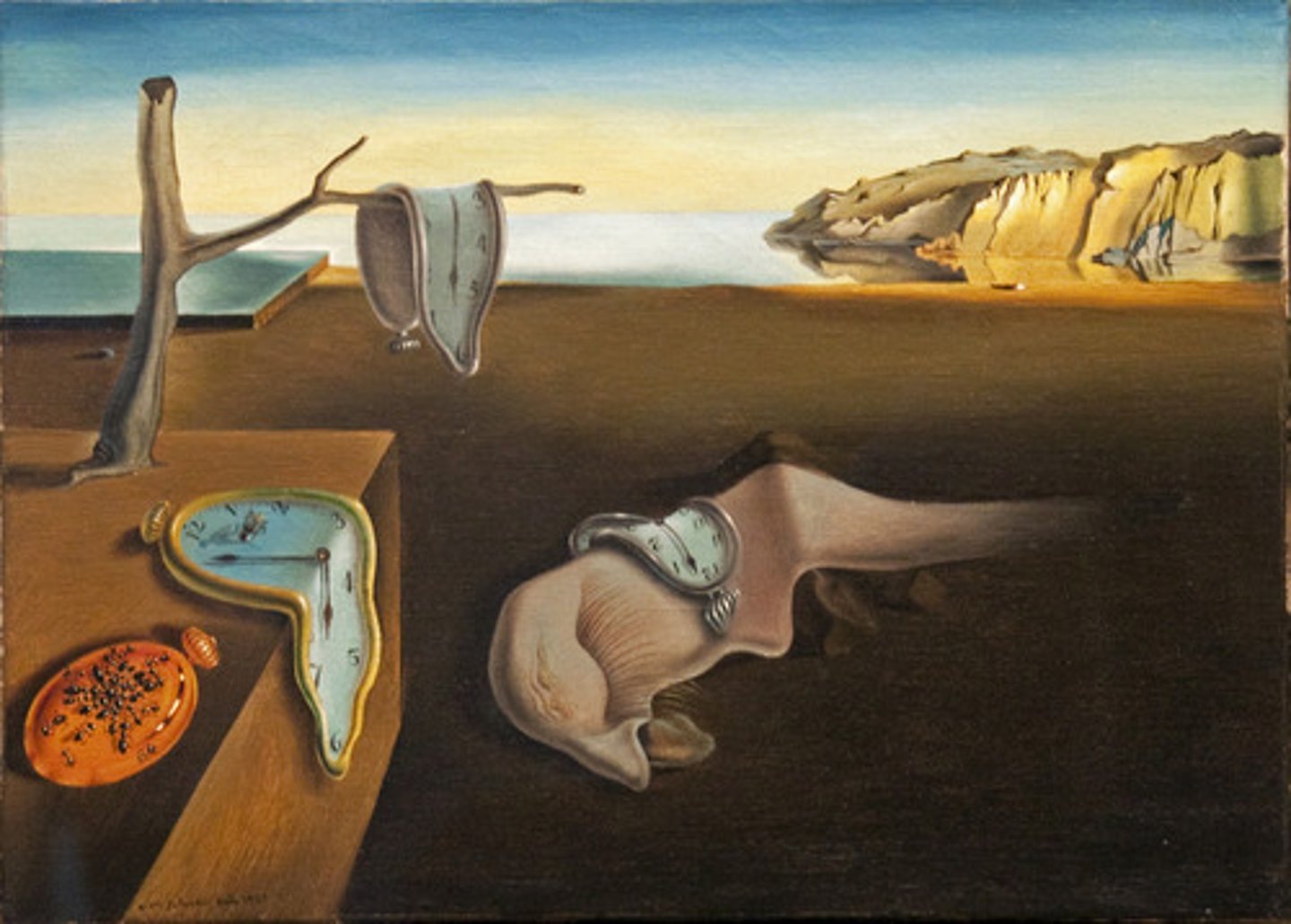
The Persistence of Memory, 1931
Salvador Dali
Surrealism & Hyperrealism
Unsettling dream; expansive landscape representing the psyche after WWI
Land is flat and devoid of texture, no waves in water and no plants
Ideas of decay & melting while the ants eat the clock and viewers see a strange carcass
Message on how memories fade and decay
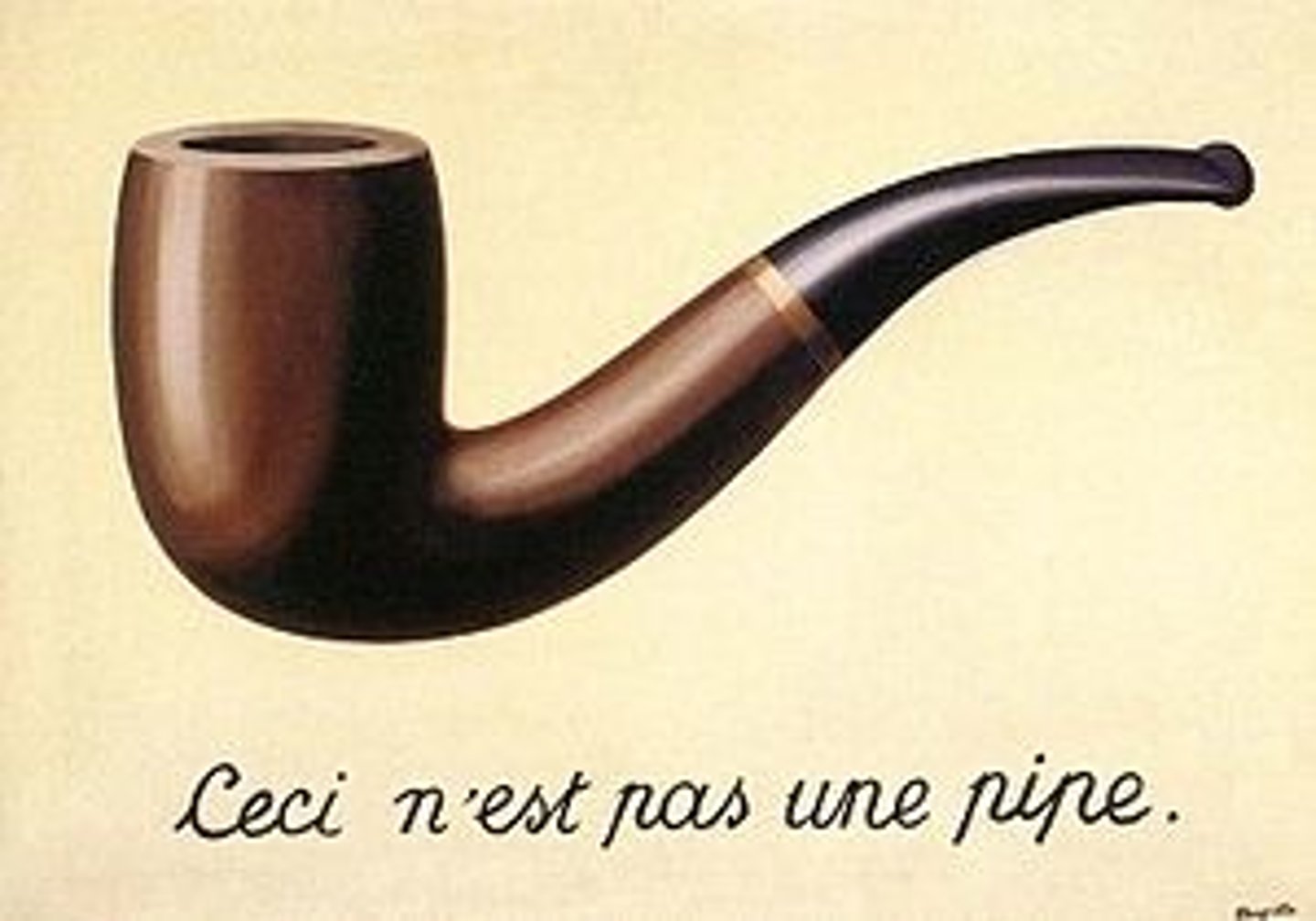
The Treachery of Images, 1929
Rene Magritte
Surrealism
*NOT ON FINAL BUT STARRED*
"This is not a pipe"
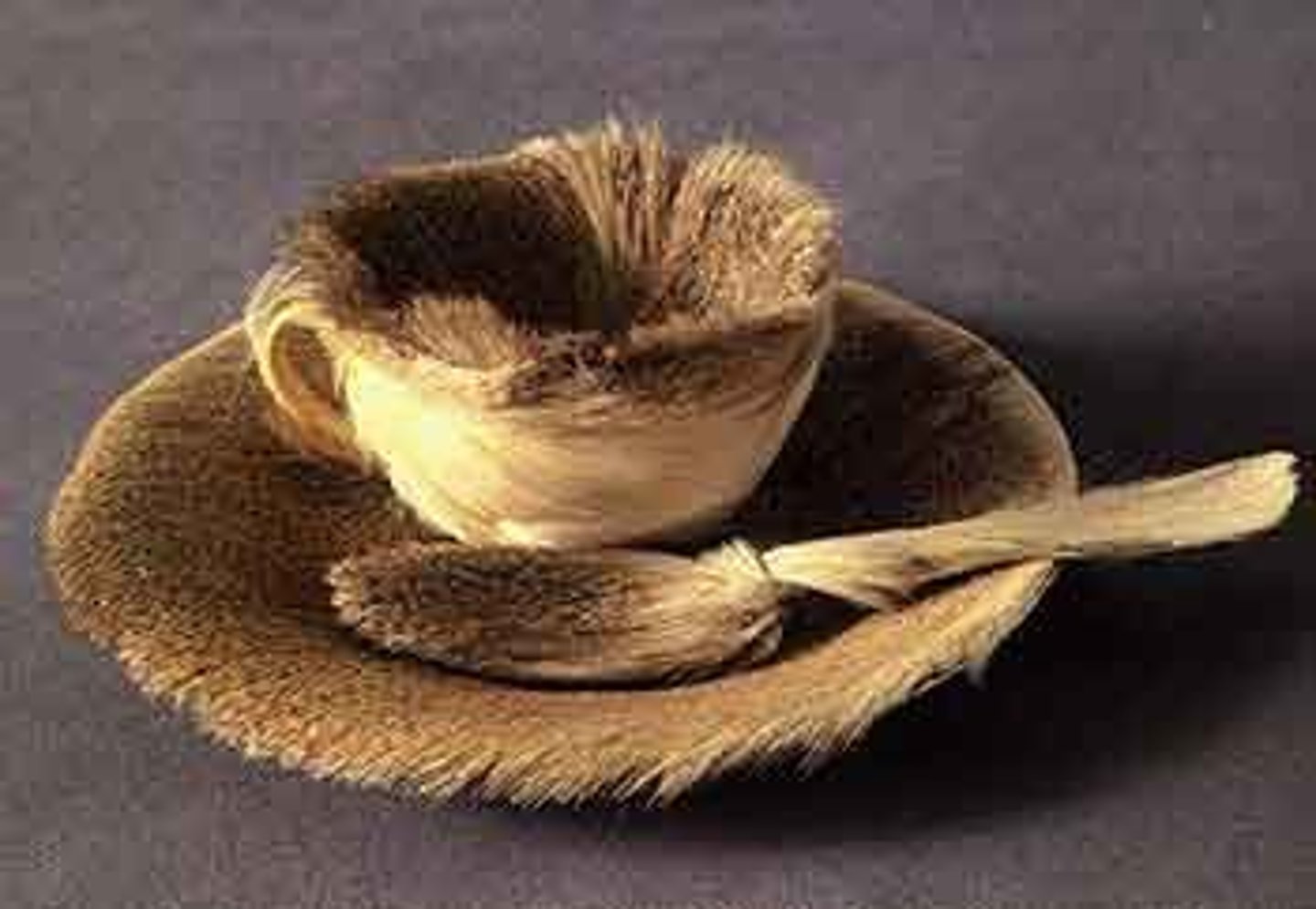
Object, 1936
Meret Oppenheim
Surrealist Objects
Young, female artist
Juxtaposition between hard and soft, organic and inorganic, function made nonfunctional
Tea is generally associated with upper class
Tea looks vaginal; dipping biscuits inside and putting mouth to cup = oral sex
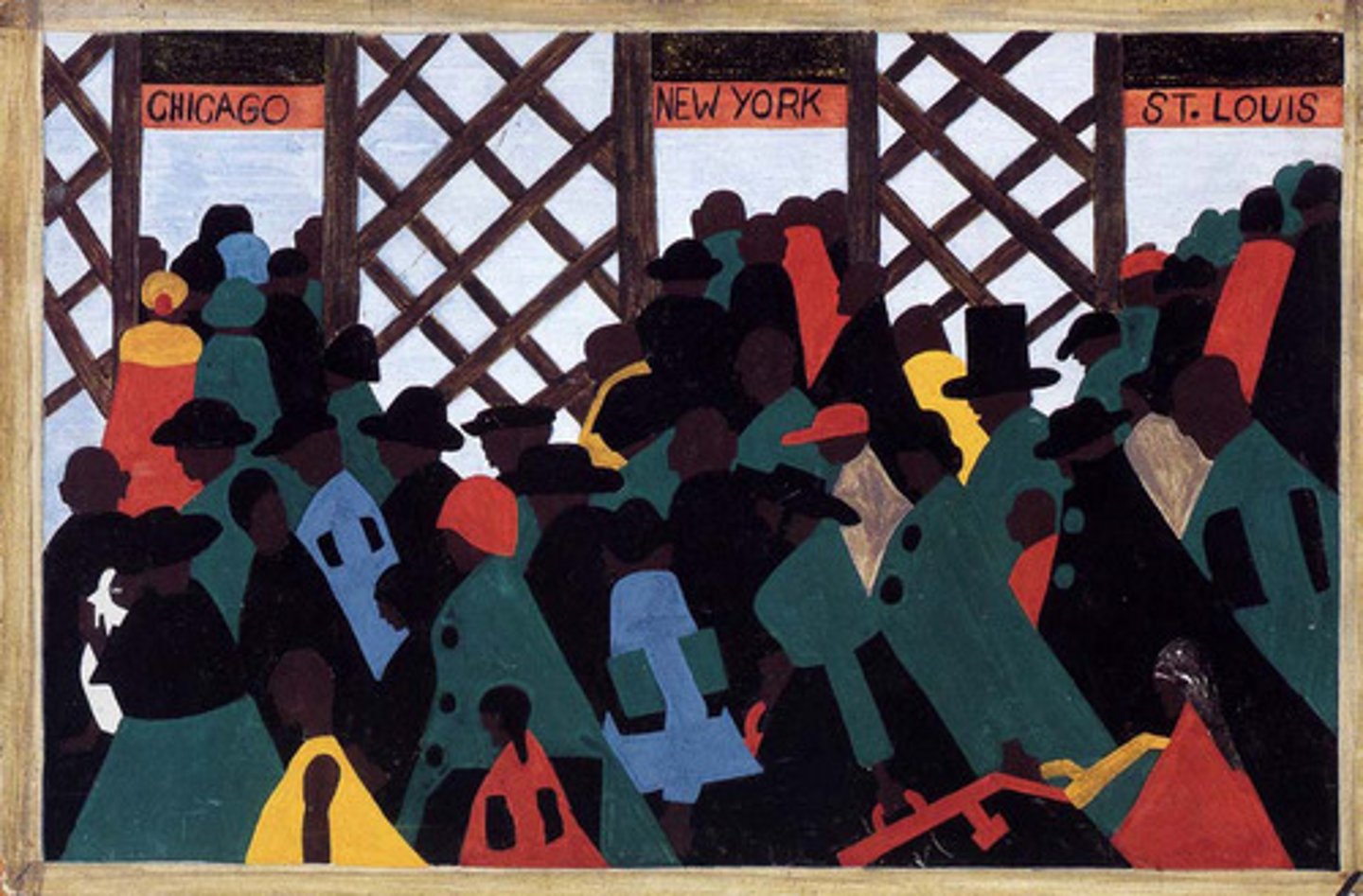
Migration Series (Panel 1), 1941
Jacob Lawrence
American Avant-Garde
Massive project consisting of 60 paintings coming out of the Harlem Renaissance
Focused on Great Migration during US Reconstruction Era; Black Americans left the South due to Jim Crow laws and flocked northward
People are moving from right to left in unified manner -- enhanced through color and shape language
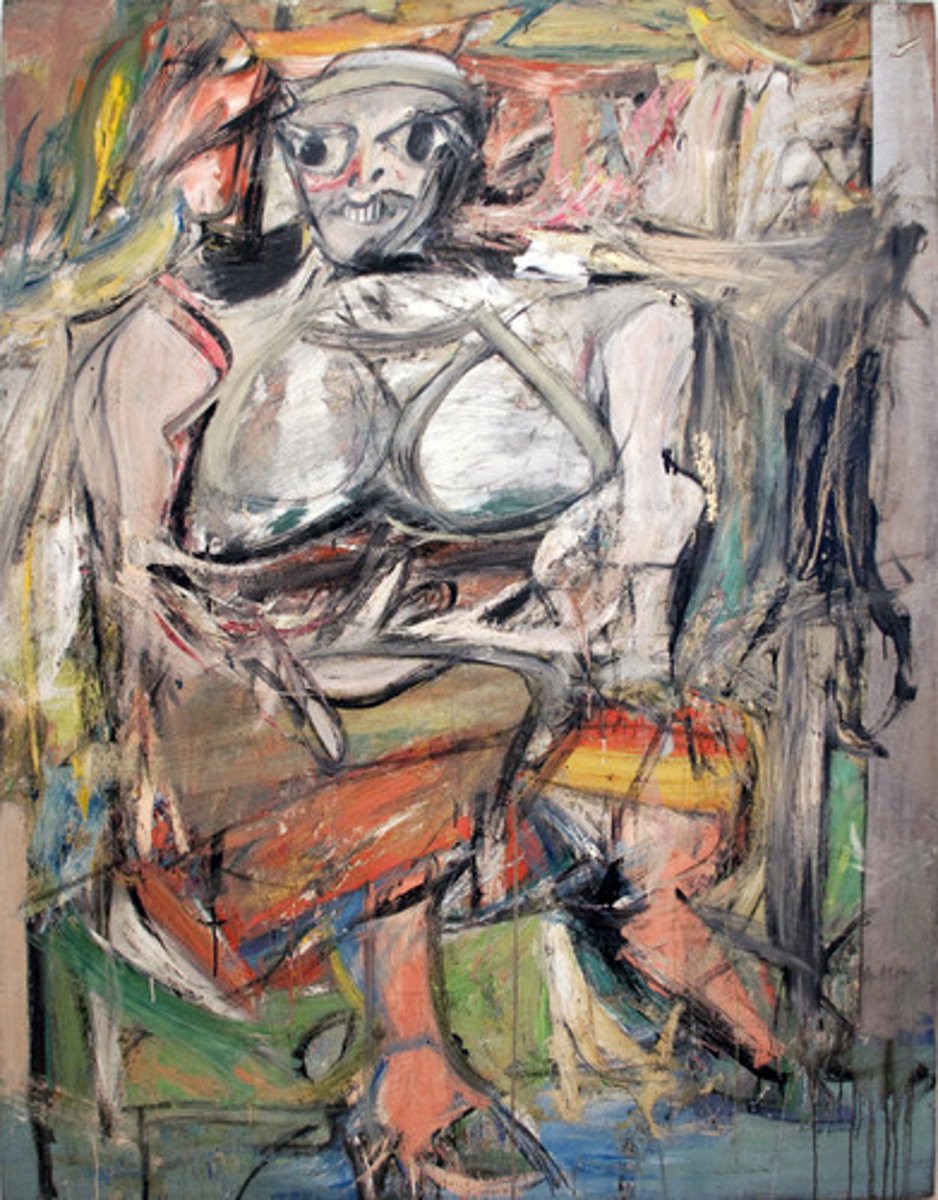
Woman I, 1950-52
Willem de Kooning
ABEX Action Painting
Tried to paint the essence of a woman, which can be shown through her large breasts; plays into themes of fertility and motherhood
Hoof-like feet that collapse the essence of a woman with a violent overtone; she bares her teeth and morphs into an inhuman figure
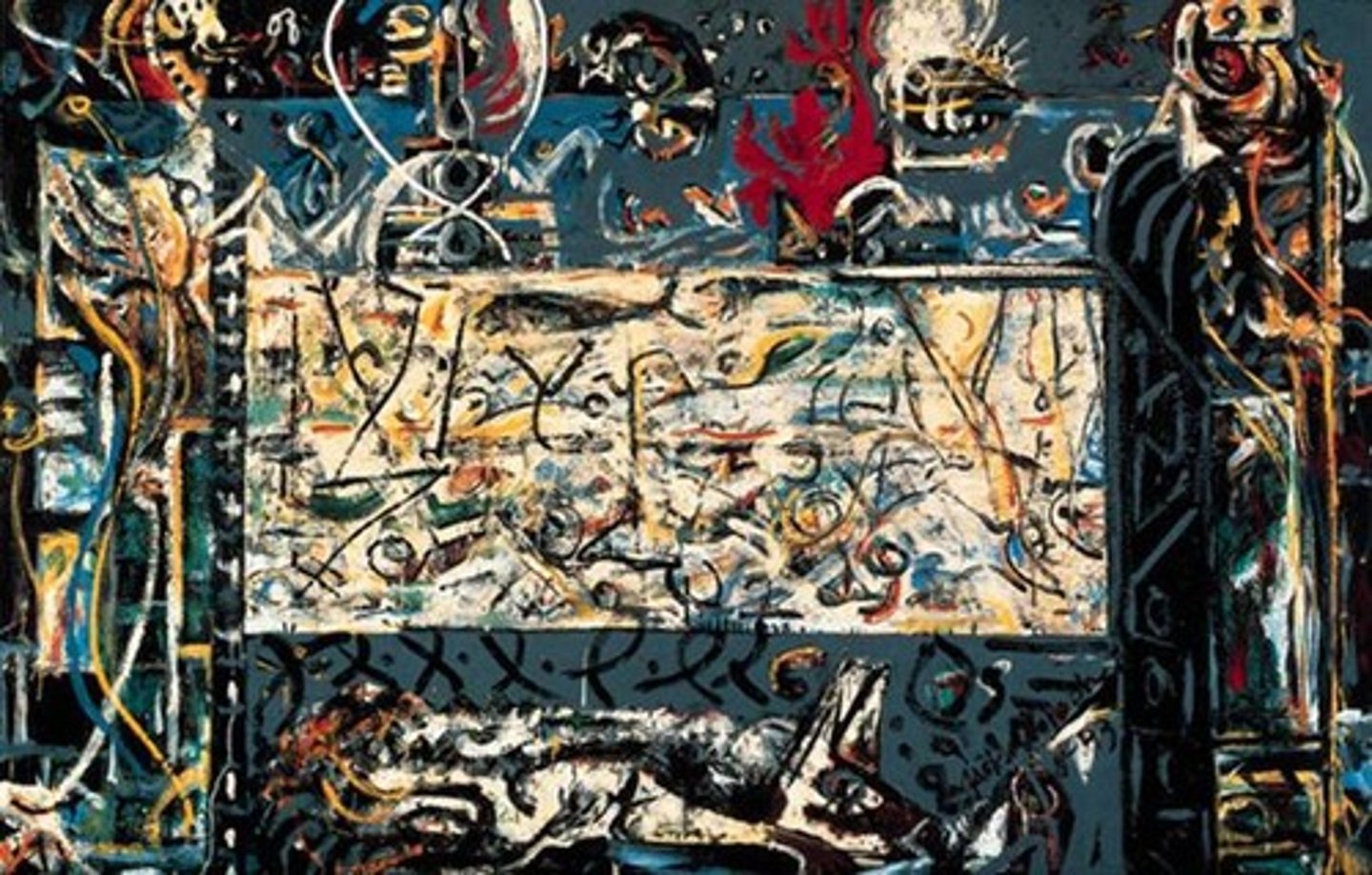
Guardians of the Secret, 1943
Jackson Pollock
ABEX Action Painting
Started thinking about and through calligraphy, surrealism, and automatism; there are still visible forms here, but they are starting to abstract
Totem-like guardians of the secret protecting some sort of scroll,, manifestation of the psyche which breaks from surrealism toward abstractionism
Phantasy II, 1946
Norman Lewis
ABEX Action Painting
Differs from other action painters of the time through use of line; contains the painting through red implied borders

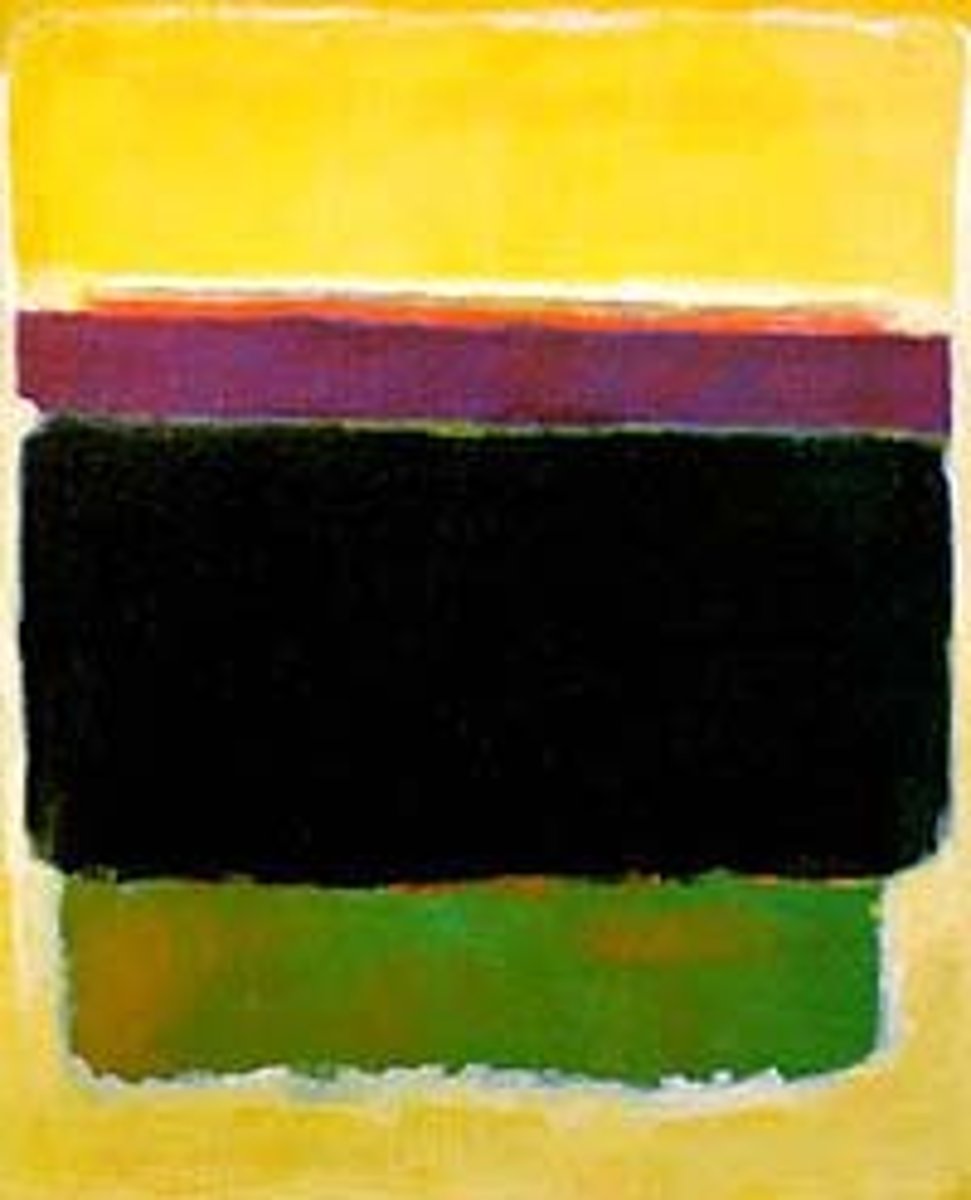
Untitled (Rothko number 5068.49), 1949
Mark Rothko
ABEX Color Field Painting
Massive in size, meant to signify a meditative process. Viewers are meant to go up very closely and feel absorbed by the piece -- almost as though they are inside of it
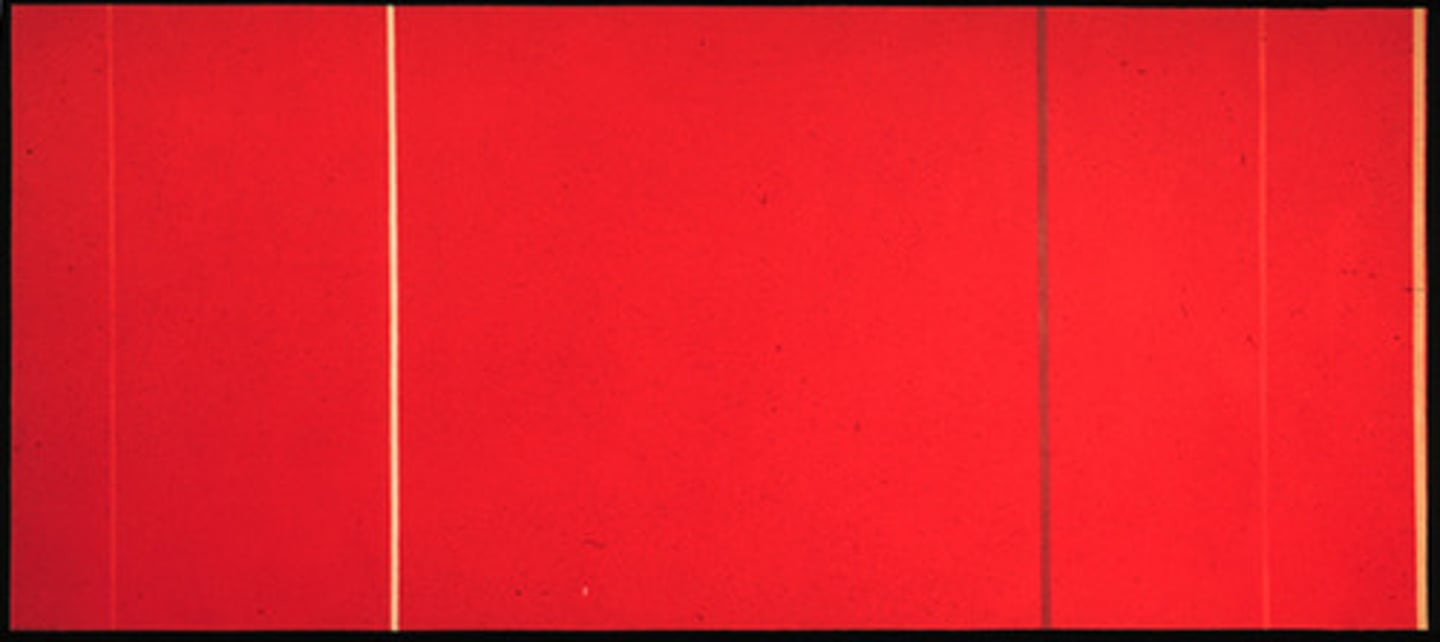
Vir Heroicus Sublimis, 1950-51
Barnett Newman
ABEX Color Field Painting
Field of red broken up by "zeps," which were seen throughout many of his pieces
Zeps break up the solid color and create tension + constant interruption
Imperfectly placed, with some Zeps slightly diagonal
Man can be both heroic and destructive; where do you position yourself in this canvas?? Zeps become different positions within the sublime and where you place yourself on that spectrum.
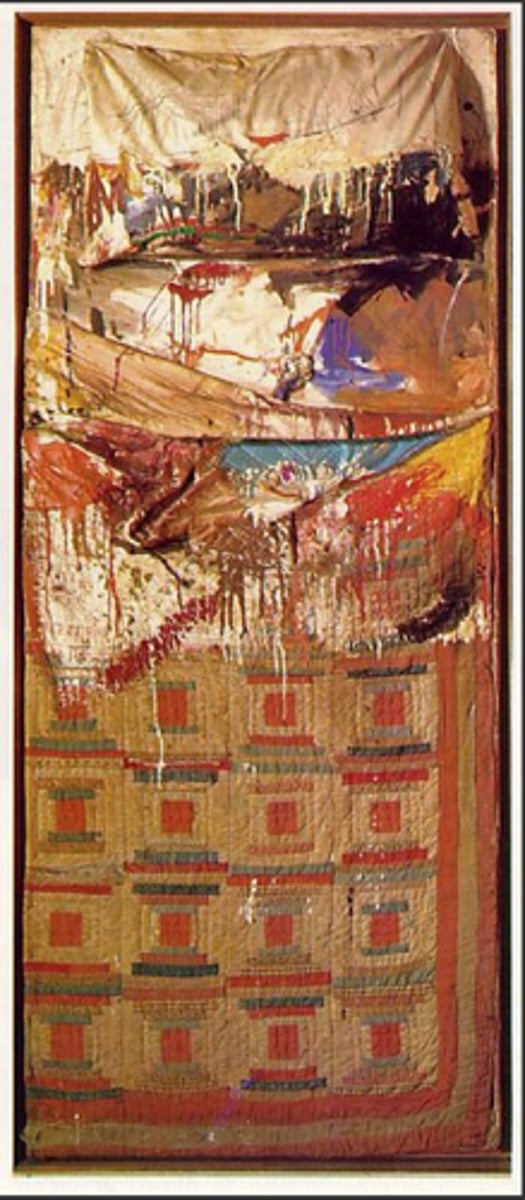
Bed, 1955
Rauschenberg
Neo Dada
Neither sculpture nor painting, but rather a combination of the two
Bed sheets + pillow hung on canvas and painted on the wall instead of the ground, where you would generally find a bed
Brushwork is turned into a product of chance instead of ABEX
Extremely intimate piece; beds are spaces of privacy, intimacy, and many other personal moments
Rauschenberg's queerness adds to this piece because he can't express absolute freedom like other straight, male ABEX artists
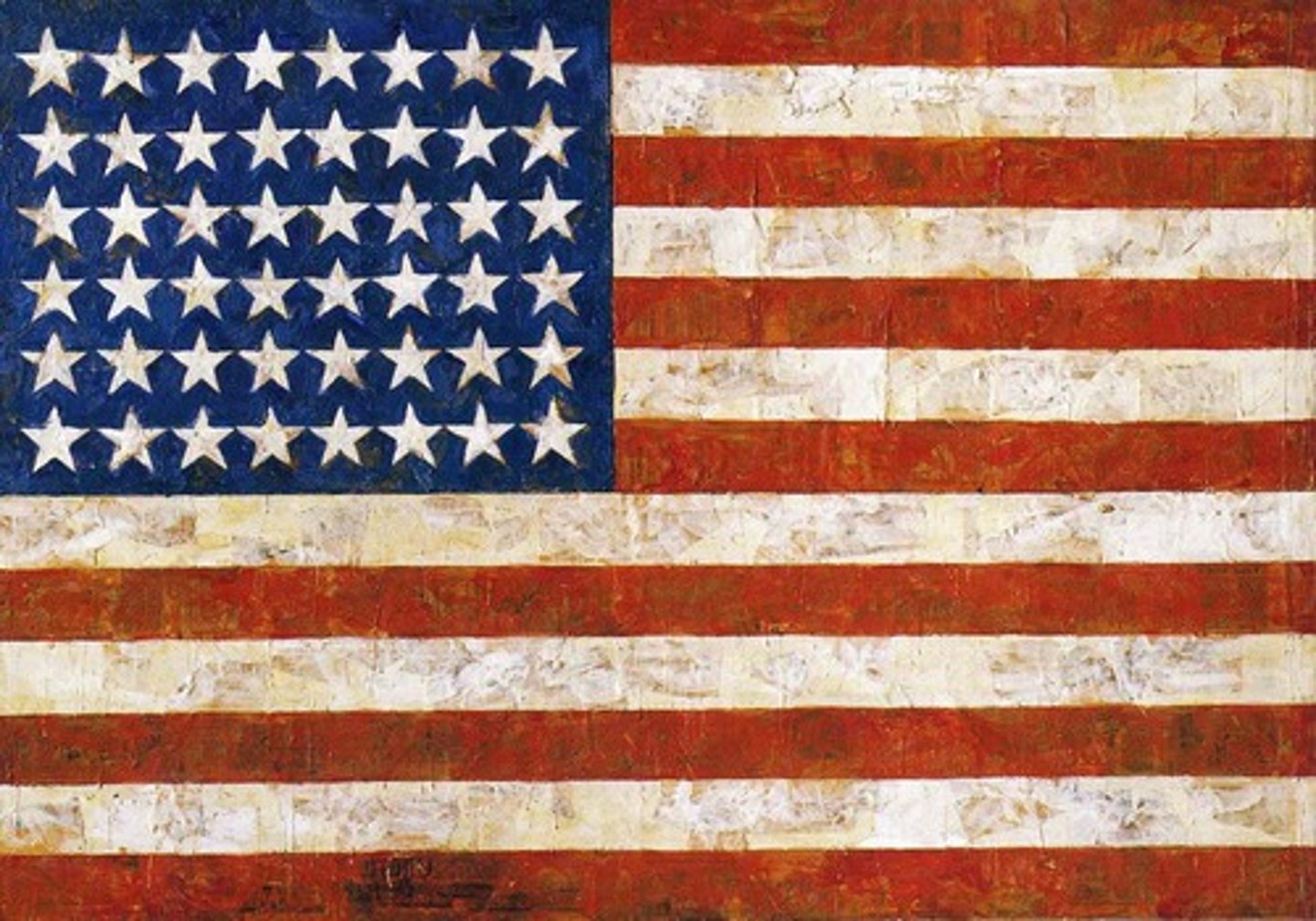
Flag, 1954
Jasper Johns
Neo Dada
Encaustic painting created with hot wax and newspaper strips that were then painted over
Not actual brushwork, but rather the hardened newspaper creating texture
ABEX brushstroke no longer connected to the artist's gesture and psyche
Raises question on what the flag means -- does it represent freedom or oppression?
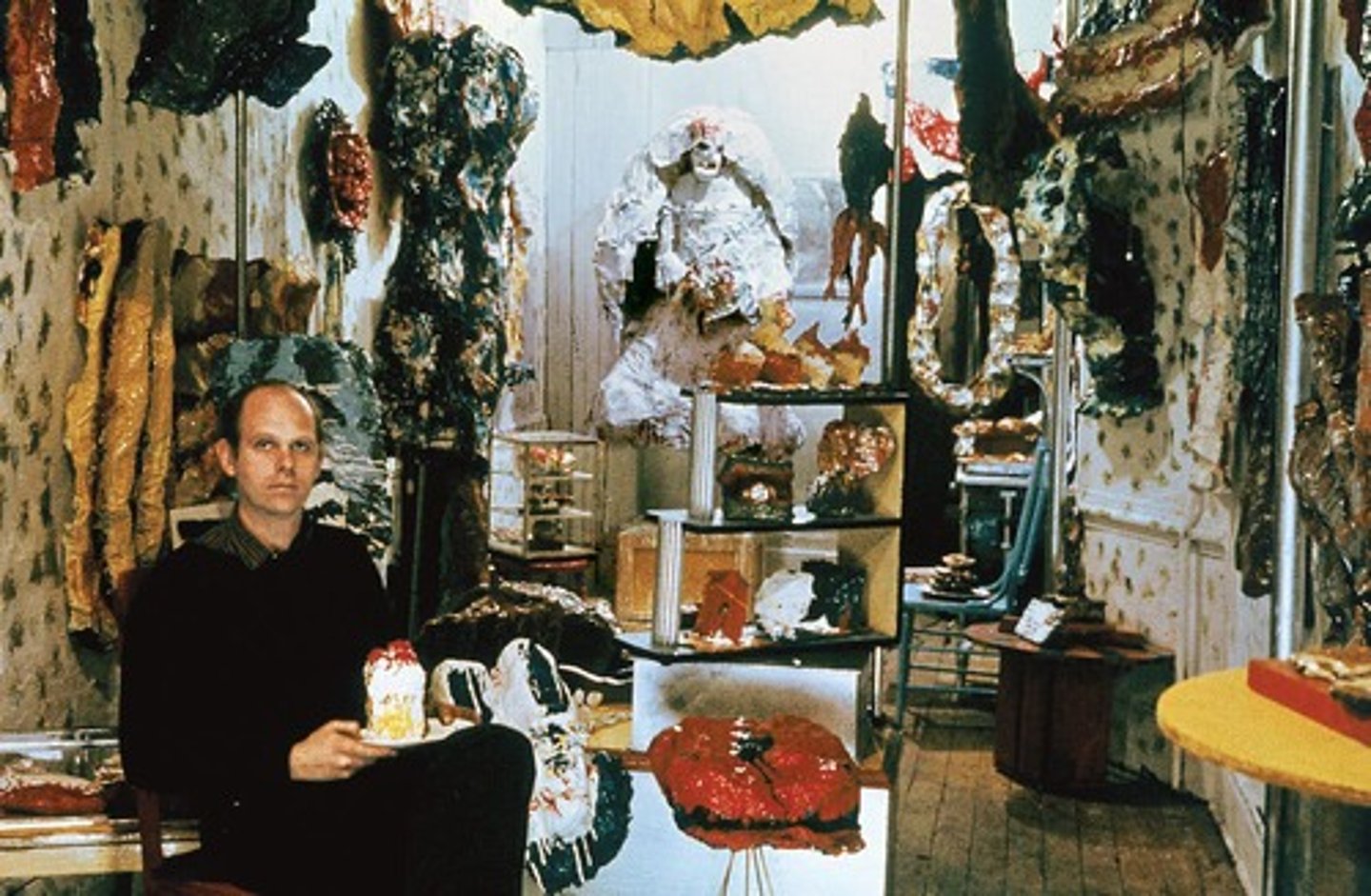
The Store, 1961
Claes Oldenburg
Pop Art
Created small objects with paper mache that you would find in an everyday bodega/cornerstore (which play important roles in city communities)
Sold everything for the price you would normally buy each object at
Critique on art as a commodity
 Note
Note  Flashcards (30)