Lecture 15: the correlational research strategy (part 2)
 Studied by 0 people
 Call Kai
 Learn
Learn Practice Test
 Spaced Repetition
 Match
Match Flashcards
 Knowt Play
1/12

There's no tags or description
Looks like no tags are added yet.
Name | Mastery | Learn | Test | Matching | Spaced | Call with Kai |
|---|
No analytics yet
Send a link to your students to track their progress
13 Terms
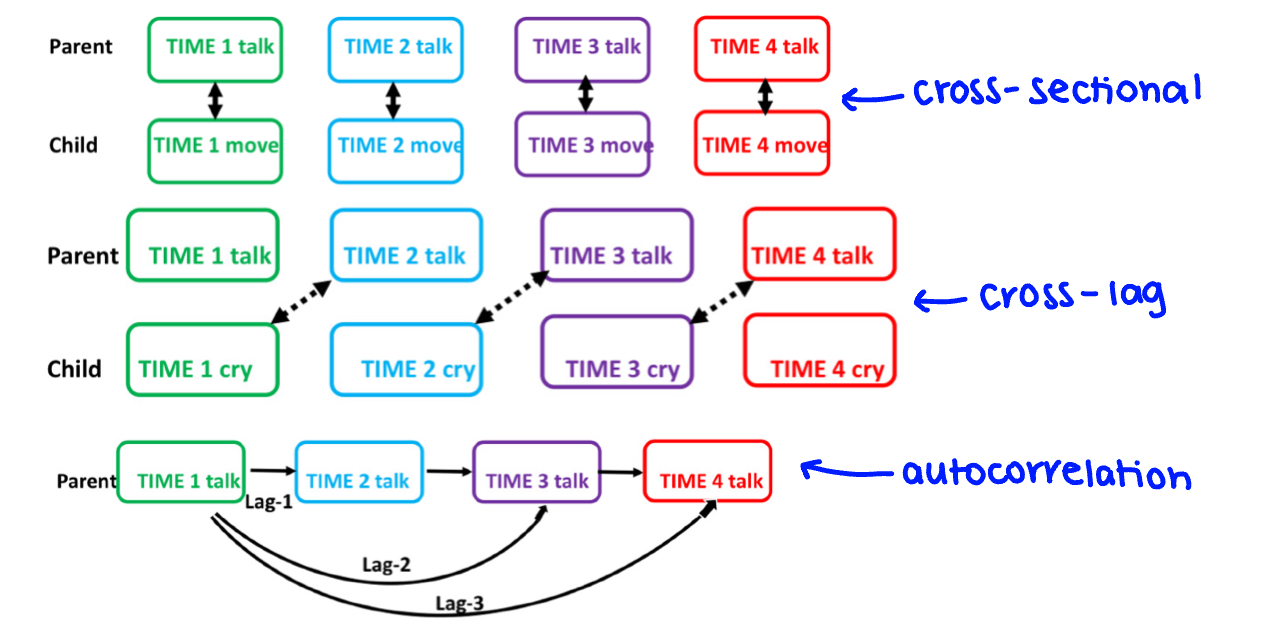
what are the timepoint based correlations? (3)
cross-sectional: tests whether 2 variables measured at the same time are related to each other
cross-lag: tests whether a variable from an earlier time point is associated with a variable at a later time point
autocorrelations: tests whether a single variable at one time point is related to the same variable at another time point
what do we measure with timepoint based correlations? (3)
strength
direction: positive or negative
significance
define “cross-sectional correlations”
tests whether 2 variables measured at the same time point are related to each other
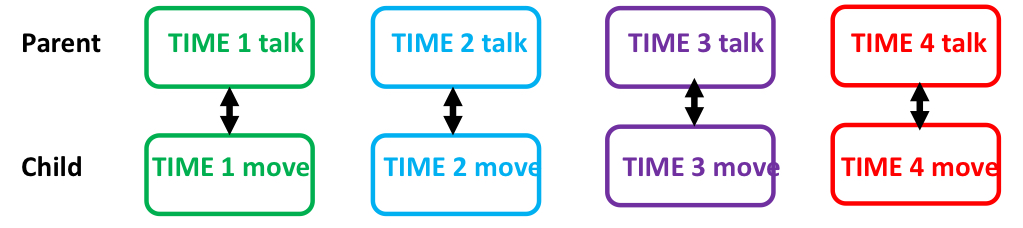
true or false: the assumption of independence in a scatterplot (one point = one person) is met in cross-sectional correlations
false: it isn’t because you measure the same people over time
define “lag cross-correlations” (AKA temporal precedence)
tests whether a variable from an earlier timepoint is associated with another variable at a later timepoint
⚠︎ variable change can go both ways: X to Y and Y to X
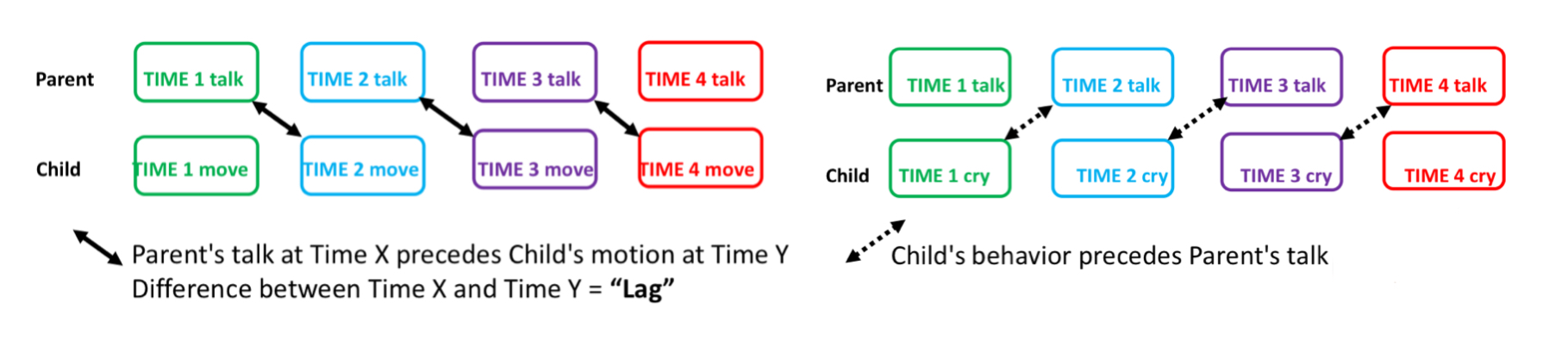
what’s an assumption of the lag cross-correlation?
the lag value stays the same at each measurement
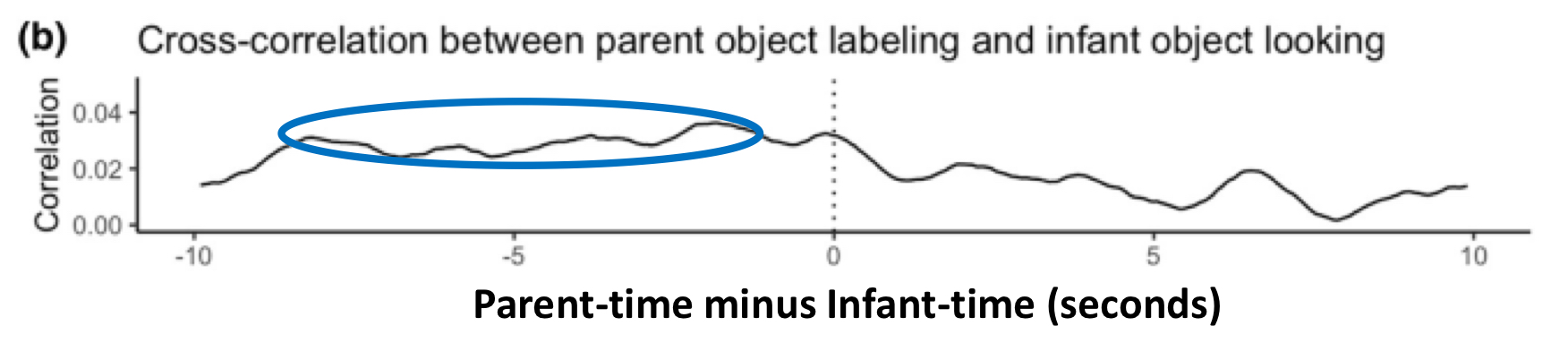
lag = […] -[…] (2)
lag = time X - time Y
lag = time Y- time X
why can we compute the lag by doing (time X - time Y) and by doing (time Y - time X)?
we want to look at the positive (X - Y) and negative (Y - X) correlations to find what truly causes the lag
we consider what happens what happens if X happens before Y and what happens if Y happens before X
define “autocorrelations”
test whether a single variable at one time point is related to the same variable at another time point
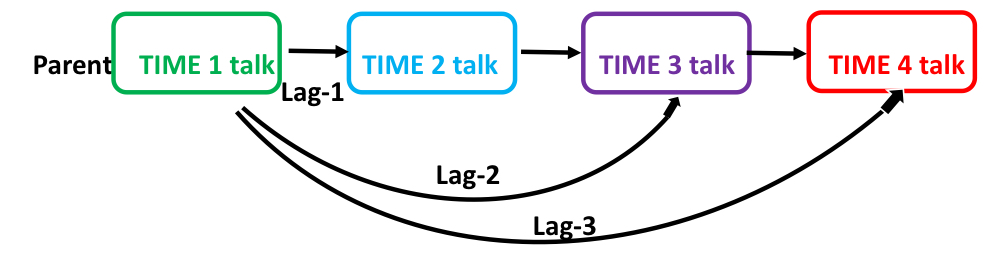
what is the characteristic that indicates that you can use autocorrelations?
something that is cyclical (like circadian cycles)
⚠︎ no need to, it’s just an indicator
true or false: just like in lag cross-correlations, autocorrelations also consider positive and negative (auto)correlations
true: (but the lag value stays the same for lag cross)
positive autocorrelation: lag increases over time
negative autocorrelation: lag decreases over time
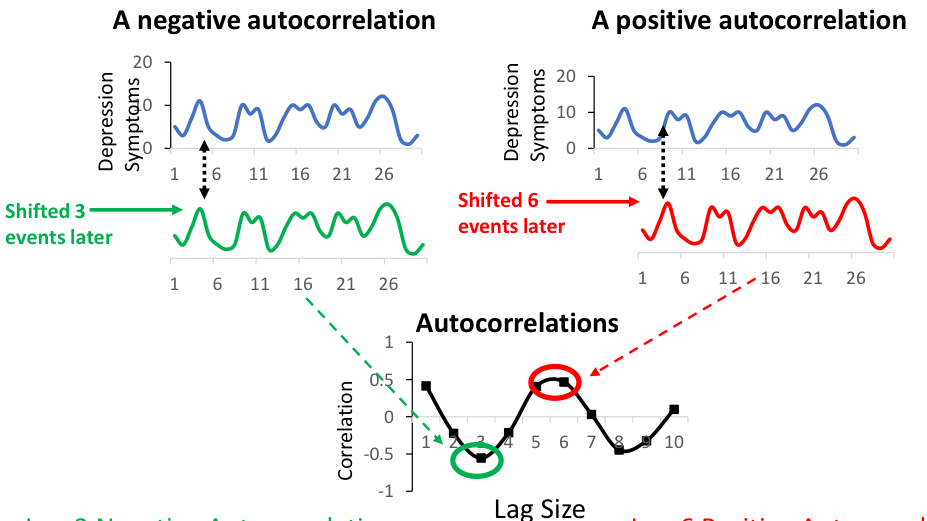
if the timepoint based correlations are significant, what does it mean? (explain individually for all 3 of them)
cross-sectional: one variable covaries with the other variable
lagged cross-sectional: one variable has temporal precedence over the other variable
autocorrelation: one variable shows regular/repeating change over time
what’s the weakness of timepoint based correlations?
it doesn’t indicate causality, it only tells you relationship and strength (just like basic correlation)
 Note
Note  Flashcards (500)