Lecture 18: Altitude and Alterations
 Call Kai
 Learn
Learn Practice Test
 Spaced Repetition
 Match
Match Flashcards
 Knowt Play
1/202

There's no tags or description
Looks like no tags are added yet.
Name | Mastery | Learn | Test | Matching | Spaced | Call with Kai |
|---|
No analytics yet
Send a link to your students to track their progress
203 Terms
What happens to barometric pressure as altitude increases?
It decreases
What percentage of atmospheric oxygen remains constant with altitude?
21%
Why does alveolar PO₂ fall at altitude even though oxygen percentage stays the same?
Because barometric pressure decreases
What is the barometric pressure at sea level?
760 mmHg
What is the barometric pressure in Denver (~5,000 ft)?
630 mmHg
What is the barometric pressure on Mt. Rainier (~14,000 ft)?
430 mmHg
What is the barometric pressure on Mt. Everest (~29,000 ft)?
250 mmHg
What is alveolar PO₂ at 30,000 ft with compensatory mechanisms?
30 mmHg
What is the water vapor pressure in fully humidified air?
47 mmHg
Why is alveolar PO₂ lower than expected at altitude?
Because water vapor pressure (47 mmHg) remains constant and takes up part of the total pressure
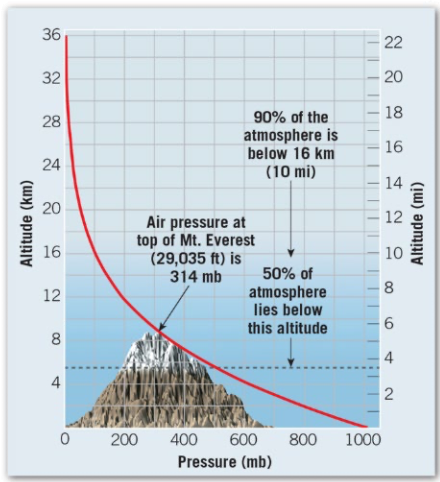
What does the graph show about atmospheric pressure distribution?
90% of the atmosphere lies below 16 km
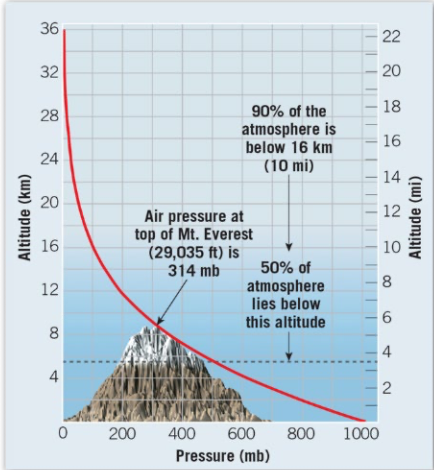
What fraction of the atmosphere lies below ~5.5 km?
50%
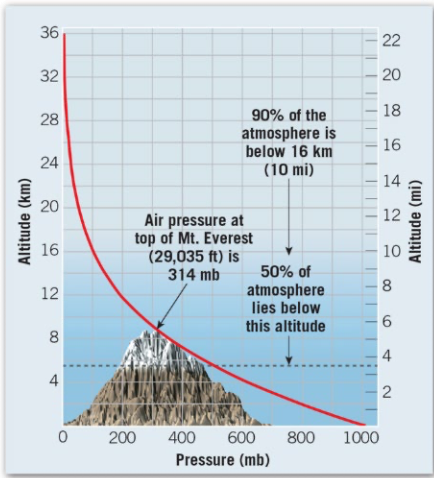
What happens to pressure as altitude increases?
It decreases exponentially
What happens to alveolar PO₂ as altitude increases?
It decreases
What happens to alveolar PCO₂ as altitude increases?
It decreases due to hyperventilation
Why does alveolar PCO₂ fall at altitude?
Hyperventilation lowers CO₂
What happens to arterial oxygen saturation at 10,000 ft (breathing air)?
90%
What happens to arterial oxygen saturation at 20,000 ft (breathing air)?
73%
What is the arterial oxygen saturation at 30,000 ft (breathing air)?
24%
What happens to arterial oxygen saturation at 30,000 ft when breathing pure O₂?
99%
At what altitude does breathing air produce ~50% Hb saturation?
23,000
What is the alveolar PO₂ at 30,000 ft when breathing pure O₂?
139 mmHg
What is the alveolar PO₂ at 47,000 ft when breathing pure O₂?
40 mmHg
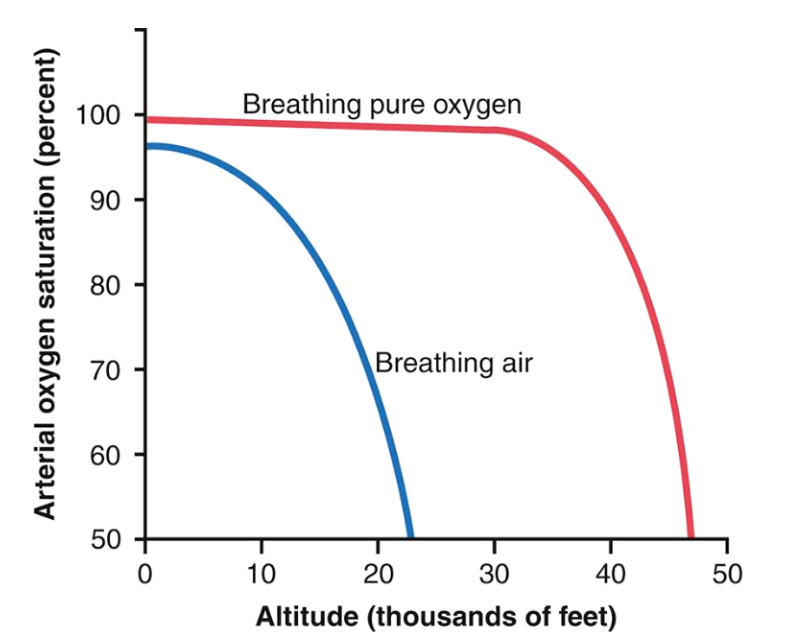
What happens to arterial O₂ saturation when breathing air at high altitude?
It decreases sharply with altitude
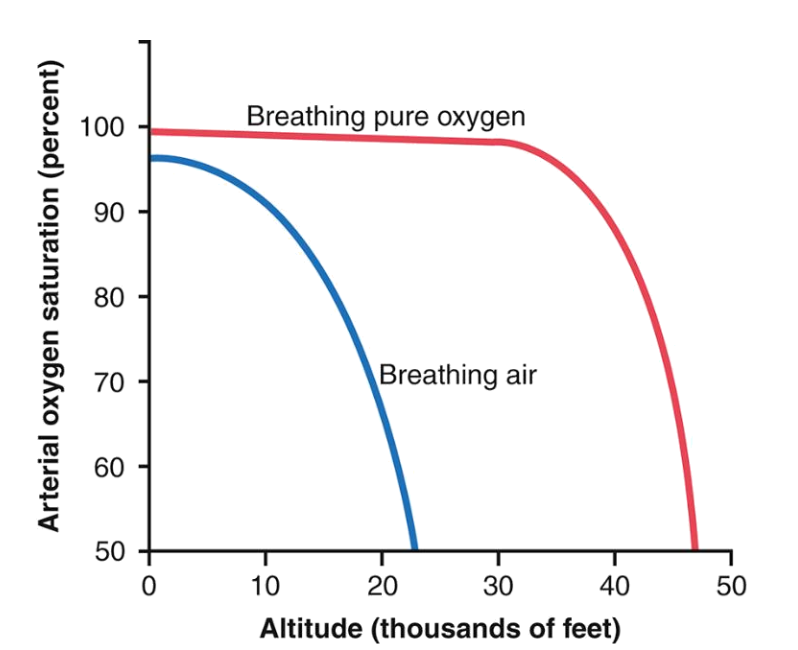
What happens to arterial O₂ saturation when breathing pure O₂?
It remains high until extremely high altitudes
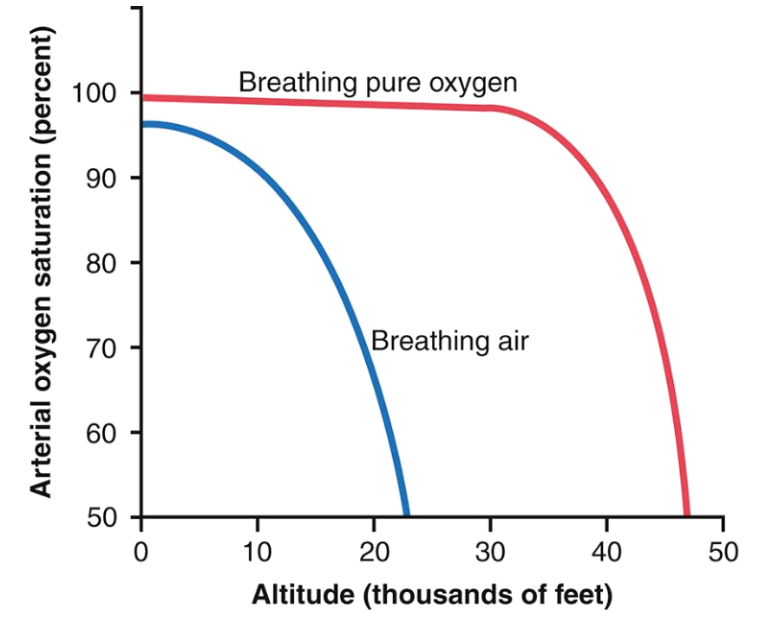
What altitude corresponds to ~50% saturation when breathing air?
23,000ft
What stimulates increased respiratory rate during acute altitude exposure?
Low PAO₂
What happens to PACO₂ during acute acclimatization?
It decreases due to hyperventilation
What hormone increases during long‑term acclimatization?
Erythropoietin
What effect does erythropoietin have?
Increases RBC count and hemoglobin concentration
What happens to diffusion capacity during long‑term acclimatization?
It increases
What happens to capillary density in tissues during long‑term acclimatization?
It increases
What is the effect of increased capillary density?
Improved tissue oxygenation
What happens to interstitial fluid PO₂ with long‑term acclimatization?
It increases
What happens to PAO₂ during acute acclimatization?
It increases due to hyperventilation
What happens to PACO₂ during acute acclimatization?
It decreases
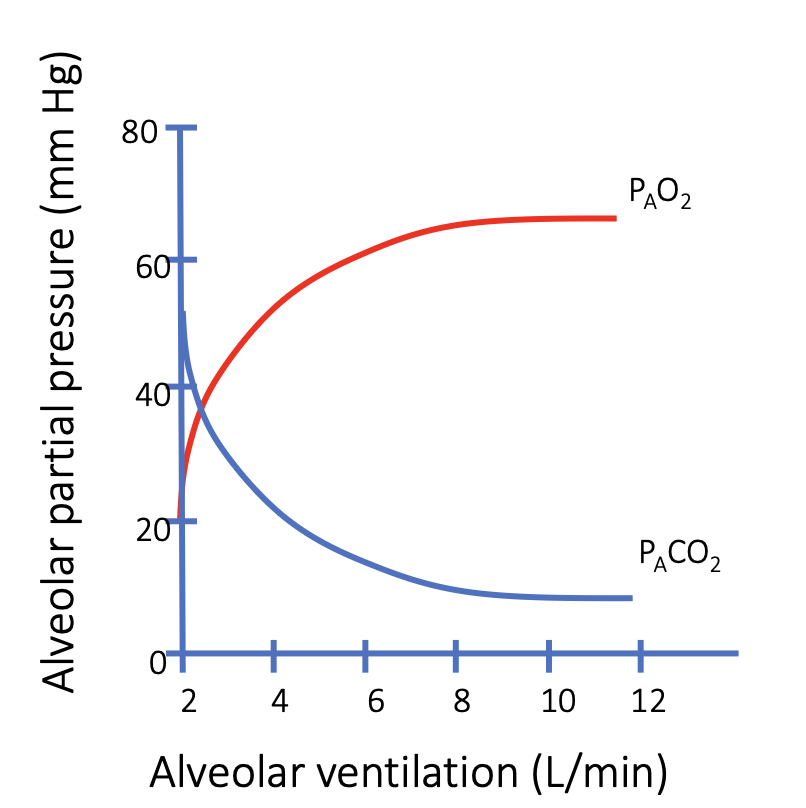
What happens to alveolar PO₂ as ventilation increases?
It increases
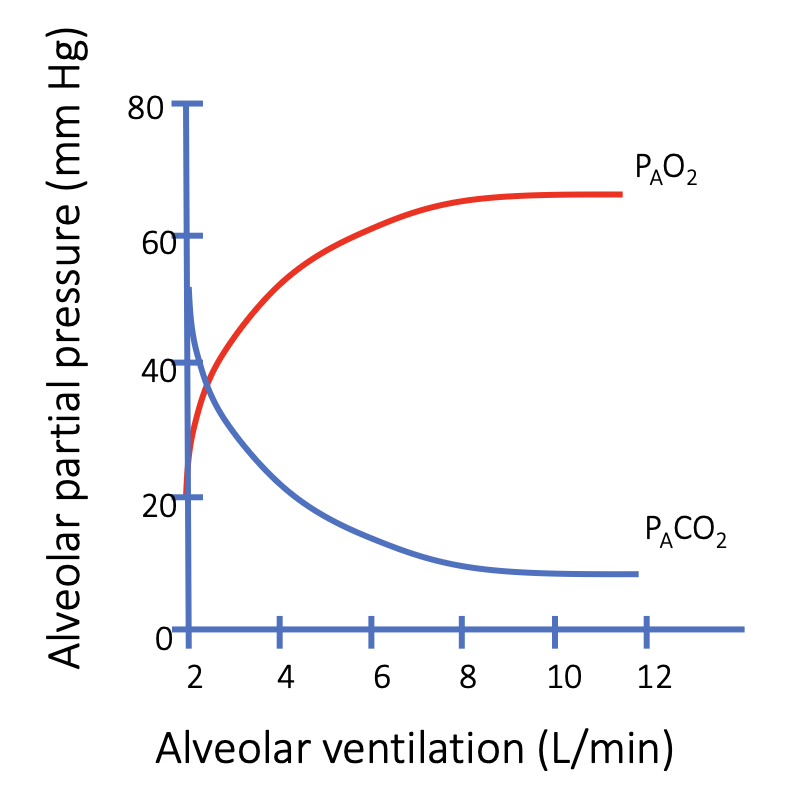
What happens to alveolar PCO₂ as ventilation increases?
It decreases
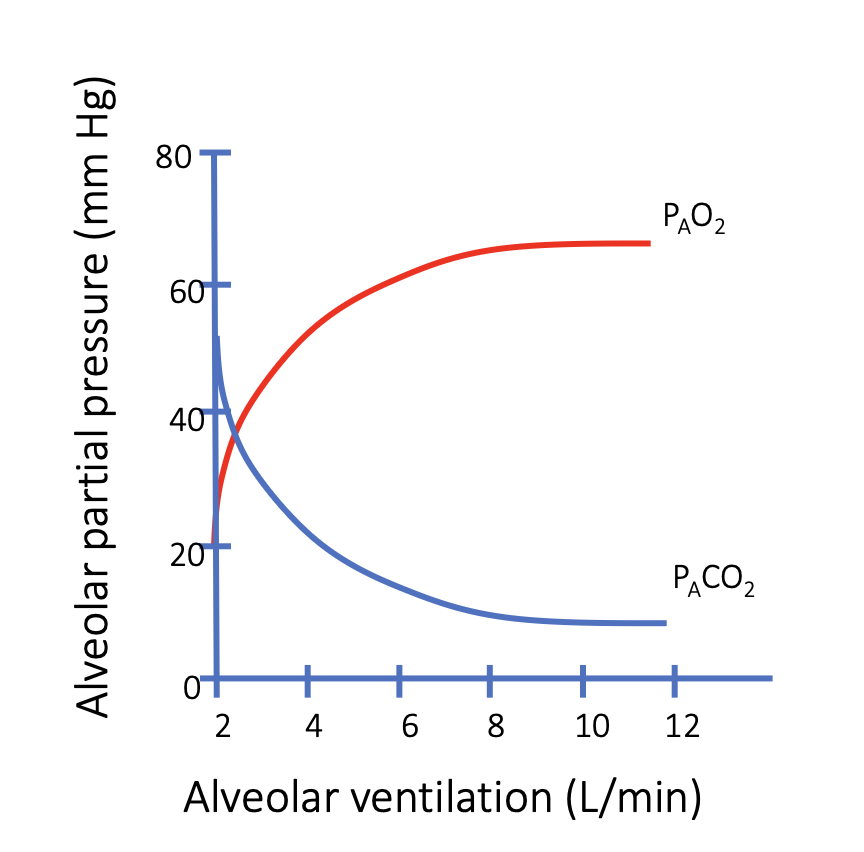
What is the relationship between ventilation and PAO₂?
Direct
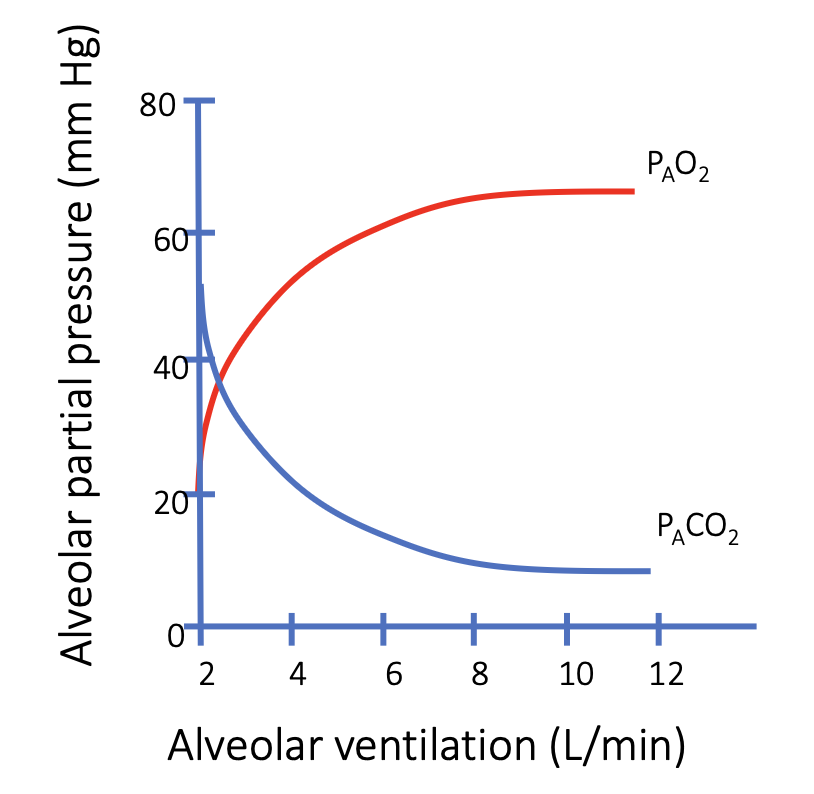
What is the relationship between ventilation and PACO₂?
Inverse
T/F: Oxygen percentage in the atmosphere decreases at altitude.
False: it remains ~21%; barometric pressure decreases
T/F: Water vapor pressure decreases at altitude.
False: it stays constant at 47 mmHg.
T/F: Alveolar PCO₂ increases at altitude.
False: hyperventilation lowers PCO₂.
Breathing pure O₂ at 30,000 ft can maintain oxygen saturation.
True: about 99%
T/F: Long‑term acclimatization increases RBC count.
True
Long‑term acclimatization increases ______ production.
erythropoietin
Increased diffusion capacity improves ______.
Gas exchange
What stimulates erythropoietin release at altitude?
Low PO₂
What effect does erythropoietin have on blood?
Increases RBC count and hemoglobin concentration
What happens to diffusion capacity during long‑term acclimatization?
It increases
Why does diffusion capacity increase at altitude?
More pulmonary capillaries are recruited
What happens to tissue capillary density during long‑term acclimatization?
It increases
What is the benefit of increased tissue capillary density?
Improved oxygen delivery to tissues
What happens to interstitial fluid PO₂ with long‑term acclimatization?
It increases
What is the difference between Tibetan and Andean adaptations?
Tibetans rely more on ventilation
Andeans rely more on increased hemoglobin
What is the work capacity of an unacclimatized person at altitude?
50% of normal
What is the work capacity after 2 months of acclimatization?
68%
What is the work capacity of a native highlander working at 17,000 ft?
87%
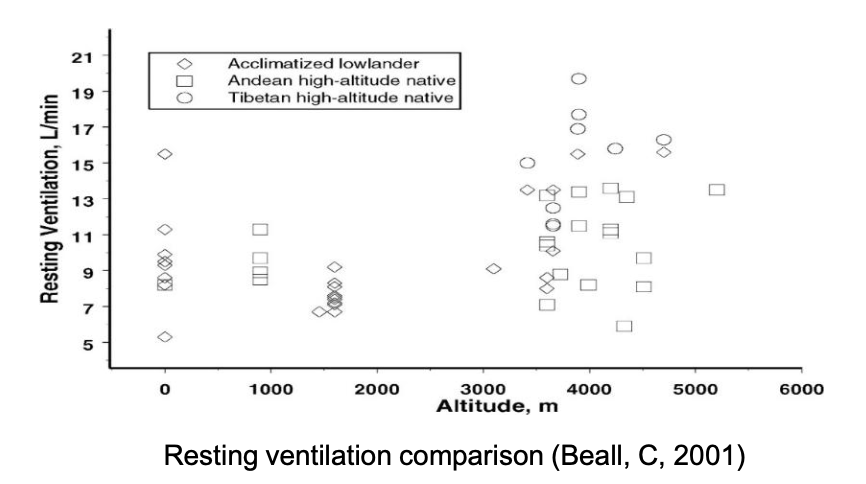
Which group has the highest resting ventilation at altitude?
Tibetan high‑altitude natives
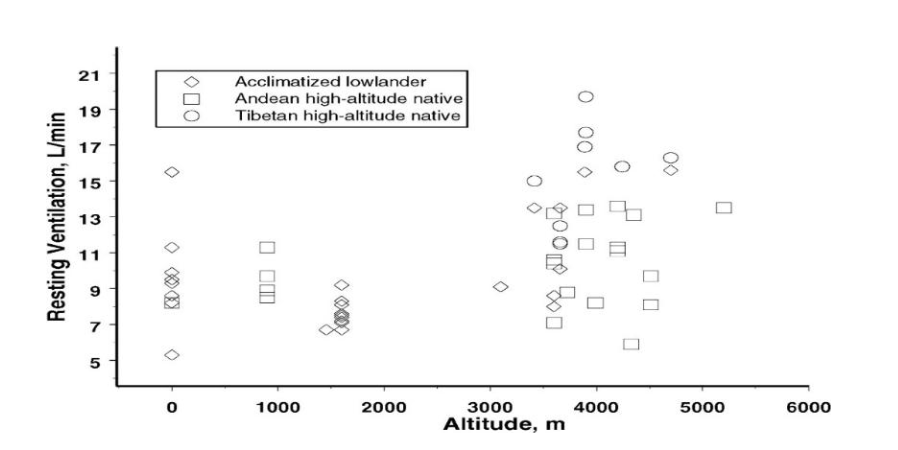
Which group has the lowest resting ventilation at altitude?
Acclimatized lowlanders
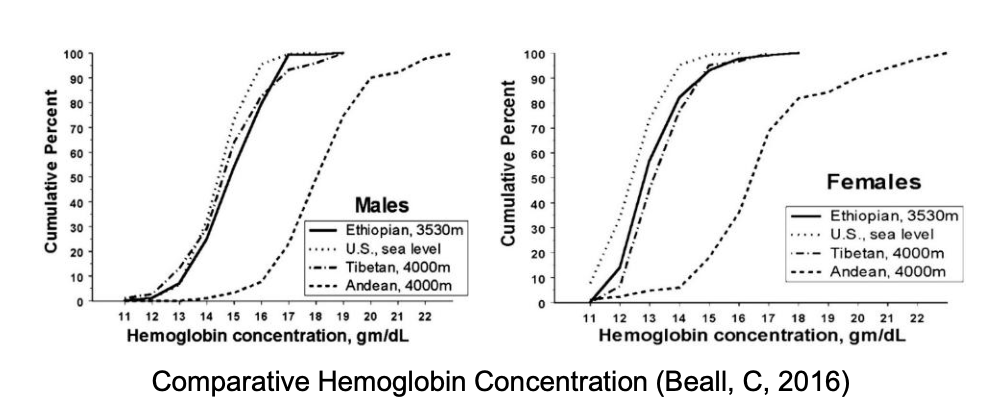
Which group has the highest hemoglobin concentration?
Andean high‑altitude natives

Which group maintains near‑normal hemoglobin despite altitude?
Tibetans
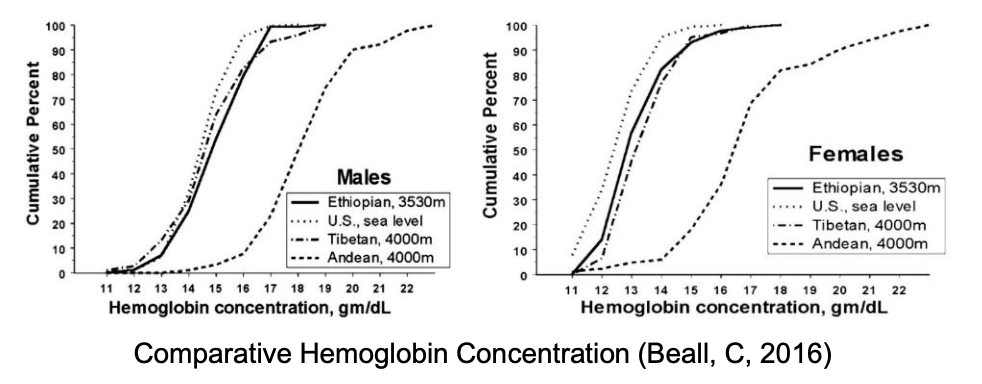
What does the hemoglobin distribution curve show about Ethiopians?
They maintain lower hemoglobin levels than Andeans at similar altitude
At what altitude do physiological effects of hypoxia begin?
2500 ft
What happens to pulmonary vessels in response to low PO₂?
Generalized pulmonary vasoconstriction
What does pulmonary vasoconstriction cause?
Pulmonary hypertension
What happens to capillary hydrostatic pressure during altitude exposure?
It increases
What does increased capillary pressure cause?
Excess filtration and pulmonary edema
What accumulates in lung tissue during altitude exposure?
Excess water
What is HAPE?
High‑altitude pulmonary edema
What are signs of HAPE?
Cyanosis, frothy pink sputum
What are symptoms of HAPE?
Confusion, dyspnea at rest, possible death
What is HACE?
High‑altitude cerebral edema
What causes HACE?
Brain tissue swelling due to hypoxia
What are symptoms of HACE?
Headache, weakness, psychosis, coma, death
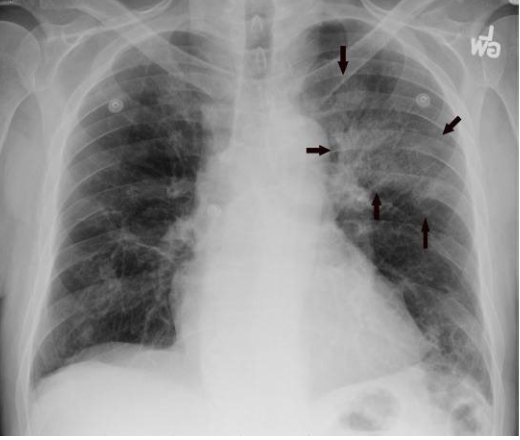
What does the chest X‑ray show in HAPE?
Diffuse pulmonary infiltrates resembling pneumonia
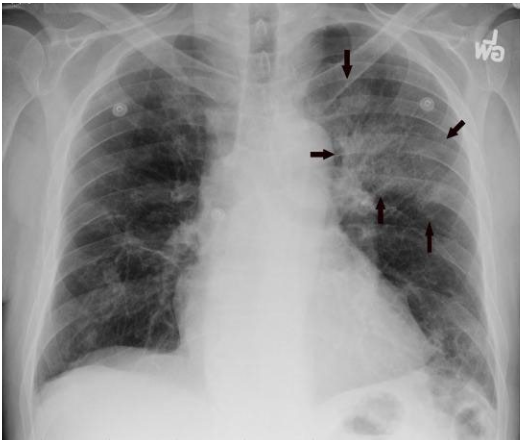
What lobe is highlighted with arrows?
Left upper lobe
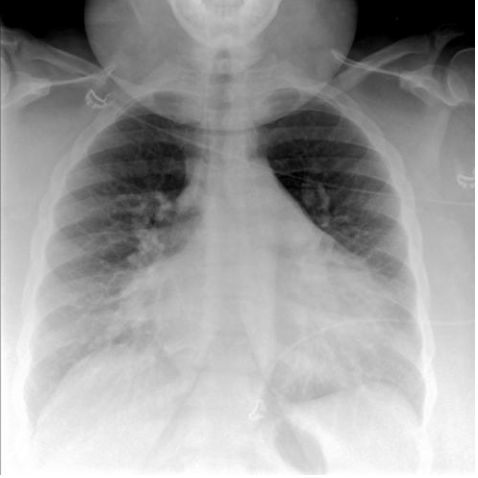
What does the image demonstrate about pulmonary edema?
Fluid accumulation in lung tissue

What causes shallow water blackout?
Hyperventilation before diving
Why does hyperventilation increase blackout risk?
It lowers CO₂ too much, delaying the urge to breathe
What normally triggers the urge to breathe?
Rising CO₂ levels
What happens to O₂ levels during a dive?
They fall steadily
Why is blackout dangerous underwater?
Loss of consciousness occurs before urge to breathe
What is the “O₂ blackout zone”?
PO₂ level where consciousness is lost
Why doesn’t hyperventilation increase O₂ stores?
Hemoglobin is already near fully saturated
What is the main physiological error in shallow water blackout?
CO₂ is removed but O₂ is not increased
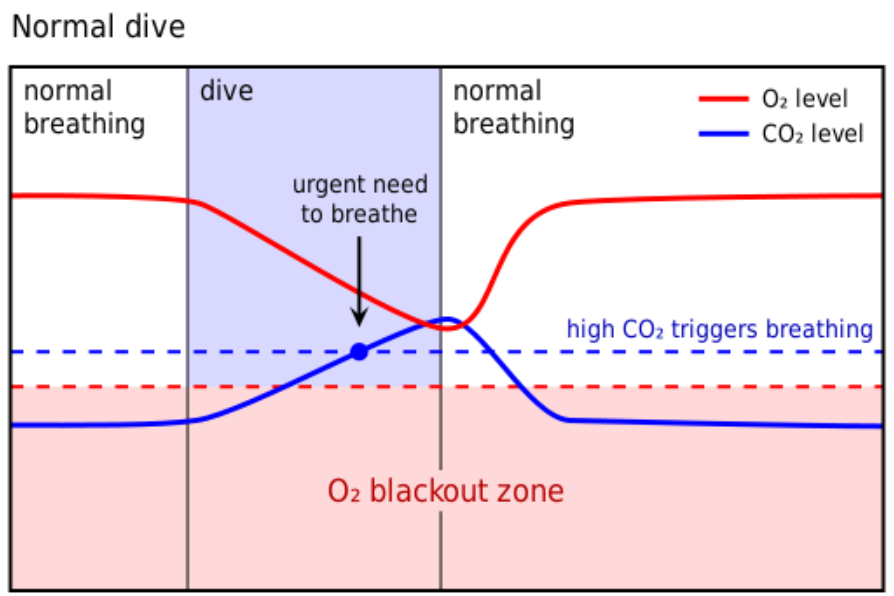
In a normal dive, what triggers surfacing?
High CO₂ levels
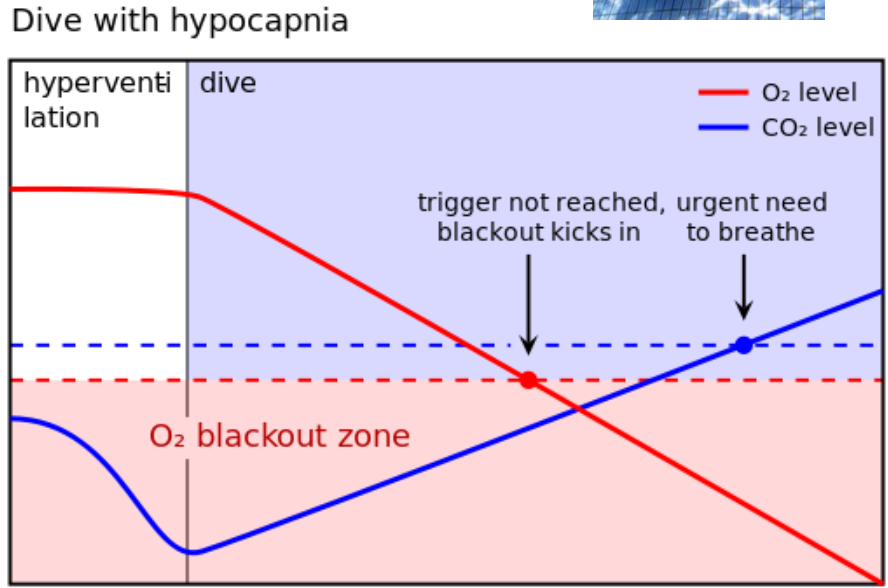
In a hyperventilated dive, what happens to CO₂ levels?
They rise too slowly to trigger breathing
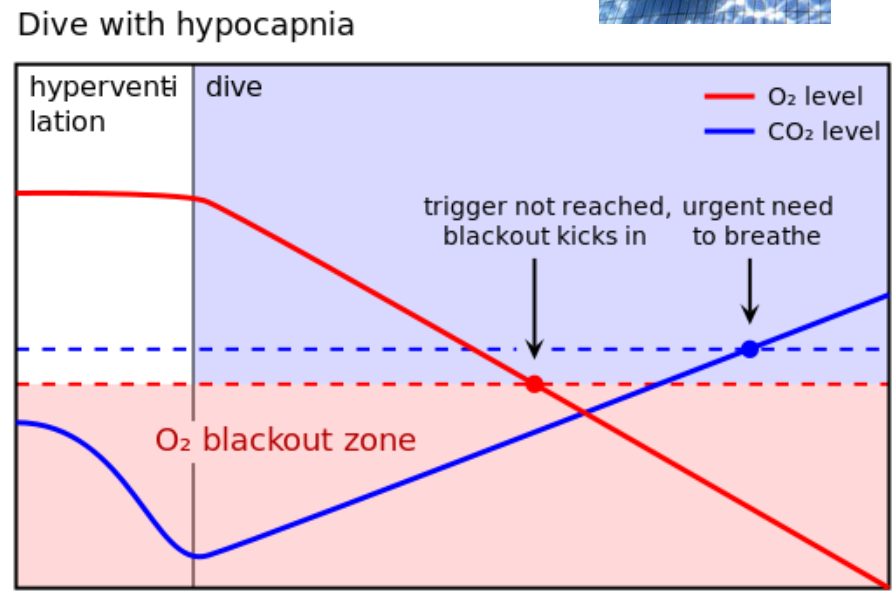
What happens to O₂ levels before CO₂ reaches the trigger point?
O₂ falls into blackout range
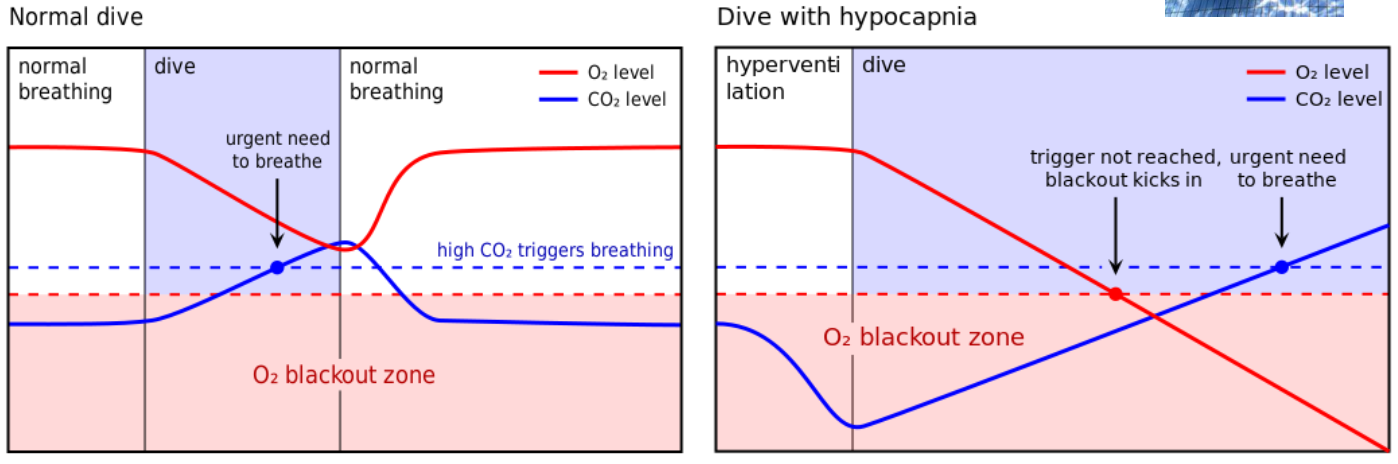
What is the key difference between the two dive graphs?
Hyperventilation delays CO₂ rise, causing blackout before urge to breathe
T/F: Hypoxia causes pulmonary vasodilation.
False: it causes pulmonary vasoconstriction.
T/F: HAPE is caused by left‑sided heart failure.
False: it is caused by hypoxia‑induced pulmonary hypertension and capillary leakage.
T/F: Hyperventilation decreases oxygen stores before a dive.
False: it only decreases CO₂ while O₂ stores barely change.
T/F: CO₂ levels determine blackout during a dive.
False: blackout occurs when O₂ falls too low, not by CO₂
Andeans adapt primarily through increased ______.
hemoglobin
Hypoxia causes pulmonary ______.
vasoconstriction
HAPE results in ______ sputum.
frothy-pink
Shallow water blackout occurs when ______ drops below consciousness threshold.
O₂
What normally triggers the urge to breathe?
Rise of CO₂ levels
What happens to O₂ levels during a prolonged dive?
They fall steadily toward blackout threshold

