PHA 334 - ANS (Lecture #3) AFTER QUIZ #1 (old)
 Call Kai
 Learn
Learn Practice Test
 Spaced Repetition
 Match
Match Flashcards
 Knowt Play
1/96

There's no tags or description
Looks like no tags are added yet.
Name | Mastery | Learn | Test | Matching | Spaced | Call with Kai |
|---|
No analytics yet
Send a link to your students to track their progress
97 Terms
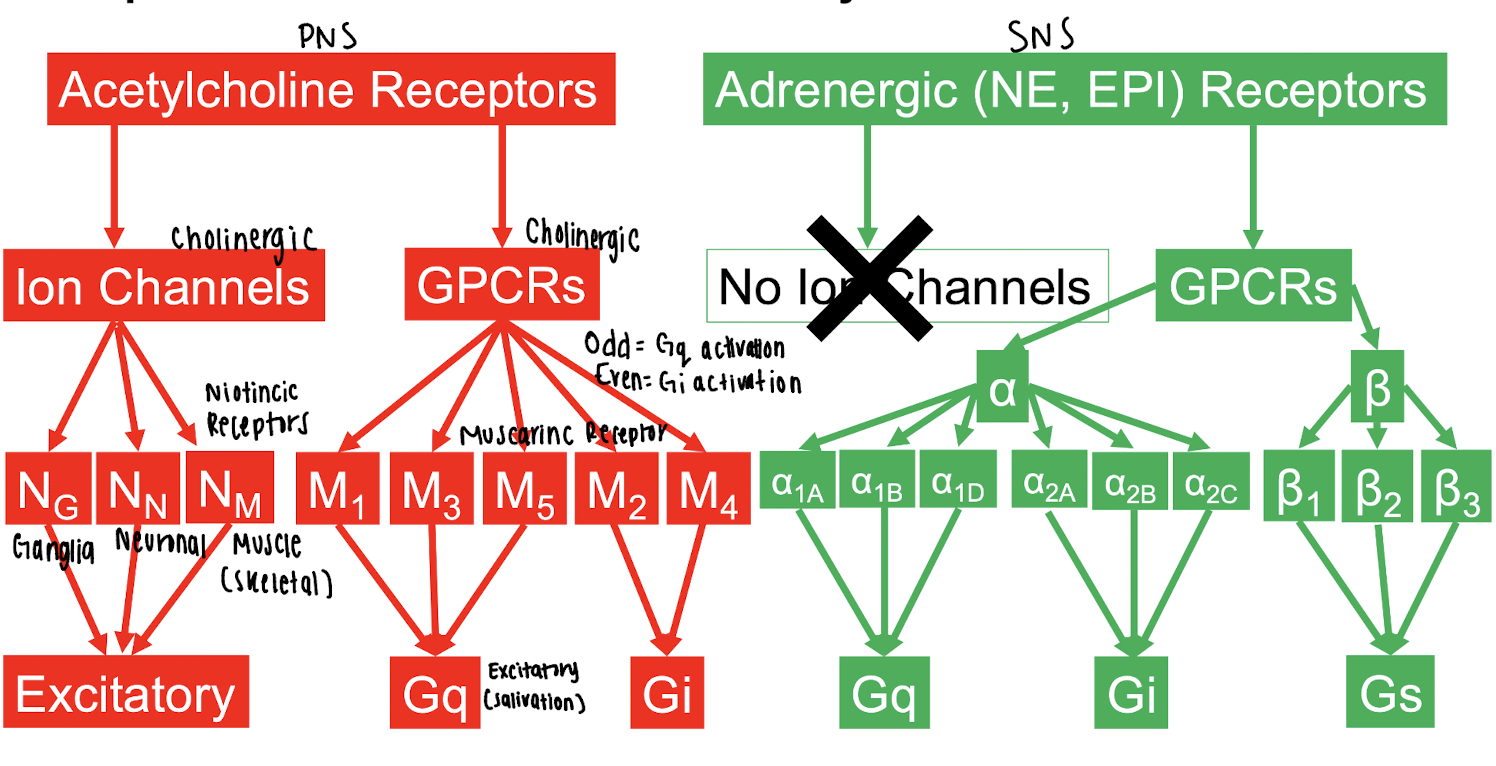
Sympathetic— nerve fibers innervate organs/tissue
adrenergic nerve fibers, except at sweat glands – cholinergic
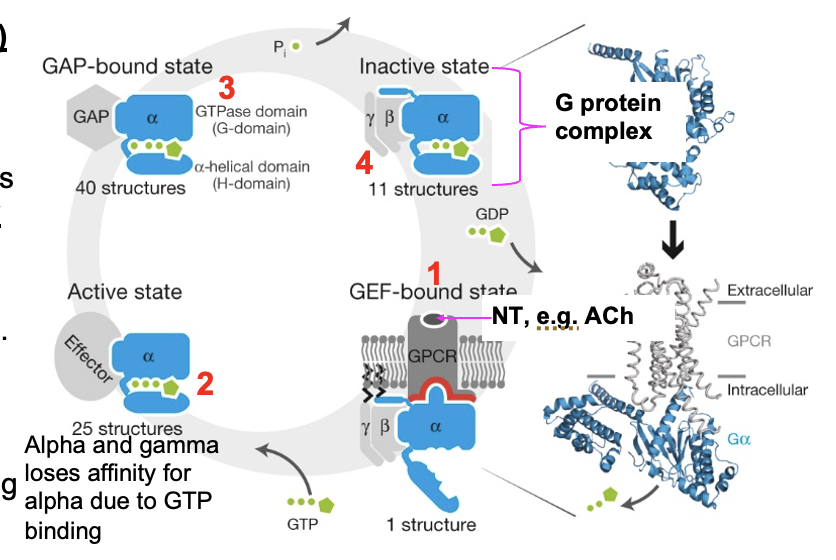
G protein-coupled receptors (GPCRs):
Neurotransmitter binds, which increases the affinity of the receptor for an intracellular G protein complex; this activates the G protein, which activates its effector(s), typically enzymes Responses endure longer than ionotropic on SCAG
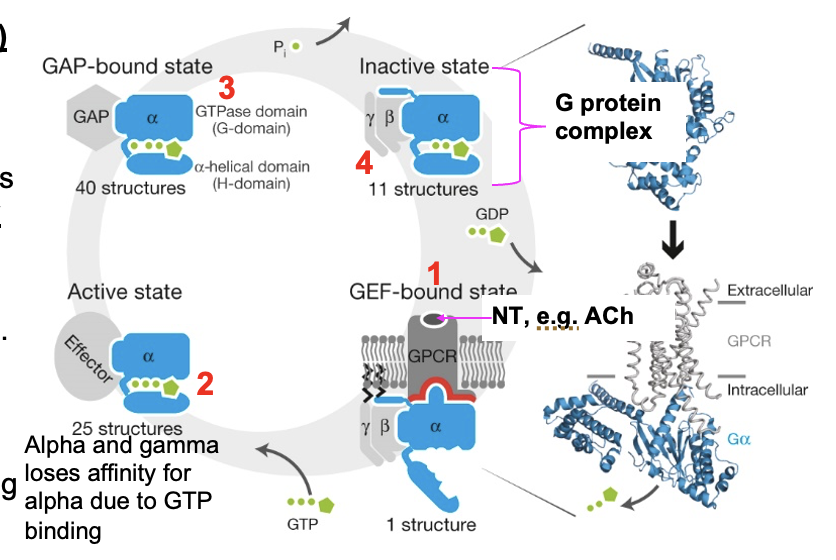
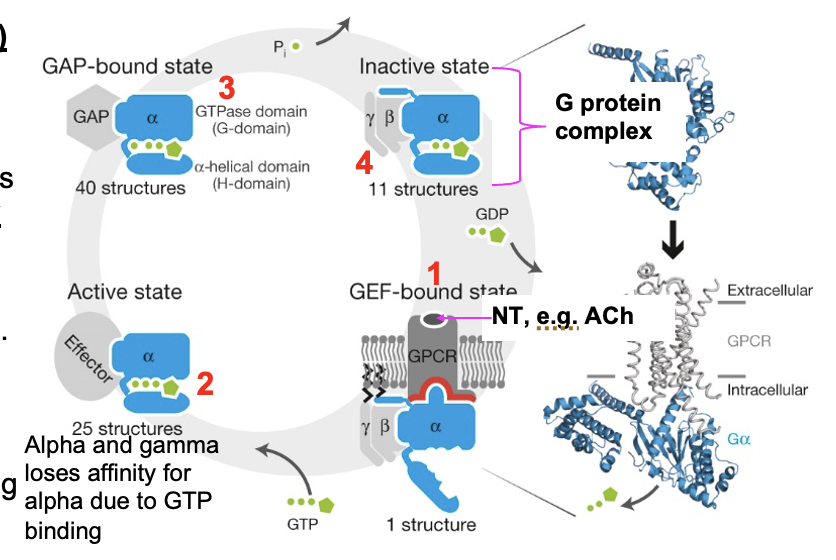
G protein activation step 2:
α subunit binds GTP and recruits downstream effectors
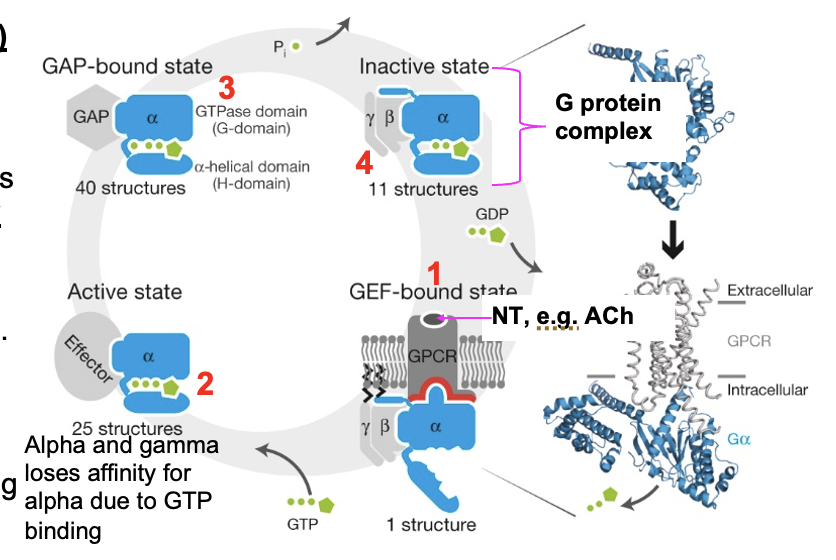
G protein activation step 3:
GTP is hydrolyzed by a GTPase activating protein (GAP)
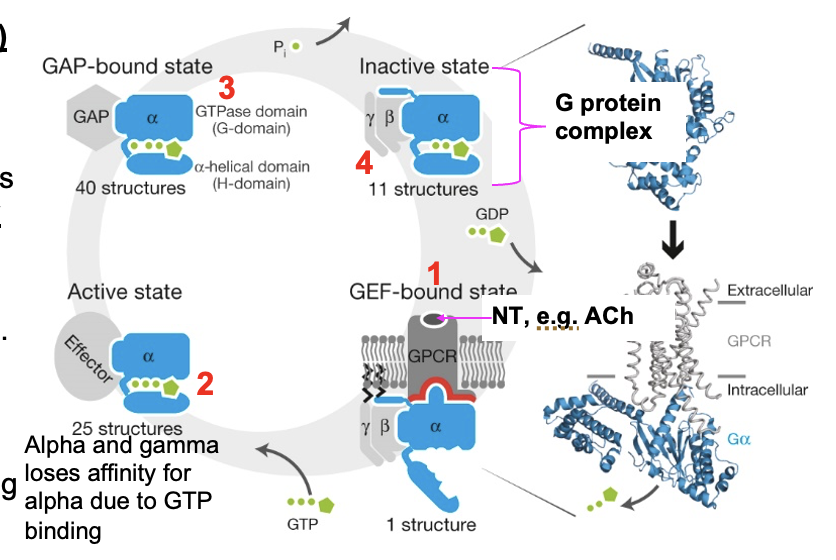
G protein activation step 4:
the inactive, GDP-bound state
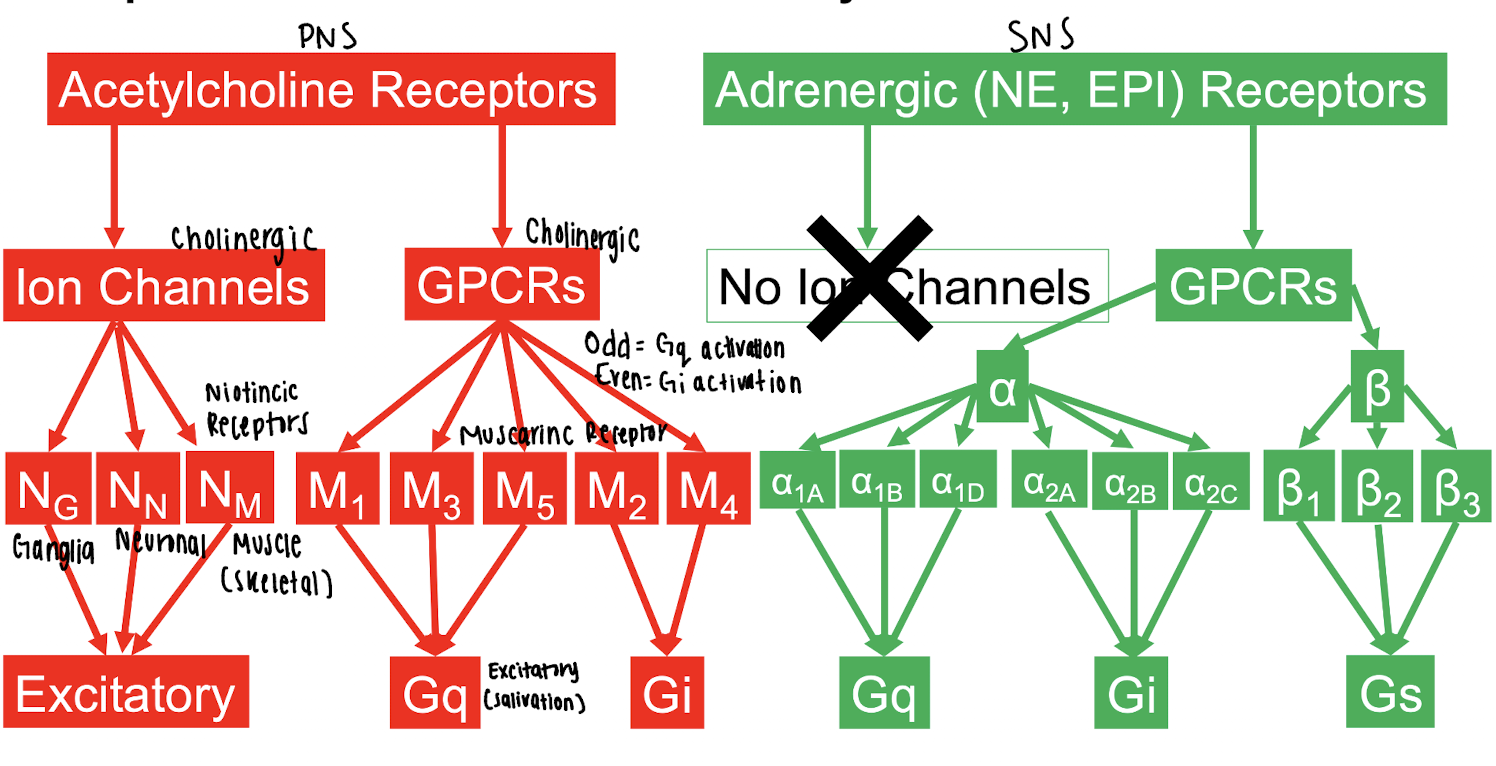
The most common alpha (α) subunits are:
Gαi Gαq
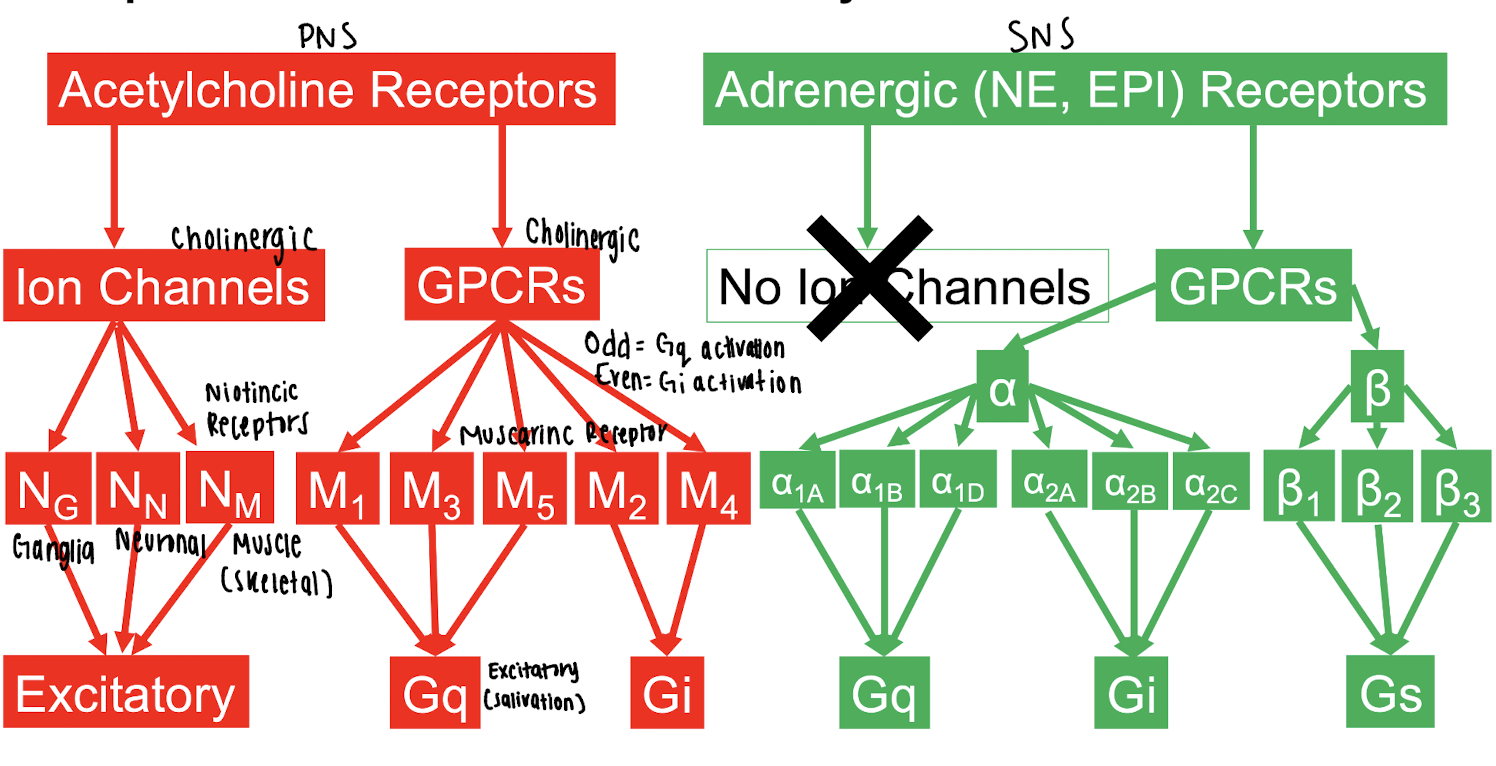
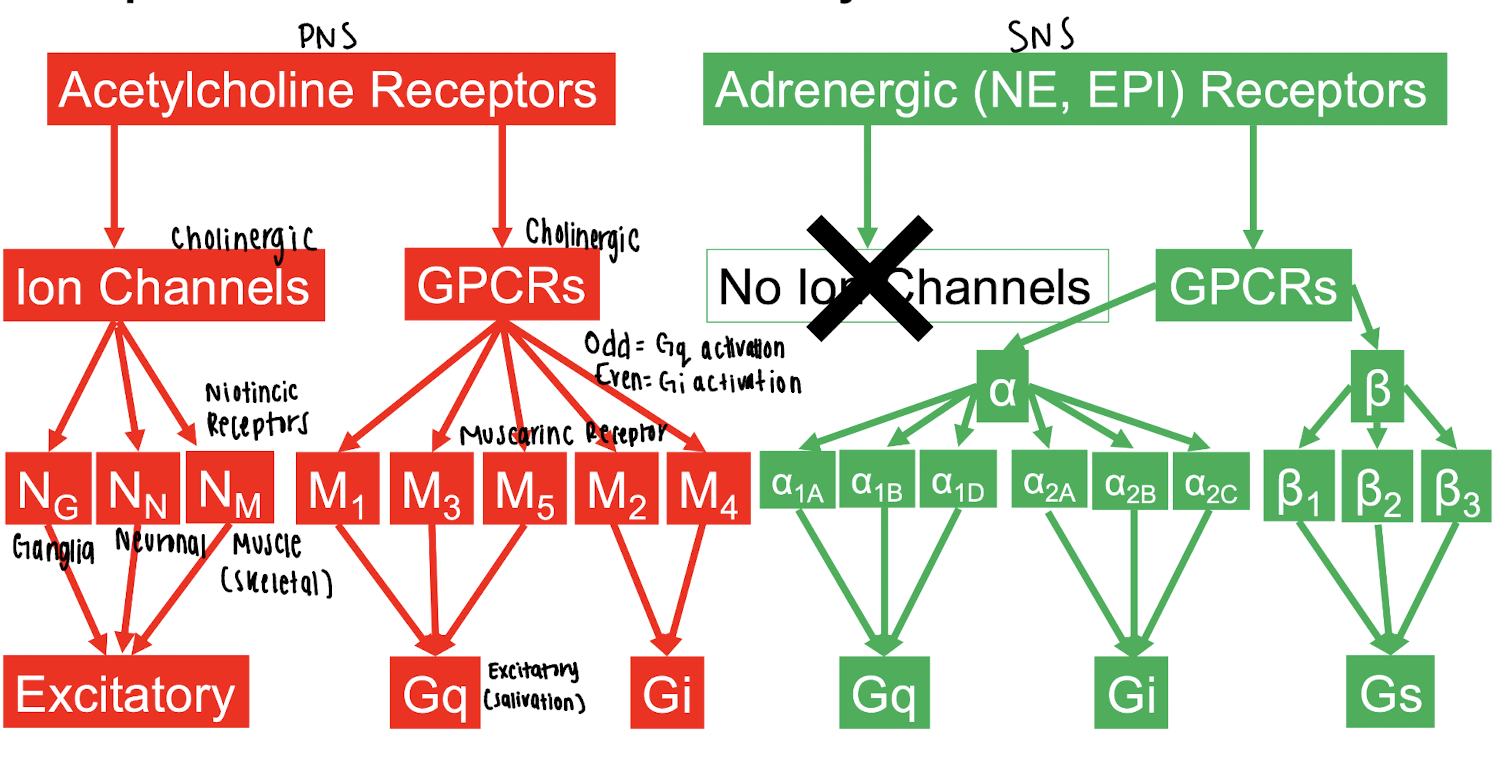
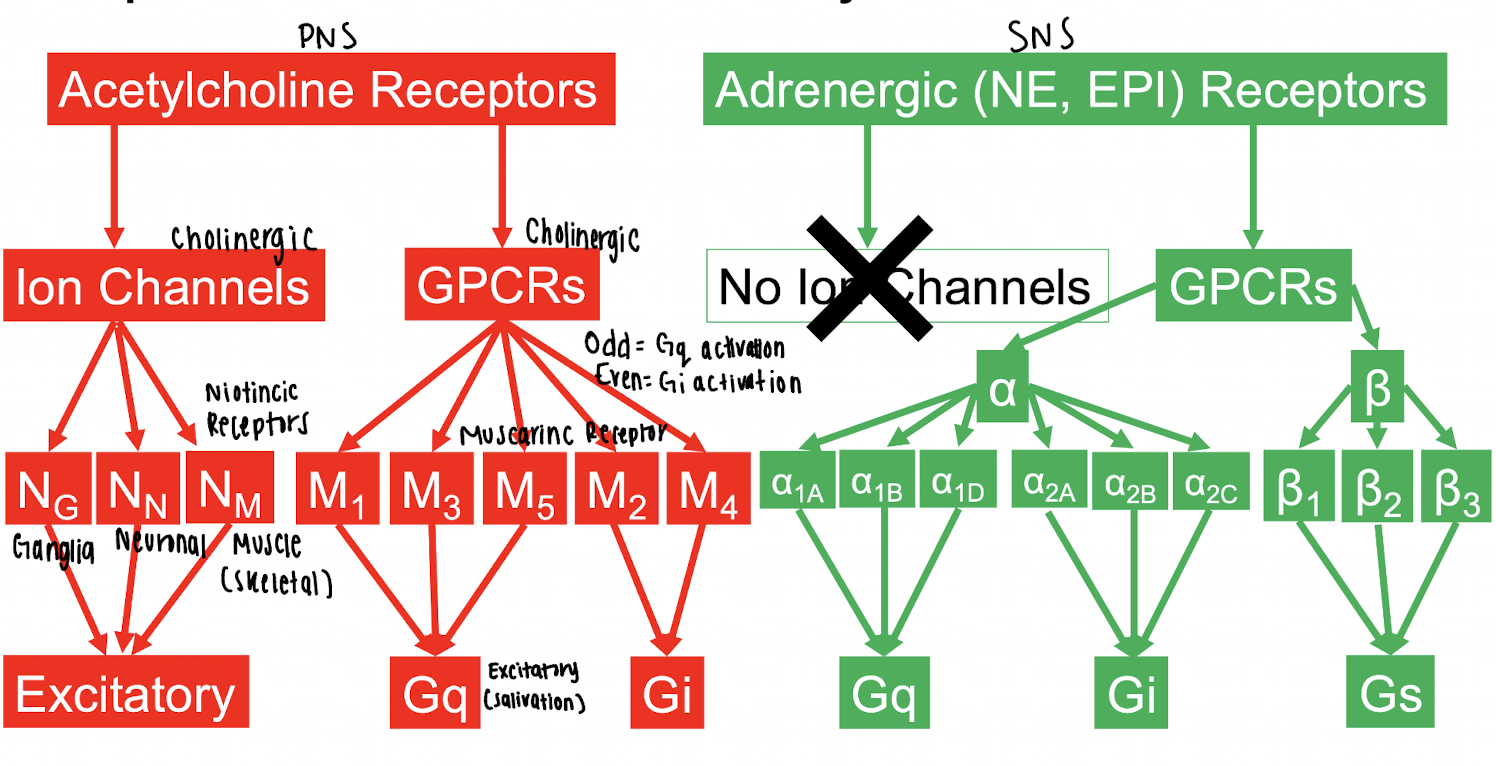
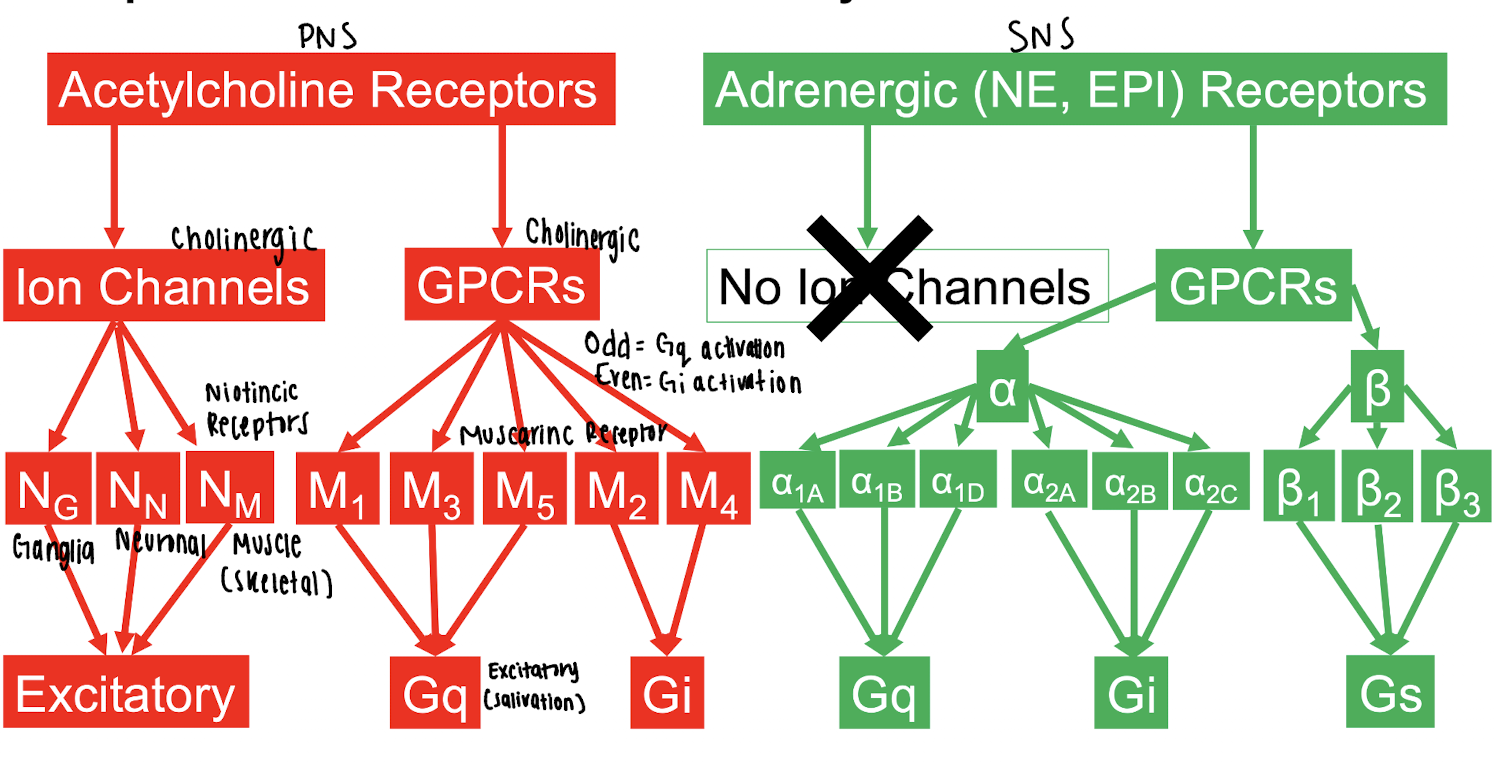
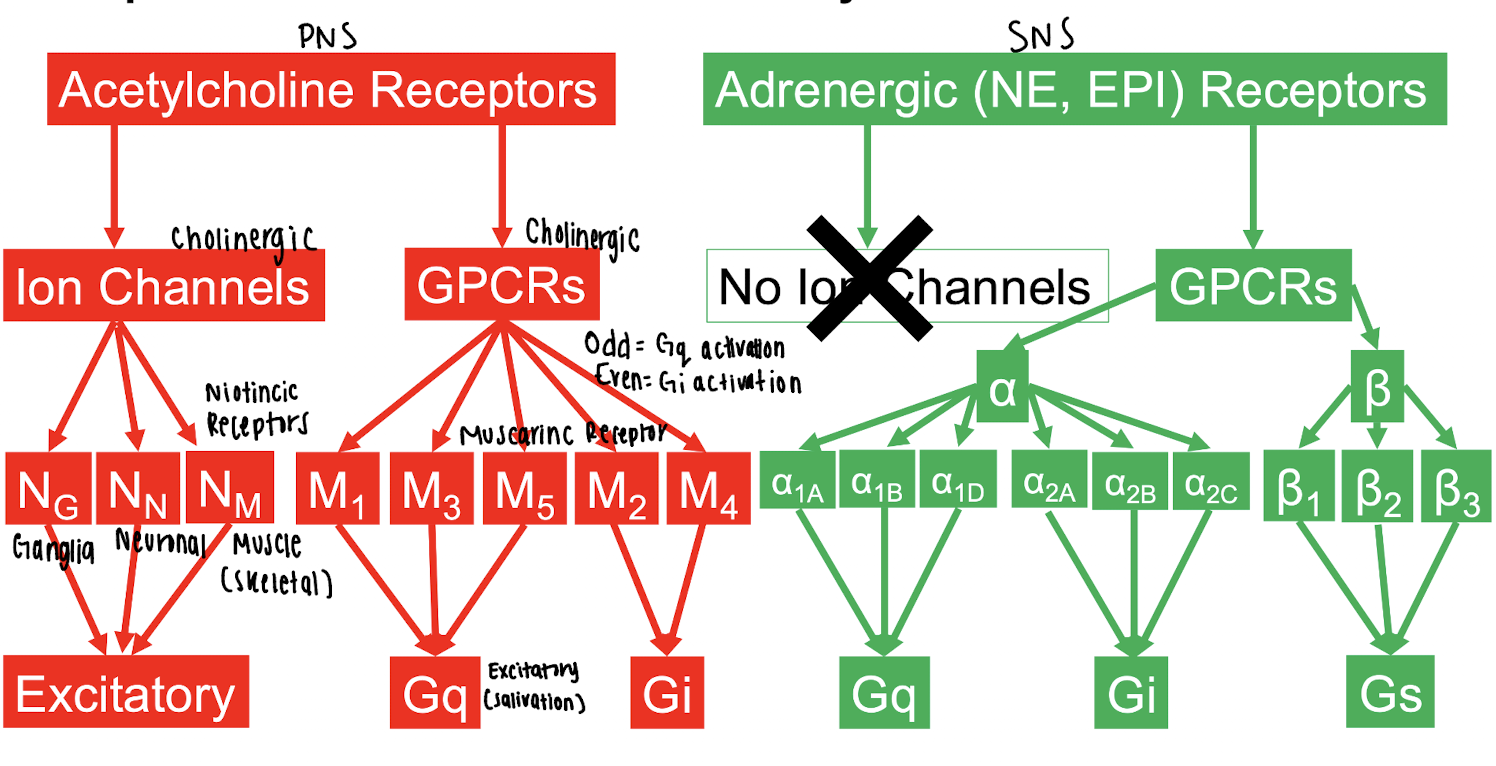
Acetylcholine Receptors:
NG NM NN M1 M3 M5 M2 M4
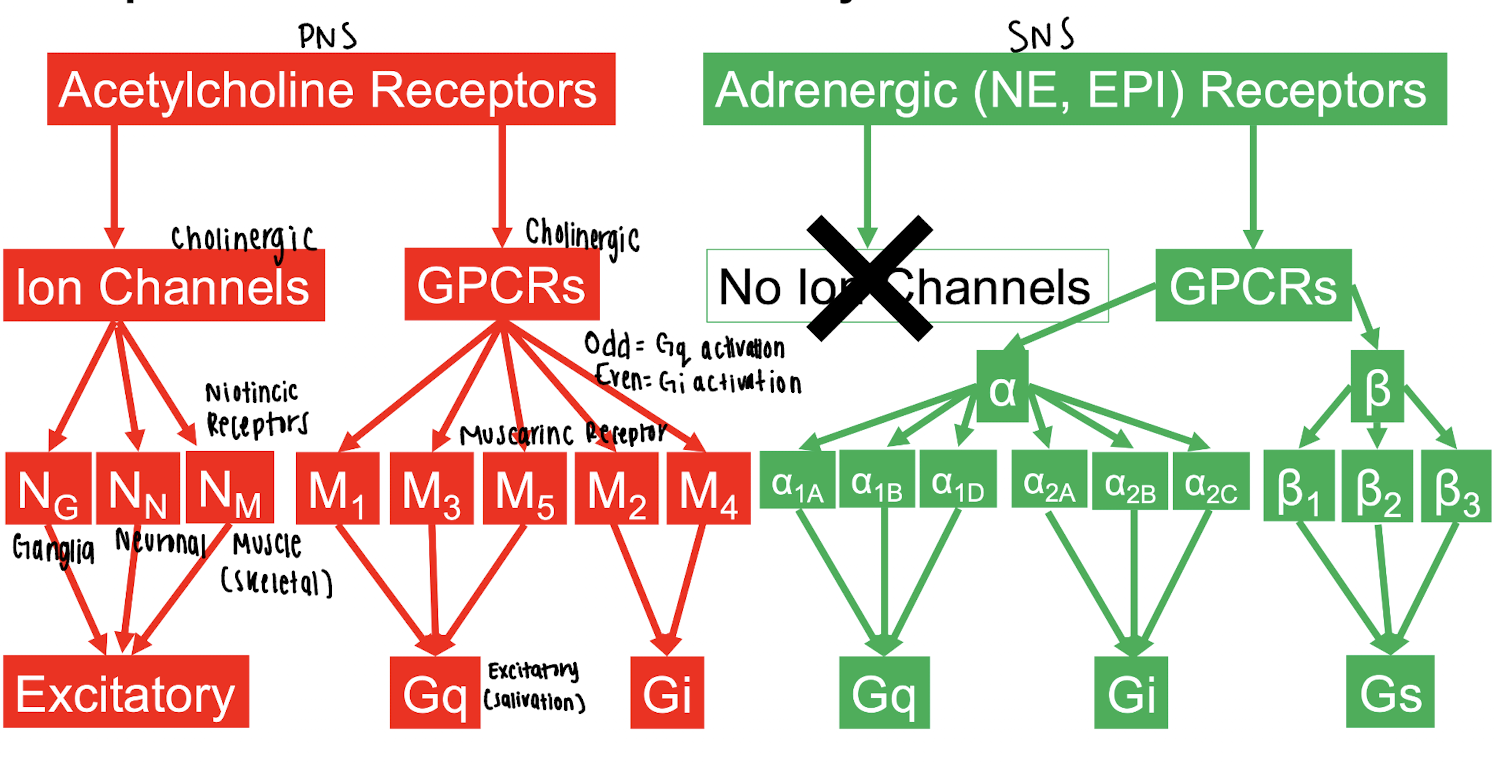
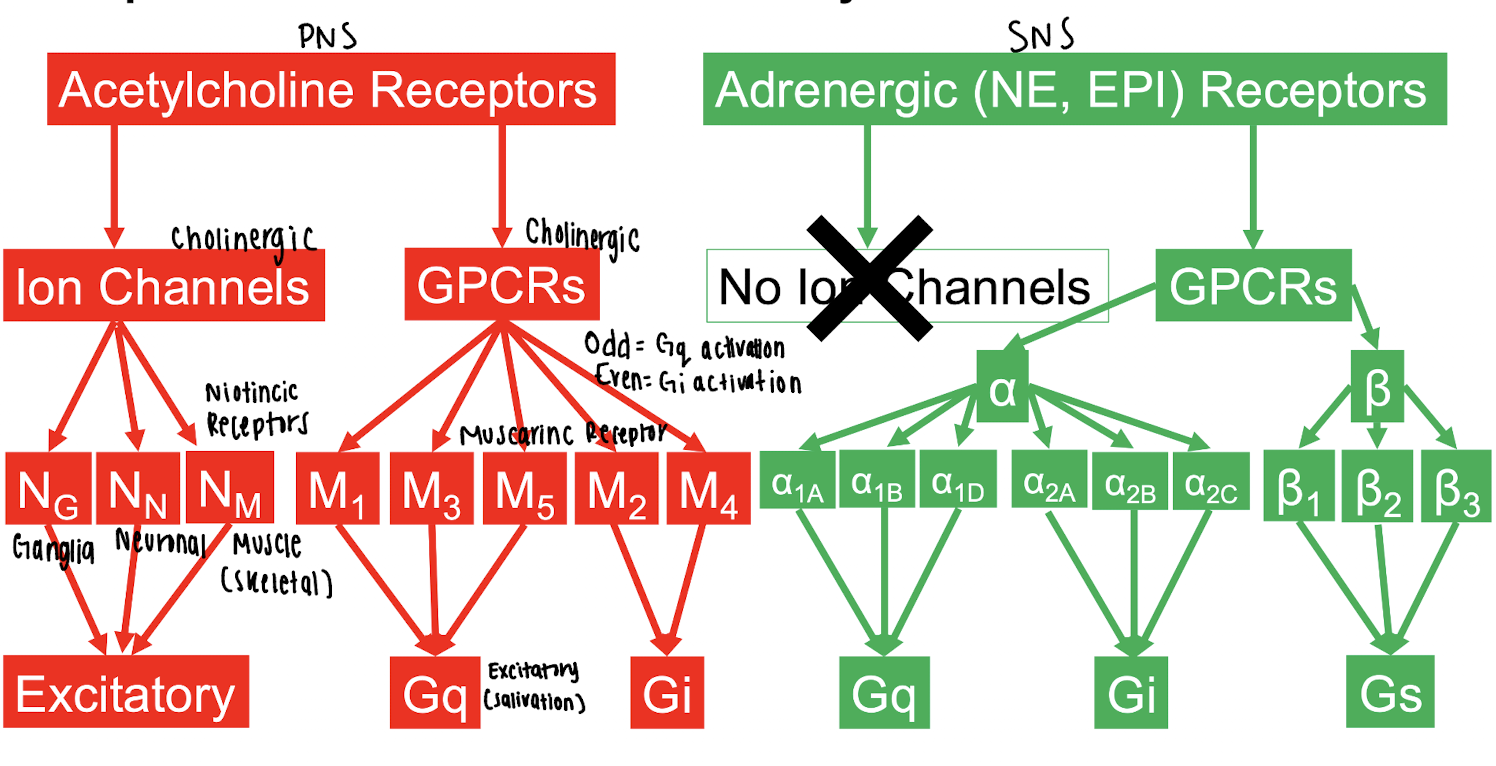
Cholinergic receptors classes:
Nicotinic receptors and Muscarinic receptors
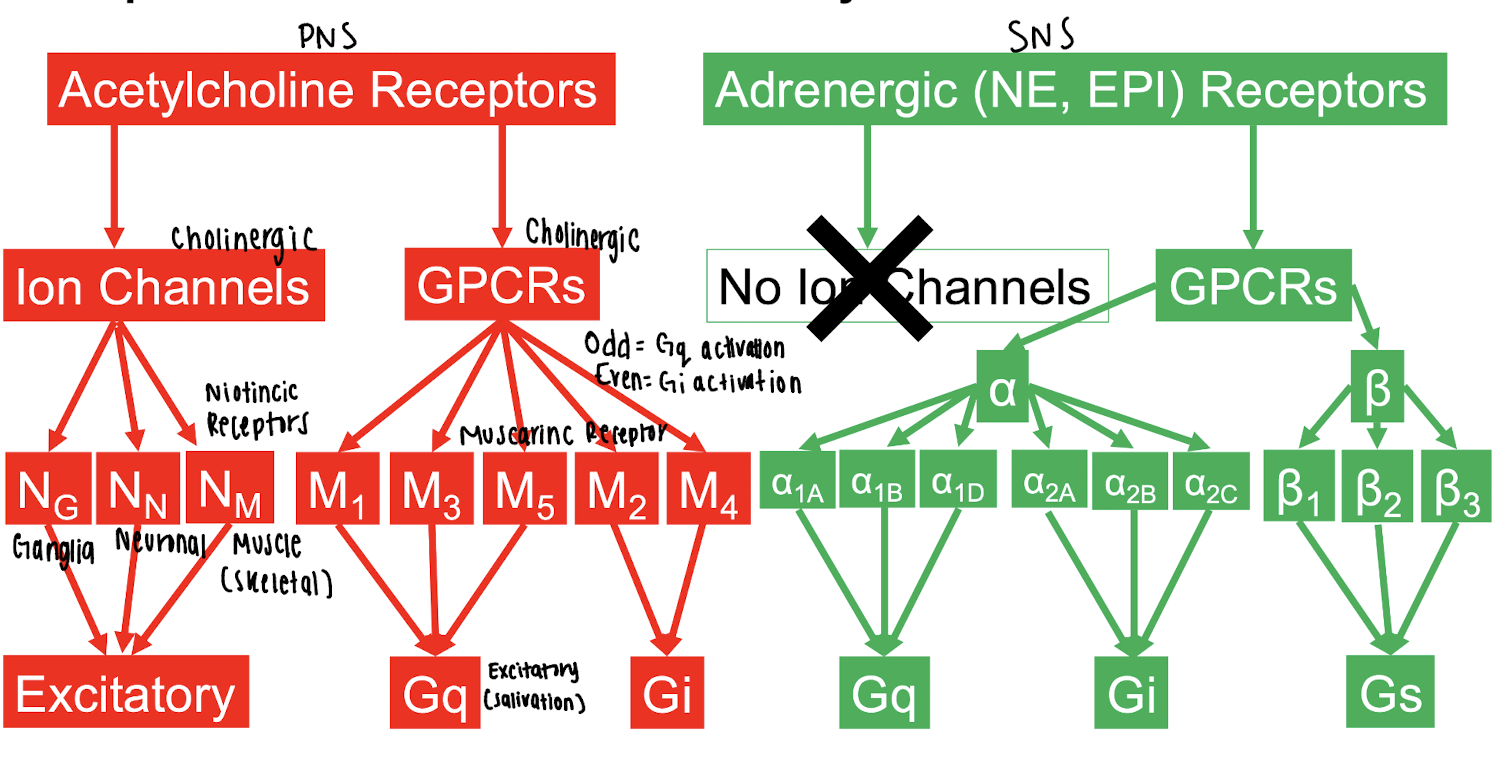
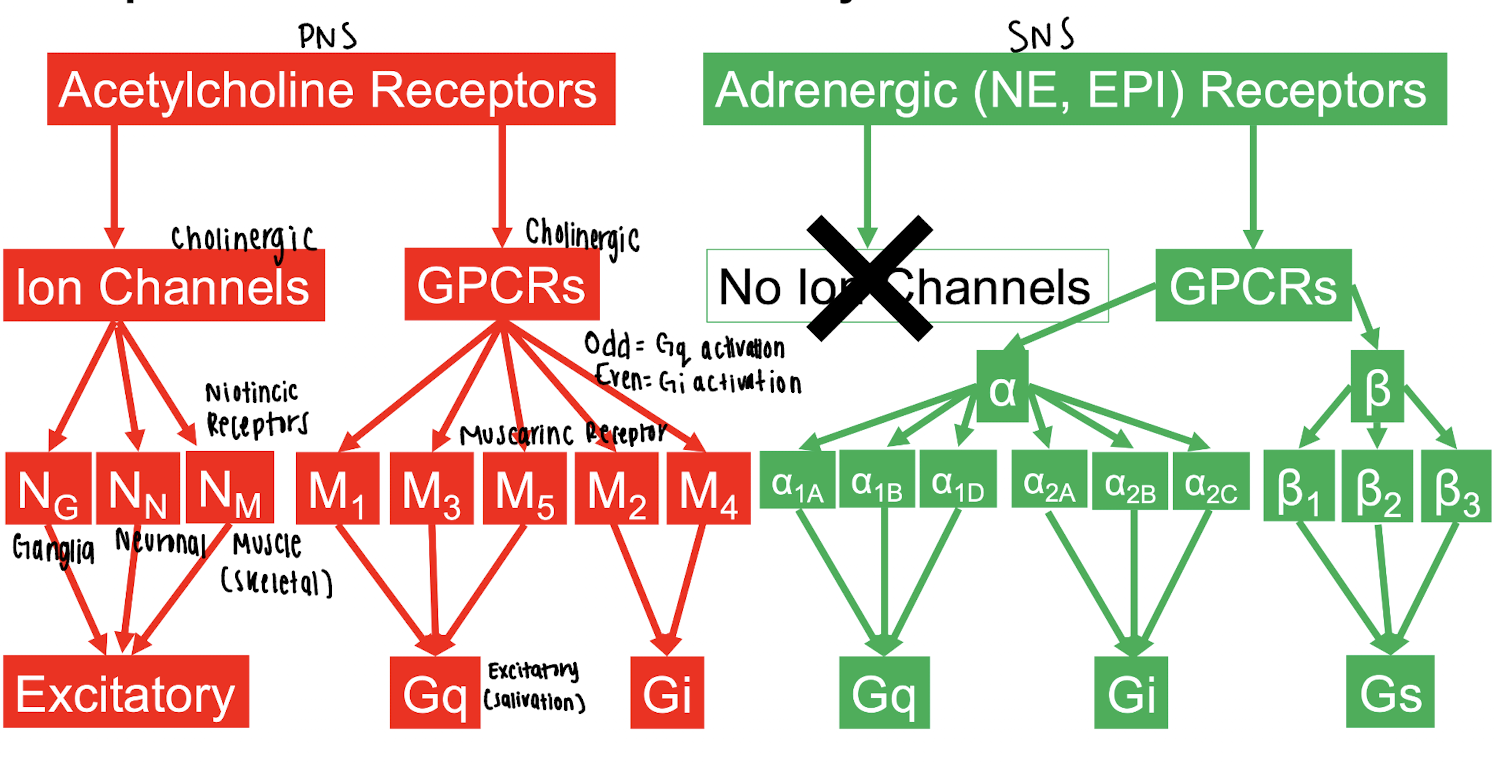
Muscarinic receptors:
inhibitory or excitatory depending on subtype, cell type/tissue, etc. – widespread throughout the body
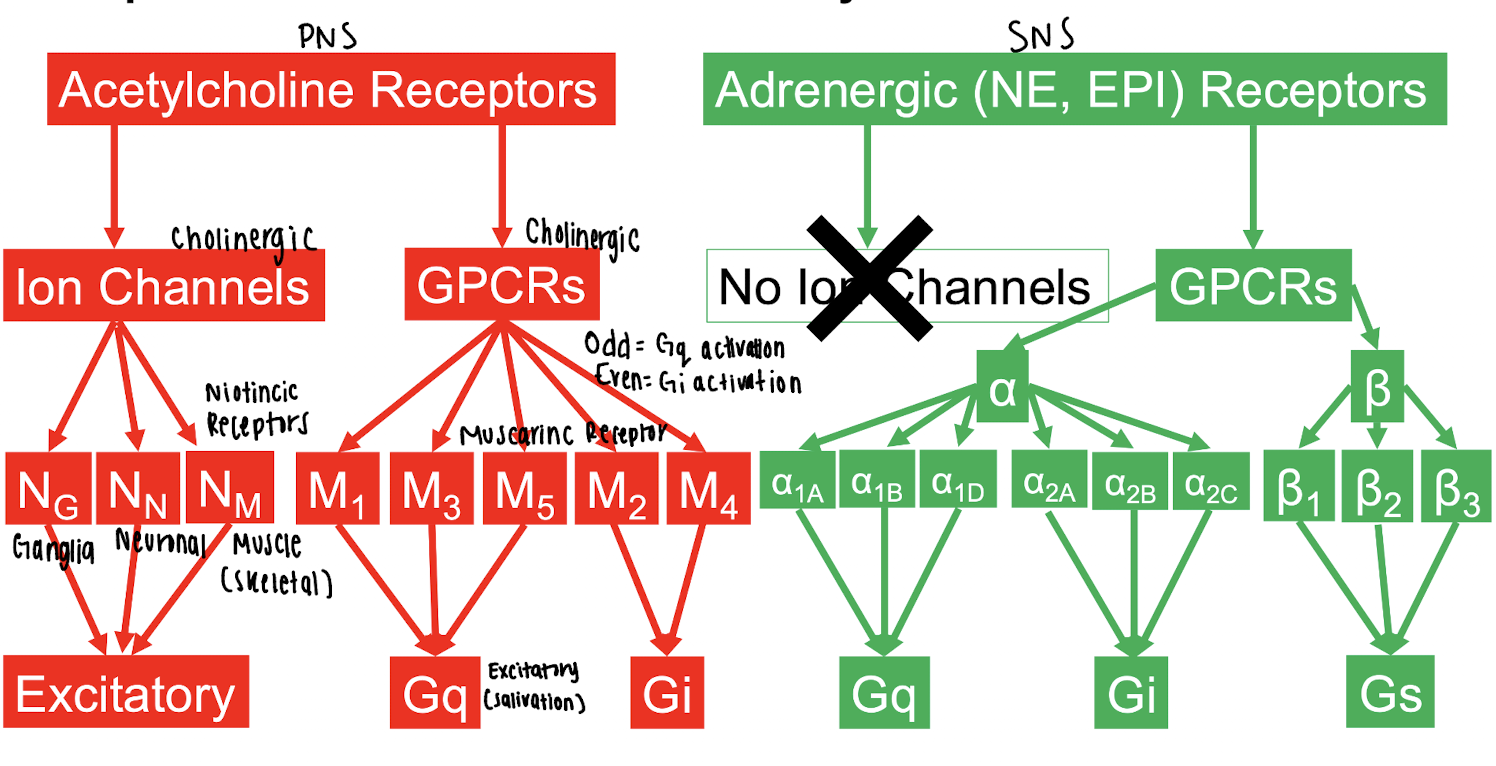
Nicotinic receptors are what type of receptors? (PNS + SNS)
excitatory ionotropic receptors composed of five subunits that form the receptor and ion pore (FAST = ion channel = ganglia)
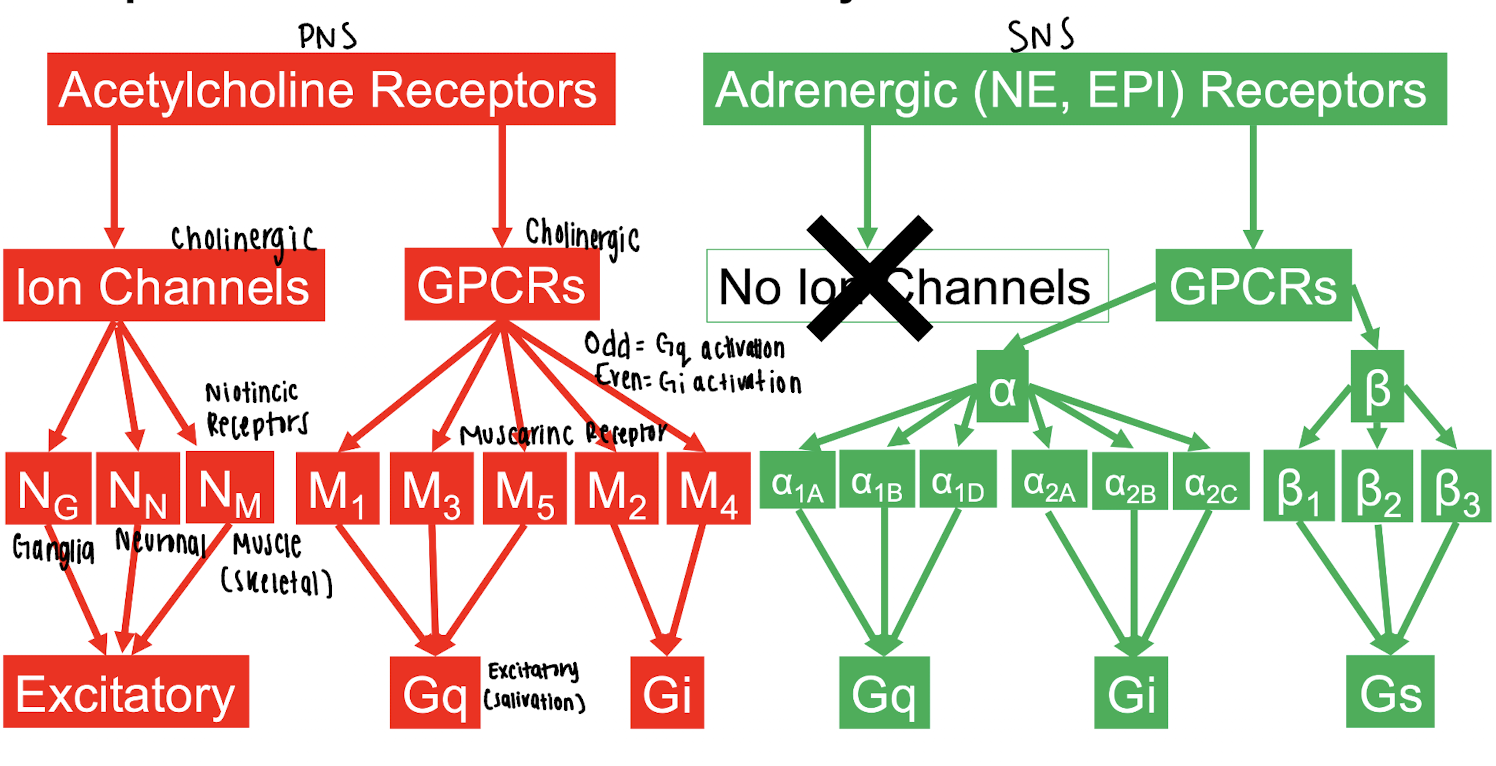
Nicotinic receptors are permeable to: (PNS + SNS)
Na+, K+, and for some subtypes Ca++
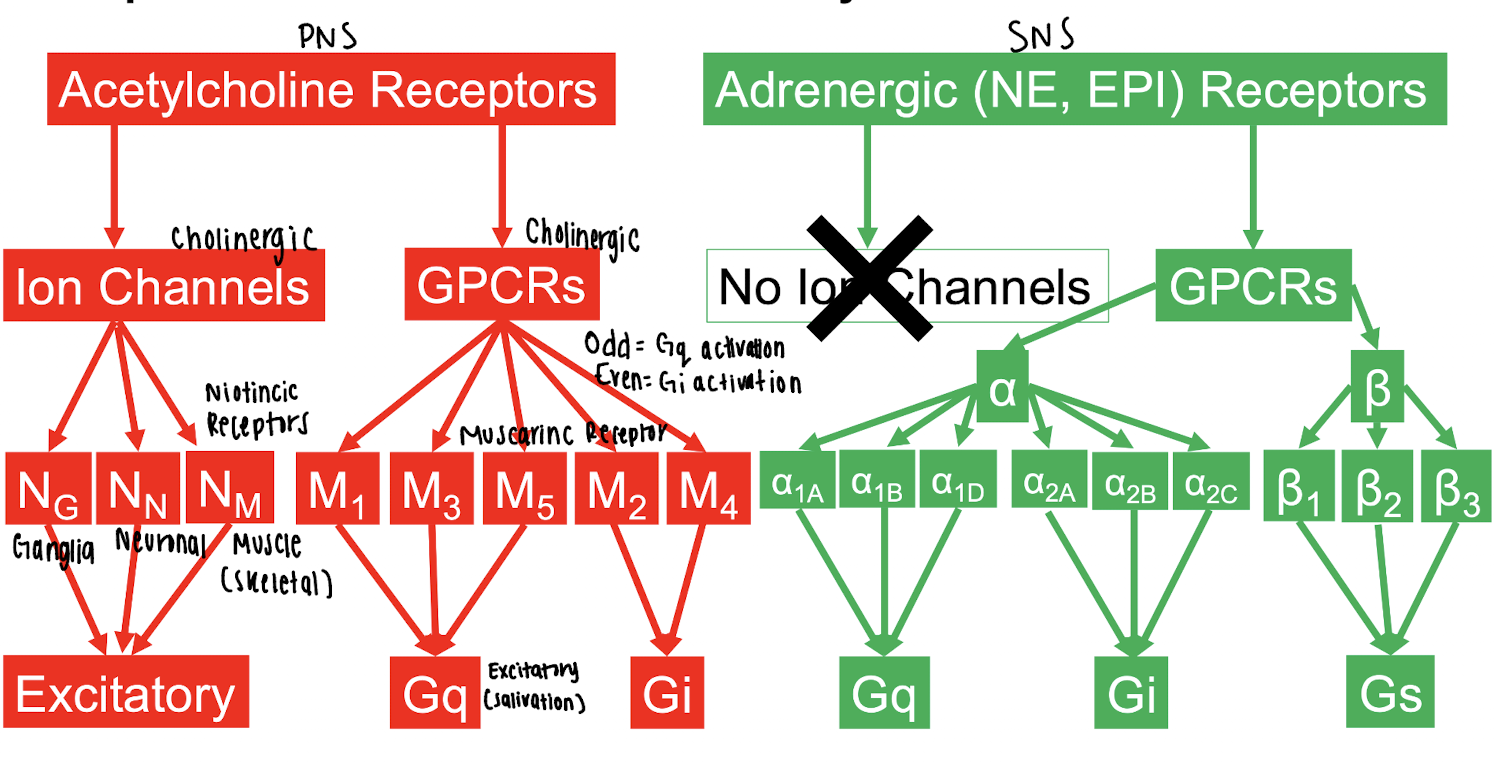
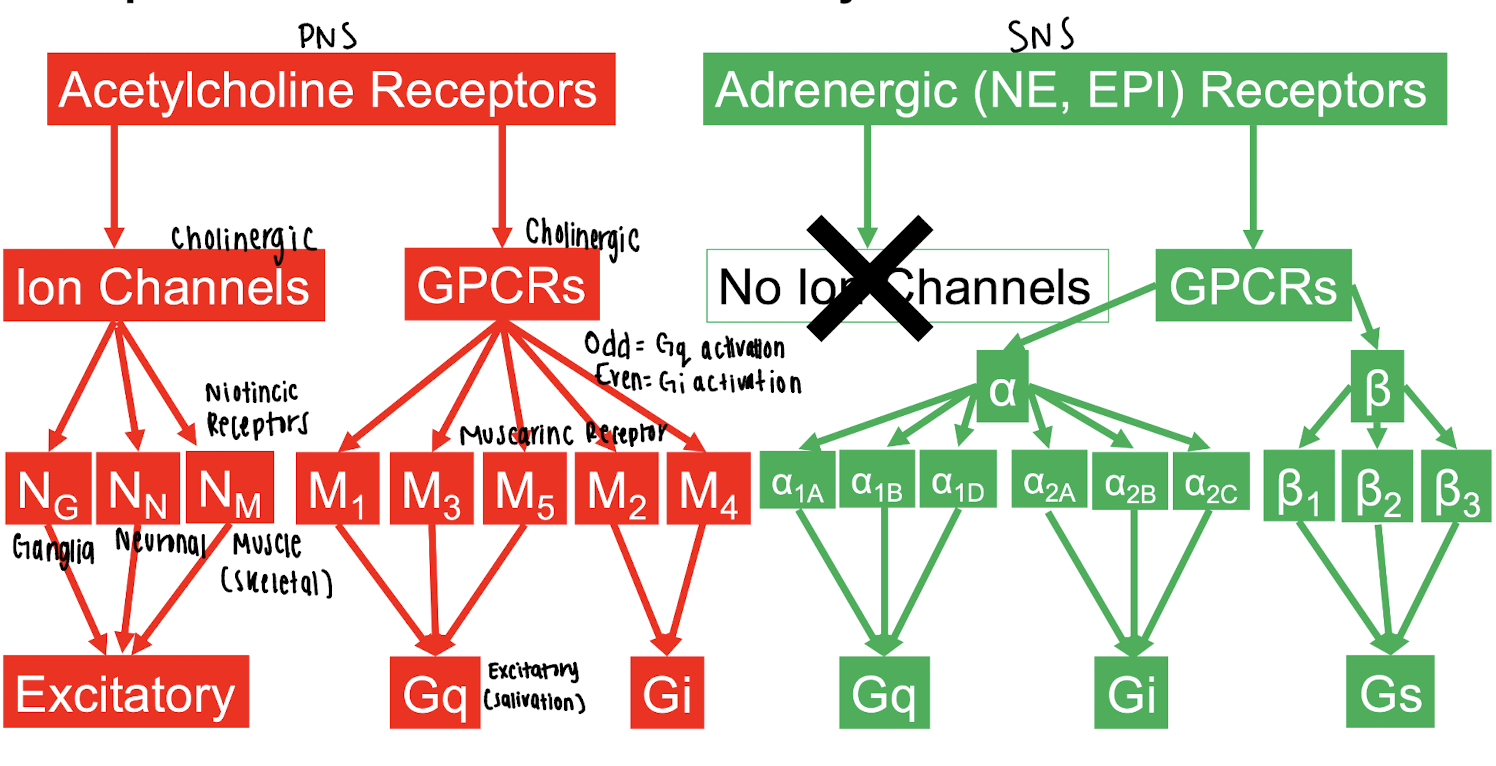
Muscarinic receptors are: (PNS)
GPCRs that generate PNS effects SSLUDDD-C (GPCR = organs SCAG)
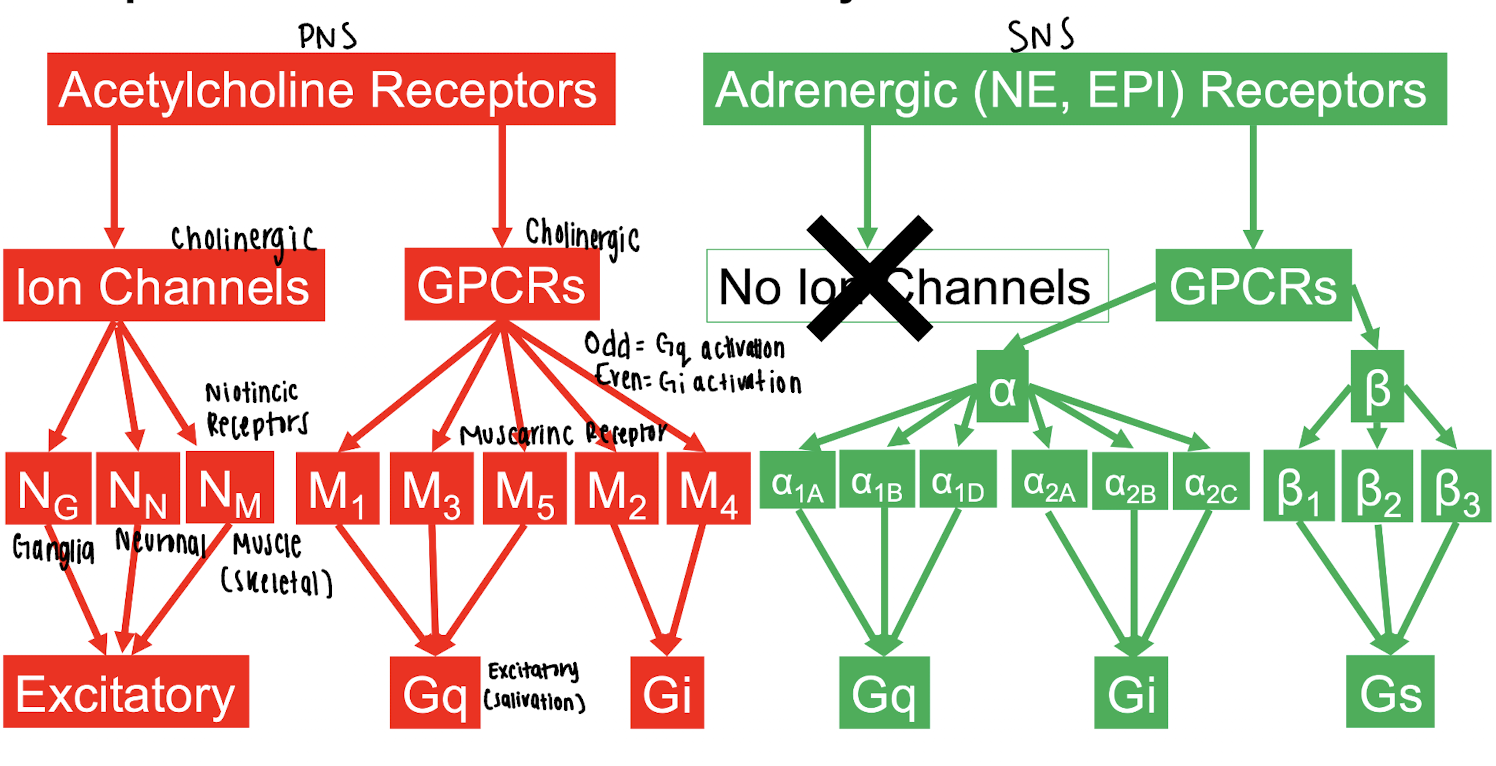
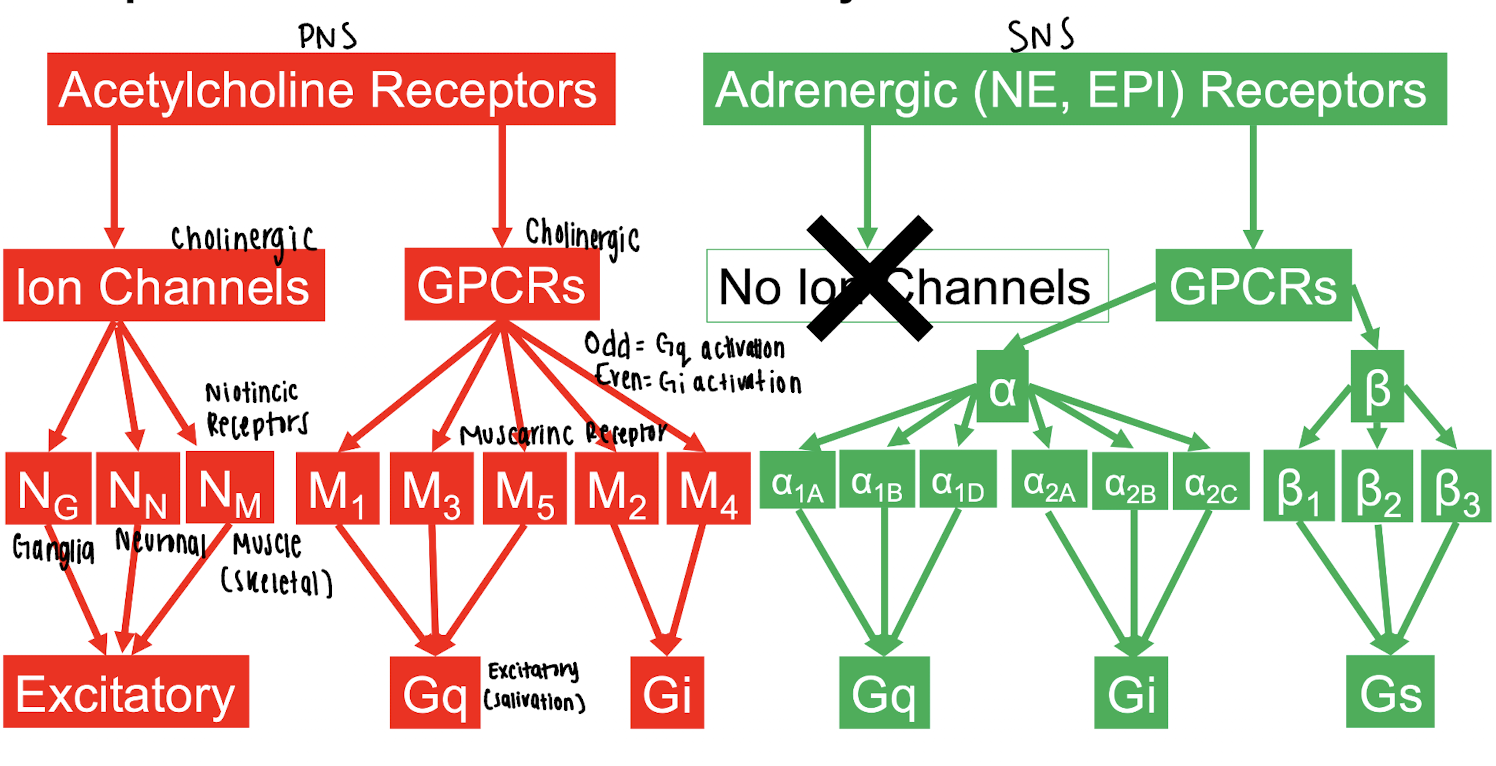
Five muscarinic receptor subtypes: (PNS)
M1 M2 M3 M4 M5
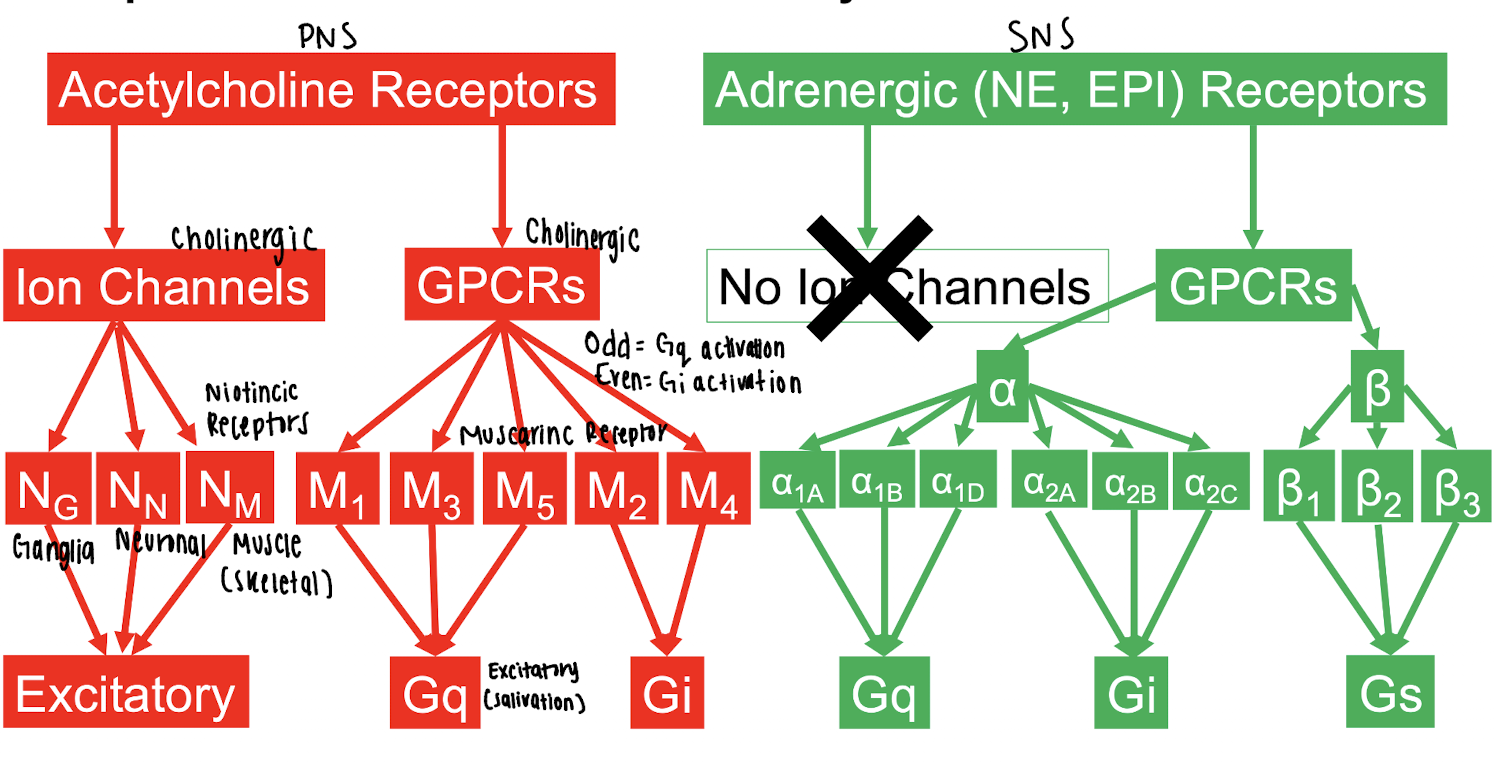
Why nicotine drugs do not cause extreme skeletal muscle contraction:
has affinity of neuronal type rather than muscle type
Muscarinic receptor activation causes: (PNS)
SSLUDDD-C
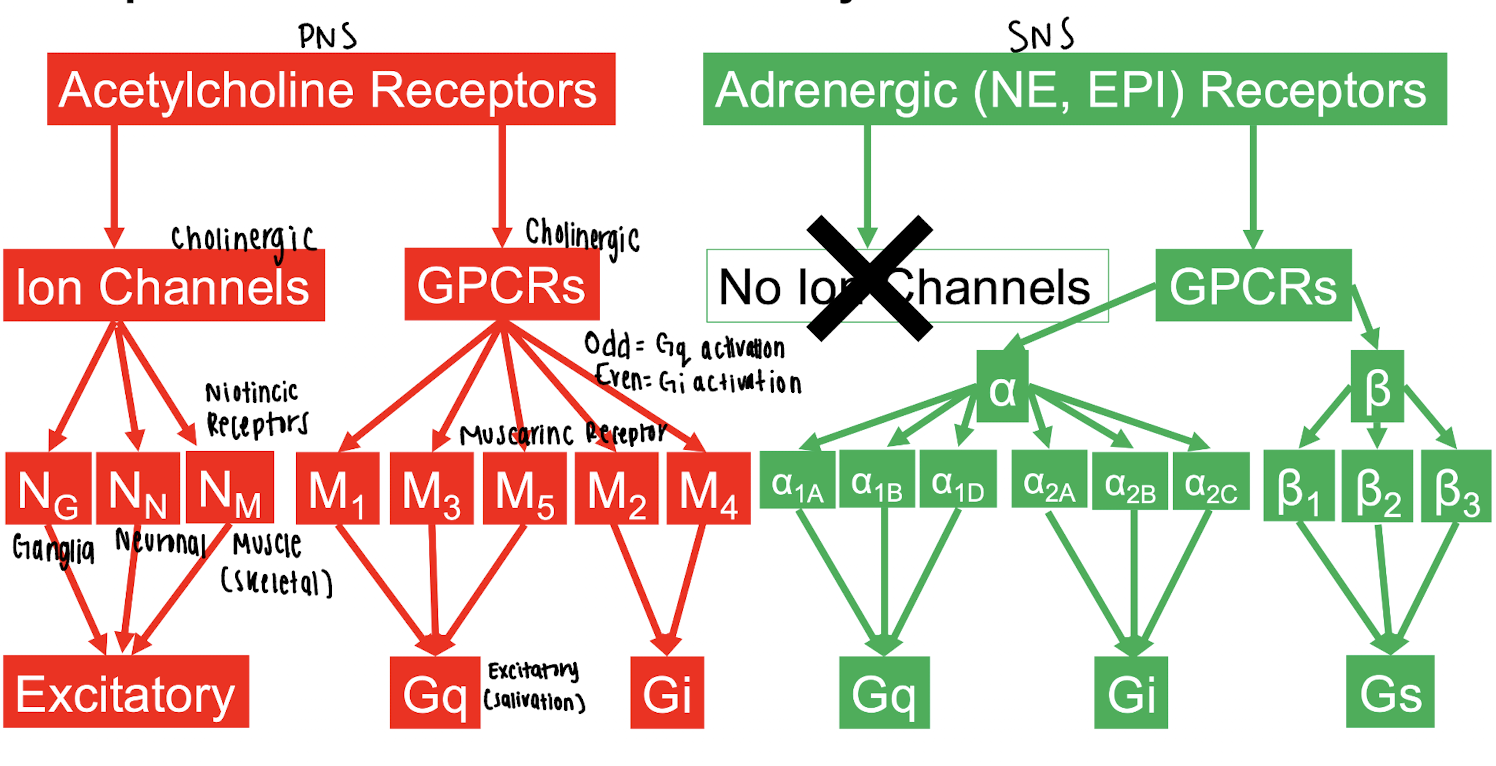
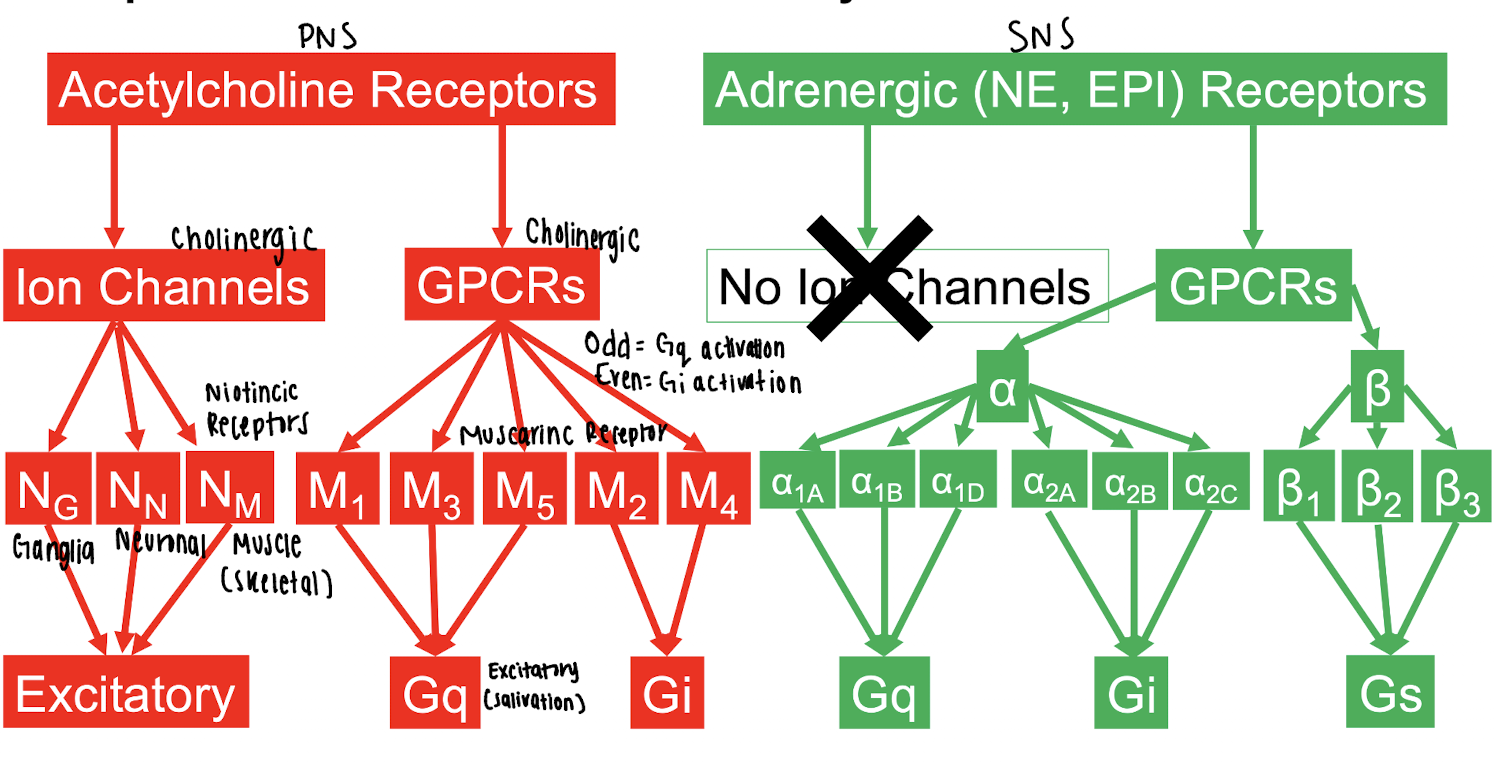
Alpha (α2) receptors: (SNS)
Gi → decrease cAMP inhibits NE release (α2 = shut OFF SNS)
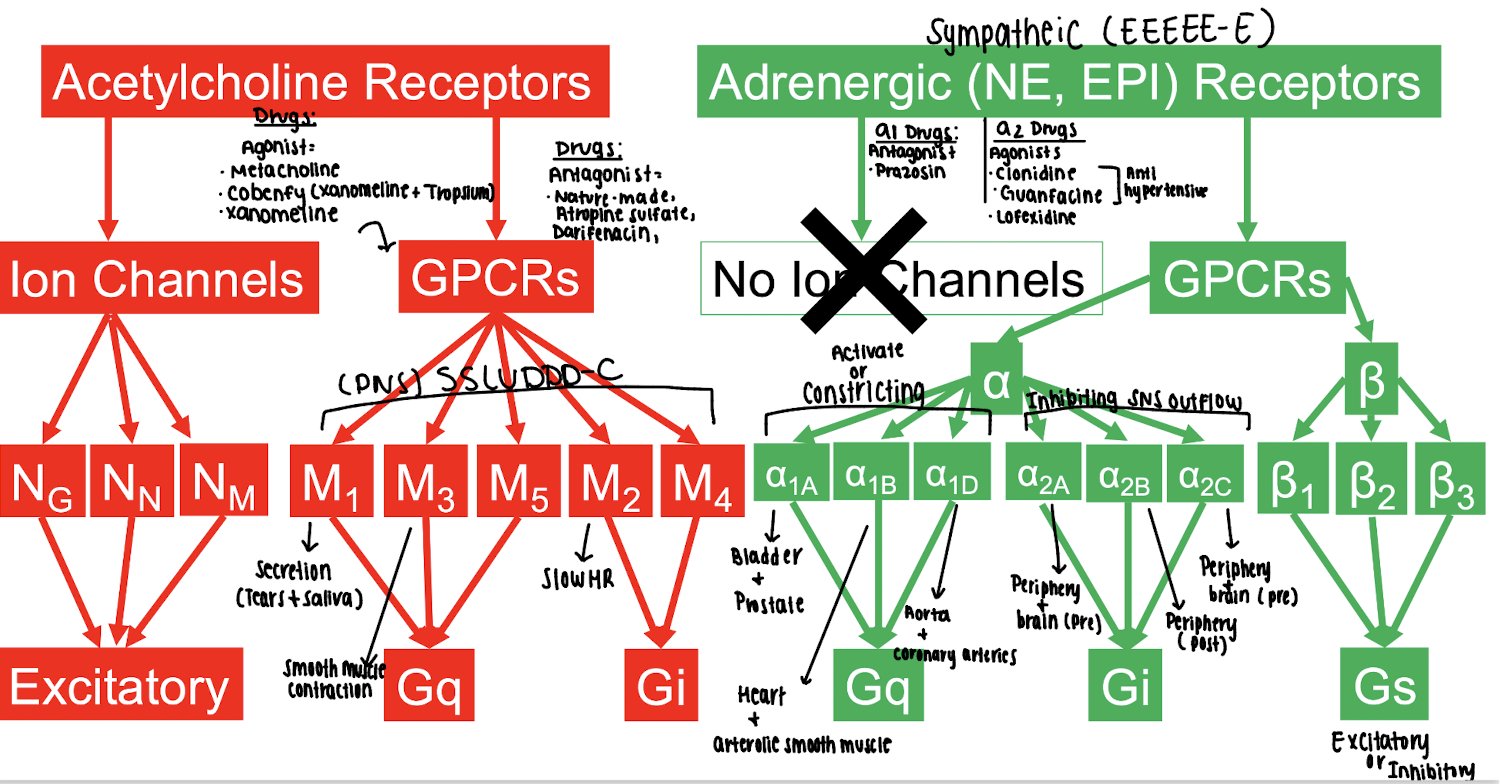
α2B receptor: (SNS)
postsynaptic causes smooth muscle contraction
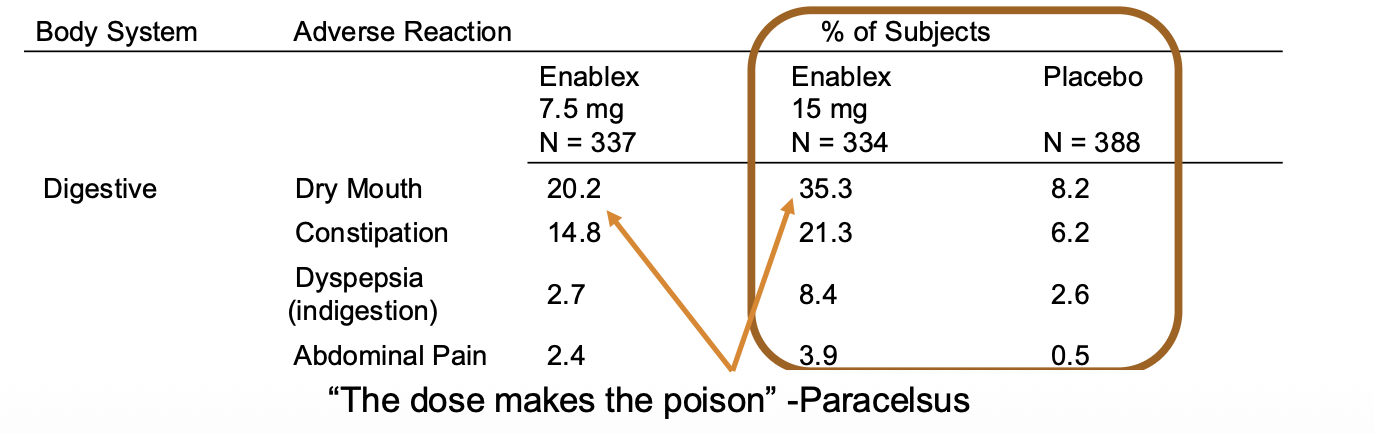
Darifenacin (Enablex)
◦ Treats overactive bladder
◦ Muscarinic receptor antagonist
Methacholine (Provocholine)
◦ Test for the diagnosis of bronchial airway hyperreactivity
◦ Muscarinic receptor agonist
Cobnefy
Xanomeline
◦ Centrally-acting muscarinic receptor agonist (thought to work through M1 and M4)
combined with
Trospium
◦ Peripherally-restricted muscarinic receptor antagonist to block xanomeline’s “SLUDDD-C” effects.
Approved to treat schizophrenia
The first non-dopaminergic drug for schizophrenia! Approved
September 26, 2024
Trospium
◦ Peripherally-restricted muscarinic receptor antagonist to block xanomeline’s “SLUDDD-C” effects.
◦ Treats overactive bladder
◦ Muscarinic receptor antagonist
Xanomeline
◦ Centrally-acting muscarinic receptor agonist (thought to work through M1 and M4)
Guanfacine (Tenex)
◦ Anti-hypertensive
◦ a2 adrenergic agonist, centrally-acting
◦ Reduces sympathetic outflow that leads to decreased release of NE on smooth muscles
and heart
Sympathomimetics (Constricts “S” in SCAG)
Drugs that Mimic the SNS:
Methamphetamine- stimulates release of NE (and DA)
Propylhexedrine (Benzedrex)-stimulates release of NE (and DA)
Pseudoephedrine - stimulates the release of NE
Sinus Congestion Relief

