rhomboid fossa
 Call Kai
 Learn
Learn Practice Test
 Spaced Repetition
 Match
Match Flashcards
 Knowt Play
1/20

There's no tags or description
Looks like no tags are added yet.
Name | Mastery | Learn | Test | Matching | Spaced | Call with Kai |
|---|
No analytics yet
Send a link to your students to track their progress
21 Terms
Orientation of the rhomboid fossa
Greater axis is vertical
What forms the rhomboid fossa?
Two triangles: inferior (medullary) and superior (pontine)
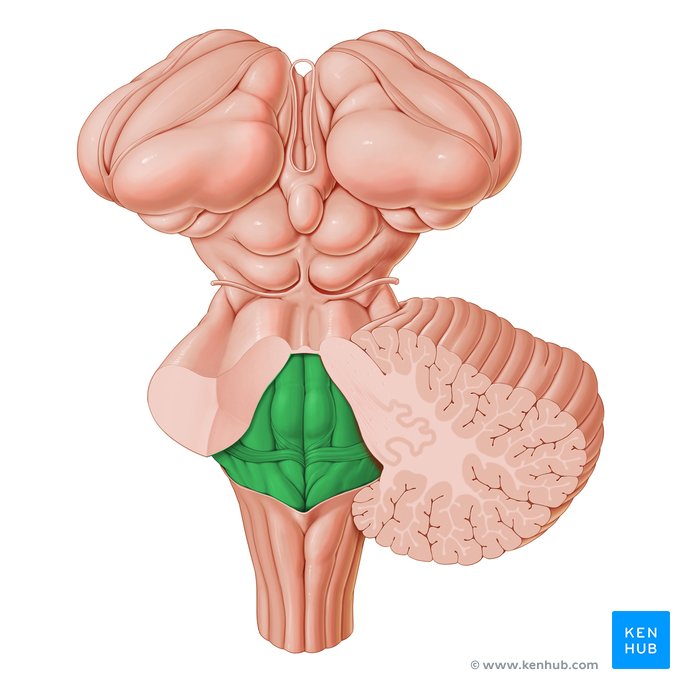
What separates the two triangles of the rhomboid fossa?
Stria medullaris
What structure divides the rhomboid fossa into two halves?
Median sulcus ( on midline )
What flanks the median sulcus?
Medial eminences
Lateral boundary of the medial eminence
Sulcus limitans
Sulcus limitans is bordered by what?
Superior and inferior foveae
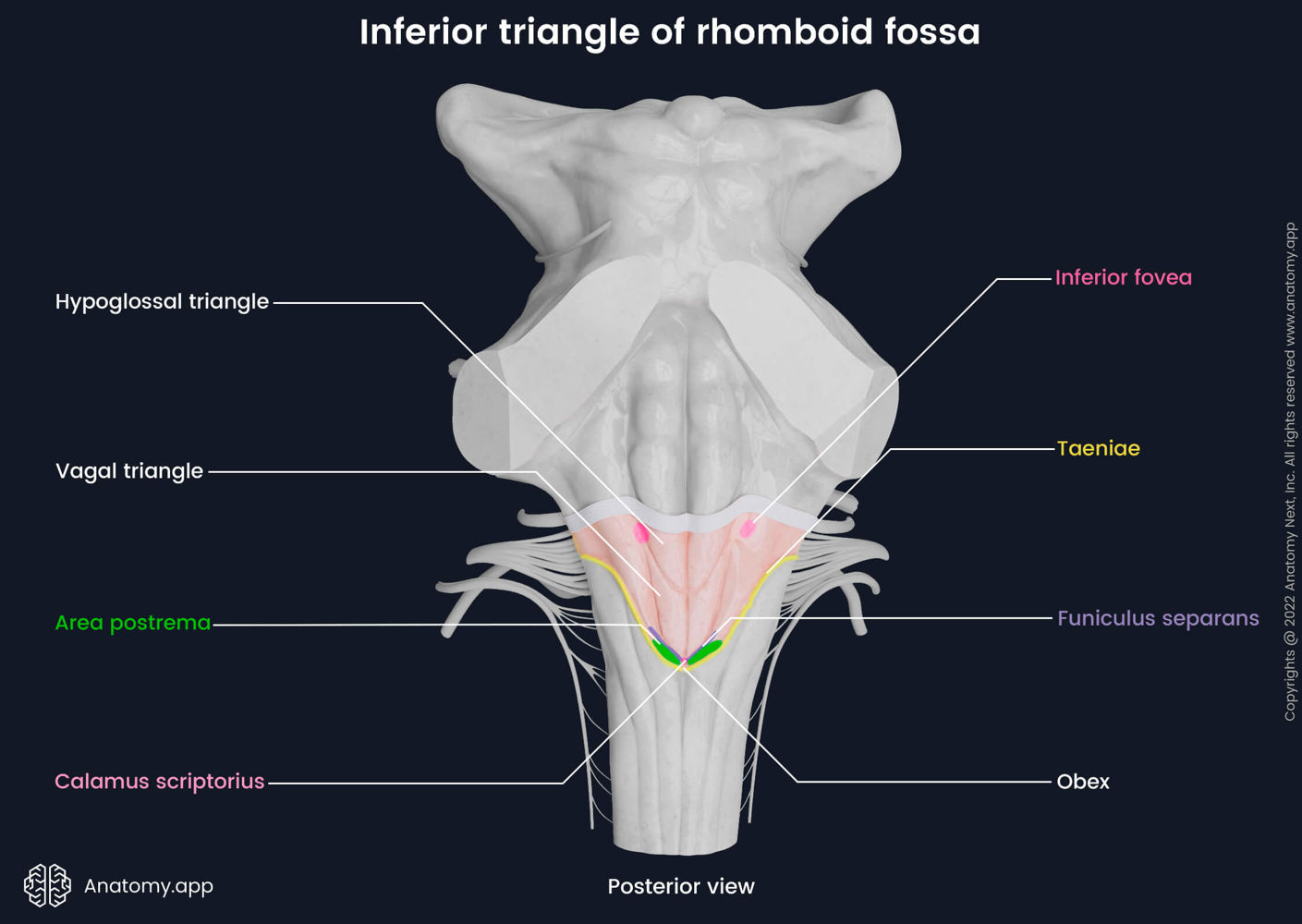
What forms the inferior (medullary) triangle?
Two triangular areas
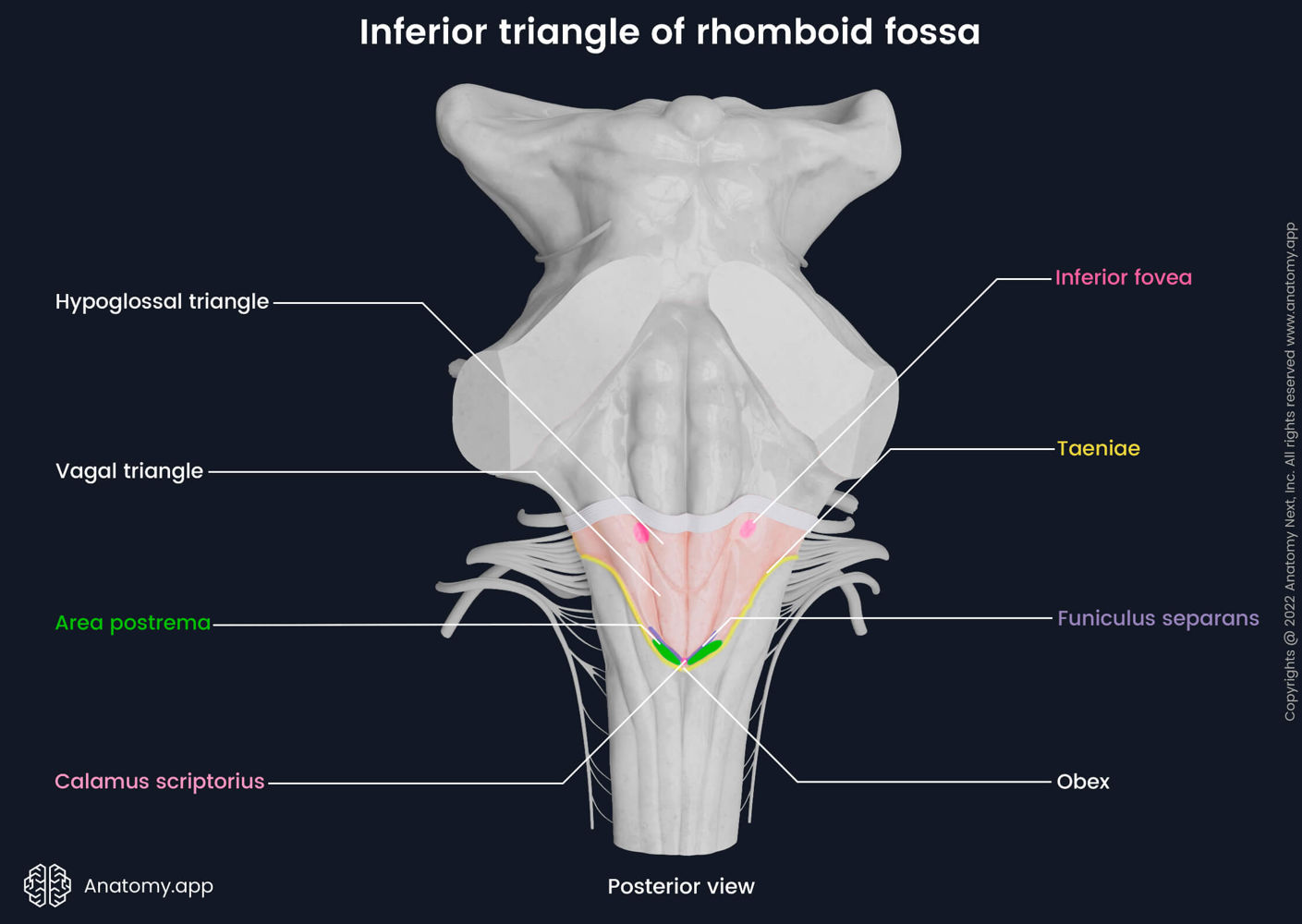
Name the two areas of the hypoglossal triangle
Medial and lateral regions
What divides the hypoglossal triangle?
Vertical funiculus
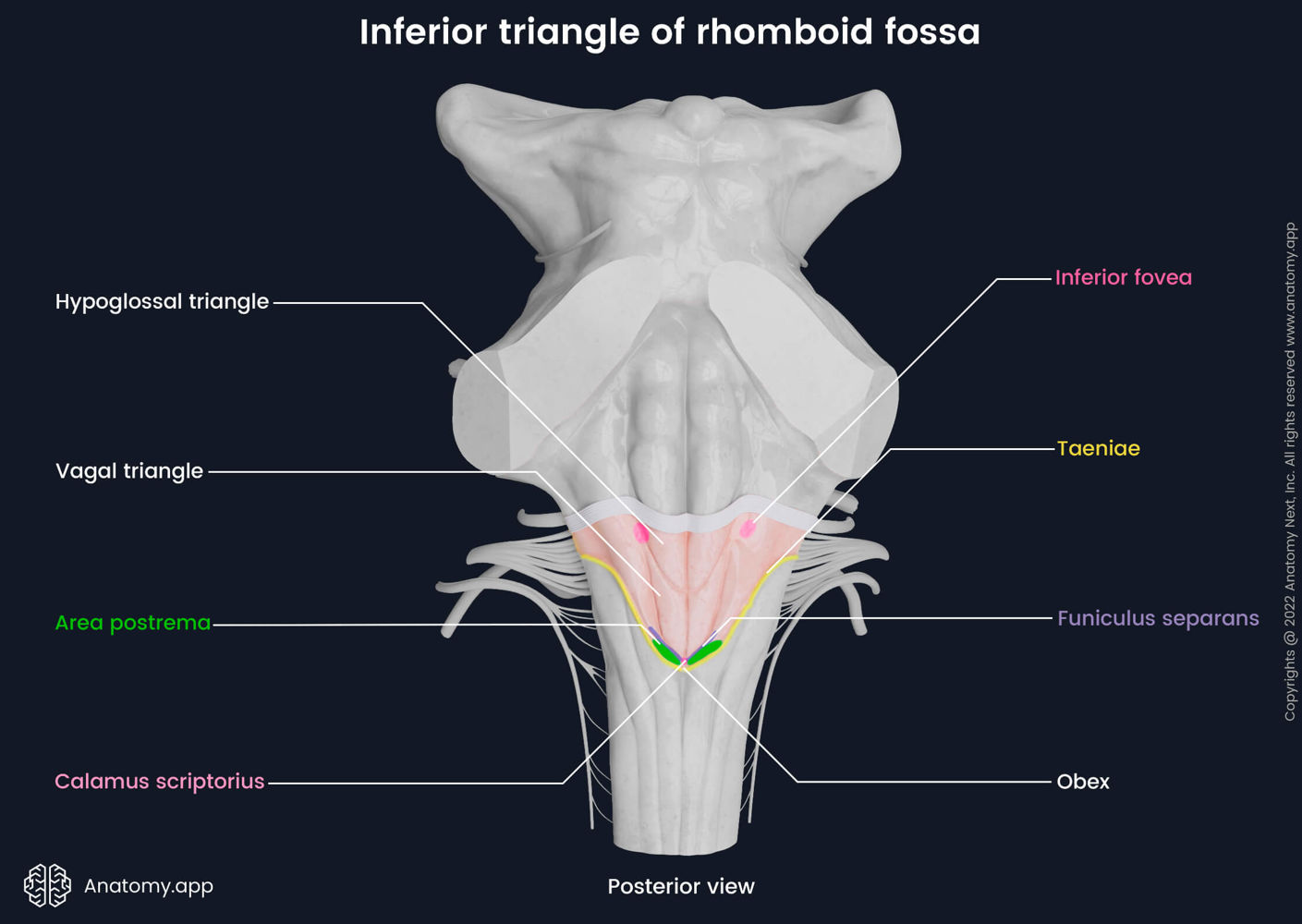
Deep structure in the medial hypoglossal region
Hypoglossal nucleus
Lateral part of hypoglossal triangle corresponds to what?
Pulviformis area (nucleus intercalatus of Staderini)
Orientation of the vagus triangle
Tip is superior
→ splitted by an oblique crest ( funiculum separans )
→ into 2 region :
Superomedial region of vagus triangle contains what?
Dorsal nucleus of vagus nerve
Inferior region of vagus triangle corresponds to what?
Area postrema
Location of vestibular area
Lateral angle of medullary triangle → contains vestibular nuclei.
Superior feature of vestibular area
Acoustic tubercle (dorsal cochlear nucleus)
Order of structures in pontine triangle (lateral → medial)
Facial colliculus → superior fovea → locus coeruleus
Facial colliculus corresponds to what?
CN VI nucleus and internal genu of CN VII
Superior fovea corresponds to what?
Motor nucleus of CN V
Locus coeruleus corresponds to what?
Nucleus coeruleus

