Cardiovascular system
 Studied by 0 people
 Call Kai
 Learn
Learn Practice Test
 Spaced Repetition
 Match
Match Flashcards
 Knowt Play
1/8

There's no tags or description
Looks like no tags are added yet.
Name | Mastery | Learn | Test | Matching | Spaced | Call with Kai |
|---|
No analytics yet
Send a link to your students to track their progress
9 Terms
3 types of blood circulation
1. Systemic Circulation : Delivers oxygen-rich blood from the heart to all body tissues (except lungs) and carries waste (CO2) back.
2. Pulmonary Circulation : Transports deoxygenated blood from the heart to the lungs for gas exchange (picking up O2, dropping off CO2) and returns oxygenated blood.
3. Coronary Circulation : A specialized circulation that feeds the heart muscle (myocardium) with oxygen and nutrients. Path: Coronary arteries branch off the aorta to supply the heart, while cardiac veins collect deoxygenated blood from the heart muscle.
What is cardiovascular system?
The cardiovascular system is body's essential transport network, comprising the heart, blood, and blood vessels (arteries, veins, capillaries), working to deliver oxygen, nutrients, hormones, and remove waste like carbon dioxide from every cell, ensuring your body's organs and tissues function properly.
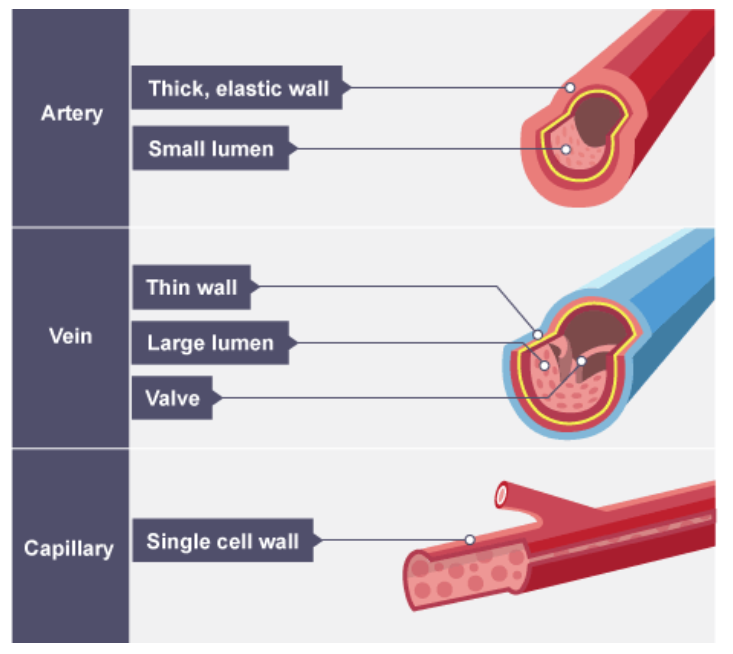
Artery blood vessel
Direction: Away from the heart.
Blood Type: Usually oxygenated (except pulmonary arteries to the lungs).
Pressure: High.
Wall Structure: Thick, muscular, and elastic to withstand high pressure and help with blood flow.
Lumen (Hole): Narrow to maintain pressure.
Vein blood vessel
Function: Returns blood to the heart from the body.
Blood Type: Carries deoxygenated blood (except pulmonary veins).
Pressure: Low pressure.
Wall Structure: Thinner walls with less muscle and elastic tissue than arteries, and a larger internal diameter (lumen).
Valves: Contain one-way valves to ensure blood flows towards the heart, especially against gravity. or no valve

Capillary blood vessel
Nutrient & Oxygen Delivery: Deliver oxygen and glucose to cells.
Waste Removal: Carry away carbon dioxide and waste products like urea.
Fluid Exchange: Regulate fluid balance between blood and tissues.
Immune Response: Allow white blood cells to exit the bloodstream to fight infection.
Size: Extremely small 1 cell thick (1 cell passes at a time)
semi Permeable membrane: Walls are "leaky," allowing easy passage of substances.
Blood Flow: Slow and low pressure, optimizing exchange time.
no valves and low blood pressure
thin lumen and wall
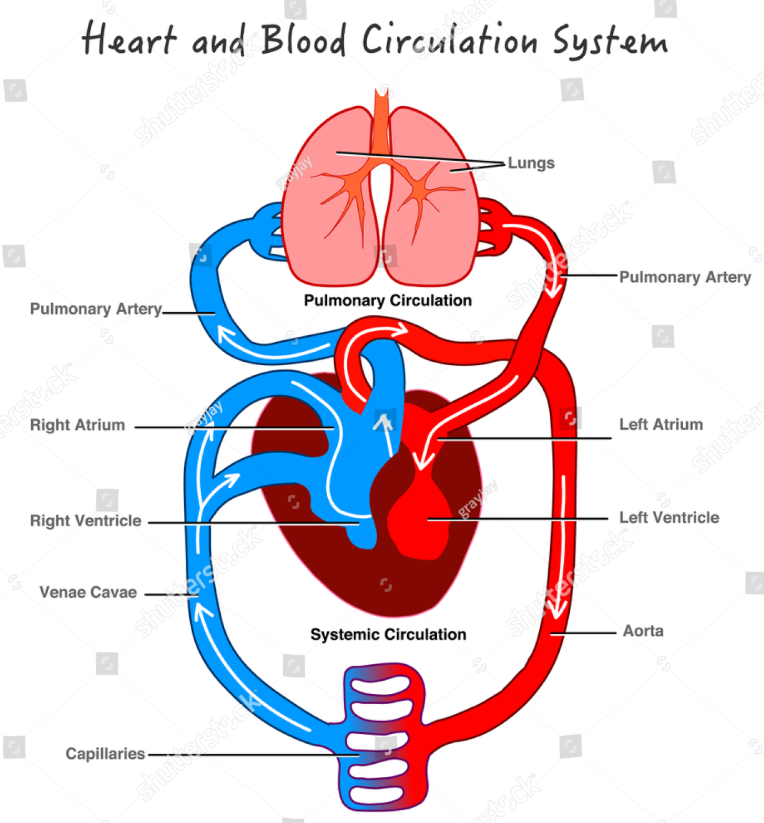
How blood flows in the heart
Deoxygenated blood returns: Blood with no oxygen (from your body) comes into the right atrium via the vena cava veins.
To the lungs (first pump): it goes from the right atrium to the right ventricle, which pumps it to the lungs through the pulmonary artery to pick up oxygen.
Oxygenated blood returns: Oxygen-rich blood comes back from the lungs to the left atrium via pulmonary veins.
To the body (second pump): it moves to the left ventricle, which powerfully pumps it into the aorta, the main artery, to deliver oxygen to your entire body.
Cycle repeats: The blood delivers oxygen, picks up waste (carbon dioxide), and returns to the right side to start again.
Key Players:
Atria (Upper Chambers): Receive blood (Right: dirty; Left: clean).
Ventricles (Lower Chambers): Pump blood out (Right: to lungs; Left: to body).
Valves: One-way doors (like tricuspid, mitral, aortic, pulmonary) that stop blood from flowing backward.
Aorta: The body's main artery, carrying oxygenated blood out.
Main function of cardiovascular system
Transport oxygen, CO2 and nutrients
Clotting of open wound
Regulates body temperature by moving blood closer to the skin (vasodilation) to release heat by enlarging and loosing heat or away from the skin (vasoconstriction) to conserve it.
Transports white blood cells and antibodies to fight infection and delivers clotting factors to stop blood loss.
Cells and their name
Red- Erythrocytes- Transport oxygen from the lungs to the body's tissues using a protein called hemoglobin, which gives them their red color.
Platelets- Thrombocytes- These are cell fragments that help the blood clot to stop bleeding after an injury.
White- Leukocytes- Part of the immune system, they defend the body against infection by fighting bacteria, viruses, and other foreign substances.
Key facts
Ventricular walls are thicker than atrium walls because they pump blood further.
Left ventricle are even thicker because it pumps blood around the body, while right ventricle pumps close to heart.
Valves to prevent backflow of blood.
Bicuspid/Mitral valve left side
Tricuspid valves right side
 Note
Note  Flashcards (24)