motor pathways brainstem systems
 Call Kai
 Learn
Learn Practice Test
 Spaced Repetition
 Match
Match Flashcards
 Knowt Play
1/75

There's no tags or description
Looks like no tags are added yet.
Name | Mastery | Learn | Test | Matching | Spaced | Call with Kai |
|---|
No analytics yet
Send a link to your students to track their progress
76 Terms
lenticulostriate arteries of M1
irrigates genu of internal capsule
reticular formations, cranial nerve motor, LMNs
targets of corticobulbar tract: majority to _____ _____, and minority to ____ ____ ____ nuclei (___)
V, VII, IX, X, XII
CNs involved in corticobulbar tract
bilateral, lower quadrant, facial nucleus, hypoglossal nucleus
most CN motor nuclei receive _____ corticobulbar inputs - the two exceptions are the _____ ___ of ____ ____, and the _____ _____
eye, III, IV, VI, brainstem pattern generators, superior colliculus
CNs for ____ movements (CNs?) do not receive direct corticobulbar inputs but are activated by _____ ____ ____ controlled by ____ _____
frontal, parietal, internal capsule, corticopontine
____ and ____ eye fields can activate pattern generators in brainstem associated with eye movements - axons travel through ____ _____ in ______ system
at level of nuclei they innervate
crossed corticobulbar fibers decussate where?
pre-olivary sulcus, pyramids, olive, will, dysphagia, dysarthria
hypoglossal: axons travel obliquely through the medulla to emerge from the ___-_____ _____ between the _____ and _____. unilateral damage will/will not lead to deficits? XII lesions —> trouble swallowing (_____) and trouble articulating (______)
ASA both
XII nucleus and nerve fascicle vascular territory
lateral rectus, abduction
VI muscle and movement
superior oblique, depresses adducted eye
IV muscle and movement
fascia bulbi, sclera
6 extraocular muscles pierce the ____ ____ to insert on the ____
superior rectus (III) and inferior oblique (III)
extraocular muscles that elevate eye with CNs
inferior rectus (III), superior oblique (IV)
extraocular muscles that depress eye with CNs
medial rectus (III)
extraocular muscles that adducts eye with CNs
lateral rectus (VI)
extraocular muscles that abducts eye with CNs
basilar
VI nucleus and nerve fascicle vascular territories
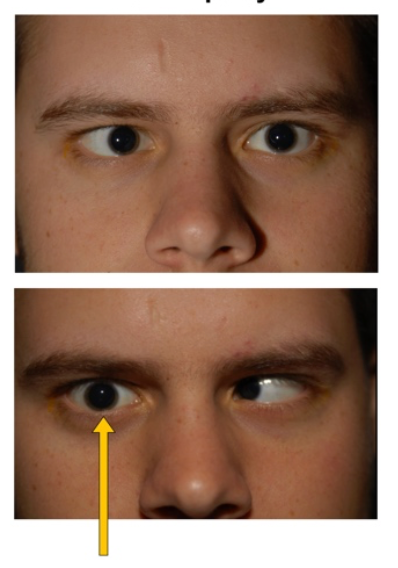
abducens nucleus or nerve damage
eye on affected side drifts medially and fails to abduct past midline on horizontal conjugate gaze to that side
trochlear nucleus, dorsal, caudal
axons decussate in superior medullary velum and emerge from ____ surface of brainstem just _____ to inferior colliculi
IV, depress, intort
superior oblique CN and action when eye is medial and when eye is lateral
SCA
irrigates trochlear nucleus and proximal nerve
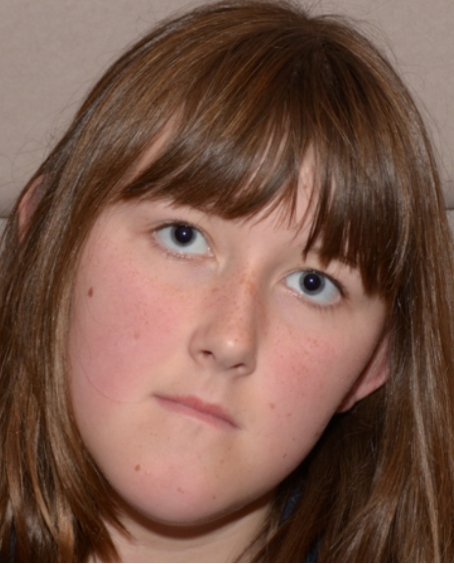
trochlear nerve or nucleus lesion
diplopia that is worse when looking down and medially. compensation for extorsion of eye by tilting head toward non-lesioned side and forward to allow affected eye to view near objects
dorsolaterally, ventrally
unlike the trochlear nerve (runs _______), oculomotor nerve fibers pass _____ through the tegmentum
basilar and PChA
oculomotor nucleus and nerve vascular territory
levator palpebrae superiorisis, superior, inferior, and medial recti, inferior oblique
muscles irrigated by oculomotor nerve
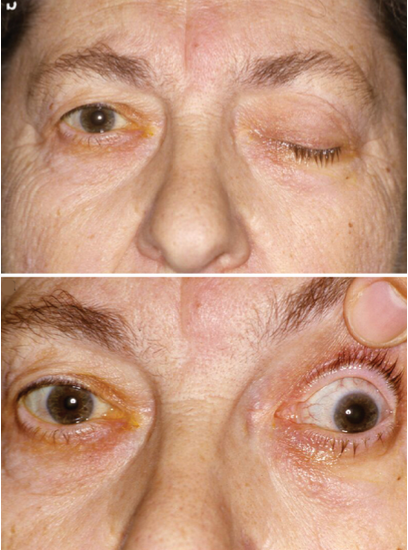
oculomotor nucleus or nerve lesion
down and out, dilated pupil, ptosis, loss of pupillary light reflexes
PCOM, aneurysms
oculomotor nerve runs parallel with _____, it is therefore vulnerable to _____ in that
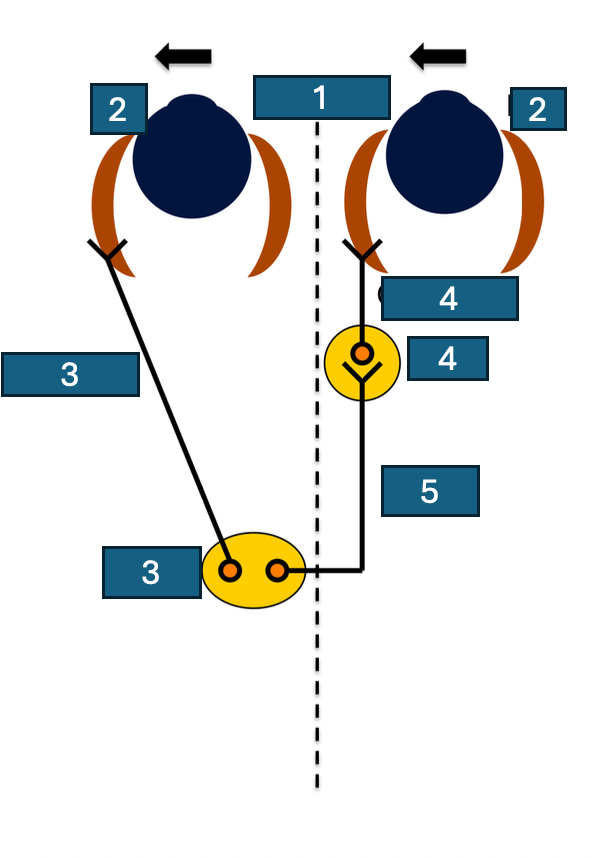
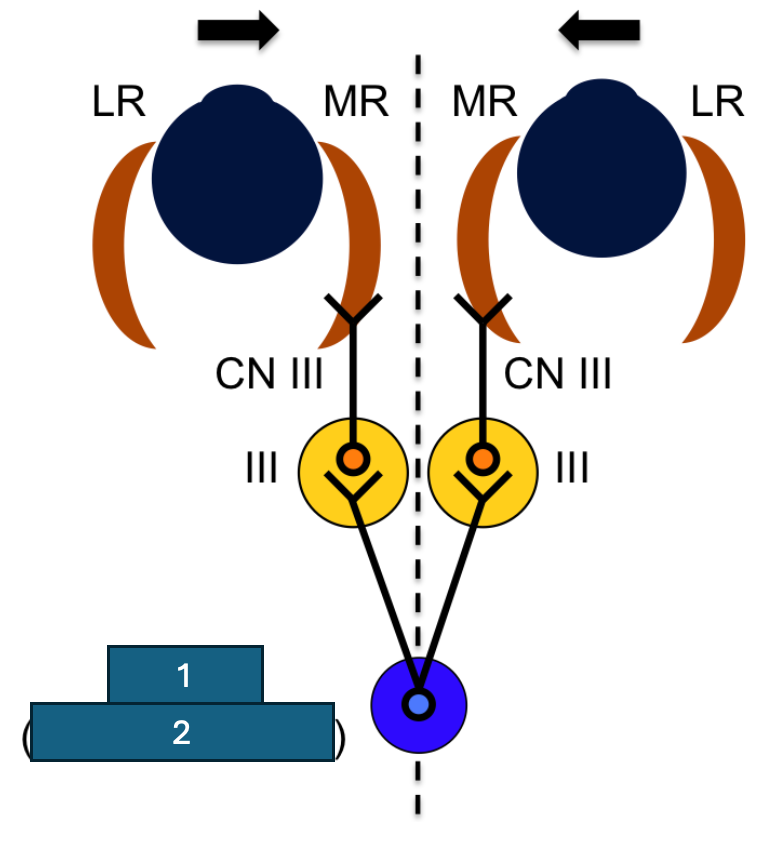
horizontal conjugate gaze, abducens
lateral movements of both eyes, driven by ______ nucleus
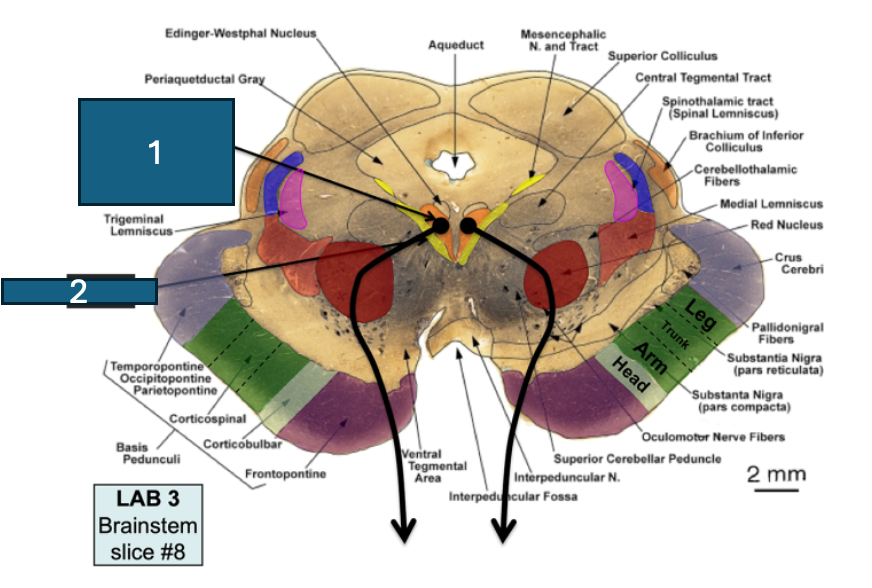
MLF, oculomotor, medial rectus, horizontal, MR, LR
abducens nucleus has interneurons that sends axons through _____ to contralateral _____ nucleus (_____ _____ portion) - causes synchronous contraction for _____ conjugate gaze. __ and __.
horizontal conjugate gaze
lesions of VI nucleus or fibers in MLF lead to ____ _____ ____ palsy
internuclear ophthalmoplegia, cannot, can
lesion to one side of MLF will produce _____ _____. when looking to side opposite of lesion, the ipsilateral eye ____ turn medially, and the contralateral eye ____ turn laterally and shows nystagmus
vertical conjugate gaze, SR, IR, SO, IO
_____ _____ ____ controlled by neurons in rostral midbrain - close to oculomotor nucleus and PAG. Coordinates actions of which muscles?
rostral dorsal, downwards
lesions affecting the ____ ____ midbrain can lead to paralysis of vertical gaze (usually eyes point ______)
pattern generators, brainstem tegmentum, VI, III, IV
cortex generates saccades via ____ _____ in _____ _____, these engage ___ nucleus for voluntary horizontal conjugate gaze, and the ____ and ___ nuclei for voluntary vertical conjugate gaze
frontal eye fields, parietal eye fields, superiorcolliculus, corticopontine
supranuclear command over brainstem nuclei responsible for saccadic eye movements (2x) - project mostly to _____ ____ via _______ pathways
frontal eye fields
in premotor cortex, govern initiation of contralateral voluntary saccadic eye movements and smooth pursuit and vergence eye movements
parietal eye fields
in posterior parietal cortex, produce signal for visual-evoked saccades and play a role in smooth pursuit
superior colliculus, saccadic, gaze, reticular formations, omnipause, reticular
receives visual inputs from retina and command inputs from cerebral cortex - if strong enough, an input can induce ______ eye movements, projects to ____ centers in brainstem ______ ______, inhibiting _____ neurons, which are clusters of pontine _____ neurons that fire continuously except just prior to and during saccades
inhibit, paramedian pontine reticular formation, MLF, pons, rostral interstitial nucleus of MLF, MLF, upper midbrain
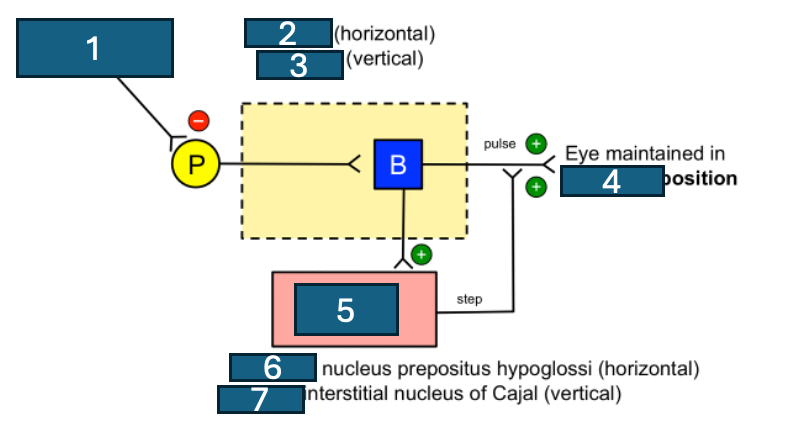
at resting state, omnipause neurons constitutively _____ populations of burst neurons - two populations of burst neurons: _____ ____ ____ ____ for horizontal saccades near ____ in ____, and ____ ______ ____ __ ____ for vertical saccades within ____ in ____ _____
neural integrator, step signal
to maintain eccentric gaze - burst neurons also send collaterals to a _____ ____ - generate a ____ ____ to extra-ocular muscles
nucleus prepositus hypoglossi, MLF, medulla, interstitial nucleus of Cajal, MLF, upper midbrain
two populations of neural integrators: _____ ____ ____ for horizontal saccades near ___ in _____, and ______ _____ _ ____ for vertical saccades within ____ in ____ _____
PPRF lesion
inability to make saccades to side of lesion (horizontal), can be overcome with VOR
abducens nucleus lesion
inability to make horizontal eye movements, can not be overcome with VOR
MLF lesion (internuclear ophthalmoplegia)
inability to adduct ipsilateral eye during horizontal eye movements, can be overcome with vergence
vergence, medial rectus, near response, MLF, edinger-westphal, near triad, synkinesis
converging eyes toward midline recruits bilateral ____ ____ muscles using ____ ____ cells in rostral midbrain, which bypass the ____. They also activate the _____-____ nucleus, resulting in all three being the ____ ____ (______)
near triad (synkinesis)
eye convergence (medial recti), accommodation of lens, constriction of pupil
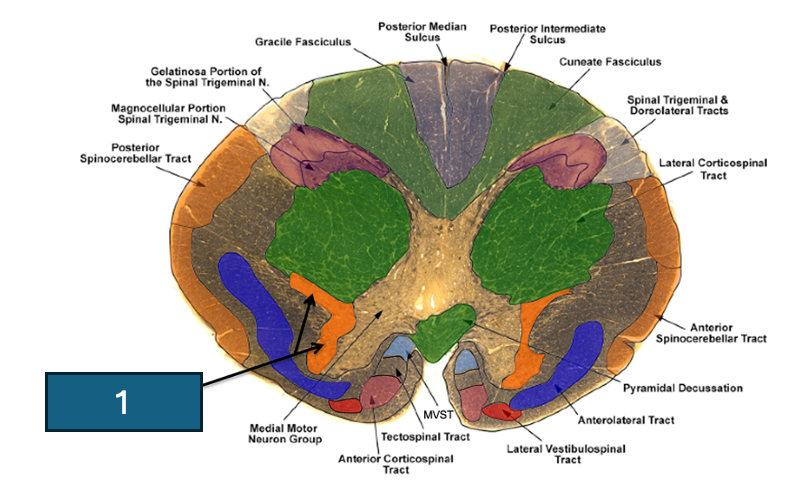
accessory nucleus, foramen magnum, jugular foramen, trapezius, sternocleidomastoid, extends
within upper cervical spinal cord ventral horn, enter skull via ____ ____ and leave via ____ ____ and supplies _____ and ________. The former ____ the neck, and the latter turns the face to the opposite side and can flex the neck
accessory nucleus or nerve damage
winging of scapula, loss of shoulder profile, difficult raising arm above shoulder level —> permanently turned head to damaged side
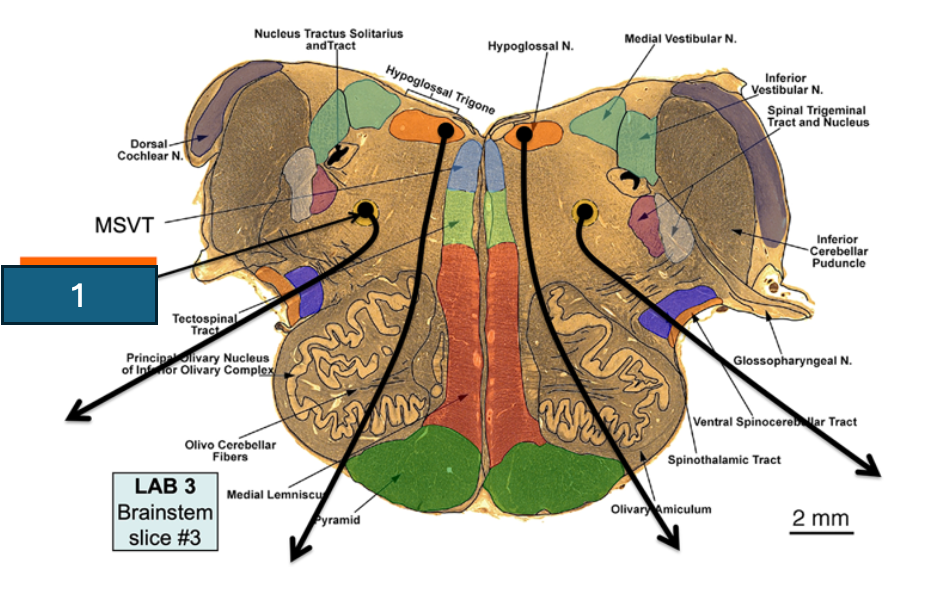
nucleus ambiguus, IX, X, post-olivary sulcus
motor innervation to pharynx, larynx, soft palate, and upper esophagus via CNs __ and __(mainly) . at midpoint of line between _____-_____ ____ and hypoglossal nucleus
nucleus ambiguus or IX/X nerve lesion
atrophy and flaccid paralysis of soft palate, pharynx, larynx —> dysphagia and dysarthria - uvula may deviate to contra-lesional side
IX, X, spinal V, nucleus ambiguus, VTT
gag reflex is a test of ___, ___, and ____ ____ function. sensory information is sent to bilateral ____ ____ via the ____
facial nucleus, pons
innervates muscles of facial expression, stylohyoid, posterior digastric, and stapedius, in the _____
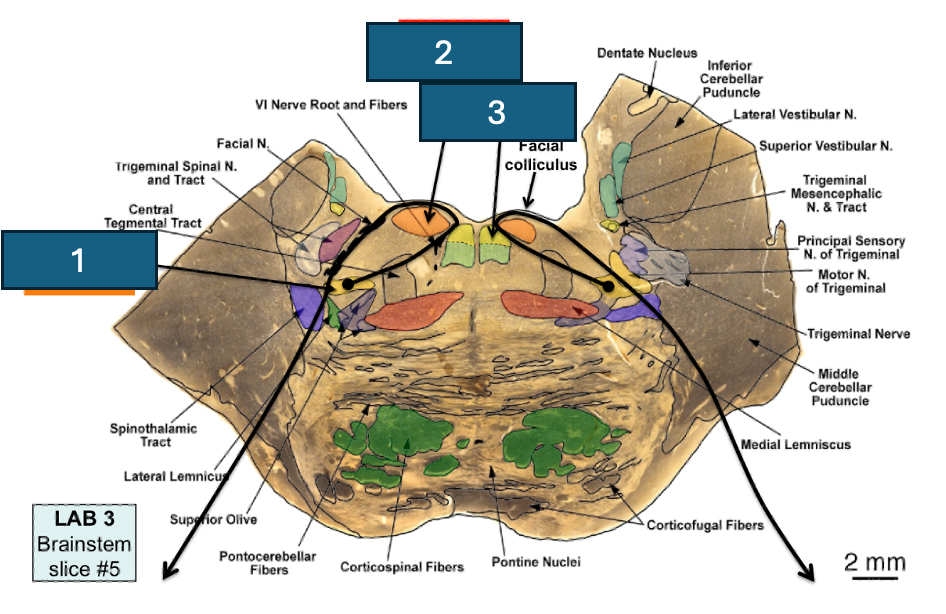
abducens nucleus, dorsal, facial colliculus
VII axons wrap around the medial edge of the ____ ____ and pass over its _____ surface before exiting - raises a hillock visible in IV floor: ______ ______
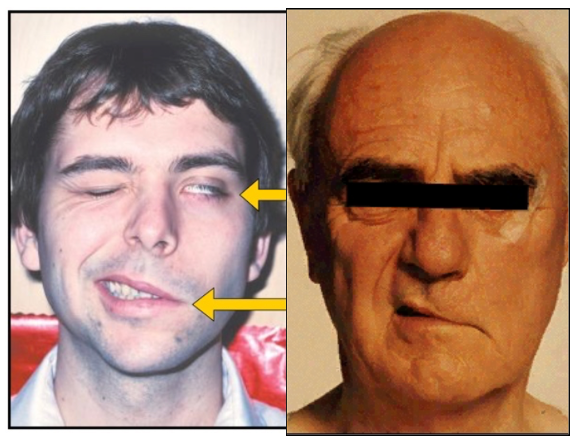
facial nucleus UMN lesion
lower quadrant palsy
facial nucleus or nerve lesion
facial hemiplegia and hyperacusis
eight and a half syndrome, abducens, ophthalmoplegia
caudal tegmental pontine syndrome - unilateral - horizontal gaze palsy (___ nucleus), internuclear _________, facial nerve palsy
corneal blink reflex
involves facial nucleus and rostral spinal trigeminal nucleus - consensual reflex
jaw jerk reflex
consensual reflex between V nuclei - mesencephalic and motor - exaggerated in corticobulbar lesions
pseudobulbar palsy
bilateral interruption of corticobulbar fibers —> UMN weakness of muscles of head
locked-in syndrome
large lesions of basal pons - damage all corticospinal and corticobulbar pathways bilaterally - total complete paralysis of voluntary muscles
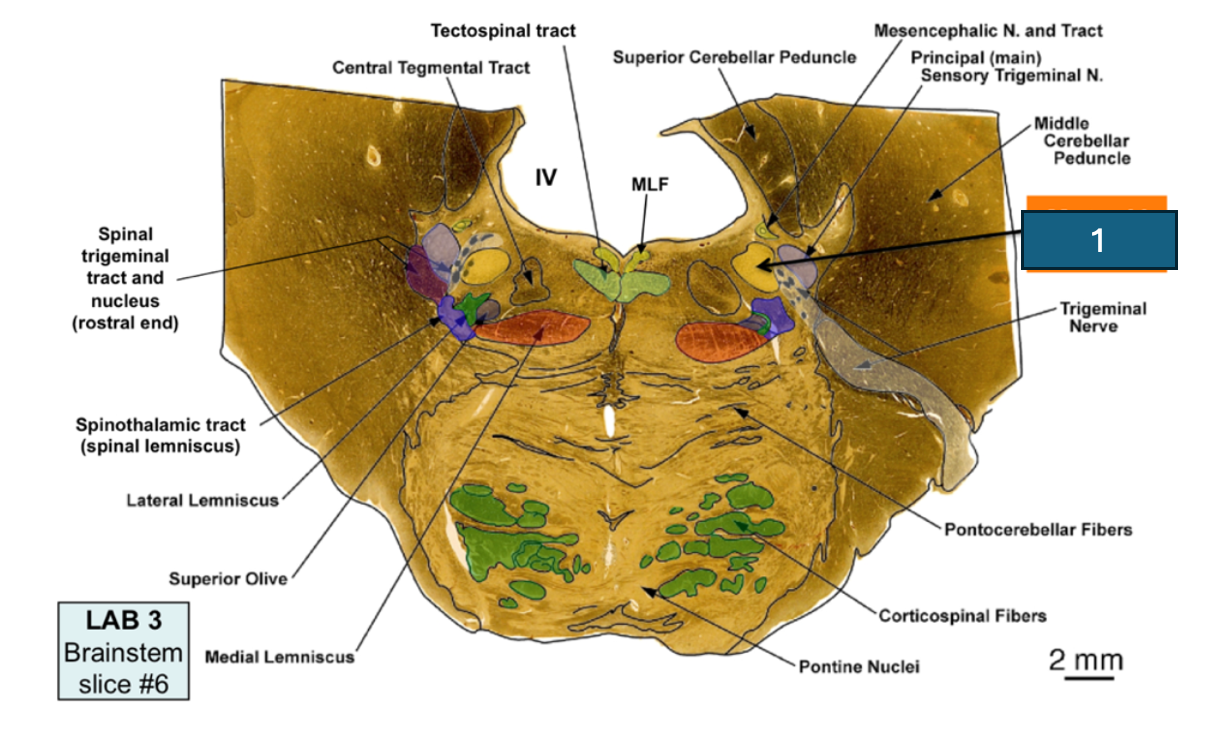
hypoglossal nucleus
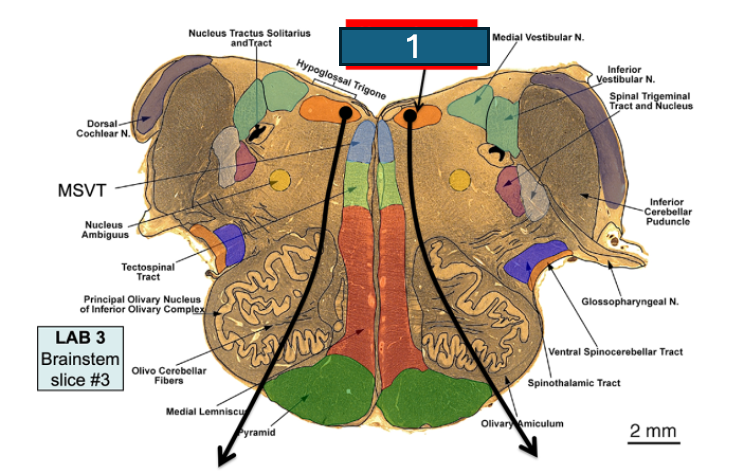
abducens nucleus, MLF
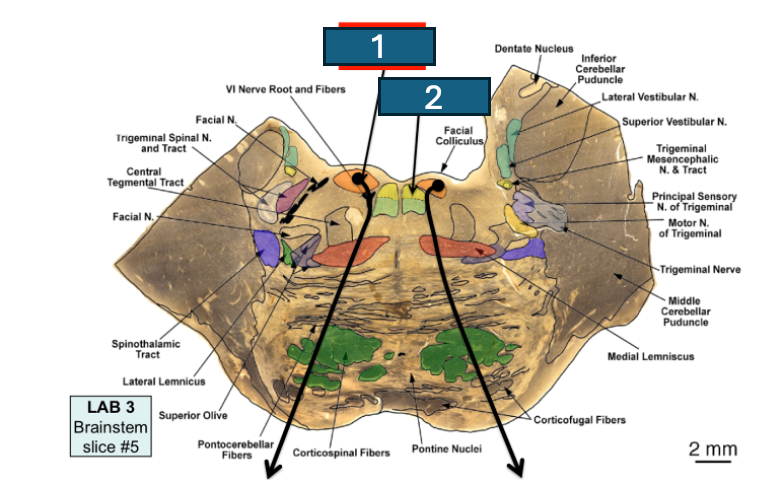
trochlear nucleus, MLF
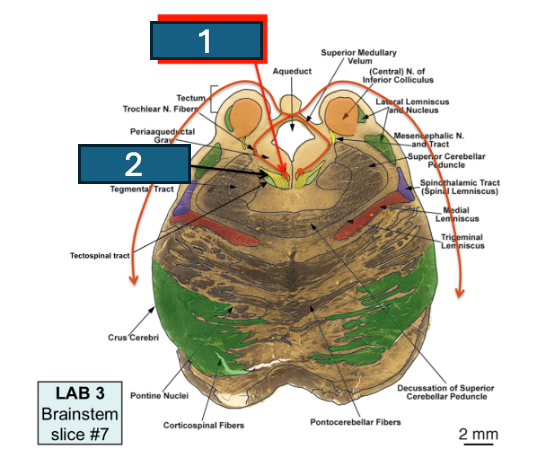
CN VI palsy
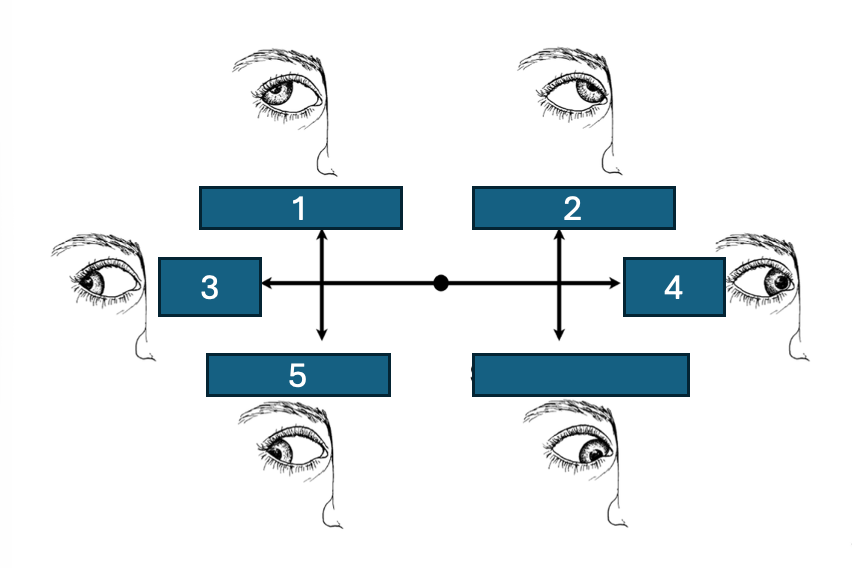
superior rectus (III), inferior oblique (III), lateral rectus (VI), medial rectus (III), inferior rectus (III), superior oblique (IV)
what cranial nerve supplies
oculomotor nuclear complex, MLF
CN IV palsy
CN III palsy
medial rectus, lateral rectus, VI, III, MLF
supranuclear command, PPRF, riMLF, eccentric, neural integrator, ppH, IC
accessory nucleus
near response cells, rostral midbrain
LMN VII lesion, UMN VII lesion
nucleus ambiguus
facial nucleus, abducens nucleus, MLF
Motor V nucleus