PHSL 3051 energy metabolism and muscle fiber types
 Studied by 0 people
 Call Kai
 Learn
Learn Practice Test
 Spaced Repetition
 Match
Match Flashcards
 Knowt Play
1/20

There's no tags or description
Looks like no tags are added yet.
Name | Mastery | Learn | Test | Matching | Spaced | Call with Kai |
|---|
No analytics yet
Send a link to your students to track their progress
21 Terms
ATP production in skeletal muscle
create kinase
glycolysis
oxidative phosphorylation
create kinase
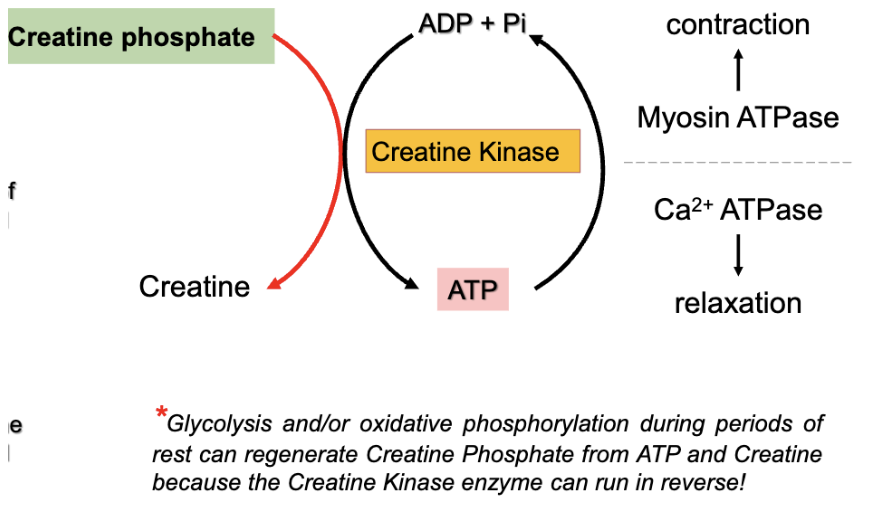
one step reaction
transfers phosphate from Creatine-phosphate to ADP to regenerate ATP
creatine phosphate provides a reservoir of high energy phosphate which is accumulated during rest in muscle cells
the action of Creatine Kinase provides ATP during the first few seconds of a contraction
the ATP production is rapid, but limited by the amount of Creatine phosphate stored in the cell
powers very short periods of muscle activity
glycolysis
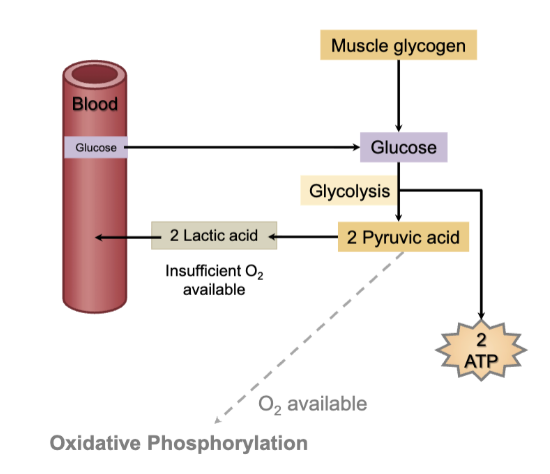
multistep reaction
anaerobic
converts 1 glucose to 2 ATP
anaerobic:
can produce ATP from glucose in the absence of O2 - kicks in during high intensity exercise
in the presence of large amounts of glucose, can produce large quantities of ATP
glucose can come from the blood or from breakdown of muscle glycogen
powers relatively short periods of muscle activity
oxidative phosphorylation
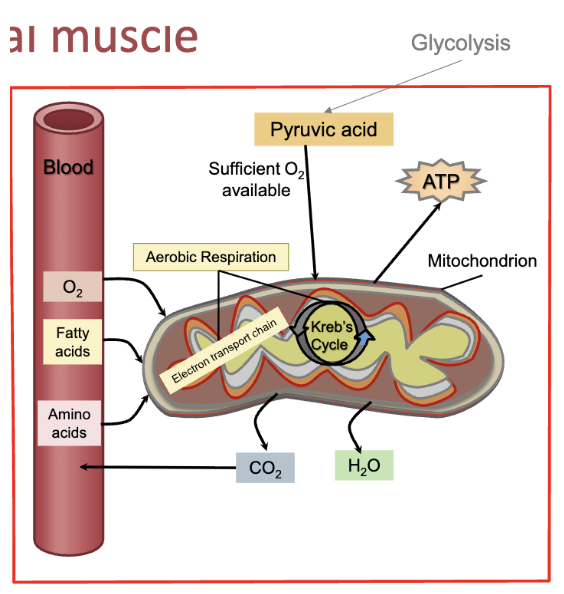
multistep reaction
requires oxygen (O2) and mitochondria
converts 1 glycose to 36 ATP
converts fatty acids to ATP
converts amino acids to ATP
phosphorylation of ADP occurs in mitochondria
multi-enzyme pathway that requires O2
initially (first 5-10 mins of activity), glucose from glycogen is the major fuel
next 30 mins, blood borne glucose and fatty acids contribute fuel, eventually giving way to mostly fatty acids
powers extended periods of muscle activity
muscle fiber types
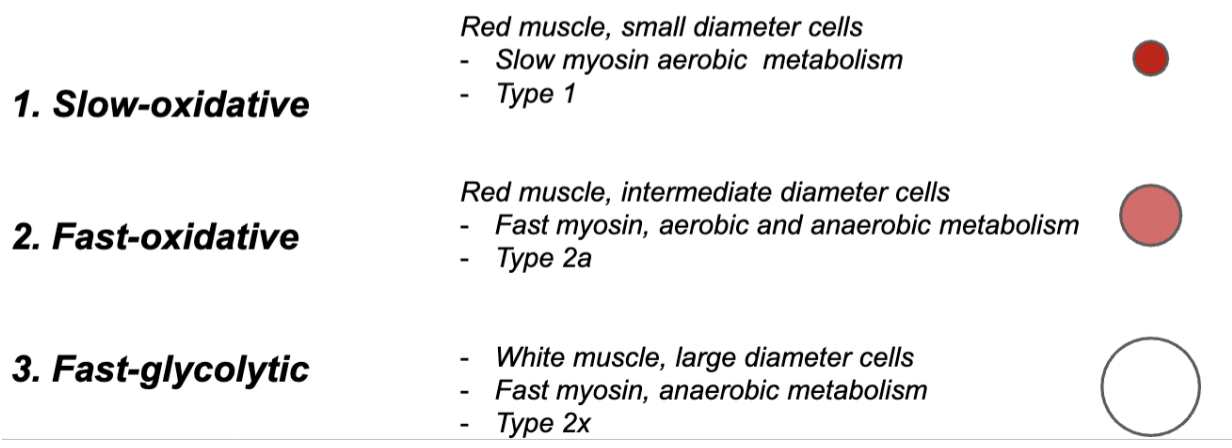
classified according to maximal velocity of shortening (ex. how quickly myosin can hydrolyze ATP/fast or slow twitch)
major pathway they use to form ATP
slow oxidative
fast oxidative
fast glycolytic
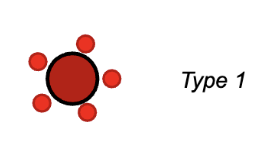
slow oxidative fibers
small diameter = less tension
slow myosin so tension development is slow
mostly oxidative phosphorylation which requires O2
many mitochondria and many capillaries to provide O2
large amounts of myoglobin to aid in O2 diffusion and to store O2 (dark meat)
resistant to fatigue
ex. postural muscles
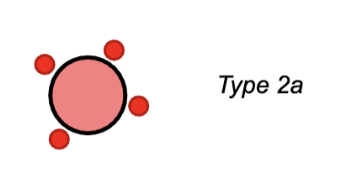
fast oxidative fibers
larger diameter = more tension
fast myosin ATPase so tension development is faster
mostly oxidative phosphorylation which requires O2
many mitochondria and capillaries to provide O2
large amounts of myoglobin to aid in O2 diffusion and to sore O2 (dark meat) - less myoglobin than slow oxidative muscle
somewhat resistant to fatigue
fat glycolytic fibers
larger diameter = more tension
fast myosin ATPase so tension development is fast
mostly glycolytic metabolism (does not depend on O2)
large amounts of glycogen to provide fuel for glycolysis
fewer capillaries and mitochondria
essentially no myoglobin (white meat)
prone to fatigue

motor units
motor unit - motor neuron and the population of muscle fibers it innervates
two motor units can generate more tension than one
when a large amount of tension needs to be generated, more motor neurons (and hence muscle fibers) are recruited
mechanism of fatigue
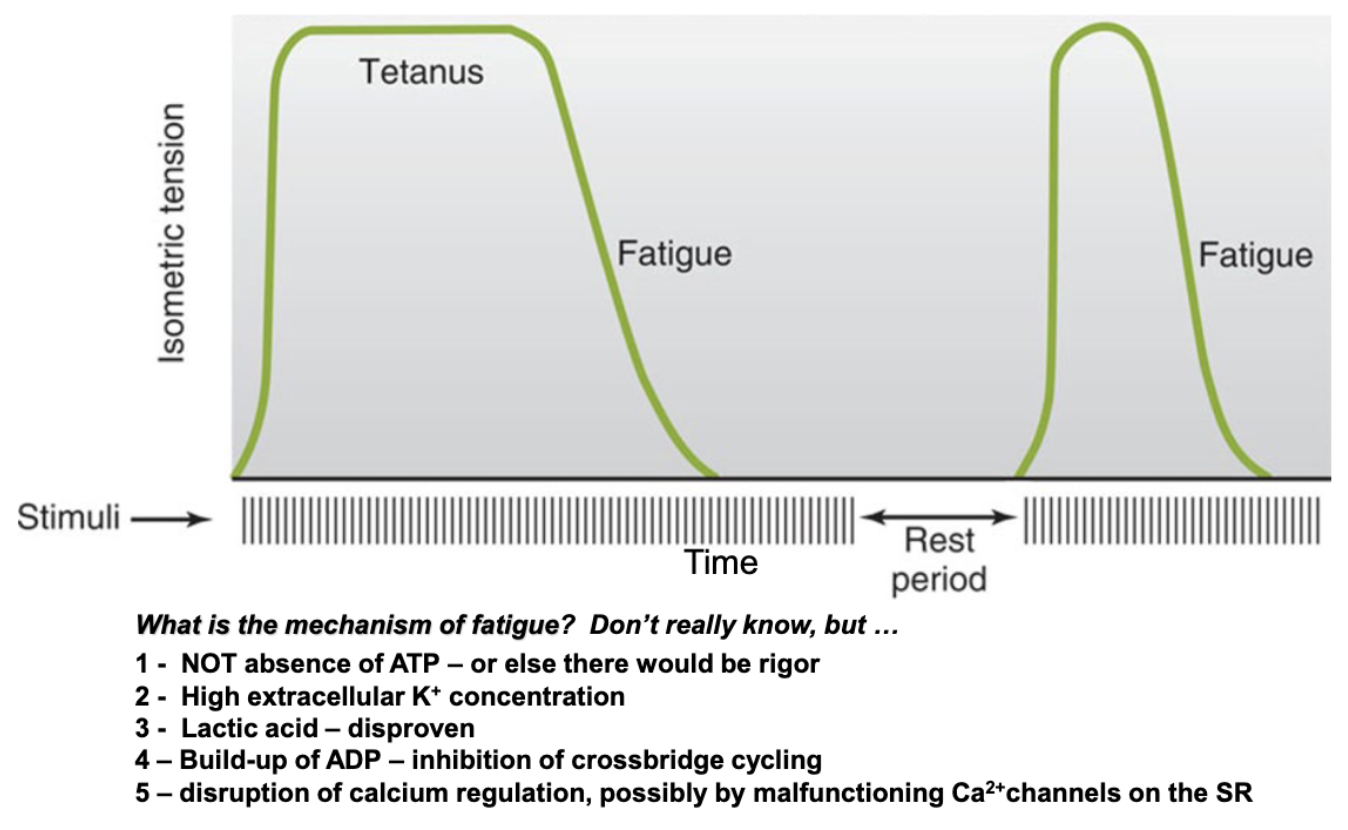
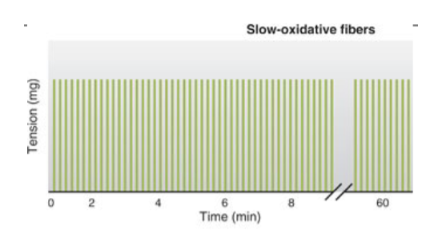
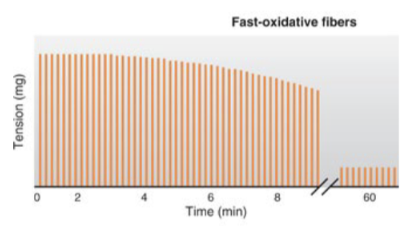
fatiguability of skeletal muscles - slow oxidative
slow myosin ATPase
least amount of tension (least amount of force)
least likely to fatigue
fatiguability of skeletal muscles - fast oxidative
fast myosin ATPase
moderate amount of tension (moderate force)
moderately likely to fatigue
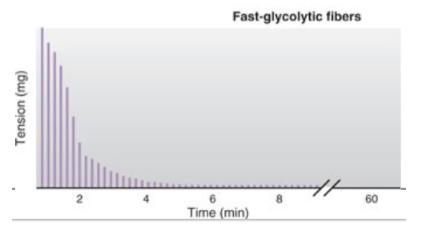
fatiguability of skeletal muscles - fast glycolytic
fast myosin ATPase
greatest amount of tension (high force)
most likely to fatigue rapidly
factors affecting how much tension a whole muscle can produce
the number of active motor units
the number of muscle fibers in each motor unit
the fiber types of the activated motor units
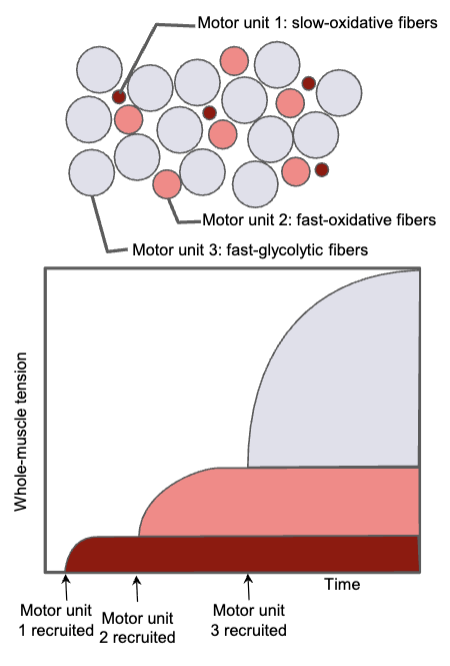
recruitment

motor unit 1: slow oxidative
small diameter muscle fibers
few fibers per motor unit
generates least tension
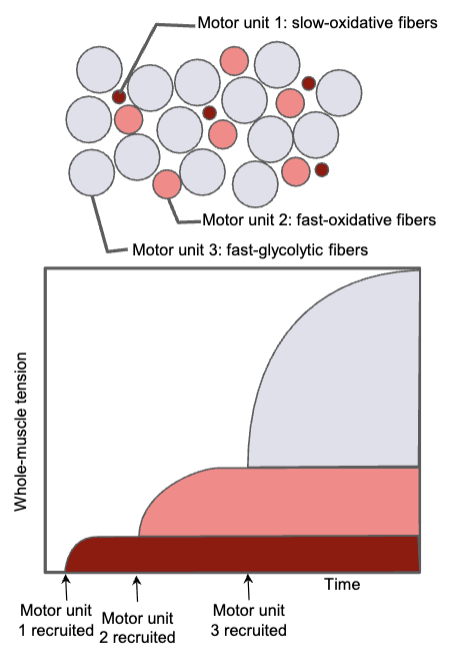
motor unit 2: fast oxidative
midsized muscle fibers
moderate # of fibers per motor unit
generates moderate tension
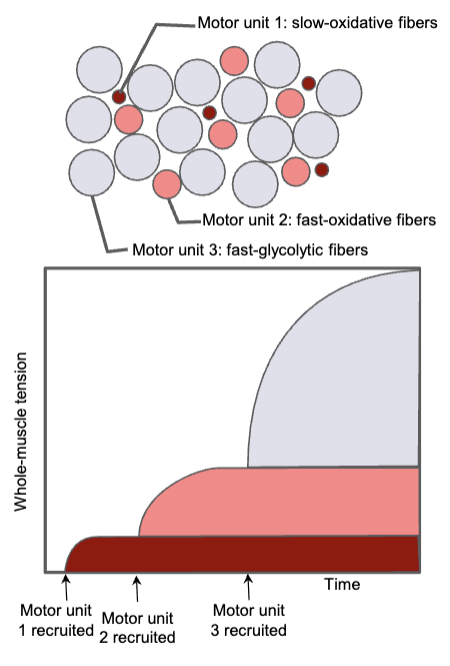
motor unit 3 - fast glycolytic
large muscle fibers
many fibers per motor unit
generates most tension, quickly
lever actions of muscle and bones
the arrangement of muscles sometimes creates a mechanical disadvantage, meaning that the force required to move an object is greater than the weight of the object itself
these disadvantages are typically offset by increased maneuverability due to lever actions around the joints
the physical levers means that small changes in muscle length can translate into much larger movements of the body
the speed of the movement is also amplified
actions of muscles attached to the skeleton (arm)
some of the muscle attachments to the skeleton are arranged as antagonistic pairs
the biceps and triceps of the upper extremity (arm and forearm) are a useful example
the contraction of the either muscle opposed the action of its partner
actions of muscles attached to the skeleton (leg)
the actions of antagonists depend on the joint in the act on and state of the antagonist pair
when relaxed, concentration of the gastrocnemius of the leg flexes the leg at the knee
when both muscles are contracted simultaneously, the knee is locked by their action and the foot extends and can raise the body on the toes
 Note
Note  Flashcards (24)