APBI 319 - M2 L2
 Call Kai
 Learn
Learn Practice Test
 Spaced Repetition
 Match
Match Flashcards
 Knowt Play
1/36

There's no tags or description
Looks like no tags are added yet.
Name | Mastery | Learn | Test | Matching | Spaced | Call with Kai |
|---|
No analytics yet
Send a link to your students to track their progress
37 Terms
Cell degeneration
due to cell membrane injury by bacterial action → fluid can't kept out → swelling
if damage bad → rupture → die aka necrosis
How cells can adapt to injury
atrophy: shrinking
hypertrophy: growing
hyperplasia: multiplying
neoplasia: uncontrolled multiplication
metaplasia: changing form
Mutualistic
host and microbe benefit
ex. skin + intestinal tract have populations of bugs
Infectious relationship
when bug can colonize and reproduce on/in host
elicits host response
ex. normal flora can become pathogenic; normally non-pathogenic bugs can become so in an immunocompromised host
Opportunistic pathogen
might require host tissues during its life cycle; not generally associated w/ disease unless in unusual location or host
Obligate pathogen
must have host to survive and depends on host for survival
when in host, pathogens generally elicit disease response
Facultative pathogen
can survive outside a host and infect them
Carriers
w/ both asymptomatic + sub-clinical infections, proportion of pop can carry
danger = not showing signs of disease but can be exposing and infecting others w/ dangerous pathogens
Pathology
scientific study of nature of disease and its causes, processes, development, and consequences
clinical pathology = study of samples taken usually from living animals
you examine the samples w/ respect to their cellular constituents or chemical constituents
can provide you w/ info in assessing health status of fish
helps in detecting + predicting problems that haven't shown characteristic disease signs
Hypoxia
loss of ability to carry on sufficient aerobic oxidative respiration
most common cause of cell injury and death
cause: ischemia
local causes:
blockage of arteries that bring in fresh blood
any blockage of veins that let blood leave; fresh blood can't flow in
shunting of arterial blood other places
systemic: failure of heart to pump enough blood
Ischemia
loss of arterial blood flow
Hypoxaemia
when blood is too low in oxygen
ex:
heart can't pump enough blood through gills
reduced O2-carrying capacity of blood (anaemic hypoxia)
haemoglobin problems
Acute inflammation
response to recent or ongoing injury
features:
dilatation
leaking of vessels
involvement of neutrophils - circulating immune cells
Chronic inflammation
late-phase inflammation + response to prolonged problems
features:
infiltration of more cells
presence of fibrin
Inflammation
Common response to most infections
noxious, non-infectious things can also produce this
Signs:
swelling
redness
fluids in tissues or cavities
fibrin coatings
granulomas
pus
Granulomas
swollen, irregular/bumpy, white-yellow nodules
Fibrin
insoluble protein essential to clotting of blood, derived from fibrinogen; released from damaged vessels
activated by clotting cascades when blood meets tissue fluids
forms meshwork that controls bleeding, walls off stuff, then becomes framework that'll form scar
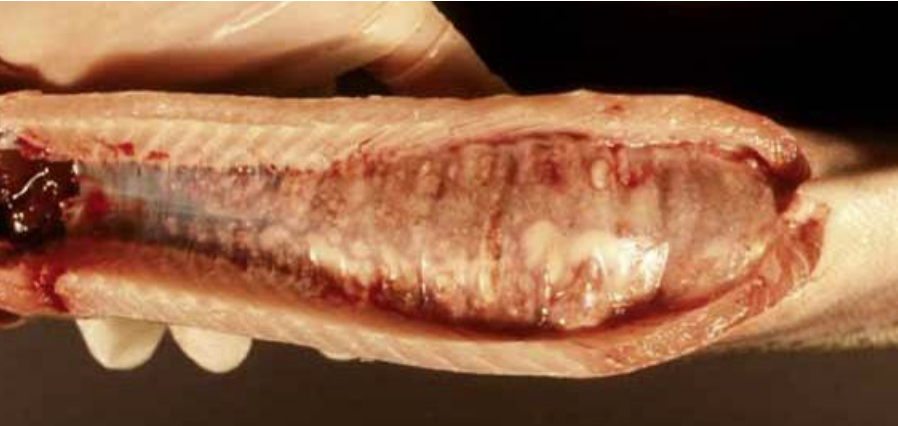
appearance: white, lacy material (ex. BKD)
BKD causes ___ deposits; it will appear as white lacy enveloping organs
can be reabsorbed, or form adhesions (after vaccinations)
Pus
fluid product of inflammation that has liquid containing leucocytes and debris of dead cells and tissue elements liquefied by proteolytic enzymes
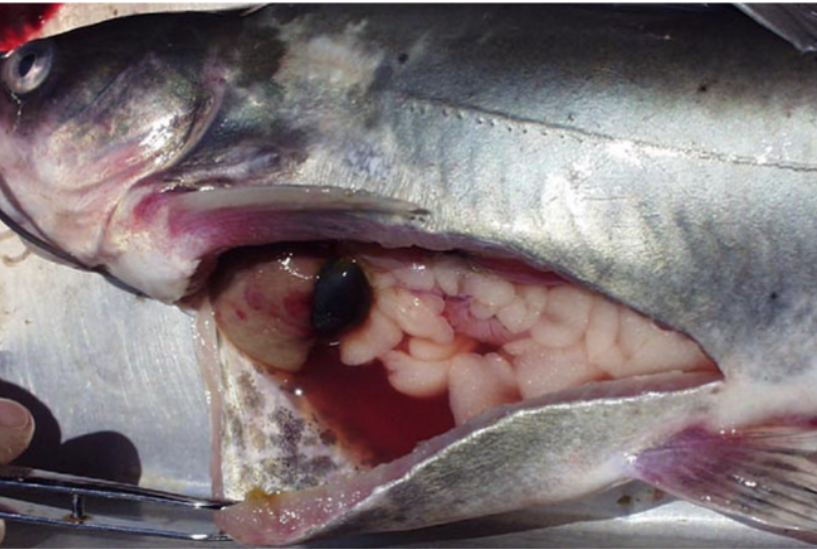
Ascites
fluid in abdominal cavity
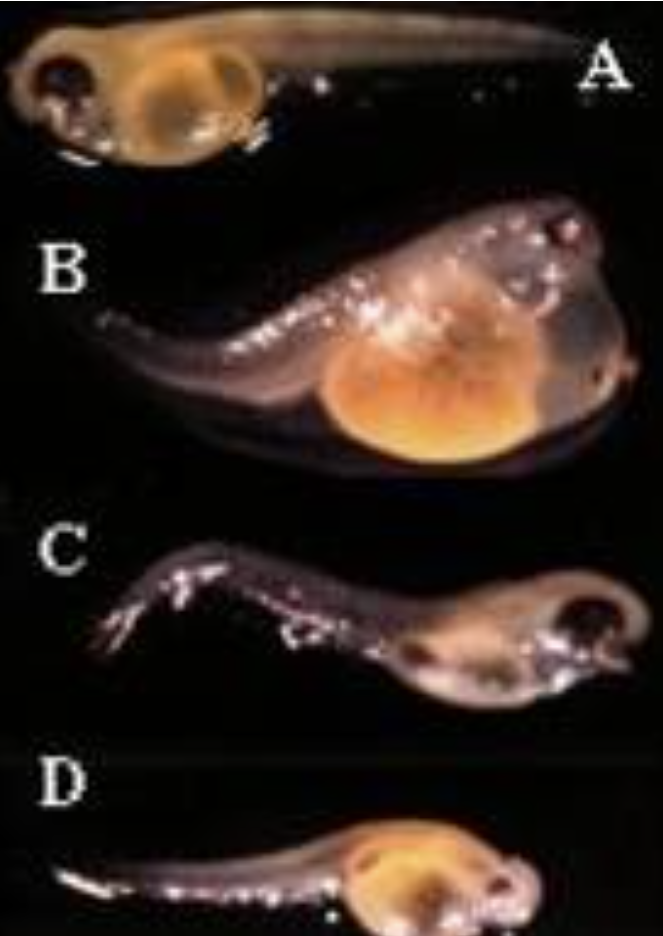
Edema
excess fluid between cells
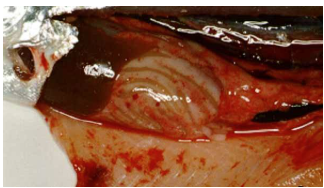
Leaky vessels
problem w/ fluids and blood movement
caused by microbes or toxins
blood leaking from vessels
signs of vessel damage in certain infections + some nutritional problems
Necrosis
cells swell and break open, release content, and can damage neighbouring cells → provoke inflammation
Pressure problems
problem w/ fluids and blood movement
if can't get rid of excess fluid → excretion problems (gills, kidneys)
osmotic stress
pump and vessel problems
Autolysis
dead cell being self-digested by lysosomal enzymes
is temperature dependent and varies with cause
if seeing all kinds of dead tissue → likely this
gills = good indicator
Malformation
when smth wrong before birth
deformities depend on when animal is affected in development
range from embryonic death - subtle, internal anatomic differences
in fish: skeletal and heart anomalies; linked to nutrition, incubation temp, toxins, and some infections
genetic, environmental, infections causes
Aplasia
complete failure of organ to form
Hyperplasia
increase in # of cells in a tissue or organ
organ increases in size by increasing number of cells
skin + gills might thicken due to inflammation
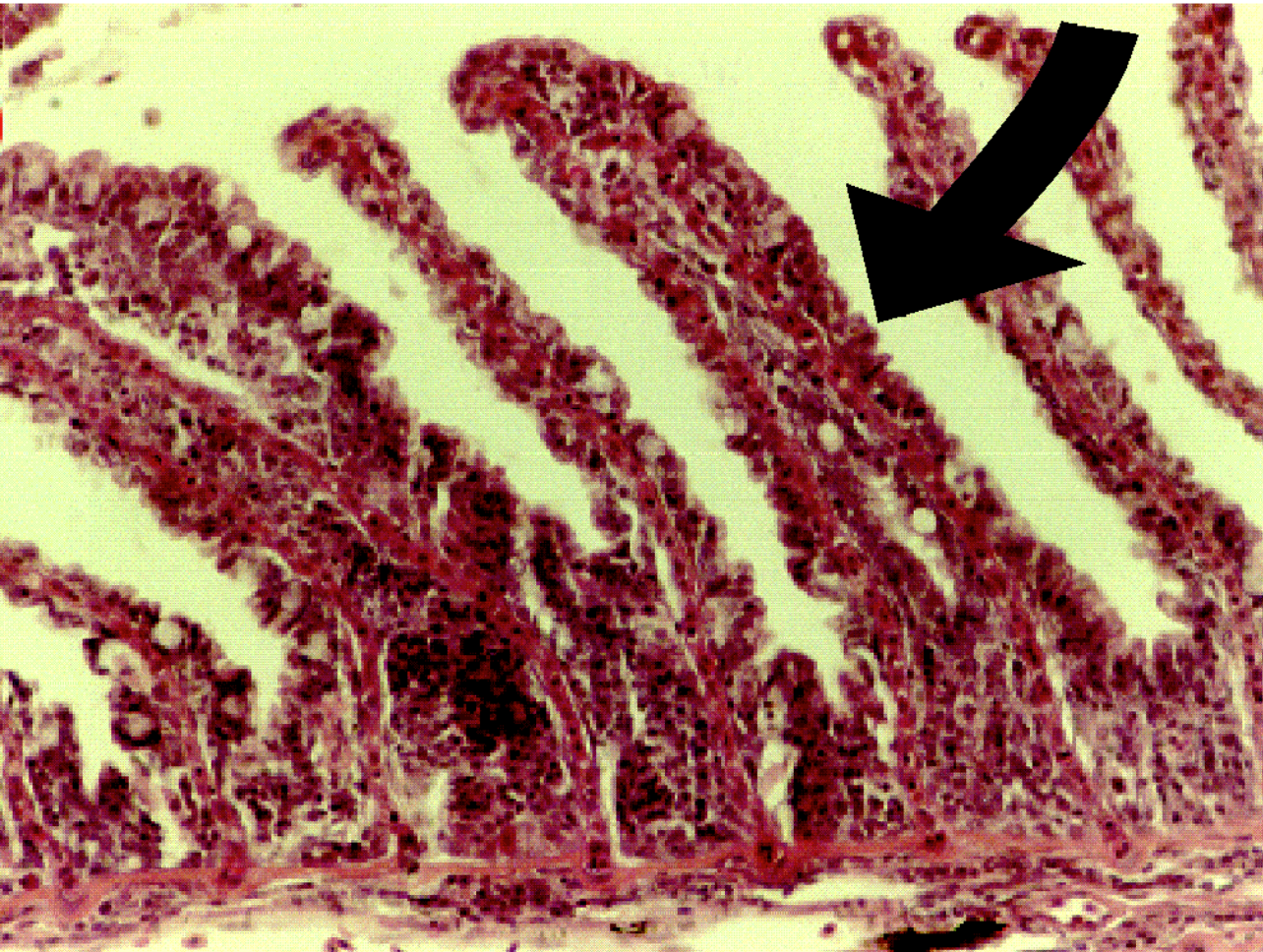
Atrophy
shrinkage in size of cell; loss of cell substance without cell actually dying
many cells shrinking so organ does too
causes: starvation, low / cut off blood supply, nerve damage, pressure
Hypertrophy
increase in size of cells and thus organ
can be adaptive
muscles increase w/ exercise, cardiac hypertrophy due to valve failure
can be hormonal response (Gonads) or pathological change (coronary arteriosclerosis in salmon - thickened vessels)
Neoplasia
new growth; Cancer
can be benign
local lesions (not spreading)
malignant: growing by invasion and spreading to other areas / tissues
Fatty change
accumulation of excess fat within non-fat cells
tends to happen in liver
body can't deal with normal amount of fat and also when too much fat
liver = normal place to store fat → becomes overwhelmed → fats deposited in other locations
Pigments
melanin can show pathological changes
it's normally dark and present in immune cells in fish
changes can be response to nerve impulses (colour change, injury)
Calcium
hard, white, crunchy
might increase in response to cancers, metabolic problems, dietary issues if bad + chronic injuries
Mucus
substance that can make things translucent/cloudy
irritants affecting orgs like skin or gills can cause major changes in quantity and quality of mucus
Latent
hidden (infections)
Chronic
long term, low level (infections)

