Cat body language & handling + online module
 Studied by 0 people
 Call Kai
 Learn
Learn Practice Test
 Spaced Repetition
 Match
Match Flashcards
 Knowt Play
1/21

There's no tags or description
Looks like no tags are added yet.
Name | Mastery | Learn | Test | Matching | Spaced | Call with Kai |
|---|
No analytics yet
Send a link to your students to track their progress
22 Terms
why is learning about cat behavior important for us?
improved experience & outocomes for cats
better interactions with owner/vet/people
improved veterinary care
owner less likely to see vet care if seen as difficult for ht ecat
reduce unwanted behaviors
safety
prevent bites & scratches
teaching children about cat communication & how to respond to behaviors
where do cats preferred to be touched?
the head & neck for physical touch by humans
might get upset and/or aggressive if pet in other areas (e.g. gripping onto hands/arms if pet belly)
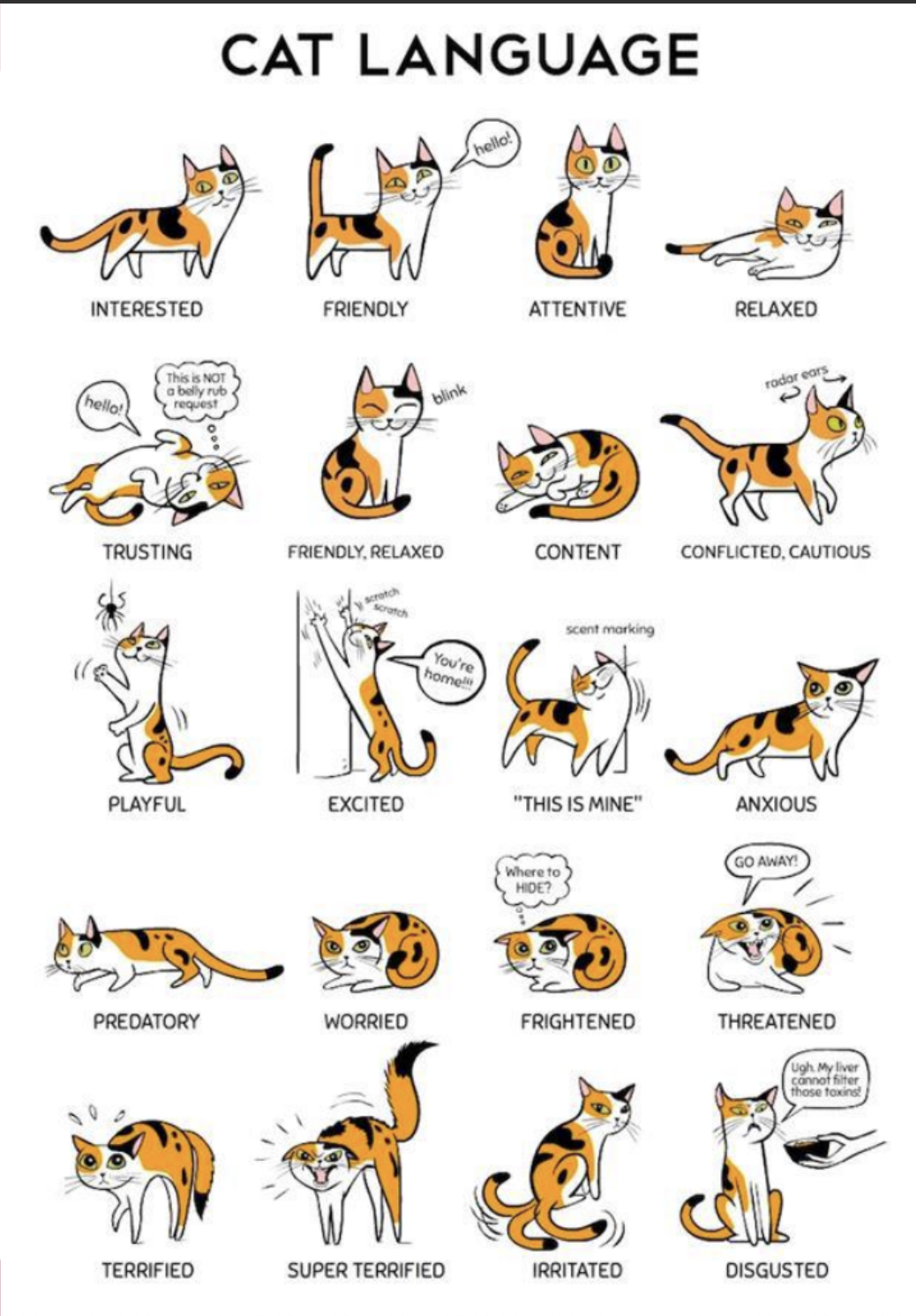
which parts of a cat’s body can we look at to read their body language (6 parts)
ears
eyes
facial cues
head & body position
tail movement
piloerection
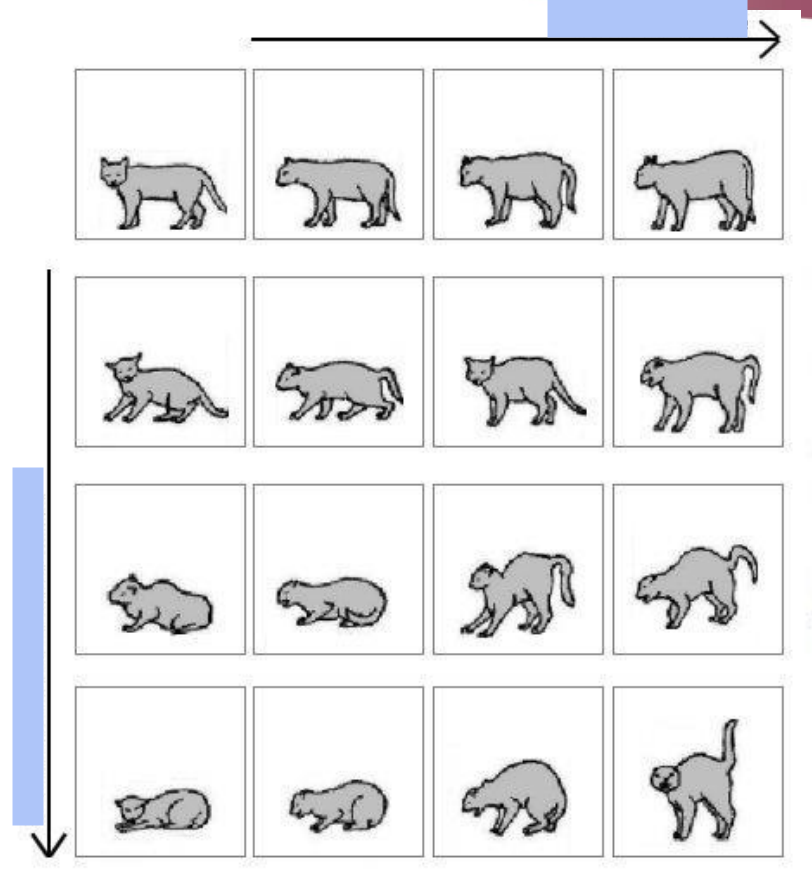
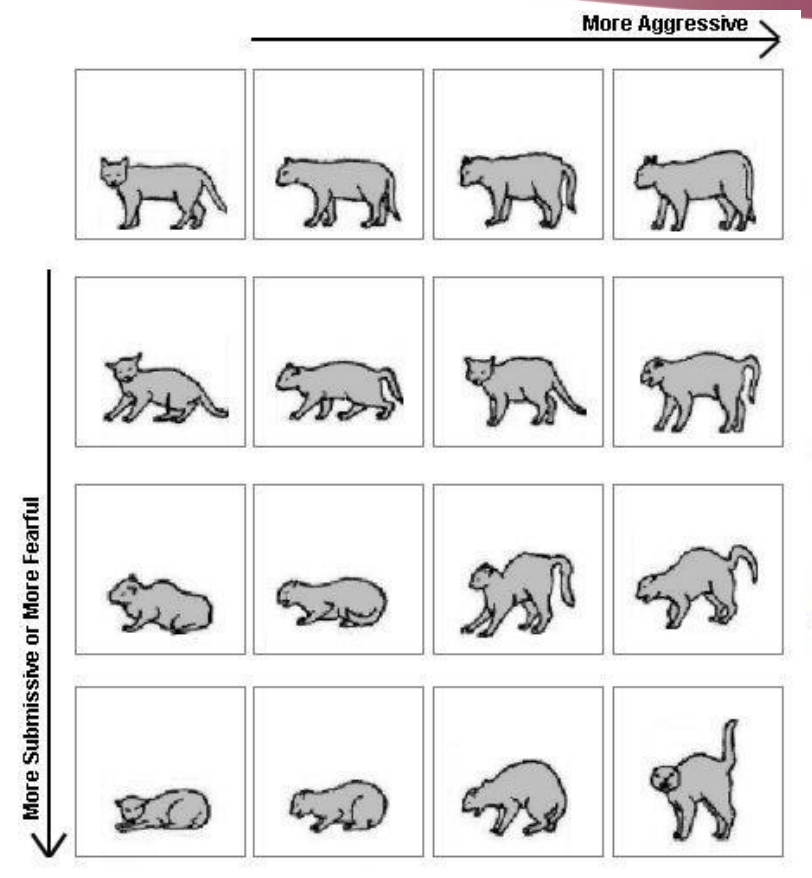
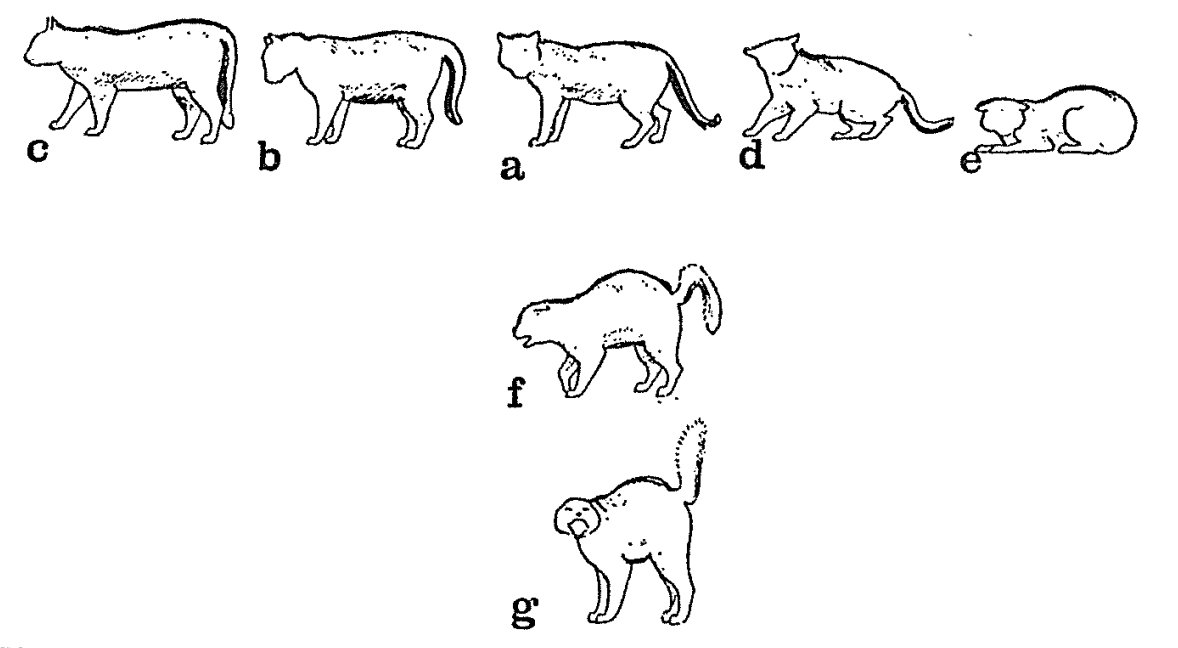
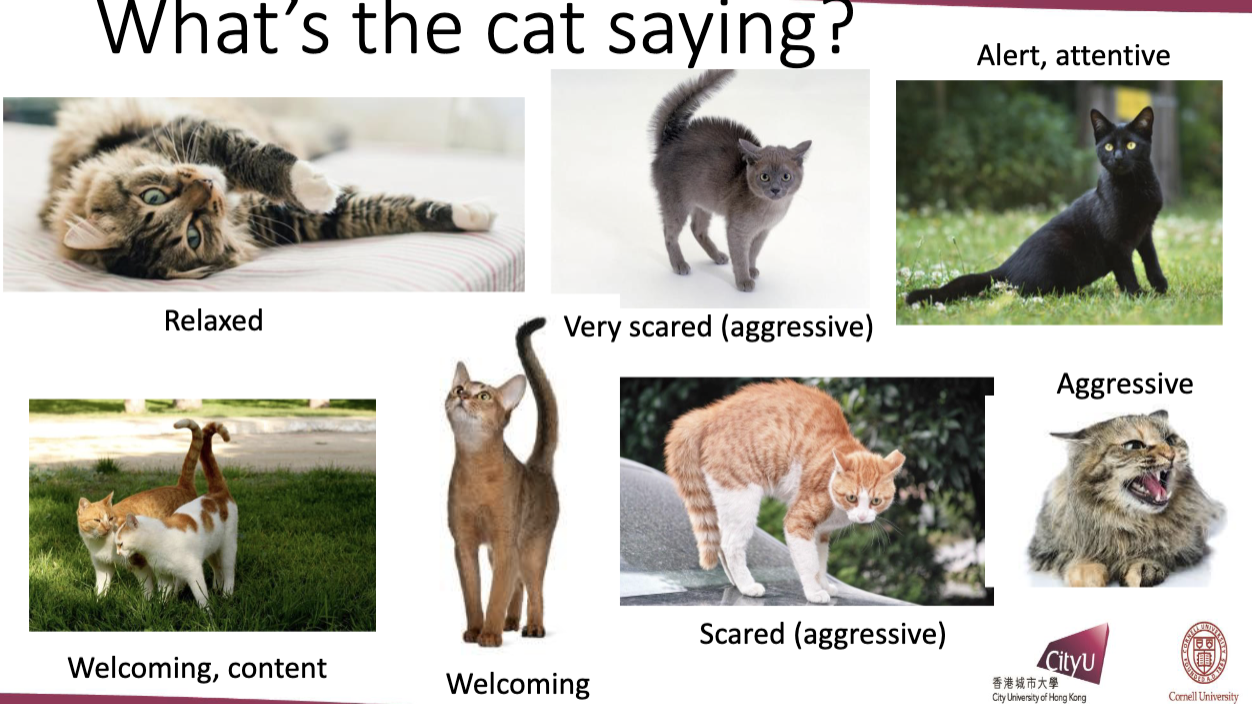
what is showing in a-c, a-e, a-g
a-c: increasing offensive display
a-e: increasing passive subimssion
a-g: increasing defensive threat
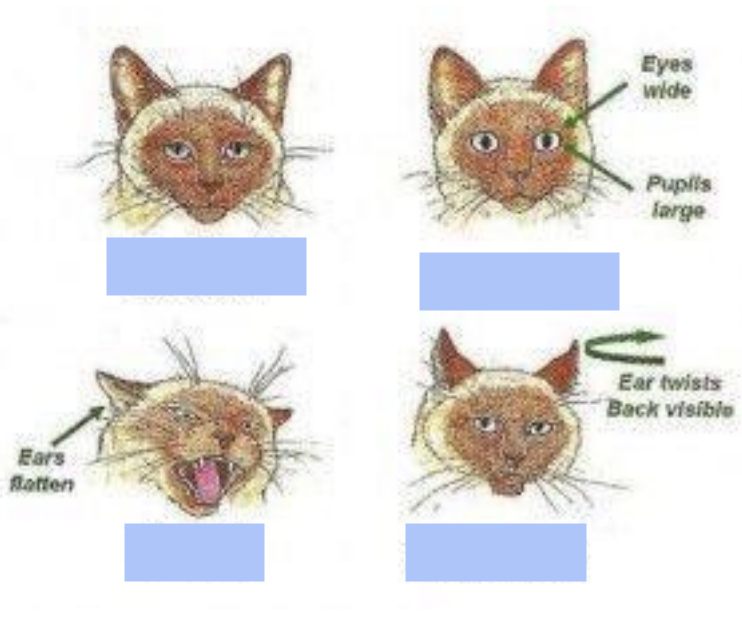
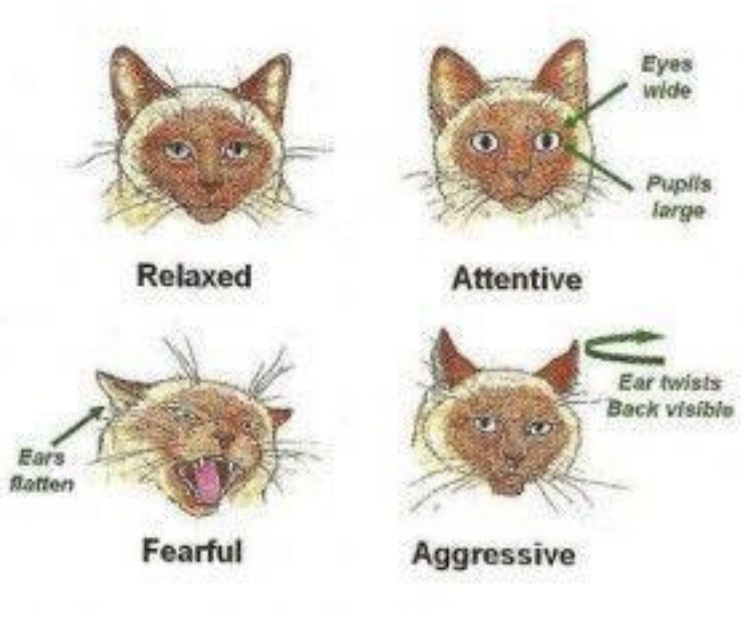
describe what you see here, will you continue to approach this cat?
progressive dilation of pupils
mild rotation/flatten of the ears
→ increasing fear → will pause, monitor or modify approach
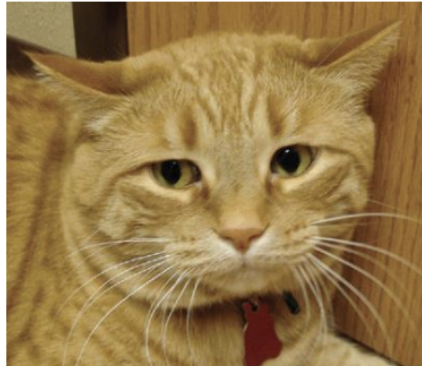
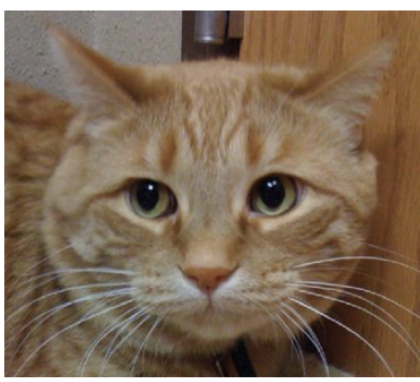
describe what you see here, will you continue to approach this cat?
slightly narrowed pupil
ears horizontal
tense jaw
→ escalating fear → modify approach or stop approaching this cat
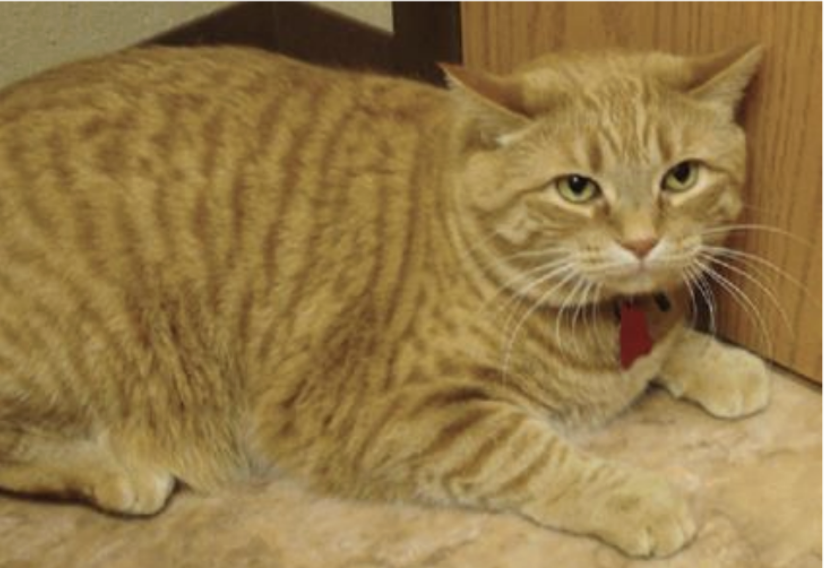
describe what you see, will you continue to approach this cat?
ears: flatten to the side
eyes: oblong shape
muzzle: tense
body posture: body flat on the ground
= early signs of fear & anxiety
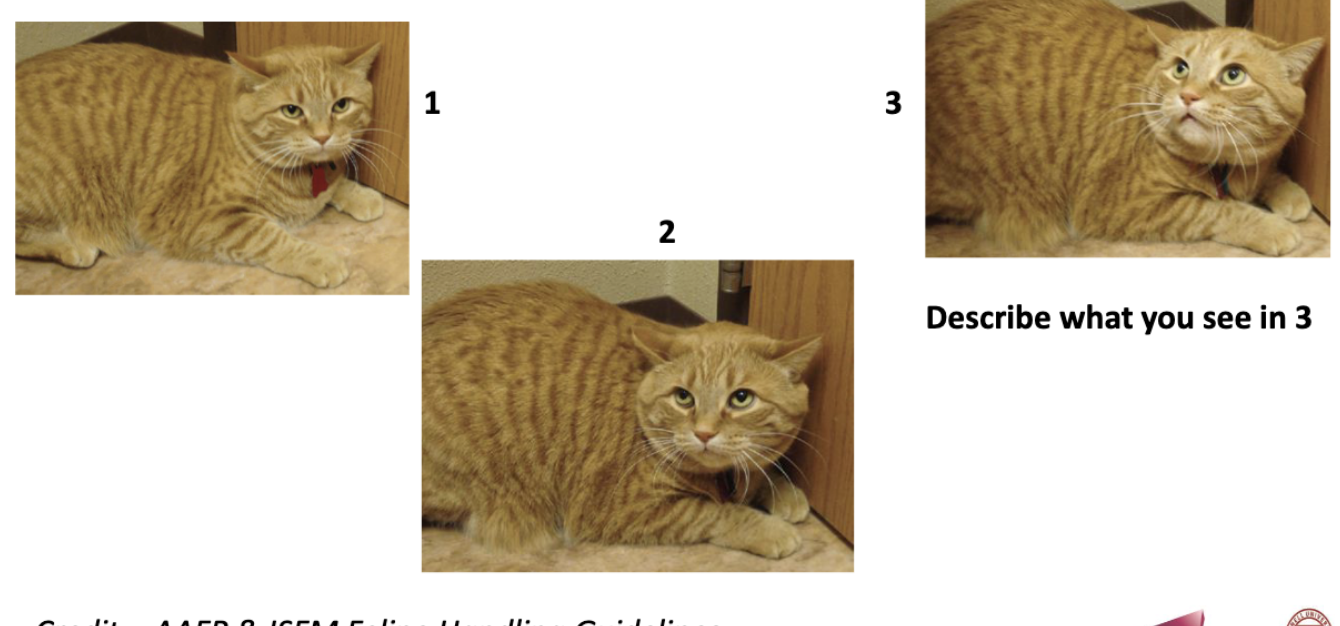
what is happening in 2 & 3?
2- ears flatten. piloerection. feet closer to the body. eyes looking up. head lowered. back visibly arched = increased fear
3 - head looking up. face tense. ready to flight = extreme fear
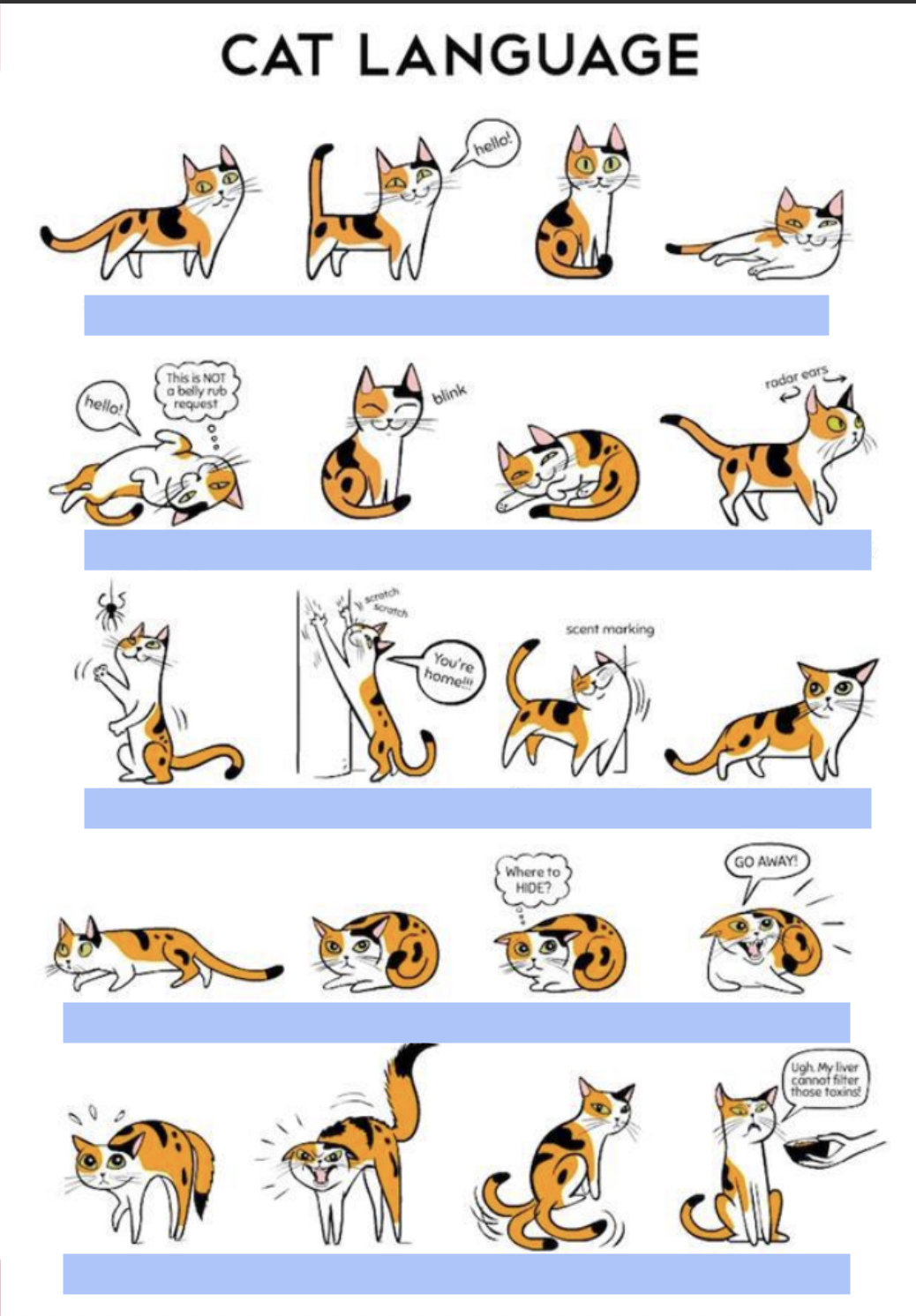
common signs of calm cats
ears
eyes
breathing
tail
body posture
ears: up and forward
eyes: wide and relaxed. or narrow and content. slow blink
breathing: calm
tail: still when lying down. or up when standing.
body postures: relaxed
why do cats do head rubs
depositing scent
do cats like belly rubs?
No. when it throws itself on the side and show its belly is a greeting behavior, saying that it feels relaxed in your presence. giving a slight head rub is good enough
what are some attributes of a good cat carrier
sturdy, secure, stable
easy to carry & lift
quiet to disassemble/open
easy to remove cat in low stress manner
e.g. removable tops can be useful for fearful, fear-aggresive, limited mobility & ill cats
how to put a cat into a carrier and how to take it out
in: feet into cafe first.
out: one hand holding onto front limbs, another hand supporting the belly.
how to safely carry a cat
right hand: finger under cat’s from legs, to hold both front limbs
left hand under cat belly, and tuck the cat under our right armpit
note: this is only food for short distance
describe how the scraf hold is done
pull one side (preferably the shorter end) and wrap around the cat’s neck
then do the same with the other end
how to restrain cats for pilling?
where should you NOT put ur fingers at
holding the cat’s head in the hollow below the zygomatic arches
left and extend the head so that the head is facing upwards → the mouth should be slightly open at this point
NOT under the mandible → b/c this way the cat won’t be able to open its mouth
how should you hold a cat for saphenous IV access
hold cat so that arm is over the head
cat body is closest to body
 Note
Note  Flashcards (73)