Intro & Homeostasis
 Studied by 0 people
 Call Kai
 Learn
Learn Practice Test
 Spaced Repetition
 Match
Match Flashcards
 Knowt Play
1/29

There's no tags or description
Looks like no tags are added yet.
Name | Mastery | Learn | Test | Matching | Spaced | Call with Kai |
|---|
No analytics yet
Send a link to your students to track their progress
30 Terms
anatomy vs physiology
-Anatomy: study of body structure (ex: organs, tissues)
-Physiology: study of body function
Larger definition: study of how organ systems work to preserve a relatively stable internal environment (homeostasis) in the body, maintaining conditions compatible with life
*both related to each other! example: heart ventricle walls thicker than atrium walls bc pumps blood to whole body vs just the lung
why study physiology? + Pathophysiology and Pharmacology definitions
-key to understanding how the body works and what can go wrong
-Pathophysiology: studying disease states requires knowledge of normal function
-Pharmacology: modifying the existing physiology with drugs
homeostasis
relatively stable internal state that organ systems work to preserve, maintaining conditions compatible with life
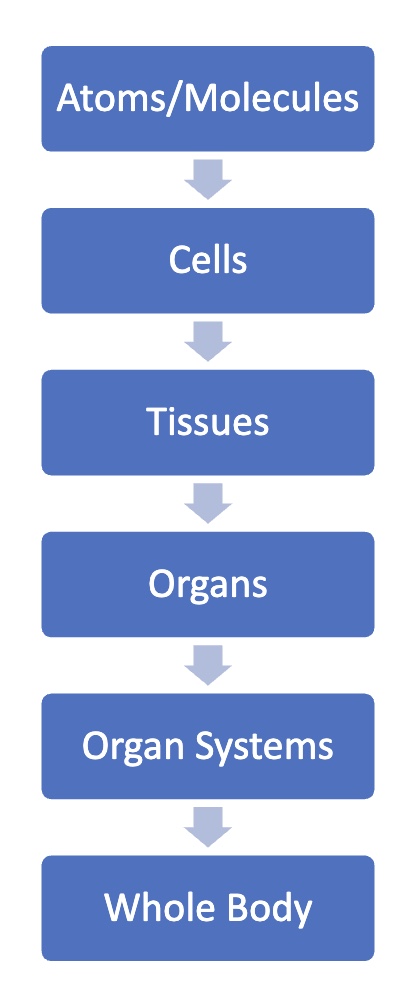
how is the body organized?
atoms/molecules → cells → tissues → organs → organ systems → whole body
-examples/further explanations…:
individual protein, ions
each cells has its own homeostasis, less regulated outside cells
cells w/ similar functions
liver, stomach, etc.
GI, nervous
List the 4 major categories of tissues and cells
-nervous tissue
-epithelial tissue
-muscle tissue
-connective tissue
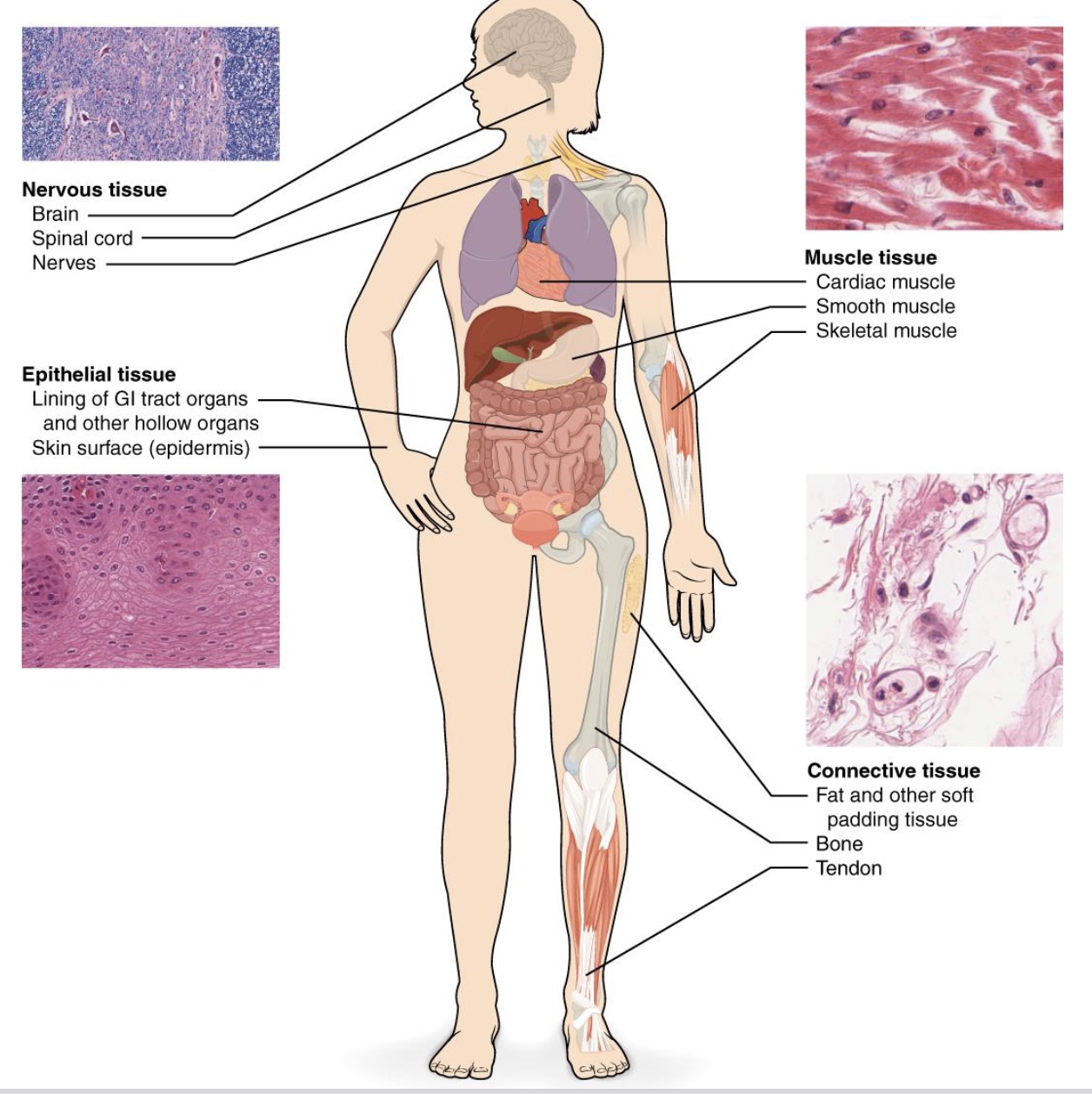
true or false: organ systems contain all 4 types of major tissue and cell categories working together
true!
-ex: heart has all 4 with cardiac muscle, connective, nervous, and epithelial (heart hallow, blood in ventricles and surrounds)
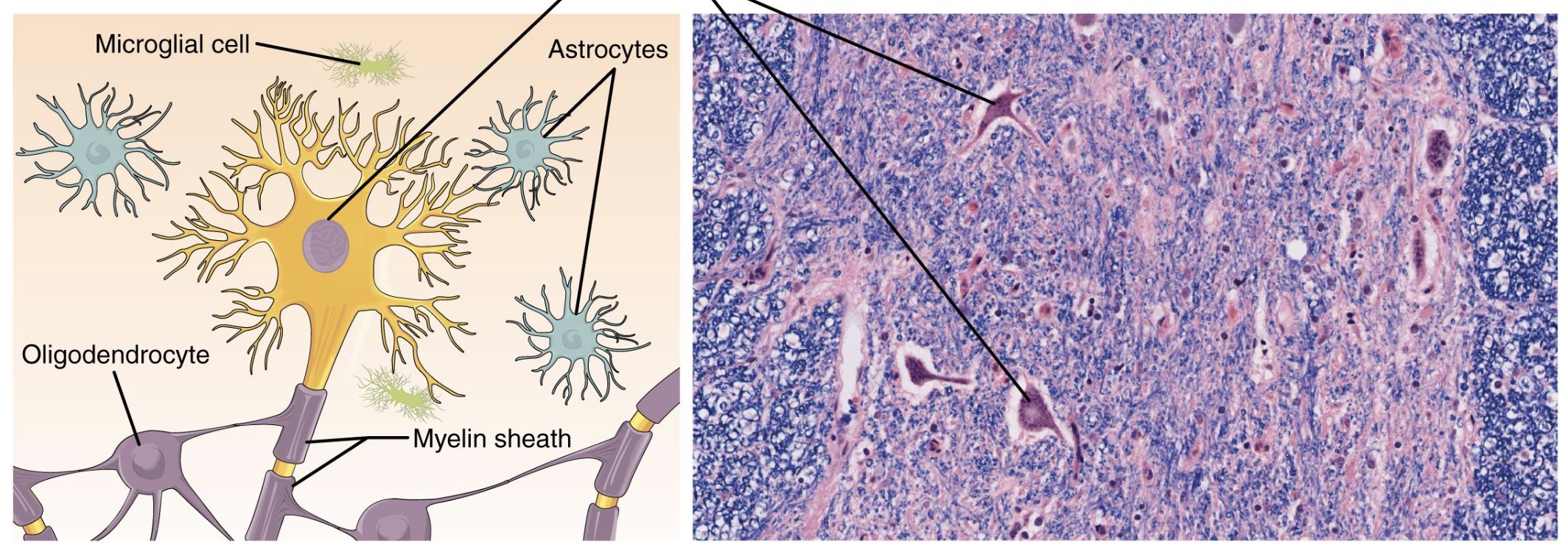
nervous tissue
-contains neurons which conduct electrical impulses and supporting glial cells (=majority of nervous tissue; microglical, astrocyctes, oligodendrocyte, etc.)
-ex: brain, spinal cord, nerves
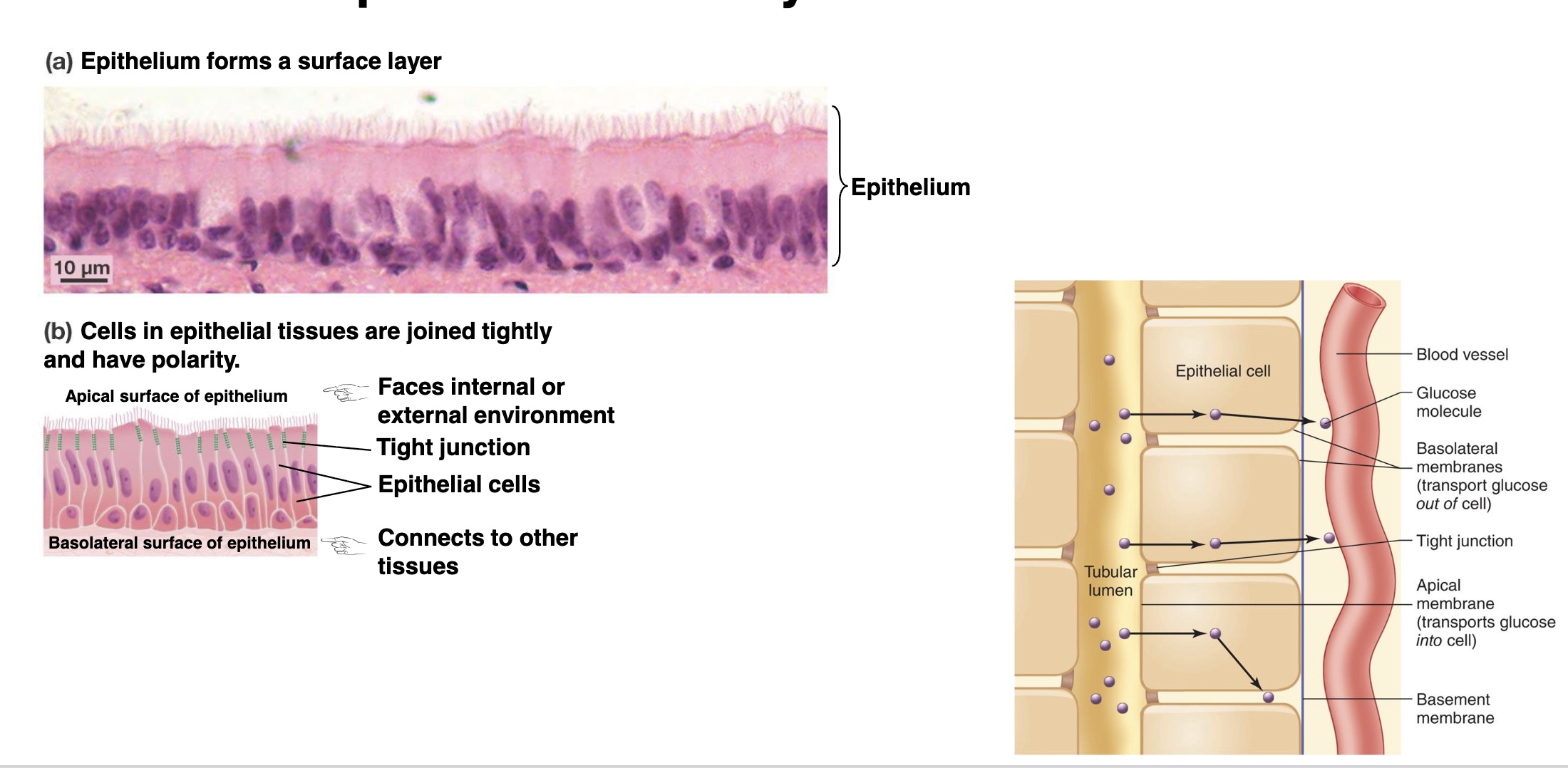
epithelial tissue
-provides protection and regulates which materials pass across body surfaces
-ex: lining of GI tract organs and other hollow organs; Skin surface (epidermins)
Apical surface: faces out (ex: skin surface, stomach wall inside)
Basolateral surface: connects to other tissues
*good for blood and blood vessels bc is an anti-coagulant; kidney and digestive move things between compartments, and kidney regulates movement of dissolved molecules and what waste and what keep
muscle tissue
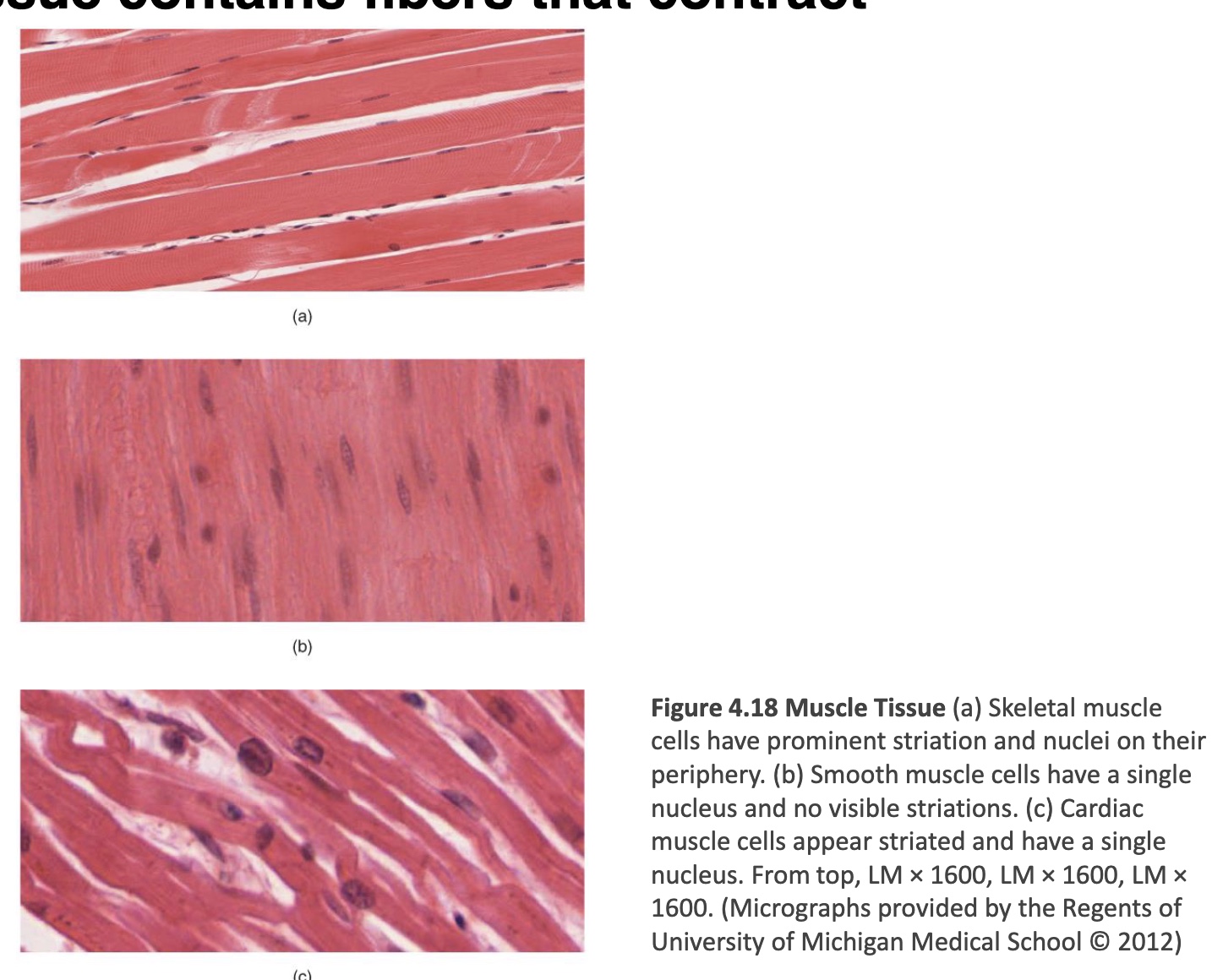
-contains fibers that contract
-3 main types: cardiac, smooth, and skeletal muscle
Cardiac: just in the heart, “hybrid” of smooth and skeletal
Smooth
Skeletal: long, parallel fibers
connective tissue
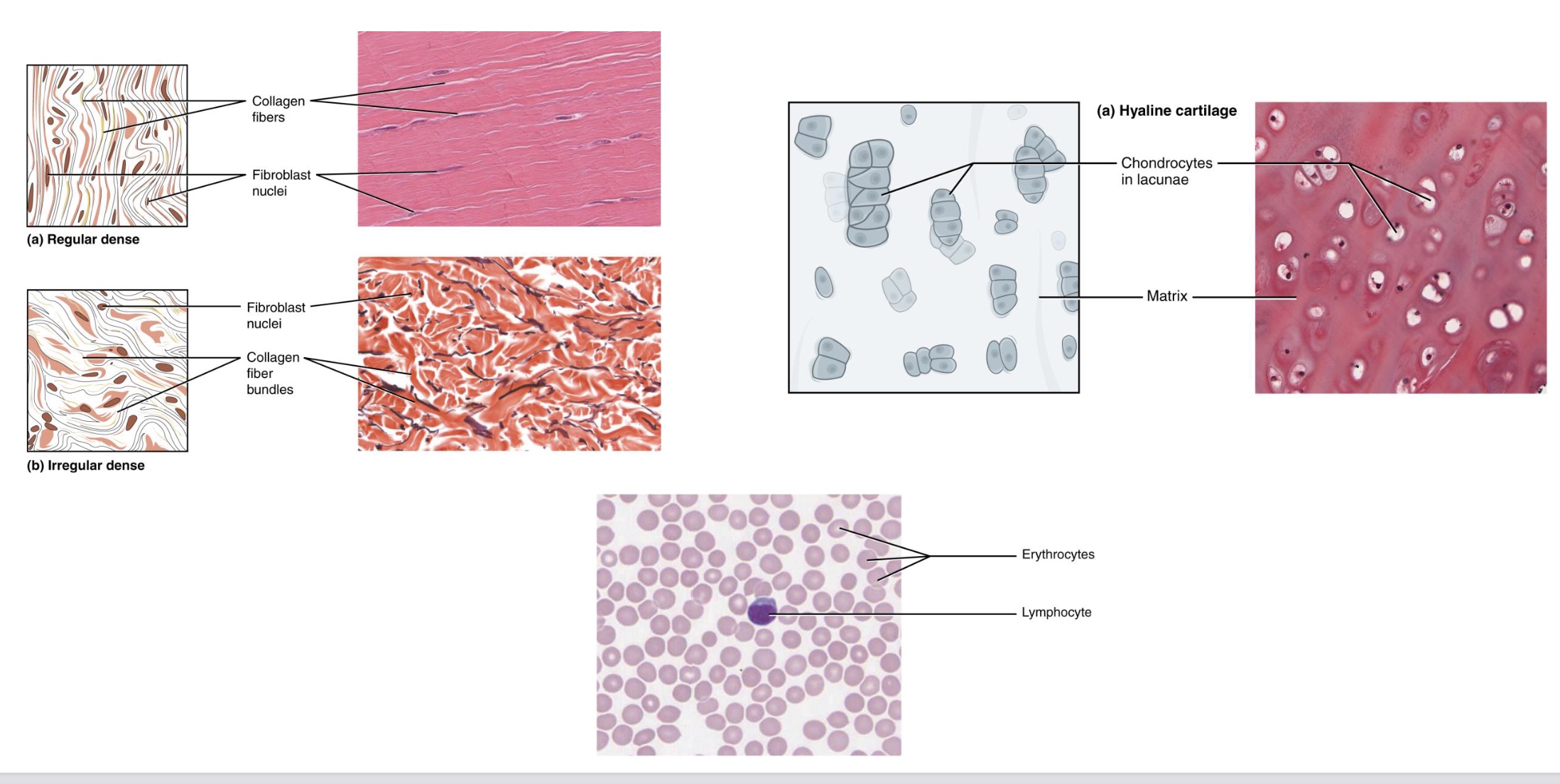
-consists of cells arranged in an extraceullar matrix (=mixture of proteins surround by fluid)
-ex: fat and other soft padding tissue, bone, tendon, blood
*Regular dense vs Irregualr dense: collagen fibers (flexible but strong) and fibroblast nuclei (living cells); Hyaline Cartilage: chondrocytes in lucane (living cells) and matrix (gel-like and rubbery, proteins and fluids); Blood plasma
water (how much and where in the body)
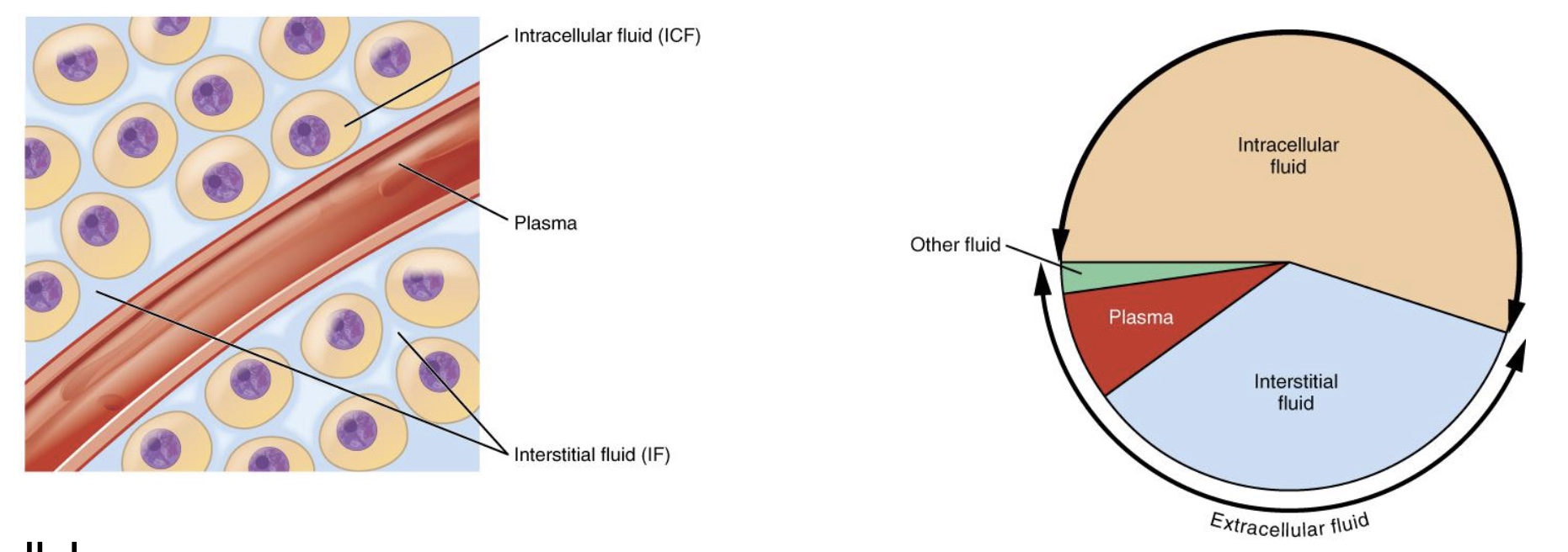
-about 55-60% of the body is water
*water=solvent
-the internal environment consists of this water and the concentration of (dissolved) ions, nutrients, etc.
*organ systems maintain the concentrations
fish bowl example
-inputs=food and oxygen; outputs= (waste) CO2, nitrogenous waste
-have to invest energy to keep the fish alive, just like out bodies
-if put in more fish/increase our metabolism/exercise?: use more food and O2, increase RR so higher O2 and lower CO2, etc.
*dirty fish water if body can’t keep homeostasis
distribution of water in the body
-intracellular: inside cells/the cytosol; most body water (~1/2 of total)
-interstitial: outside and surrounding cells
-plasma: liquid part of blood (~3L)
*“other fluid”= CSF, etc.; body contains 42L of water total
ICF <-> ISF <-> plasma <-> organs <-> external environment
-ICF: K+, high in protein
*cell/plasma membrane (stricter regulation)
-ISF: Na+, lower protein
*BV wall; unrestricted movement most places except for proteins (bc too big for capillaries)
-Plasma: Na+, high protein
-Organs: examples= lung gas exchange or kidney waste removal and ion [ ]’s
______________________________________
-The body’s fluid compartments are in a state of equilibrium with each other
-Organs condition the plasma
-Interstitial fluid (ISF) is a filtrate of plasma
proteins can’t move as easily
-Intracellular fluid (ICF) is derived from ISF, with selective transport by the cell membrane
“semi-permable” bc not everything can pass through
![<p><strong><mark data-color="blue" style="background-color: blue; color: inherit;">-ICF:</mark></strong><mark data-color="blue" style="background-color: blue; color: inherit;"> K+, high in protein</mark></p><p><mark data-color="blue" style="background-color: blue; color: inherit;">*cell/plasma membrane (stricter regulation)</mark></p><p><strong><mark data-color="blue" style="background-color: blue; color: inherit;">-ISF:</mark></strong><mark data-color="blue" style="background-color: blue; color: inherit;"> Na+, lower protein</mark></p><p><mark data-color="blue" style="background-color: blue; color: inherit;">*BV wall; unrestricted movement most places except for proteins (bc too big for capillaries)</mark></p><p><strong><mark data-color="blue" style="background-color: blue; color: inherit;">-Plasma:</mark></strong><mark data-color="blue" style="background-color: blue; color: inherit;"> Na+, high protein</mark></p><p>-Organs: examples= lung gas exchange or kidney waste removal and ion [ ]’s</p><p>______________________________________</p><p><mark data-color="red" style="background-color: red; color: inherit;">-The body’s fluid compartments are in a state of equilibrium with each other</mark></p><p>-Organs condition the plasma</p><p>-Interstitial fluid (ISF) is a filtrate of plasma</p><ul><li><p>proteins can’t move as easily</p></li></ul><p>-Intracellular fluid (ICF) is derived from ISF, with selective transport by the cell membrane</p><ul><li><p>“semi-permable” bc not everything can pass through</p></li></ul><p></p>](https://knowt-user-attachments.s3.amazonaws.com/0a2726d9-1214-41b0-a946-7140b6d1ab11.jpg)
Examples of physiological variables that are conditioned by organ systems
*”physiological variables”=can measure; usually regulated in a tight range
-Concentrations of:
Nutrients (ex: BG)
Gases (ex: O2 and CO2)
Wastes (ex: usually low [ ])
Electrolytes (ex: Na+ or K+)
-pH (ex: blood=7.4)
-Temperature (relatively constant within 1 degree)
-Water (plasma) volume and pressure (BP)
true or false: overtime physiological variables remain relatively constant despite large changes in the external envionrment and wide variation of nutrient intake
true!
more accurate word for homeostasis
-Although the word could be literally translated as “to stay the same,” homeostasis is more accurately described as a dynamic equilibrium
*fluctuation around a set-point, but stays around the set-point due to mechanisms
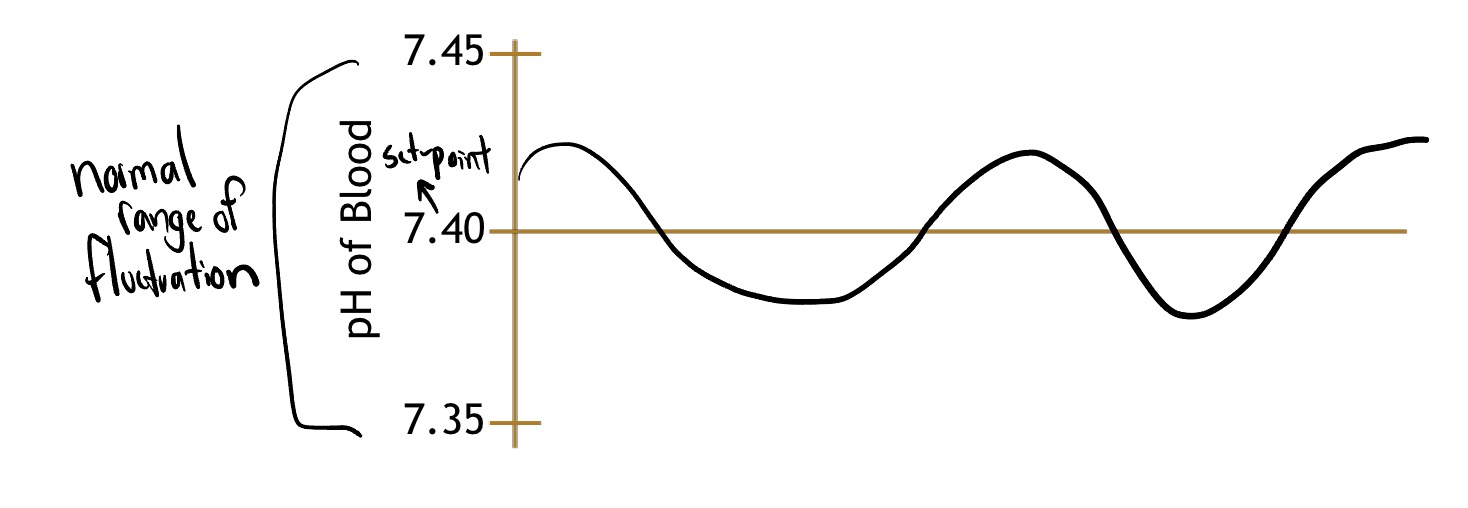
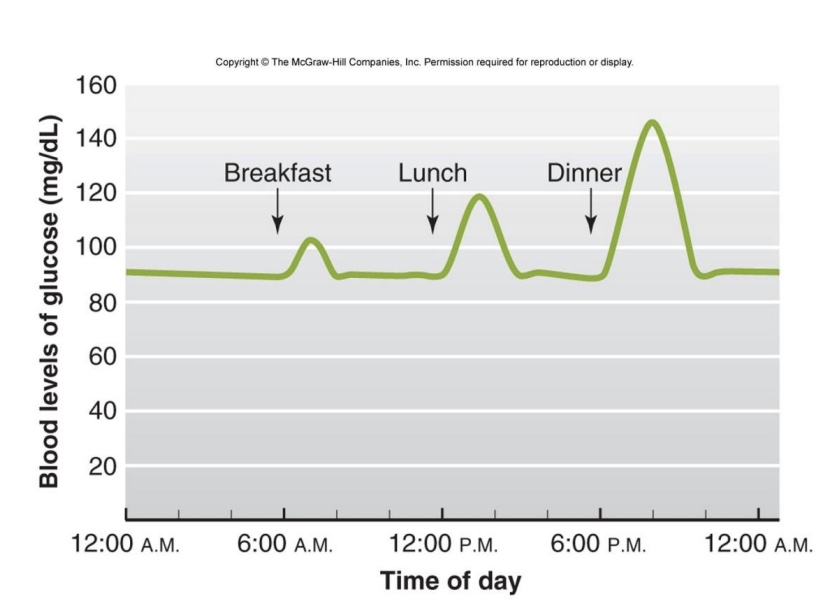
Example dynamic equilibrium: Blood Glucose
-Blood glucose levels increase after eating. Levels return to their set point via homeostasis.
-This is an example of dynamic equilibrium. Levels change over short periods of time, but remain relatively constant over long periods of time.
*insulin= mechanism to decrease BG
-What is the significance of doing a blood sugar test in someone who has been fasting?= gives most accurate set-point of a person (not dependent on recent meal)
*Disease=break down of homeostatic mechanism, can’t return back to the set point (ex: DM: not producing insulin or low sensitivity, so have a higher set-point)
Negative Feedback
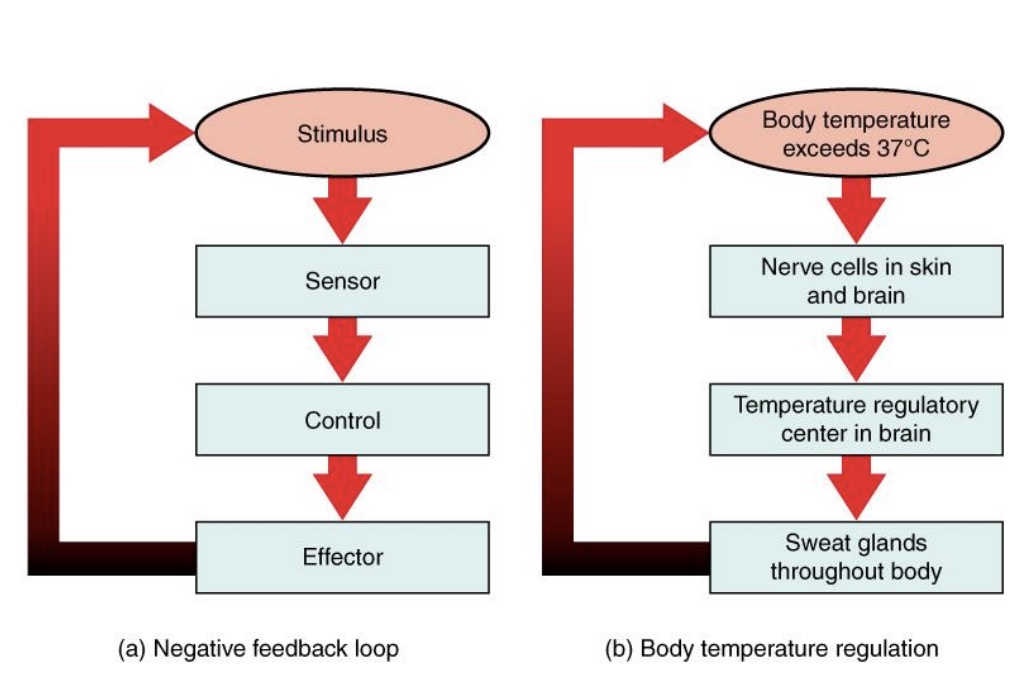
-Each variable has a set point; Deviations activate mechanisms that attempt to return the variable to the set point
-Set points are restored by negative feedback mechanisms (oppose/reverse direction of change)
Stimulus → sensor → control → effectors → repeat…
*positive feedback more rare and amplifies the change
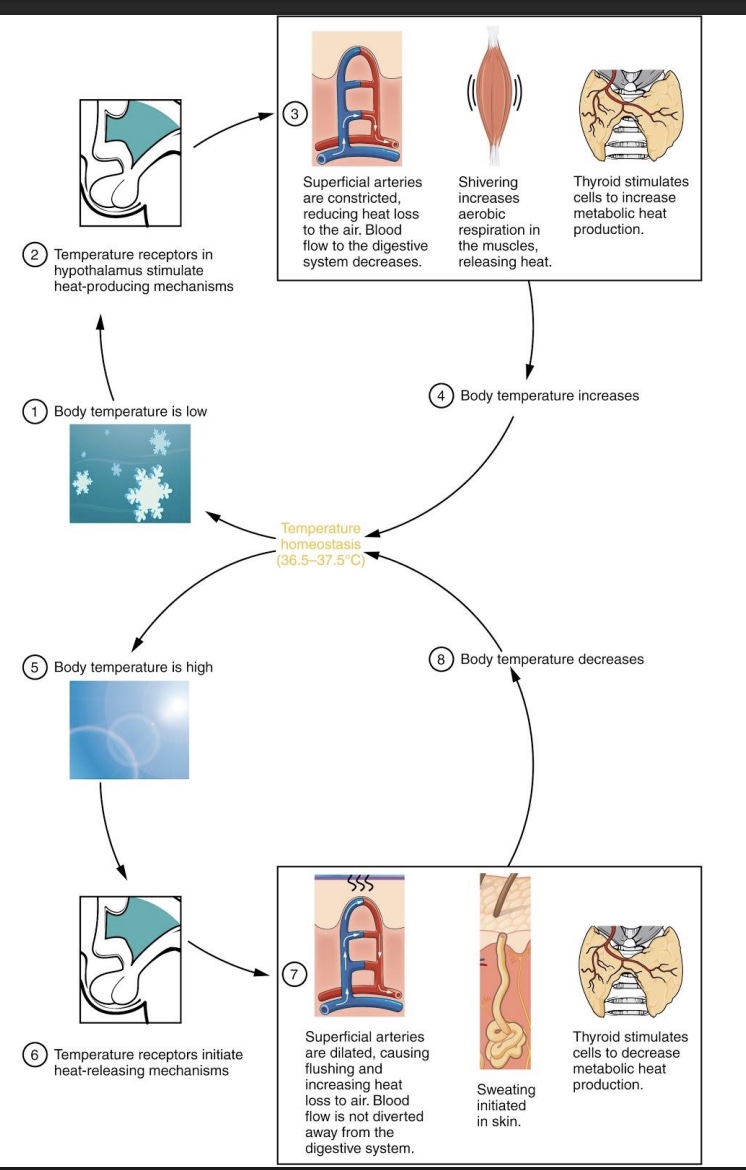
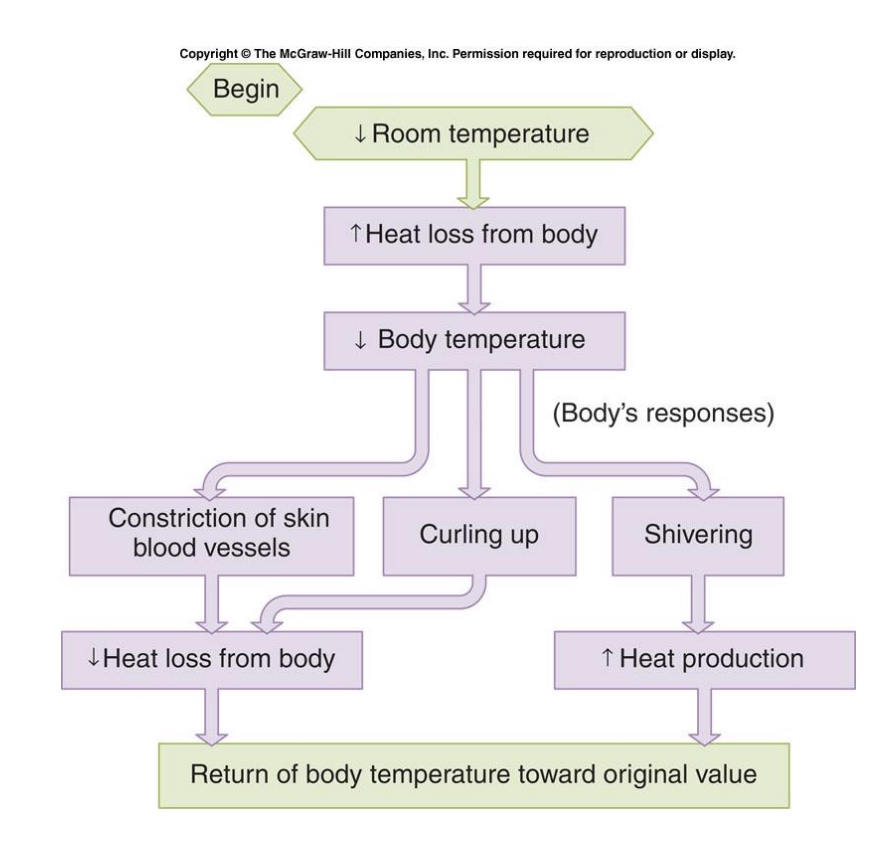
Feedback mechanism: high and low body temp
*note: thyroid more long term effect (ex: if move from warm to cold climate)
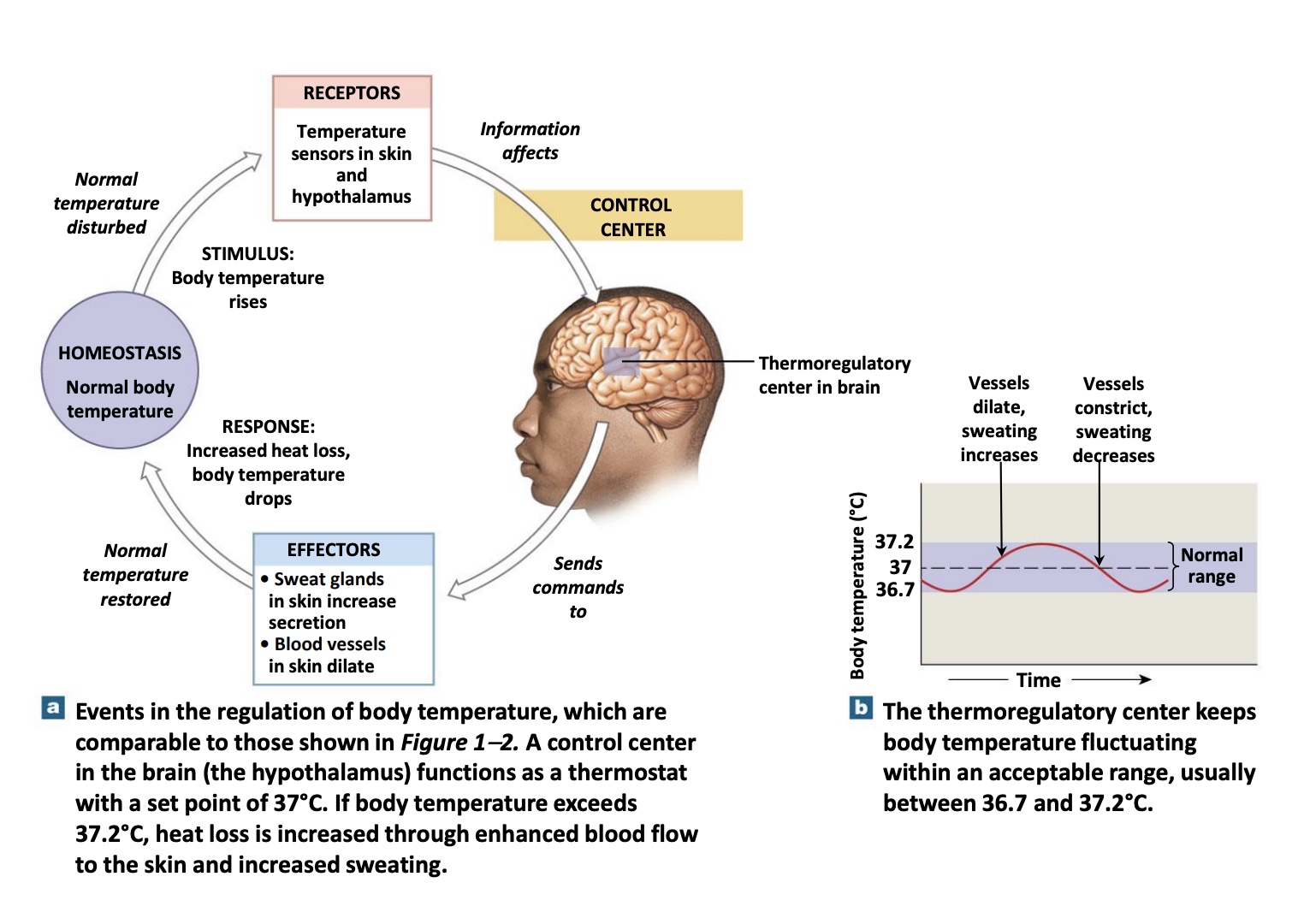
Negative Feedback loop if too hot
-hypothalamus: regualtes temp, nutrient levels, hunger, and thirst
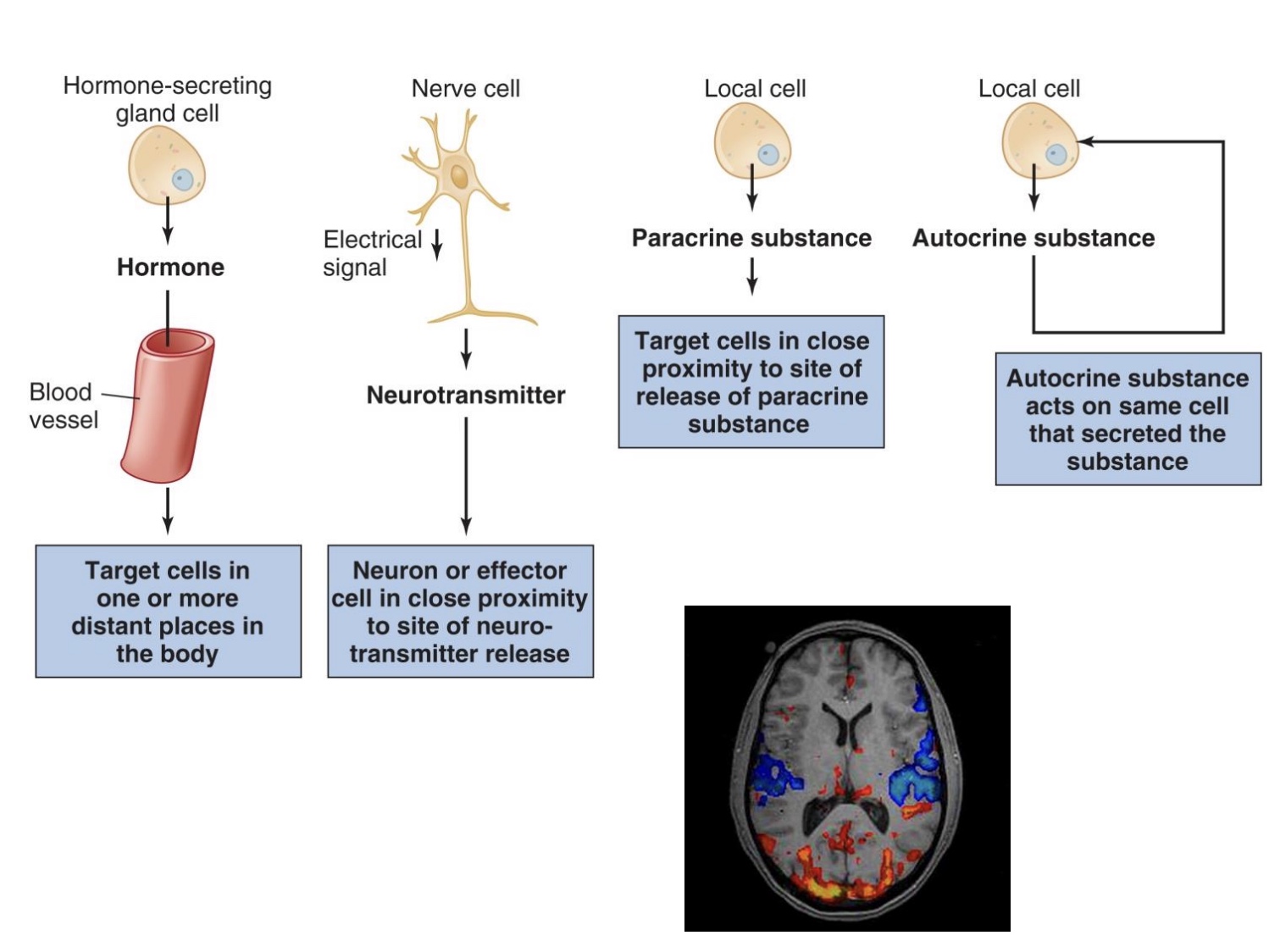
4 types of effector mechanisms
-hormone: long-distance and all over body through blood
-neurotransmitter: ex=muscle contractions
*next two just one part of body, but often together…
-Paracrine substance: target cells next door, ex=brain blood flow where higher neuroactiivty = higher blood flow/more VD
-Autocrine substance: cells can activate response on own self
Set points and circadian rhythms
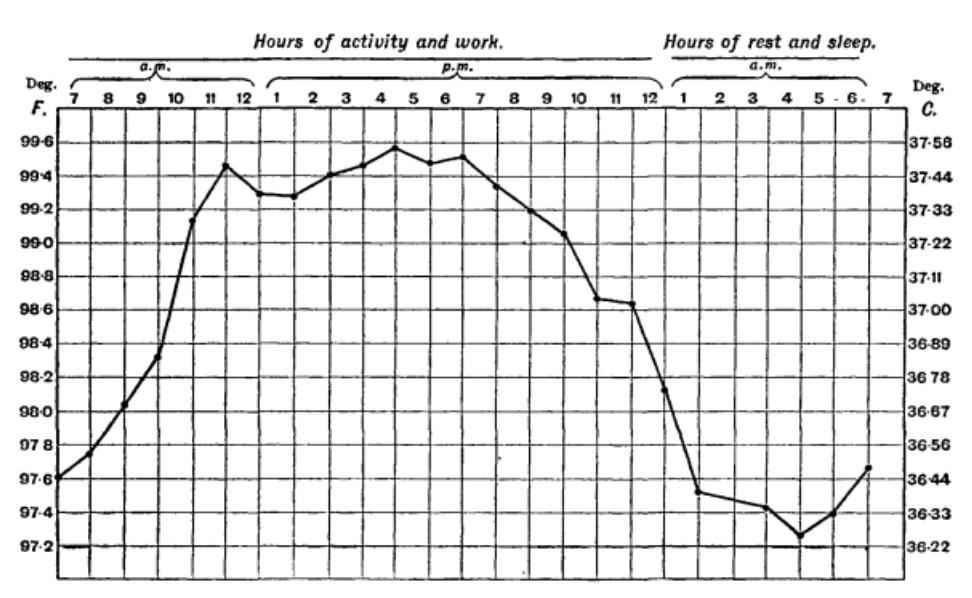
-Normal physiology: set points change with circadian rhythm (“circadian variation”)
*ex: body temp
-Adds anticipatory component to homeostatic control
*body can anticipate increase or decrease in activity (ex: increase metabolism during day and lower at night; cortisol increase in morning and lowers throughout the day)
*also individual variation between people
Set ponts and fever
-Fever → body temp is high, but we shiver and feel cold. why?= higher set point and perceived heat loss
*cytokines tell your hypothalamus to increase the set point bc higher temps inhibit bacterial growth and better for immune systems. Not dangerous bc leads to faster resolution of fever (though hyperthermia is dangerous and external)
clashing demands of set-points
-Acting to preserve one set point can have effects on others
-There is a hierarchy – some more crucial than others
*ex: fever increases body temp and helps immune response but burns more energy, sweating leads to more water loss, and certain things don’t work well at higher temps
immediate and long-term homeostatic control (w/ BP example)
-Homeostatic control can range from immediate to long-term
example…
Blood pressure: vasoconstriction (e.g. sitting to standing) better immediate basis and prevents pooling of blood due to gravity
Long term BP regulation: changing body water volume (e.g. congestive heart failure= heart not meeting bodies demands, increases water volume to compensate and increase BP bc most imp on hierarchy, but can lead to edema in lower extremity and the lungs)
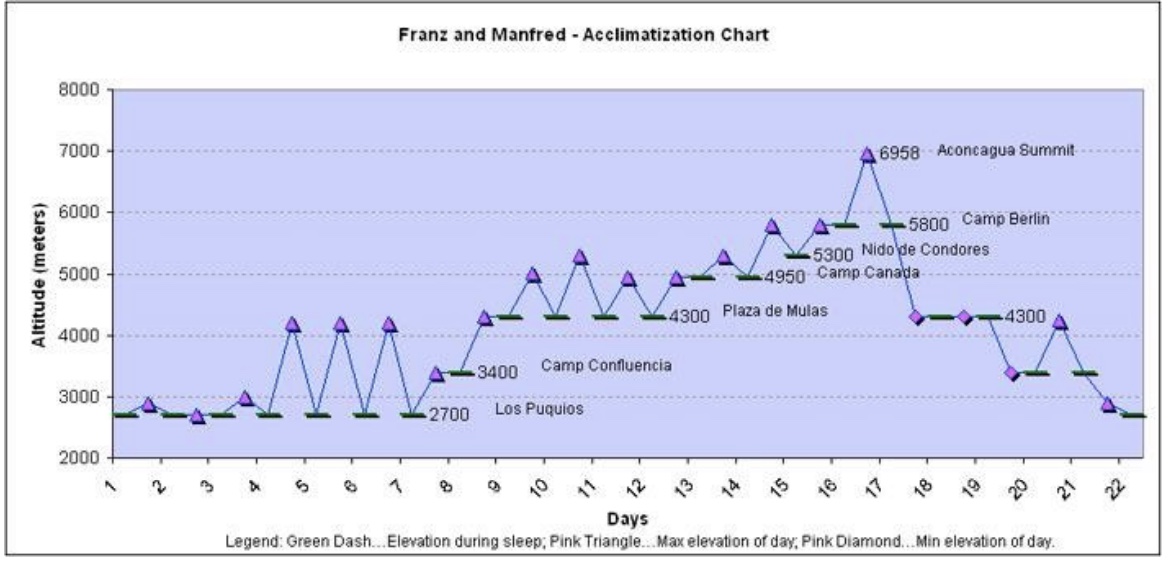
acclimatization
-Another long-term change that promotes homeostasis
-Altitude: several changes from immediate to weeks (higher RBC)
true or false: homeostasis can regulate at all levels of organization
true!
*ex: regulate levels of chemical substrate
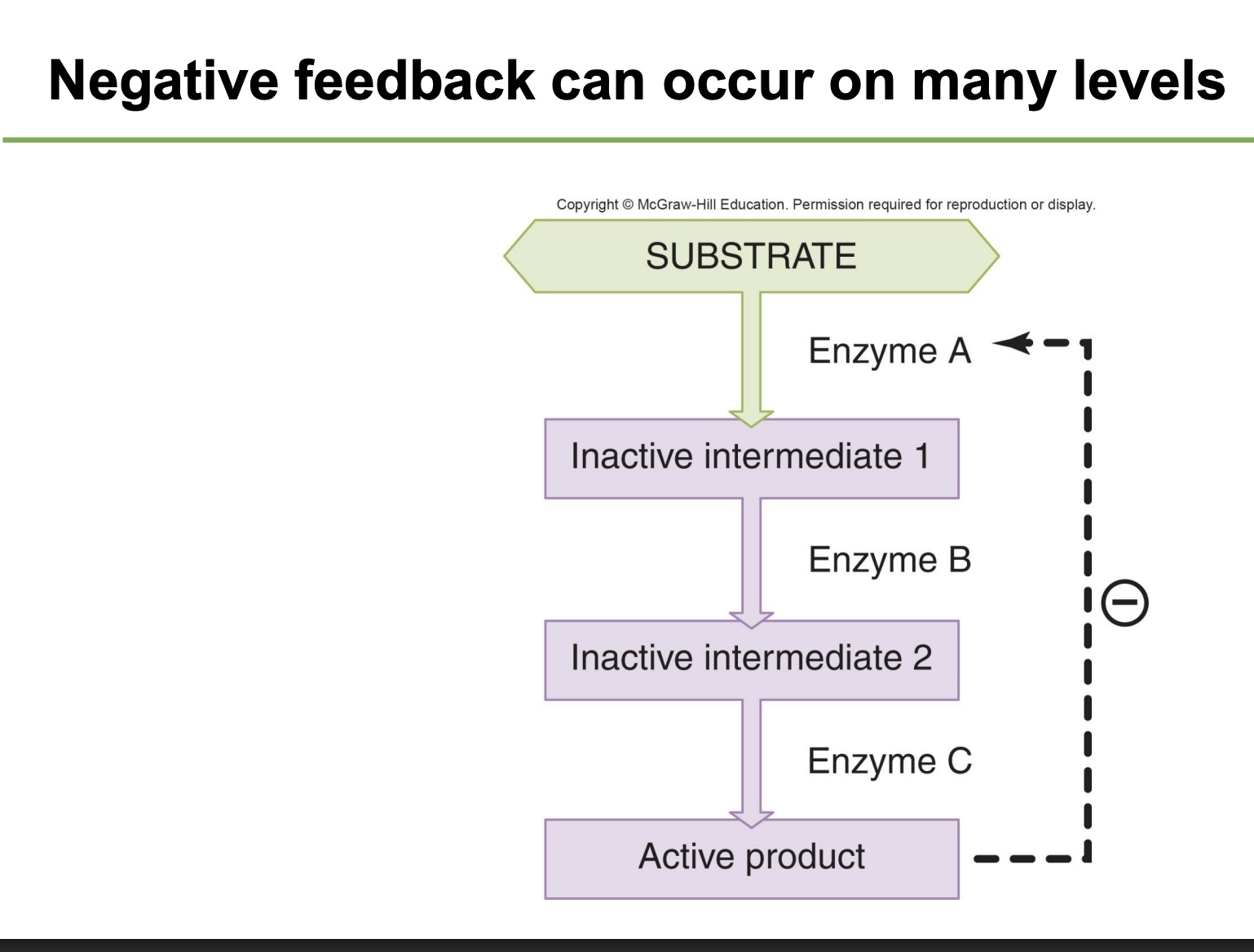
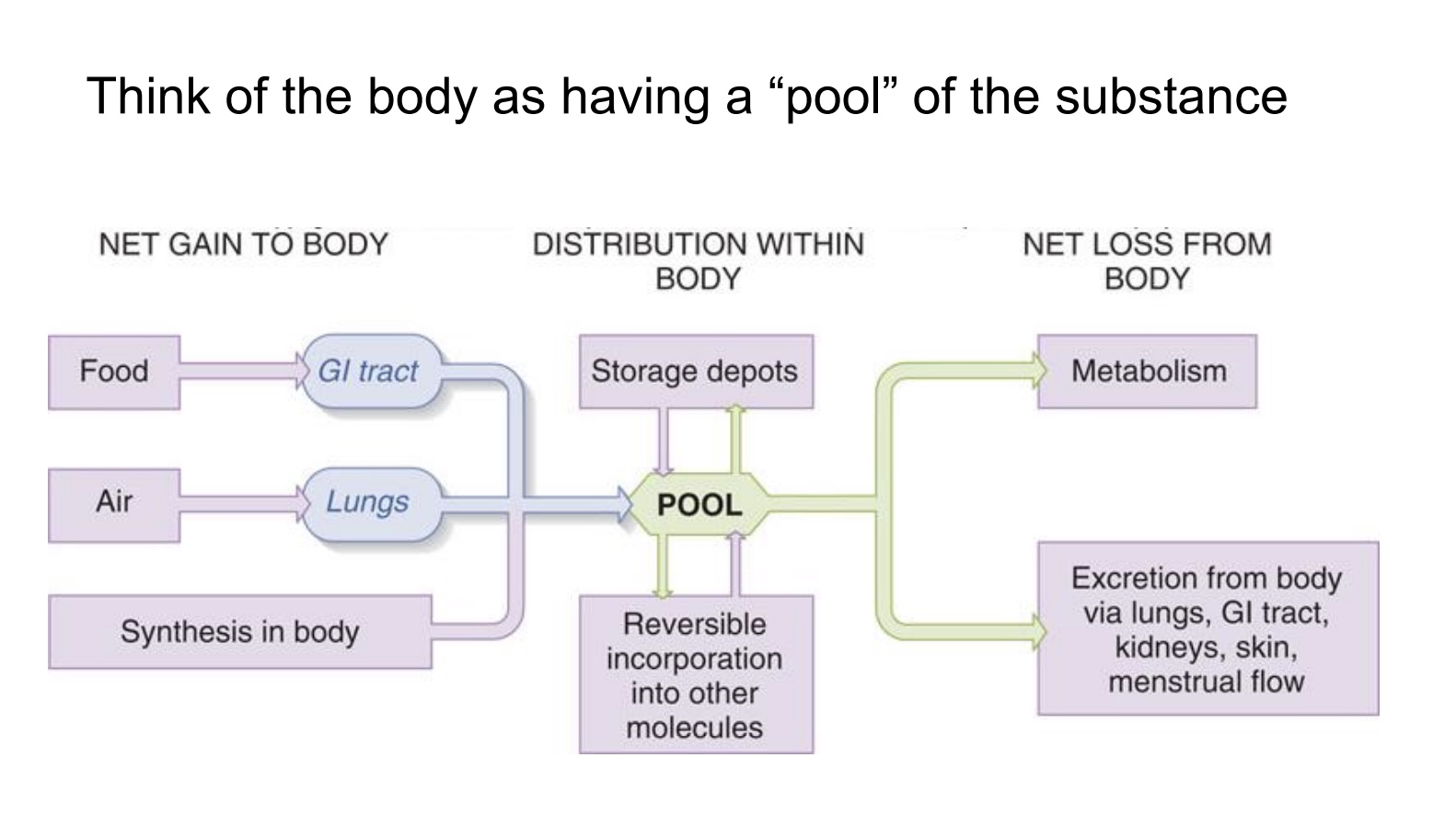
homeostasis of chemical substances
-ex: Na+, K+, Ca2+
-ex: Sodium ingested vs Sodium extremed (if increase ingested, body cataches up to a certain point with amount excrete)
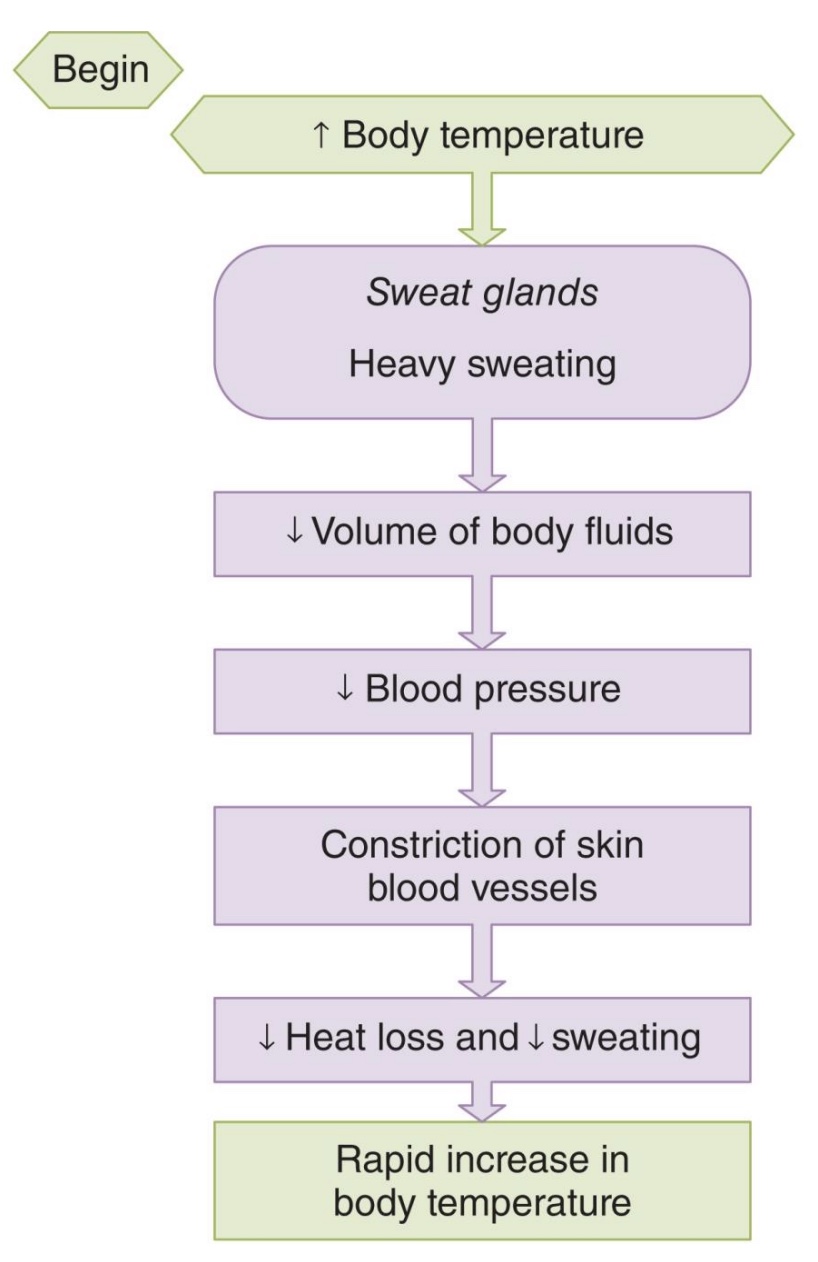
sequence of events in Heat Stroke
 Note
Note  Flashcards (22)