Session 3: Mutations
 Call Kai
 Learn
Learn Practice Test
 Spaced Repetition
 Match
Match Flashcards
 Knowt Play
1/51

There's no tags or description
Looks like no tags are added yet.
Name | Mastery | Learn | Test | Matching | Spaced | Call with Kai |
|---|
No analytics yet
Send a link to your students to track their progress
52 Terms
What are the three major types of mutation?
- Point mutation
- Chromosomal mutation
- Copy number variation
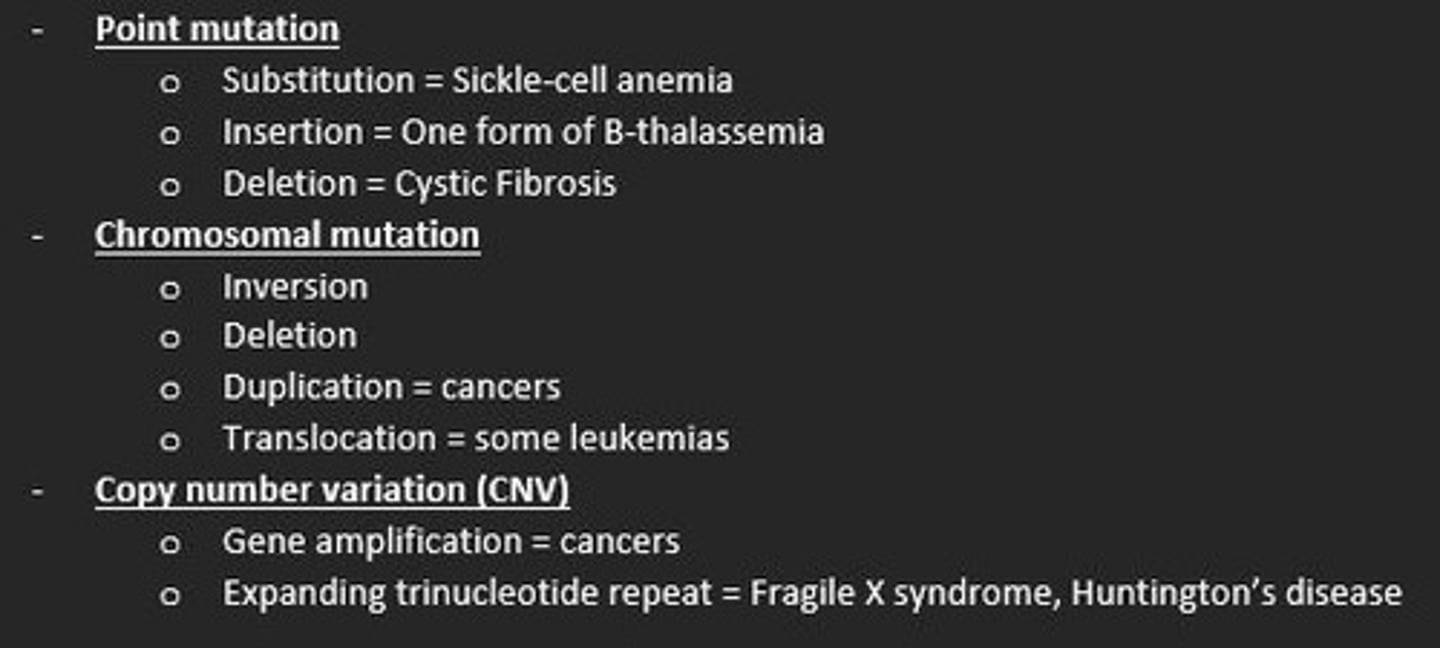
Example of condition caused by point mutation (substitution)
Sickle cell anemia
Example of condition caused by point mutation (deletion)
Cystic fibrosis
Example of expanding trinucleotide repeat conditions?
- Fragile X syndrome
- Huntington's disease
What is the most common type of point mutation?
Substitution
Point mutations are the most ___ type of mutation
common
What are the two major types of point mutation (most common type of mutation)?
1) Transition = a purine (adenine/guanine) is substituted with another purine (or one pyrimidine substituted by another pyrimidine)
2) Transversion = a purine is substituted for a pyrimidine (cytosine/thymine/uracil)
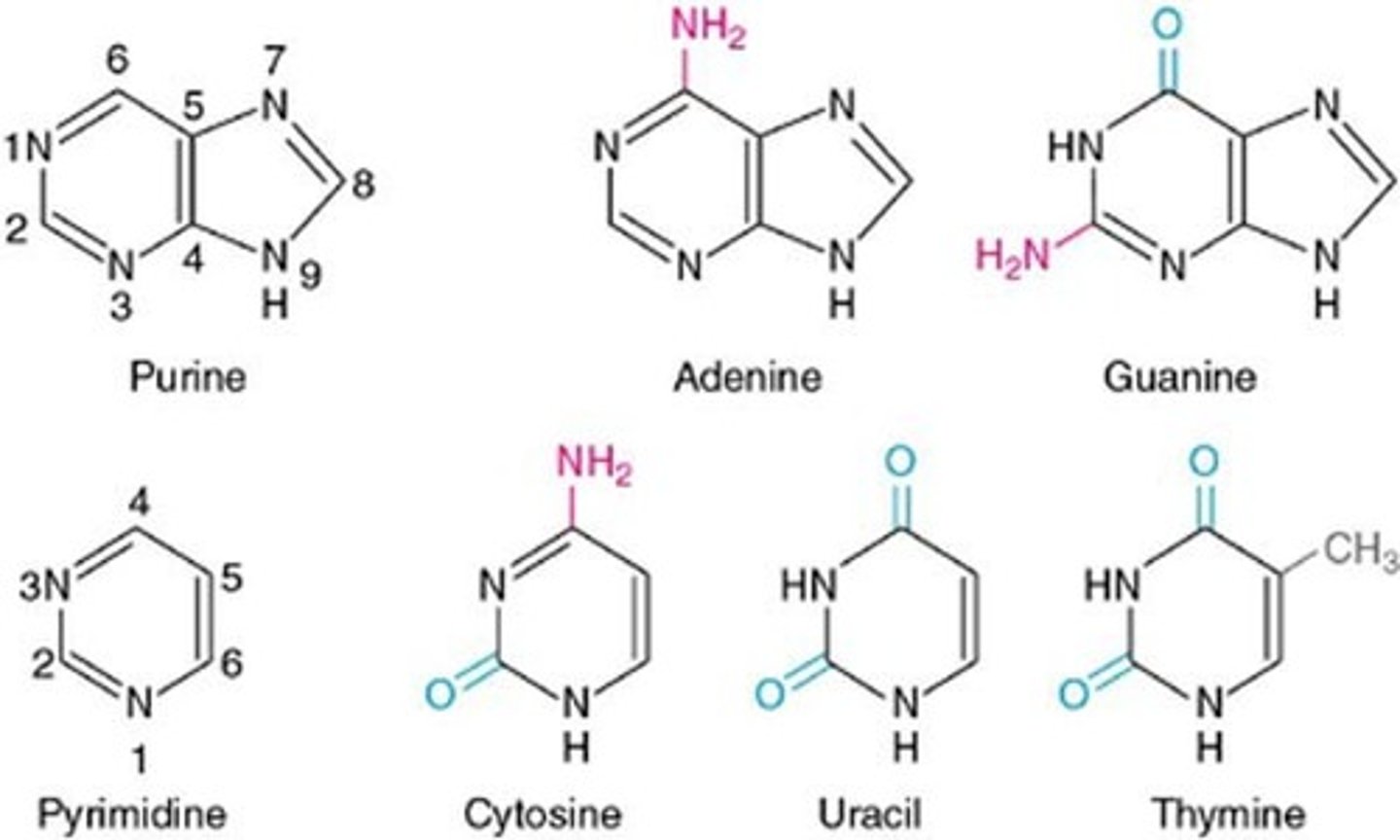
Purines
PU-AG (purine - adenine and guanine)
Pyrimidines
PYR-CTU (pyrimidine - cytosine, thymine, uracil)
Point mutations that occur in DNA protein-encoding sequences can have three effects... what are they

Silent point mutation in protein-encoding sequence
Generation of codon for same amino acid (redundancy)
Missense point mutation in protein-encoding sequence
Generation of codon that specifies DIFFERENT amino acid (conservative/non-conservative)
Nonsense point mutation in protein-encoding sequence
Generation of STOP codon
The K-Ras proto-oncogene is activated by a ___ mutation
Missense
The most frequent K-Ras mutation in 17-25% of human cancers is...
(especially pancreatic, lung and colorectal cancers)
K-Ras G12V
K-Ras G12V
- Missense mutation
- GGC codon → GTC codon
- Results in change of amino acid
- Gly → Val at position 12
HbS mutant protein in sickle cell anemia is the result of what type of point substitution mutation?
- Missense mutation
- GAG codon → GTG codon
- Results in change of amino acid in beta-globin gene
- Glutamate → Valine at position 6
Insertion or deletion point mutations can be small (single extra DNA base pair) or large (piece of chromosome).
The insertion or deletion of just one base pair can lead to a ___ mutation which results in the change of amino acid sequence and can sometimes lead to the premature termination of translation (truncated protein)
Frameshift mutation
Cystic fibrosis (most common) point mutation
Deletion
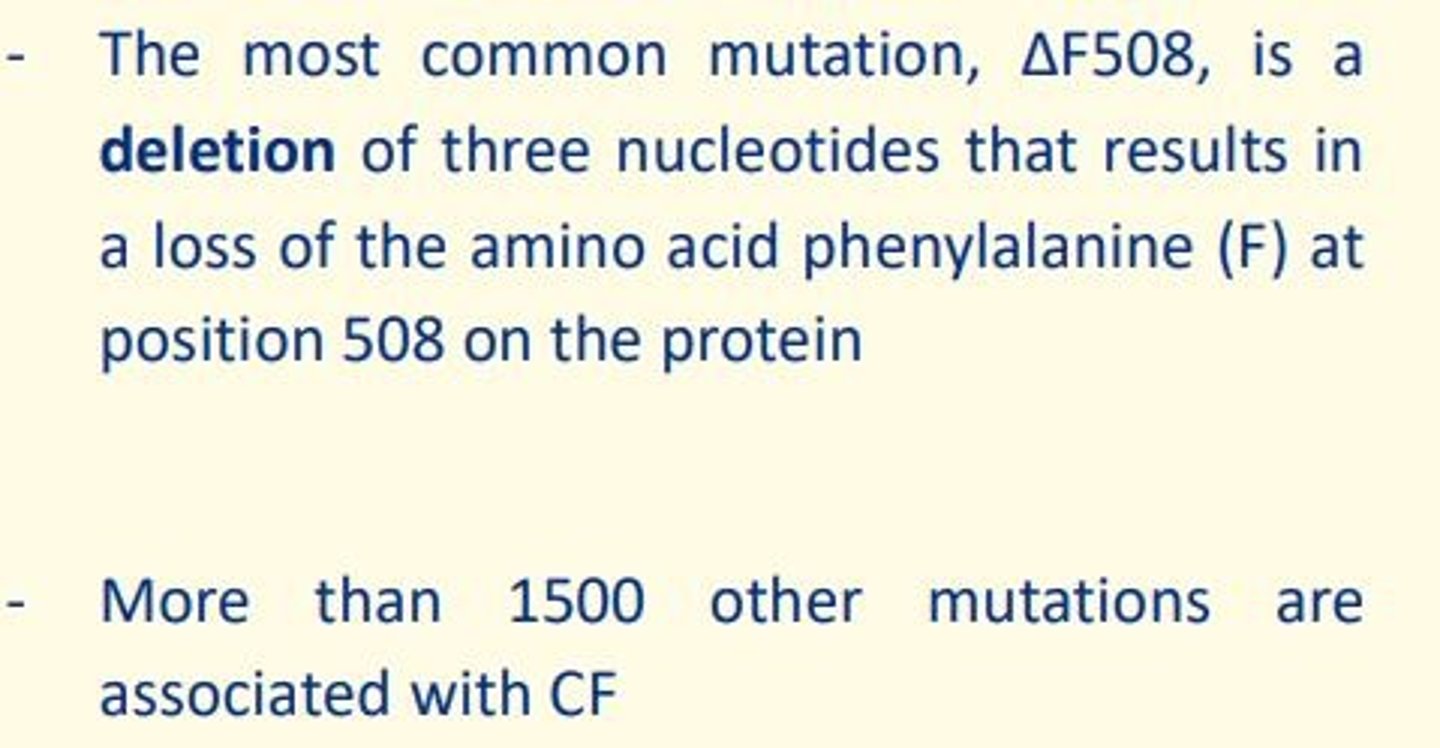
Point mutations ONLY occur in the protein-encoding regions
True or false?
False
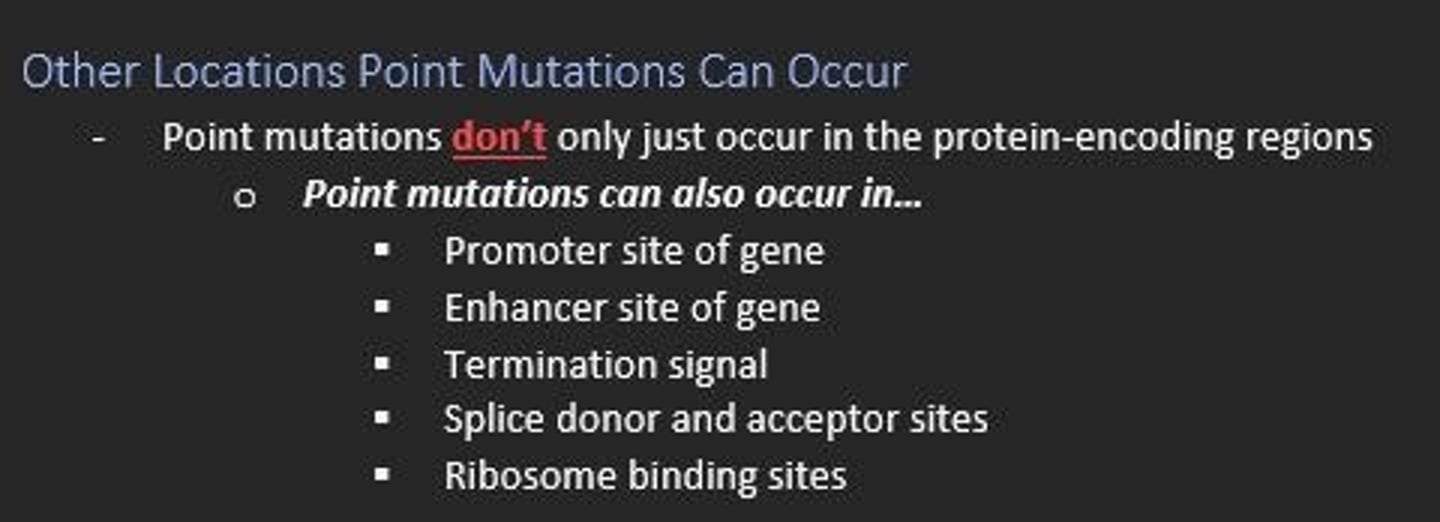
- Point mutations don't only just occur in the protein-encoding regions
- Point mutations can also occur in promoter/enhancer site, termination signal, splice donor/acceptor site, ribosome binding site
Enhancer
Regulatory elements that specify where and when particular genes are expressed
The ___ gene promoter mutations can be observed in ~30% of primary melanomas
TERT gene promoter mutation (point mutation)
Beta-thalassemia is caused by ___-site mutations (point mutations) found in the genomes of affected patients
Splice-site mutations

Phenylketonuria (PKU) is caused by a single-base mutation in the ___ ___ site of intron 12.
This makes the site unrecognizable by splicing enzymes - leads to exon 12 being excised along with introns 11 and 12.
Individuals with this mutation have truncated phenylalanine hydroxylase (PAH) protein which has zero PAH activity
splice donor site
Three causes of mutations in DNA
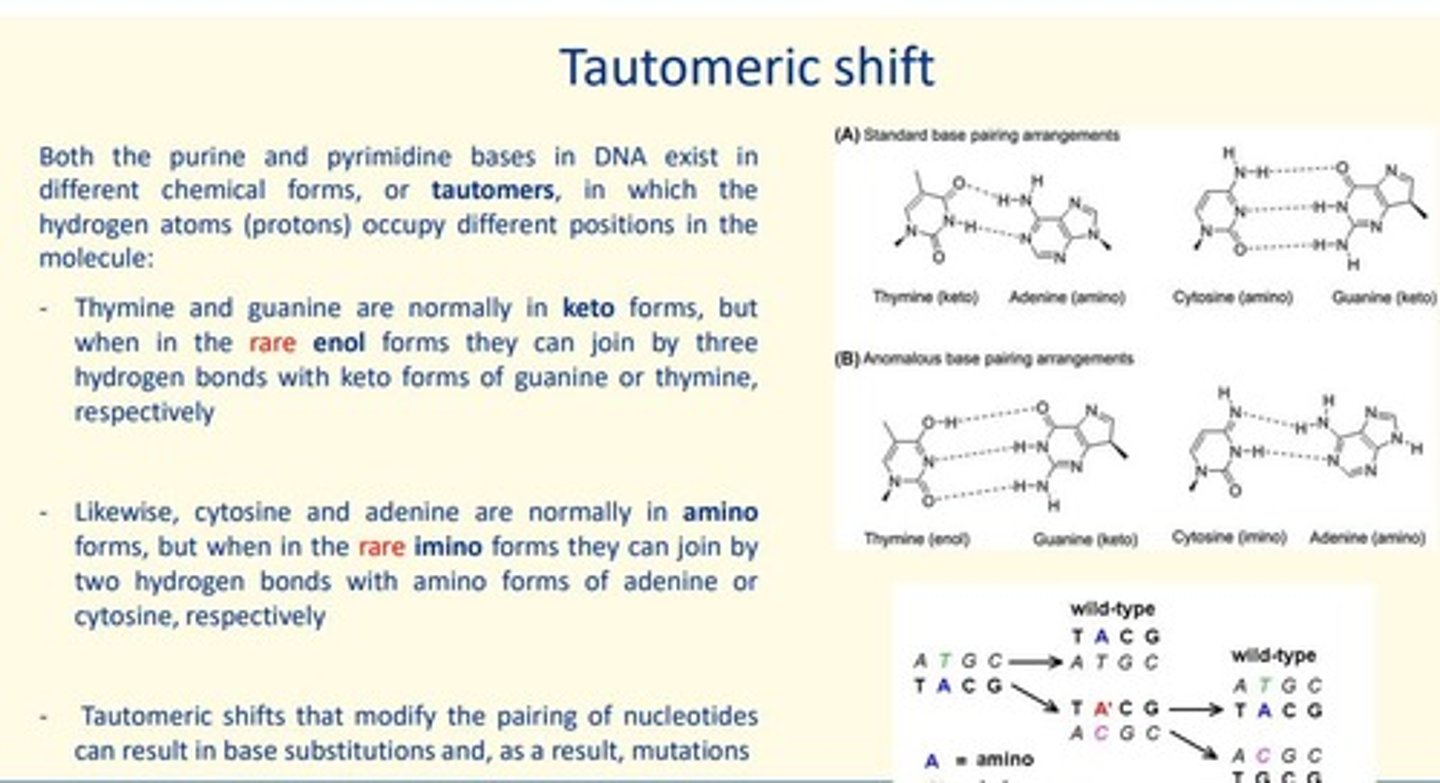
1) Errors in DNA replication
2) Chemical damage to DNA = mutagens
3) Radiation = ionizing and UV
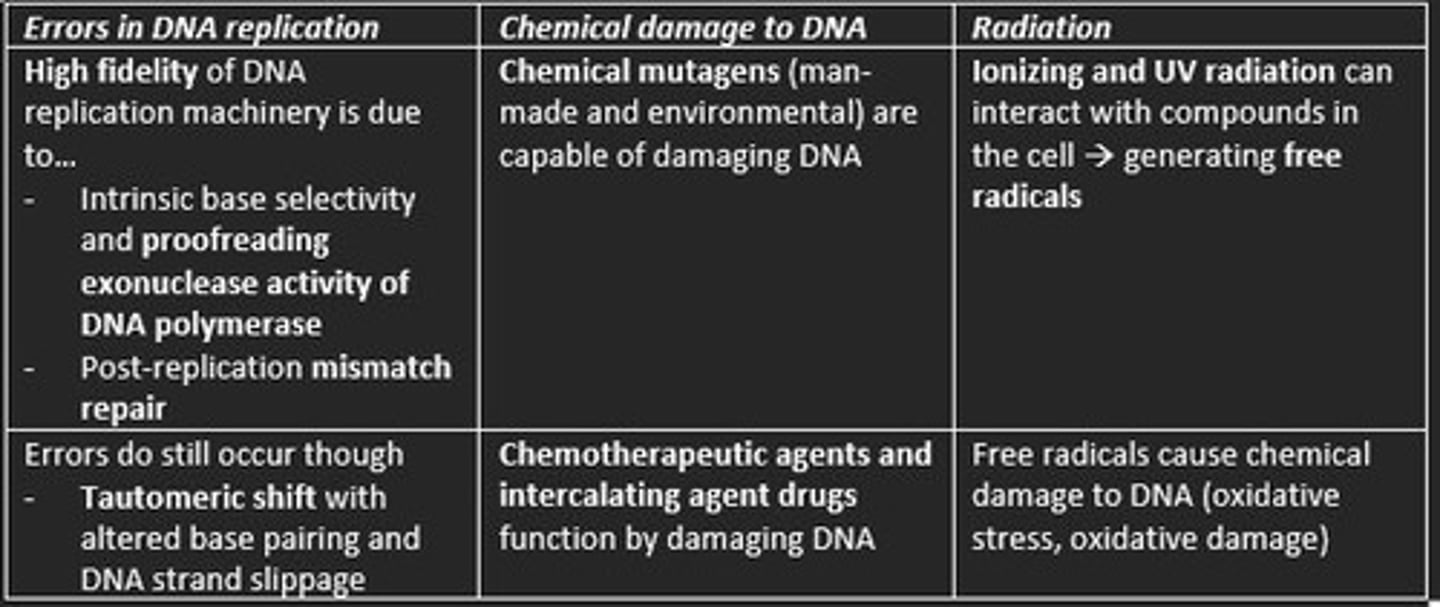
Tautomeric shift
Error in DNA replication leading to mutation
- Tautomeric shifts that modify the pairing of nucleotides can result in base substitutions and mutations
Slipped-strand mispairing - what is it
Error in DNA replication leading to frameshift mutation
- Misalignment of DNA strands during replication of repeated DNA strands leading to genetic rearrangements
Two examples of DNA replication error leading to mutation
1) Tautomeric shift
2) Replication slippage or slipped-strand mispairing
Mutagen
Physical or chemical agent that permanently changes DNA and thus increases the frequency of mutations above natural background level
Give example of two chemical carcinogen mutagens found in tobacco products such as cigarettes, snuff, e-cigarettes and smokeless tobacco
1) Tobacco-specific nitrosamines (TSNAs)
2) Polycyclic aromatic hydrocarbons (PAHs)
How do carcinogens such as tobacco-specific nitrosamines (TSNAs) and polycyclic aromatic hydrocarbons (PAHs) lead to cancer?
1) TSNAs and PAHs cause bulky DNA adducts
2) If not repaired - these DNA adducts lead to mutations by DNA covalently bonding w/ chemicals)
3) Accumulation of mutations lead to cancer
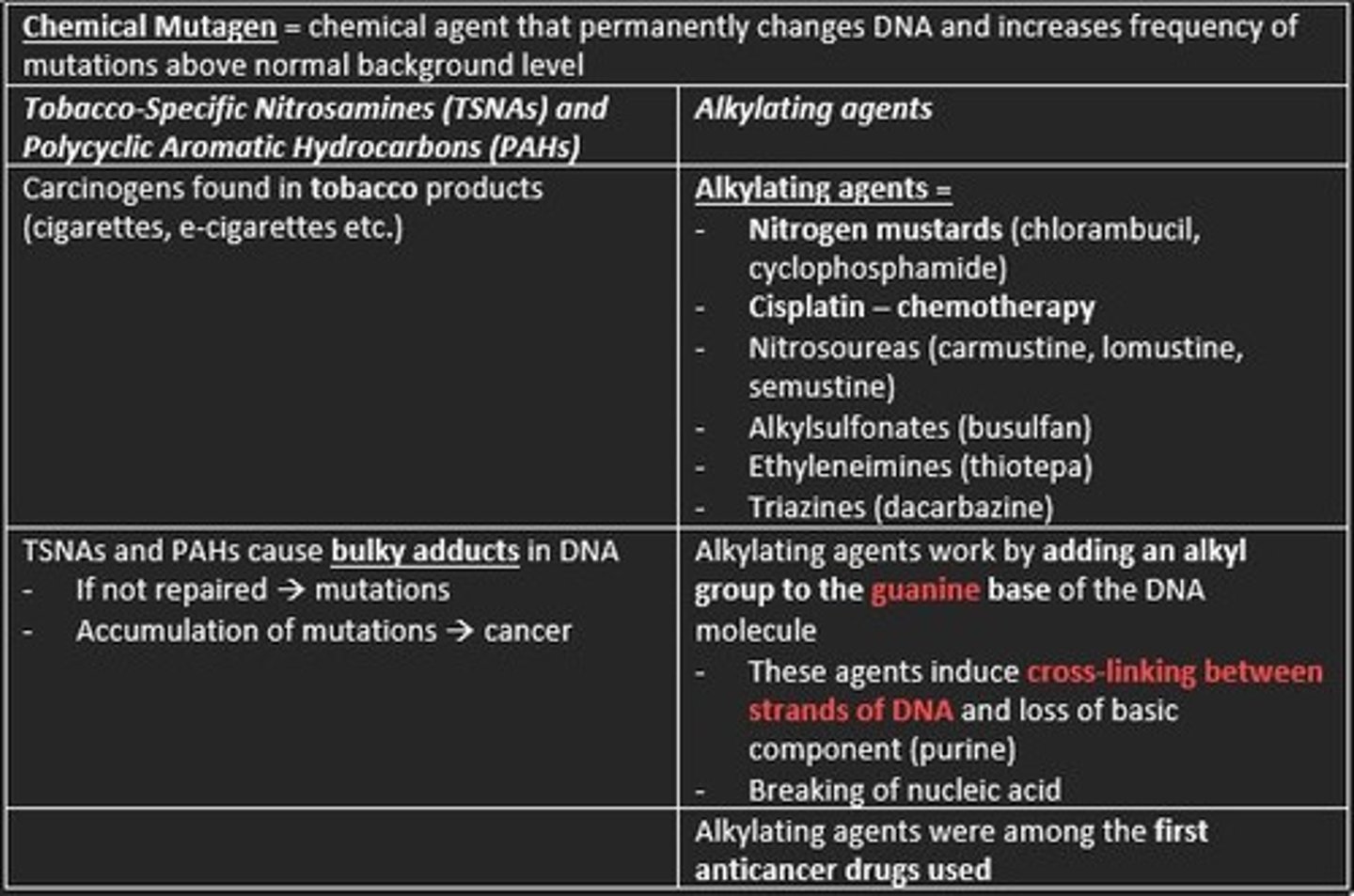
Example of another chemical mutagen that can mutate DNA
Alkylating agents
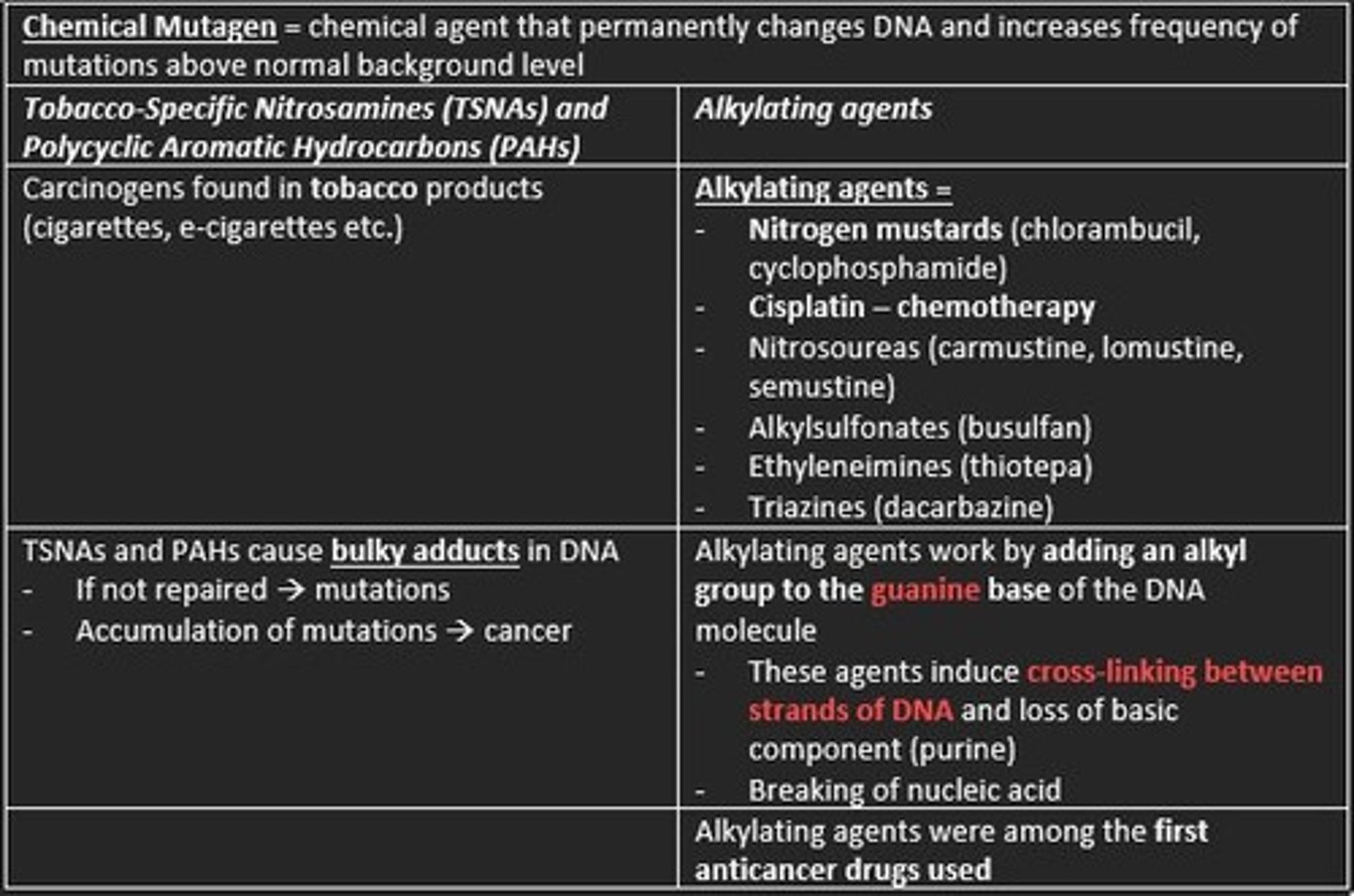
How do alkylating agents exert their mutagen action on DNA?
Alklating agents work by adding an alkyl group to the guanine base of DNA
1) Induce cross-linking between strands of DNA and loss of basic component (purine) or the breaking of the nucleic acid
Name some examples of alkylating agents
- Nitrogen mustards (chlorambucil and cyclophosphamide)
- Cisplatin (anticancer treatments)
- Triazines (dacarbazine)
What types of radiation can be harmful to DNA?
1) Ionizing radiation (alpha, beta, gamma, neutrons and x-rays)
2) UV radiation
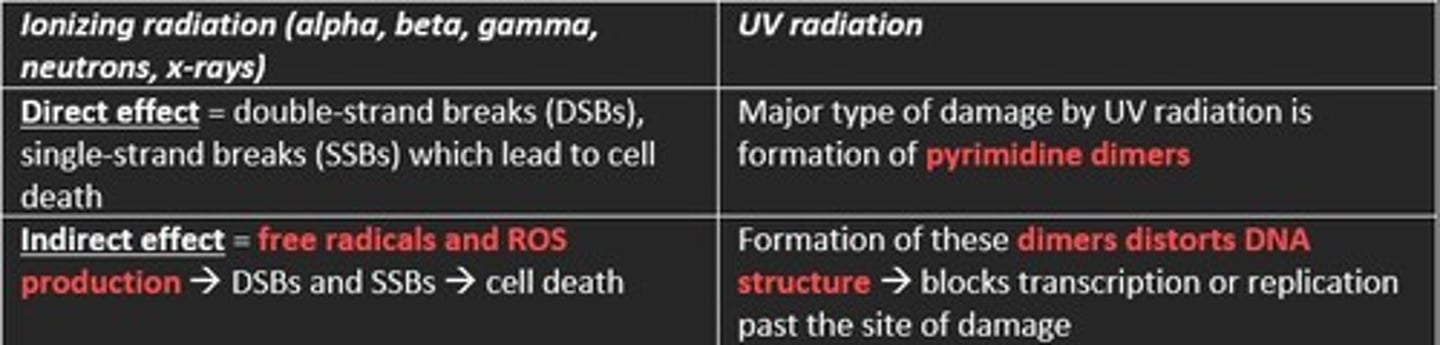
What is the direct and indirect effect of ionizing radiation on DNA?
1) Direct effect = double-strand breaks (DSBs), single-strand breaks (SSBs) - leading to cell death
2) Indirect effect = free radicals & ROS production which leads to DSBs and SSBs - leading to cell death
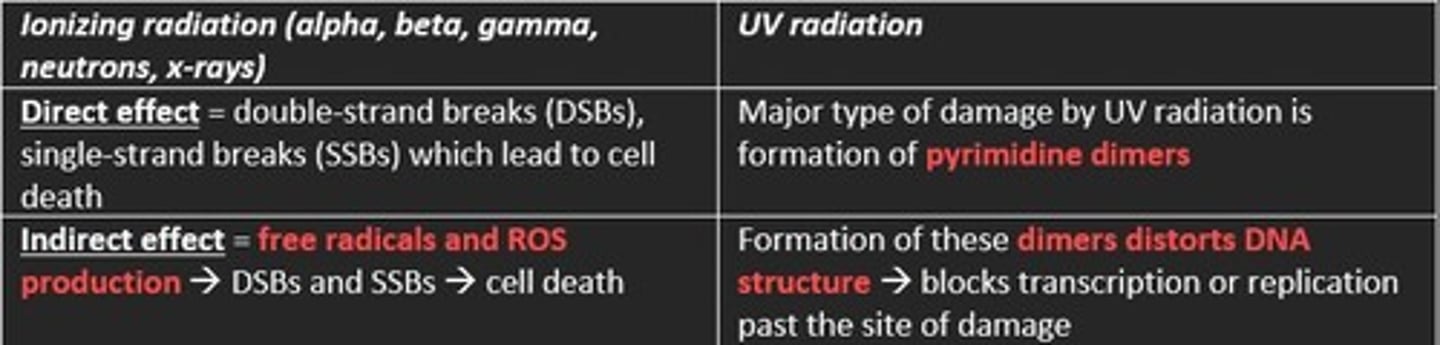
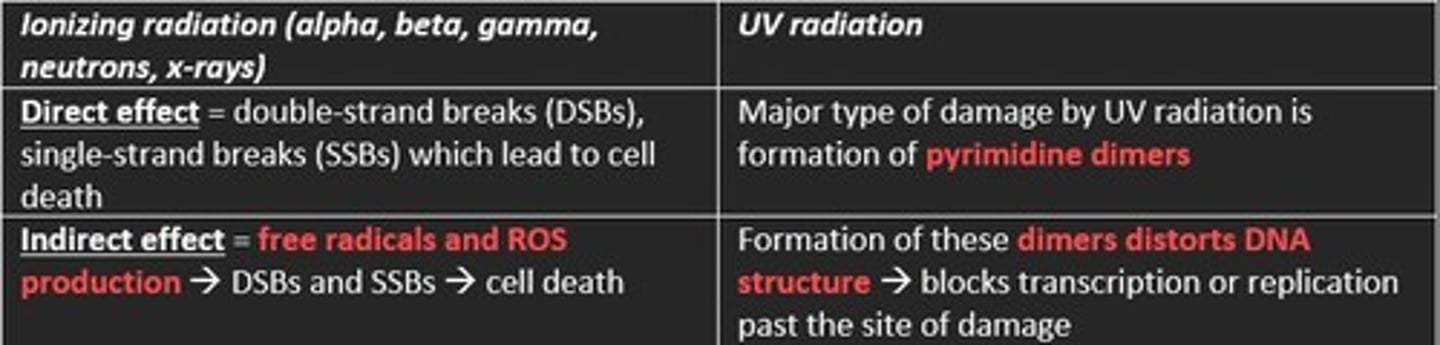
How does UV radiation harm DNA?
- Formation of pyrimidine dimers
- These dimers distort DNA structure - block transcription or replication past the site of damage
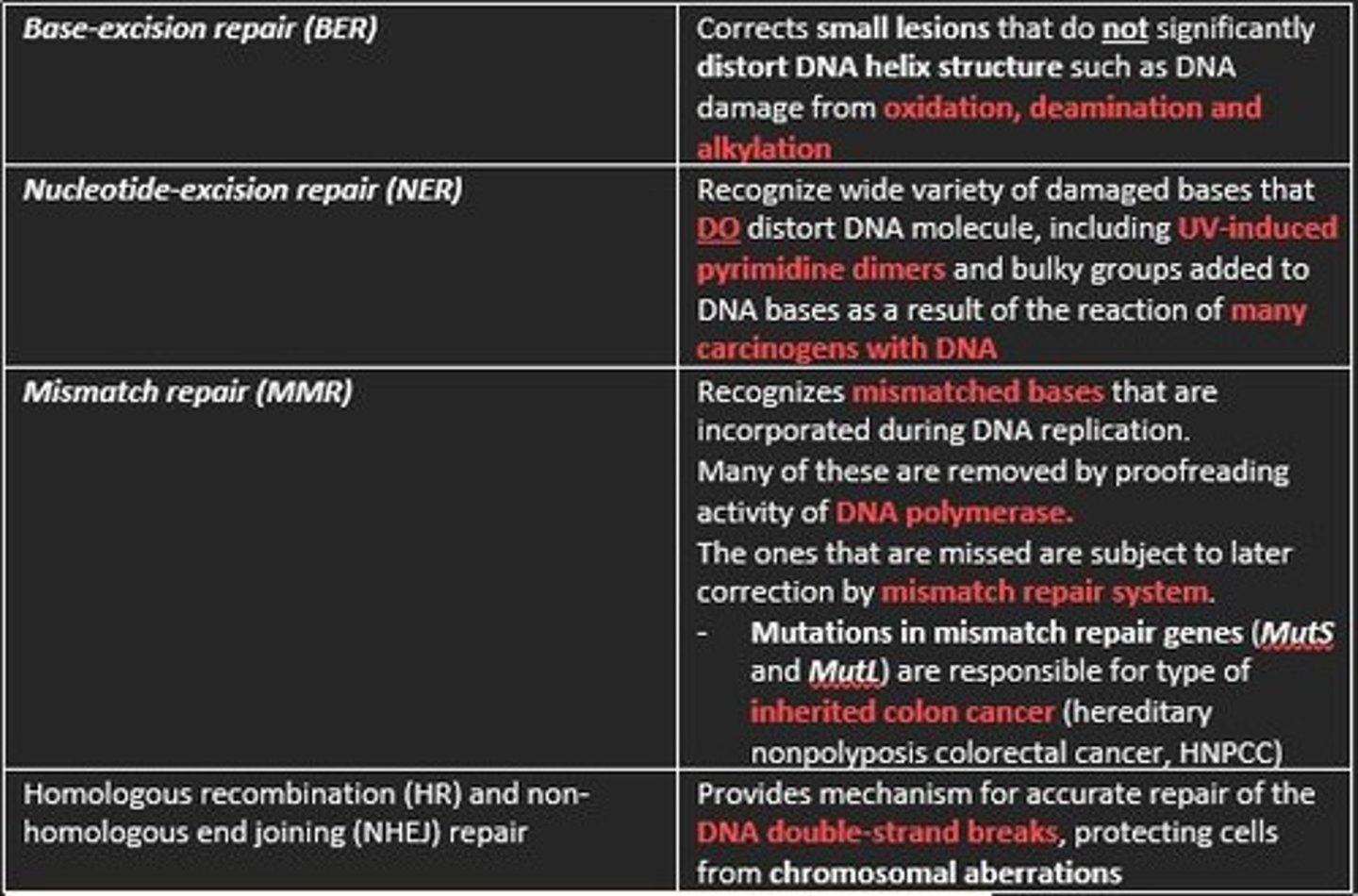
Base-excision repair (BER)
Corrects small lesions that do not significantly distort DNA helix structure
- Damage from oxidation, deamination and alkylation
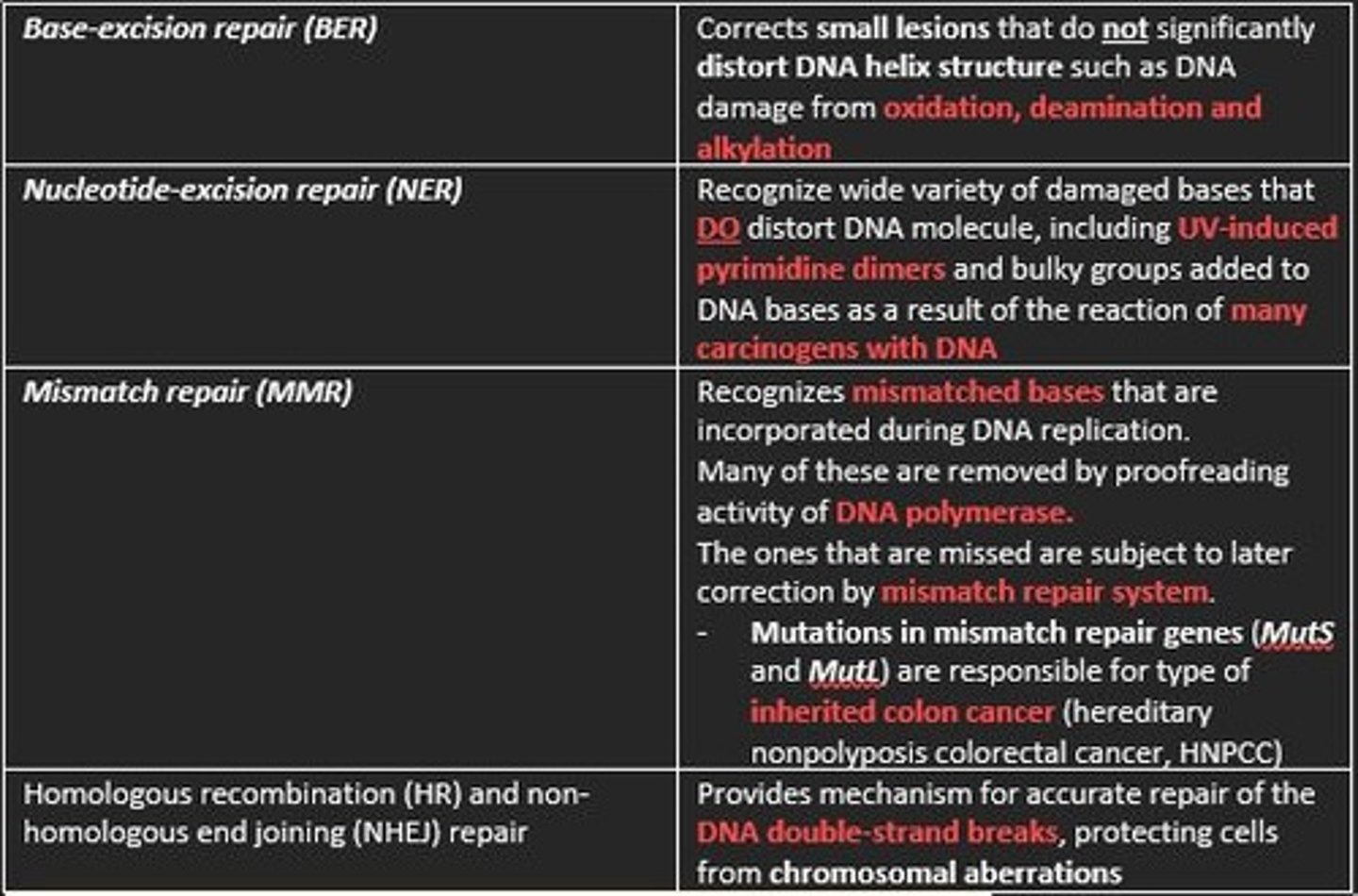
Nucleotide-excision repair (NER)
Recognizes wide variety of damaged bases that DO distort DNA molecule, including UV-induced pyrimidine dimers and bulky groups added to DNA bases as a result of reaction of many carcinogens with DNA
- Damage from UV radiation and chemical mutagens
Mismatch repair (MMR)
Correction of mismatched bases that are incorporated during DNA replication
- Many are fixed by proofreading ability of DNA polymerase
- The ones that are missed are subject to later correction by the mismatch repair system
Homologous recombination (HR) and non-homologous end joining (NHEJ) repair
Provides mechanism for accurate repair of the DNA double-strand breaks (DBSs)- protecting cells from chromosomal aberrations
Mutations in mismatch repair genes (MutS and MutL) are responsible for a common type of inherited ___ cancer
colon
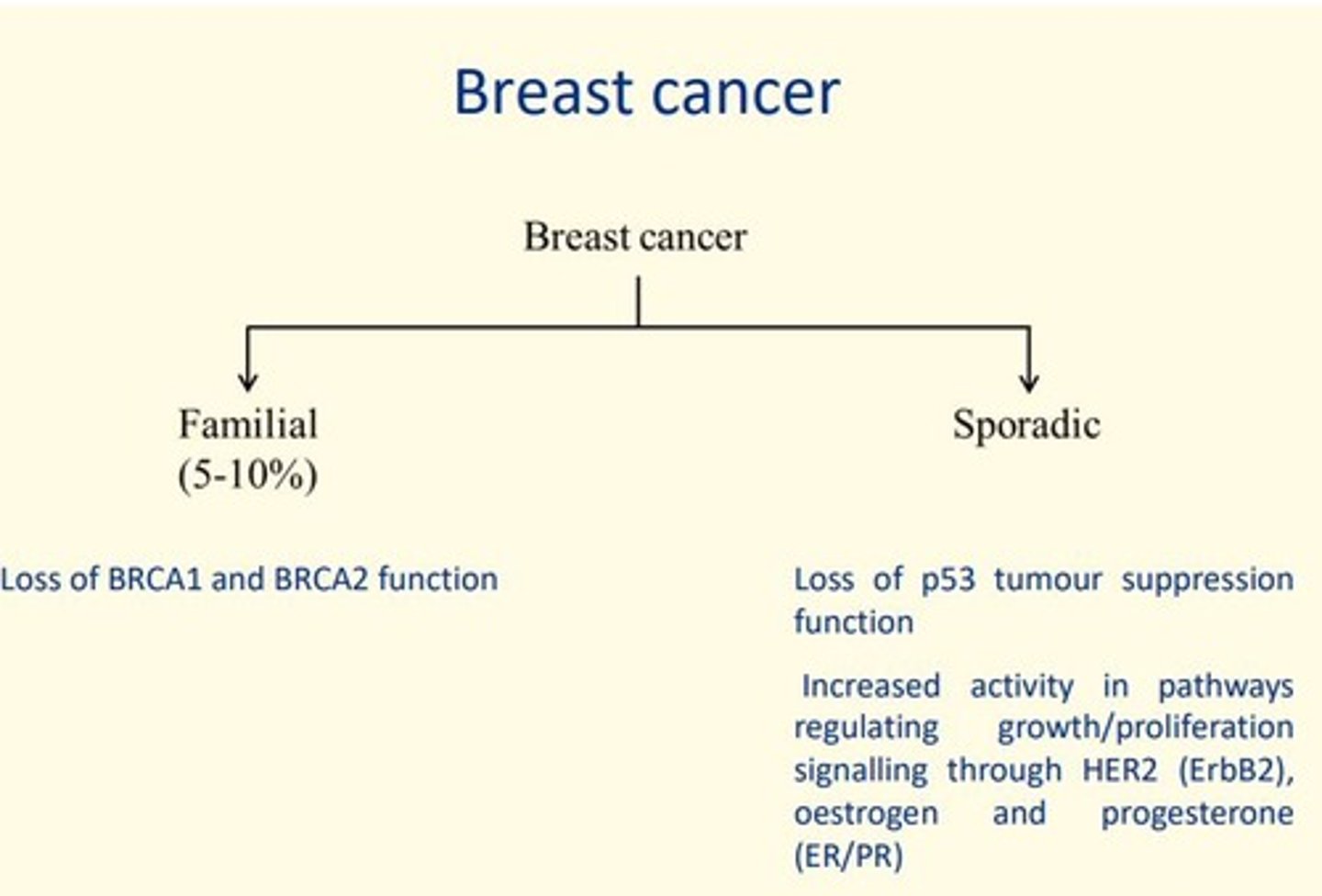
Familial breast cancer makes up 5-10% of breast cancer. It is associated with the loss of ___ and ___ function
BRCA1 and BRCA2
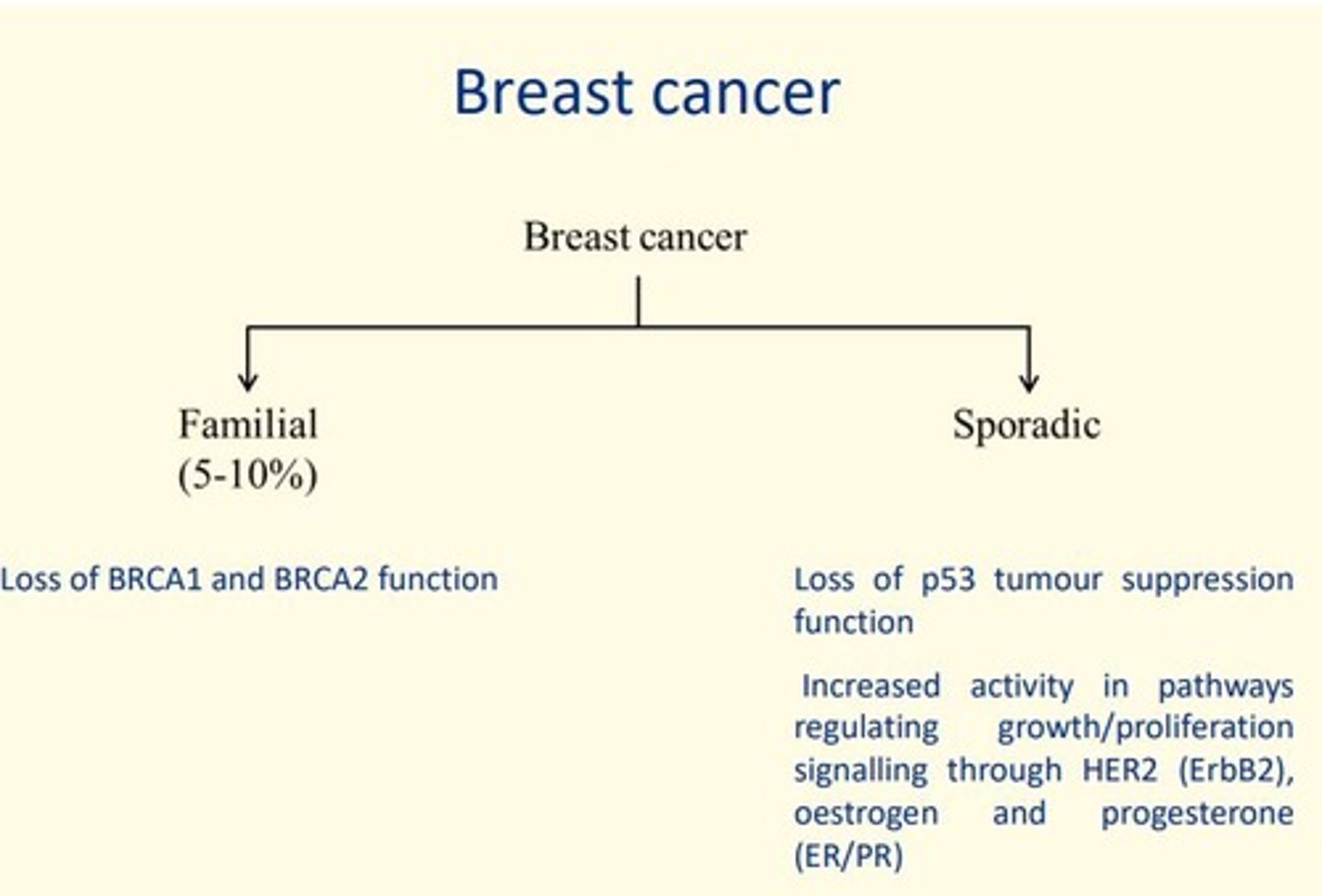
Sporadic breast cancer is associated with the loss of ___ tumour suppression function and increased activity in pathways regulating growth/proliferation signalling through HER2 (ErbB2), oestrogen and progesterone (ER/PR)
p53
Penetrance
The percentage of individuals with a particular genotype that actually displays the phenotype associated with the genotype.
Reduced or incomplete penetrance
Individual carries a disease-causing mutation but does not have clinical symptoms (do not develop features of the disorder)
e.g.,
BRCA1 lifetime risk = 55-65%
BRCA2 lifetime risk = 45% (incomplete penetrance)
BRCA1 and BRCA2 proteins promote high fidelity homologous recombination repair of double-stranded DNA breaks - they are the...
caretakers of chromosomal stability
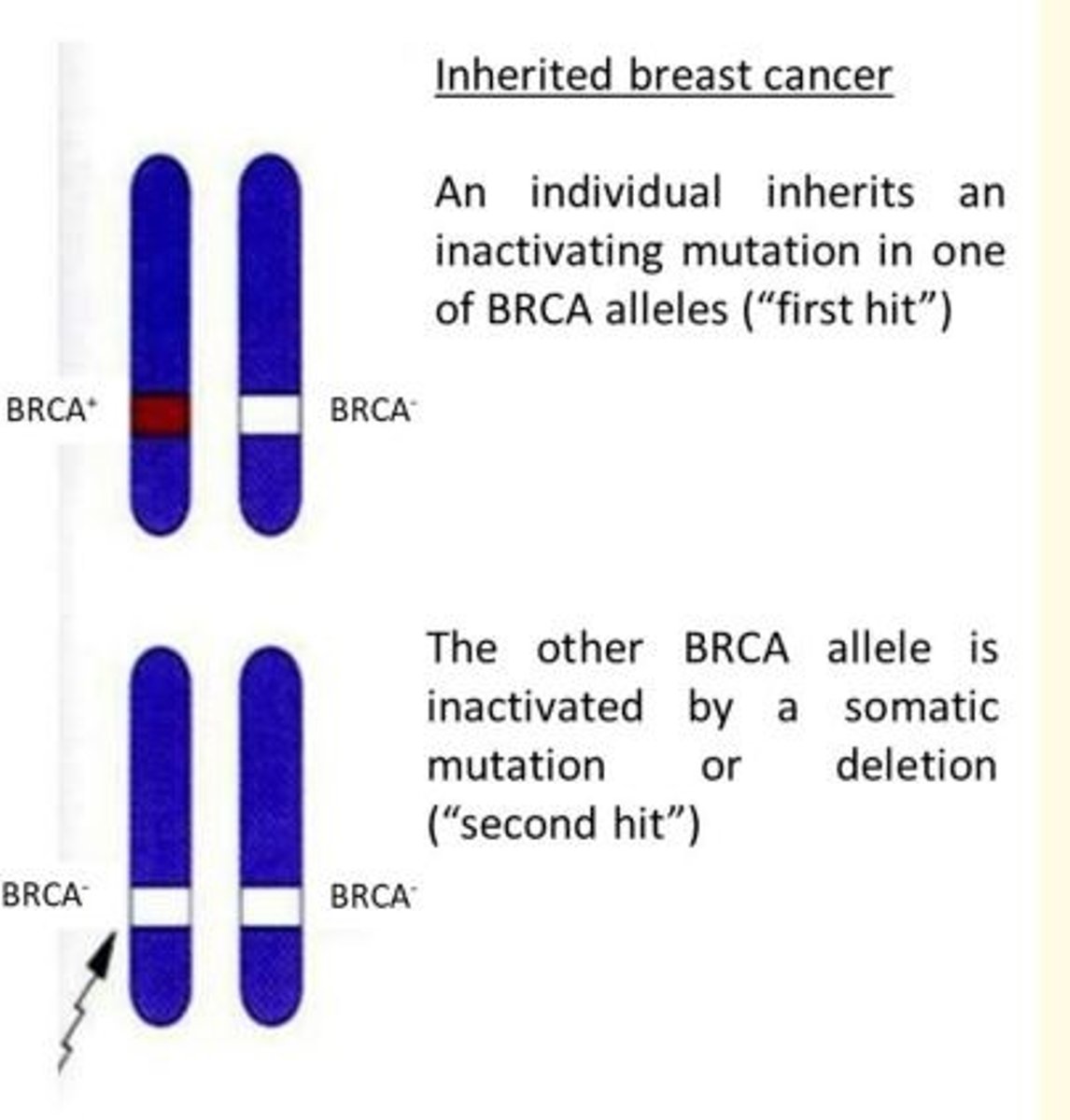
One defective copy of BRCA1 or BRCA2 is enough to cause cancer predisposition but the second allele must be LOST in order for cancer to actually develop. This phenomenon is known as: ___ ___ ___ hypothesis.
Knudson's two-hit hypothesis
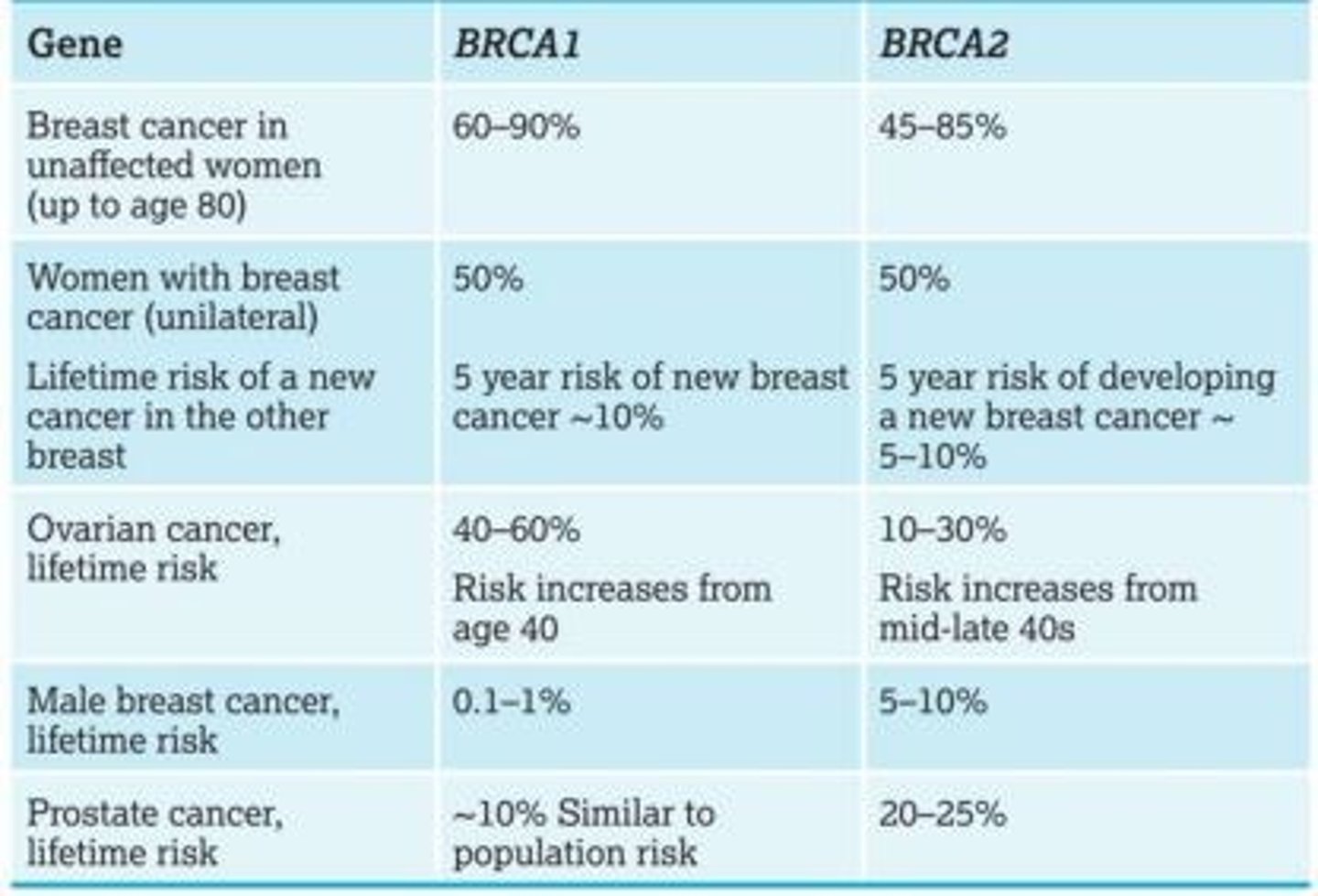
What other forms of cancer are BRCA1 and BRCA2 mutations ALSO associated with (other than familial breast cancer)?
Ovarian
Prostate
Name two methods which are used for BRCA testing
1) Next-generation sequencing (NGS)
2) Long-range PCR
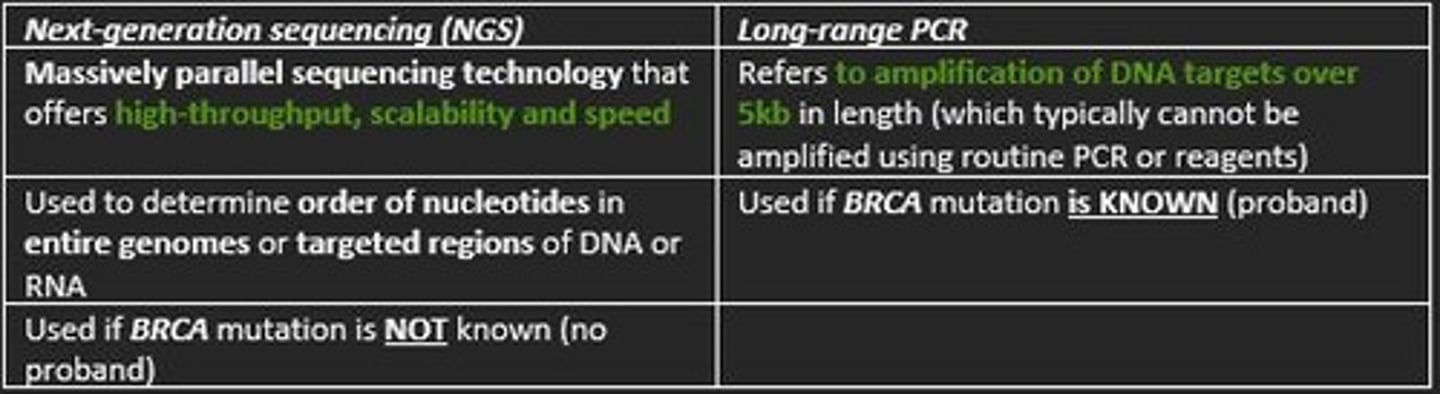
Name a method used for BRCA testing when the BRCA mutation is NOT known (no proband)
Next-generation sequencing (NGS)
Name a method used for BRCA testing when the BRCA mutation is KNOWN (proband)
Long-range PCR

