Chapter 9 The-Bryophytes-Pioneers-of-the-Terrestrial-World
 Call Kai
 Learn
Learn Practice Test
 Spaced Repetition
 Match
Match Flashcards
 Knowt Play
1/24

There's no tags or description
Looks like no tags are added yet.
Name | Mastery | Learn | Test | Matching | Spaced | Call with Kai |
|---|
No analytics yet
Send a link to your students to track their progress
25 Terms
Understanding Bryophyte Origins
The Transition to Land
Paraphyletic Nature
Bryophytes represent a transition between green algae (charophytes) to vascular plants.
Early vascular plants looked like bryophytes
Paraphyletic
a taxonomic grouping that includes a common ancestor and some, but not all, of its descendants. It represents an incomplete clade
Three bryophyte phyla
• Marchantiophyta (liverworts)
• Bryophyta (mosses)
• Anthocerotophyta (hornworts)
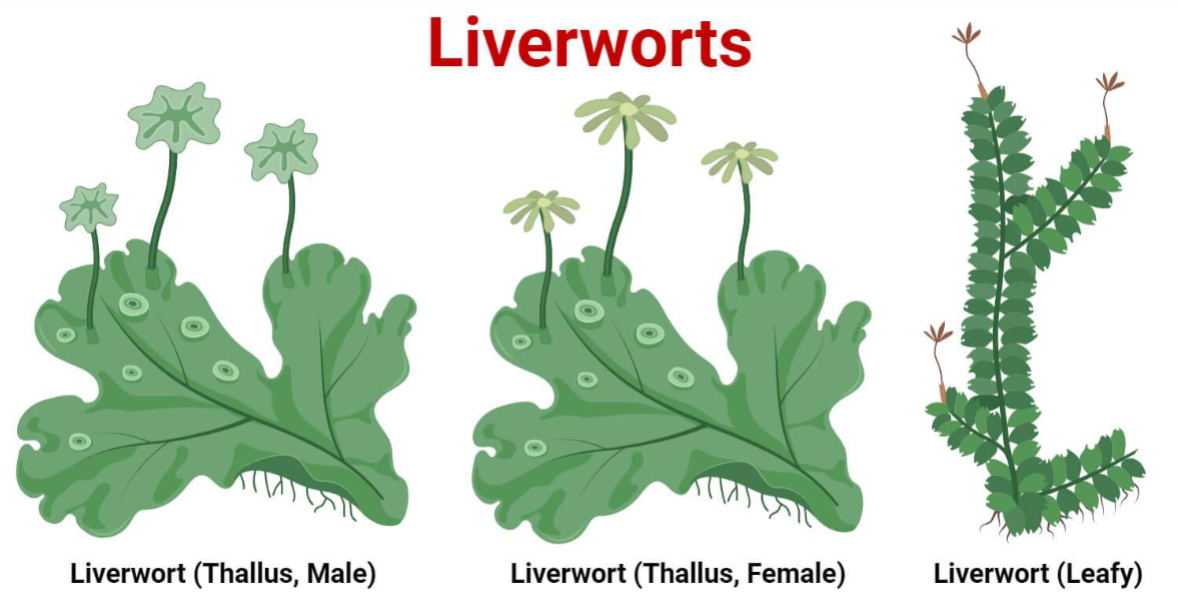
Liverwort (male, female, and leafy) identification
Shared Ancestry with Charophytes
-Well-developed grana stacks
-Same photosynthetic pigment
-asymmetrical flagellated sperm (motile sperm)
-Phragmoplast and cell wall formation during division
-Oogamous Reproduction (sexual reproduction)
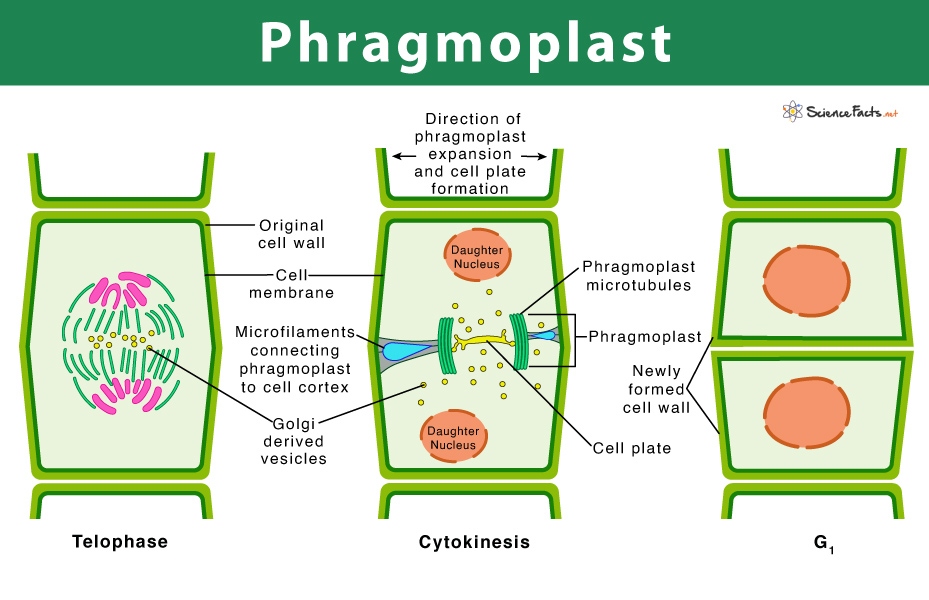
phragmoplast
a plant-specific, barrel-shaped structure of microtubules, actin filaments, and endoplasmic reticulum that forms between daughter nuclei during late cytokinesis
Land Plant Adaptations
-Sterile Jacket Layer (prevent desiccation)
-Embryo Retention (Zygote remains protected in archegonium)
-Sporopollenin Coating (meiospores coated in desiccant resistant sporopollenin for wind travel)
-Apical Meristems (growth zones at shoot and roots)
Bryophyte Key Structural Differences from Vascular Plants
-lack true xylem and phloem
-lack lignin (restrict height)
-Gametophyte Dominance (haploid n)
-Dependent Sporophyte (sporophyte attached to Gametophyte)
-Single Sporangium (Sporophytes are unbranched structures producing only one sporangium per fertilization event, limiting reproductive output.)
The Bryophyte Gametophyte: Form and Function (Thalloid Forms)
Thalloid bryophytes are non-vascular plants with a flat, ribbon-like, or heart-shaped body (thallus) that lacks true stems or leaves, characteristic primarily of liverworts and hornworts
The Bryophyte Gametophyte: Form and Function (Leafy Forms)
-primarily comprising most liverworts and all mosses
- non-vascular, spore-producing plants that thrive in moist, shaded habitats.
- small, thin (often one-cell thick) leafy structures arranged in two or three rows, allowing them to absorb nutrients directly from the air and surface
The Bryophyte Gametophyte: Form and Function (Rhizoid Anchoring)
Moss rhizoids are multicellular filaments,
while liverwort and hornwort rhizoids
consist of single elongated cells
Symbiotic Partnerships: Bryophytes frequently harbor…..
nitrogen-fixing cyanobacteria or form associations with
mycorrhizal fungi to enhance nutrient uptake in nutrient-poor environments.
Internal Physiology and Gas Exchange
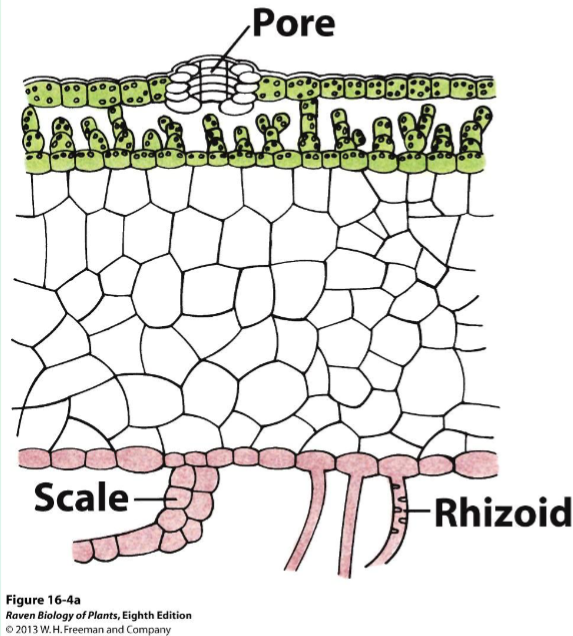
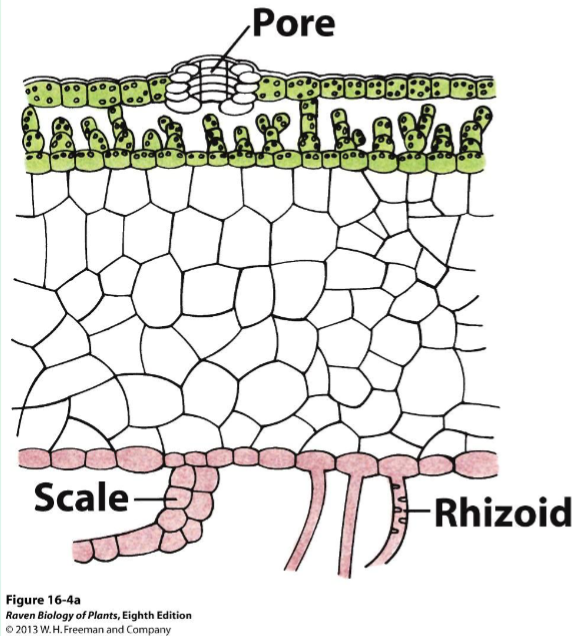
-Surface Pores
-Cuticle Development
-Plasmodesmatal Connections
-Ancestral Plastids
Surface Pores
Thalloid liverworts like
Marchantia possess pores functionally analogous to
stomata, facilitating
CO_2 entry for photosynthesis
Cuticle Development
Waxy cuticle layers cover many bryophyte surfaces, significantly retarding water
loss while maintaining gas exchange capacity.
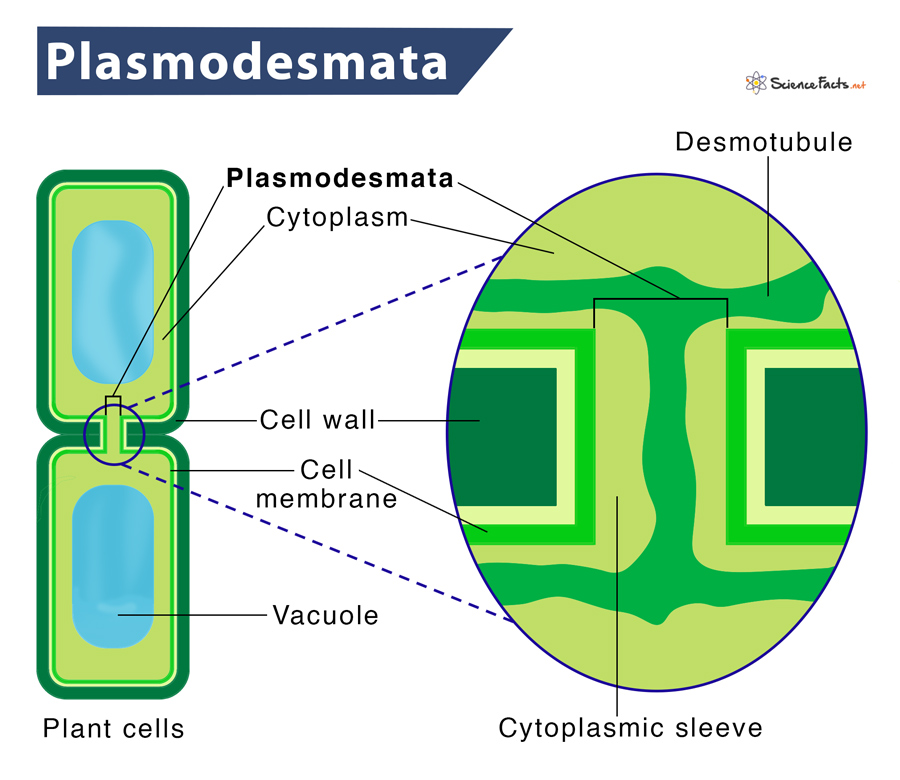
Plasmodesmatal Connections
Contain desmotubules—central tubular structures derived from endoplasmic
reticulum—enabling intercellular communication and transport
Ancestral Plastids
Some hornwort cells retain a single large chloroplast with pyrenoids, directly
reflecting their ancestral green algal origins.
Bryophytes Sexual Reproduction Dynamics
Water Requirement
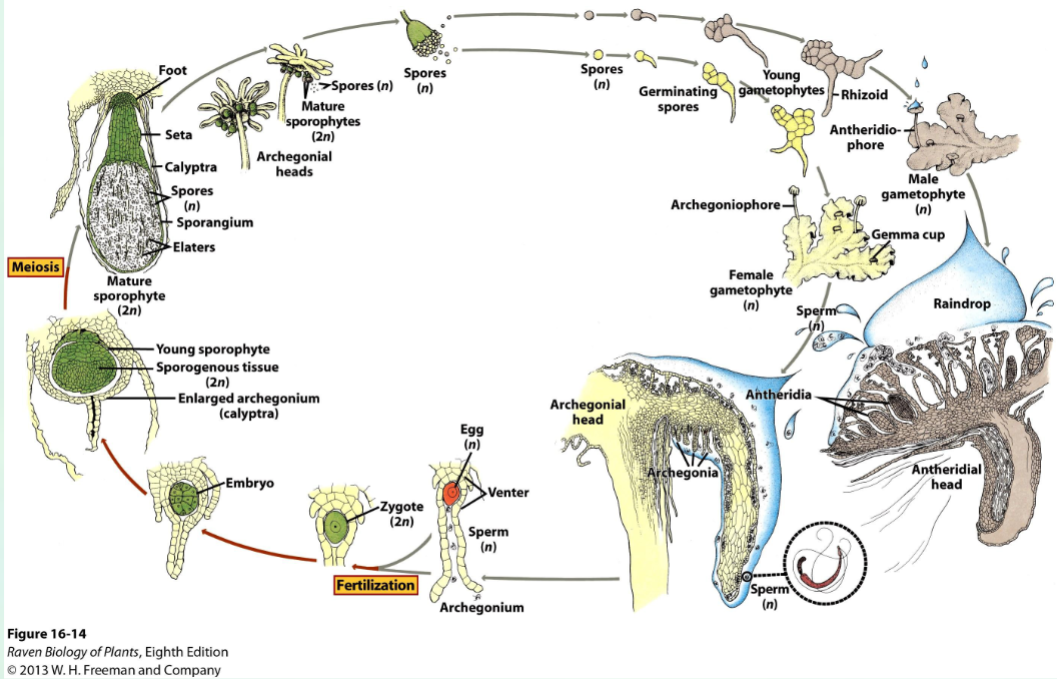
Antheridia Structure
Archegonia Architecture
Fertilization Pathway
Water Requirement
Flagellated sperm cells require a continuous film of liquid water to swim toward
stationary eggs—the primary limitation on bryophyte reproduction
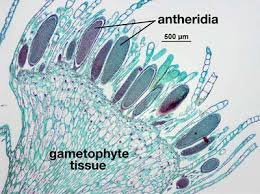
Antheridia Structure
Stalked, spherical male organs containing spermatogenous tissue surrounded by
a protective sterile jacket layer
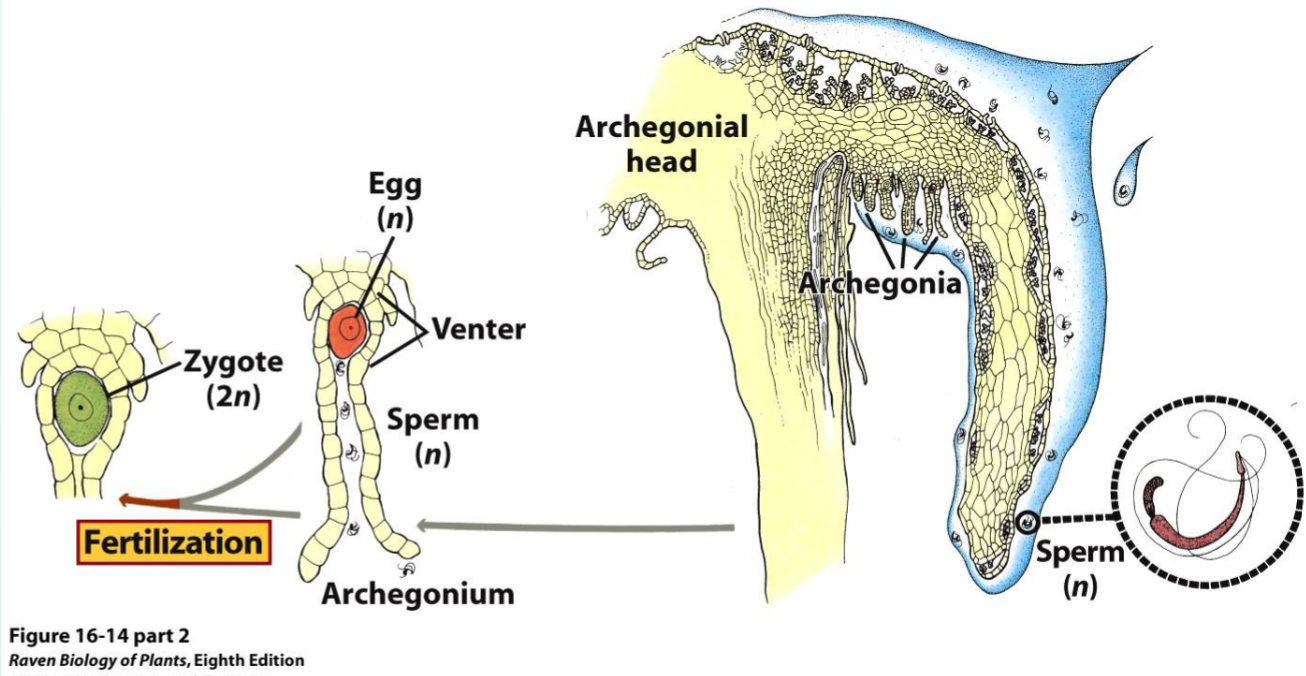
Archegonia Architecture
Flask-shaped female structures featuring a long neck and swollen base (venter)
housing the egg cell.
Fertilization Pathway
Neck canal cells disintegrate at maturity, creating a mucilaginous fluid-filled
channel guiding sperm to the egg.
Phylum Marchantiophyta
The Liverworts
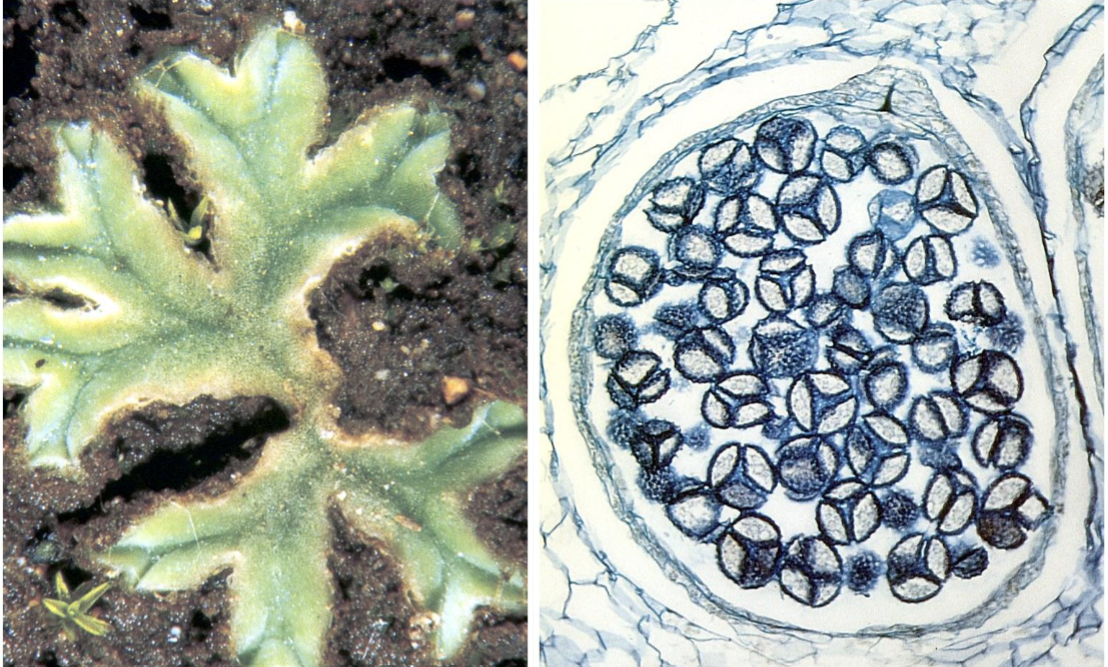
Riccia
one of the simplest
liverworts