NF unit 2
 Call Kai
 Learn
Learn Practice Test
 Spaced Repetition
 Match
Match Flashcards
 Knowt Play
1/29

Earn XP
Description and Tags
applied drug design
Name | Mastery | Learn | Test | Matching | Spaced | Call with Kai |
|---|
No analytics yet
Send a link to your students to track their progress
30 Terms
what is the function of an agonist
binds to the ligand binding site and triggers a chain of intracellular events to transduce a response
this then leads to what?
tissue response
what is the function of an antagonist
bind to the same binding site and obscure the receptor so the agonist can no longer access it
this does what?
blocks the response
selectivity is defined as — —
this means that a ligand (— or —) has higher — for one receptor over another
as you increase the concentration of a ligand eventually it will start to bind to other receptors as well
if a drug has better selectivity, it means you can use it a high concentration without worrying about it binding to off target sites/other receptors and having adverse effects
relative affinity, agonist, antagonist, affinity
what are the 3 major ways you can quantify selectivity
response profiles, concentration response curves, radioligand binding
what is the most up to date and selective one?
radioligand binding
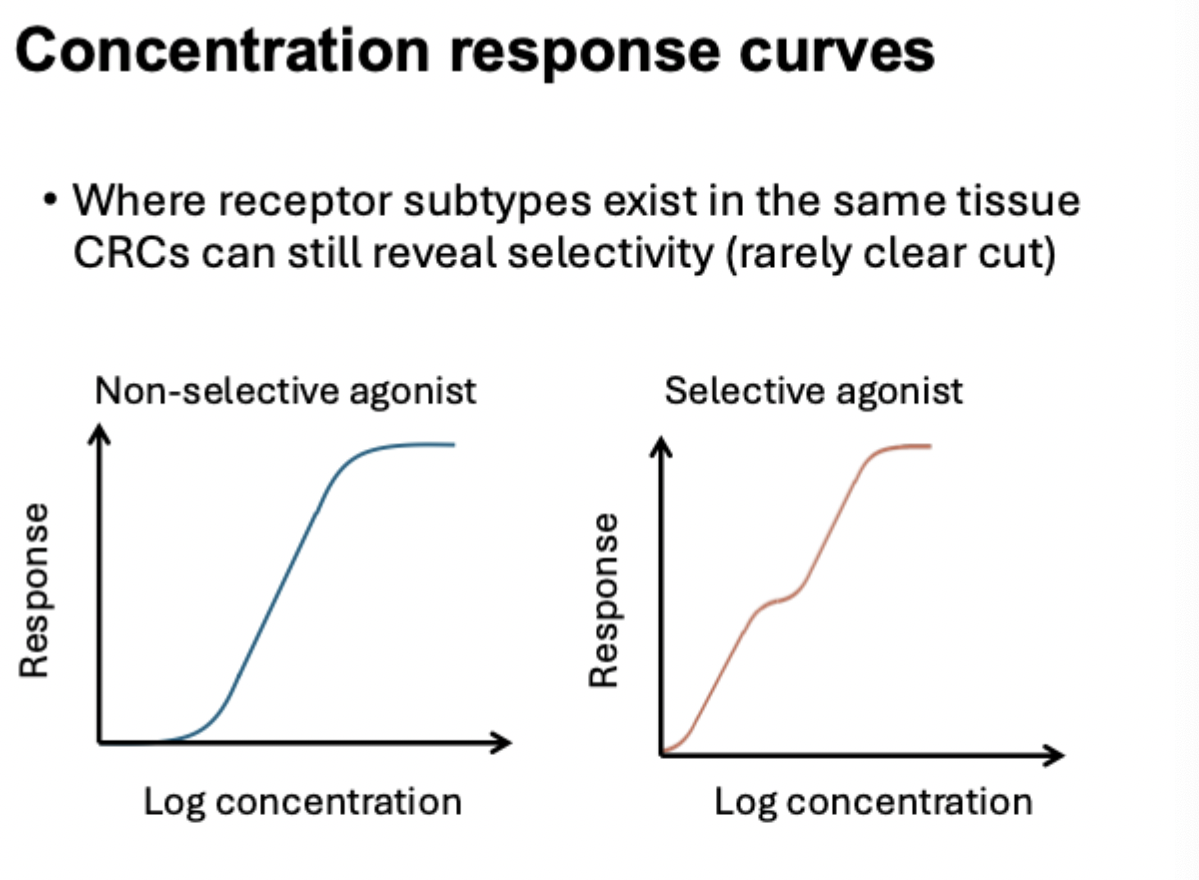
concentration response curves with non selective and selective agonist
done
what does radioligand binding determine?
binding affinity of ligand for binding site
what is not a factor for radioligand binding?
efficacy
so there is no distinction between?
agonists and antagonists
what are the two types of radioligand binding
saturation binding, competition binding
in saturation binding the drug of interest is labelled with a — label and then by measuring the — you can measure how much drug is present in any given sample
radioactive, radioactivity
when you add your radiolabelled drug you will get 2 types of binding- what are they
specific binding, non specific binding
what happens with specific binding
drug binds to target receptor
what is non specific binding
drug binds to membranes and other proteins that are not the ligands receptor
which type of binding is saturable?
specific binding
what is the equation for total binding?
specific binding + non specific binding
what is a cold ligand?
unlabelled version of the drug
what is a hot ligand?
radiolabelled drug
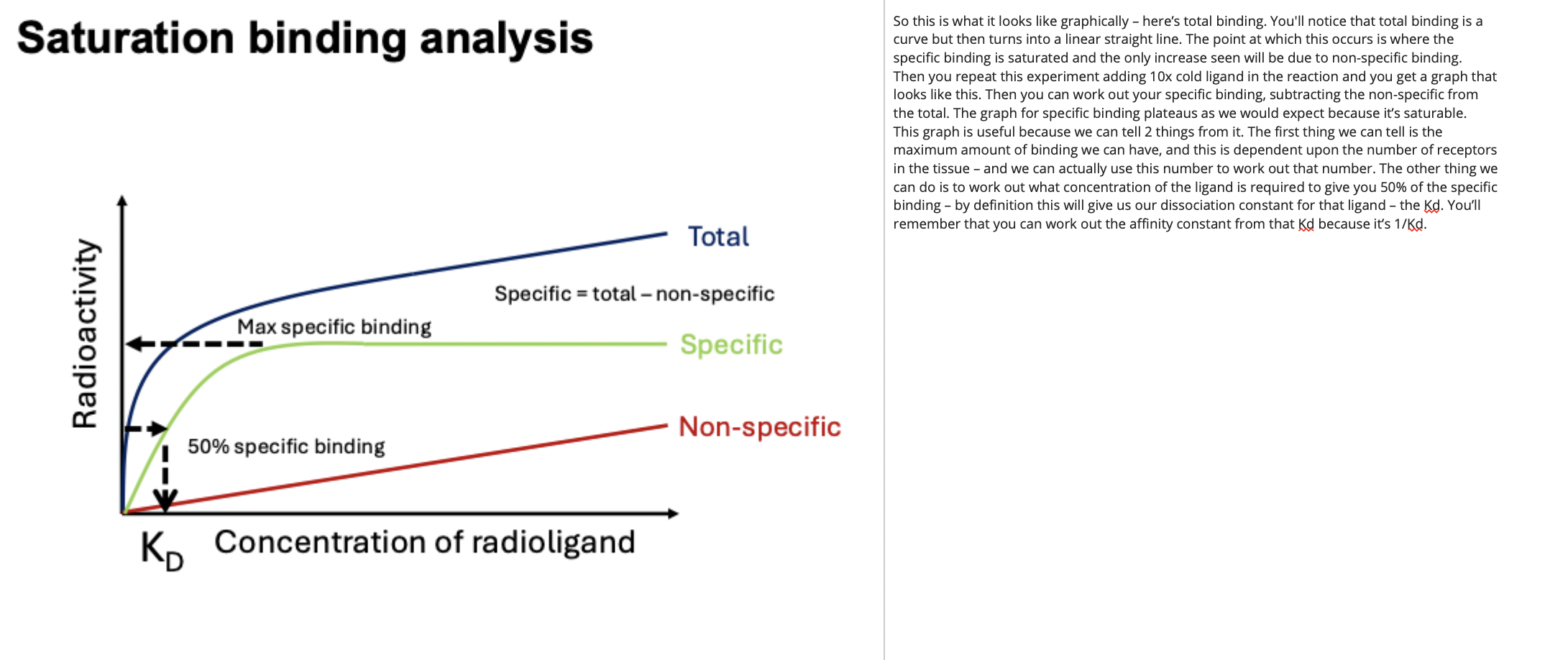
saturation binding analysis
done
what can you obtain from saturation binding?
KD
what can you then obtain from KD?
affinity constant KA
what is the affinity constant equation
1/KD
this means a low KD means a — affinity
high
maximum specific binding is equivalent to?
total number of receptors present
in competition binding, what amount of radioligand is added?
one concentration
during competition binding, the radioligand is — from receptors with — —
displaced, unlabelled ligand
affinity is calculated based on?
relative affinity and concentration of radioligand used

