Pyschodynamics and Behaviorism
 Call Kai
 Learn
Learn Practice Test
 Spaced Repetition
 Match
Match Flashcards
 Knowt Play
1/26

There's no tags or description
Looks like no tags are added yet.
Name | Mastery | Learn | Test | Matching | Spaced | Call with Kai |
|---|
No analytics yet
Send a link to your students to track their progress
27 Terms
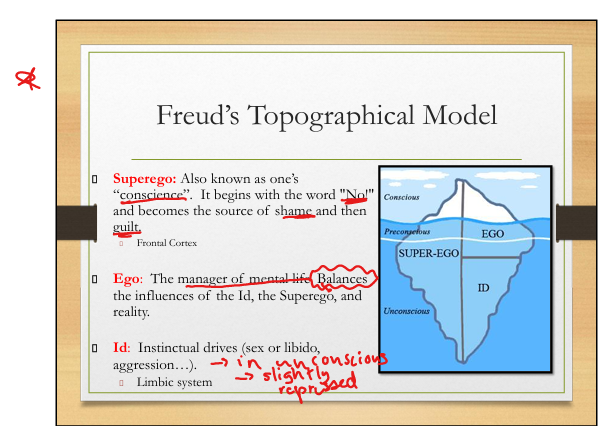
Define the Id.
Instinctual drives (sex/libido, aggression); entirely unconscious.
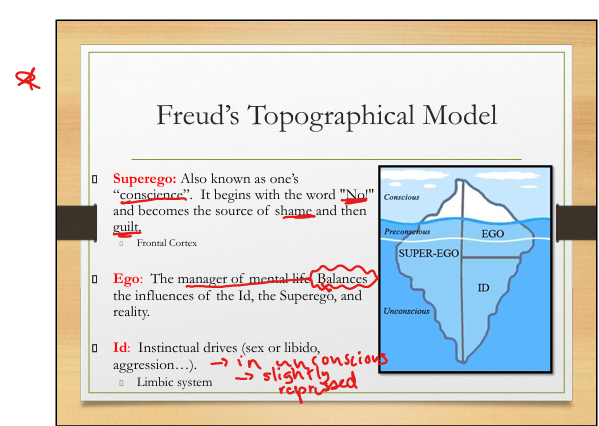
Define the Ego.
The manager of mental life; balances Id, Superego, and reality.
Define the Superego.
Internalized conscience; source of shame and guilt (“It begins with the word ‘No!’”).
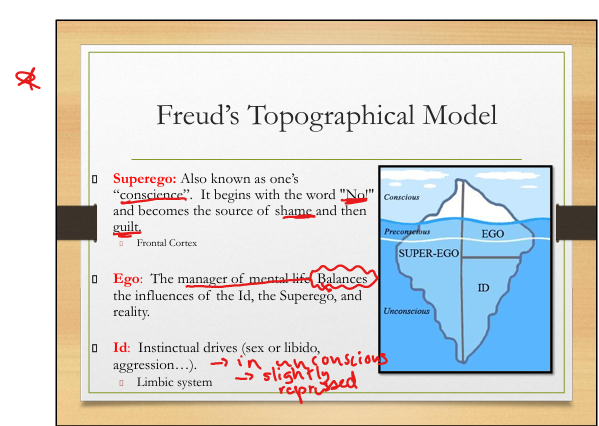
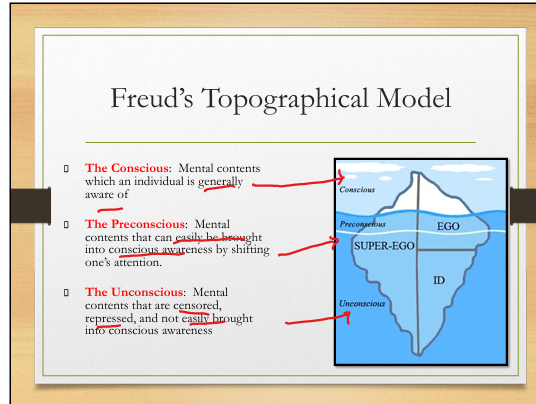
The conscious, preconscious, and unconscious definitions
Conscious: mental contents which an individual is generally aware of
Preconscious: mental contents that can be easily brought into conscious awarenes by shifting one’s attention
Unconscious: mental contents that are censored, repressed, and not easily brought into conscious awareness
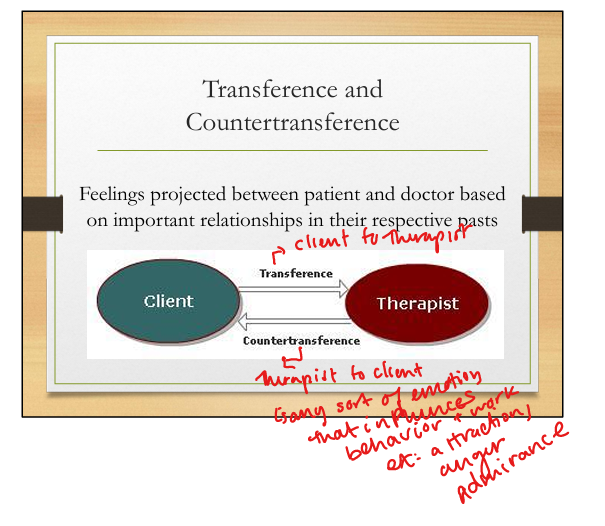
Define transference.
Patient projects feelings from past relationships onto the clinician.
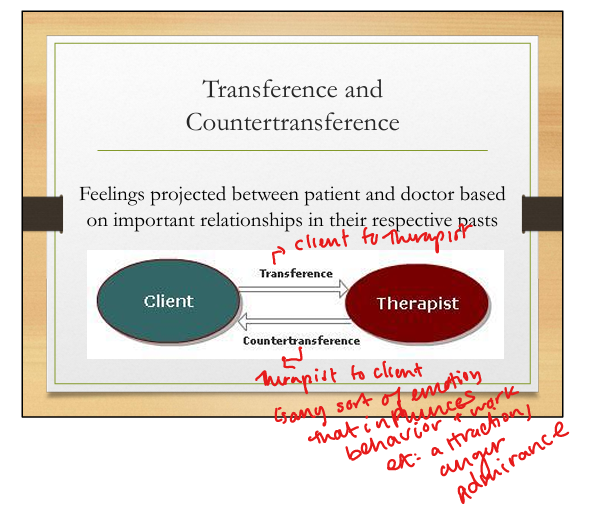
Define countertransference.
Clinician projects feelings from past relationships onto the patient.
Define denial.
Avoiding awareness of external reality by disregarding sensory data. (“That spot doesn’t mean anything.”)
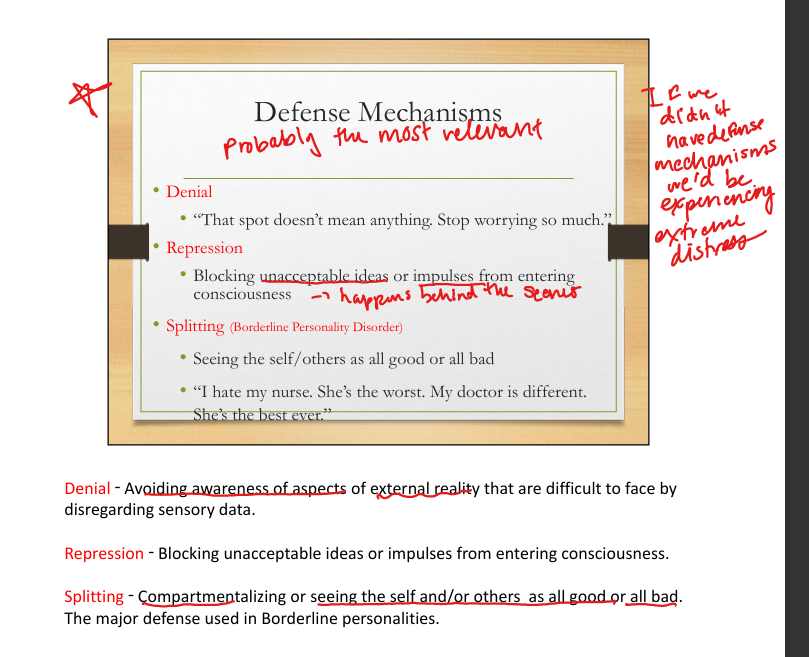
Define repression.
Blocking unacceptable ideas or impulses from entering consciousness.
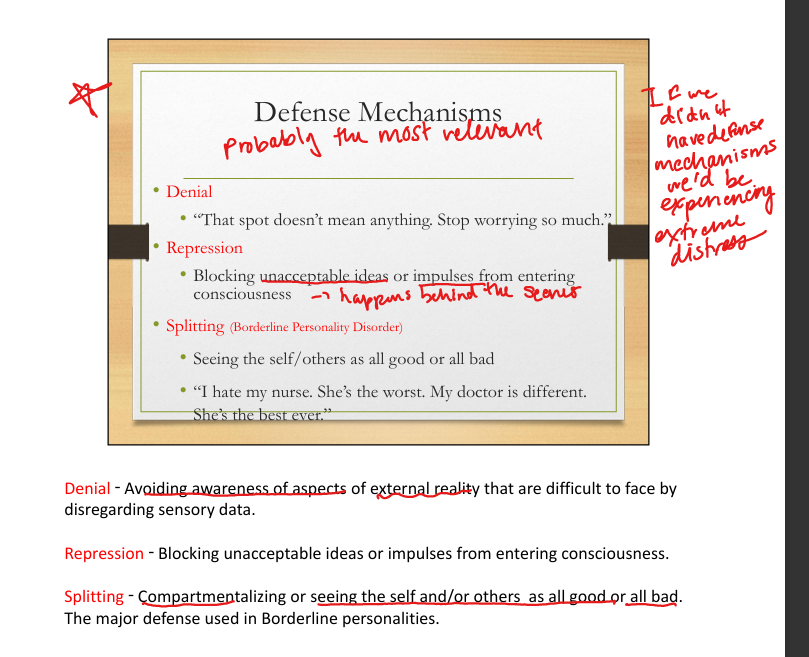
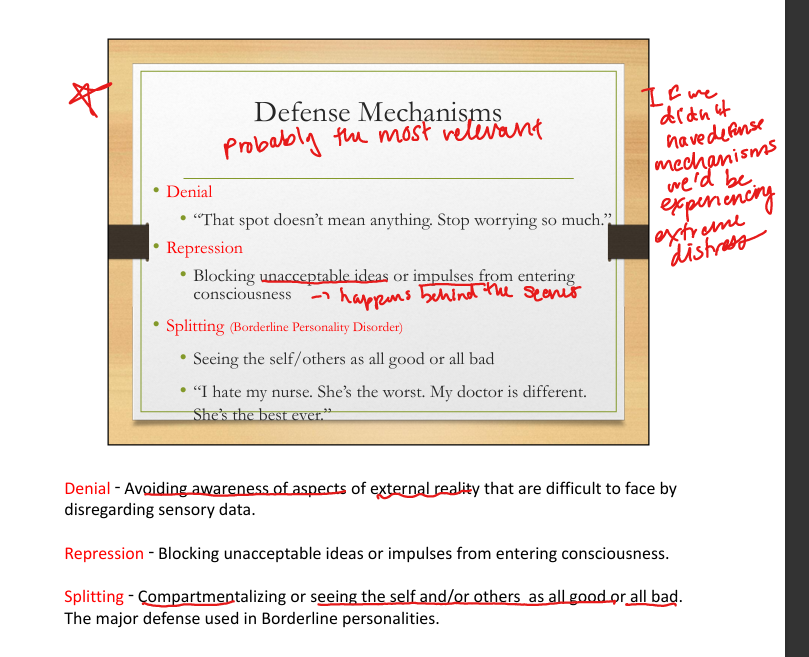
Define splitting.
Seeing self/others as all good or all bad; common in borderline personality disorder.
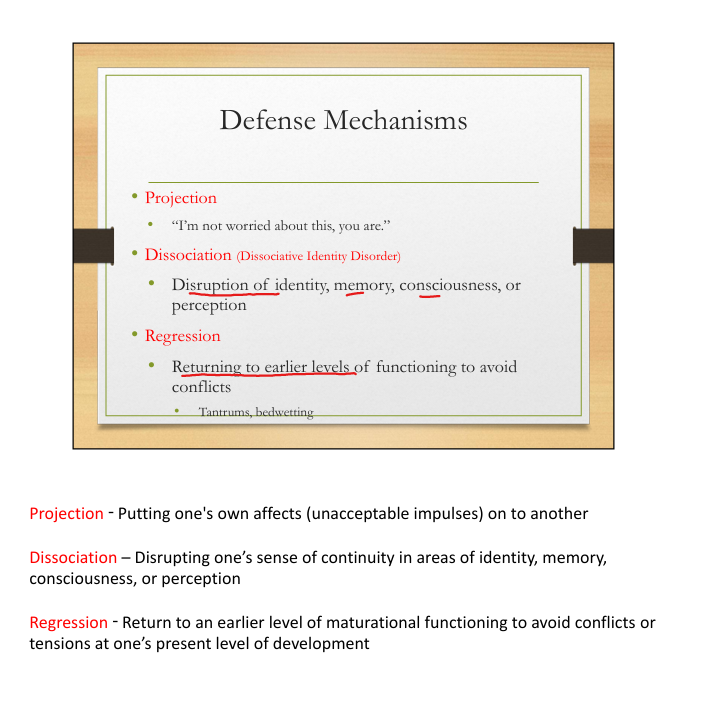
Define projection.
Attributing one’s own unacceptable impulses to another. (“I’m not worried about this, you are.”)
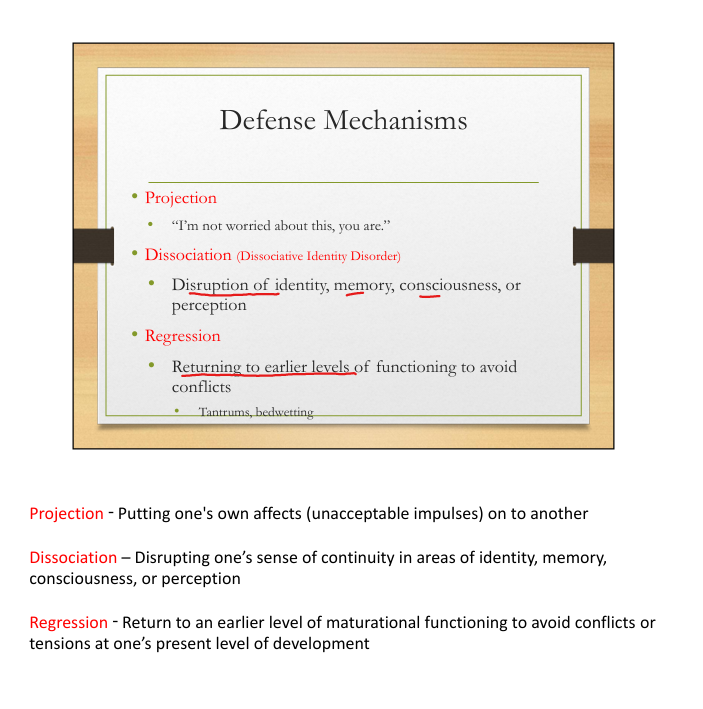
Define dissociation.
Disruption of identity, memory, consciousness, or perception.
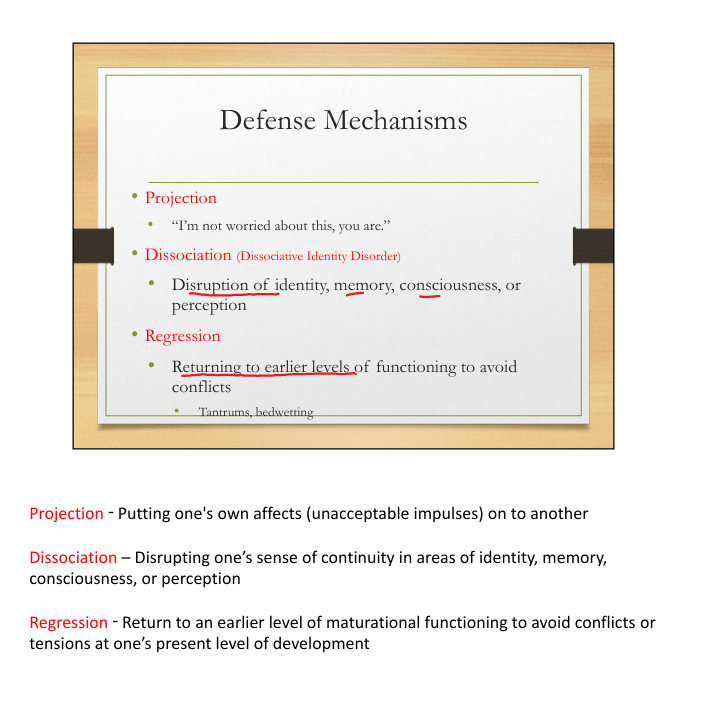
Define regression.
Returning to earlier developmental functioning (e.g., bedwetting, tantrums).
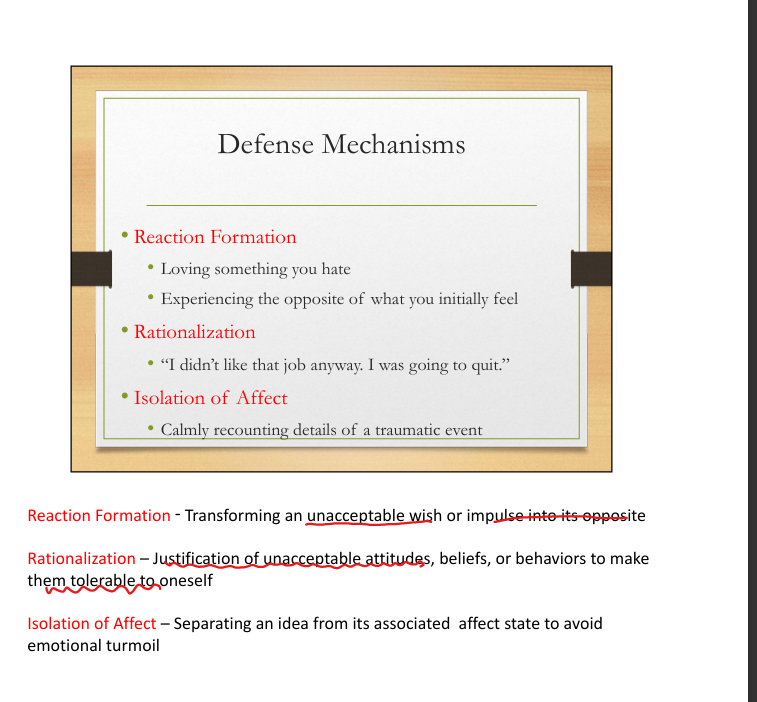
Define reaction formation.
Transforming an unacceptable impulse into its opposite.
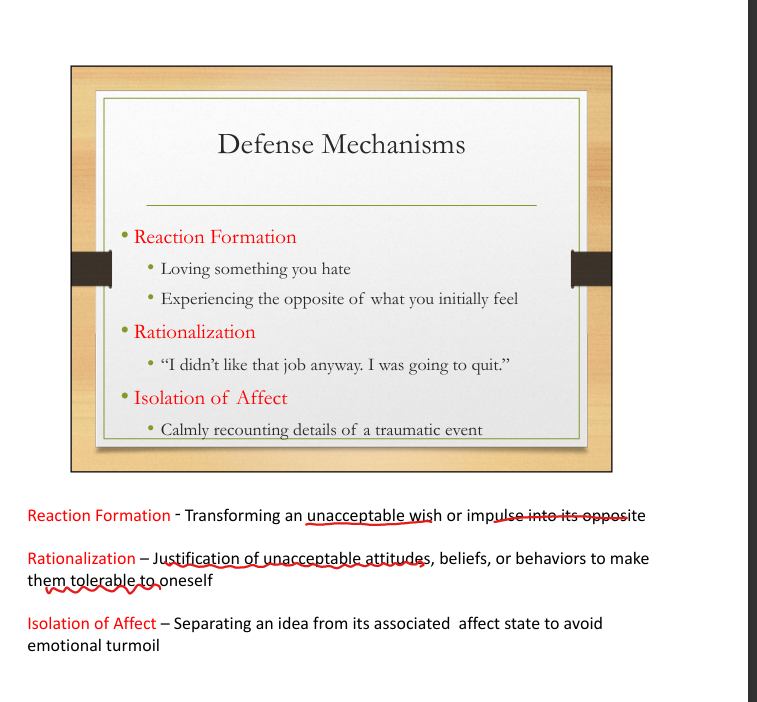
Define rationalization.
Justifying unacceptable behavior to make it tolerable (“I didn’t like that job anyway.”)
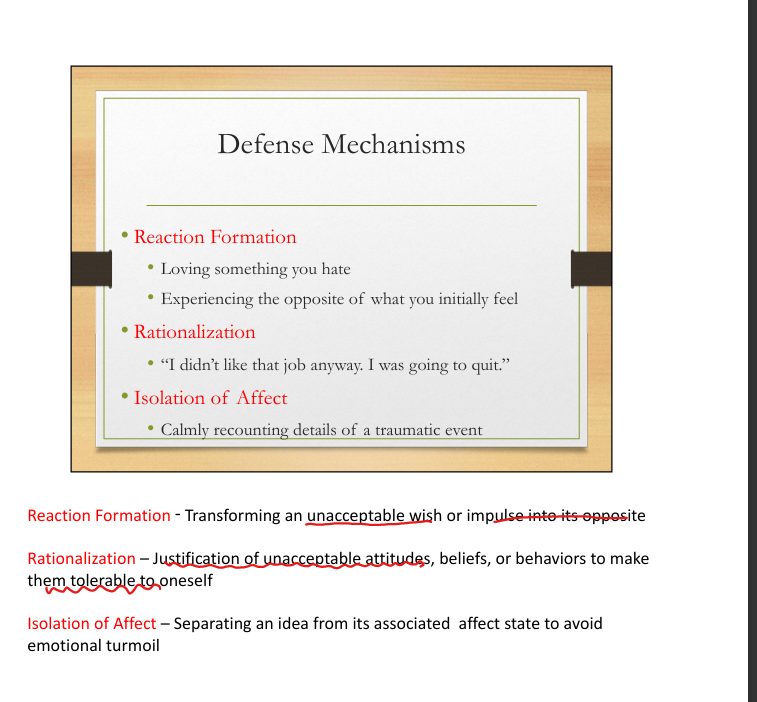
Define isolation of affect.
Separating an idea from its emotional content.
Define sublimation.
Channeling unacceptable impulses into socially acceptable behavior.
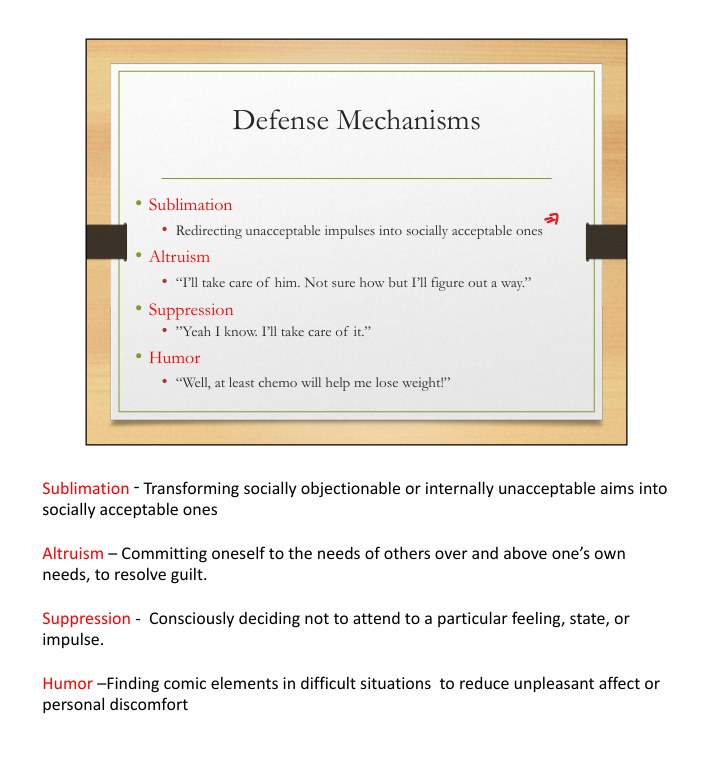
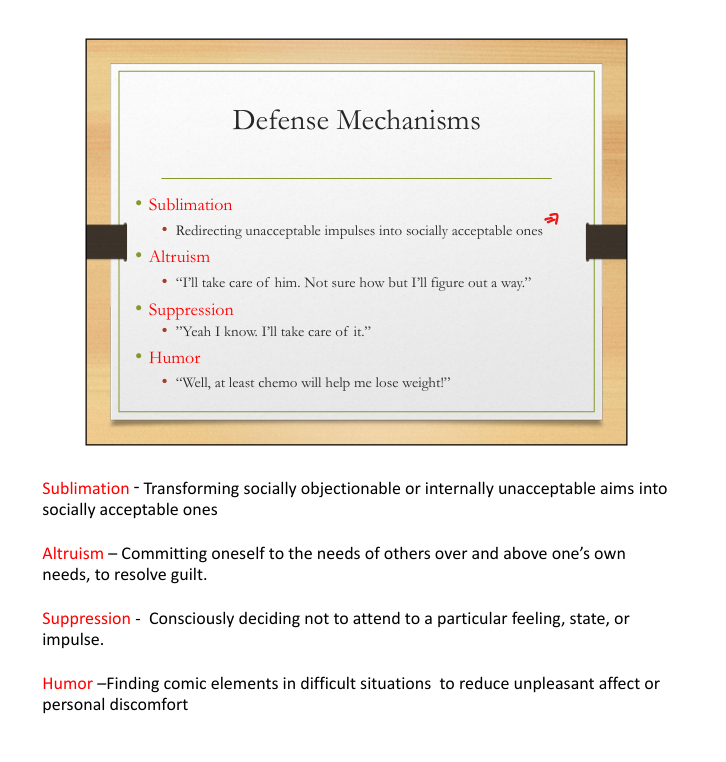
Define altruism.
Meeting others’ needs to reduce internal guilt.
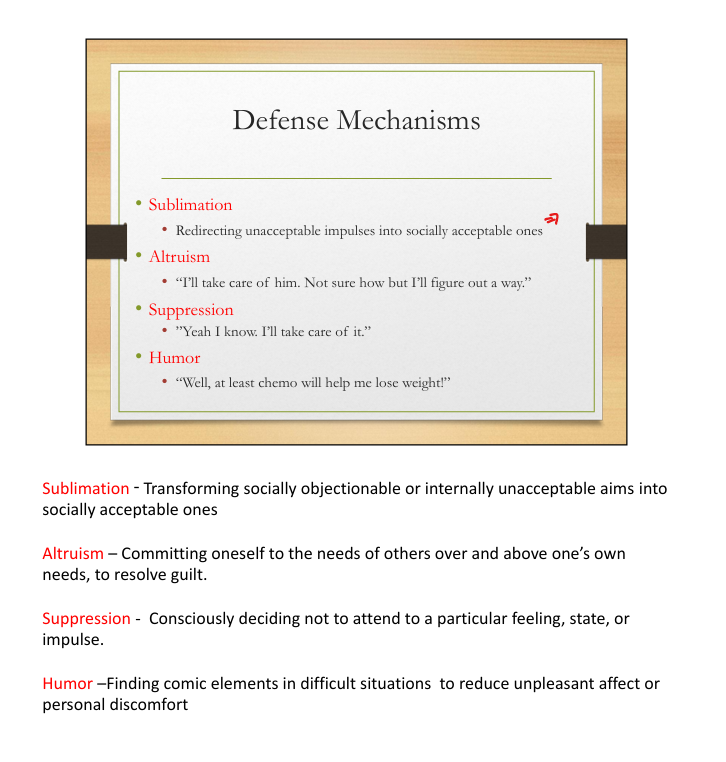
Define suppression.
Consciously choosing not to attend to a feeling or impulse.
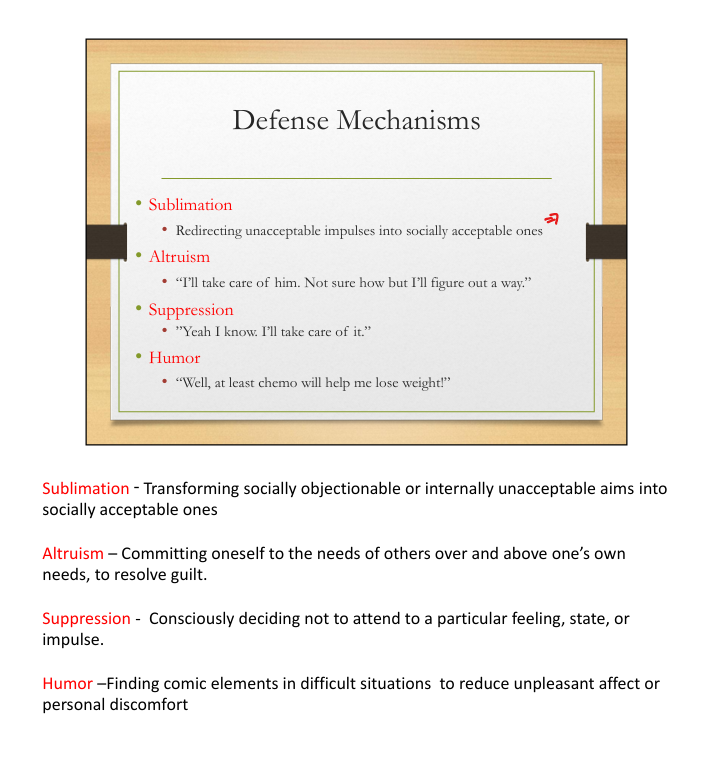
Define humor as a defense.
Finding comic elements in difficult situations to reduce distress.
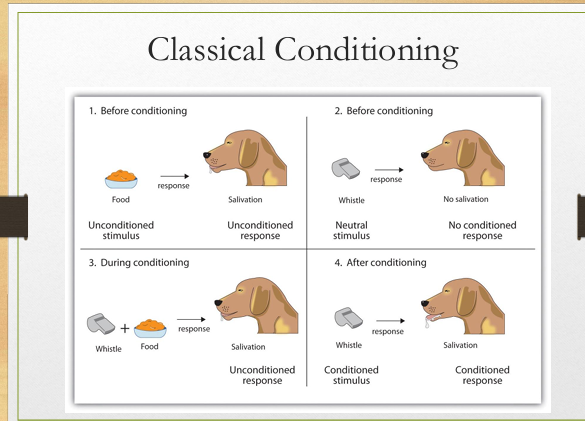
Classical conditioning definition.
Control of behavior based on antecedent events; Pavlovian learning.
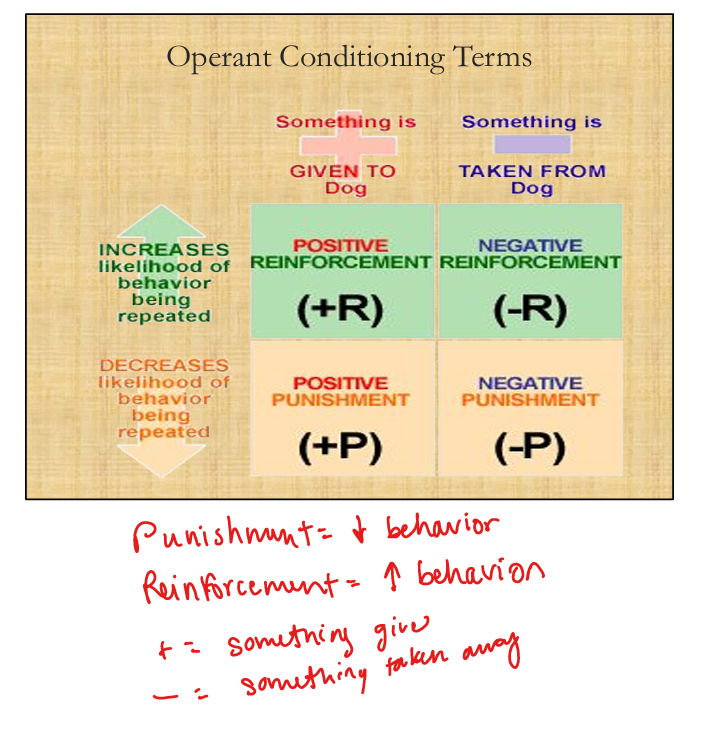
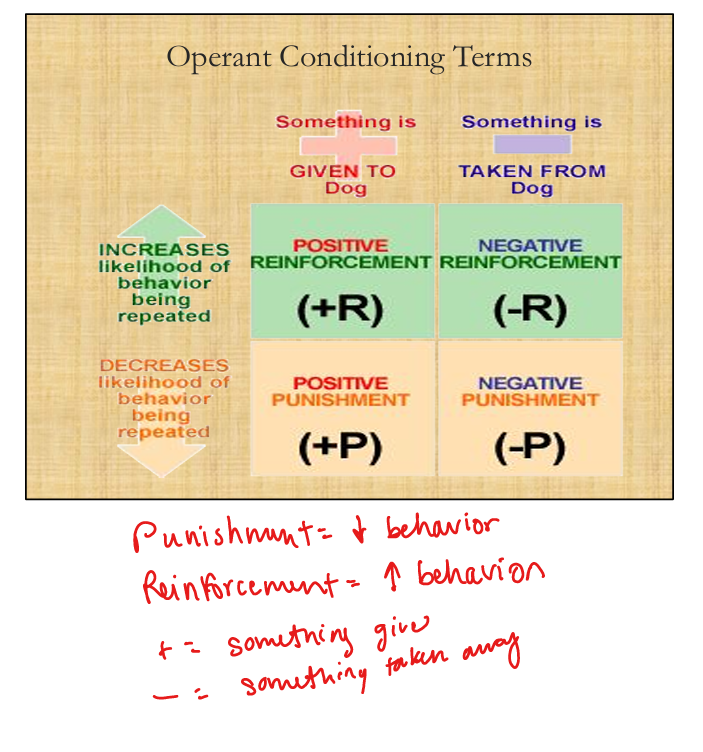
Positive reinforcement.
Adding something desirable to increase behavior.
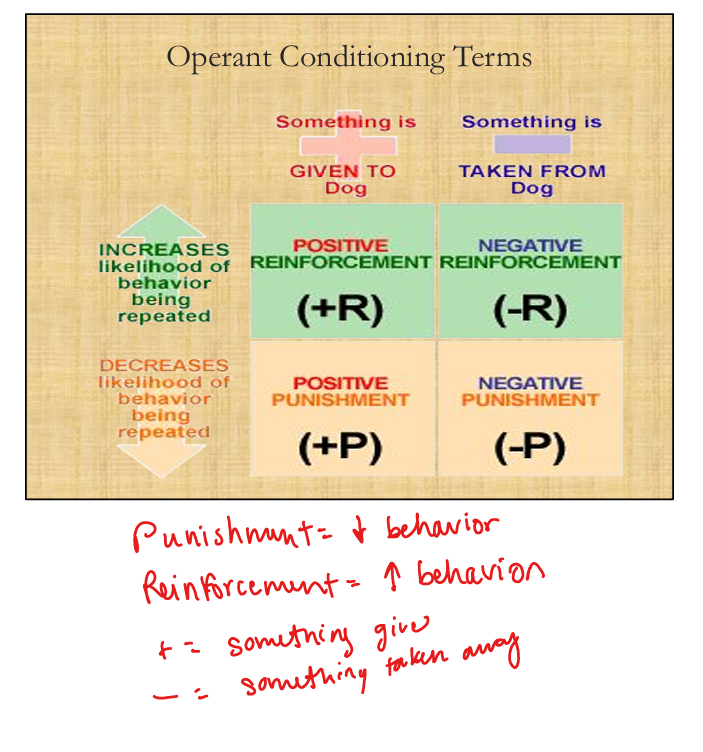
Negative reinforcement.
Removing something aversive to increase behavior.
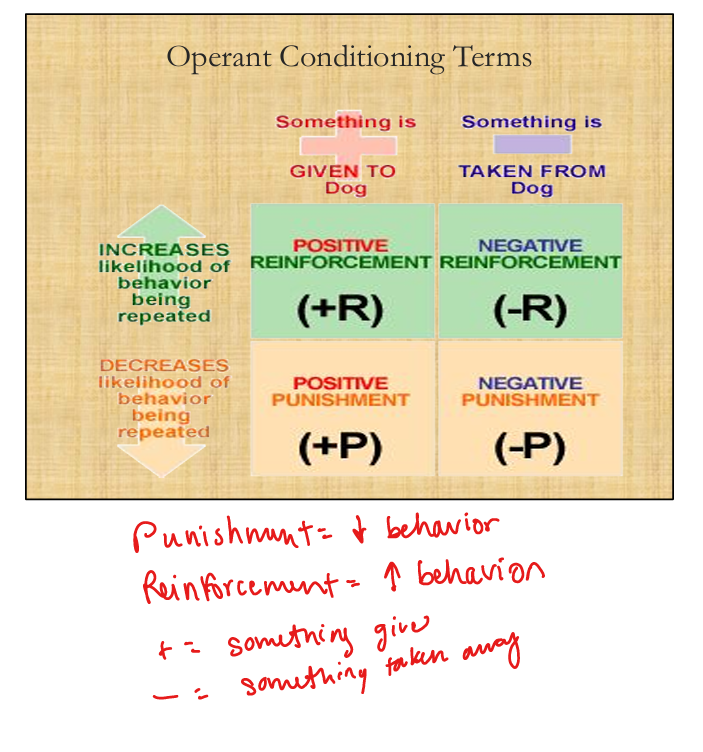
Positive punishment.
Adding something aversive to decrease behavior.
Negative punishment.
Removing something desirable to decrease behavior.
Define shaping.
Rewarding successive approximations of a desired behavior.
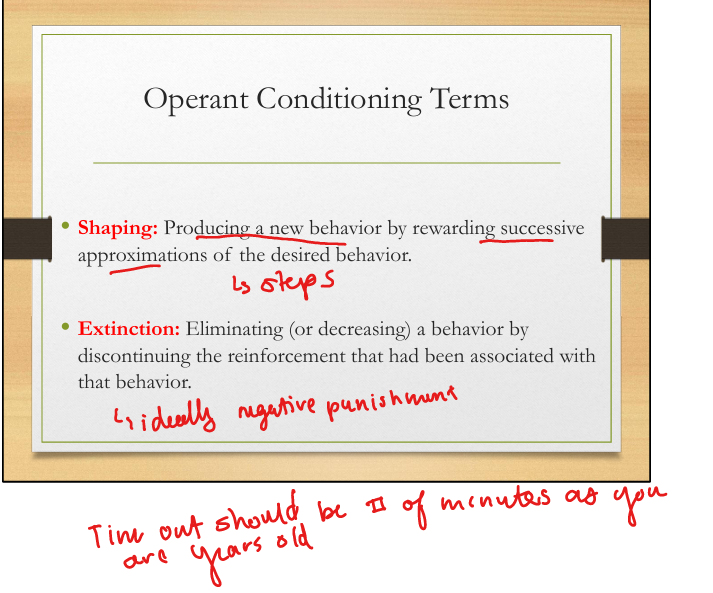
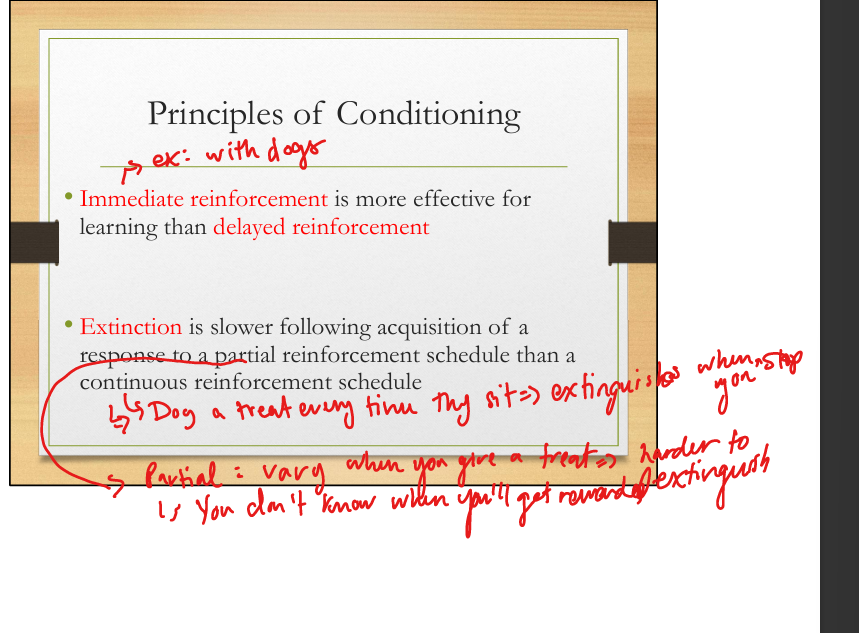
Define extinction.
Decreasing behavior by removing reinforcement.
Which reinforcement schedule is hardest to extinguish?
Variable ratio (e.g., gambling).