PS262 Chapter 6: Visual Attention (terms)
 Call Kai
 Learn
Learn Practice Test
 Spaced Repetition
 Match
Match Flashcards
 Knowt Play
1/40

There's no tags or description
Looks like no tags are added yet.
Name | Mastery | Learn | Test | Matching | Spaced | Call with Kai |
|---|
No analytics yet
Send a link to your students to track their progress
41 Terms
attention
the process of focusing on certain information while ignoring other information
overt attention
directing attention by moving your eyes toward something
example:
turning your head and looking at someone who calls your name in class
covert attention
paying attention without moving your eyes
example:
staring at your laptop during lecture but listening to people talking behind you
dichotic listening
listening to different messages in each ear at the same time
example:
hearing two conversations simultaneously through headphones and trying to focus on and repeat only one of them
selective attention
focusing on one stimulus while ignoring others
example:
studying in a busy cafe while focusing on your textbook and ignoring nearby conversations
attended ear
the ear that the listener is instructed to focus on during dichotic listening
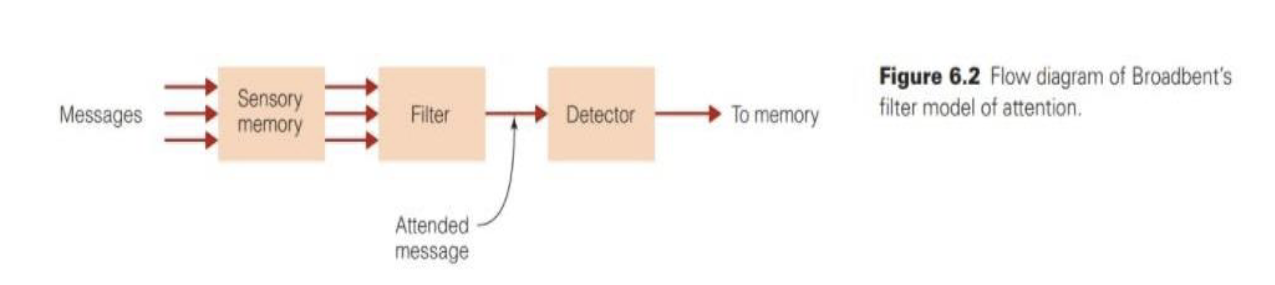
broadbent’s filter model
theory that attention works like a filter, allowing only selected information to be processed
spatial attention
focusing attention on a specific location in space
posner precueing experiment
study showing that cues about where a stimulus will appear speed up responses
valid trial
the cue correctly predicts where the stimulus appears
invalid trial
the cue predicts the wrong location
spotlight model of attention
attention works like a spotlight, enhancing processing in one area
feature integration theory (treisman)
theory explaining how attention combines object features like colour and shape
preattentive stage: feature integration theory
early stage where features are processed automatically and separately
focused attention stage: feature integration theory
stage where attention combines features together
binding: feature integration theory
the process of combining features into a single object
illusory conjunction: feature integration theory
when features from different objects are mistakenly combined
example:
seeing a green triangle when none exists
visual search
looking for a target object among other objects
example:
looking for your friend in a crowded lecture hall
feature search
search based on one feature (fast, target “pops out”)
example:
finding a red circle among many blue circles
conjunction search
search based on multiple features (slower and requires attention)
example:
finding a red circle among red squares and blue circles
visual scanning: eye movements
looking around a scene by moving the eyes
fixation: eye movements
when the eyes pause briefly on an object
saccade: eye movements
a rapid eye movement between fixations
fovea: eye movements
area of the retina with the sharpest vision
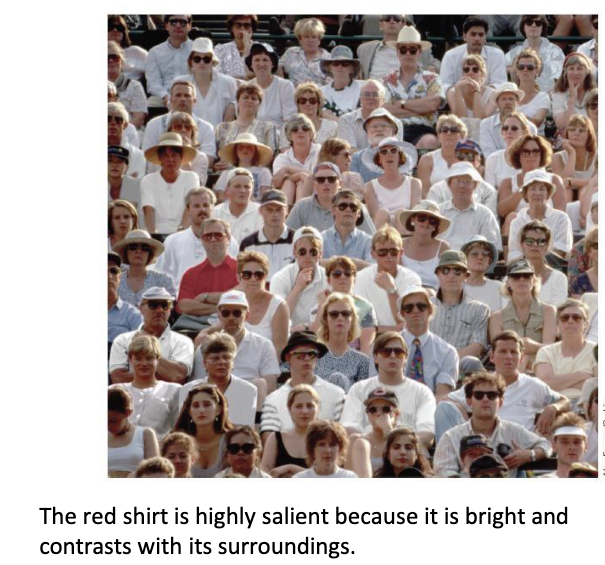
visual salience: what directs attention
when something stands out visually and attracts attention
examples:
bright colour
high contrast
movement
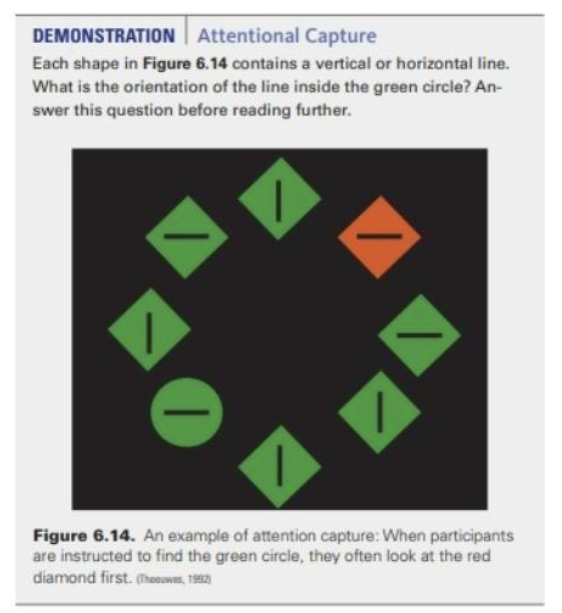
attentional capture: what directs attention
when a stimulus automatically grabs attention
saliency map: what directs attention
a map showing which areas of a scene are most visually noticeable
top-down attention: what directs attention
attention directed by goals, knowledge, or expectations
example:
searching for your car in a parking lot
task demands: what directs attention
attention guided by the steps needed to complete a task
example:
making a sandwich
scene schema: what directs attention
knowledge about what objects normally appear in certain scenes
example:
expecting a stove in a kitchen
attention speeds up processing: benefits of attention
people respond faster to things they are paying attention to
attention influences appearance: benefits of attention
attended objects may appear stronger or clearer
parahippocampal place area (PPA)
brain region involved in scene and place recognition
fusiform face area (FFA)
brain region specialized for face perception
inattentional blindness
failing to notice a visible object because attention is focused elsewhere
example:
while counting how many times a basketball team passes the ball, a person walks through the scene in a gorilla suit, but many people don’t notice it because they’re focused on counting passes
change blindness
failing to notice a change in a scene after a brief interruption
example:
looking at two pictures of the same room shown one after the other, but not noticing that a lamp has disappeared between the images
distractors
stimuli that are irrelevant to the task but compete for attention
load theory of attention
when a task is demanding, fewer distractors are processed
distracted driving: smartphone distraction
using a phone while driving reduces attention and slows reaction time
important finding:
hands-free phones do not eliminate the problem
spatial neglect: attention disorders
a neurological condition where a person ignores one side of space
usually caused by right hemisphere brain damage
focused attention mediation
a type of meditation where attention is focused on one thing (like breathing)
meditation can improve attention control and awareness

