Bio1110 Plant Intro to Plants and Bryophytes
 Call Kai
 Learn
Learn Practice Test
 Spaced Repetition
 Match
Match Flashcards
 Knowt Play
1/152

There's no tags or description
Looks like no tags are added yet.
Name | Mastery | Learn | Test | Matching | Spaced | Call with Kai |
|---|
No analytics yet
Send a link to your students to track their progress
153 Terms
Why are plants important
Give us what we need to do cellular respiration, like O2 and high energy organic compounds (glucose), give us our 5 F’s
What are the 5 F’s
food (what we eat), feed (what we feed animals), Fibers (wood), Fuel, and Pharmaceuticals
What are the three things that make up the terrestrial ecosystem?
Energy, carbon, and ozone (condensed O2)
What supergroup do plants belong to?
Archaeplastida
How did Archaeplastida obtain the ability to photosynthesize?
primary endosymbiosis = ancestor of eukaryotic cells engulfed a cyanobacterium which became the chloroplast
What is the ancestor of Archaeplastida?
the photosynthetic eukaryote
Almost all members of Archaeplastida are …
autotrophs
What else is a part of Archaeplastida besides plants?
Red algae, chlorophytes, closest charophyte relatives, and more distant charophyte relatives, all come from the ancestral alga
What are algae?
Photosynthetic organisms that aren’t plants, they make up the groups Excavate, red algae, and green algae, they can be eukaryotic and prokaryotic
Blue-green algae =
cyanobacteria
Archaeplastida consists of green algae, …
red algae, and land plants
What group of algae are most closely related to plants?
Green algae
What type of habitat does algae live in?
aquatic ecosystems, can be fresh or salt
Examples of algae that plants are distantly related to
Euglenoids(can eat food when sunlight is not available), Diatoms, Brown algae = kelp, Red algae
Green algae contains both …
unicellular and multicellular organisms
Historically, green algae is split between …
chlorophytes and charophytes, charophytes are most closely related to plants
Green algae is what kind of taxonomic group?
Paraphyletic (examples - volvox(unicellular) and ulva(multicellular))
Chlorophyll and a and b are found in what two groups?
Charophytes and plants
Charophytes and plants both have cell walls made of …
cellulose
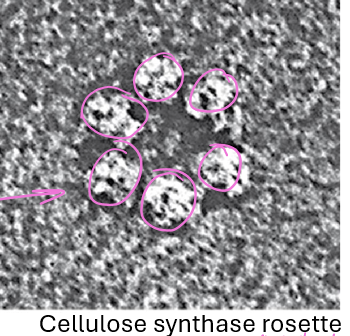
How is cellulose arranged in charophytes and plants?
in microfibrils by cellulose synthase rosettes
Charophytes and plants have similarities in what DNA?
Nuclear, mitochondrial, and chloroplast
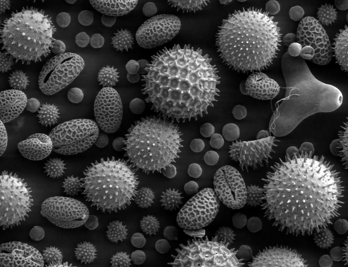
What is sporopollenin?
an exceptionally tough, chemically inert, and durable bio-polymer that forms the outer protective wall (exine) of plant spores and pollen grains, found in charophytes and plants
What environmental factors shaped the ancestor of modern plants?
H2O, sunlight(can only be gathered when its close enough to the surface), gasses dissolved in water, mineral nutrients dissolved in water like nitrogen
Eventually what became depleted in the ocean which drove plants towards the coast?
mineral nutrients
Early photosynthetic life was what three things?
Unicellular, prokaryotic, and aquatic
How do minerals get in the water?
travels throughout the water system, which runs over rocks, corroding them and bringing the minerals with it
What are the major challenges of transitioning to land?
reproduction (swimming sperm cells are no longer helpful), gas exchange (moist surface), water (they have cuticles to let in water wherever it meets their bodies), and support (since they don’t move, turgor pressure from vacuole helps provide support)
What environmental changes did plants meet as they made their way to shore?
higher exposure to sun and air (tides), waves (being crushed and cut a part by waves), and currents (being moved to where there is no sunlight)
What three things led the transition onto land?
ability to survive desiccation(drying out), strong cells walls (to keep from being ripped apart), and multicellularity (anchorage - prevents from being swept away by the current)
What adaptations do embryophytes have that differentiates them from algae?
alternation of heteromorphic generations, a multicellular embryo that is dependent on its parent plant, apical meristems
Why are plants called embryophytes?
because of their dependent embryo, important because it helps prevent desiccation and UV radiation while supplying essential nutrients from the parent tissue
What are apical meristems?
regions of actively dividing, undifferentiated stem cells located at the tips of roots and shoots in plants, drives primary growth via rapid cell division
How does alternation of heteromorphic generations help plants on land?
allows plants to maximize survival and reproduction with the two life stages
When did the origin of land plants(embryophytes) start?
470 mya
When was the origin of vascular plants?
425 mya
When was the origin of seed plants?
360 mya
What are the three major adaptations of embryophytes?
moving onto land (1st), vascular plants (2nd), and seed plants (3rd)
What is Sporic meiosis?
production of haploid spores (starts with one diploid and ends with 4 haploid spores), plants NEVER make gametes through meiosis, always through mitosis
Spores are a single reproductive cell capable of giving rise to …
a new individual without sexual fusion, making the new individuals haploid
Why is the dispersal of offspring important to plants?
to avoid overcrowding and resource competition with the parent plant, facilitating higher survival rates
What do seedless plants use to disperse their next generation far from the parent plant?
they use spores
What is alternation of generations and what does it mean if they are heteromorphic?
means the plant goes through two generations where one is diploid and the other is haploid, heteromorphic means that the two generations have different physical appearances or structures, one is often large and dominant
The sporophyte is …
diploid, the sporophyte makes spores through meiosis (the reduction division)
The gametophyte is …
haploid, makes haploid gametes through mitosis
After the sporophyte makes spores, the spores divide through …
mitosis which develops into the gametophyte
Once the gametophyte makes gametes they then …
fuse with another to form the zygote(fertilization) which develops into the sporophyte
The spore is the first cell of the _______ generation
haploid/gametophyte
The zygote is the first cell of the _______ generation
diploid/sporophyte
Pollen isn’t sperm its …
a tiny plant
Charophytes and moss have a ______ gametophyte
dominant - moss’s gametophyte is longer living and larger, can live on its own, its sporophyte is really tiny
What makes up the sporophyte of a charophyte?
the zygote, that’s it
Angiosperms, gymnosperms, Lycophytes, and Monilophytes have what dominant region?
A dominant sporophyte
A charophyte having only its zygote as the sporophyte makes them like …
fungi
What is a sporangium?
a specialized, often sac-like structure found in fungi, plants, and algae that produces, houses, and releases reproductive spores
What is a gametangium?
specialized, haploid, multicellular structures found in plants, algae, and fungi where gametes (sex cells) are produced, its the equivalent to gonads
What is an archegonium?
a multicellular, flask-shaped female reproductive organ found in bryophytes (mosses, liverworts), ferns, and many gymnosperms, makes egg cells
What is an antheridium?
the haploid, male reproductive organ found in non-flowering plants (bryophytes, ferns), fungi, and algae, makes sperm cells
What is a bisexual gametophyte?
has both an antheridium and archegonium, so it can make both egg and sperm cells
What is a unisexual gametophyte?
Has just the antheridium or archegonium, so its only makes sperm or only eggs
Defining characteristics of bryophytes
non-vascular (no xylem/phloem), no organs (aka roots, leaves, or stems), has a thallus, low growing and small in size, thin cuticle or absent, most can survive desiccation for a period of time
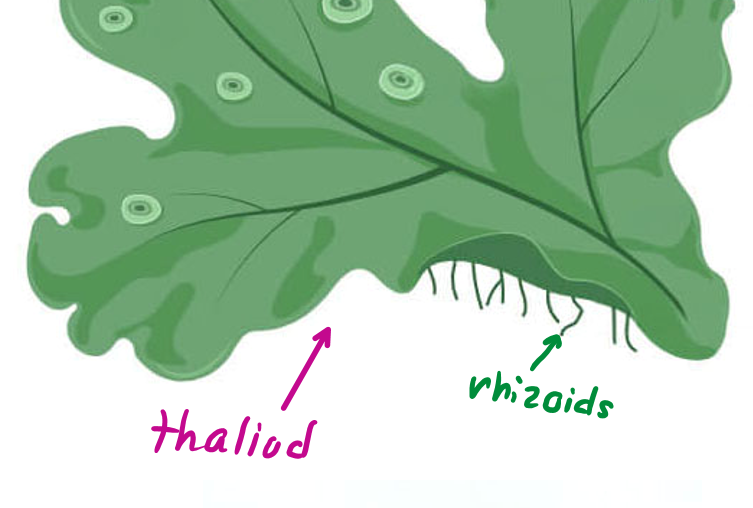
A Thallus includes a simple root-like structure called the …
rhizoid
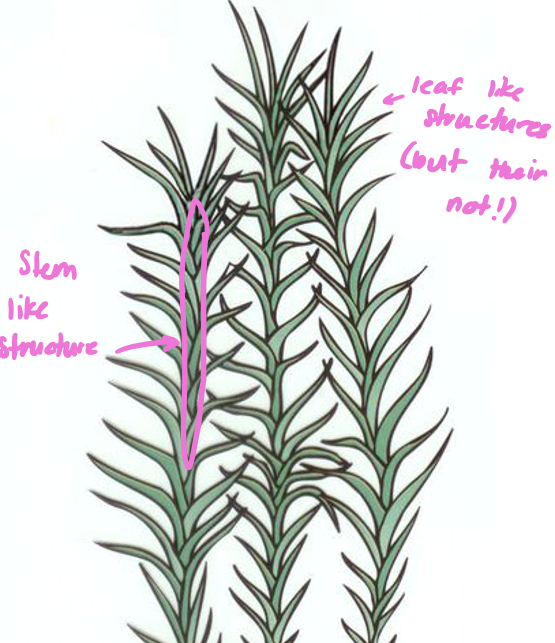
Bryophytes don’t have leaves or stems but …
they can have leaf-like and stem-like structures, but they AREN’T
Why is the cuticle of a bryophyte thin?
to absorb H2O and for gas exchange
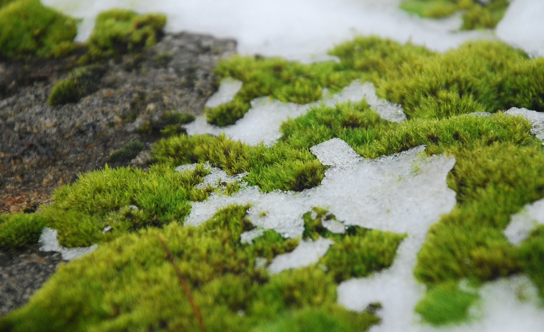
What environments do bryophytes live in?
damp places (waterfalls, edges of streams and wetlands - because of their thin cuticle they dry out easily so they grow in areas where they will be constantly splashed by water) and extreme environments like epiphytes or on rocks, or in extreme cold or deserts
What are the three bryophyte groups?
mosses, liverworts, and hornworts
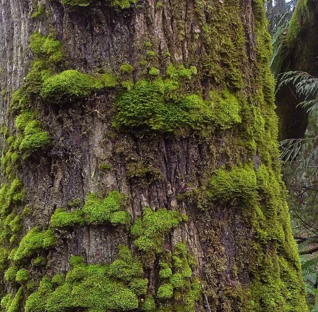
What is an epiphyte?
bryophyte that lives on another plant (its not a parasite, they don’t take or give anything to the plant they live on
In Bryophytes what part is dominant?
the gametophyte generation (can live on its own), and the sporophyte is dependent on the gametophyte (dominant one can do photosynthesis to support the plant)
Do bryophytes have seeds?
no, they are seedless, liquid water is needed in the environment for reproduction because they have swimming sperm
What is a thallus?
the bryophyte body plan, includes the rhizoid and the simple lead-like and stem-like structures, low growing and small in size and come
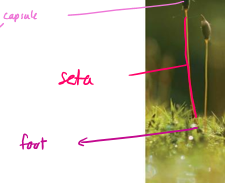
The sporophyte is made up of what three parts?
the foot, seta, and capsule
What is the foot of the sporophyte?
where the sporophyte attaches to the female gametophyte (like a little anchor) at a placenta
What is the seta?
like the stem or stalk of the sporophyte
What is the capsule/what does it do?
the little bulb at the top of the sporophyte, it holds the sporangium
The gametophyte is made up of the thallus which has what three parts?
rhizoids, “stem” and “leaves”
True Mosses(bryopsida) are split into what two groups?
Acrocarpous (cushionary mosses) and Pleurocarpous (feathery mosses)
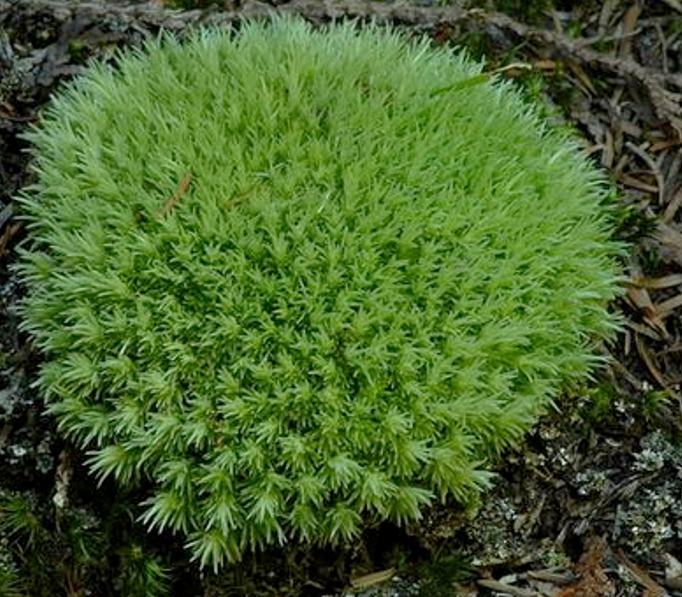
Describe cushiony mosses
have an erect (erect = the upright, green, leafy, or stem-like sexual phase of a plant's life cycle) gametophyte with few branches, the sporophyte is terminal, it grows vertically
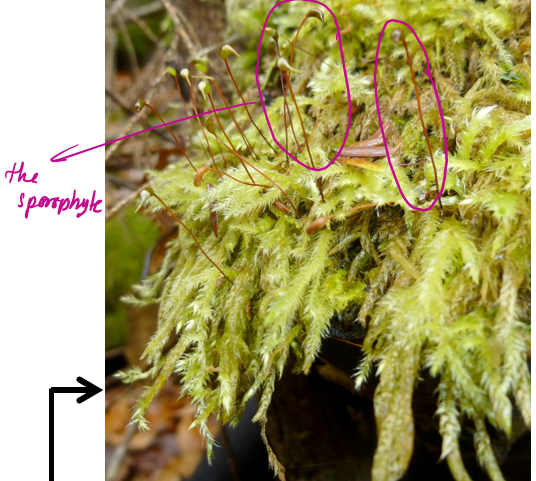
Describe feathery mosses
have a creeping gametophyte with many branches, the sporophyte is found along the stalk, grows across the ground, not up
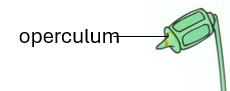
What is the operculum?
a little lid over the capsule opening (stays on until the spores are developed and ready to be released, it falls off once they ar4e ready)
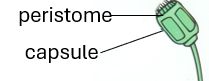
What is the peristome?
a double row of teeth around the capsule opening (will close up when there aren’t right conditions for spores to be released like when its raining because the rain will knock them out of the air)
Why do bryophytes used spores and gametes?
for dispersal, if the plant cannot spread its sperm that it will germinate around itself and offspring will be fighting its parent for resources
What is a protonema?
thread-like stage in the life cycle of mosses and some liverworts, forming immediately upon spore germination, grow in a chain of cells a lot like how algae grow, this is how they start growing
Starting from the protonema, describe the moss life cycle
protonema develops a bud which grows into the gametophyte which uses rhizoids to anchor to the ground, at the top of the gametophyte an antheridia(male) or archegonia(female) develops and releases sperm/makes eggs which meet and fertilize in the archegonium sprouting a sporophyte which releases spores that then sprout gametophytes as protonema
For bryophytes where does fertilization happen?
In the archegonium
What happens when sporophytes are done making spores?
they’ll fall off
Since fertilization happens within the archegonium then …
sporophytes only grow on female mosses, unisexual and bisexual is not really important in mosses
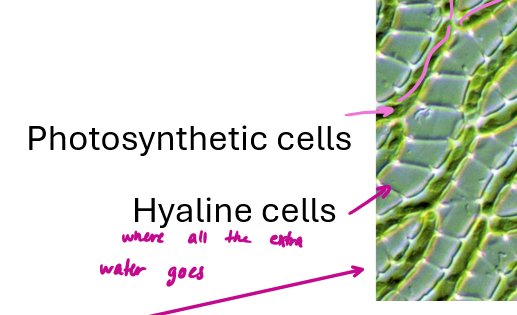
What features make Sphagnum mosses unique?
its found in bogs and helps maintain moist environments, its highly absorbent, lowers pH, is used for antiseptic/antimicrobial phenolics, has photosynthetic and hyaline cells, and its decay resistant (peat)
What is peat bog?
a type of acidic, waterlogged wetland where partially decayed plant matter—primarily sphagnum moss—accumulates over thousands of years, stores 400 billion metric tons of carbon worldwide
Why is peat moss decay resistant?
because of its low pH - keeps fungi from growing
What is peat?
partially decayed organic matter
How does sphagnum create a wet bog?
by holding in moisture and preventing decay
Where is a majority of the worlds carbon located?
in peat bogs
What kind of matter is usually held in peat bogs?
dead plants, but dead animals are preserved as well
Bog bodies preserve …
skin, internal organs, and hair, and phenolics tan skin, while bones are dissolved
What do liverworts not have?
stomates on their sporophytes, they are only made of a foot and seta and a small capsule, most bryophytes lack a strong cuticle and have no stomates on the gametophyte and few on the sporophyte
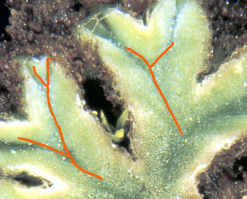
What kind of branching does liverworts do?
dichotomous = it splits and grows in two directions
Liverwort includes what two types?
Thalloid liverwort and leafy liverwort
Characteristics of thalloid liverwort
flat, and liver-shaped
Characteristics of leafy liverwort
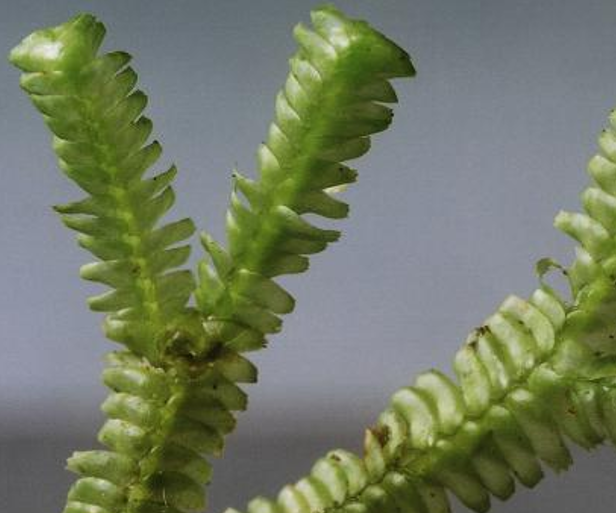
thallus is divided into leaf-like projections, looks like flattened moss
The cuticle keeps water in but …
keeps gases out, stomates create opening in the cuticle to temporarily allow gases in
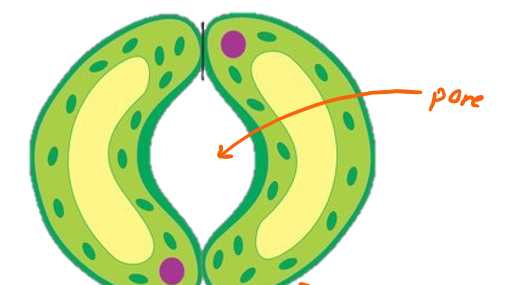
Stomates are made up of …
two guard cells, they change their shape to open/close

