ANSC 325 - Midterm 2 - Lecture 4

0.0(0)
studied byStudied by 0 people
0.0(0)
call with kaiCall with Kai
learnLearn
examPractice Test
spaced repetitionSpaced Repetition
heart puzzleMatch
flashcardsFlashcards
GameKnowt Play
Card Sorting

1/35

encourage image

There's no tags or description

Looks like no tags are added yet.

Last updated 7:48 PM on 2/2/26
Name
Mastery
Learn
Test
Matching
Spaced
Call with Kai

No analytics yet

Send a link to your students to track their progress

36 Terms

1
New cards
  • Head and mental status

  • Gait and posture

  • Neck and forelimbs

  • Trunk

  • Tail and anus

Neuro exam should assess these 5 categories

2
New cards
  • Sensory

  • Integration

  • Motor systems (upper vs lower motor neurons)

Divisions of neuro examination should include (3)

3
New cards

Upper Motor Neuron

  • Brain to spinal cord in CNS

  • Weakness or paralysis

  • Spasticity

  • Increased muscle tone (hypertonia)

  • Over-response reflexes (hyperflexia)

4
New cards

Lower Motor Neuron

  • Spinal cord to structure (muscle, organ, etc.)

  • Decreased of absent muscle tone (hypotonia or atonia)

  • Decreased or absent or areflexia)

  • Muscle atrophy

5
New cards
  • Mentation and alertness

  • Cranial nerve function

Neurological exam - Head and Mental Status assesses (2)

6
New cards
  • Alert

  • Depression

  • Stupor

  • Coma

Four consciousness levels

7
New cards

Alert

Level of Consciousness

  • Aware of environment-normal

  • Aware and awake

8
New cards

Depression

Level of Consciousness

  • Awake but unresponsive to the environment 

9
New cards

Stupor

Level of Consciousness

  • Asleep except when aroused: needs to be aroused by strong (i.e. noxious) stimulus: pain, loud noise, bright light 

  • Asleep, but will wake up

10
New cards

Coma

Level of Consciousness

  • Deep state of unconsciousness and animal can not be aroused with noxious stimuli

11
New cards

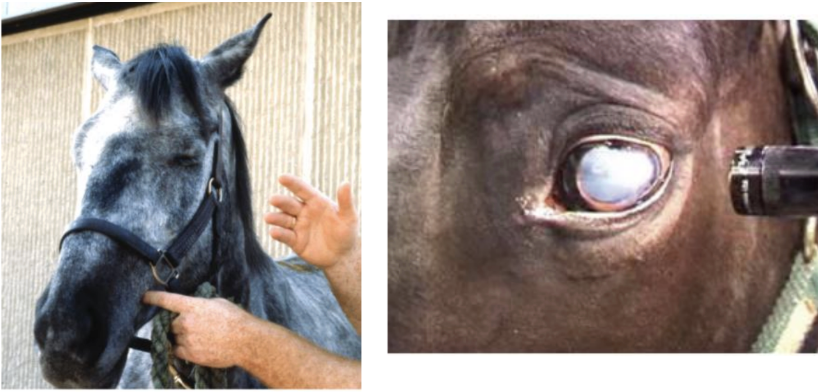
CN II

Cranial Nerve - Optic

  • Related to pupillary reflex

  • Function: vision

  • Assessment: menace response and pupillary light reflex, lesions cause blindness and loss of pupillary light reflex
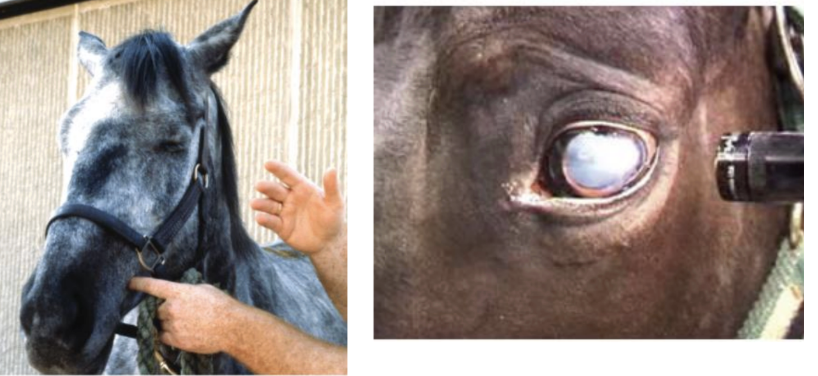
<p>Cranial Nerve - <strong>Optic</strong></p><ul><li><p>Related to pupillary reflex</p></li><li><p>Function: vision</p></li><li><p>Assessment: menace response and pupillary light reflex, lesions cause blindness and loss of pupillary light reflex</p></li></ul><p></p>
12
New cards

CN III

Cranial Nerve - Oculomotor

  • Related to pupillary reflex

  • Function: pupillary constriction, extra ocular muscles

  • Assessment: pupillary light reflex, pupil size, eye position, lesions cause ventral strabismus, loss of PLR
<p>Cranial Nerve - <strong>Oculomotor</strong></p><ul><li><p>Related to pupillary reflex</p></li><li><p>Function: pupillary constriction, extra ocular muscles</p></li><li><p>Assessment: pupillary light reflex, pupil size, eye position, lesions cause ventral strabismus, loss of PLR</p></li></ul><p></p>
13
New cards

CN VIII

Cranial Nerve - Vestibulocochlear

  • Related to head dropping, vestibular disease

  • Function: posture, balance, hearing

  • Assessment: head and eye position (strabismus) and nystagmus, lesions cause nystagmus, head tilt, balance loss, deafness
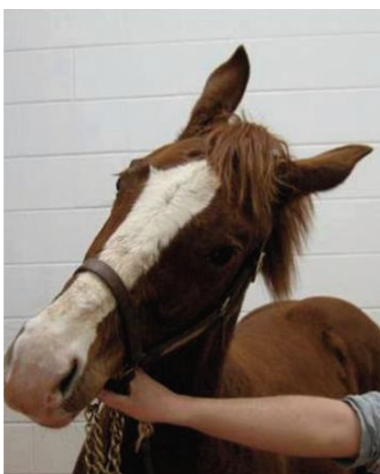
<p>Cranial Nerve - <strong>Vestibulocochlear</strong></p><ul><li><p>Related to head dropping, vestibular disease</p></li><li><p>Function: posture, balance, hearing</p></li><li><p>Assessment: head and eye position (strabismus) and nystagmus, lesions cause nystagmus, head tilt, balance loss, deafness</p></li></ul><p></p>
14
New cards

CN VII

Cranial Nerve - Facial

  • Related to facial nerve tone and lip dropping

  • Function: motor to muscles of facial expression

  • Assessment: facial symmetry, palpebral blink, ear and muzzle/lip movement, lesion causes facial paralysis, loss of palpebral reflex, blink, dry eye
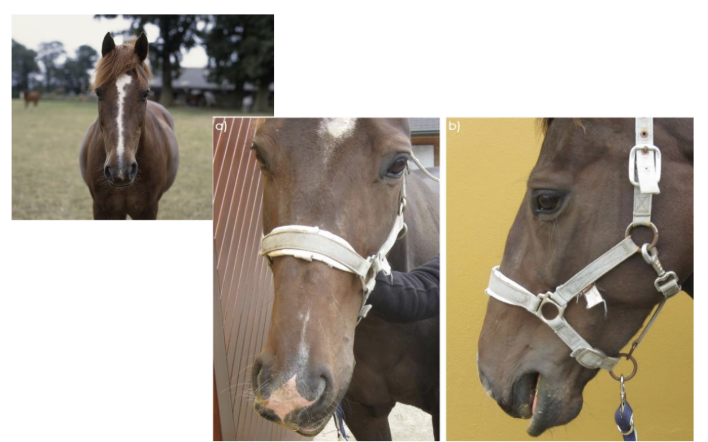
<p>Cranial Nerve - <strong>Facial</strong></p><ul><li><p>Related to facial nerve tone and lip dropping</p></li><li><p>Function: motor to muscles of facial expression</p></li><li><p>Assessment: facial symmetry, palpebral blink, ear and muzzle/lip movement, lesion causes facial paralysis, loss of palpebral reflex, blink, dry eye</p></li></ul><p></p>
15
New cards

CN XII

Cranial Nerve - Hypoglossal

  • Related to difficulty eating and drinking and not pulling tongue back when pulled

  • Function: motor to tongue

  • Assessment: tongue stretch and symmetry, lesions cause atrophy and paralysis
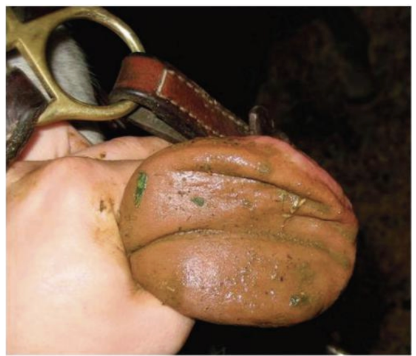
<p>Cranial Nerve - <strong>Hypoglossal</strong></p><ul><li><p>Related to difficulty eating and drinking and not pulling tongue back when pulled</p></li><li><p>Function: motor to tongue</p></li><li><p>Assessment: tongue stretch and symmetry, lesions cause atrophy and paralysis</p></li></ul><p></p>
16
New cards

CN IX

Cranial Nerve - Glossopharyngeal

  • Related to difficulty swallowing, saliva/mucous coming out

  • Function: Sensory and motor to pharynx

  • Assessment: Ability to swallow, lesions cause dysphagia and displaced soft palate
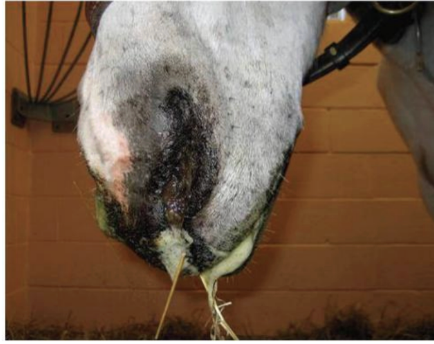
<p>Cranial Nerve - <strong>Glossopharyngeal</strong></p><ul><li><p>Related to difficulty swallowing, saliva/mucous coming out</p></li><li><p>Function: Sensory and motor to pharynx</p></li><li><p>Assessment: Ability to swallow, lesions cause dysphagia and displaced soft palate</p></li></ul><p></p>
17
New cards

CN X

Cranial Nerve - Vagus

  • Related to difficulty swallowing, saliva/mucous coming out

  • Function: sensory and motor to pharynx and larynx

  • Assessment: ability to swallow, laryngeal movement, lesion causes dysphagia, laryngeal paralysis, displaced palate
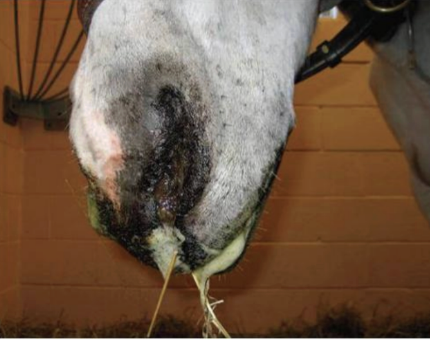
<p>Cranial Nerve - <strong>Vagus</strong></p><ul><li><p>Related to difficulty swallowing, saliva/mucous coming out</p></li><li><p>Function: sensory and motor to pharynx and larynx</p></li><li><p>Assessment: ability to swallow, laryngeal movement, lesion causes dysphagia, laryngeal paralysis, displaced palate</p></li></ul><p></p>
18
New cards

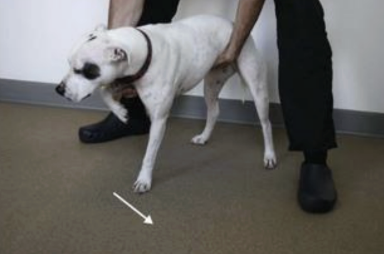
Standing Sway Test

Test of posture during neurological exam

  • apply pressure of the shoulder: Horse should always maintain balance initially leaning into the examiner, then the horse should step away 

  • Should be resistant and come back to original position

19
New cards

Thoracic limb test

Test of posture during neurological exam

  • lift thoracic limb and force horse to hop on the down leg: some examiners consider this a test dangerous to both owner and the horse 

  • Take front limb and lift, unstable

  • Not very safe

<p>Test of posture during neurological exam</p><ul><li><p><span style="background-color: transparent; font-family: &quot;Times New Roman&quot;, serif;"><span>lift thoracic limb and force horse to hop on the down leg: some examiners consider this a test dangerous to both owner and the horse&nbsp;</span></span></p></li></ul><ul><li><p><span style="background-color: transparent; font-family: &quot;Times New Roman&quot;, serif;"><span>Take front limb and lift, unstable</span></span></p></li><li><p><span style="background-color: transparent; font-family: &quot;Times New Roman&quot;, serif;"><span>Not very safe</span></span></p></li></ul><p></p>
20
New cards

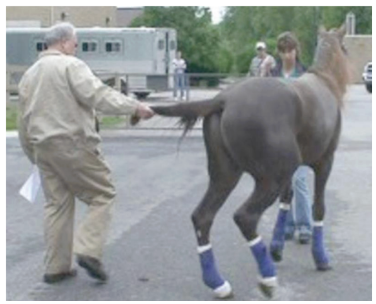
Tail pull test

Test of posture during neurological exam

  • pelvic limb weakness

    • Should be able to readjust back

<p>Test of posture during neurological exam</p><ul><li><p><span style="background-color: transparent; font-family: &quot;Times New Roman&quot;, serif;"><span>pelvic limb weakness</span></span></p><ul><li><p><span style="background-color: transparent; font-family: &quot;Times New Roman&quot;, serif;"><span>Should be able to readjust back</span></span></p></li></ul></li></ul><p></p>
21
New cards

0

Modified Mayhew Scale - Grade __

  • No neurological deficits

22
New cards

1

Modified Mayhew Scale - Grade __

  • Neurological deficits just detected at normal gait, but worsened by backing, turning, loin pressure, or neck extension

23
New cards

2

Modified Mayhew Scale - Grade __

  • Neurological deficits easily detected at the walk and exaggerated by backing, turning, loin pressure, or neck extension

24
New cards

3

Modified Mayhew Scale - Grade __

  • Neurological deficits prominent at the walk with a tendency to buckle or fall with backing, turning, loin pressure, or neck extension

25
New cards

4

Modified Mayhew Scale - Grade __

  • Stumbling, tripping, and falling spontaneously at a normal gait

26
New cards

5

Modified Mayhew Scale - Grade __

  • Horse recumbent

27
New cards

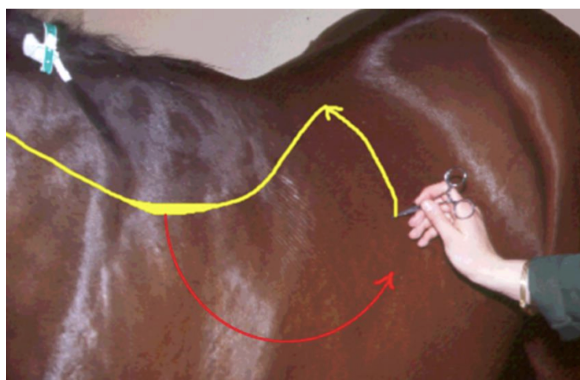
Cutaneous trunci reflex

  • Part of trunk part of neurological exam

  • Responses of spinal reflexes between thoracic nerve of the brachial plexuses and CN8-T1

  • Localize spinal cord injuries

<ul><li><p>Part of trunk part of neurological exam</p></li><li><p>Responses of spinal reflexes between thoracic nerve of the brachial plexuses and CN8-T1</p></li><li><p>Localize spinal cord injuries</p></li></ul><p></p>
28
New cards

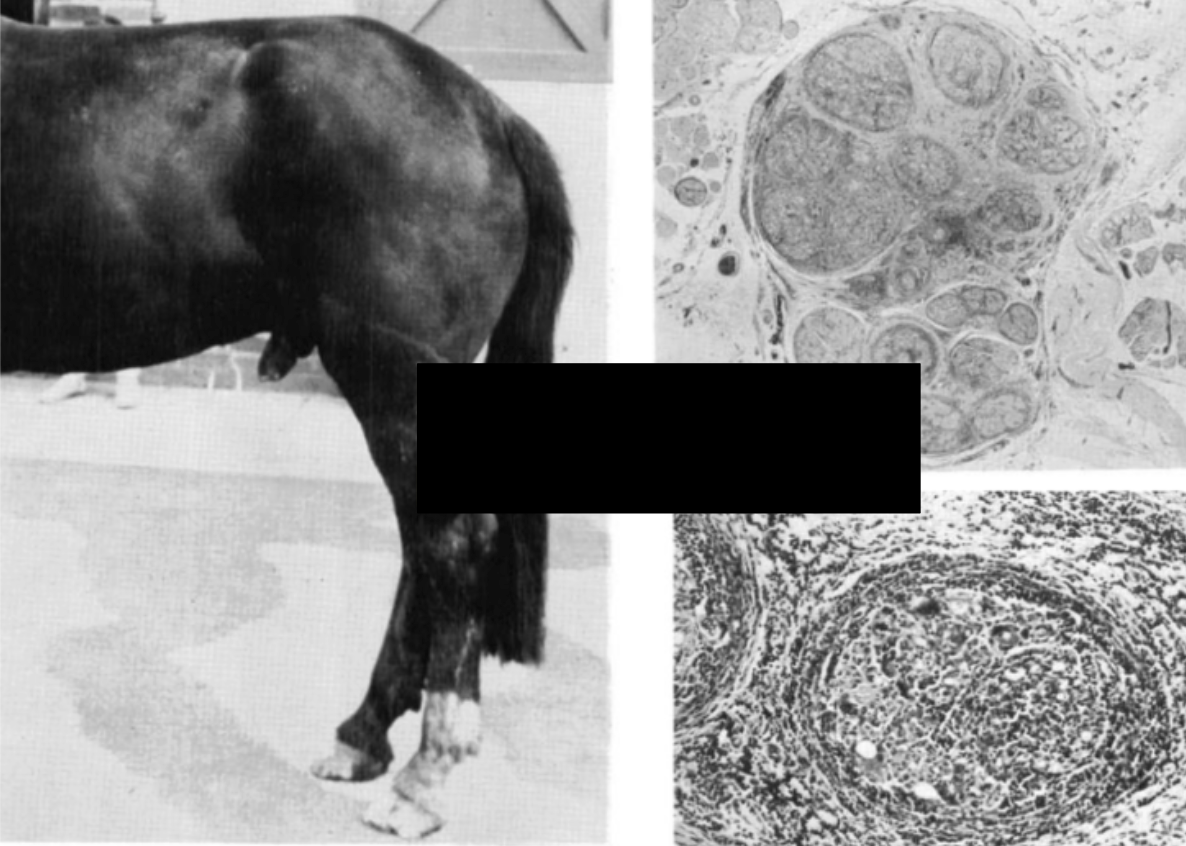
Cauda Equina Syndrome (Gegenerative Lumbosacral Stenosis)

  • Penis extending - not retracted in prepuce

  • Backend dropped (tail head dropped)

  • Dying and dead ganglion

<ul><li><p><span style="background-color: transparent; font-family: &quot;Times New Roman&quot;, serif;"><span>Penis extending - not retracted in prepuce</span></span></p></li><li><p><span style="background-color: transparent; font-family: &quot;Times New Roman&quot;, serif;"><span>Backend dropped (tail head dropped)</span></span></p></li><li><p><span style="background-color: transparent; font-family: &quot;Times New Roman&quot;, serif;"><span>Dying and dead ganglion</span></span></p></li></ul><p></p>
29
New cards

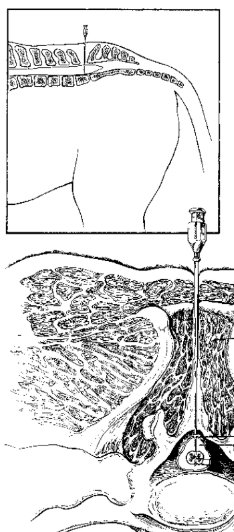
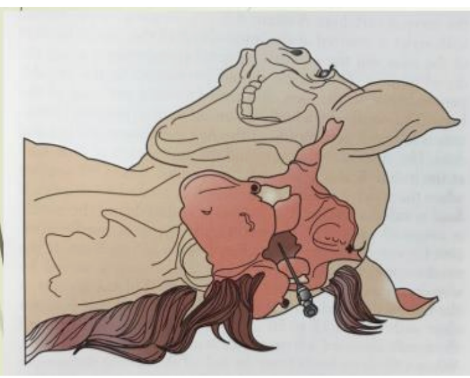
Cerebrospinal puncture

  • Collection fluid from subarachnoid space- indication of inflammation, infection, neoplasia, hemorrhage within the brain and spinal cord 

  • 2 sites:

    • Lumbosacral

    • Atlantooccipital

30
New cards

Lumbosacral

Site of Cerebrospinal Puncture

  • Sedate (standing) horse 

  • Base of spine

  • Below foramen magnum

<p>Site of Cerebrospinal Puncture</p><ul><li><p><span style="background-color: transparent; font-family: &quot;Times New Roman&quot;, serif;"><span>Sedate (standing) horse&nbsp;</span></span></p></li></ul><ul><li><p><span style="background-color: transparent; font-family: &quot;Times New Roman&quot;, serif;"><span>Base of spine</span></span></p></li><li><p><span style="background-color: transparent; font-family: &quot;Times New Roman&quot;, serif;"><span>Below foramen magnum</span></span></p></li></ul><p></p>
31
New cards

Atlantooccipital

Site of Cerebrospinal Puncture

  • Anesthetized horse

  • Higher up

  • Where spinal cord is leaving the skull

  • Above foramen magnum

  • Riskier

<p>Site of Cerebrospinal Puncture</p><ul><li><p><span style="background-color: transparent; font-family: &quot;Times New Roman&quot;, serif;"><span>Anesthetized horse</span></span></p></li></ul><ul><li><p><span style="background-color: transparent; font-family: &quot;Times New Roman&quot;, serif;"><span>Higher up</span></span></p></li><li><p><span style="background-color: transparent; font-family: &quot;Times New Roman&quot;, serif;"><span>Where spinal cord is leaving the skull</span></span></p></li><li><p><span style="background-color: transparent; font-family: &quot;Times New Roman&quot;, serif;"><span>Above foramen magnum</span></span></p></li><li><p><span style="background-color: transparent; font-family: &quot;Times New Roman&quot;, serif;"><span>Riskier</span></span></p></li></ul><p></p>
32
New cards
33
New cards
34
New cards
35
New cards
36
New cards

Explore top flashcards