Lab #13 - Identifying External Brain Structures - Lab 1
 Call Kai
 Learn
Learn Practice Test
 Spaced Repetition
 Match
Match Flashcards
 Knowt Play
1/18

There's no tags or description
Looks like no tags are added yet.
Name | Mastery | Learn | Test | Matching | Spaced | Call with Kai |
|---|
No analytics yet
Send a link to your students to track their progress
19 Terms
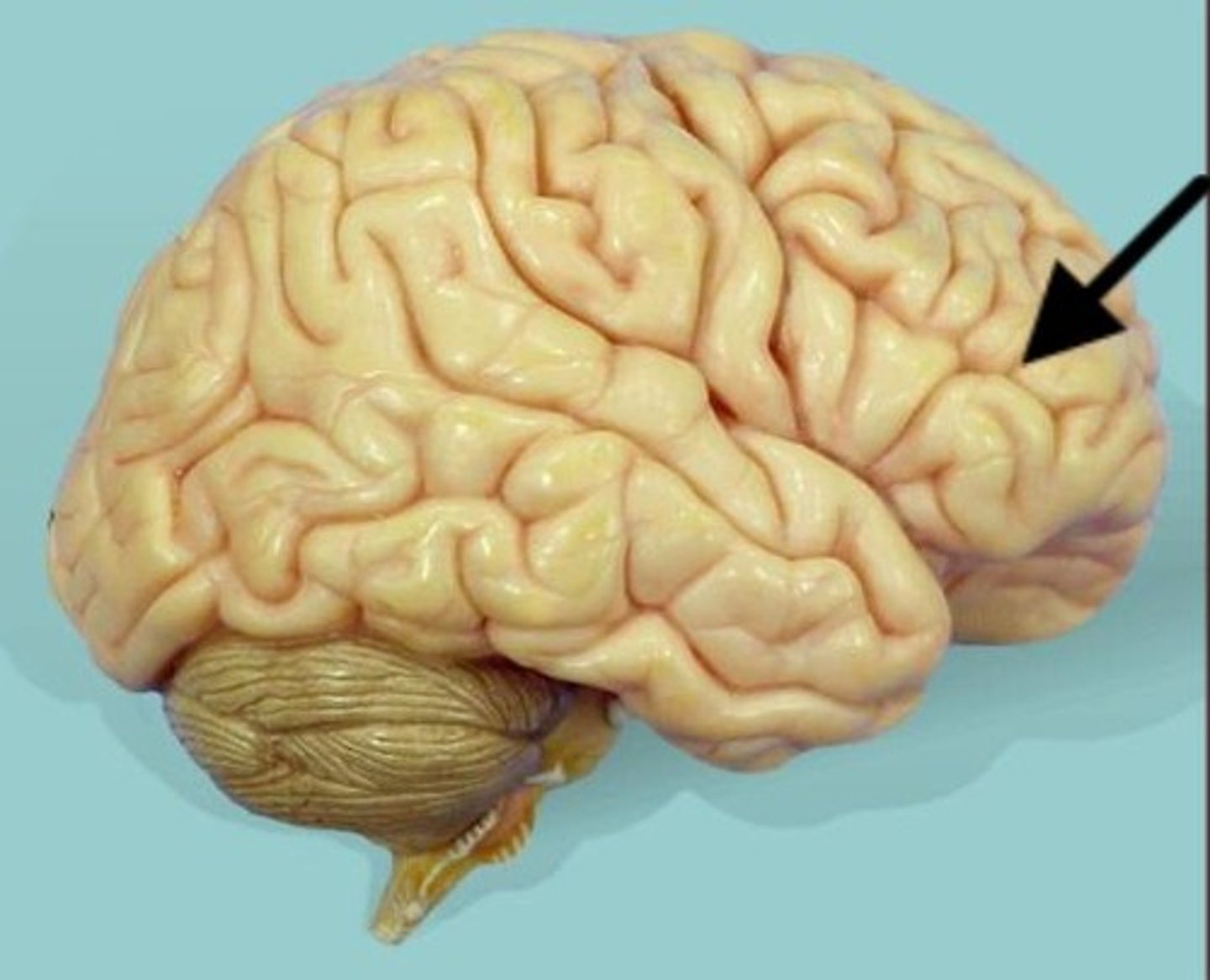
Frontal Lobe
A region of the cerebral cortex that has specialized areas for movement, abstract thinking, planning, memory, and judgment
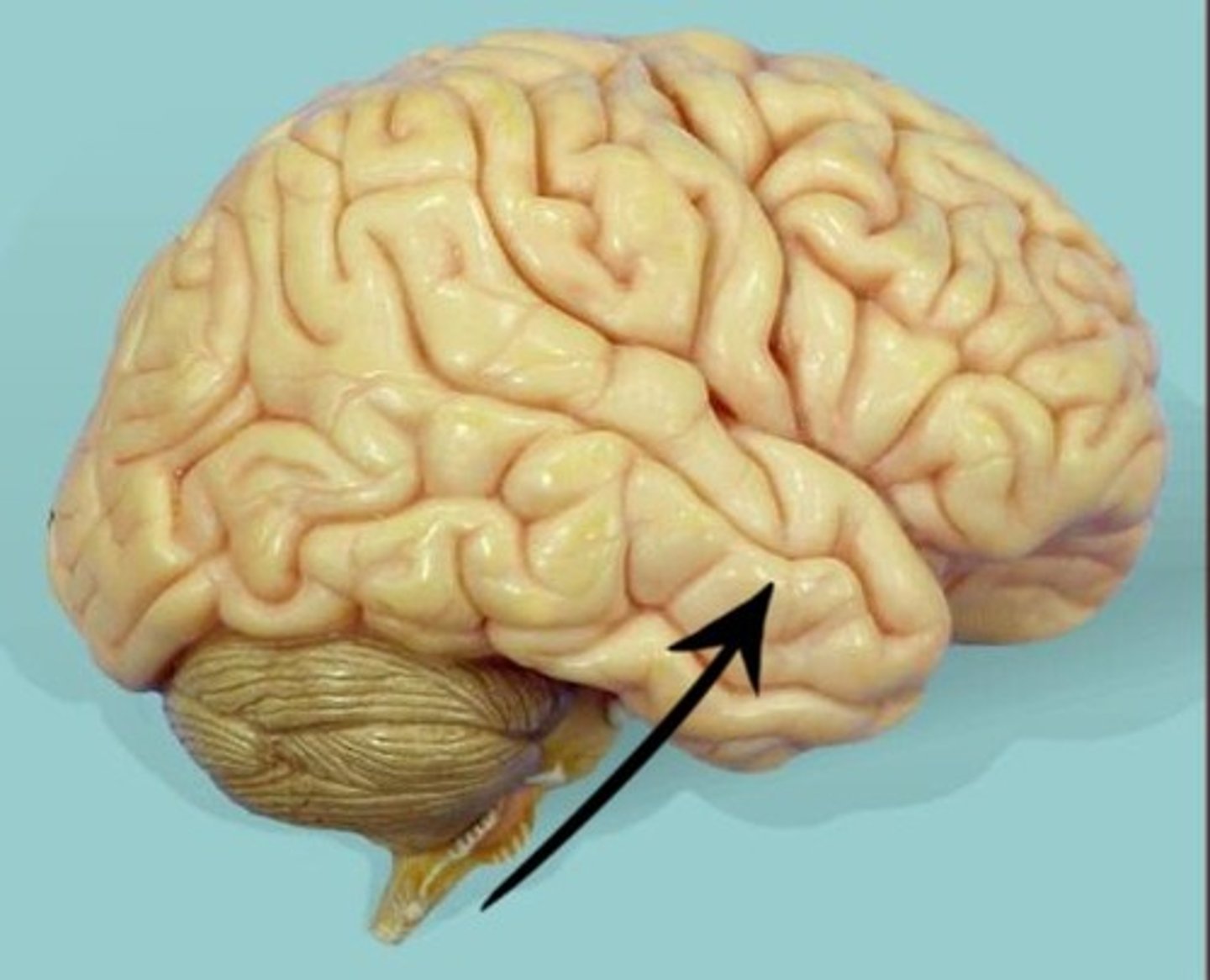
Temporal Lobe
A region of the cerebral cortex responsible for hearing and language.
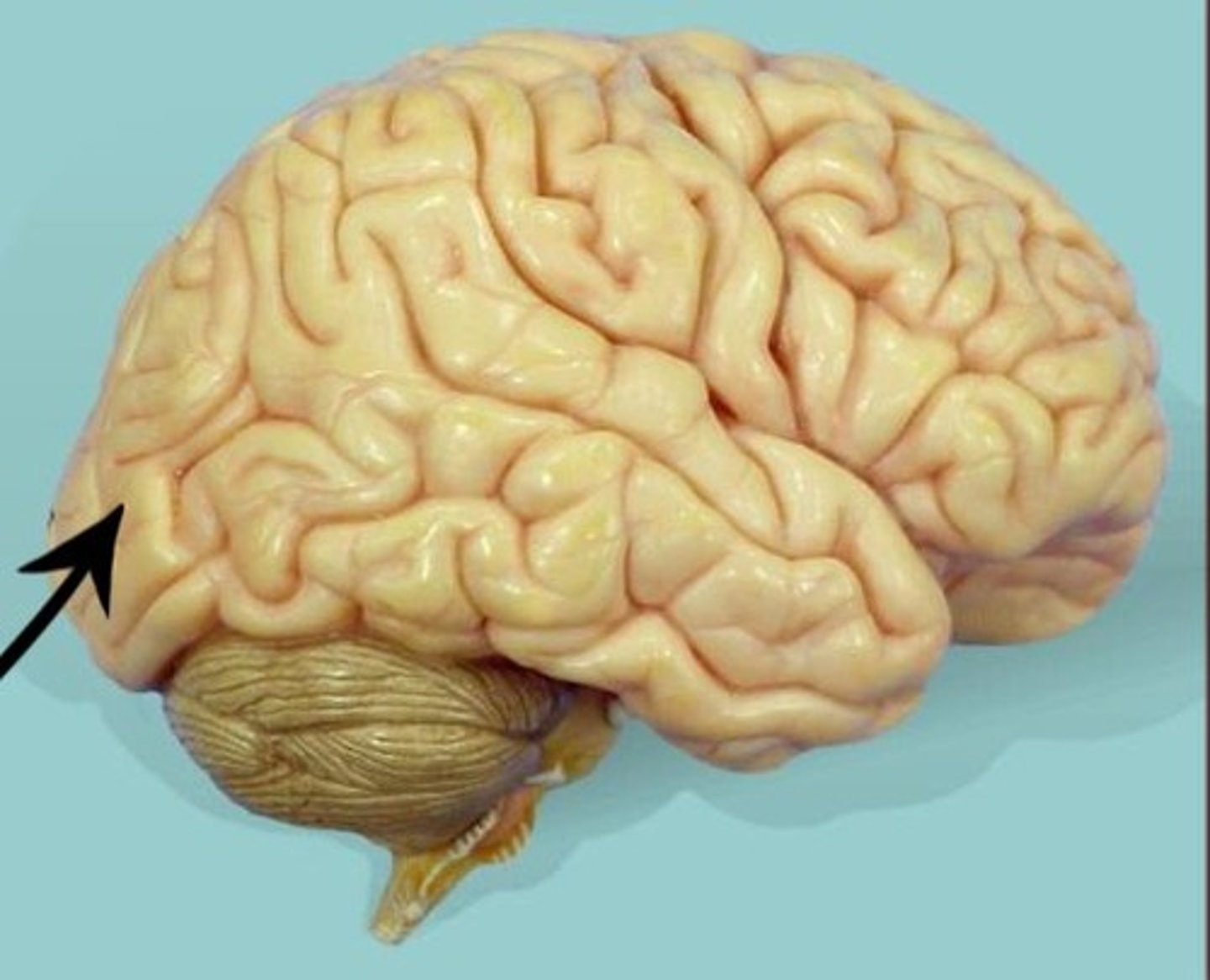
Occipital Lobe
A region of the cerebral cortex that processes visual information
Cerebellum
the "little brain" at the rear of the brainstem; functions include processing sensory input and coordinating movement output and balance
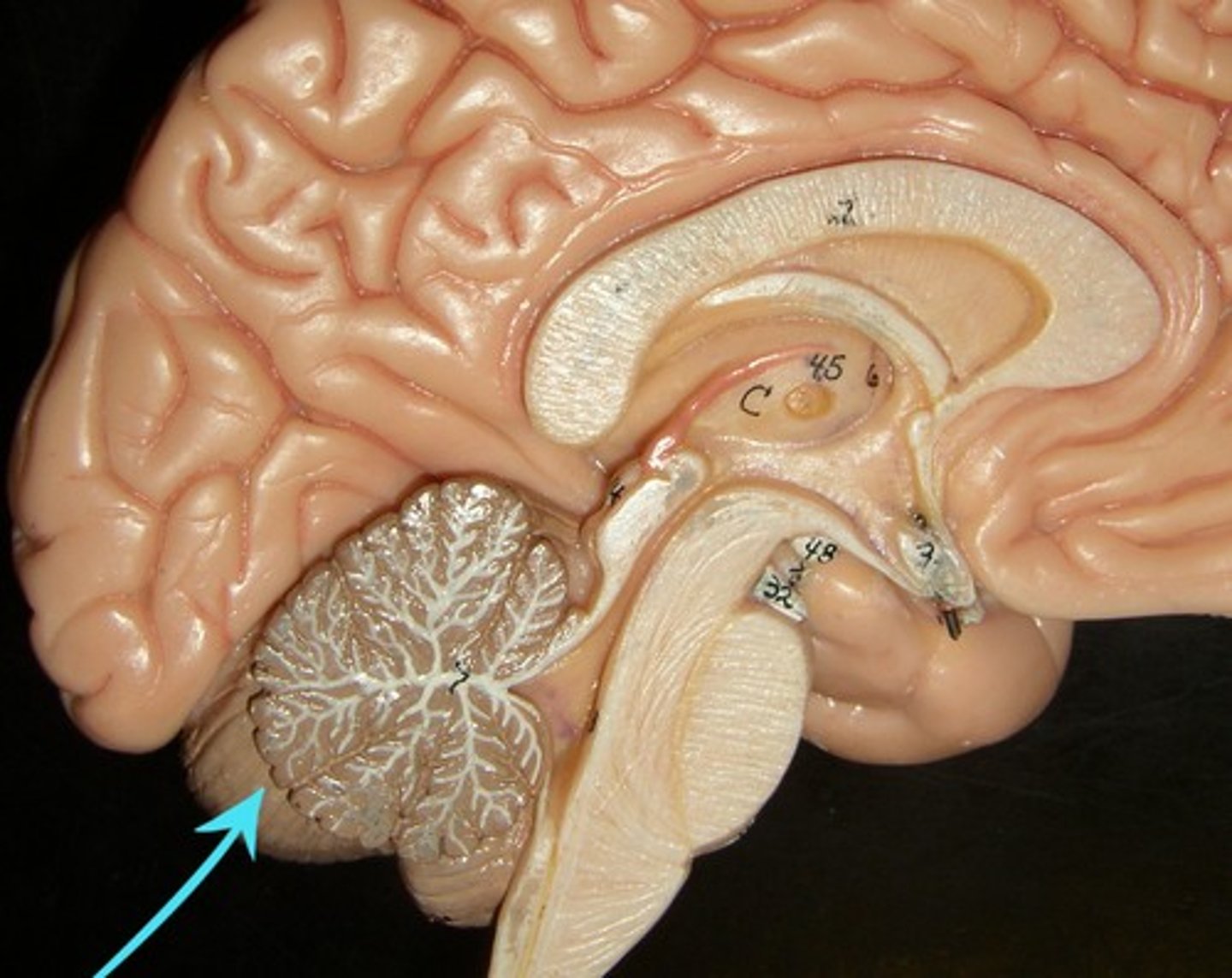
Pons
A brain structure that relays information from the cerebellum to the rest of the brain
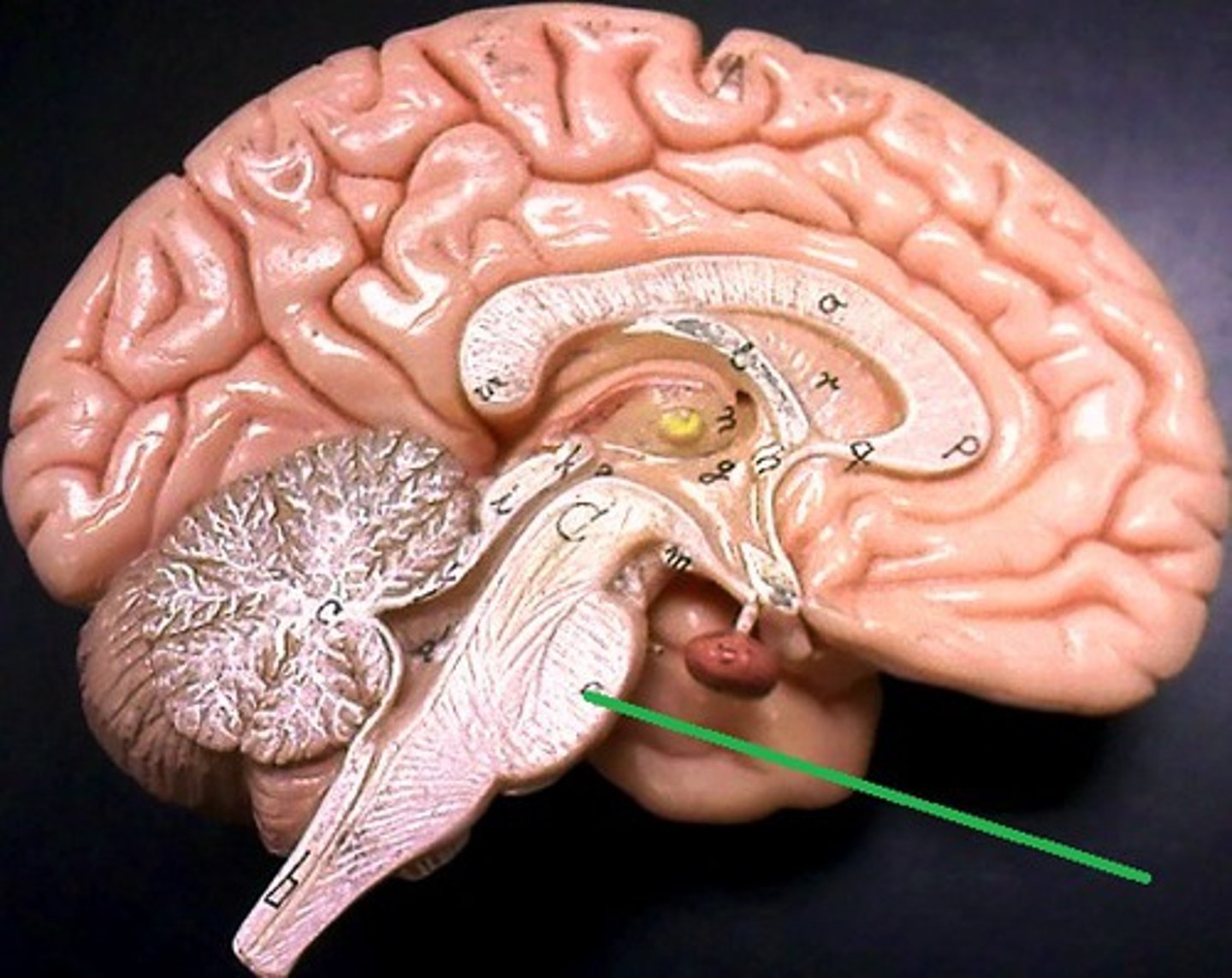
Medulla Oblongata
Part of the brainstem that controls vital life-sustaining functions such as heartbeat, breathing, blood pressure, and digestion.
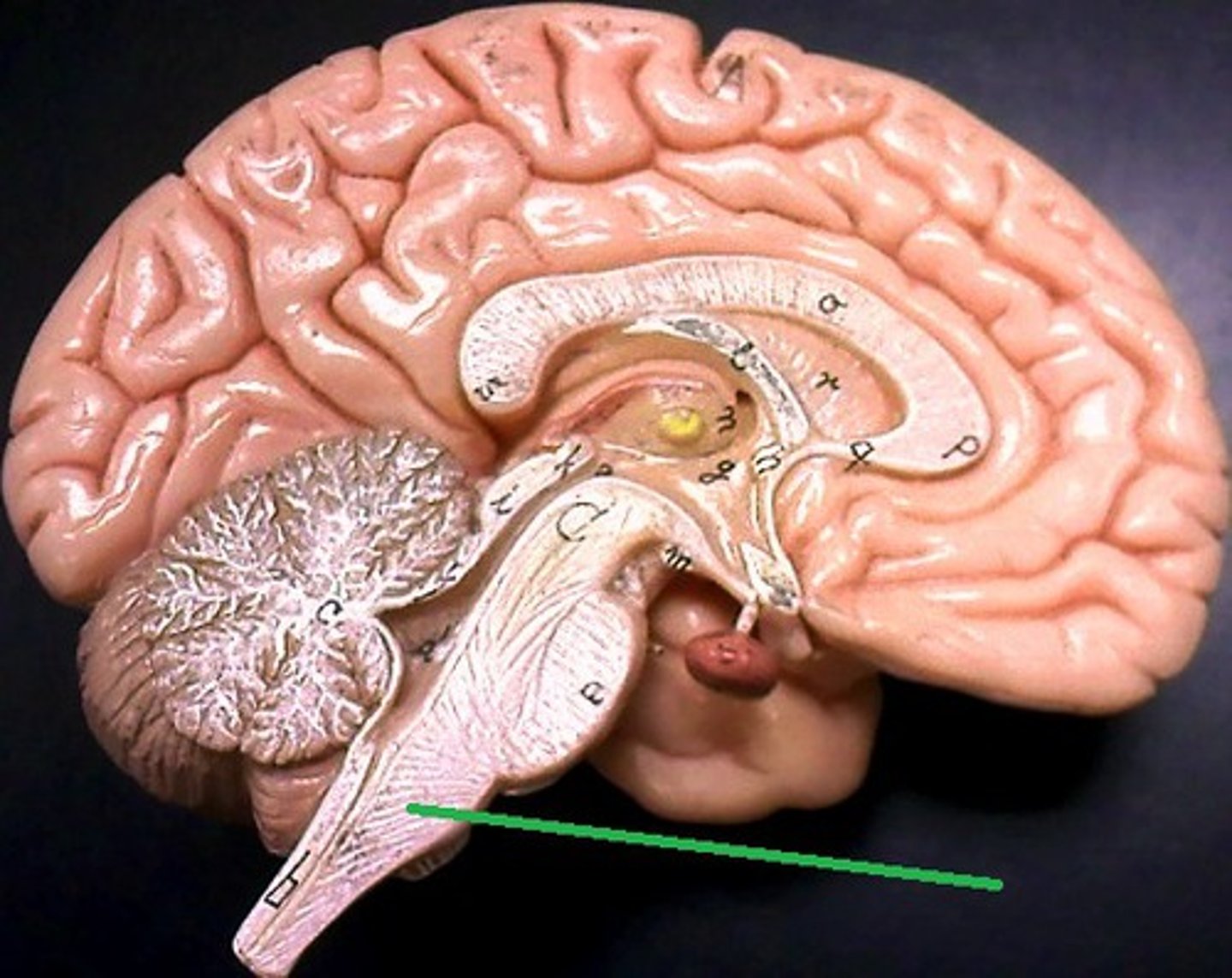
Gyrus
A ridged or raised portion of a convoluted brain surface.
Cortex (gray matter)
The outer layer (approximately one-fourth to one-half inch) of brain tissue containing nerve cell bodies (neurons)
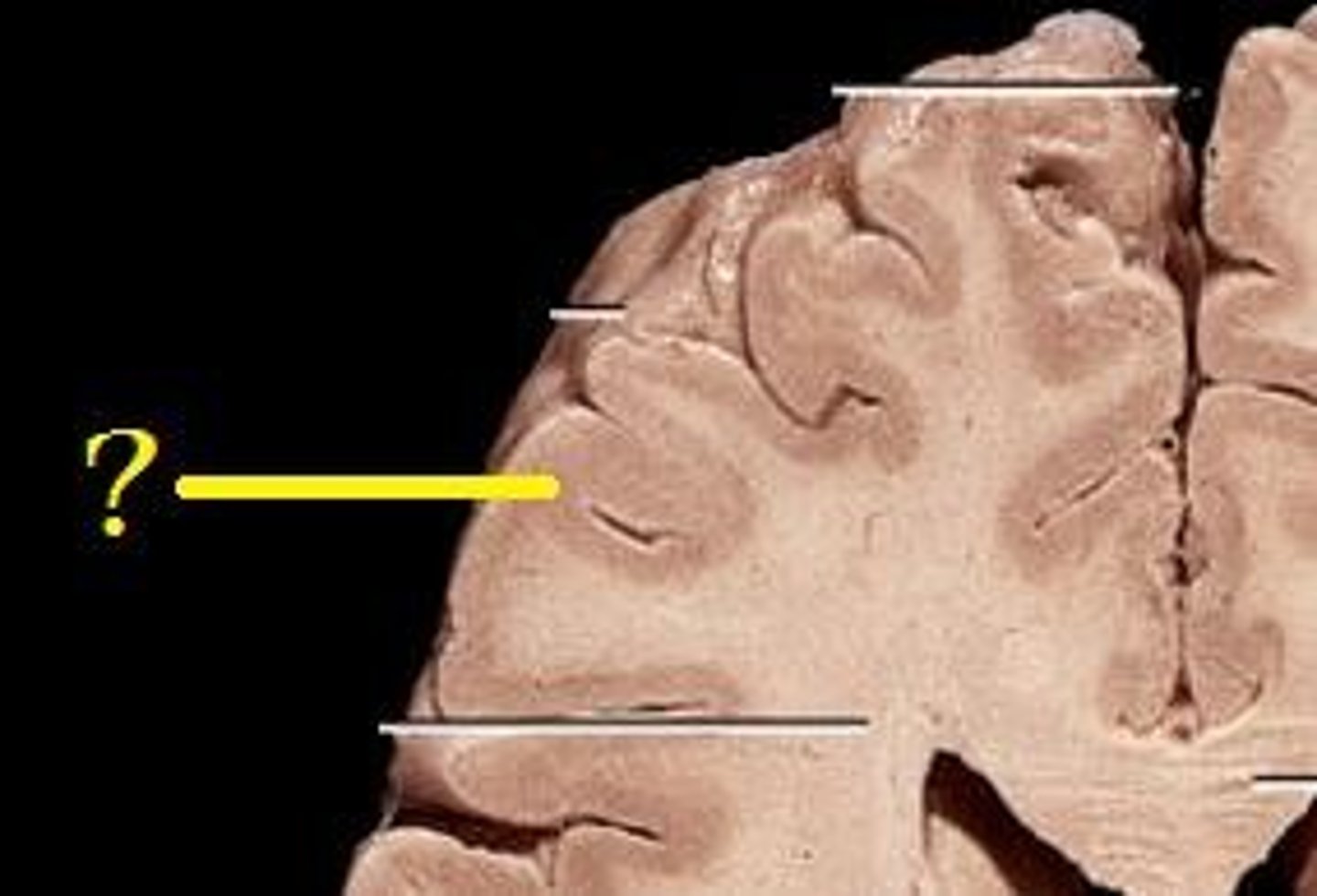
Pituitary Gland
The endocrine system's most influential gland. Under the influence of the hypothalamus, the pituitary regulates growth and controls other endocrine glands.
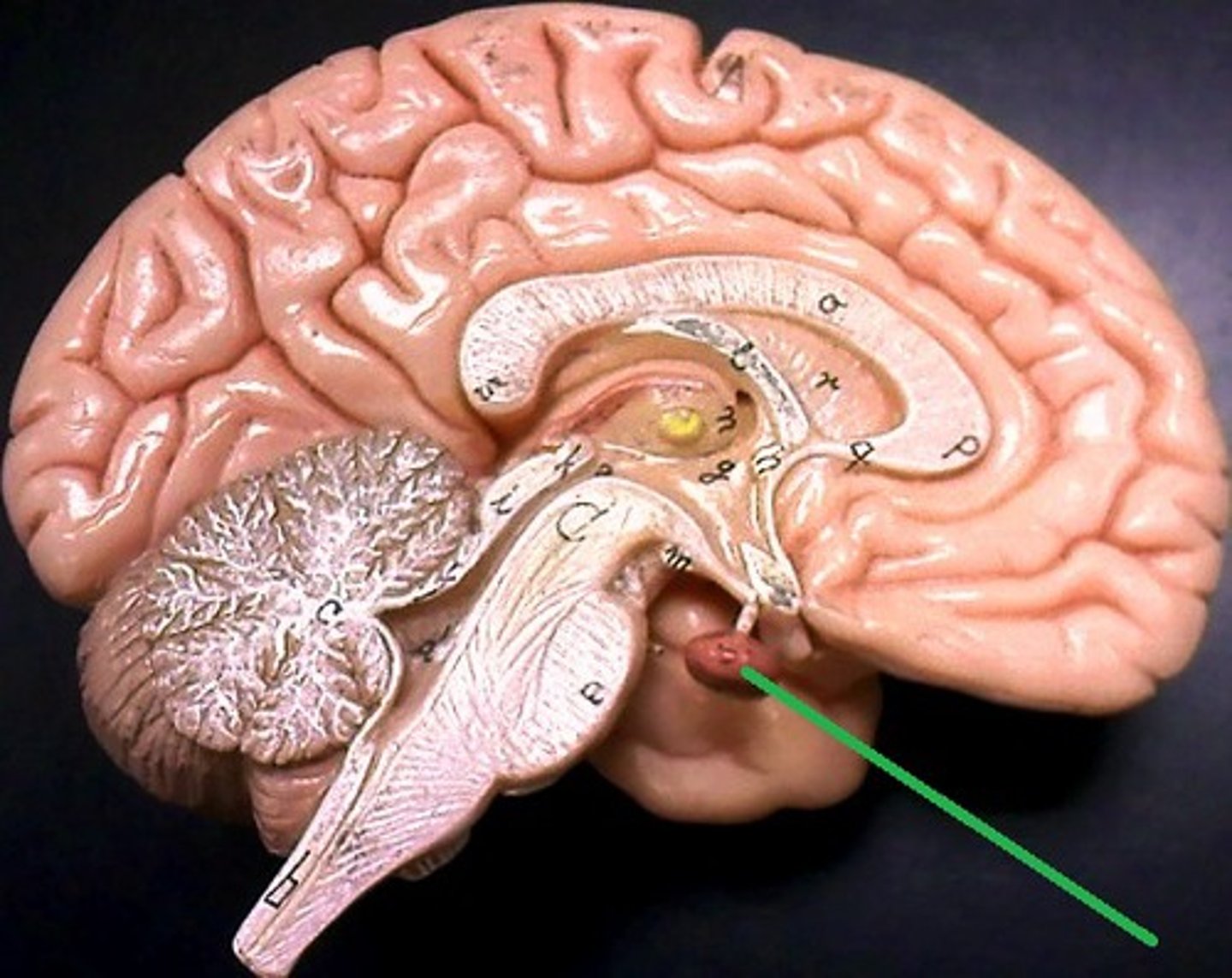
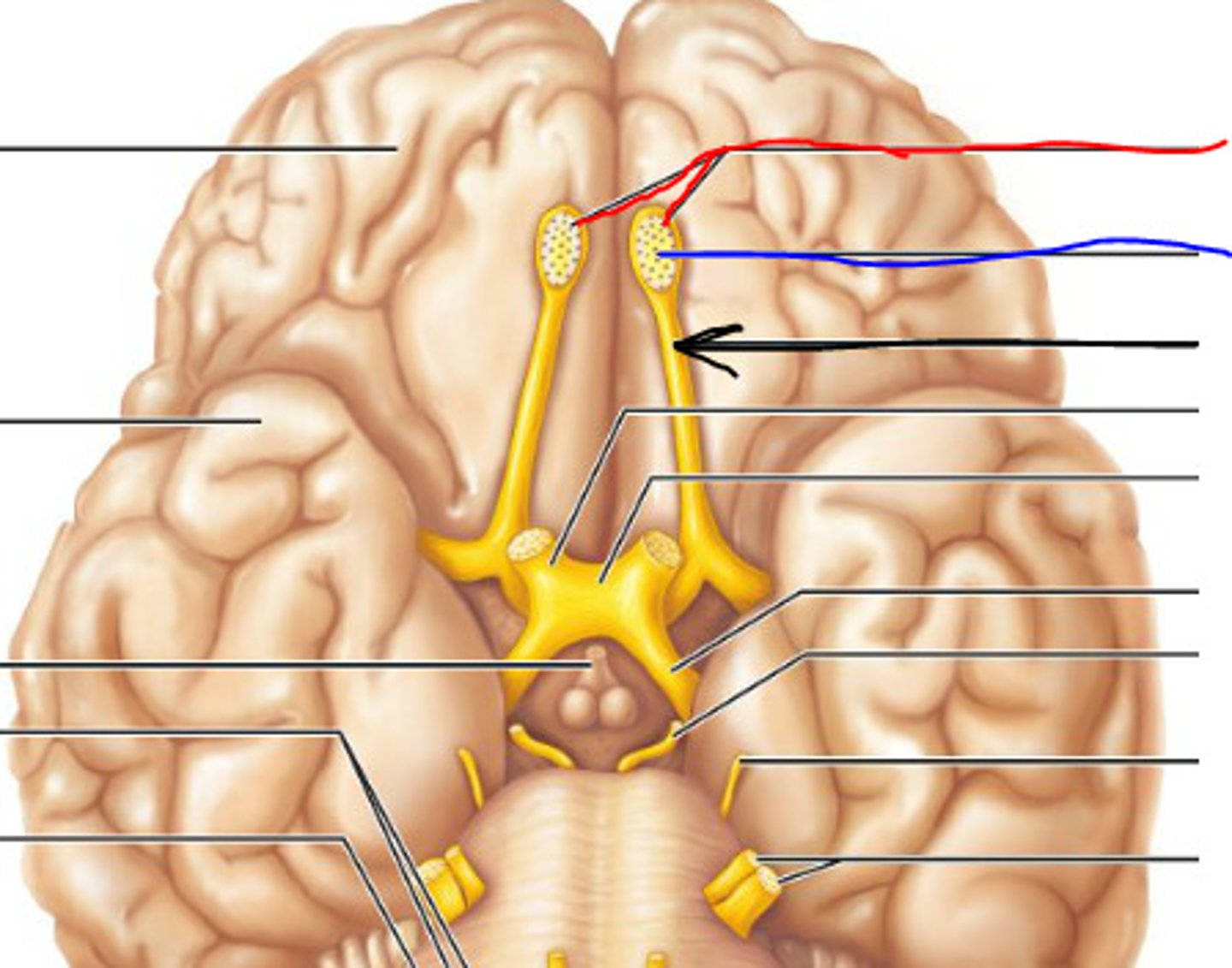
Optic Chiasma
The crossing of the optic nerves from the two eyes at the base of the brain
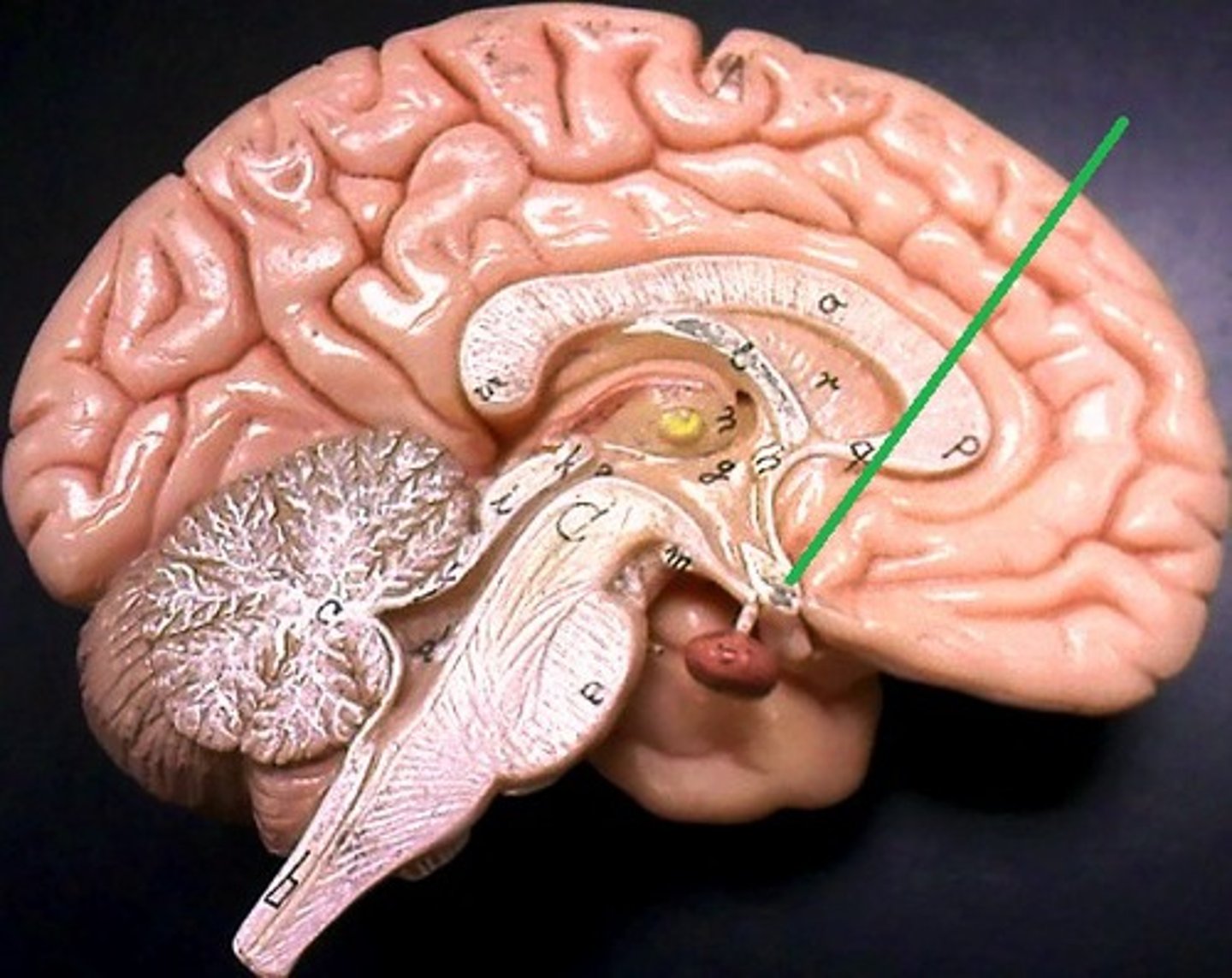
Optic Nerve
The nerve that carries neural impulses from the eye to the brain
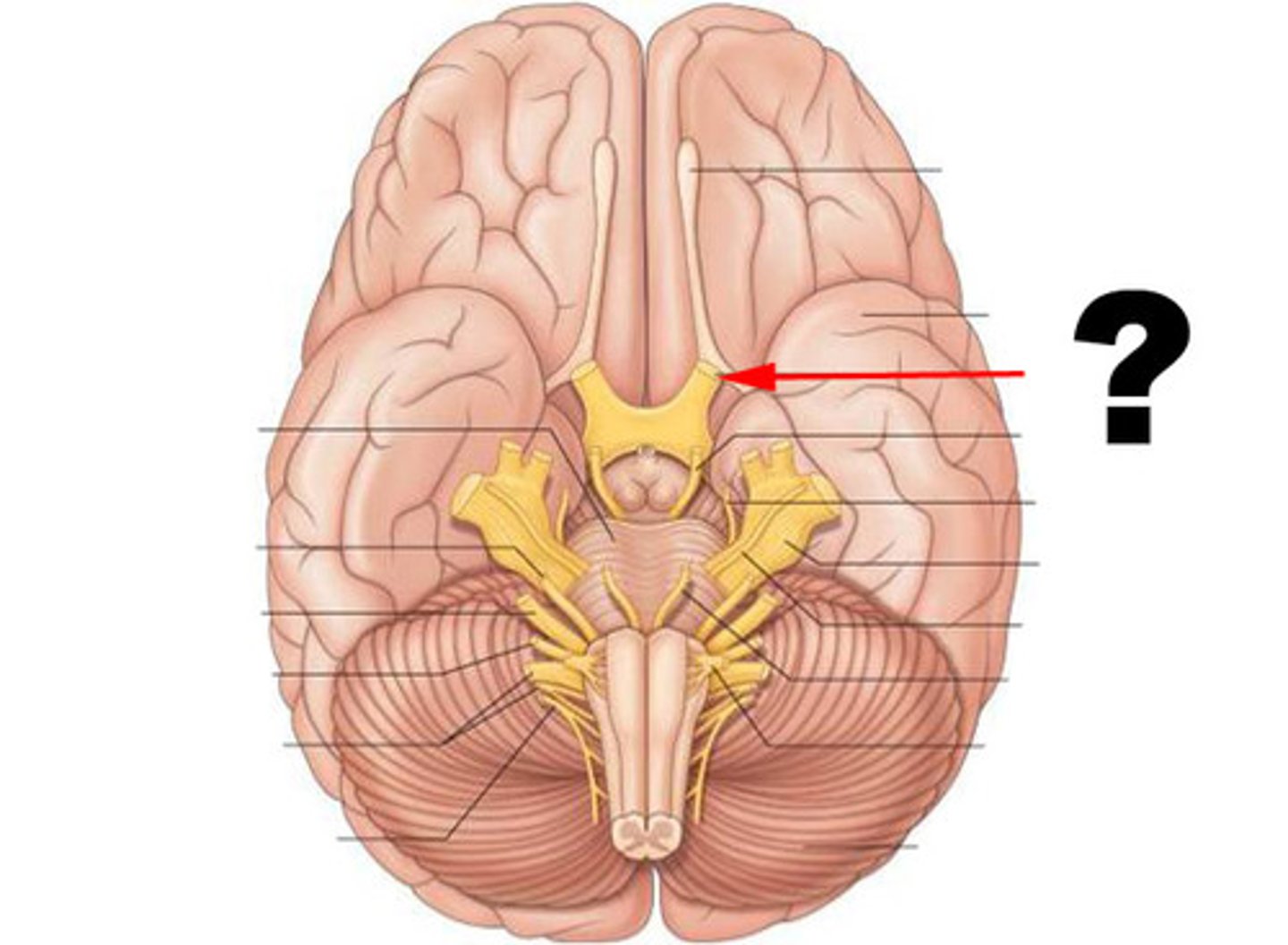
Olfactory Bulb and Tract
Sense of smell
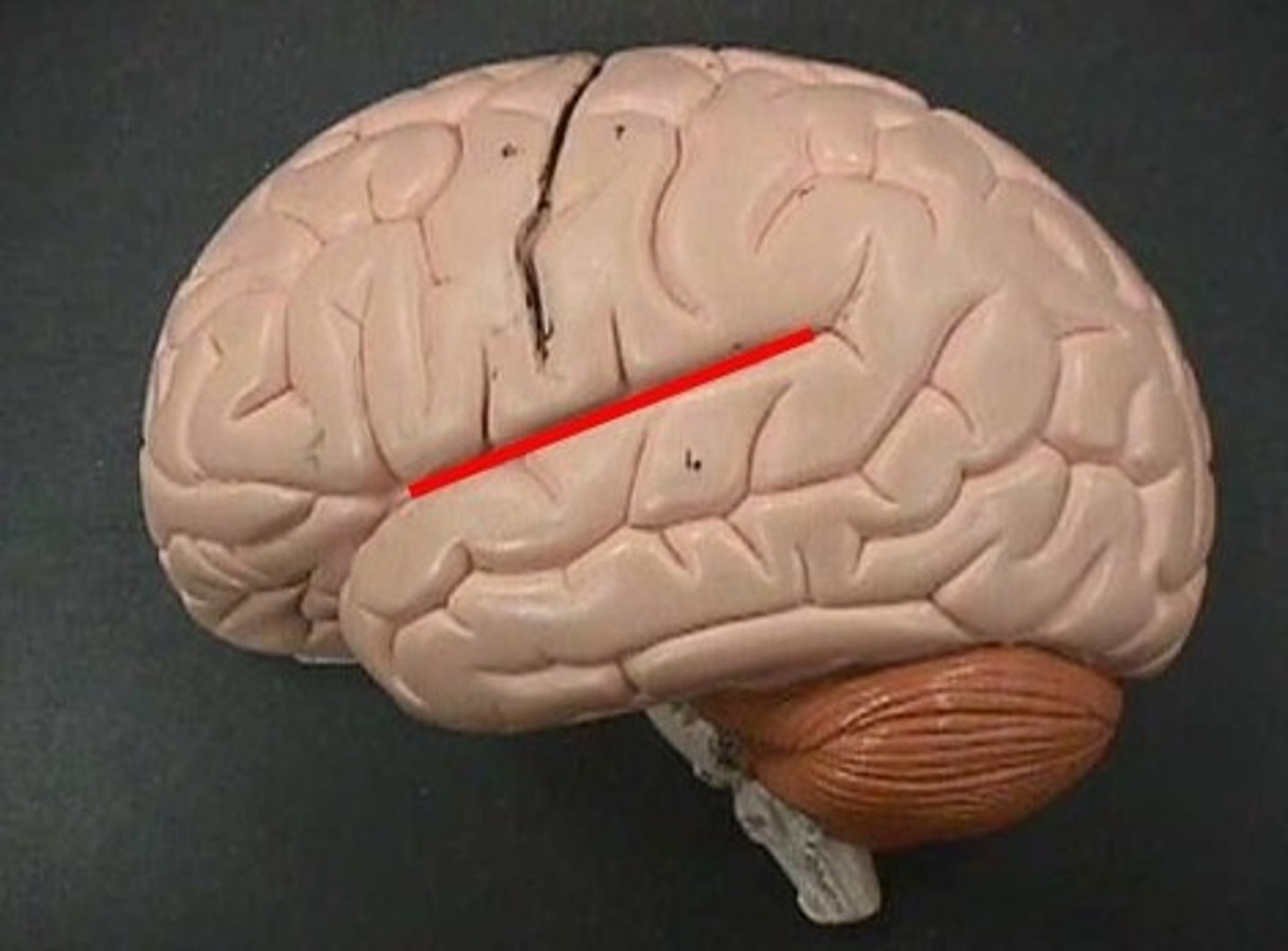
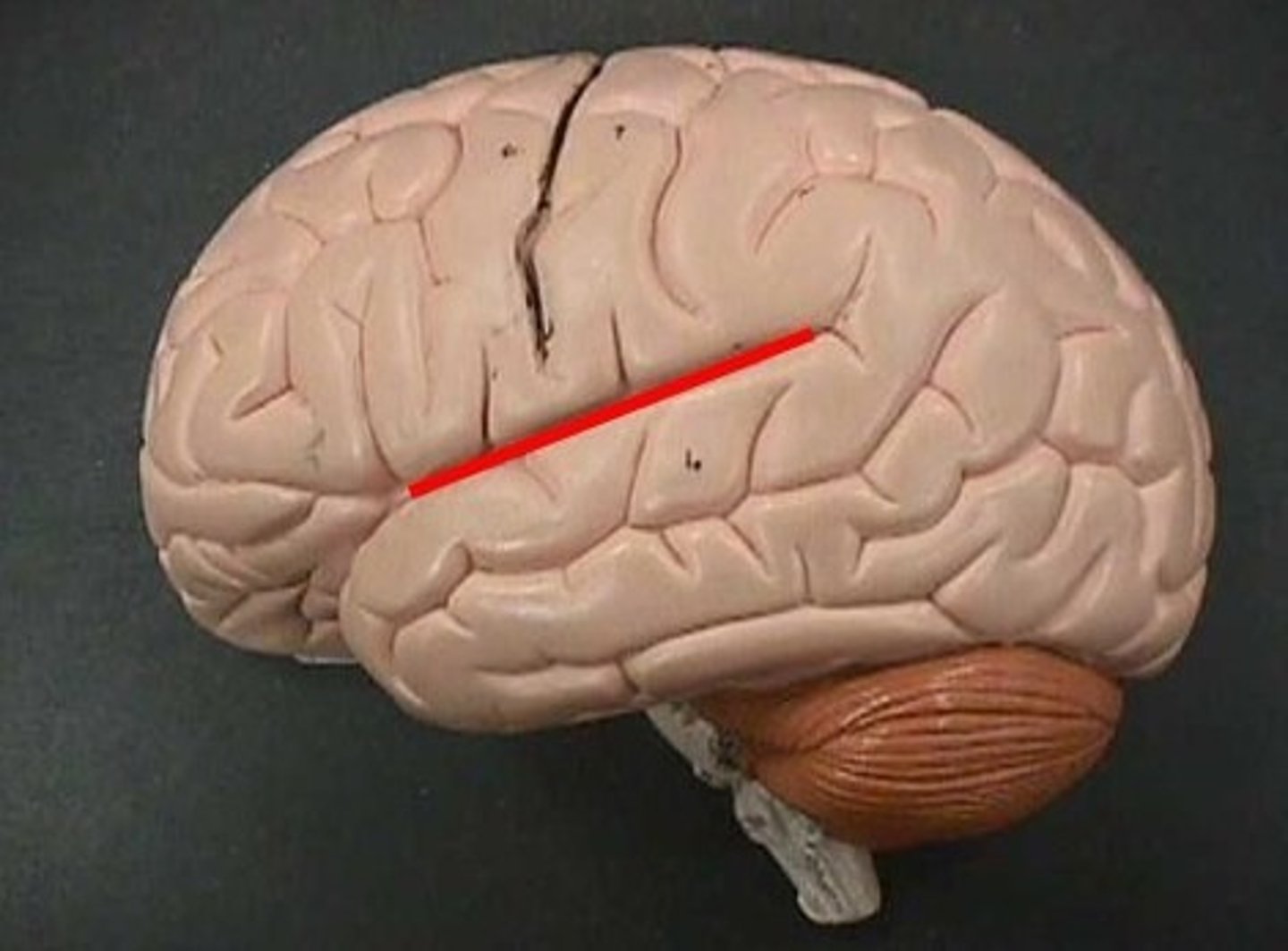
Lateral Sulcus
Separates temporal lobe from parietal and frontal lobes
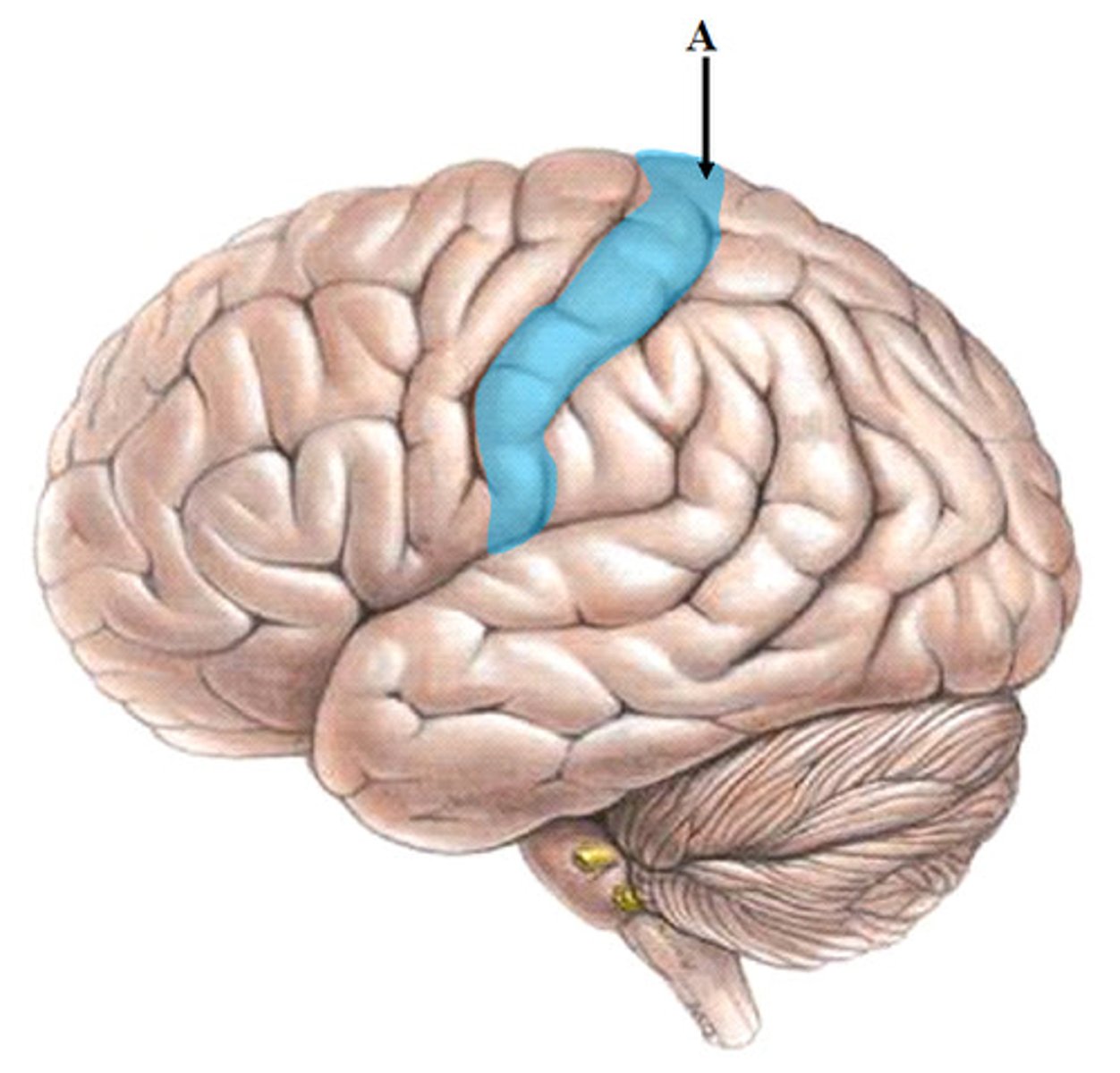
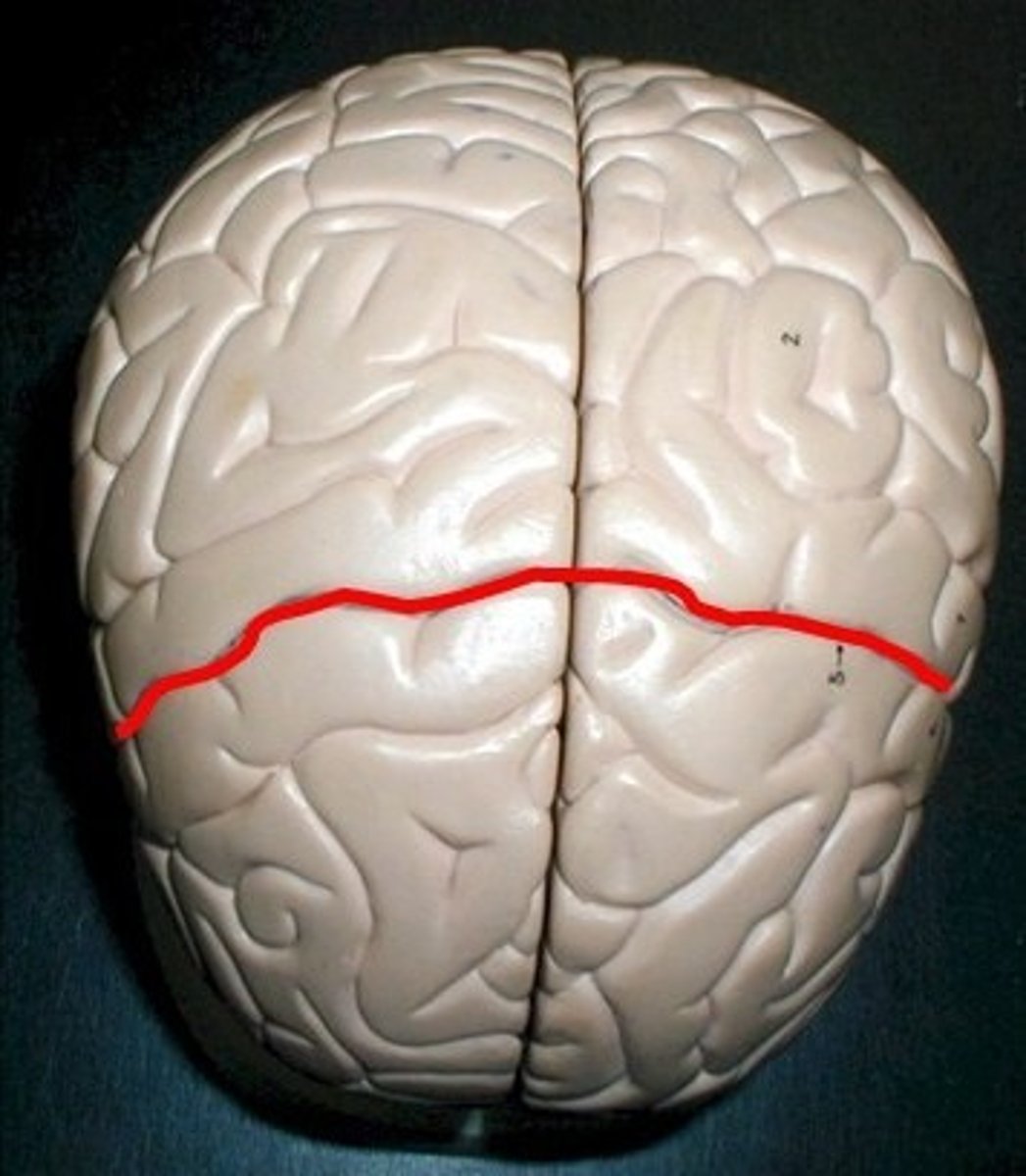
Central Sulcus
Separates frontal lobe from parietal lobe
Sulcus
Narrow groove
White Matter
Whitish nervous tissue of the CNS consisting of neurons and their myelin sheaths.
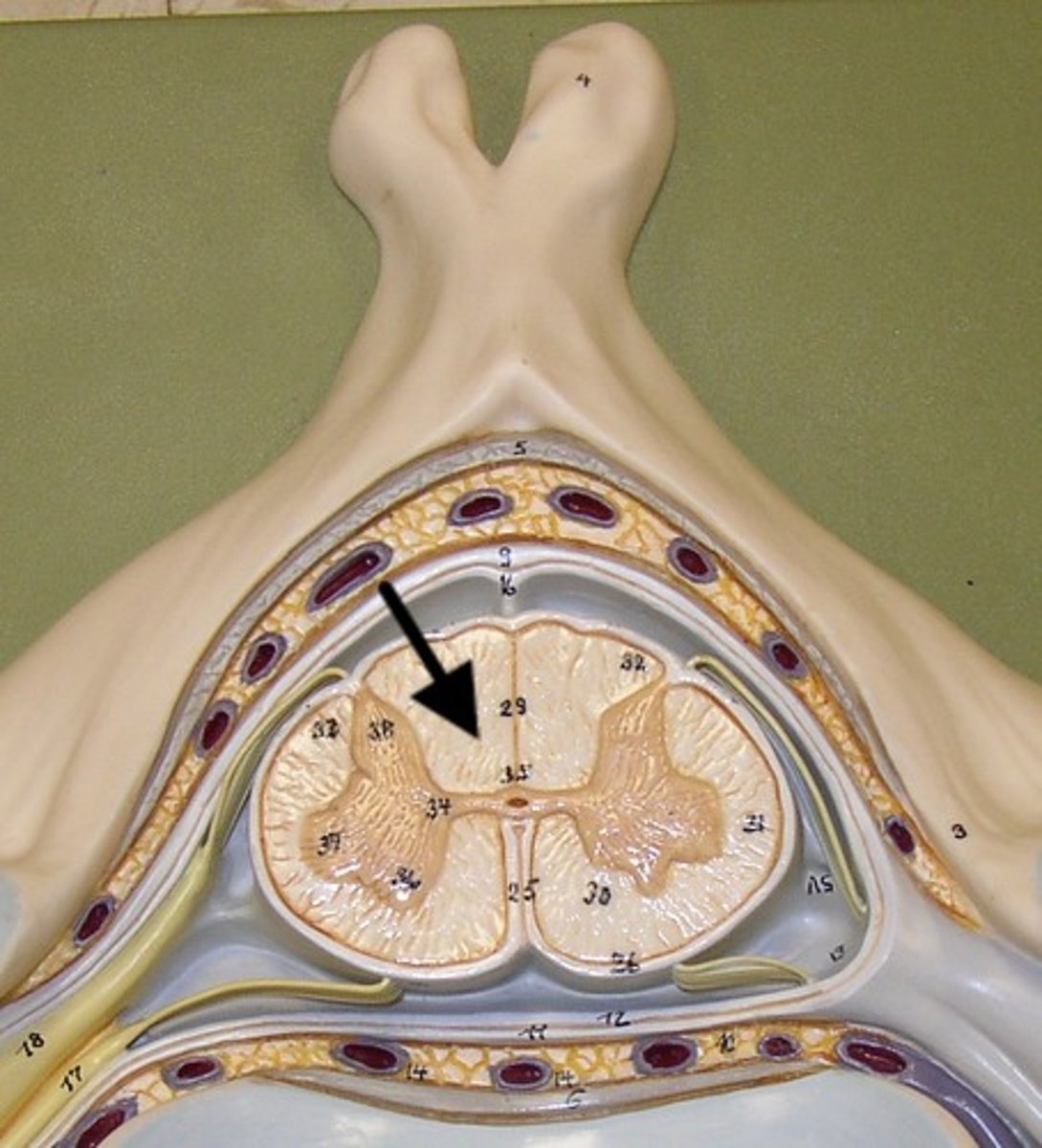
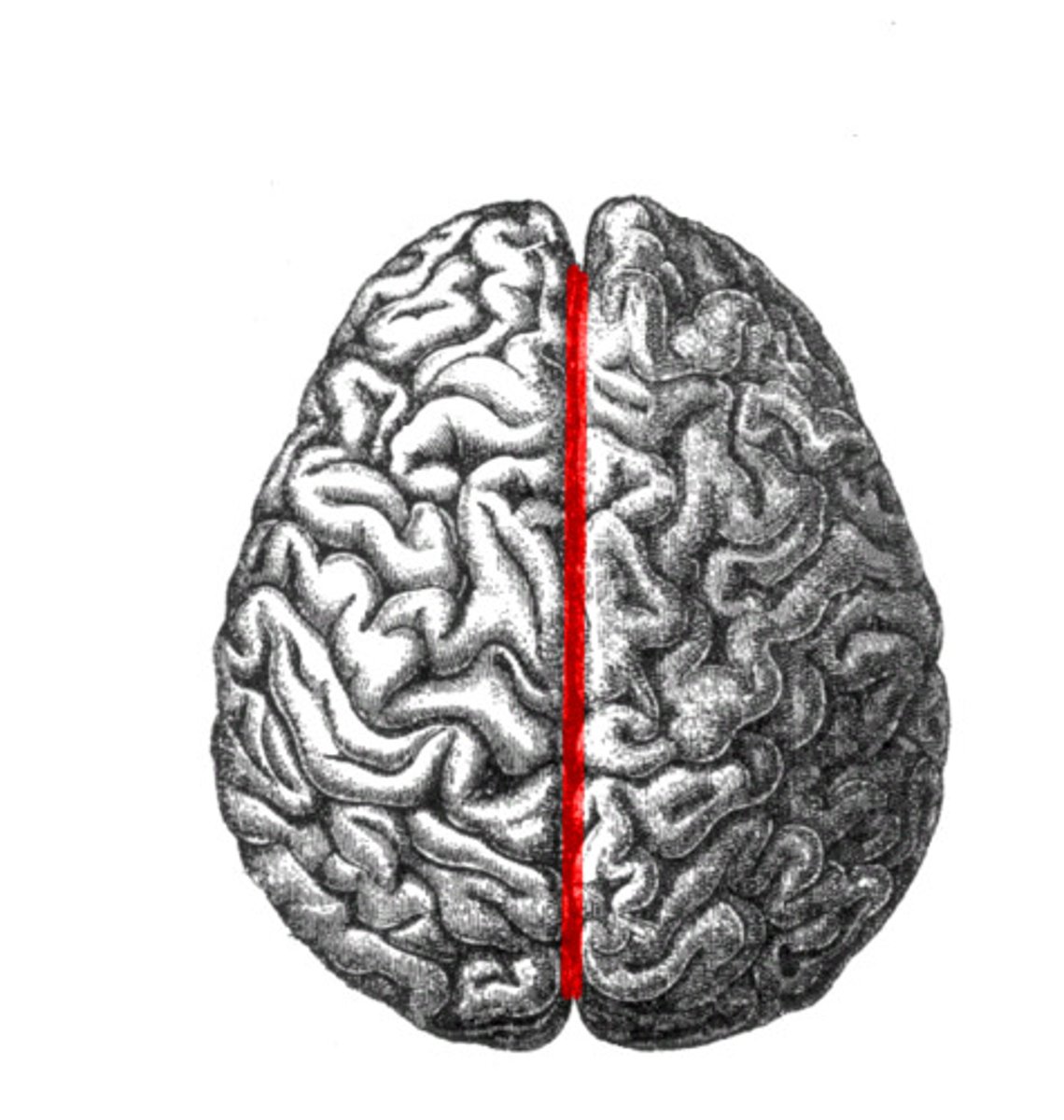
longitudinal fissure
separates left and right hemispheres
precentral gyrus
the strip of frontal cortex, just in front of the central sulcus, that is crucial for motor control
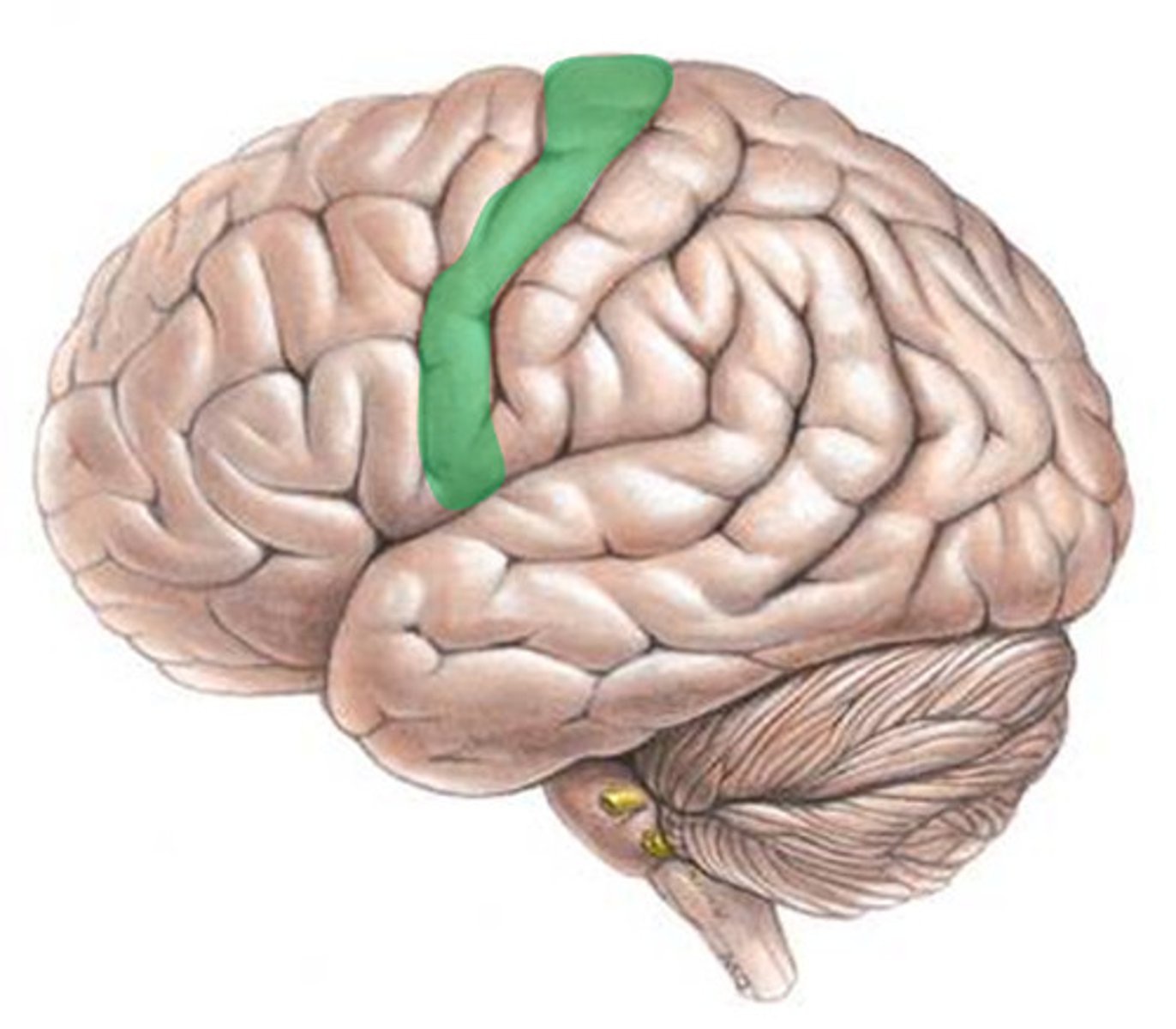
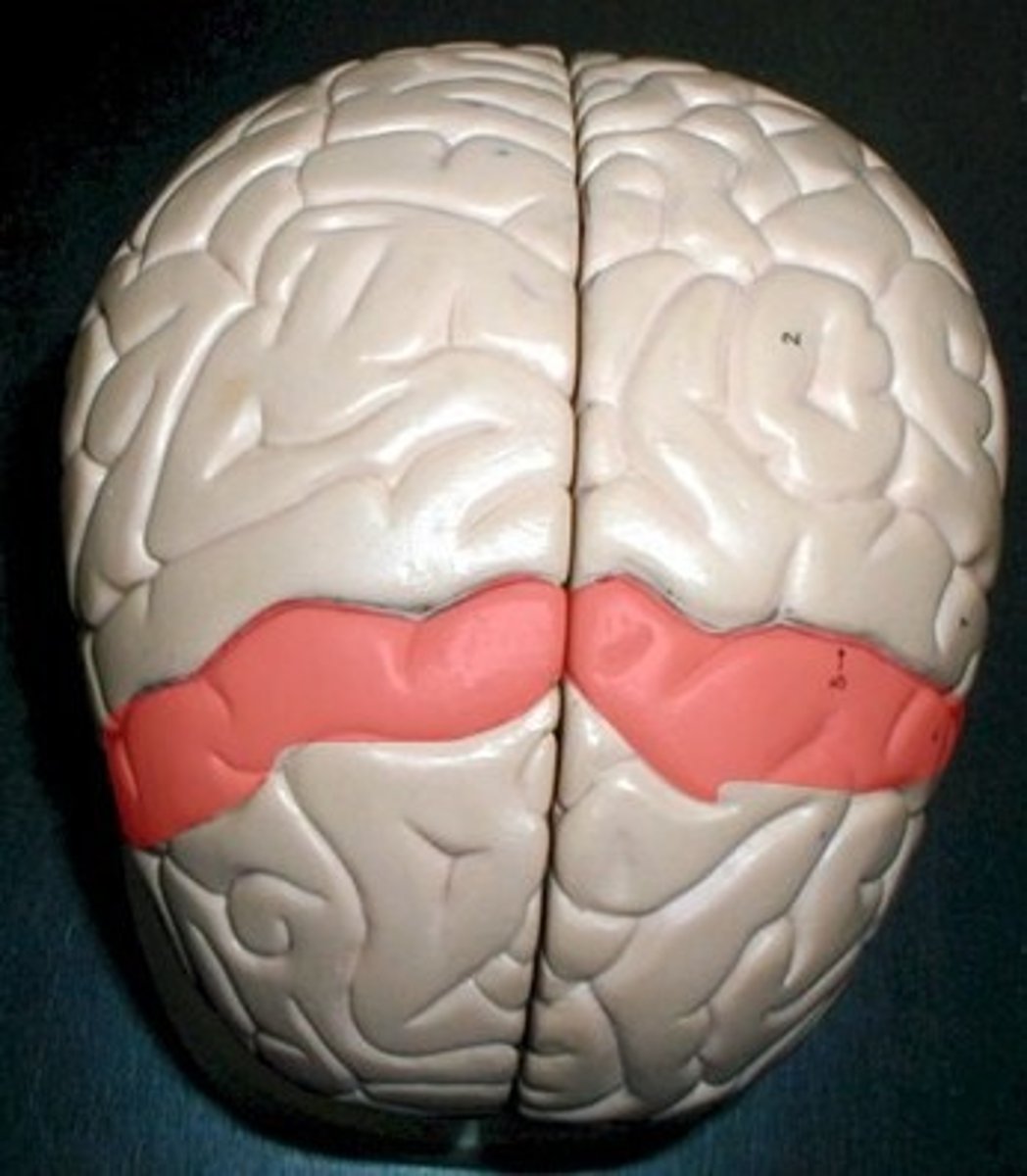
postcentral gyrus
the strip of parietal cortex, just behind the central sulcus, that receives somatosensory information from the entire body