Kingdoms and Domains
 Call Kai
 Learn
Learn Practice Test
 Spaced Repetition
 Match
Match Flashcards
 Knowt Play
1/27

There's no tags or description
Looks like no tags are added yet.
Name | Mastery | Learn | Test | Matching | Spaced | Call with Kai |
|---|
No analytics yet
Send a link to your students to track their progress
28 Terms
Kingdom Animalia
Multicellular, eukaryote, can move, can't make it's own food.
Example, human
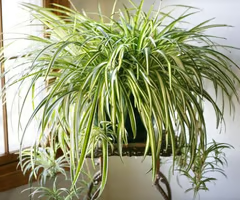
Kingdom Plantae
Multicellular, eukaryote, can't move, can make it's own food.
Example, tree
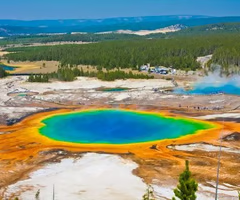
Kingdom Archaebacteria
Oldest bacteria, prokaryote, unicellular, some able to make food. Can live in extreme environments, ie hot springs
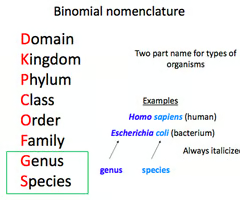
Binomial nomenclature
Naming organisms using two part names (greek/latin). The first name is the genus, and it's always capitalized. The second name is the species, and it's always lower case.
Carolus Linnaeus
Father of classification
Classification
The process of grouping things based on their similarities
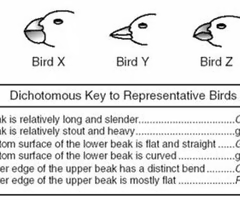
Dichotomous key
Use descriptive statements to sort and identify organisms
Kingdom Eubacteria
Most bacteria, prokaryote, unicellular, some can make food.
Example, e.coli
Domain
Biggest classification group. 3 domains: Eukarya, Bacteria, Archaea
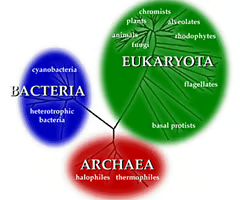
Levels of classification
From biggest to smallest groups - Domain, Kingdom, Phylum, Class, Order, Family, Genus, Species
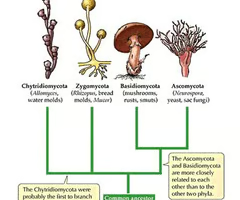
Kingdom Fungi
Unicellular or multicellular, eukaryote, can't make it's own food, can't move.
Example: Mushroom
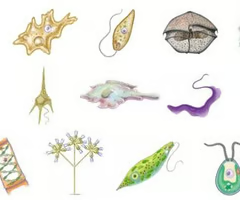
Kingdom Protista
Unicellular or multicellular, eukaryote, some can make their own food, some can move.
Example: Paramecium
Phylum
In classification, a group of closely related classes
Taxonomy
The science of identifying, classifying, and naming organisms.
Characteristics of phylum: Cnidaria
Invertebrate, stinging cells called nematocysts.
Example: Jellyfish
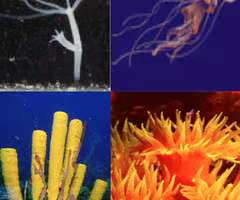
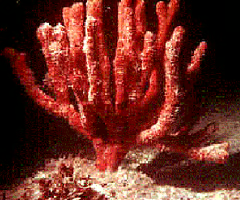
Characteristics of phylum: Porifera
Invertebrate, simple body plan, radial symmetry
Example: Sponges
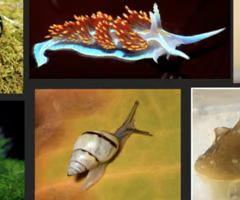
Characteristics of phylum: Mollusca
Invertebrate, soft body, shell, muscular foot used for locomotion
Example: Octopus
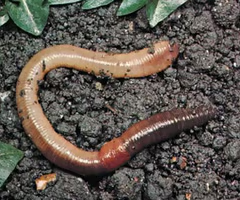
Characteristics of phylum: Annelida
Invertebrates, have segmented bodies
Example: Earthworm, leech
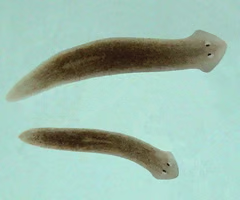
Characteristics of phylum: Platyhelminthes
Example: Flatworms, flukes, tapeworms
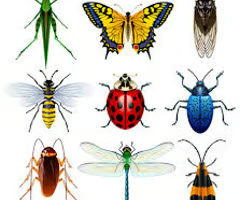
Characteristics of phylum: Arthropoda
Invertebrate, exoskeleton (made of chitin), jointed appendages, compound eyes, ability to molt
Example: Insects, spiders, crayfish
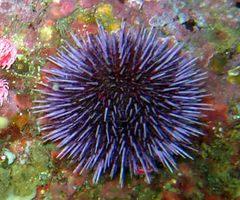
Characteristics of phylum: Echinodermata
Invertebrate, endoskeleton with spines
Example: Sea urchin, sea star
Characteristics of phylum: Chordata
Vertebrate, bilateral symmetry, nerve chord, endoskeleton
Example: Humans
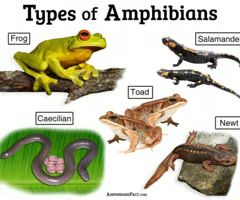
Characteristics of class: Amphibia
1) 3 Chambered Heart
2) Cold Blooded
3) reproduction in water
Example: Frogs
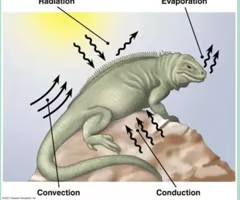
Characteristics of class: Reptilia
1) Cold Blooded
2) 4 Chambered Heart
3) Dry Skin
Example: Lizard
Characteristics of class: Aves
1. Toothless bill
2. Lay eggs
3. Covered with feathers
4. Skeleton composed of porous, lightweight bones (not a characteristic for all birds)
Example: Birds
Characteristics of class: Mammals
1. Vertebrates with hair
2. Young feed on milk from mammary glands
3. Have different types of teeth (incisors; canines; premolars and molars)
Example: Humans
Characteristics of class: Osteichthyes
Bony skeleton
Example: Fish
Characteristics of class: Chondrichthyes
1) Skeleton of Cartilage
2) No swim bladder or lungs
Example: Sharks

