ANSC 331 Exam 4: Maternal Recognition of Pregnancy
 Call Kai
 Learn
Learn Practice Test
 Spaced Repetition
 Match
Match Flashcards
 Knowt Play
1/21

There's no tags or description
Looks like no tags are added yet.
Name | Mastery | Learn | Test | Matching | Spaced | Call with Kai |
|---|
No analytics yet
Send a link to your students to track their progress
22 Terms
Define maternal recognition of pregnancy:
a biochemical signal that must be produced by the conceptus in sufficient amounts and at the correct time to prevent termination of the pregnancy
What is the goal of maternal recognition? What is necessary in order for this to occur?
- need progesterone to be produced at sufficient levels by the CL so that embryogenesis and attachment to the endometrium can take place
- maternal recognition of pregnancy must happen BEFORE luteolysis occurs
What are the requirements for luteolysis in sub-primate mammals?
- presence of oxytocin receptors on endometrial cells
- presence of a critical level of oxytocin
- PGF2A synthesis by the endometrium
Name and describe the mechanism of maternal recognition in each of the species discussed in class
Cow - Interferon Tau (IFNT)
Ewe - IFNT
Mare - 3 proteins/estrogens
Sow - estradiol
Human - human chorionic gonadotropin (hCG)
Describe the mechanism of maternal recognition of the cow and ewe.
- IFNT is secreted by the trophoblast cells of the conceptus
- Acts on the endometrial (inner layer of the uterus) cells
- IFNT induces secretes of proteins from the uterine glans into the lumen
Where is oxytocin produced in a cyclic sow?
- endometrium
- posterior pituitary
- Corpus Luteum
What stimulates the secretion of PGF2A during the late luteal phase?
Oxytocin (that is secreted by the large luteal cells)
IFNT is secreted by what type of cells within the conceptus?
by trophoblast cells of the conceptus
What does IFNT do to the endometrial cells?
- prevent OTR expression
- stops oxytocin binding
- prevents PGF2A pulses
IFNT induces secretions of proteins which is used by what?
the conceptus
IFNT gets into the uterine vein and can do what?
it can prevent luteolysis
Understand MRP in the Pig: Estradiol and the endocrine-exocrine theory.
- In a pregnant sow, conceptus secretes estradiol
- PGF2A is still produced
- Estradiol causes PGF2A to be rerouted into the uterine lumen, where it is destroyed
- PGF2A cannot enter uterine vein -> is unable to transport to the ovary -> cannot cause luteolysis
Does the number of embryos matter in a pig? How many embryos are required?
Yes, the number of embryos matters; requires at least 4 embryos (2 per horn)
In the mare, understand uterine migration phenomenon.
- conceptus doesn't undergo morphological changes from spherical -> tubular -> filamentous
- presence of conceptus prevents luteolysis
- conceptus is moved 12-14 times per day on days 12-14 by uterine contractions (this prevents production of PGF2A)
- allows the distribution of pregnancy recognition factors to the endometrial cels
In humans, what is the role of hCG?
Human Chorionic Gonadotropin (hCG) acts like LH
** LH supports function of the CL; causes ovulation and lutenization + normal progesterone production
- produced by trophoblast cells of chorion
- sustains the CL
- promotes trophoblast growth & placental development
Describe maternal recognition of pregnancy signals in cats and dogs
No signal from conceptus required
- Dogs: diestrus length similar to gestation length
- Cats: mating induced CL formed, luteal duration same as gestation
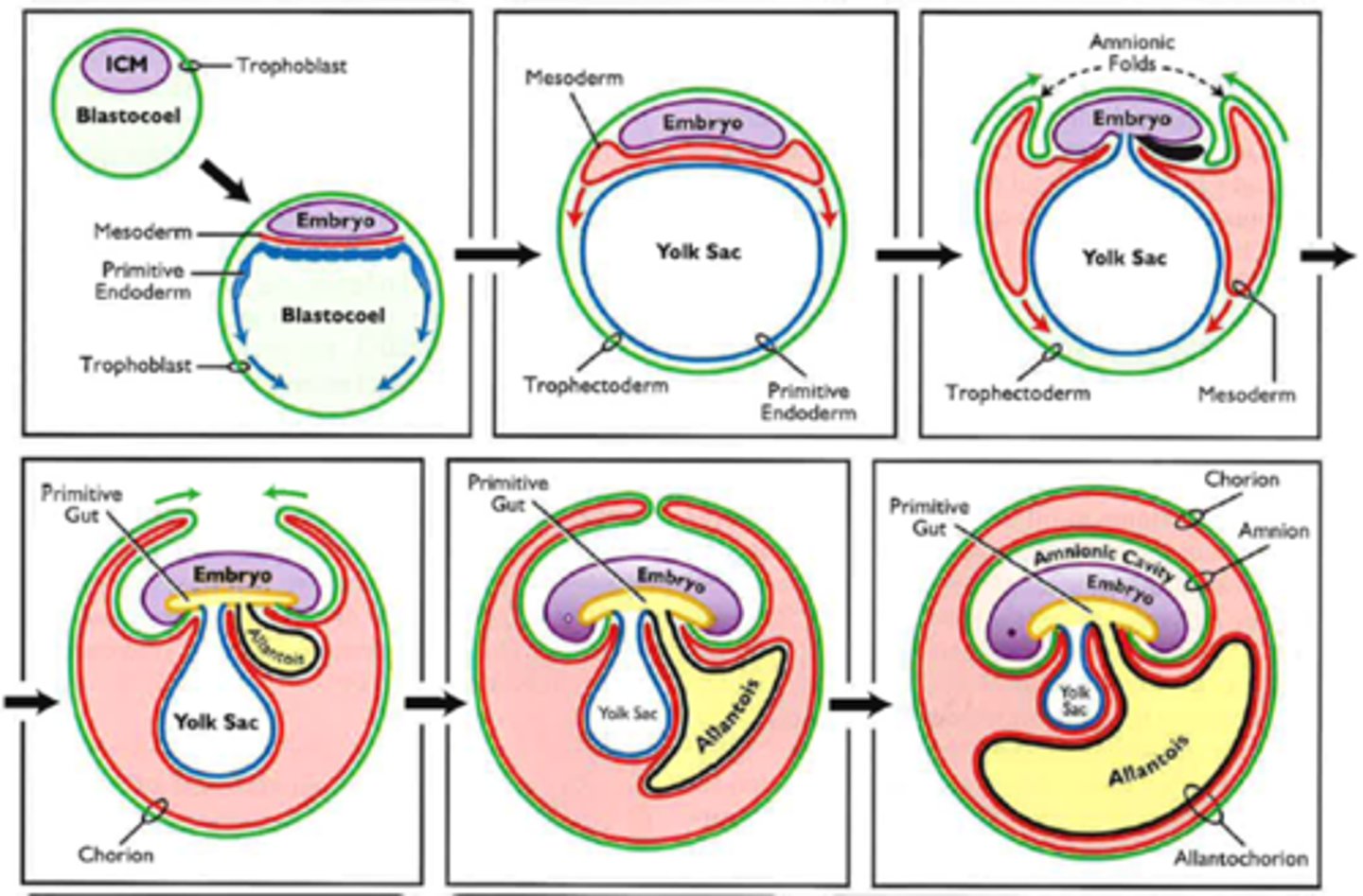
Define yolk sac
(transient membrane):
- source of some primordial cells (hindgut is primary source)
- source of blood stem cells
- regresses in the 1st trimester
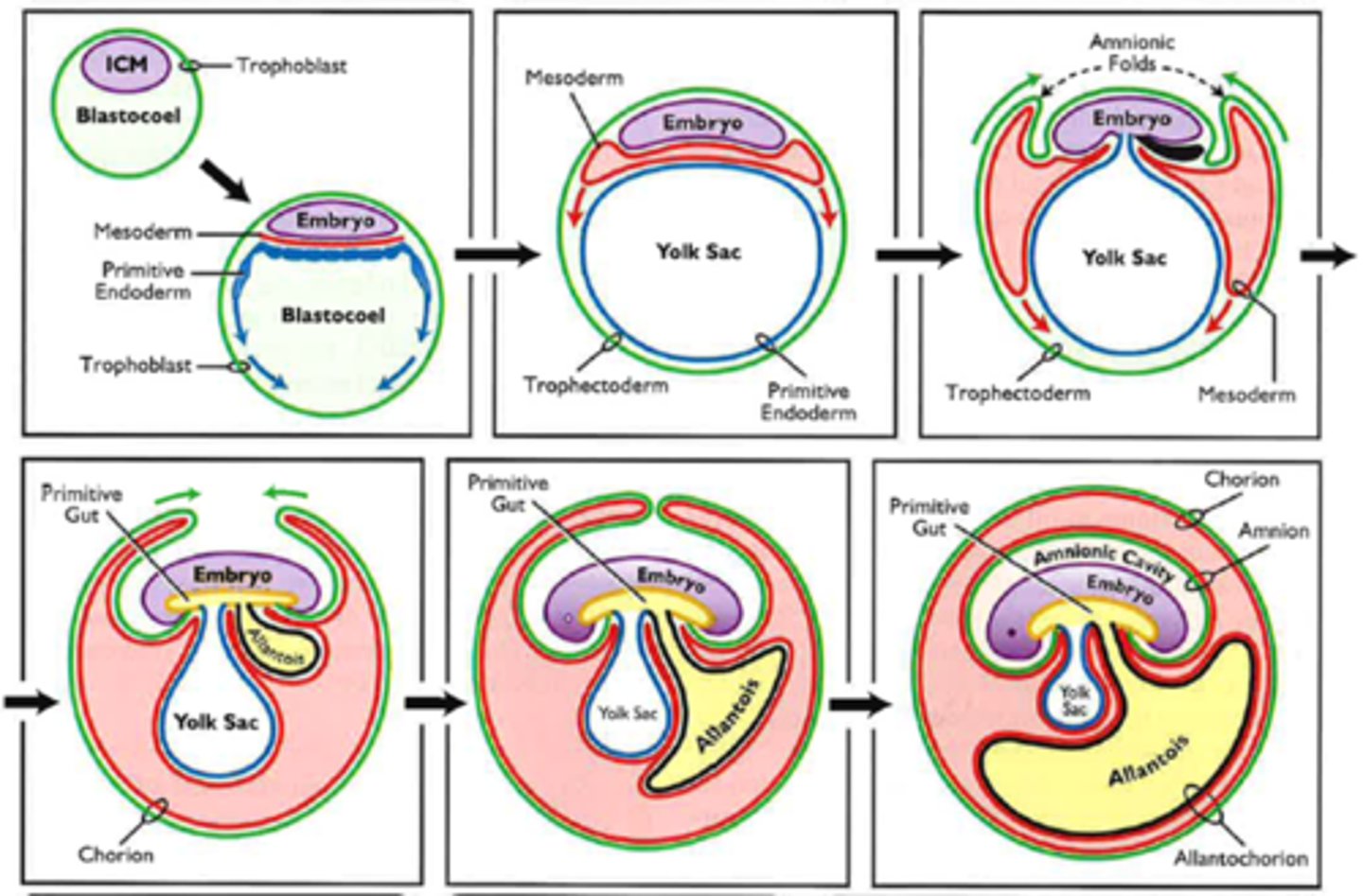
Define amnion
(immediate layer right outside the embryo)
- filled with amniotic fluid. Allows the fetus to develop symmetrically and not get stuck to the membranes
- protective sac that embryo develops in
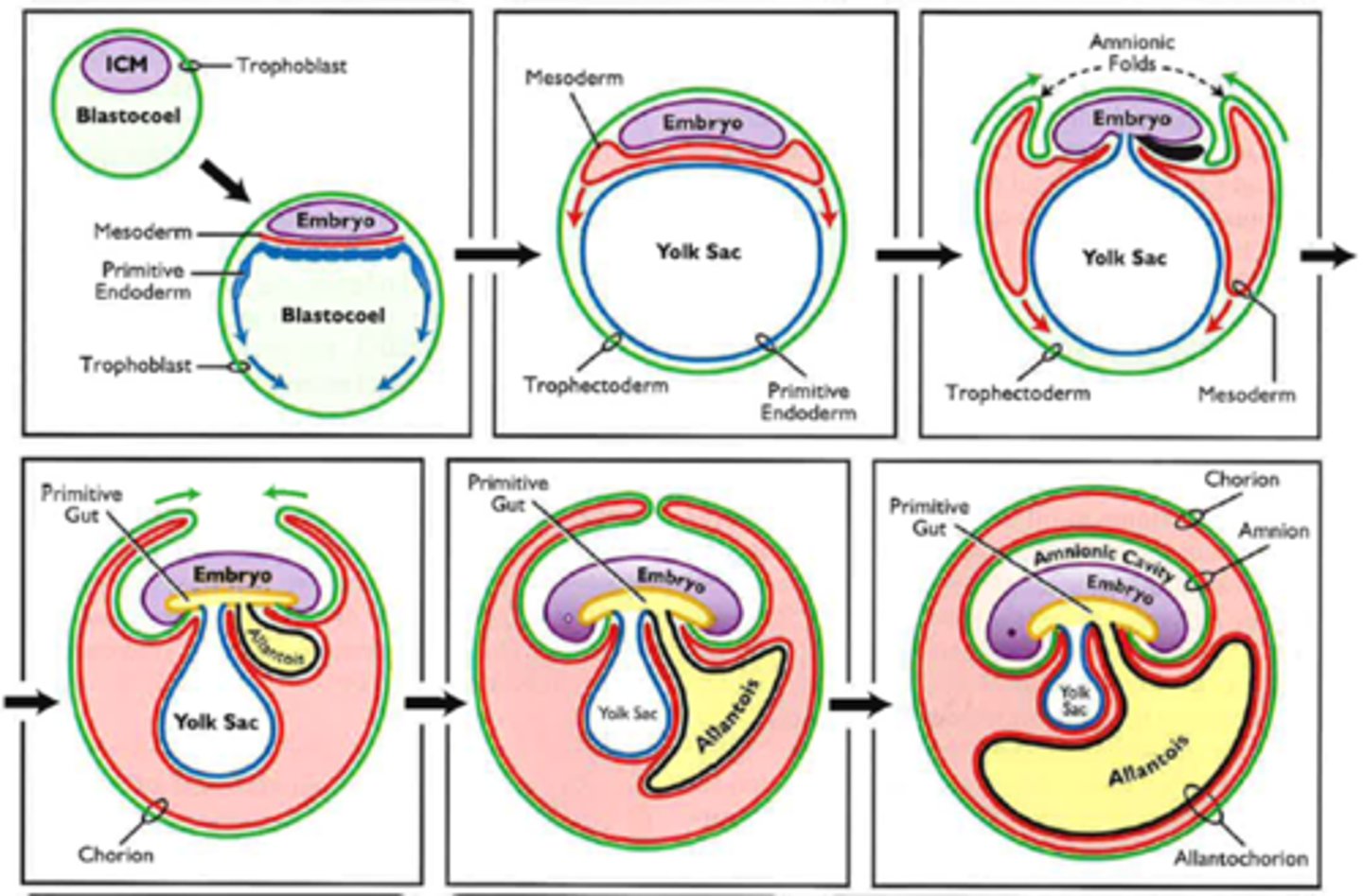
Define chorion
- mesoderm fuses with the trophectoderm = chorion
- outer most layer of placenta (derived from trophectoderm)
- eventually fuses with allantois
- produces maternal recognition of pregnancy signal, attaches to uterus, takes up nutrients
Define allantois
- fills with nutrients flowing through GI tract and fetal kidneys
- fuses with chorion and provides blood supply
- derived from the primitive gut (of the embryo)
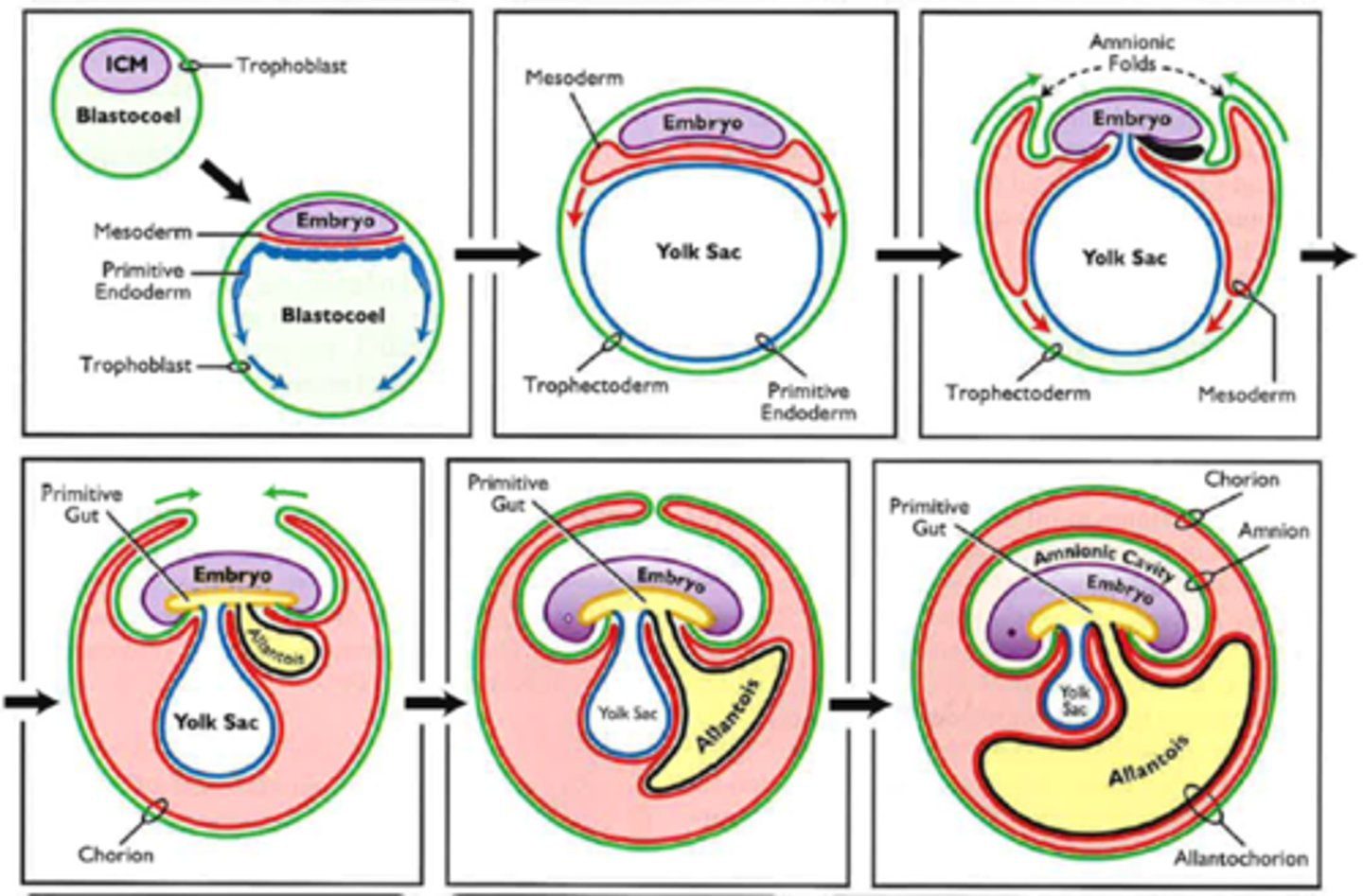
Define allantochorion
- fusion of allantois and chorion
- fetal contribution to the placenta
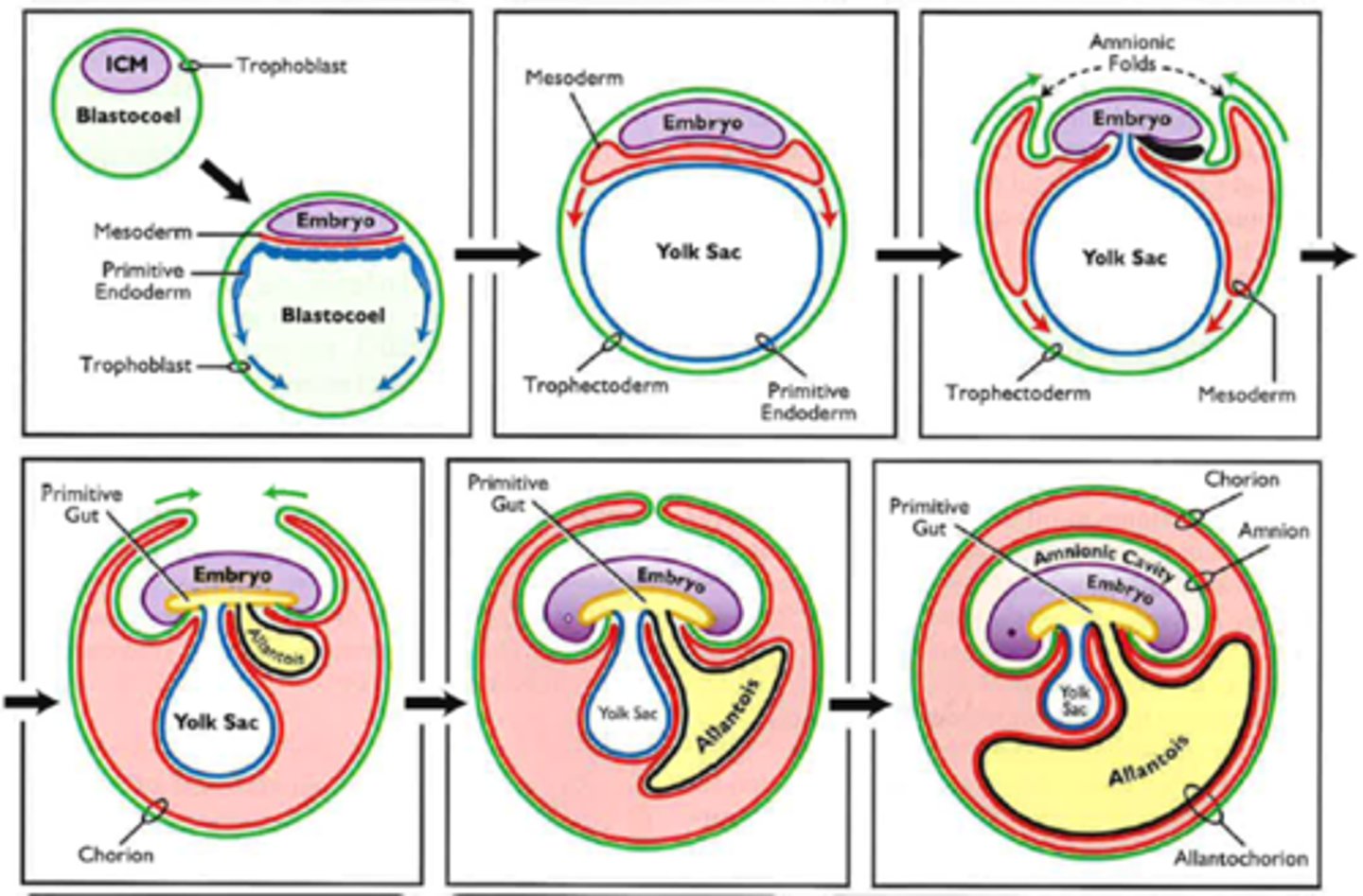
There is a double sac that surrounds the embryo. What is the inner and outer sac made of?
Inner sac: trophectoderm and mesoderm = amnion
Outer sac: chorion

