CHAPTER 10: OBTURATION
 Call Kai
 Learn
Learn Practice Test
 Spaced Repetition
 Match
Match Flashcards
 Knowt Play
1/77

There's no tags or description
Looks like no tags are added yet.
Name | Mastery | Learn | Test | Matching | Spaced | Call with Kai |
|---|
No analytics yet
Send a link to your students to track their progress
78 Terms
significance of obturation
sealing the root canal system
entombing residual irritants
preventing periapical pathology
promoting periapical healing
ideal root canal filling
easily retrievable in case retreatment
non-resorbable material that remains stable over time
radiopacity to allow clear assessment on radiographs
complete sealing of the root canal’s apical, lateral, and coronal aspects
non-toxic and biocompatible properties to avoid irritation of periapical tissues
timing of obturation
single-visit obturation
multiple-visit obturation
single-visit obturation
recommended for cases with vital pulps, no signs of infection, and well-dried canals
multiple-visit obturation
a necrotic pulp with infection is present
when there is persistent periapical inflammation
the canal exhibits exudation or is not completely dry
with an intracanal medicament → calcium hydroxide
0.5-1.0mm
the optimal length of obturation, short of the radiographic apex
overfilling (extrusion beyond the apex)
may cause periapical irritation
underfilling (short of the working length)
leaves unsealed spaces that can harbor bacteria
preparation for obturation
before placing the obturation materials, proper cleaning and disinfection are essential
following steps are crucial:
removal of smear layer
final irrigation
drying the canal
removal of smear layer
this layer of dentinal debris and bacteria formed during instrumentation should be eliminated using:
EDTA
NaOCl
citric acid
final irrigation
a combination of NaOCl and EDTA ensures thorough decontamination and allows better adaptation of sealers
drying the canal
paper points are used to eliminate residual moisture before obturation
instruments for obturation
paper points
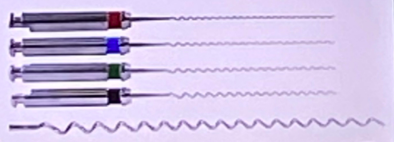
lentulo spiral
spreaders & pluggers
gutta percha
sealers
[ in order ]
lentulo spiral
usage: clockwise
deliver sealer in the canal
requirements of a good sealers
slow setting time
dimensional stability
solubility, flowability
radiopacity, hermetic seal
retreatment compatibility
non-toxicity and biocompatibility
adhesion to dentin and core material
types of sealers
bioceramic sealers
resin-based sealers
glass ionomer sealers
silicone-based sealers
calcium hyroxide sealers
zinc oxide-eugenol sealers
zinc oxide-eugenol sealers
forms a chelating reaction with dentin, creating a mechanical seal
still widely used but have been largely replaced by more advanced materials
composition of zinc oxide-eugenol sealers
eugenol
zinc oxide
additives for setting control
properties of zinc oxide-eugenol sealers
antimicrobial due to eugenol
long setting time (can take 24+ hrs)
good working time and flow
disadvantages of zinc oxide-eugenol sealers
can shrink over time, leading to leakage
soluble in tissue fluids, reducing long-term stability
eugenol may cause cytotoxic effects on periapical tissues
sample brands of zinc oxide-eugenol sealers
Procosol
Roth’s Sealer
Wach’s sealer
Tubli-Seal EWT
Tubli-Seal (Sybron- Endo)
Pulp Canal Sealer EWT
Pulp Canal Sealer (SybronEndo)
calcium hyroxide sealers
best suited for cases requiring apexification of regenerative endodontics
releases hydroxyl ions promoting antibacterial activity and hard tissue formation
composition of calcium hyroxide sealers
resins, fillers
calcium hydroxide
properties of calcium hyroxide sealers
bactericidal effect due to high pH
stimulates apical barrier formation
disadvantages of calcium hyroxide sealers
weak adhesion to dentin
soluble over time leading to microleakage
sample brands of calcium hyroxide sealers
Apexit
Sealapex
Apexit Plus
CRCS (Calciobiotic Root Canal Sealer)
glass ionomer sealers
forms chemical bonds to dentin improving adhesion
used in cases requiring strong adhesion but less preferred due to difficulty in retreatment
composition of glass ionomer sealers
glass ionomer cement with fluoride release
properties of glass ionomer sealers
high radiopacity
fluoride release may enhance reminiralization
disadvantages of glass ionomer sealers
brittle and difficult to remove in retreatment
can undergo dimensional changes over time
sample brands of glass ionomer sealers
Ketac-Endo
Activ GP
resin-based sealers
adhesive bonding dentin providing excellent sealing ability
AH Plus (epoxy resin) → most commonly used sealers due to its superior sealing properties and low solubility
composition of resin-based sealers
epoxy resin or methacrylate-based formulations
properties of resin-based sealers
high radiopacity
minimal shrinkage
long setting time (8 hrs)
disadvantages of resin-based sealers
difficult to remove in retreatment
requires complete canal dryness for bonding
some formulations contain cytotoxic components
sample brands of resin-based sealers
AH-26
AH Plus
EndoREZ
Diaket
Epiphany
RealSeal
silicone-based sealers
expansion upon setting ensuring a tight seal
guttaflow combines gutta-percha particles within the sealer making it an easy-to-use material
composition of silicone-based sealers
silicone-based materials with gutta-percha particles (in guttaflow)
properties of silicone-based sealers
biocompatible and tissue-friendly
dimensional stability → does not shrink
disadvantages of silicone-based sealers
weaker adhesion to dentin
expensive compared to other sealers
sample brands of silicone-based sealers
RoekoSeal
GuttaFlow
bioceramic sealers
forms hydroxyapatite upon setting, chemically bonding to dentin
becoming the gold standard due to their superior sealing ability, biocompatibility, and dimensional stability
composition of bioceramic sealers
zirconium oxide
calcium silicates
calcium phosphate
properties of bioceramic sealers
excellent biocompatibility and bioactivity
strong antimicrobial properties due to high pH
hydrophilic, works well in moist environment
disadvantages of bioceramic sealers
long setting time (12-24hrs)
expensive compared to traditional sealers
sample brands of bioceramic sealers
zirconium oxide
calcium silicates
calcium phosphate
methods to introduce sealers into the canal
coating the master cone
using lentulo spirals
applying with files and reamers
utilizing ultrasonic devices
core filling material
must be stable and provide a three-dimensional seal
3 common core materials
resilon
silver cones
gutta-percha
gutta-percha
the gold standard in root canal obturation
available in standardized and non-standardized cones
composition:
20% gutta-percha
65% zinc oxide
10% radiopacifiers
5% plasticizers
used as matrix
gutta percha
used as filler
zinc oxide
used as plasticity
waxes or resins
used as radiopacitiy
metal sulfates (barium, strontium)
resilon
bonds chemically to resin-based sealers
a synthetic polymer-based alternative to gutta-percha
shows promise but has lower long-term clinical success compared to GP
methods of obturation
lateral compaction
warm vertical compaction
continuous wave compaction
thermoplastic injection techniques
carrier-based gutta-percha
thermo-mechanical compaction
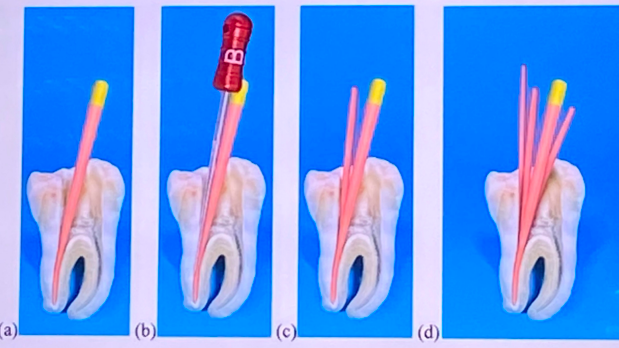
cold lateral compaction
most commonly taught technique
uses a master gutta-percha cone and additional accessory cones compacted laterally using a spreader and sealer
advantages of cold lateral compaction
simple, cost-effective, and provides good control
disadvantages of cold lateral compaction
may leave voids and does not adapt well to irregular canal anatomy.
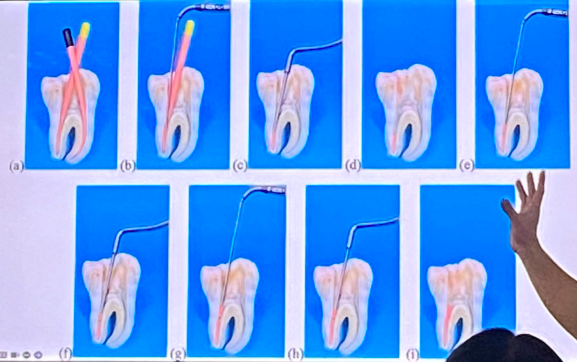
warm vertical compaction
involves softening gutta-percha using heat and compacting it vertically with a plugger
advantages of warm vertical compaction
provides better adaptation to canal walls and irregularities
disadvantages of warm vertical compaction
more technique sensitive and requires specialized equipment
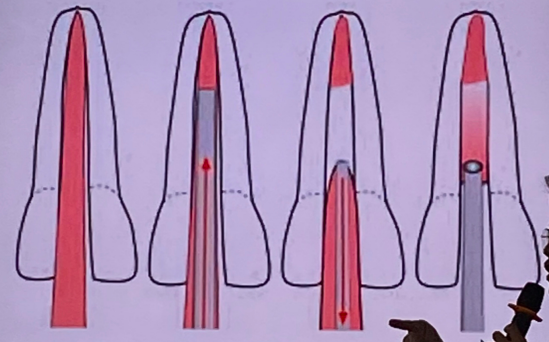
continuous wave compaction
a variation of warm vertical compaction using a heated plugger to down-pack gutta-percha in one continuous motion
advantages of continuous wave compaction
more efficient than traditional warm vertical compaction
disadvantages of continuous wave compaction
requires a learning curve and specialized instruments
thermoplastic injection techniques
uses injected thermoplasticized gutta-percha via a delivery system (ex: Obtura III, Calamus)
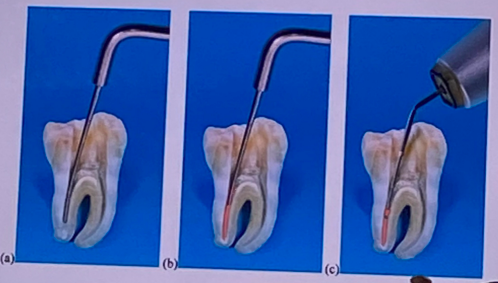
advantages of thermoplastic injection techniques
provides a homogeneous fill and excellent adaptability to canal irregularities
disadvantages of thermoplastic injection techniques
expensive and may lead to overfilling if not controlled properly
carrier-based gutta-percha
uses a central plastic or cross-linked gutta-percha carrier coated with flowable gutta-percha
advantages of carrier-based gutta-percha
quick and easy placement, good adaptation
disadvantages of carrier-based gutta-percha
difficult to retreat if necessary
thermo-mechanical compaction
uses a rotating compactor (ex: McSpadden Compactor) to generate frictional heat, softening and compacting gutta-percha
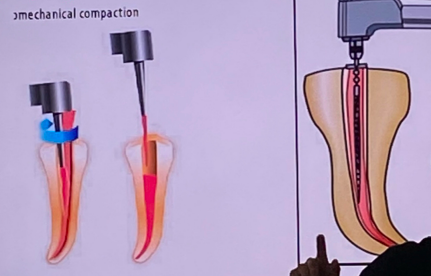
advantages of thermo-mechanical compaction
efficient and quick technique
disadvantages of thermo-mechanical compaction
risk of apical extrusion
coronal orifice sealing
cavit or resin-modified GIC → commonly used temporary restorations for this purpose (placed before permanent restoration (composite, crown)
after obturation, sealing the coronal access is vital to prevent reinfection (immediate coronal seal is critical to prevent microleakage)
radiographic evaluation of a well-obturated canal
appear homogeneous, radiopaque, extend to the proper working length
common errors of obturation
underfilling → incomplete obturation
voids → inadequate compaction or sealer placement
overfilling → apical extrusion of gutta-percha or sealer
special considerations when obturating
retreatment cases
root resorption cases
immature teeth with open apices (apexification & regenerative endodontics)

