Lecture 13 Brainstem
 Call Kai
 Learn
Learn Practice Test
 Spaced Repetition
 Match
Match Flashcards
 Knowt Play
1/85

There's no tags or description
Looks like no tags are added yet.
Name | Mastery | Learn | Test | Matching | Spaced | Call with Kai |
|---|
No analytics yet
Send a link to your students to track their progress
86 Terms
brainstem is ___% of the brain's total weight
2.6
brainstem regulates ___ and ___
heart
respiration
brainstem provides ___ and ___ nerve supply to the ___ and ___ via ___ ___
sensory; motor
face; neck
cranial nerves
brainstem is the main output of the
corticobulbar tract
brainstem conveys sensory and motor from ___ to ___ , ___ to ___ via what three tracts
brain; body
body; brain
corticospinal, DCML, spinothalamic
brainstem connects the ___ to the ___ and ___
cerebrum
spinal cord
cerebellum
brainstem is continuous with the ___ of the ___
thalamus
diencephalon
midbrain (___) consists of
(mesencephalon)
tectum, tegmentum, cerebral peduncles, cerebral aqueduct
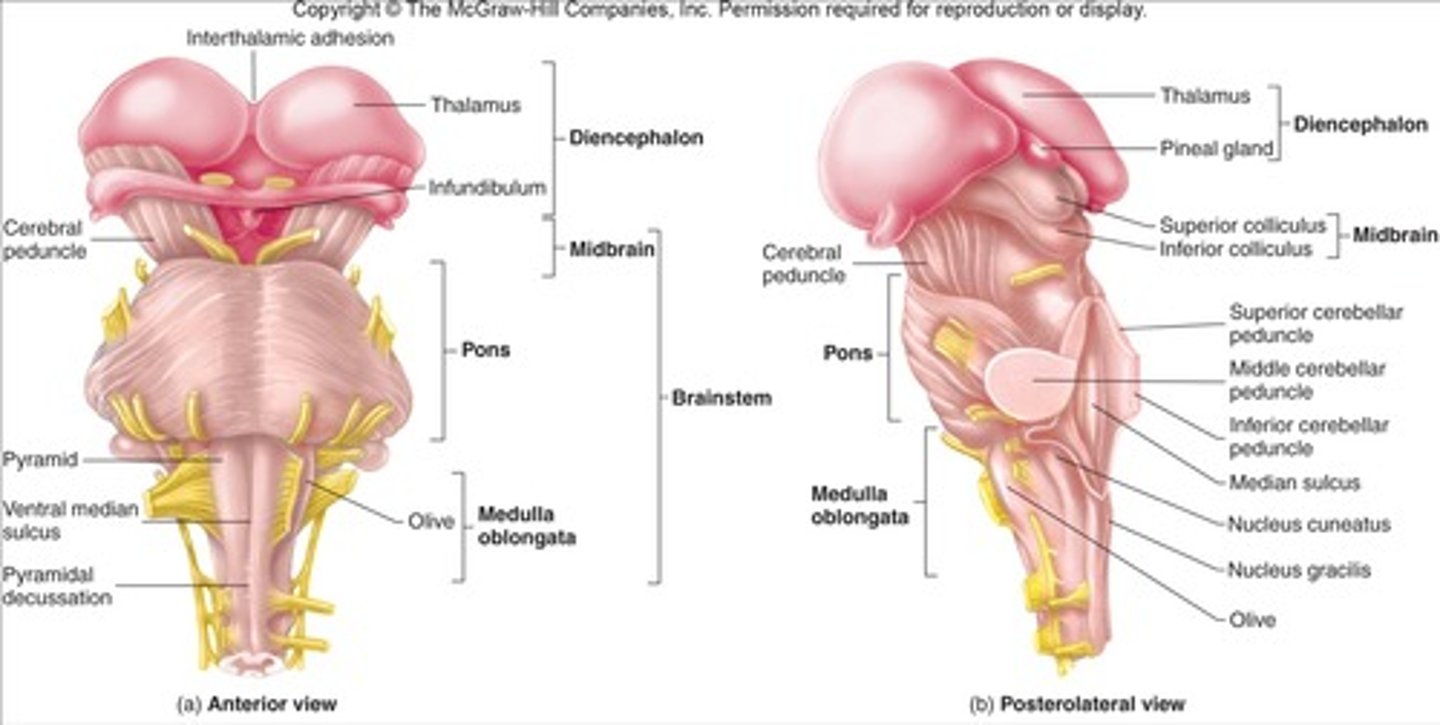
tectum consists of
superior and inferior colliculus
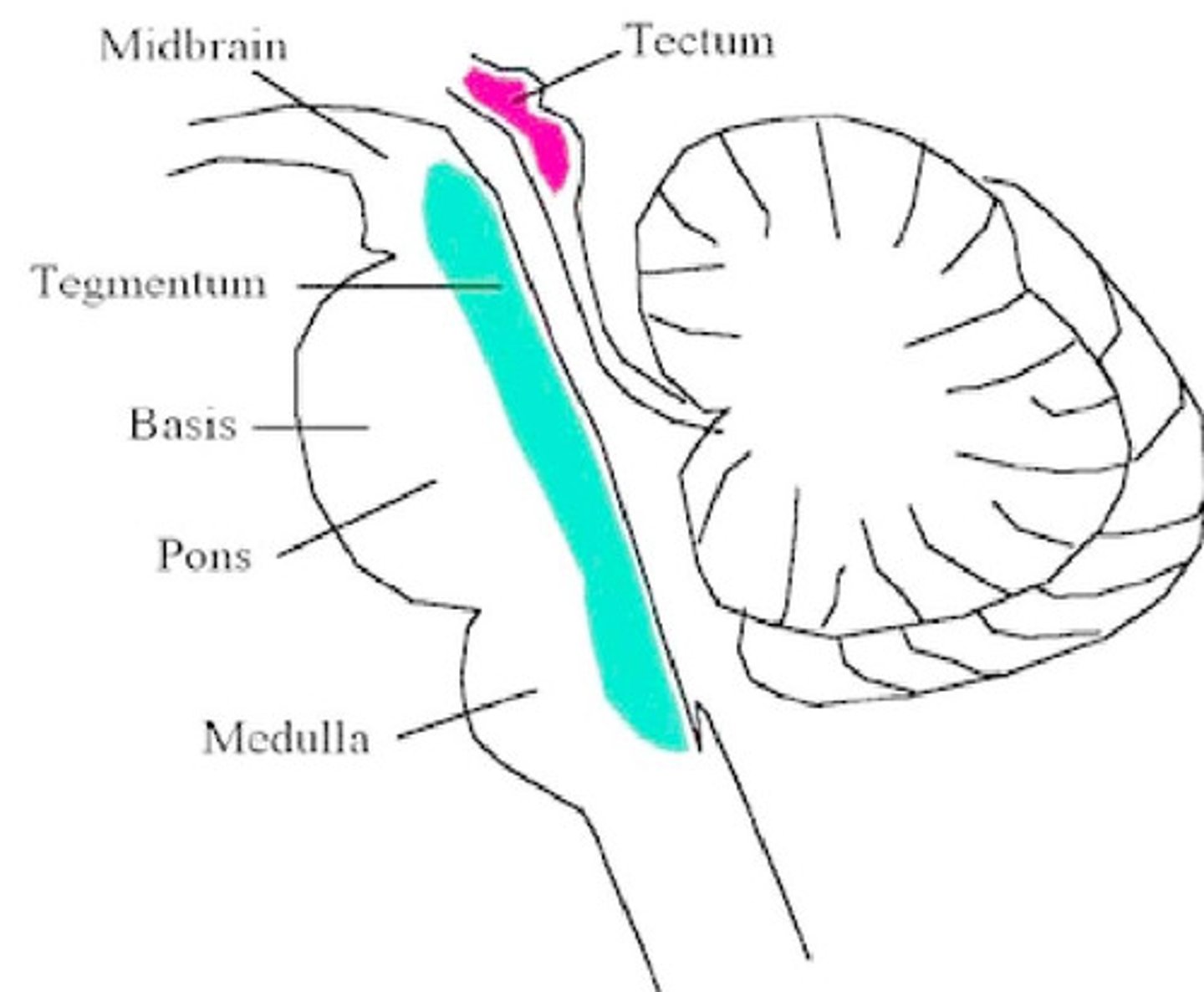
tegmentum consists of
- reticular formation
- periaqueductal gray
- substantia nigra
- ventral tegmental area (VTA)
- red nucleus
- cerebellar peduncles
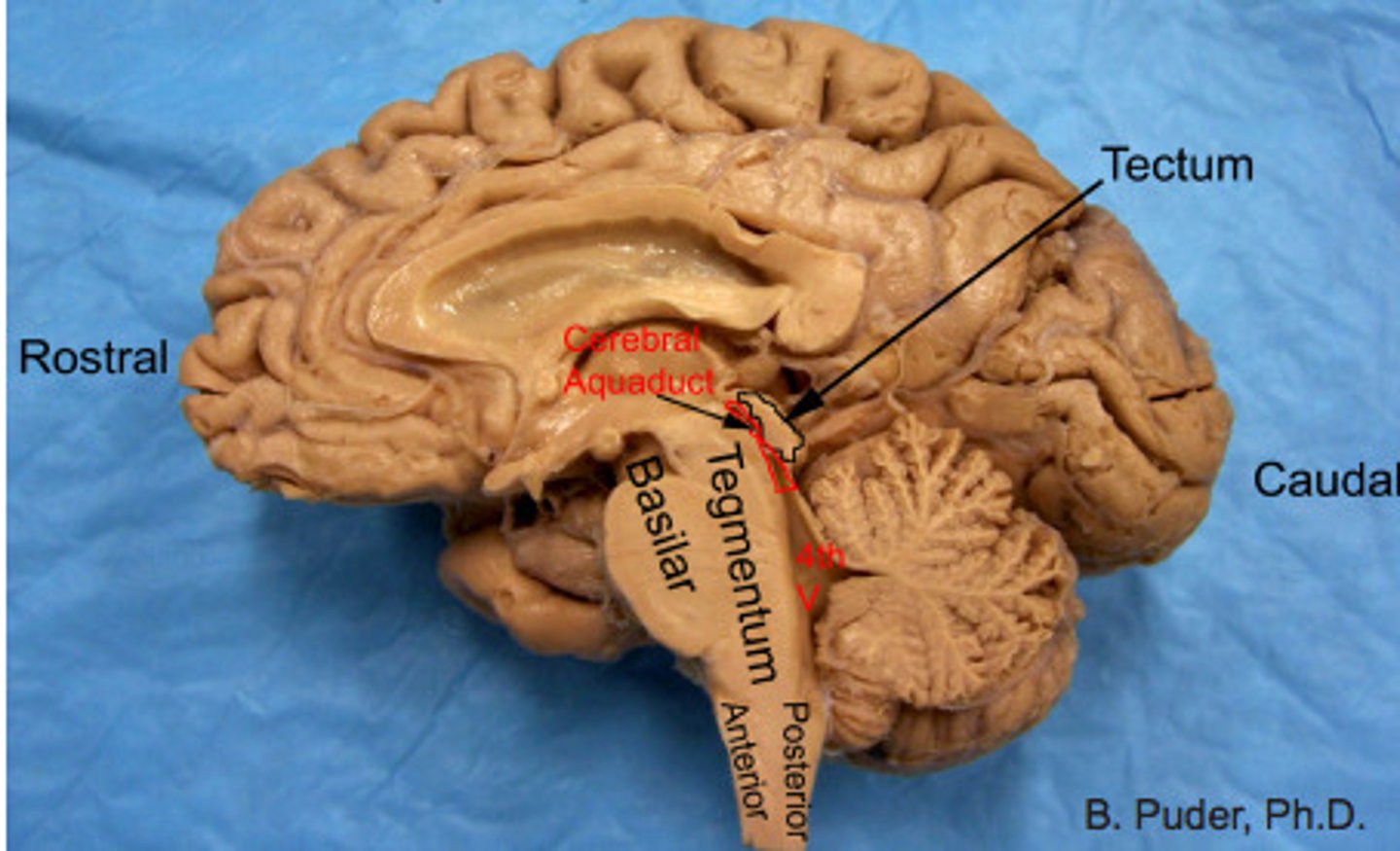
cerebral aqueduct contains
Edinger-Westphal nucleus
diencephalon consists of
thalamus, hypothalamus, pineal gland
tectum is latin for
roof
tegmentum is latin for
covering
what serves the midbrain
basilar artery
midbrain is site of ___ nuclei
CN IV (trochlear)
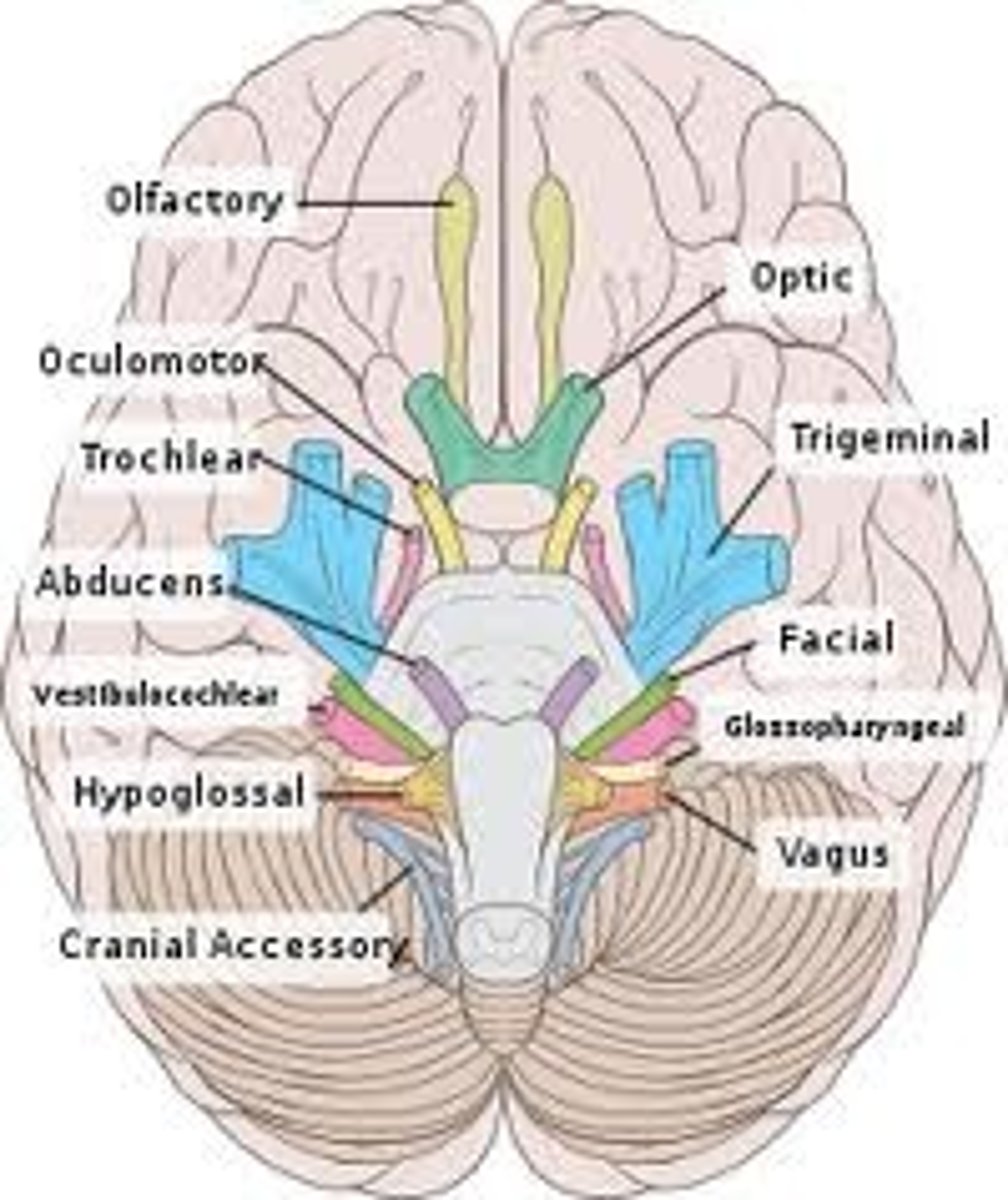
cerebral peduncle anatomy
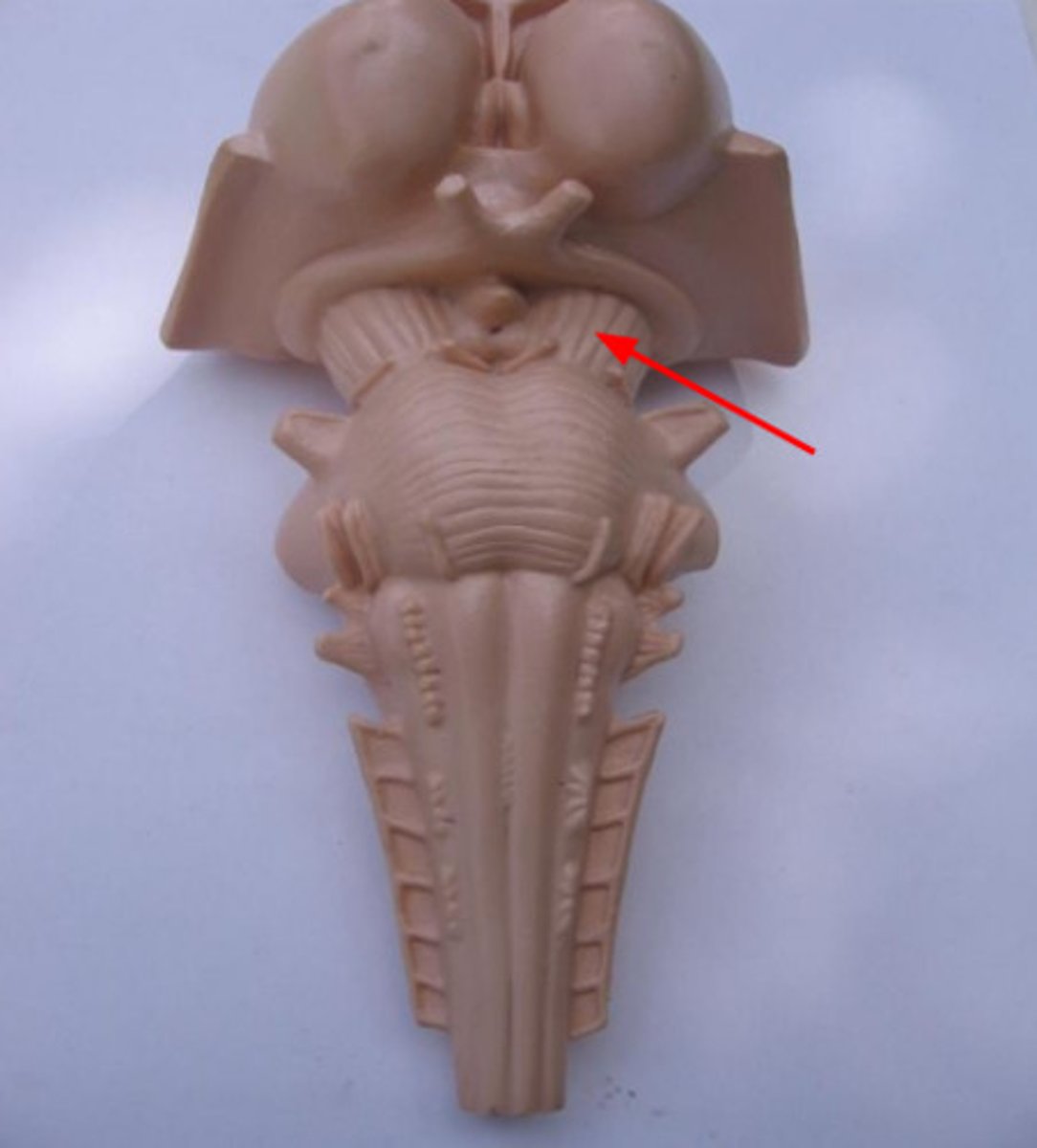
superior colliculus
integrates visual, auditory, and somatosensory spatial info to initiate orienting movements of the eyes and head toward salient objects in space
superior colliculus receives info from ___ and then uses that info to initiate a ___ appropriate to the current ___
environment
behavioral response
environmental context
superficial layers of superior colliculus receives
visual info from retina and visual cortex
deep layers of superior colliculus receives
info from auditory, visual, and somatosensory system
in many vertebrates (fish, birds), the ___ is one of the largest brain regions
superior colliculus
inferior colliculus
- largest nucleus of the auditory system in humans
- the point in the brainstem where all auditory pathways traveling through the brainstem converge
the point from which auditory pathways branch out to carry auditory info on to other areas of the brain like the (___) is the ___
superior colliculus
inferior colliculus
inferior colliculus neurons are specialized to respond to cues that allow for ___ or ___. this info is transmitted to the ___, which is involved in ___
localization of sound
determination of where in space sound in coming from
movement in response to visual and auditory cues in the environment
red nucleus is involved in
motor coordination
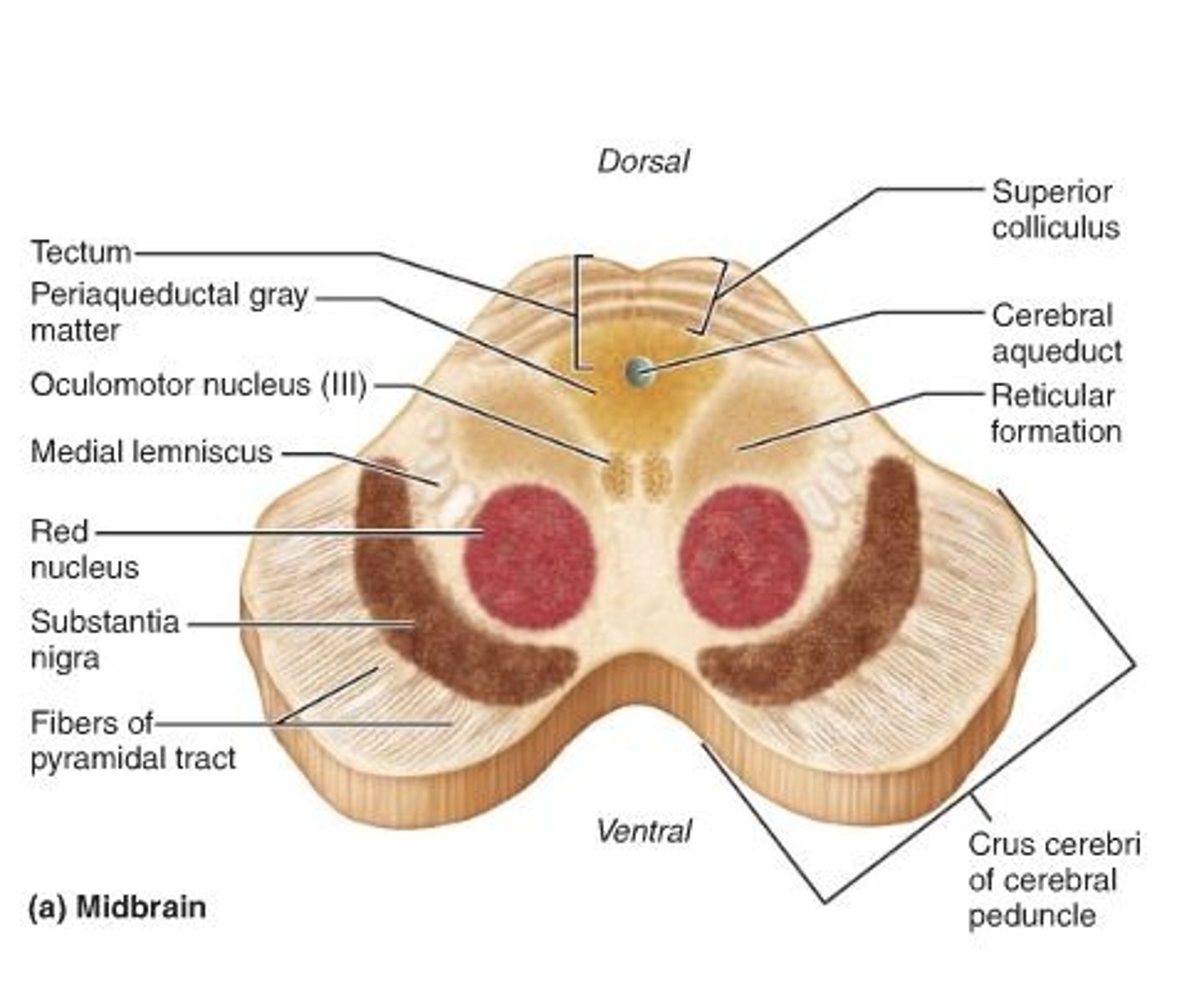
red nucleus is considered to be a subcortical center of ___ along with ___
extrapyramidal motor system
substantia nigra
the cerebral peduncles are
two stalks that attach the cerebrum to the brainstem
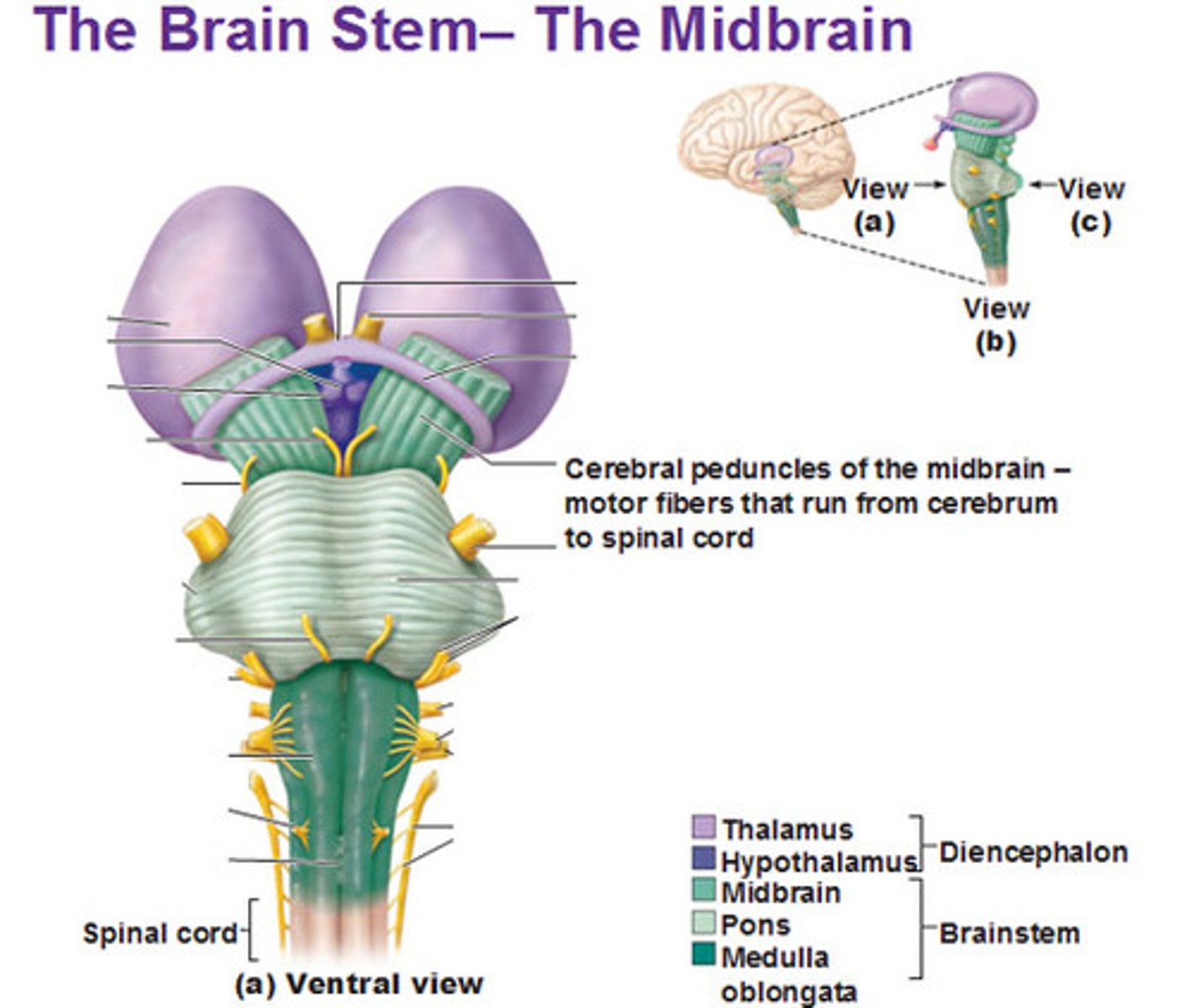
cerebral peduncles are at the ___ of the midbrain, which arise from the ___ and contain the ___ nerve tracts that run to and from the ___ from the ___
front
ventral pons
large ascending (sensory) and descending (motor)
cerebrum
pons
important fiber tracts that run through the cerebral peduncles
corticospinal
corticopontine
corticobulbar
how many cerebral peduncles vs cerebellar peduncles are there?
2 cerebral
3 cerebellar
cerebellar peduncles
a paired structure of white matter that connects the cerebellum to the midbrain
where are the cerebellar peduncles located?
superior peduncle: midbrain
middle peduncle: pons
inferior peduncle: medulla
(each part of the brainstem has one cerebellar peduncle)
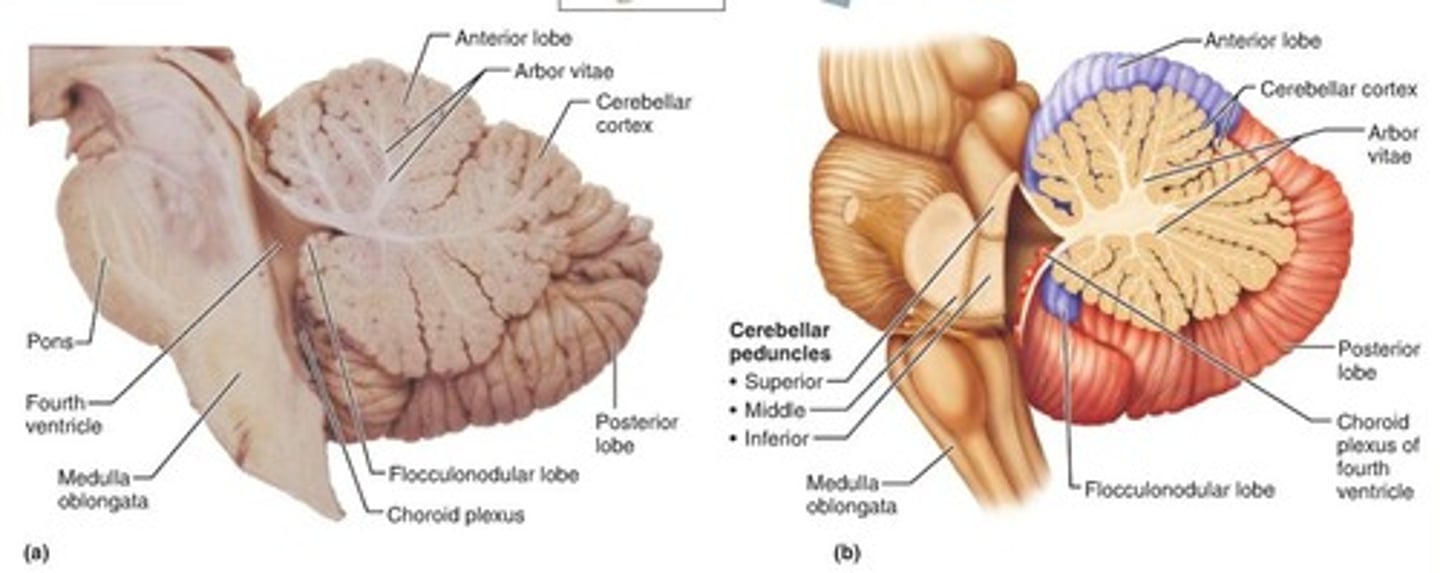
cerebellar peduncle consists of mainly
efferent fiber
pons makes up the
metencephalon
pons is latin for
bridge
pons evolved from the ___ about ___ years ago
medulla
525 million
pons has two distinct regions:
pontine tegmentum (dorsal part of the pons)
basilar pons (ventral part of the pons)
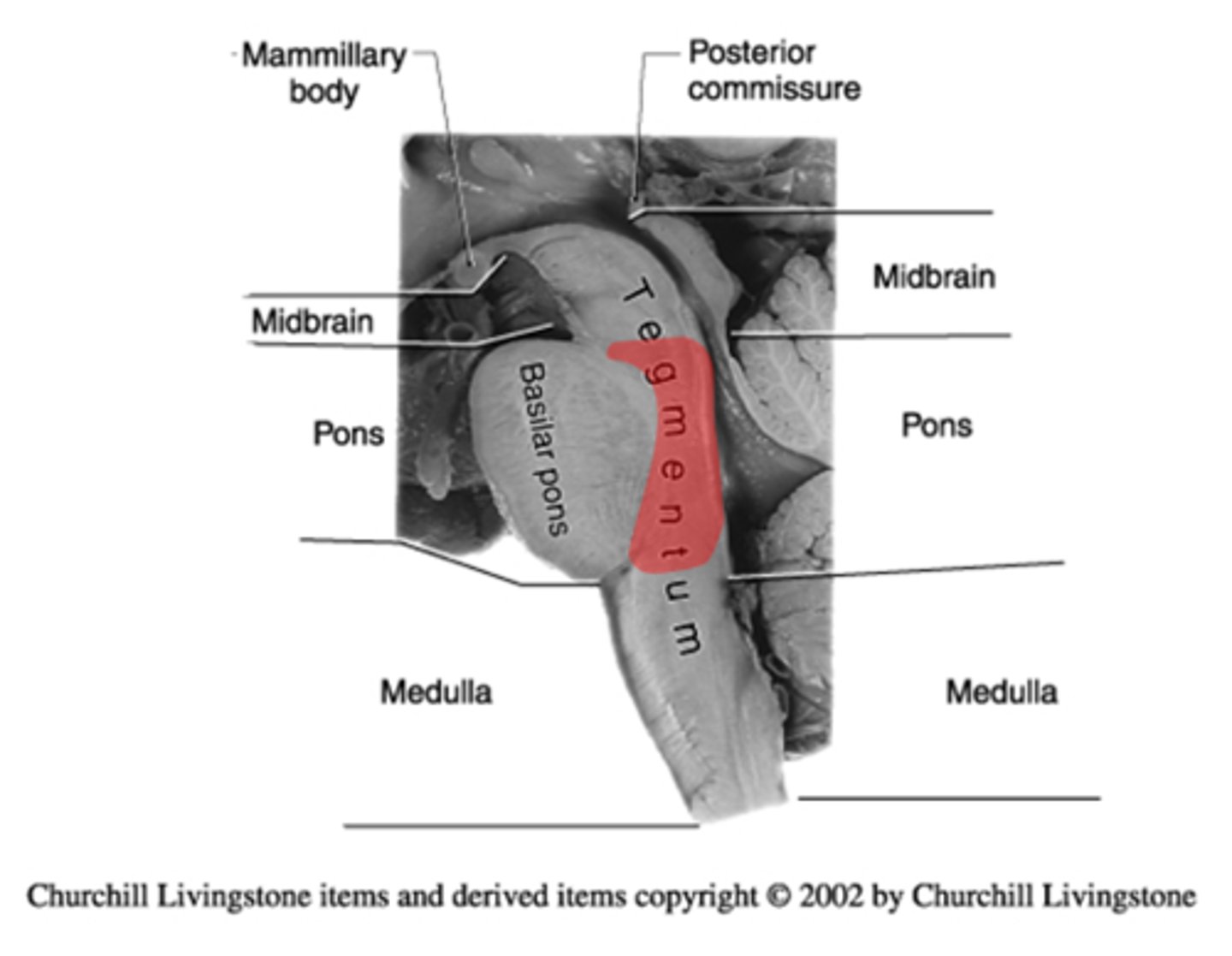
what artery serves the pons?
basilar artery
what ventricle runs through the pons?
4th ventricle
what peduncle serves the pons?
middle cerebellar peduncle
pons has the base nuclei for what cranial nerves?
V (trigeminal)
VI (abducens)
VII (facial)
VIII (vestibulocochlear)
the pons work with the ___ to serve an esp critical role in generating the ___
medulla oblongata
respiratory rhythm of breathing
pons cranial nerve functions include
- swallowing
- bladder control
- hearing
- equilibrium
- taste
- eye movement
- facial expressions
- facial sensation
- psoture
active functioning of the pons may also be fundamental to
rapid eye movement (REM) sleep
pons contains nuclei that relay signals from ___ to ___
forebrain
cerebellum
middle cerebellar peduncle: paired structures that connect the ___ to the ___ and are composed of ___ fibers
cerebellum
pons
incoming
locus coeruleus is latin for ___ and it gets its name because of
"blue spot"
melanin granules in cells (remember "black substance")
locus coeruleus (LC) is a nucleus in the
posterior area of the rostral pons
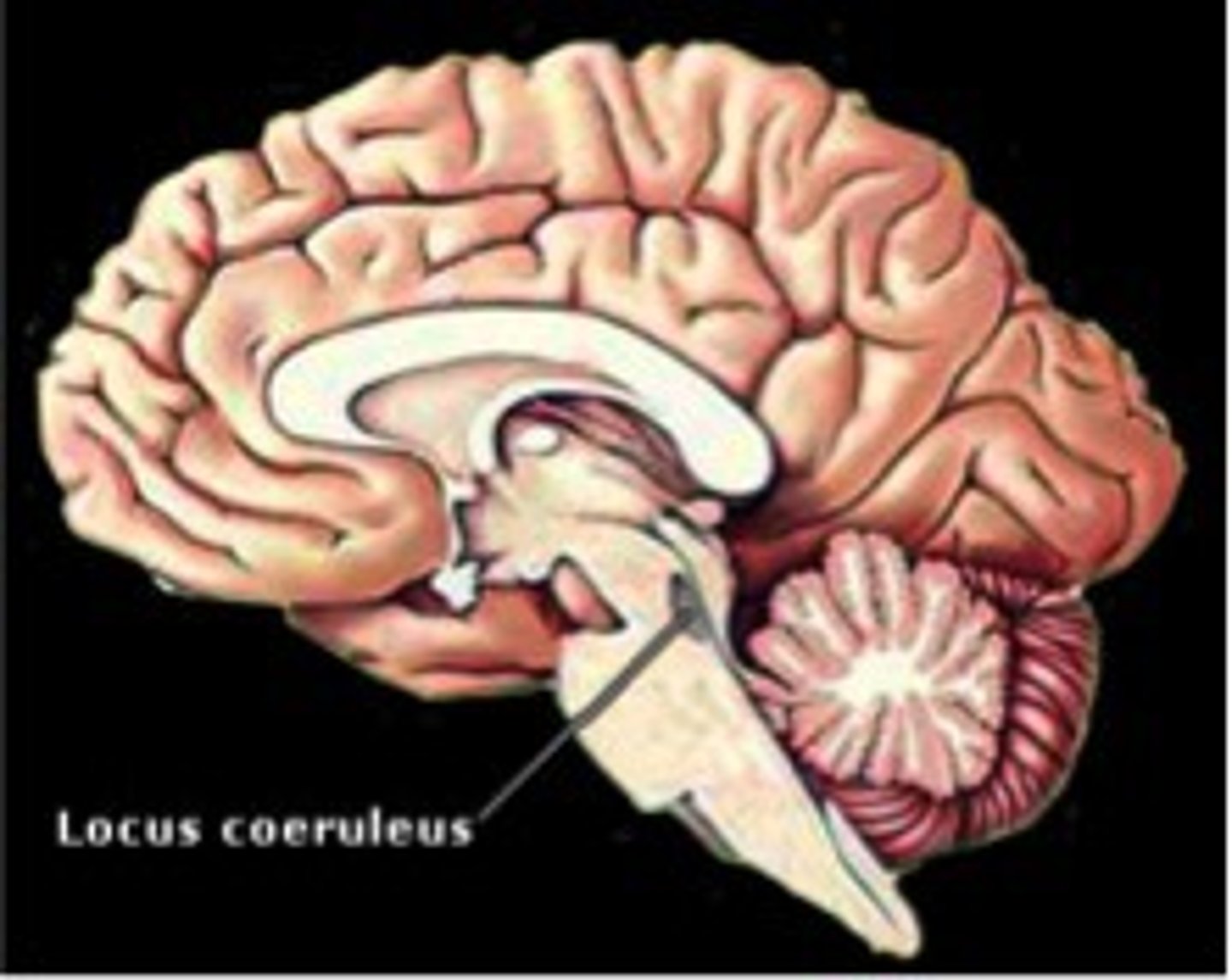
LC is principal site for production of
norepinephrine (noradrenaline)
LC projects ___ to...
norepinephrine
- spinal cord
- brainstem
- cerebellum
- hypothalamus
- thalamic relay nuclei
- amygdala
- telencephalon
- cortex
LC plays a role in
•Arousal/stress
•Attention
•Creativity
•Decision making
•Emotions
•Posture and balance
what is known as "black substance"
substantia nigra
norepinephrine (NE) is a
catecholamine
NE does what?
mobilize the brain and body for action
•"Fight or flight"
•Arousal
•Alertness
•Vigilance
•Formation and retrieval of memory
•Focuses attention
•Restlessness and anxiety
•Heart rate and BP
•Reduces blood flow to the GI
LC is activated by ___ and will ___
stress
increase NE secretion
increased NE production alters
cognitive function (PFC)
increase motivation (NAC)
activates HPA
hypothalamic-pituitary-adrenal (HPA) axis is the body's ___. it is a what kind of system?
central stress response
neuroendocrine
HPA axis regulates
•Stress
•Digestion
•Immune system
•Mood
•Emotions
•Sexuality
•Energy storage
•Expenditure
HPA axis
1. ___ of the ___ secretes ___ and ___
paraventricular nucleus
hypothalamus
CRH/CRF
vasopressin
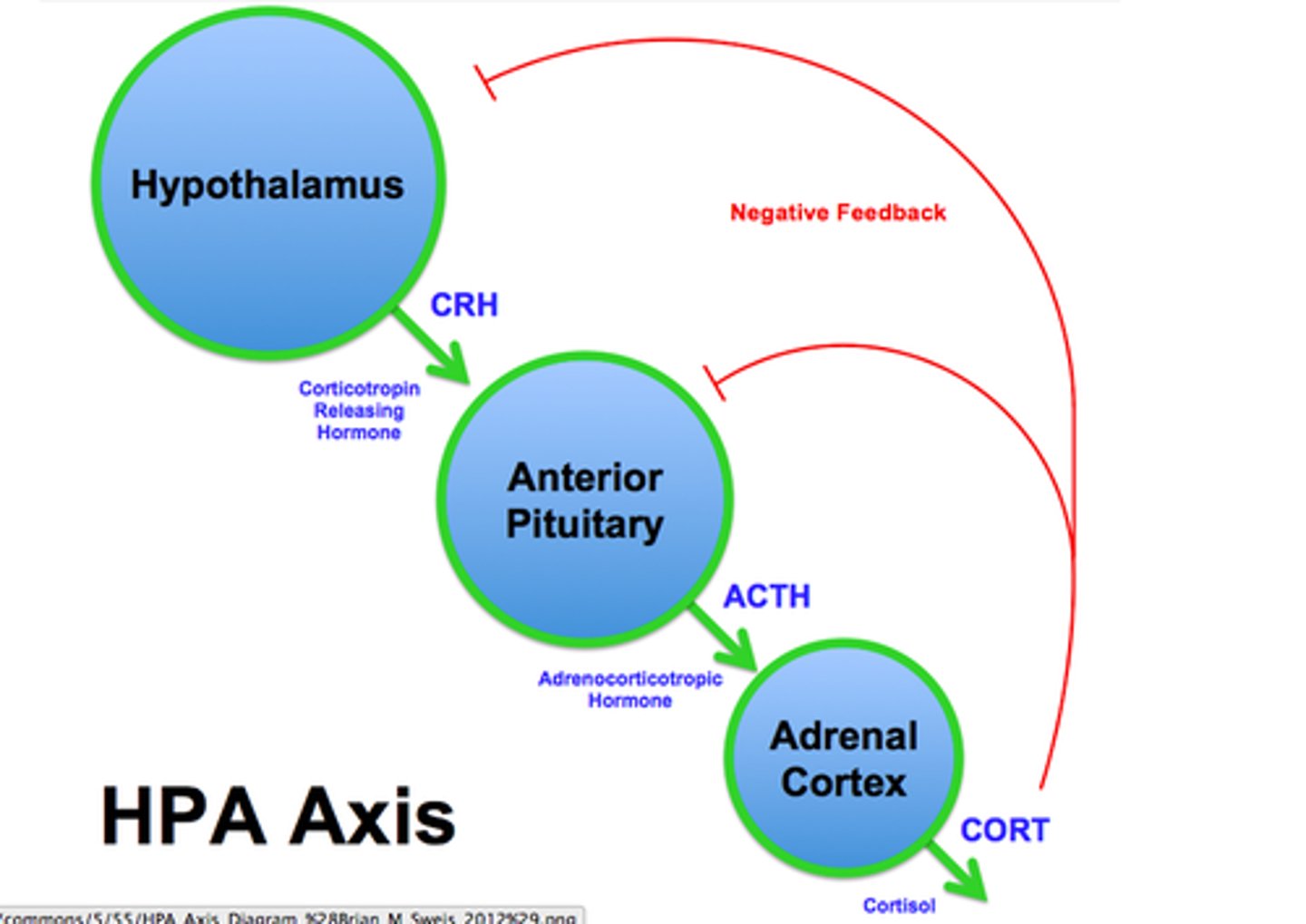
HPA axis
2. CRF and vasopressin release stimualtes the ___ from the ___
adrenocorticotropic hormone (ACTH)
anterior lobe of the pituitary
HPA axis
3. ACTH release stimulates ___ from the ___
cortisol release
adrenal cortex
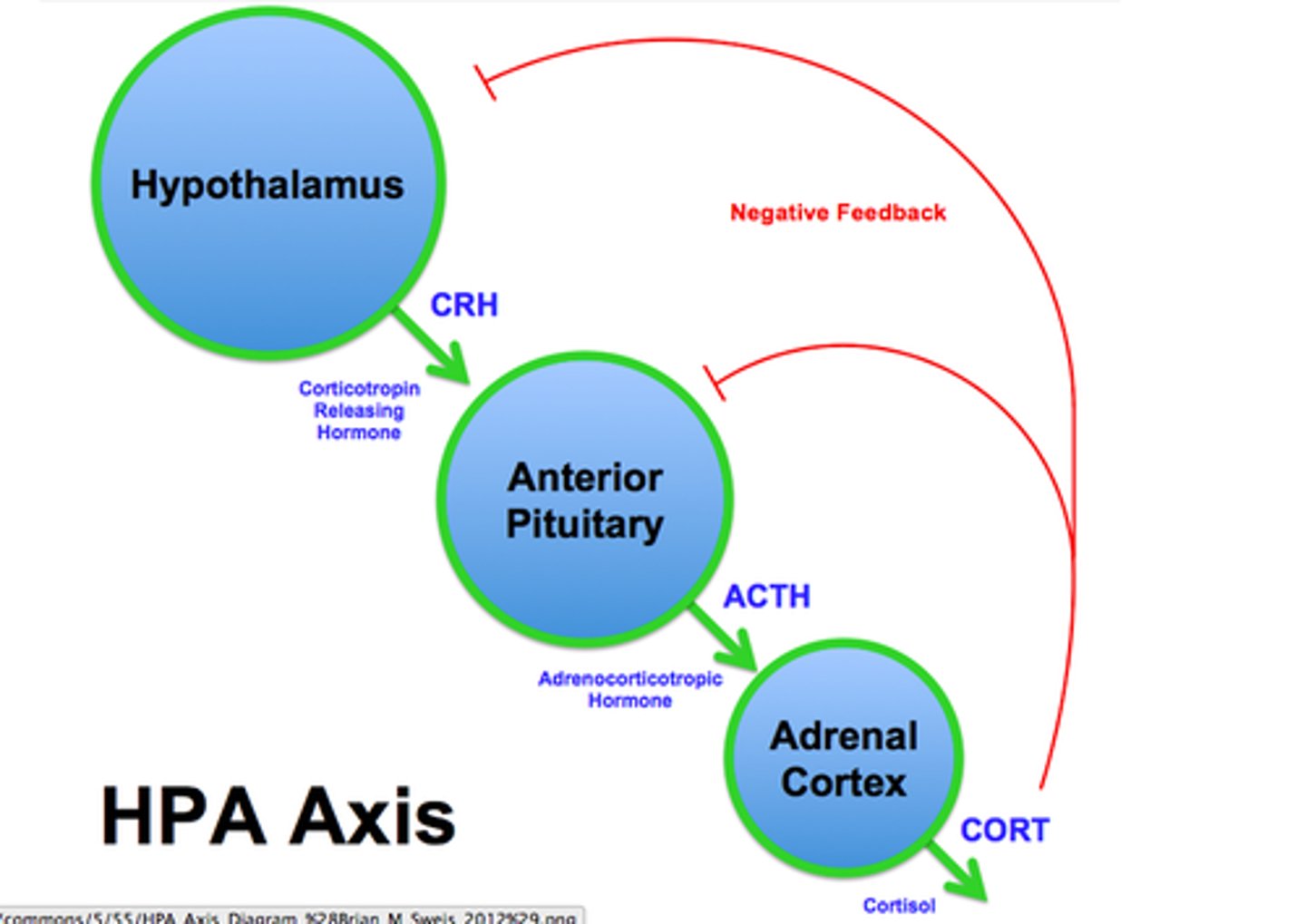
HPA axis
4. cortisol forms a ___ feedback loop with the ___ and ___
negative
hypothalamus
anterior pituitary
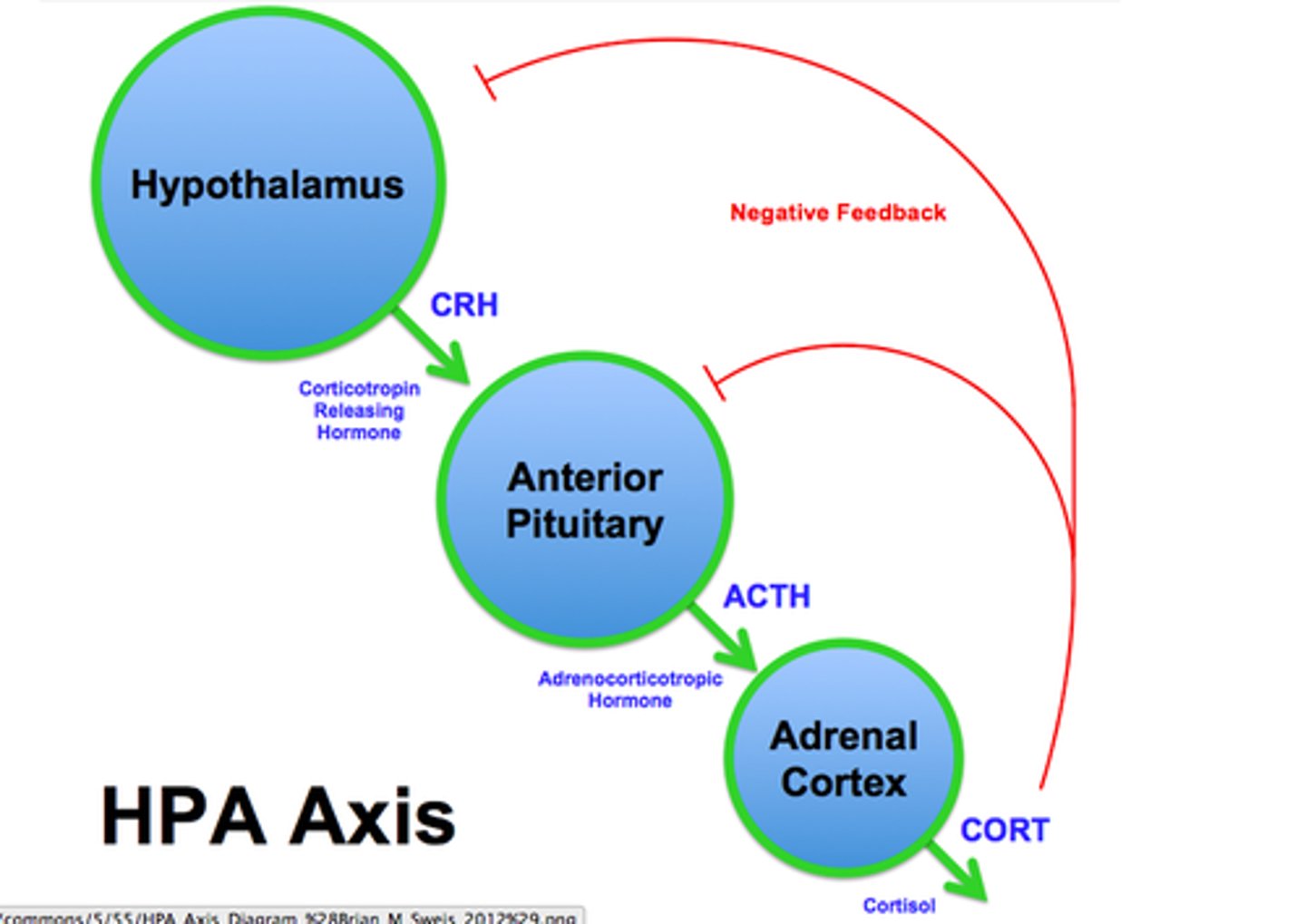
cortisol is a ___ produced by the ___
steroid hormone
adrenal glands (glucocorticoid)
cortisol is released during ___ and ___
stress
low blood sugar
cortisol does what?
- increase blood sugar
- suppress the immune system
- metabolizes fat, protein, carbs
symptoms of adrenal fatigue
•Poor mood
•Brain fog
•"wired" in the evenings
•Cravings for sweet and salty food
what leads to adrenal fatigue?
chronic stress (constant release of cortisol)
medulla oblongata comes from
myelencephalon
medulla oblongata consists of
•Nucleus cuneatus
•Nucleus gracilis
•Internal arcuate fibers
•Pyramids
•Inferior cerebellar peduncle
what artery serves medulla oblongata?
basilar artery
what cranial nerve base nuclei is in medulla?
IX (glossopharyngeal)
X (vagus)
XI (accessory)
XII (hypoglossal)
medulla plays an essential role in
passing messages b/t your spinal cord and brain
medulla is responsible for regulating several basic functions of the ___ nervous system including
autonomic
- respiration
- cardiac function
- vasodilation
- reflexes (e.g. vomiting, coughing, sneezing, swallowing)
nucelus cuneatus represents the rostral termination of the ___, the posterior column spinal pathway that carries info regarding ___ from the ___ extremities
fasciculus cuneatus
proprioception, fine tactile discrimination, and vibratory sensations
upper
nucleus gracilis represents the rostral termination of the ___, the posterior column spinal pathway that carries info regarding ___ from the ___ extremities
fasciculus gracilis
proprioception, fine tactile discrimination, and vibratory sensations
lower
internal arcuate fibers (tract)
axons of the second order sensory neurons that compose the gracile and cuneate of the medulla
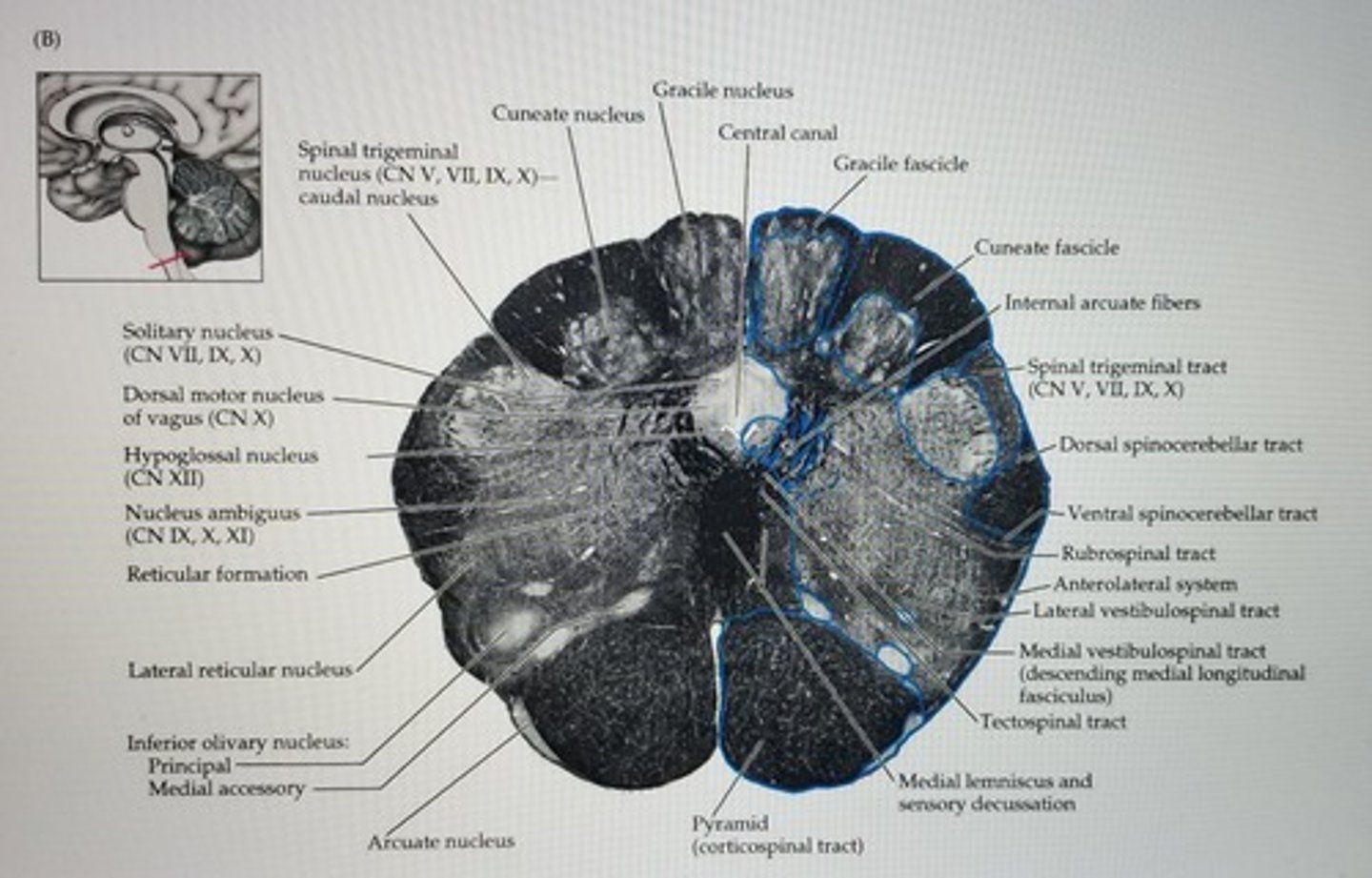
medullary pyramids are paired ___ matter structures containing ___ fibers or the ___ and ___ tracts... hence the pyramidal tracts
white
motor
corticospinal
corticobulbar
pyramids are located on the ___ side of the medulla
ventral
pyramids are bordered medially by the
anterior median fissure
at the pyramids most caudal end, the ___ axons decussate the ___ and continue down the spinal cord on the ___ side. these fibers make up the ___ ___ tract. the fibers that don't decussate here make up the ___ ___ tract
corticospinal
midline
contralateral
lateral corticospinal
anterior corticospinal
inferior cerebellar peduncles contain mostly ___ fibers to the ___
afferent
cerebellum
brainstem damage is rare/common? and results from
rare
swelling in other areas of the brain or some stroke
most common consequences of brainstem damage
•Death
•Coma
•Locked in syndrome
•Swallowing problems
•Respiratory problems
•Motor difficulties
locked in syndrome
Individual is aware and capable of thinking but is paralyzed and cannot communicate
separate note!
there are a lot of anatomy images at the end of this lecture; make sure to look at them!

