Crim 101 Restorative justice...
 Studied by 3 people
 Call with Kai
 Learn
Learn Practice Test
 Spaced Repetition
 Match
Match Flashcards
 Knowt Play
1/15

There's no tags or description
Looks like no tags are added yet.
Name | Mastery | Learn | Test | Matching | Spaced | Call with Kai |
|---|
No study sessions yet.
16 Terms
restorative/transformative justice: an overview
Restorative, transformative justice
is part of the critical tradition in criminology
argues for a paradigm shift in criminal justice
argues for changes to the social structures that perpetuate injustice and inequality
Restorative justice: a paradigm shift
has gained tremendous momentum in Canada as an alternative or addition to contemporary criminal justice since the 1970s
informed by values, principles, and practices from a variety of sources including Indigenous ways of knowing
primary focus on healing people and relationships
promotes meaningful accountability, collaborative dialogue, and empowerment of offenders, victims, and communities
Critical criminology
Need to change social structures that perpetuate injustice and inequality
Restorative Justice Paradigm involves
Inclusiveness
Problem solving focus
Accountability
Dialogue
Reparation
Pursuit of healing and righting relationships
Justice as healing
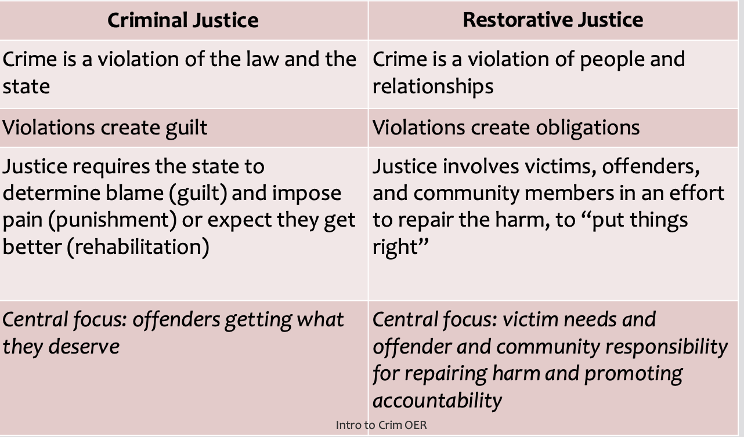
opposite of retributive or punitive justice; but not that simple
restorative justice and the current system are not mutually exclusive
while sentencing principles laid out in s. 718 of the
Criminal Code include punishment and deterrence ,the following are also considered by judges:
offender treatment
rehabilitation
reparation
responsibility
Justice as healing: support for restorative justice
Canadian support for restorative justice is growing as restorative justice focuses on:
victims’ needs
community engagement
inclusive and collaborative processes
emotional and relational dimensions of crime
Comparisons of justice
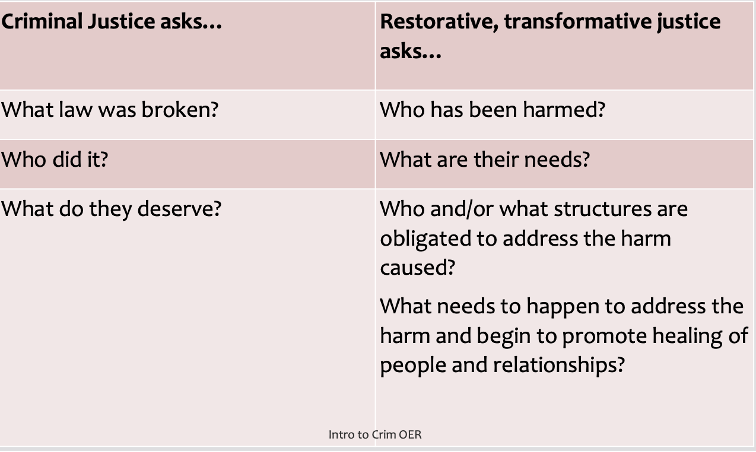
Questions asked
In the criminal justice system RJ processes can…
RJ can occur in collaboration with the CJ system at any time
pre-charge
post-charge/pre-conviction
post convictions/pre-sentence
post- sentence
Restorative justice - outside of the criminal justice systems
RJ can occur independently of the CJS in many ways
self-referral option for victims to contact a community -based RJ program on their own
within Indigenous communities through their Nation’s justice program
culturally responsive
avoids colonially-based legal system
reclaiming responsibility for justice practices is an important component of self-determination and self-governance
for interpersonal harm in the community, schools or workplaces
to address harm in the aftermath of genocide, governmental issues, and/or apartheid.
aims of RJ
Restorative Justice is a Relational theory of Justice
rehabilitation involves interventions that focus on reducing the risk that perpetrators will cause harm in the future
retribution seeks to impose proportional discomfort to ‘teach a lesson’ and deter future crime
RJ, however, aims to address the relationships that have been harmed - between victim and offender or those within families and communities
Justice stakeholders
Restorative justice aims to meaningfully include 3 stakeholders:
Victims (primary and secondary)
Offenders
Community (geographic and social)
Justice stakeholders: types and degrees of RJ practices
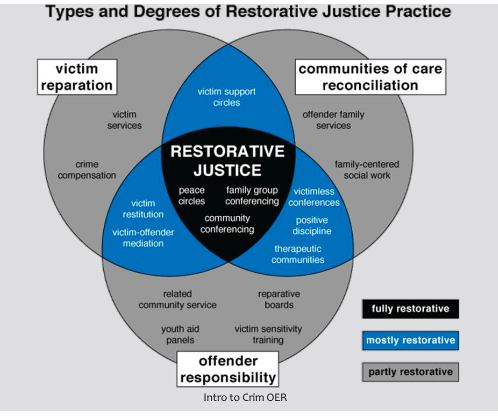
Restorative Justice models
Criteria to move forward with RJ
the person who caused the harm must accept responsibility for their actions and be open to making reparation
the victim/survivor must participate voluntarily and be provided voice and choice in how the process will unfold.
community members might also be included
they must be informed and prepared to ensure the process itself upholds the values of respect, honesty, accountability, and safety
Restorative Justice Models
- Victim offender dialogue
- Conferencing
- Peacemaking circles
Benifits of RJ
Victims/Survivors
information and answers to questions
direct accountability from the person who caused harm
influence, choice and voice in determining how the harm will be addressed
restitution, reparation and vindication
opportunities to be heard and understood
community support
increased satisfaction with justice
opportunities for meaningful communication
Offenders
opportunity to start to make things right and be accountable
encouragement for personal transformation and support in addressing underlying issues
community reintegration and support
opportunities for meaningful communication
Community Members
Increased sense of safety
Reduced re-offending
Inclusion in justice process
Strengthening community and building relationships
Critiques of RJ
Lack of support and awareness within the criminal justice system and
some people perceive that it is “soft on crime”among the general public
practical and cost concerns of shifting an entire criminal justice system to a new paradigm
does not work for all cases
net widening
possible risks
Summary & Conclusion
offers an alternative version of justice that balances needs of offenders, victims, and offenders
research demonstrates positive results in Canada and globally in
widens the justice lens to offer innovative, collaborative, and healing approaches to harm
benefits of restorative justice are plentiful and awareness of these principles can be integrated across all areas of the criminal justice system
 Note
Note  Flashcards (20)