VETS3018 EOS Exam
 Call Kai
 Learn
Learn Practice Test
 Spaced Repetition
 Match
Match Flashcards
 Knowt Play
1/47

There's no tags or description
Looks like no tags are added yet.
Name | Mastery | Learn | Test | Matching | Spaced | Call with Kai |
|---|
No analytics yet
Send a link to your students to track their progress
48 Terms
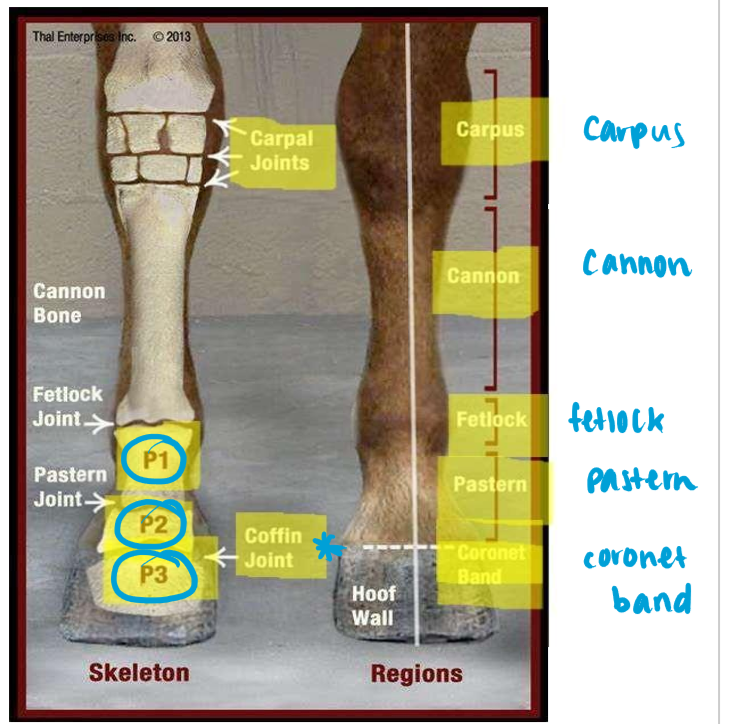
Horse Leg Bones
Carpus
Cannon
Fetlock
Pastern
Coronet band/Coffin joint
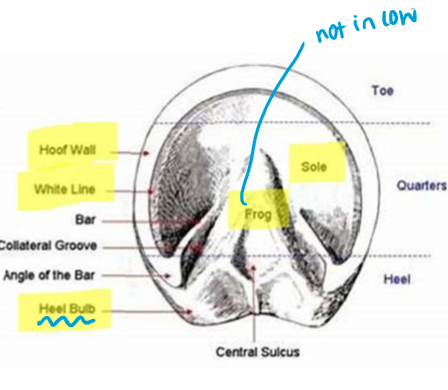
Hoof Anatomy
Navicular bone!
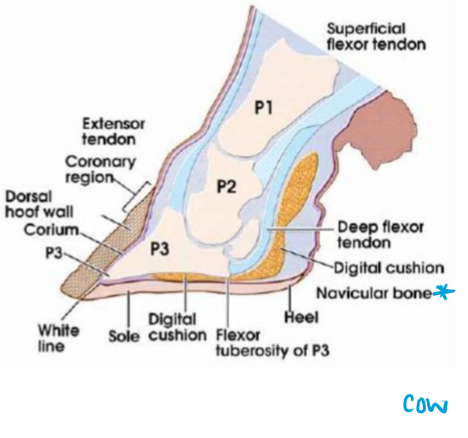
Cow Anatomy L and R Side
LS: Ascending and descending colon, gut sounds, rumen
RS: cecum
Rumen GIT Development
Increasing age = increasing rumen size and decreasing abomasum size (true stomach)
Oesophageal groove closes - milk straight to abomasum (if in rumen = spoils)
Rumen: fluffy,, Reticulum: honeycomb, Omasum: spikey, Abomasum: folds
Cattle Teeth Eruption
2 teeth - 2 years
4 teeth - 2.5 years
6 teeth - 3 years
8 teeth - 4 years
Monogastric vs Ruminant Digestion
CHO
Monogastric: CHO food - digestive enzymes - glucose in SI - absorb
Ruminant: CHO food - microbial ferment - VFA in rumen - absorb
Protein
Monogastric: Protein food - digestive enzymes - aa in SI - absorb
Ruminant: Protein food - microbial ferment - diet and microbial protein in rumen - absorb
Mono: pigs, poultry, dogs, cats (HCL, pepsin - intestinal enzymes - sugar, aa, fa
Ruminants VFAS, ammonia out, HCL pepsin, intestinal enzymes low sugar, aa (mostly microbial protein)
Hindgut (horses): combo (mono first then ruminant for indigestible cellular fibre)
LA PHYSICAL EXAM
Clinical Exam Order
Presenting complaint (scour, down, lame, dystocia, mastitis, cough, die)
Signalment (species, breed, prod purpose, ae, sex/repro status (preg..) - interpret BCS, nutrition/metab demands, timing of signs - calving
Hx (immediate, past, herd)
Observe enviro (trees, grass, mud, lantana, dust)
distant exam - herd
distant exam - animal (stand/walk, lying - sternal/move, ruminating/eat, breathe norm, BCS, female lactating/calf suck, urine, coat, hooves, sunken eyes hydration, rr, faeces, mentation, gait, symmetry, injuries, discharge, head tilt, brisket oedema)
clinical exam
further investigations
Cattle Parameters
Temp: 38-39.5
Rumen Contractions: 1-2/min
HR: Adult: 40-80bpm, Calf: 80-100bpm
RR: 10-39 bpm
Cow Clinical Exam
Rear: collect urine, temp, tail pulse, rr, vulva mm, CRT, abdomen contour, BCS, udder and suspensory ligaments, scrotum and penis in sheath, hind legs and hooves, d/c, odour
LHS: left side thorax and abdomen
RHS: right side thorax and abdomen
Front: head and neck, jugular vein, brisket oedema, auscultate trachea
Urine Collection
midstream, manual stim of prepuce (stroking below vulva)
clarity, colour, content, USG
Strips: pH, ketones, cells, protein
Abdominal Contour
Reverse D - bloat - rumen swell
Pear - ascites or intestinal obstruction
Apple - severe ascite, hydrodrops
D - abomasal volvulus or impaction
Papple - vagal indigestion (don’t burp as well)
LHS Exam
Gas cap
fibromat
fluid layer
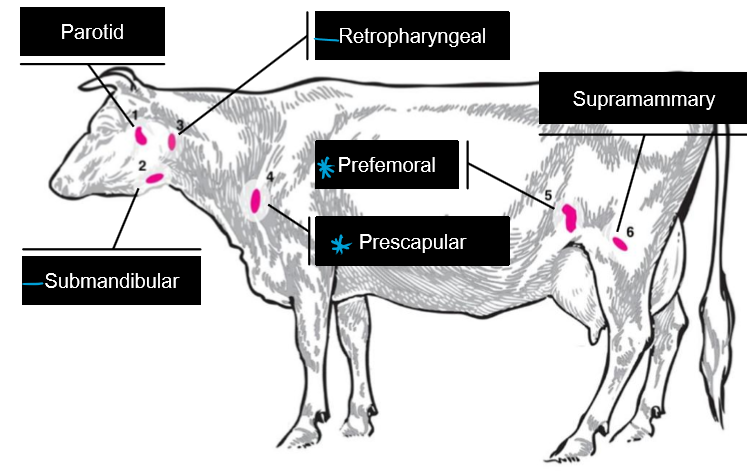
Prefemoral lymph node
Palpate Rumen - feel contractions
Auscultate rumen - sounds - wave on beach
Percuss (ting - gas under pressure) - resonance (fluid = dull, soft tissue = flat) - FLICK (will show if abdomen displaced - LDA)
Rumen Ballottement (PUSH and bounce back - fluid layer)
observe: udder, scrotum, sheath, hind limn and lower limb
palpate: pre-femoral lymph node, mammary vein, left forequarter
RUMEN CONTRACTIONS: paralumbar fossa (primary - dosral to ventral sac) (secondary - gas to burp) Rumination cycles 6-10/day = Regurg, rechew, re-swallow (10-60mins long)
Lungs (11th-6th rib) - RR (triphasic) - CAN’T HEAR - bag over nose = better
Heart - HR
Prescapular lymph node
Cow Lymph Nodes
Head and Oral Cavity Exam
muzzle, nares, jaws, eyes - palpebral, menace, retropharyngeal, teeth, gums, CRT, colour, tongue, pharynx, symmetry, brisket oedema, teeth, d/c, blood
RHS Exam
abdominal outline, auscultate right flank and percuss plus on rib cage, observe hind foot and lower limb, lymph nodes, mammary gland, milk vein
abomasum - distended - dilated/torsion
Intestines
Uterus - can feel calf in abdomen
Rumen - can be pushed to r side
Liver - can’t palpate - behind last rib
SMALL RUMINANT CLINICAL EXAM
EXAM
Distant - diarrhoea, dags, flystrike
Clinical exam - standing, tipped
Same as cattle: (temp, hr - NOT ON TAIL (femoral artery or heart), lymph nodes, mm, CRT, skin, lung auscultate, abdominal palpate/contour, rumen contractions, DON’T PERCUS, hoof and repro exams when tipped, lameness common - trim hoofs, parasite check - wool partings
teeth and aging
BCS
MMC
Fleece/coat
Feet/Musculoskeletal
FEC
FAMACHA (3? 4 and 5 treat)
Sheep Parameters
HR: 70-80bpm
RR: 12-20bpm
Rumen Turnover Rate: 3 in 2 mins
Dag Score < or equal to 2
Temp: 38.5-40
Mobility: 0-1
Sheep Lymph Nodes
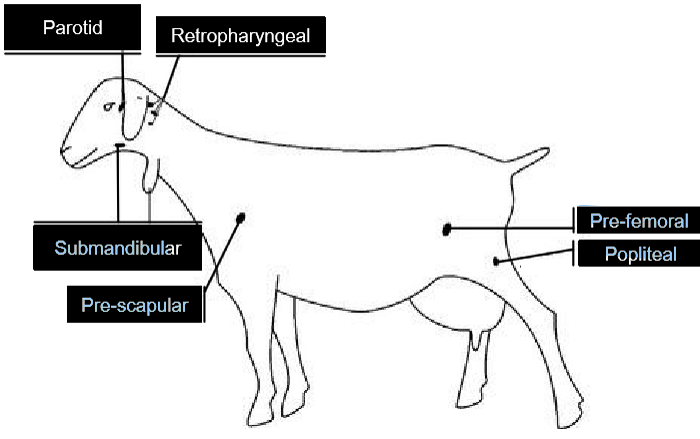
Cheesy Gland
caseous lymphadenitis - Corynebacterium pseudotuberculosis
inf after shearing (especially if dipping), lymph node abscesses
Sheep Teeth Aging
Divide by 2 (2 teeth = 1 year old)
RUMINANT PROCEDURES
4 Basic Animal Instincts
move direction facing
follow
see press
pressure released
7 Stock Handling Principles
flight zone
body language strong
constant pressure = move onto pressure
mob leader
handler - reaction
observe - tell u ur location
Analgesia
welfare, recovery times, not legally required in calves
Oral/Inj: MELOXICAM (USE before procedure 10/15min or relief delayed) (oral transmucosal - blue gel)
Topical: TRI-SOLFEN (spray, 6-8wk calves) - LOCAL (lignocaine, bupivicaine, adrenaline, cetrimide (antibac) 6-9ml
Disbudding
Calves: 2-4wks (LESS THAN 2m), Goats 1-2wks
sx or cautery* (most common)
less invasive
better anim welfare
remove horn producing cells - before attach to skull
xylazine plus lignocaine cornual block - 5 mins before
Dehorning
remove fully developed horns - after skull attachment
older calves/adults
scoop dehorners, saws, wire, guillotine
bleeding, increase complications, frontal sinus infection
PAIN RELIEF
Reasons to disbud vs dehorn
human safety, animal welfare (safe, backwards horn), meat quality (bruising)
Disbudding Complications - Goats
Scurs: incomplete disbudding, part regrows
thermal injury: skin necrosis, cosmetic, slow heal
Inf: poor hygiene, fly, swell
POLLED GENE DOMINANT
Castration Reasons
control breeding - improve genes
behav control (steers less aggressive)
meat quality (increase fat and marble, tender, less CT)
Elastrator
Non surgical
UNDER 2 WKS
Pain and stress if performed late, incorrect placement (miss testicle), inf, delay heal, chronic discomfort, sloughing - takes wks, tetanus risk
tetanus: Sheep and goat higher risk than cattle
anaerobic - soil/muddy - (dead tissue = low 02 enviro) (7-21days post apply)
Because
maternal immunity - no mum vacc, no transfer, low
timing: 3 months - after maternal immunity gone
SOLUTION: vacc 2/3 wks before ring and booster when putting ring on
Burdizzo
Non-surgical castrate
UP TO 6m, bloodless
4 crushes, confirm success diff
Castrate Surgery
less than 6m, MOST EFFECTIVE
inf, injury
triple crush emasculators (nut to nut), Henderson tool
CLOSED: tunica vaginalis intact
OPEN: not intact - pull out testicles
Haemostasis: strum cord, twisting sperm cord, ligatures, emasculators
NOT CLOSED SCROTUM SO DRAINAGE, 15-20 calves replace scalpel
ONLY IF: 2 norm testicles, free moving, palpated scrotum
NOT IF CRYPTORCHID
HORSE CLINICAL EXAM
Horse Parameters
Temp: (37.5-38.5)
Pulse: facial artery (mandible, below eye, or digital arteries)
HR: (28-44)
RR: (8-20)
Distant Exam
BCS (out of 9), Cresty neck score (excess fat in nuchal ligament - risk of metabolic disease (laminitis), mentation and behav, coat, gait, RR
ventral oedema, wheals (bumps)
Eye Exam
conjunctiva
epiphora - tears
blepharospasm - eyes closed/wink
Cornea
Eyelids
Menace
Nare Exam
mm
airflow - symmetry
smell
d/c
Mouth
gums, mm, CRT, teeth, tongue, age
jaundice (liver d), neonatal isorthrolysis
petechiae - pinpoint bruises - coag disorders
ecchymosis: bruising patches (large petechiae)
Full exam: hausmann gag needed
Other things to examine on face
facial arteries (index finger - find VAN (vein artery nerve) - bp measure
retropharyngeal: lymph nodes (retropharyngeal and submandibular) (SWOLLEN + STRANGLES, INF ANAEMIA, HERPES), larynx, guttural pouch, parotid gland
Jugular vein fill (2/3 down jugular 1-2 sec)
Heart Auscultation
LHS
PAMS (pulmonary, aortic, mitral) (3, 4, 5 intercostal space)
RHS:
tricuspid (4 intercostal space)
s1: lub: close atrioventricular vales (L-mitral, R- tricuspid)
s2: dub: close semilunar valves (L-aortic, R-pulmonary)
s3: passive ventricular fill (bottom)
s4: atria contract (top)
Thoracic Auscultation
RR, RE, Resp Sounds
3, 2, 1 (triangle)
heave line = struggling to breathe
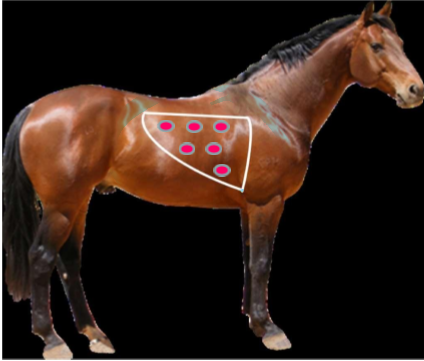
Abdominal Auscultation
Left side soft gurgling
R side - ileocaecal flush
(o = no motility, +++ = hypermotility)
Hindlimb and Forelimb
digital pulses = increased = foot inflamm
hoof testers - see soreness
LA DIAGNOSTICS
Bloods
diag: anaemia, inf, inflamm, organ dysfunction, electrolyte/hormone disturbances
EDTA: purple - haematology
RED: biochem
LITH HEP: green - everything else
CITRATE: blue - coag, fibrinogen
Ca OXOLATE: grey - glucose
venous: jug, ceph, lat thoracic, saph, transverse facial sinus (small sample - PCV/TP)
arterial: transverse facial, carotid, dorsal metatarsal - blood gas (resp/metab)
Blood tests:
PCV: 28-44%
TP: 60-70g/L
CBC MBA
Urine Sample
Free floe: mid stream (diff substrate, hose)
Catheter: (inf care)

