PSIO Lab 2
 Studied by 0 people
 Call Kai
 Learn
Learn Practice Test
 Spaced Repetition
 Match
Match Flashcards
 Knowt Play
1/76

Earn XP
Description and Tags
Blood Vessels
Name | Mastery | Learn | Test | Matching | Spaced | Call with Kai |
|---|
No analytics yet
Send a link to your students to track their progress
77 Terms
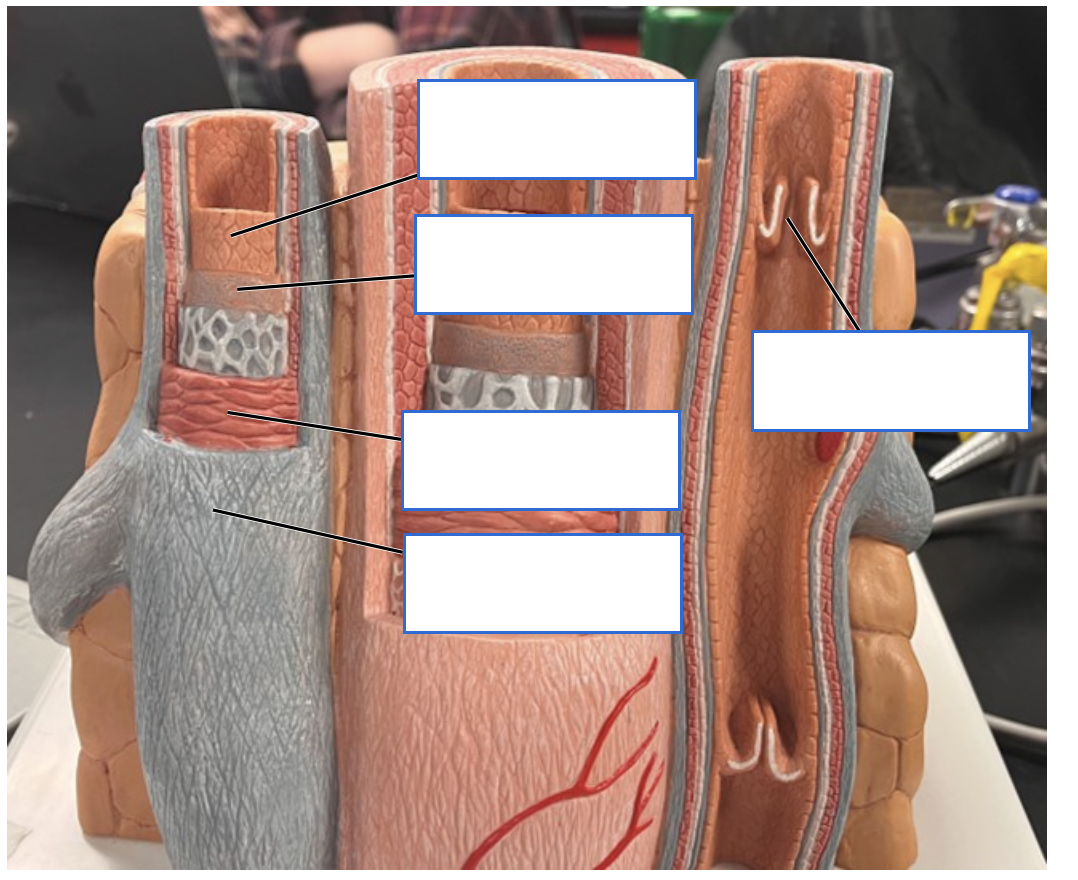
Describe the general appearance of arteries and veins
Arteries: Thick walls, small lumens. Rounded.
Veins: Thin walls, large lumens. Flattened.
What are the three distinct tissue layers in both arteries and veins? (superficial to deep)
Tunica externa
Tunica media
Tunica intima
Describe the tunica externa in both arteries and veins
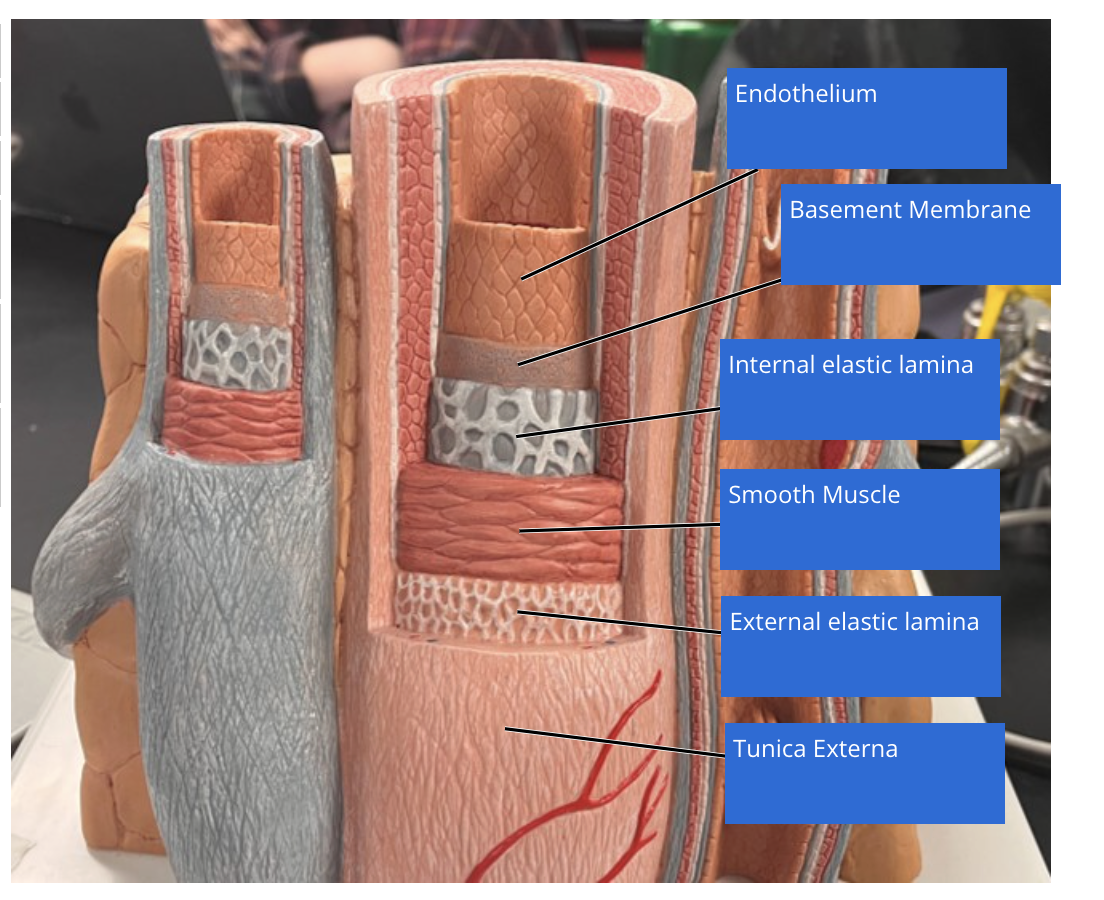
Arteries: Usually thinner than media (except in big vessels). Collagenous/elastic fibers. Vasa vasorum are present on large vessels.
Veins: Thickest layer in veins. Collagenous/elastic fibers, some smooth muscle. Vasa vasorum are present in large vessels
Describe the tunica media in both arteries and veins
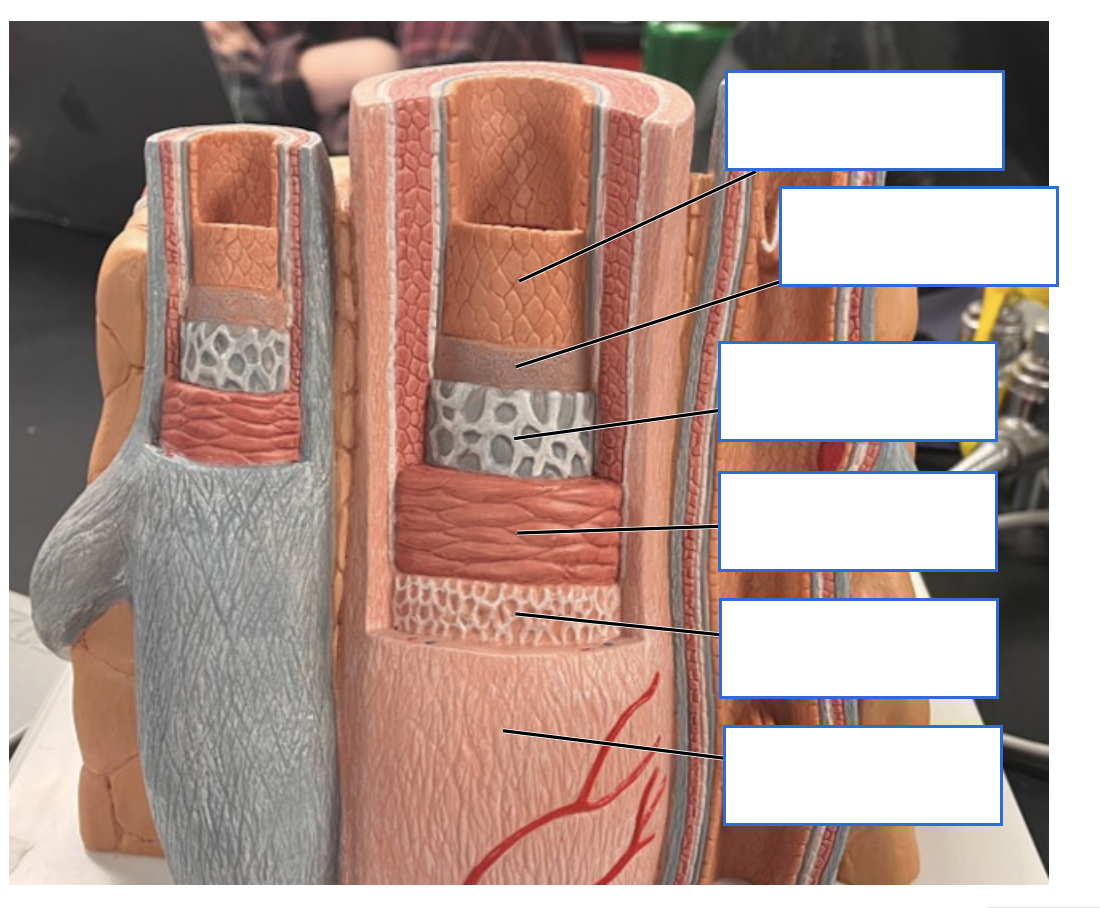
Arteries: Thickest layer in arteries. External elastic lamina → Smooth muscle (deep)
Veins: Thinner than externa. Smooth muscle/collagenous fibers. Vasa vasorum in large vessels. No external elastic membrane.
Describe the tunica intima in both arteries and veins
Arteries: Endothelium appears wavy. Basement membrane. Internal elastic membrane. (superficial)
Veins: Endothelium appears smooth. No internal elastic membrane.
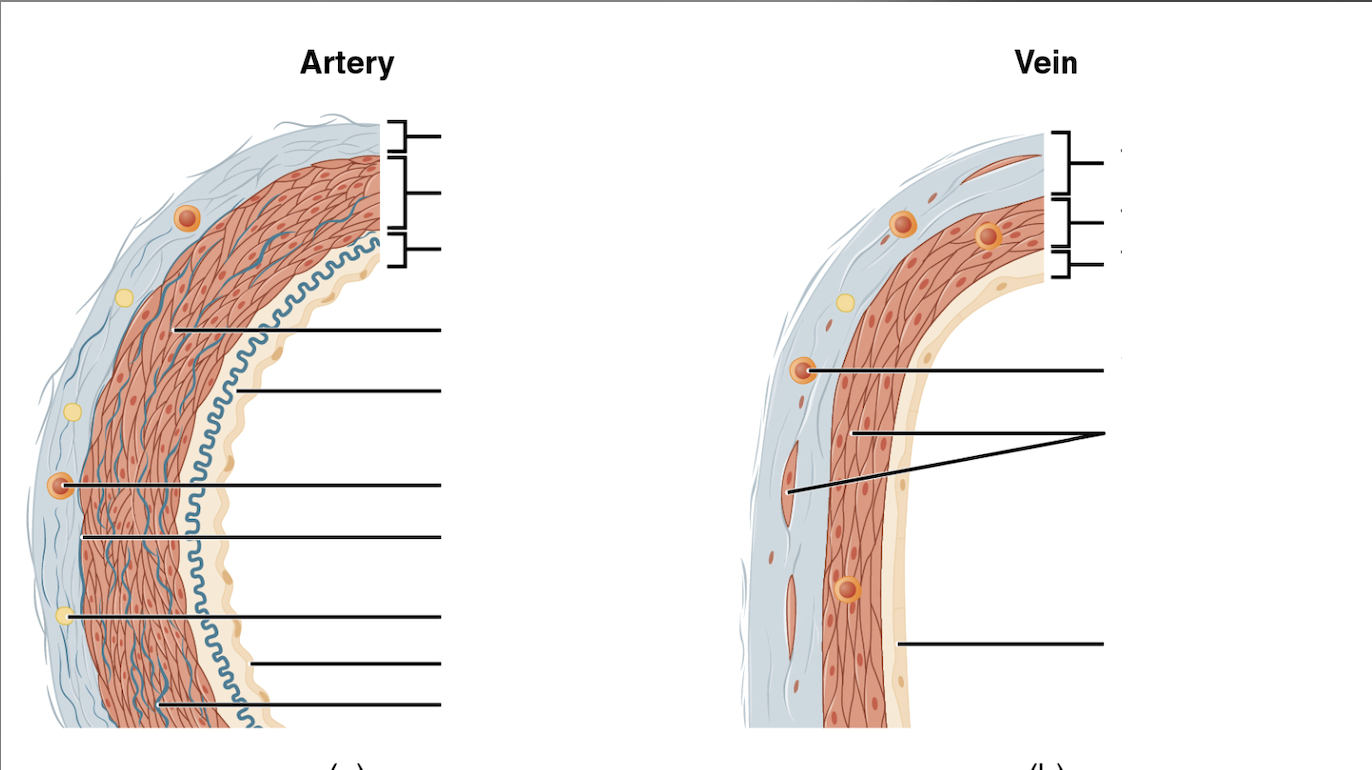
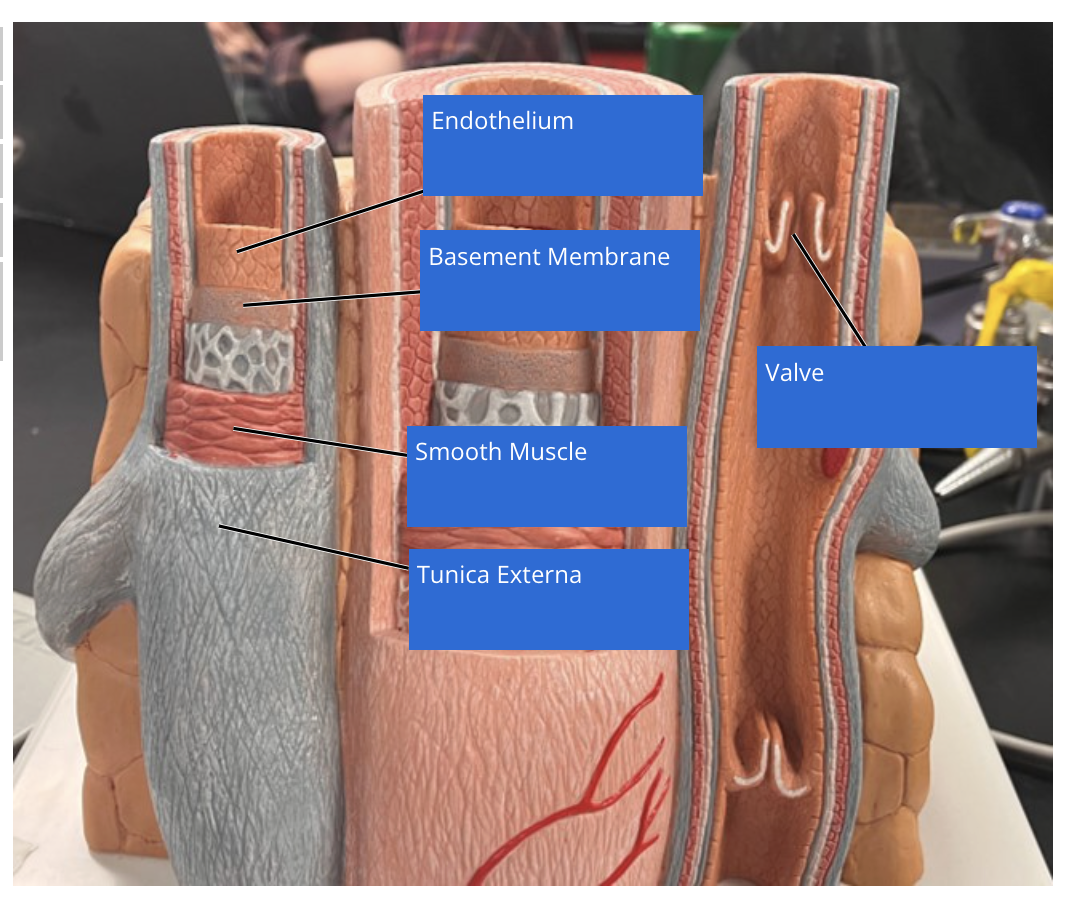
Label this diagram of the internal blood vessel
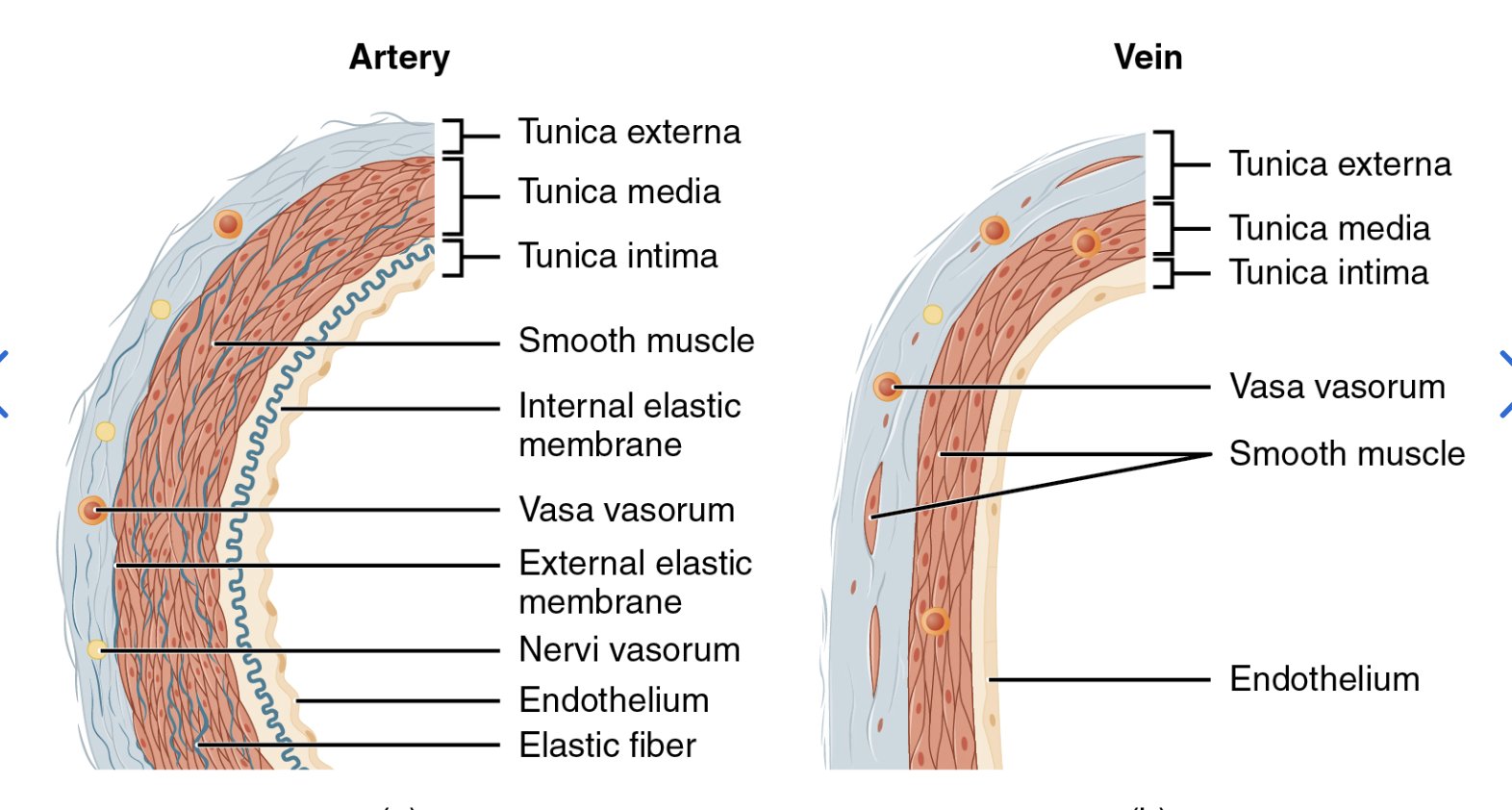
What are vasa vasorum?
Small networks of blood vessels that supply the tunica externa (arteries and veins) and tunica media (veins)
Nervi vasorum
Nerves that innervate the tunica externa
What are the three types of arteries? And what are some characteristics?
Elastic arteries: found closest to the heart/thickest walls/most elastic
Muscular arteries: Distribute blood to a vast network of arterioles, aka distributing artery
Arterioles: very small arteries that lead to a capillary
What are capillaries? What do they do?
Microscopic channels that supply blood to tissues throughout the body (perfusion)
exchange gas/other substances through blood and surrounding interstitial fluid
What is perfusion?
The distribution of blood to the tissues
What must be true about capillaries that allows them to allow substances to pass through?
Their walls must be “leaky”
What are the three major types of capillaries? What are they categorized based on?
Categorized based on leakiness
Continuous capillaries (least leaky)
Fenestrated capillaries
Sinusoid capillaries
Blood moves out of ____ to enter the venous circulation
capillary beds
What is the purpose of valves in large veins?
Promote unidirectional flow to the heart; prevent backflow toward capillaries
Which is more distensible? Arteries or veins? Why?
Veins because they store higher amounts of blood at any given time;
Adjusts the contraction of veins
Remember: thinner walls, larger lumens
What is a venule? What do multiple venules make up?
An extremely small vein
Multiple venules join together = vein
Postcapillary venule
Multiple capillaries join together to form a postcapillary venule exiting the capillary bed
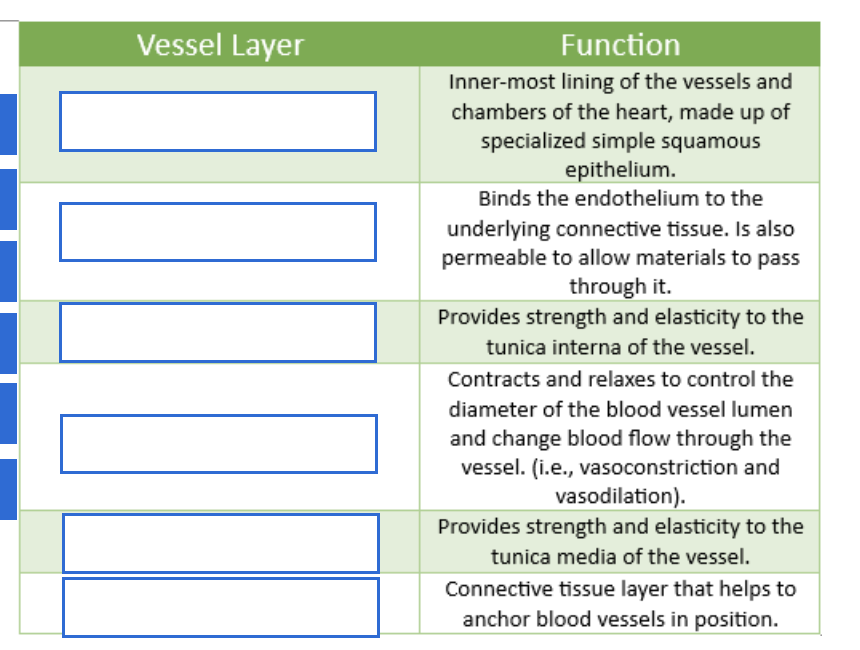
Fill out this function chart
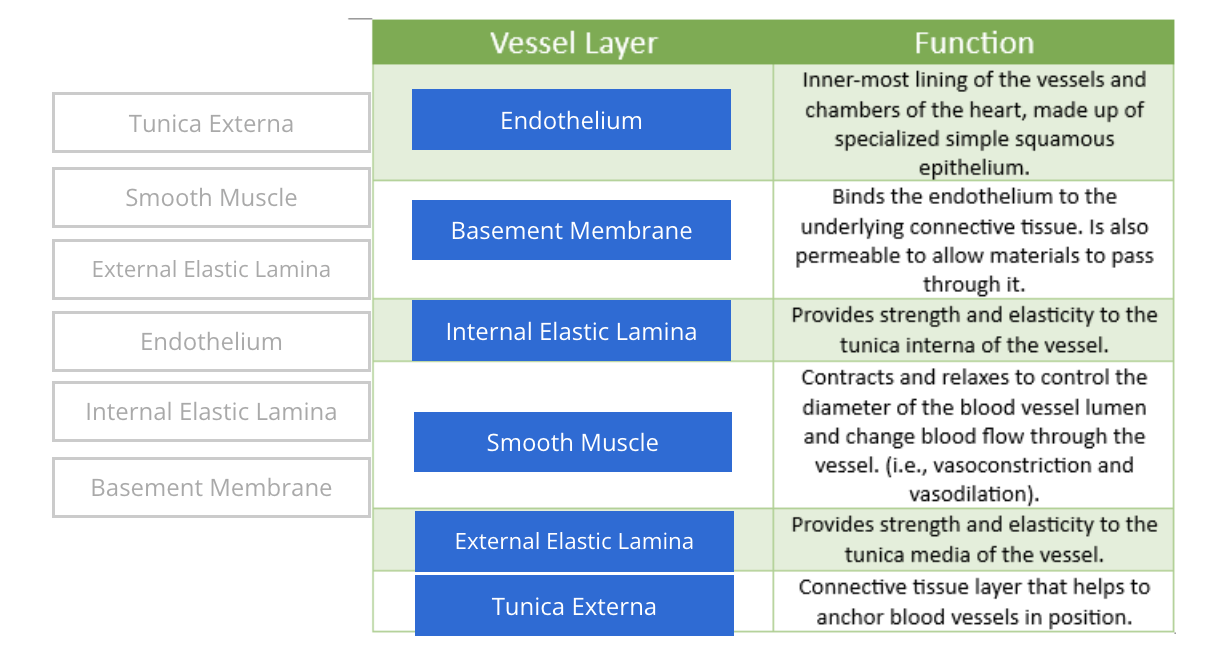
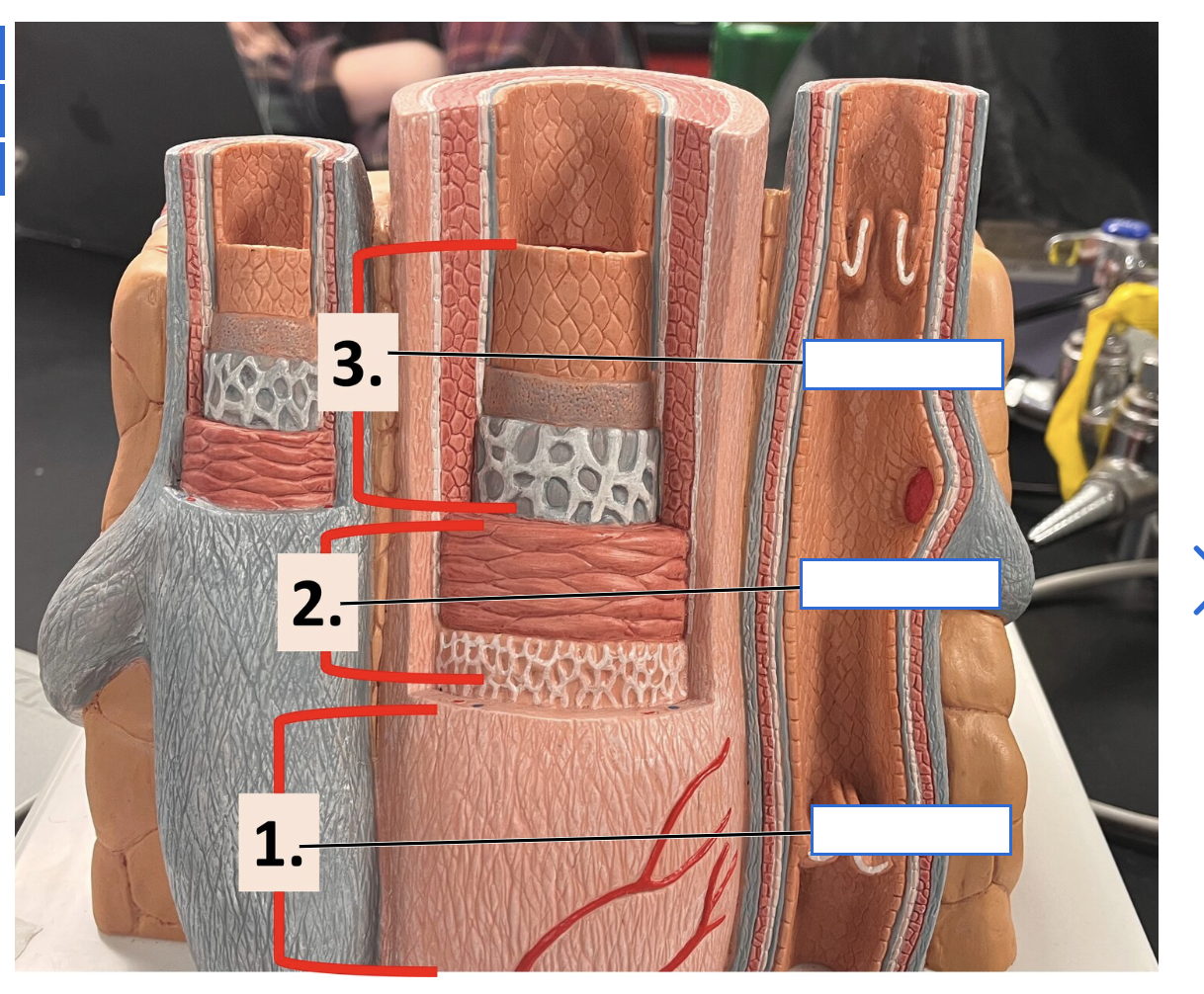
Label this diagram of an artery
Tunica Externa
Tunica Media
Tunica interna
Anastomosis
Vessel that allows for alternate route of blood flow
Trunks
Large, short vessels that immediately branches
Portal
Vessel that connects two capillary beds in series
Vasoconstriction
Contraction of smooth muscle, smaller lumen
INCREASES blood pressure
Vasodilation
Relaxation of smooth muscle, bigger lumen
DECREASES blood pressure
The cerebral arterial circulation (circle of willis) is an example of what?
Anastomosis
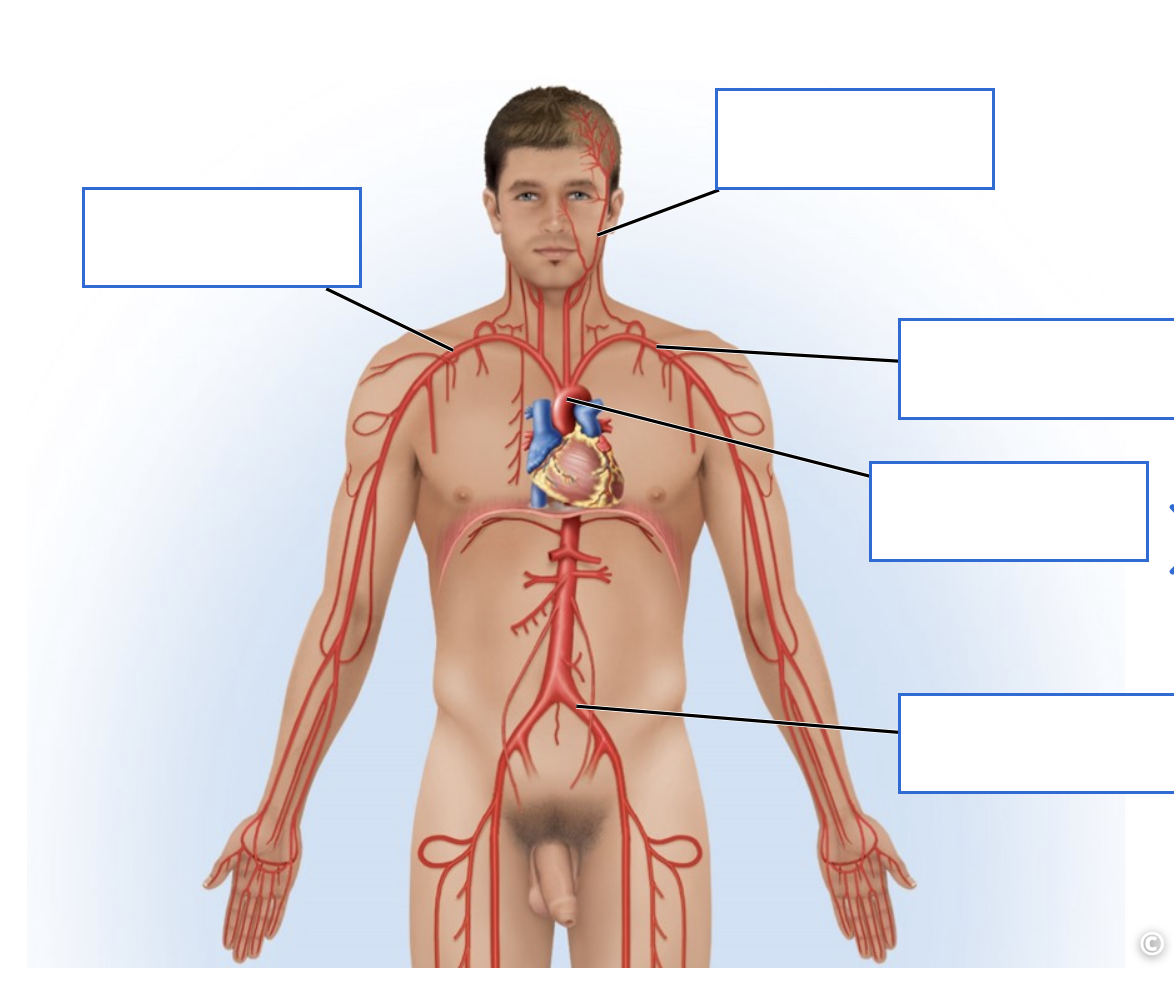
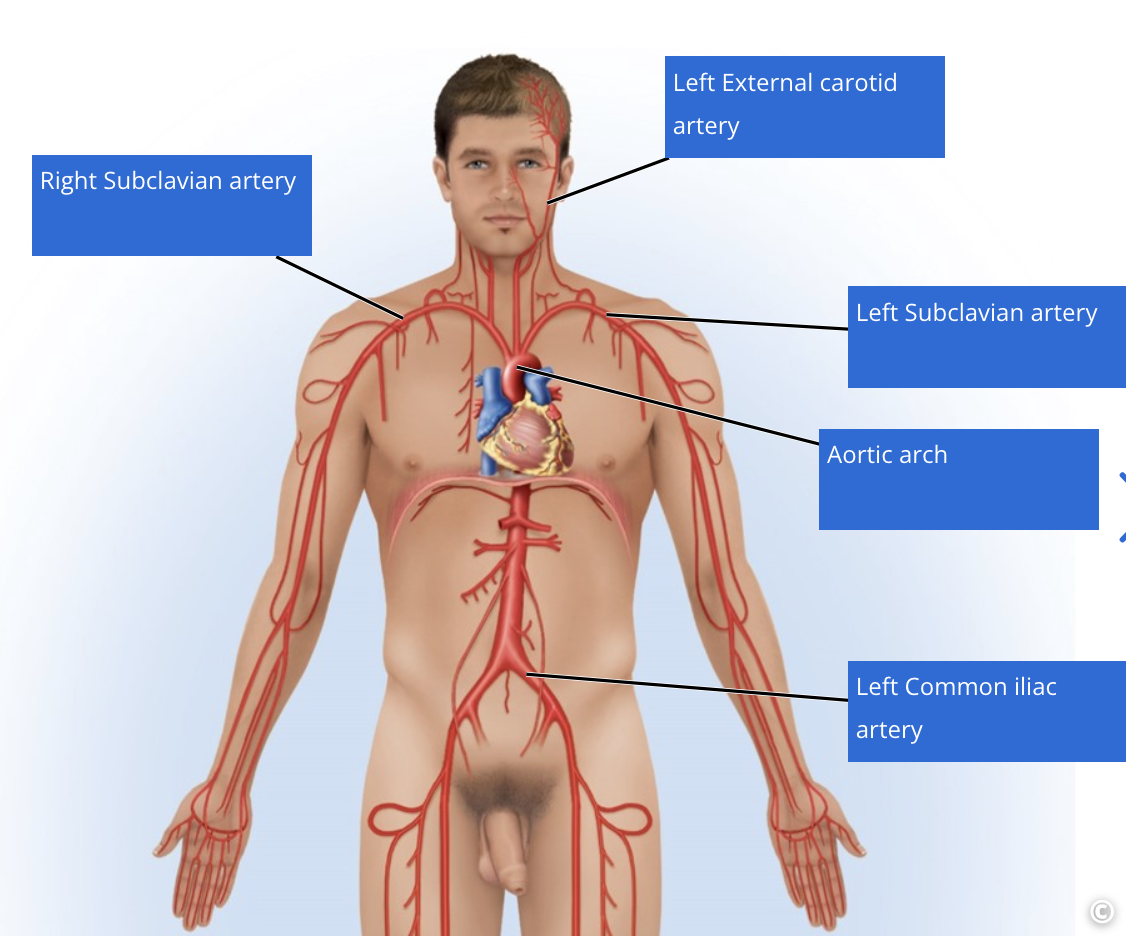
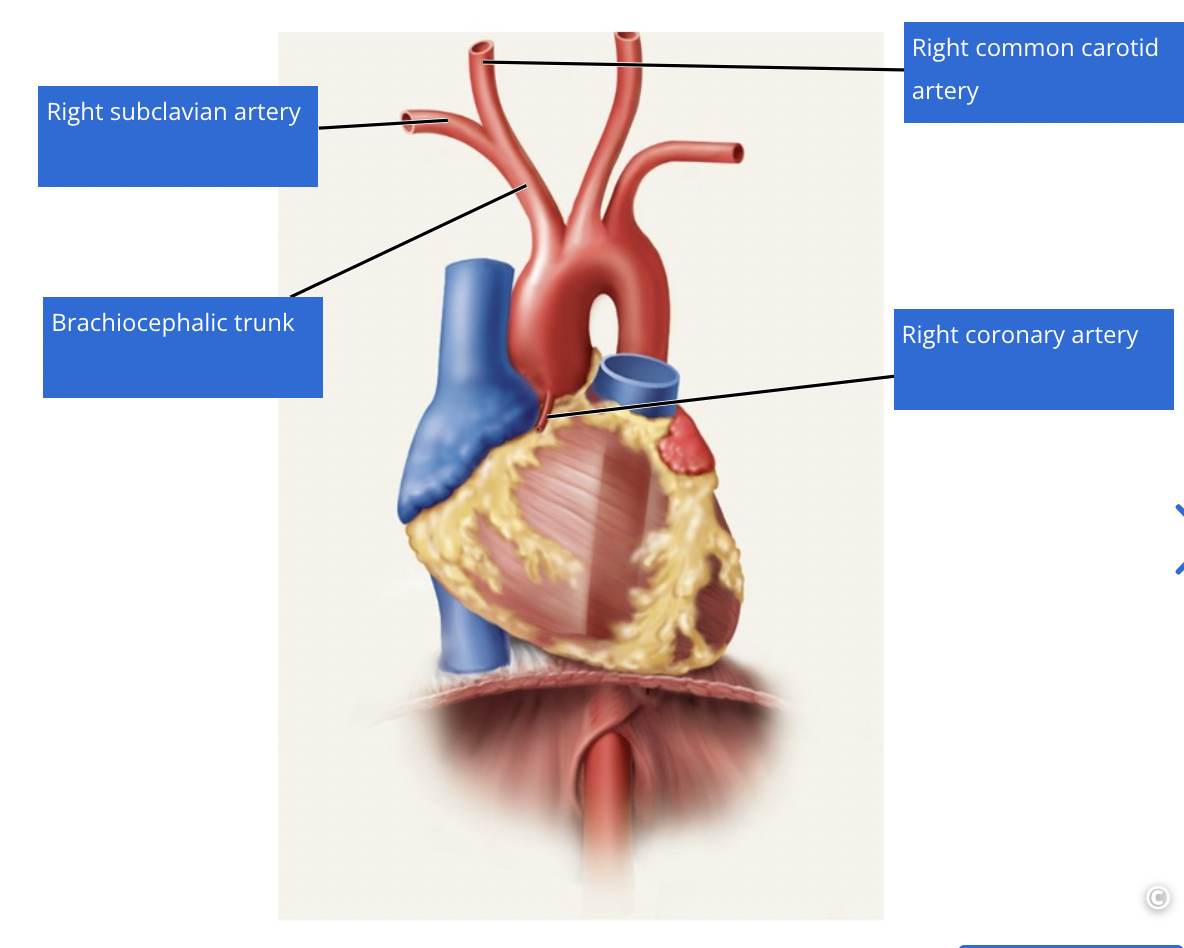
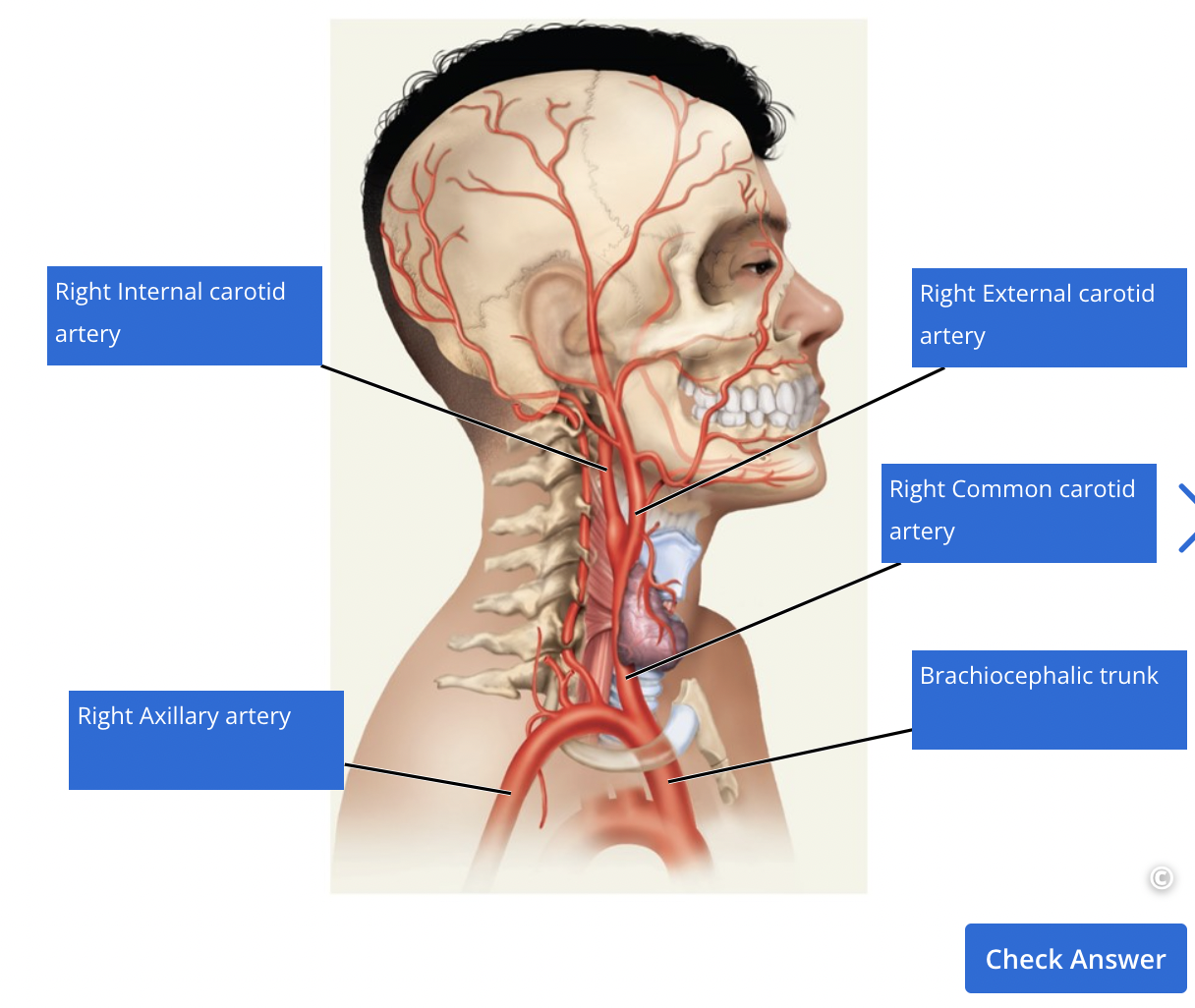
The brachiocephalic trunk branches into which two vessels?
Right subclavian artery and right common carotid artery
What are the three major branches of the aortic arch?
Brachiocephalic artery (→ right common carotid/right subclavian)
Left common carotid artery
Left subclavian artery
Where do the R/L subclavian and R/L carotid arteries supply blood?
Subclavian: arms
Carotid: head and brain
What do the R/L subsclavian arteries branch into?
Vertebral arteries
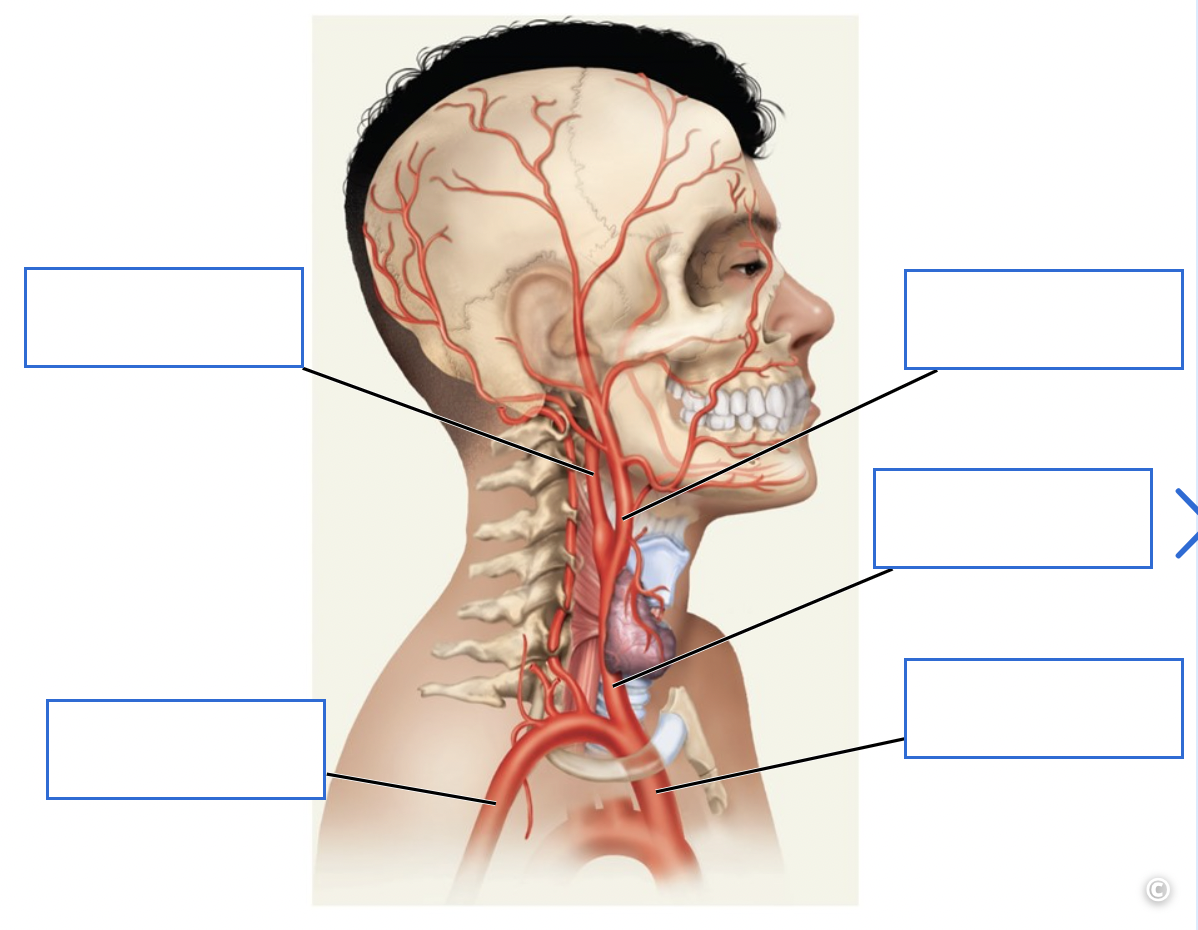
What do the R/L Common Carotid arteries branch into? To where do these arteries supply blood?
External carotid artery: Scalp and R/L head
Internal carotid artery: brain and cerebral circuit
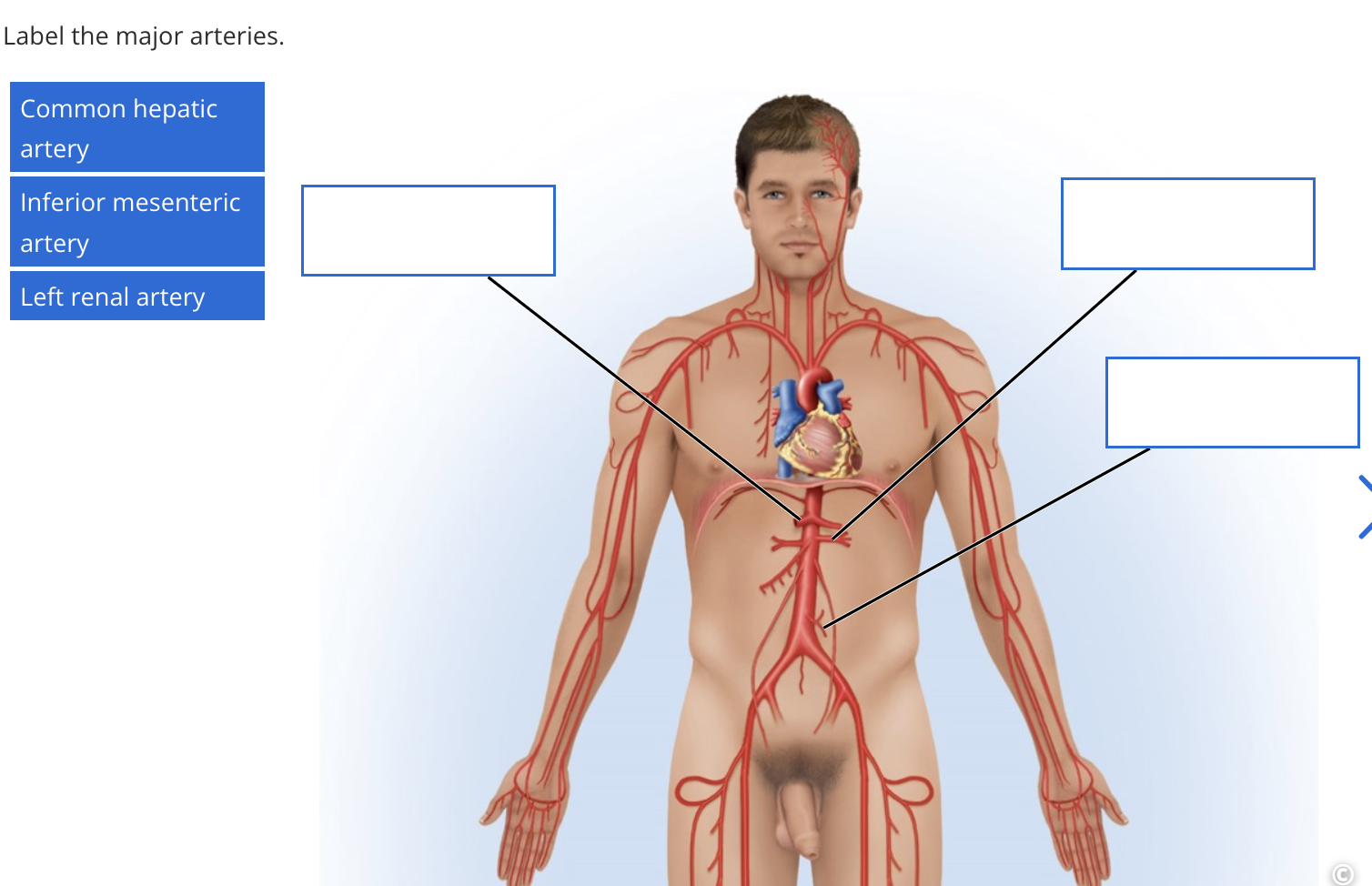
Where do mesenteric arteries supply blood?
Intestines
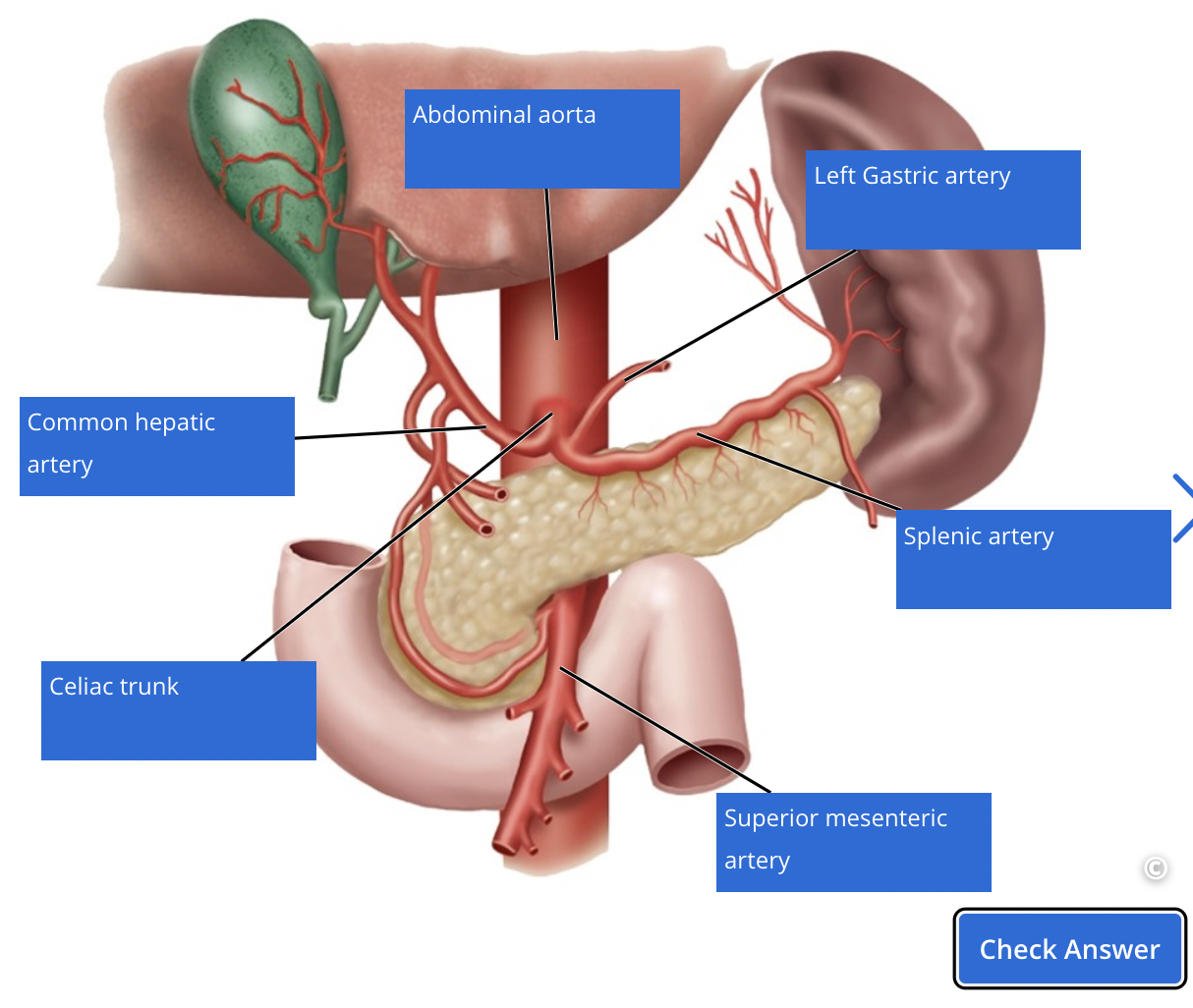
List the three branches of the Celiac trunk
Common hepatic artery
Splenic artery
L Gastric artery
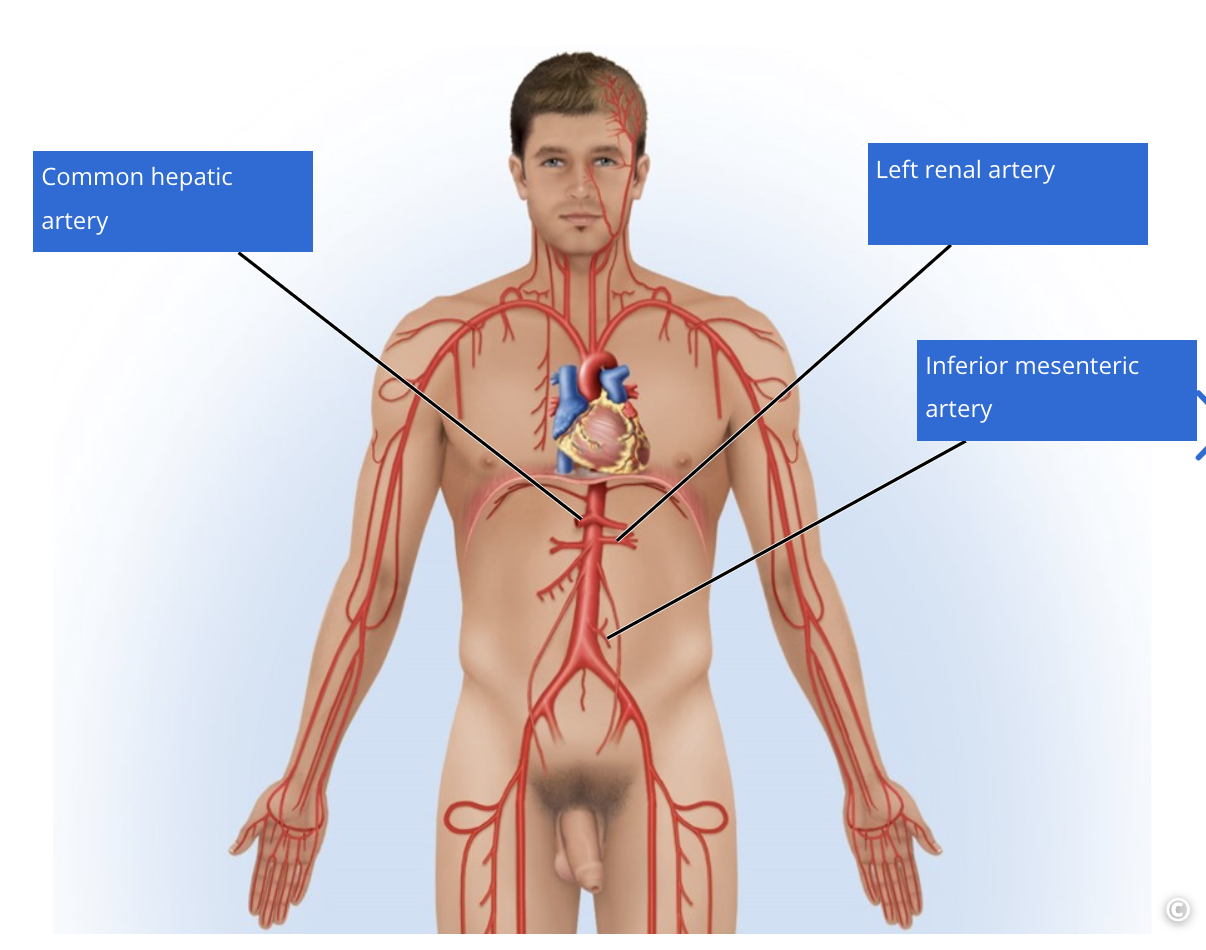
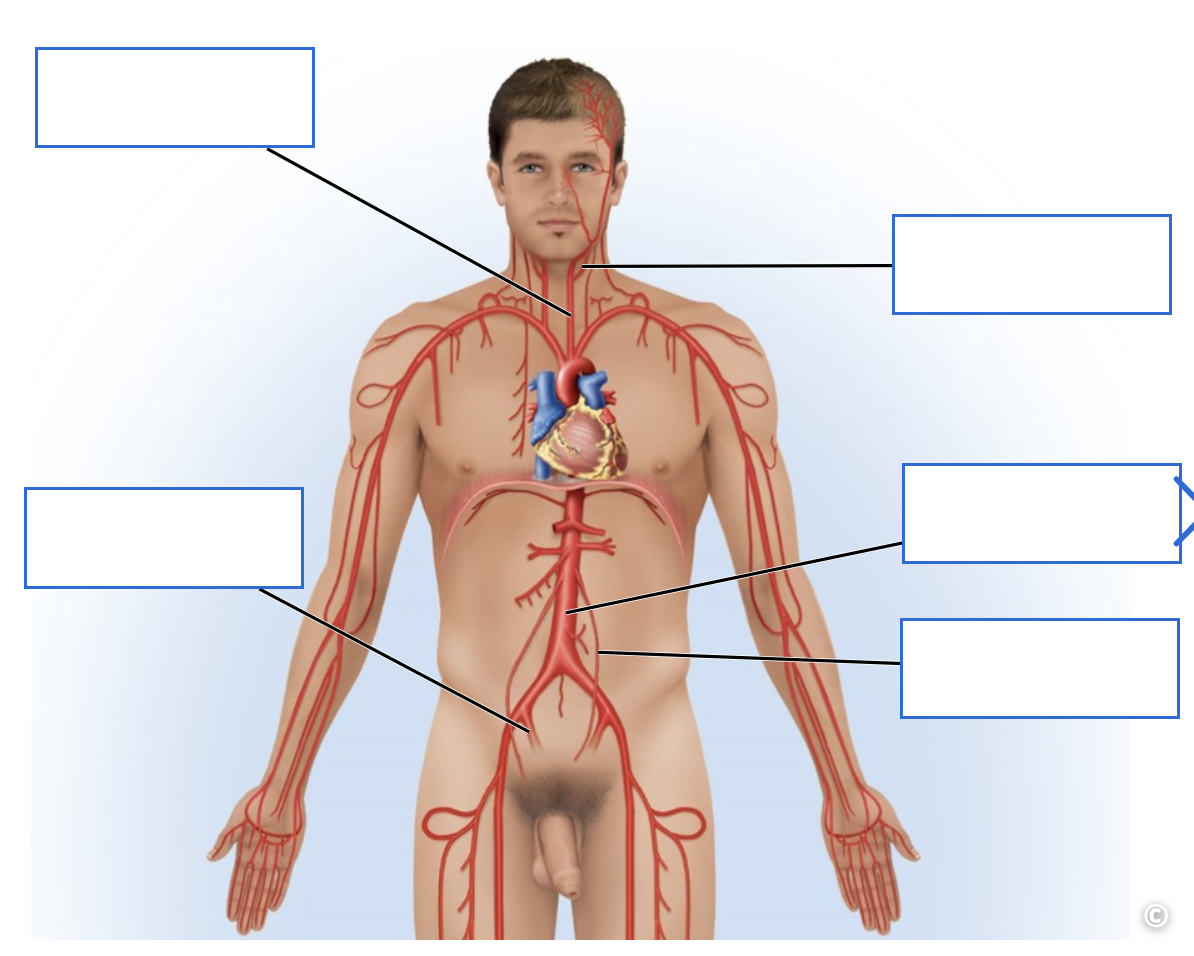
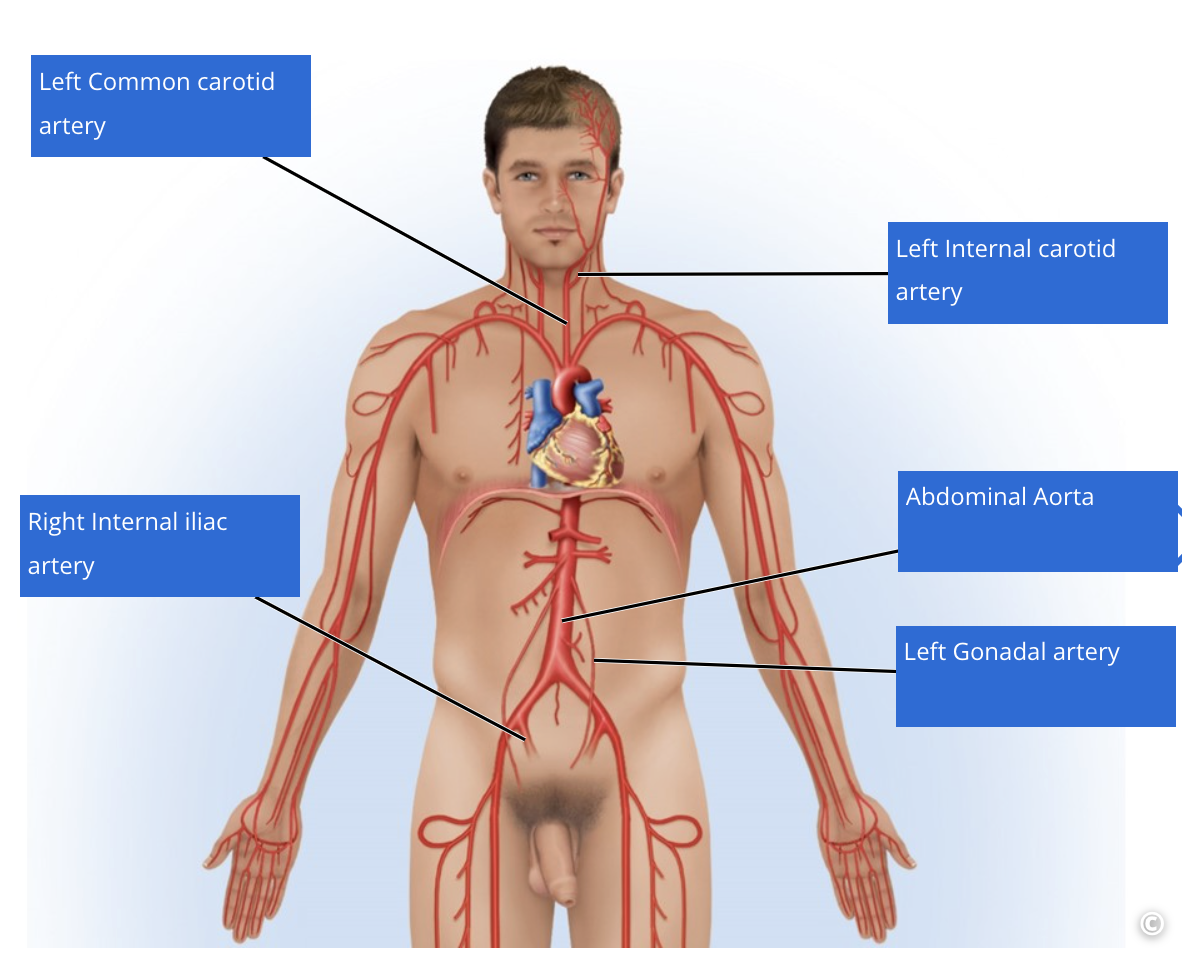
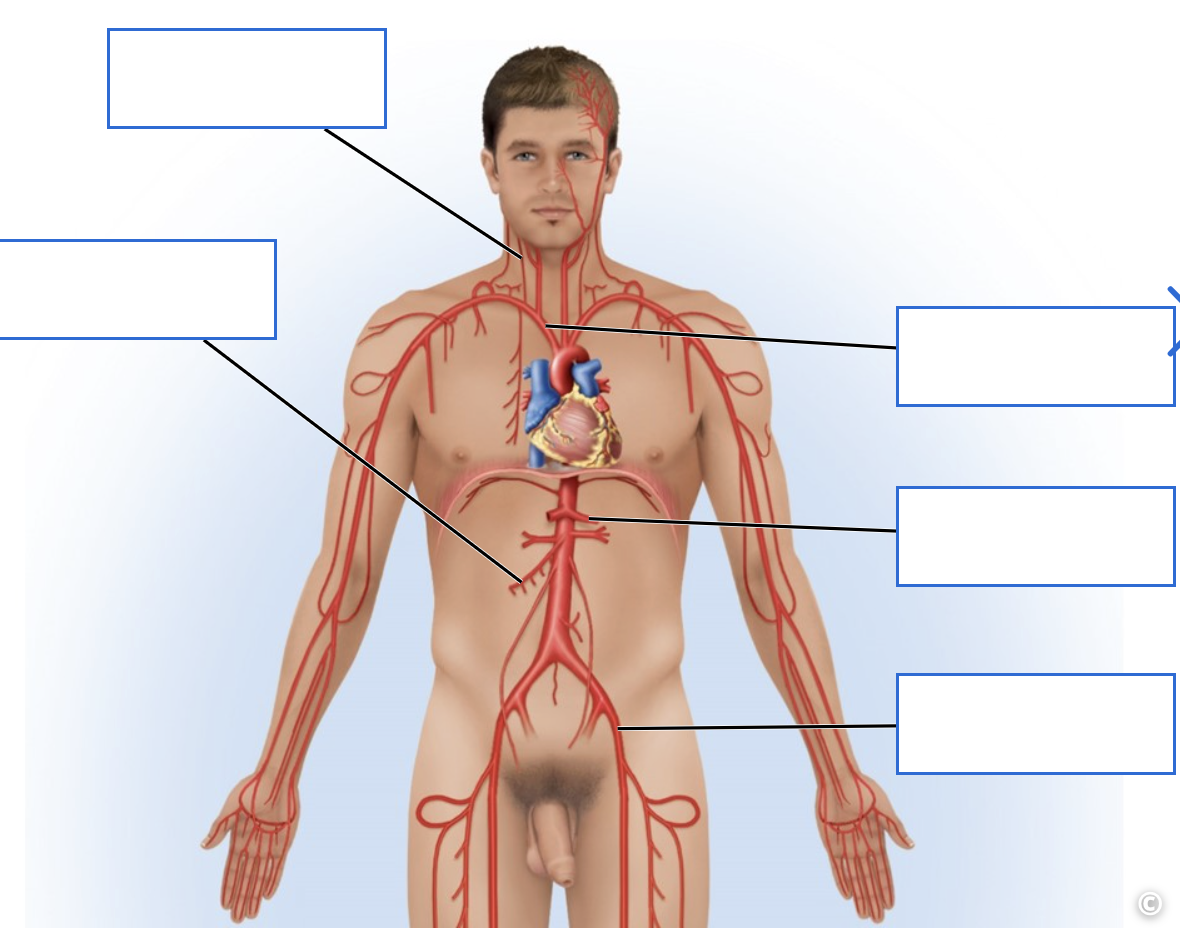
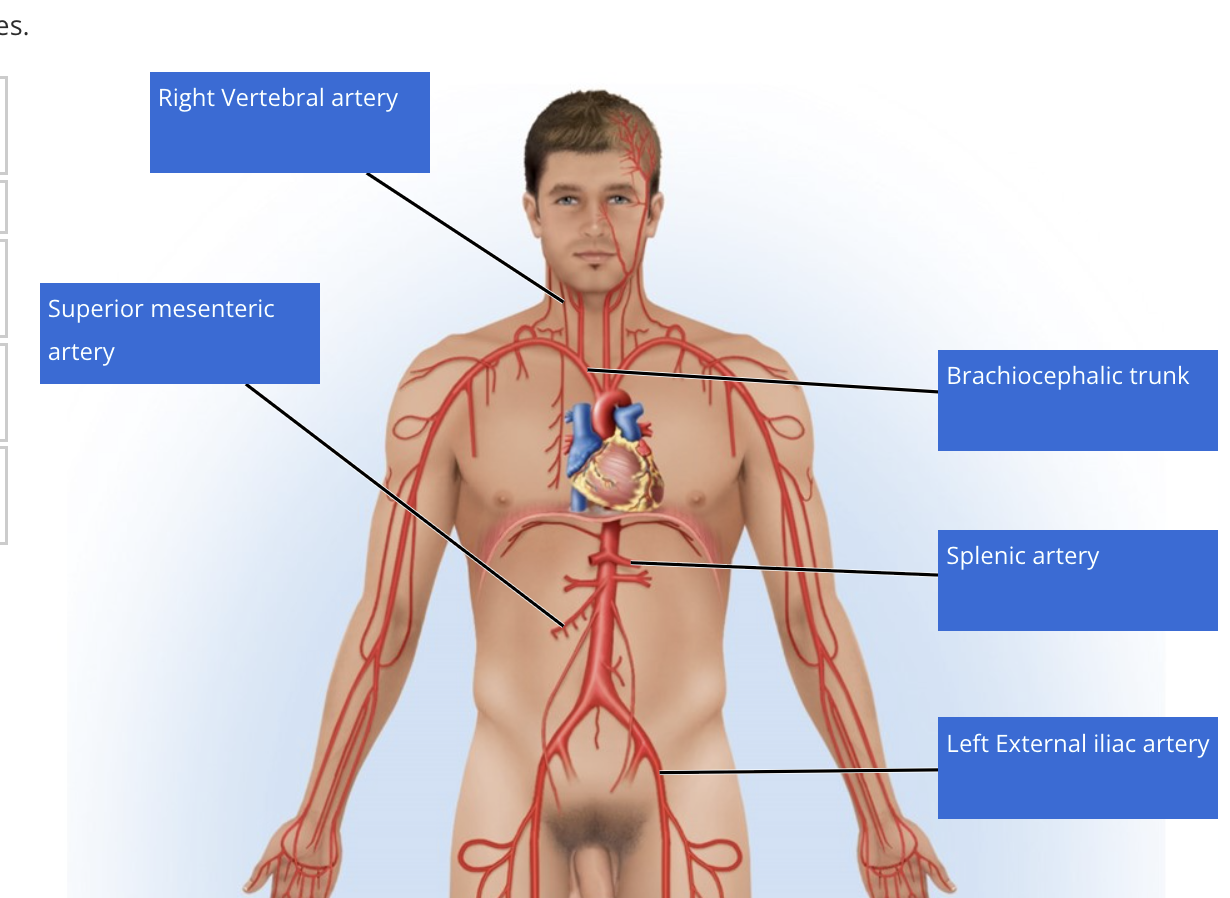
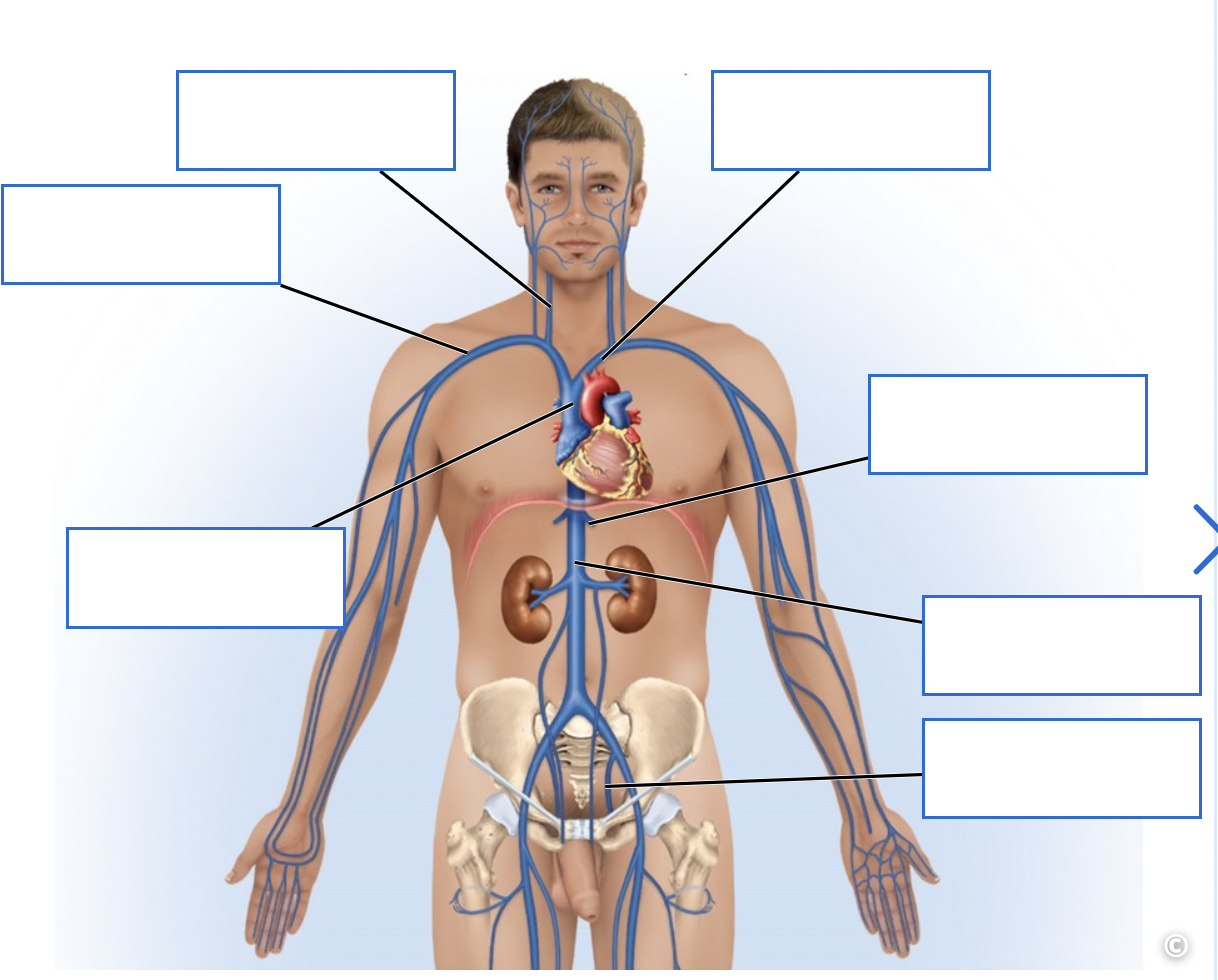
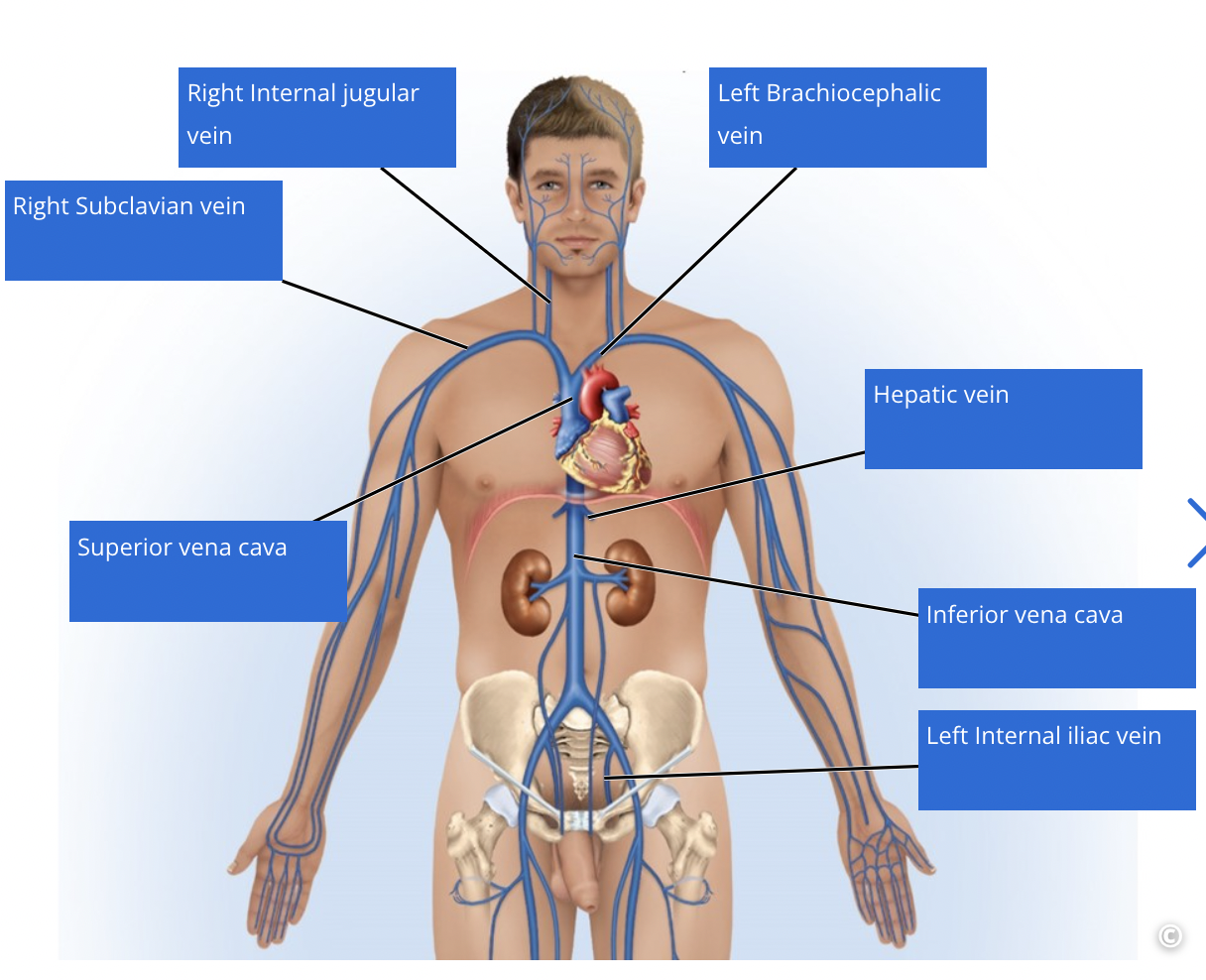
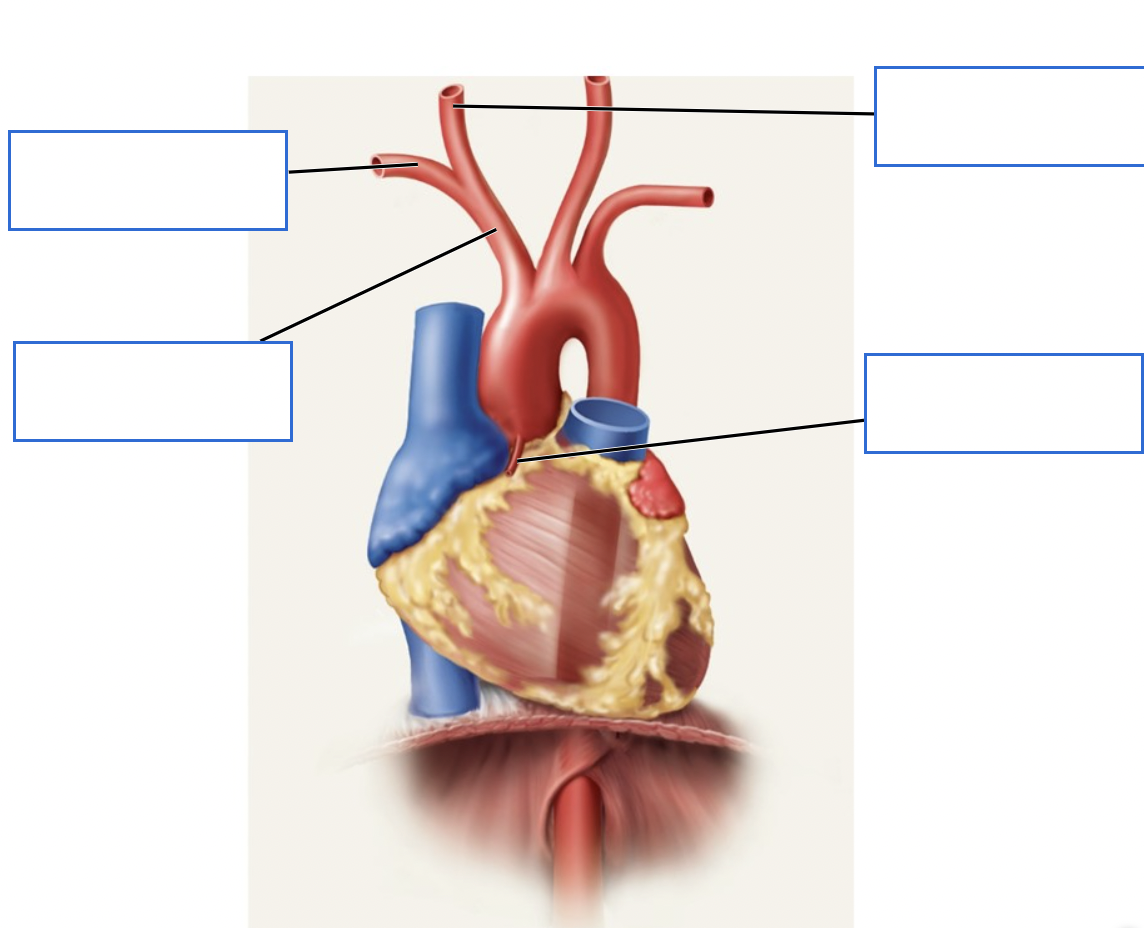
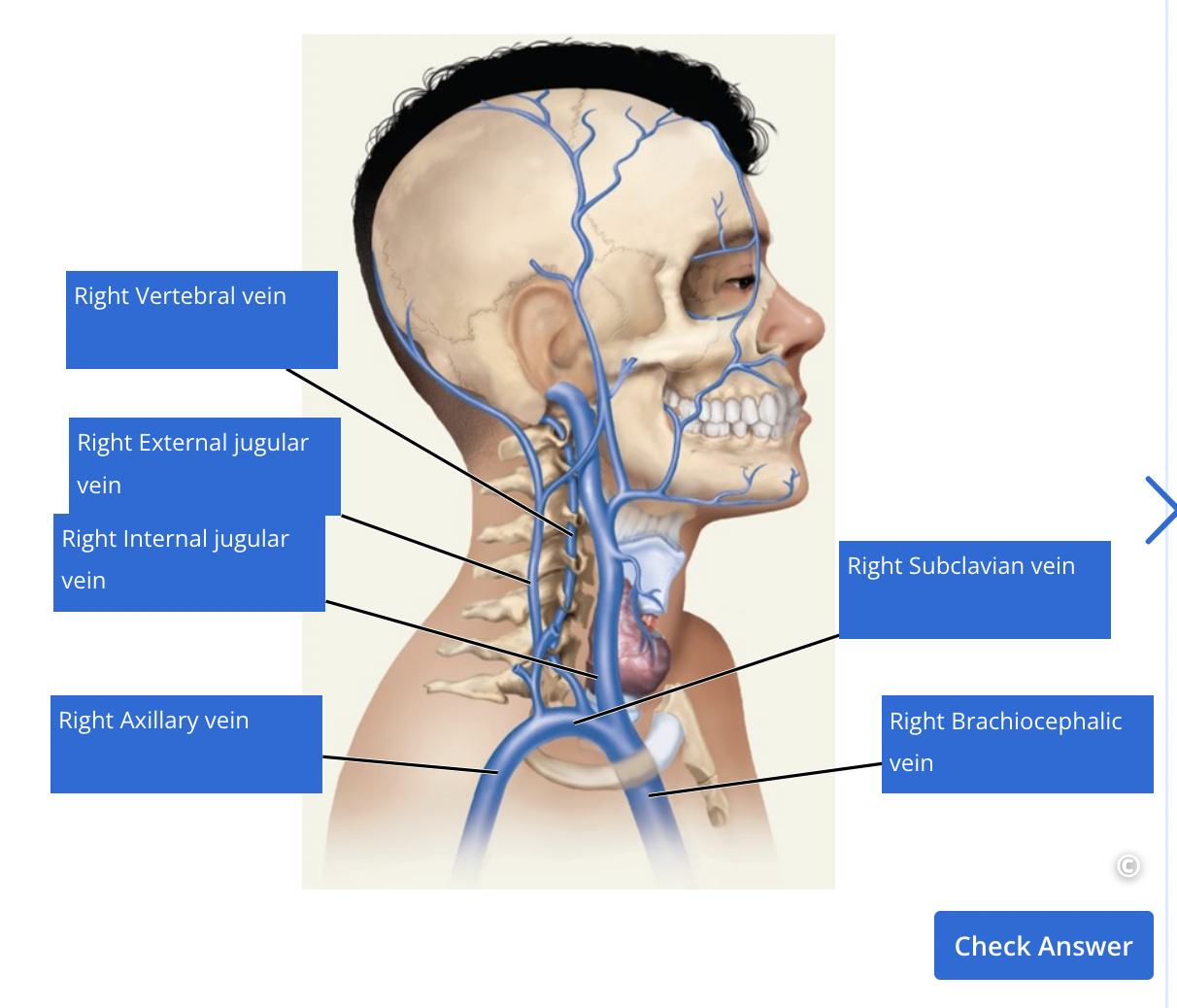
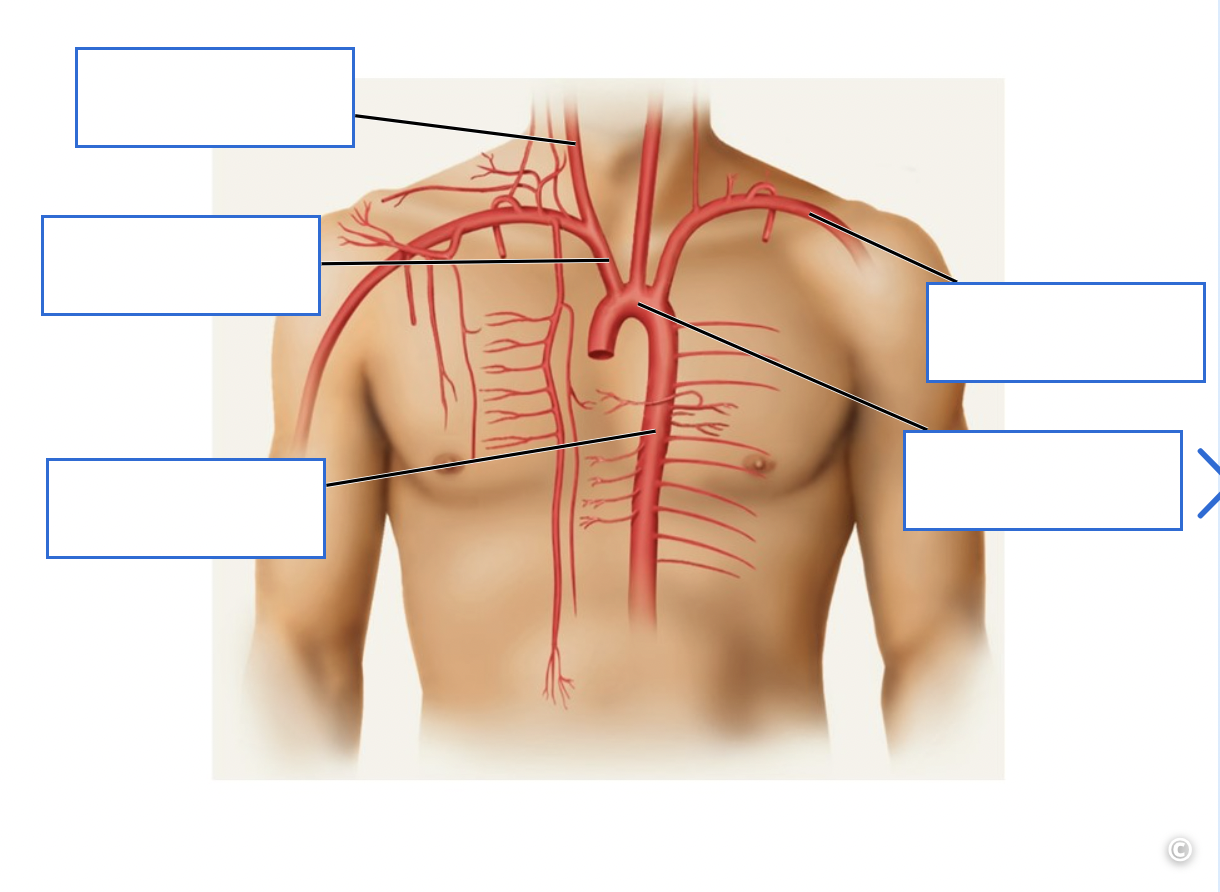
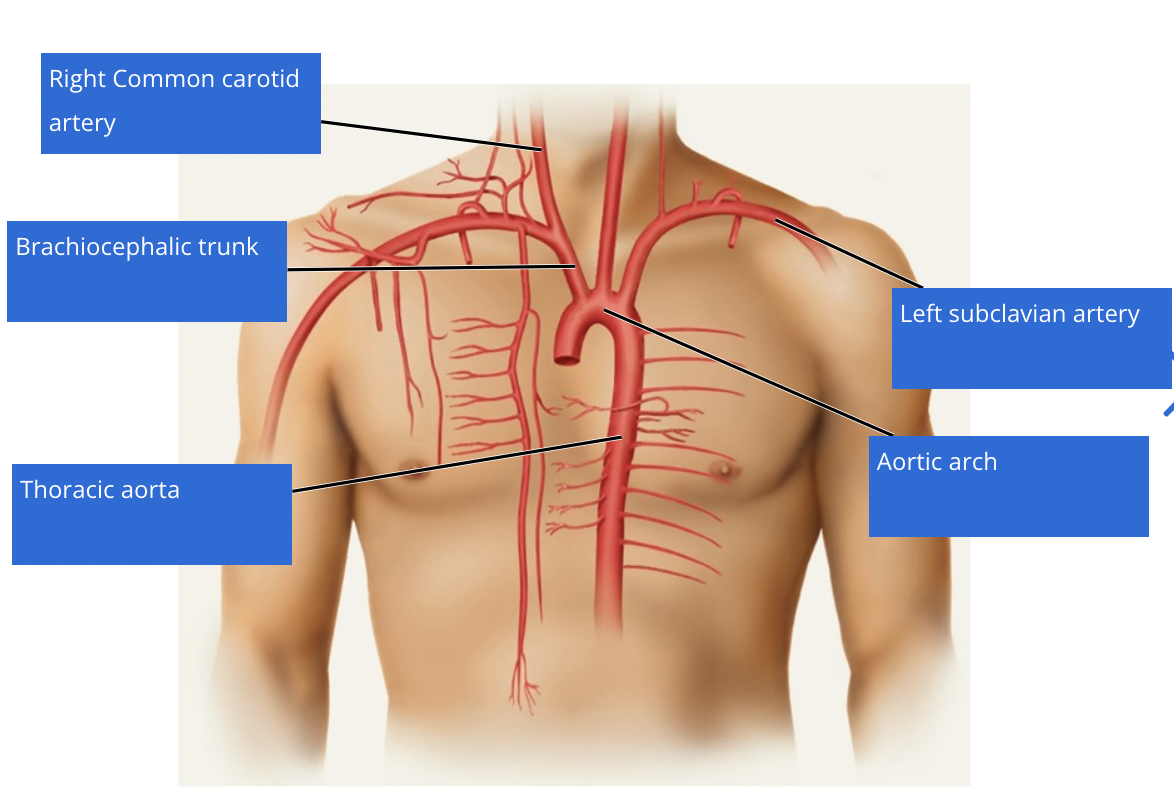
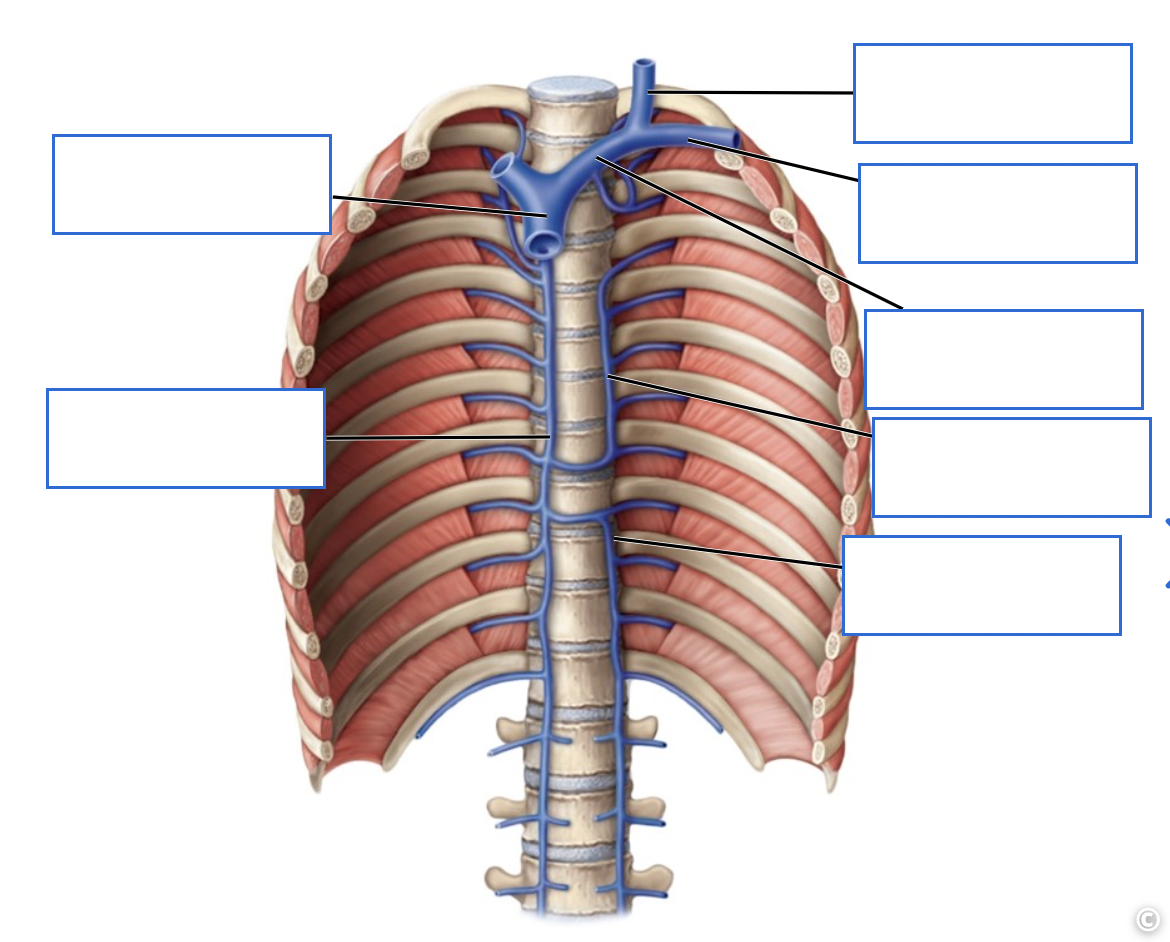
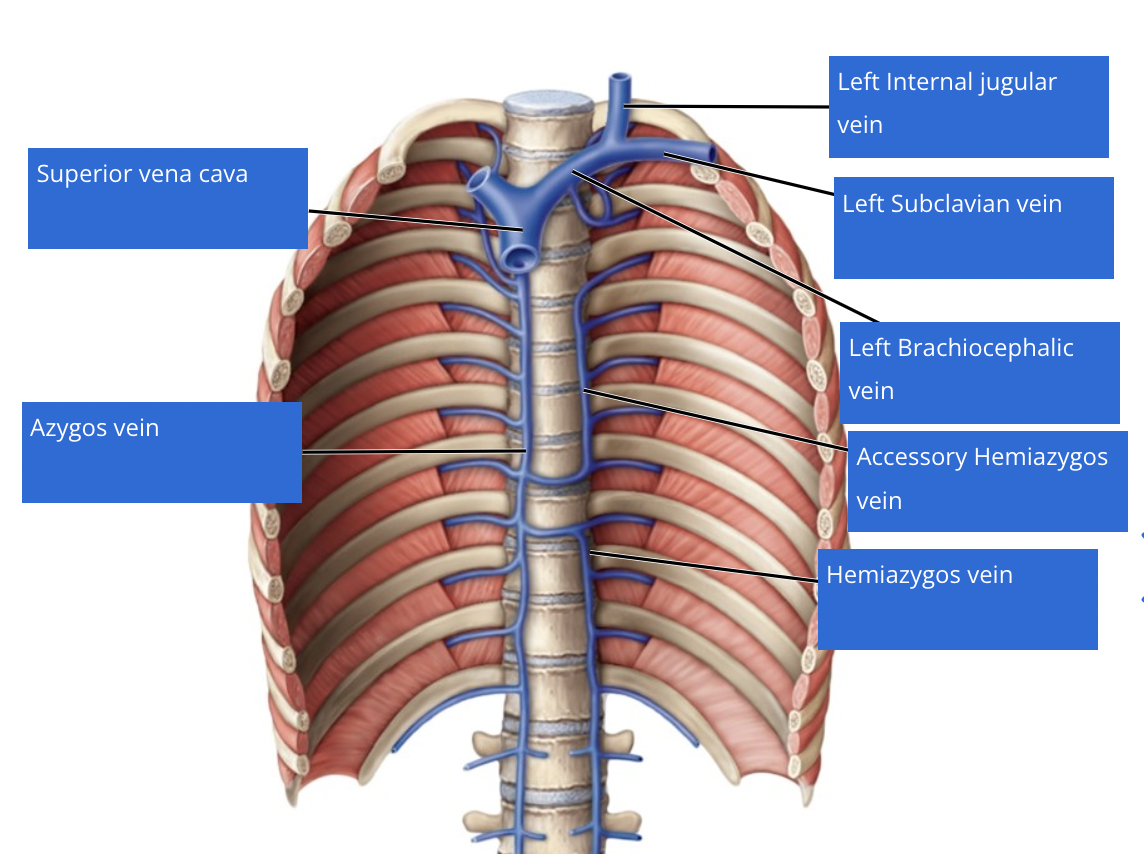
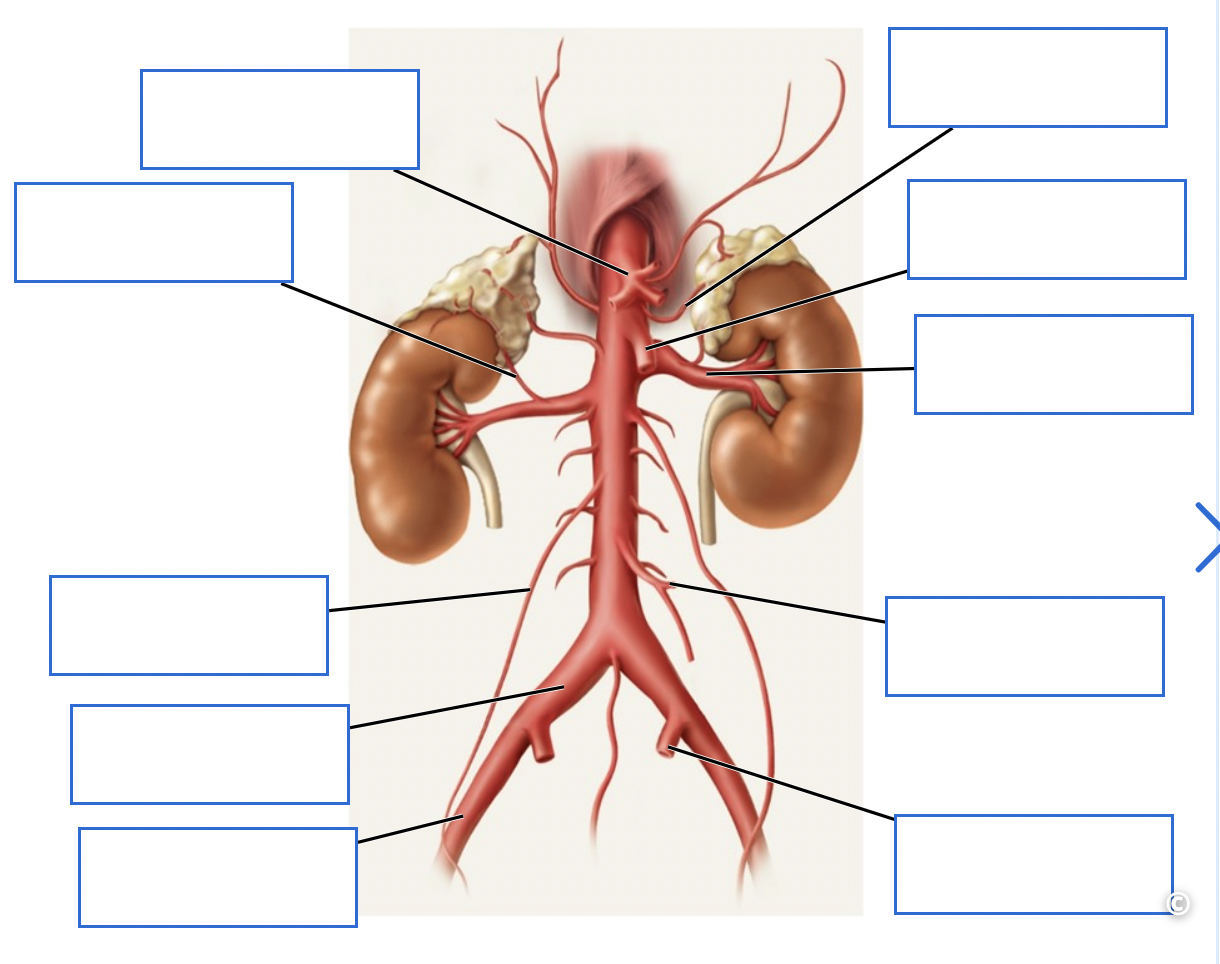
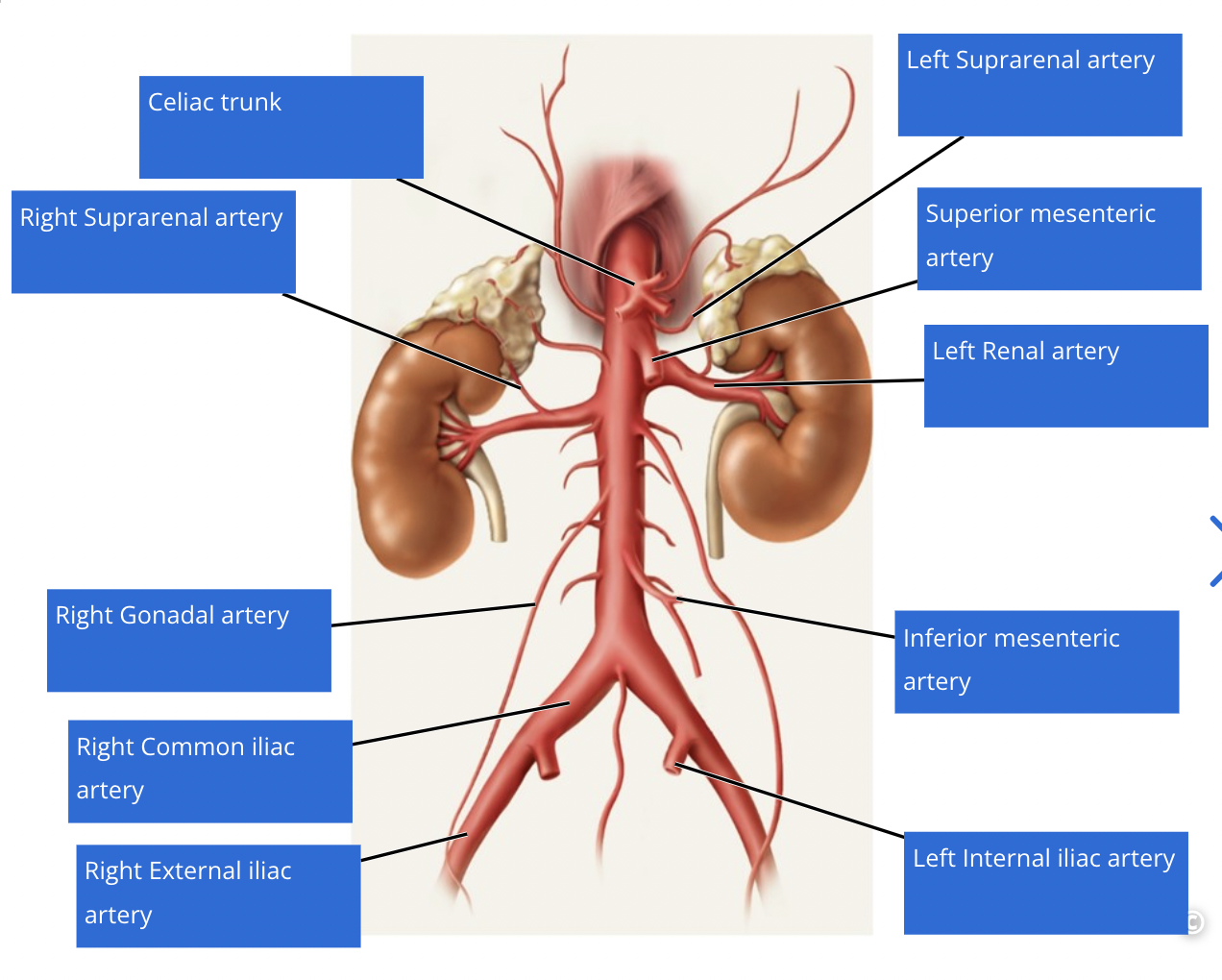
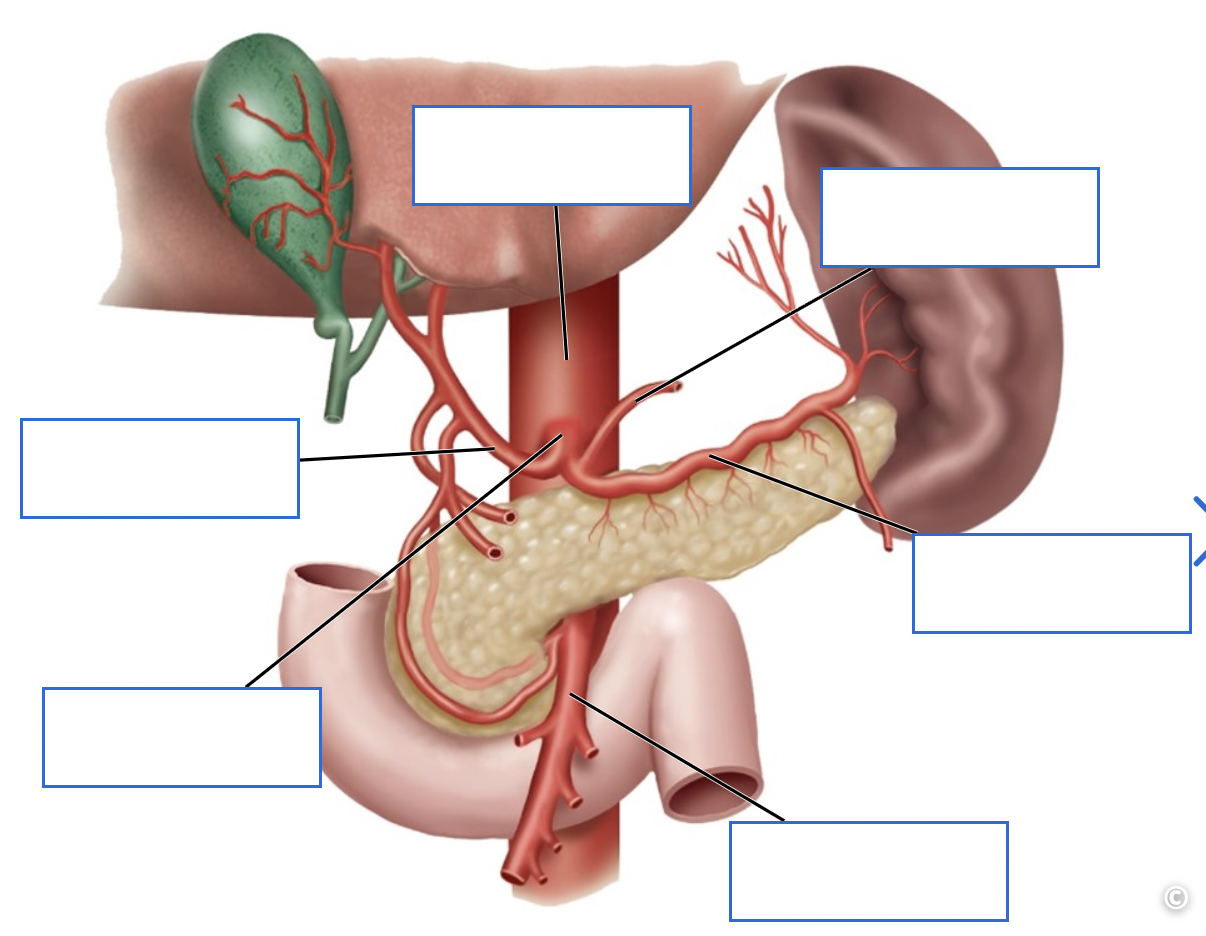
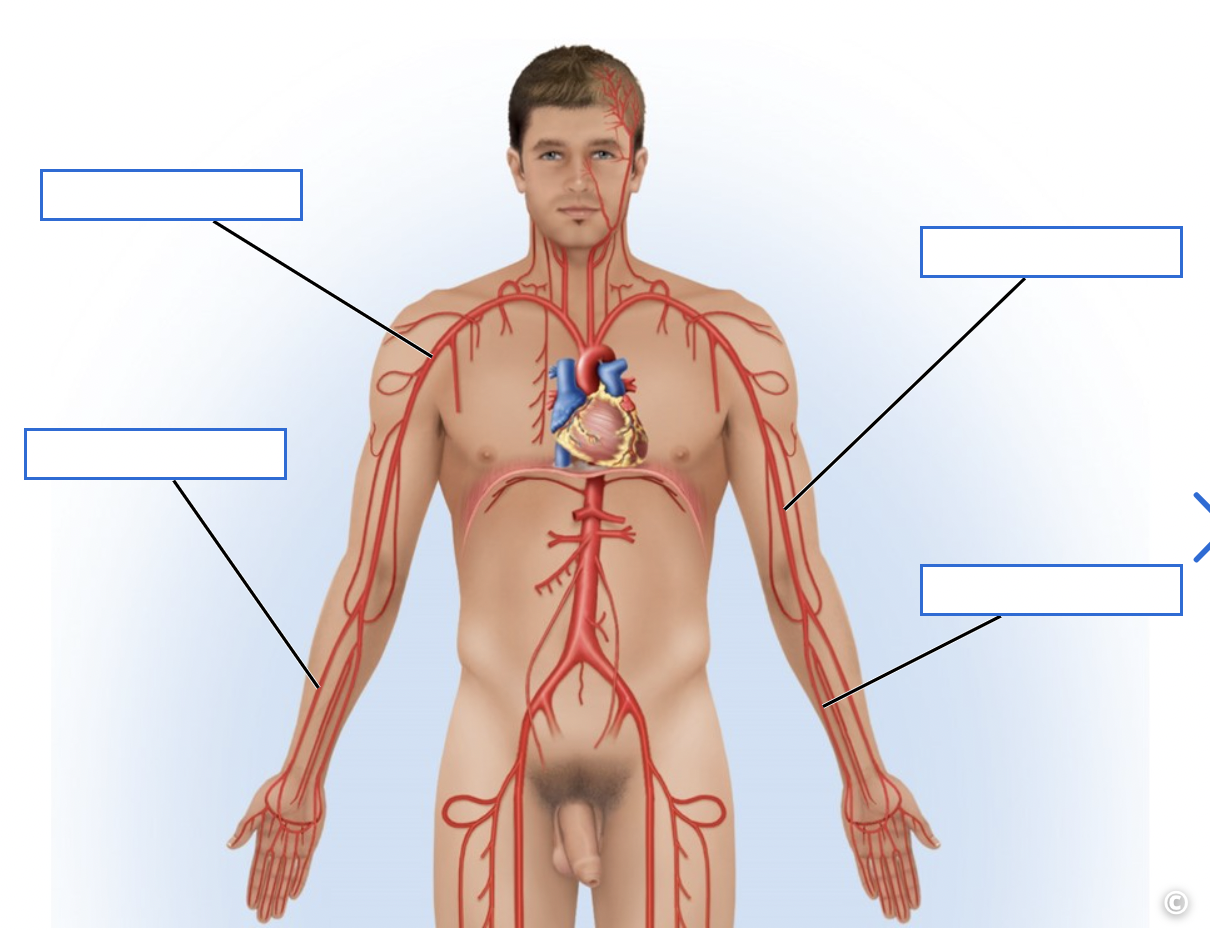
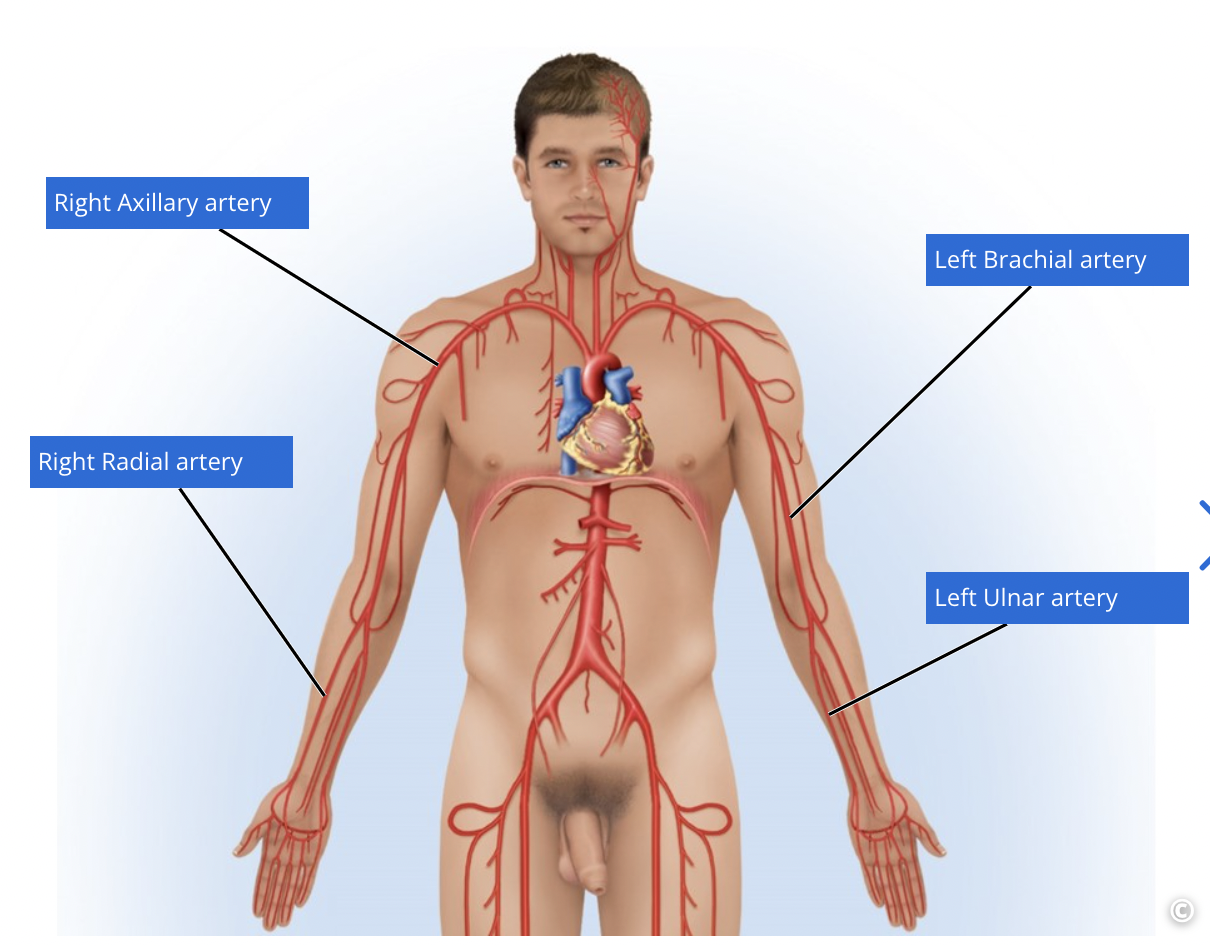
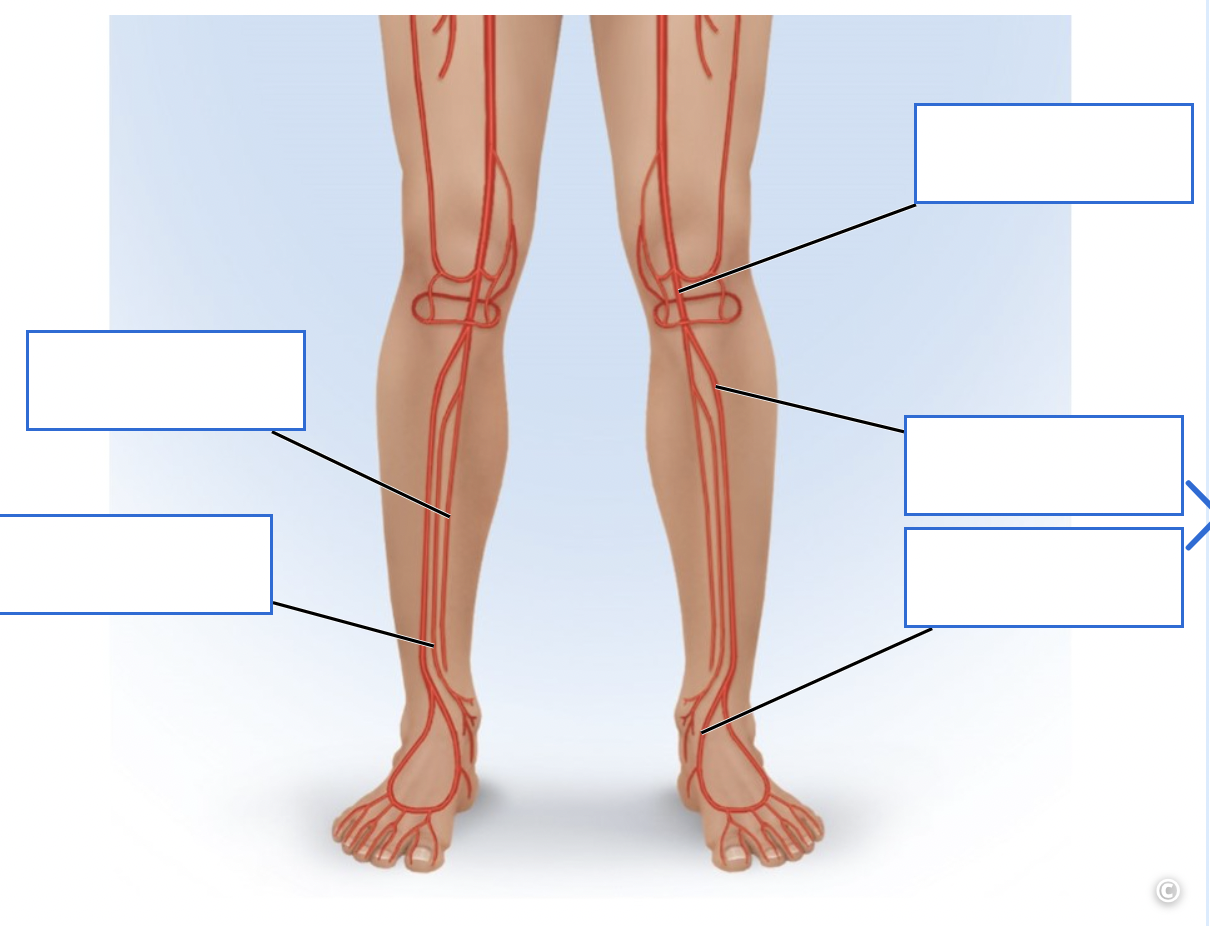
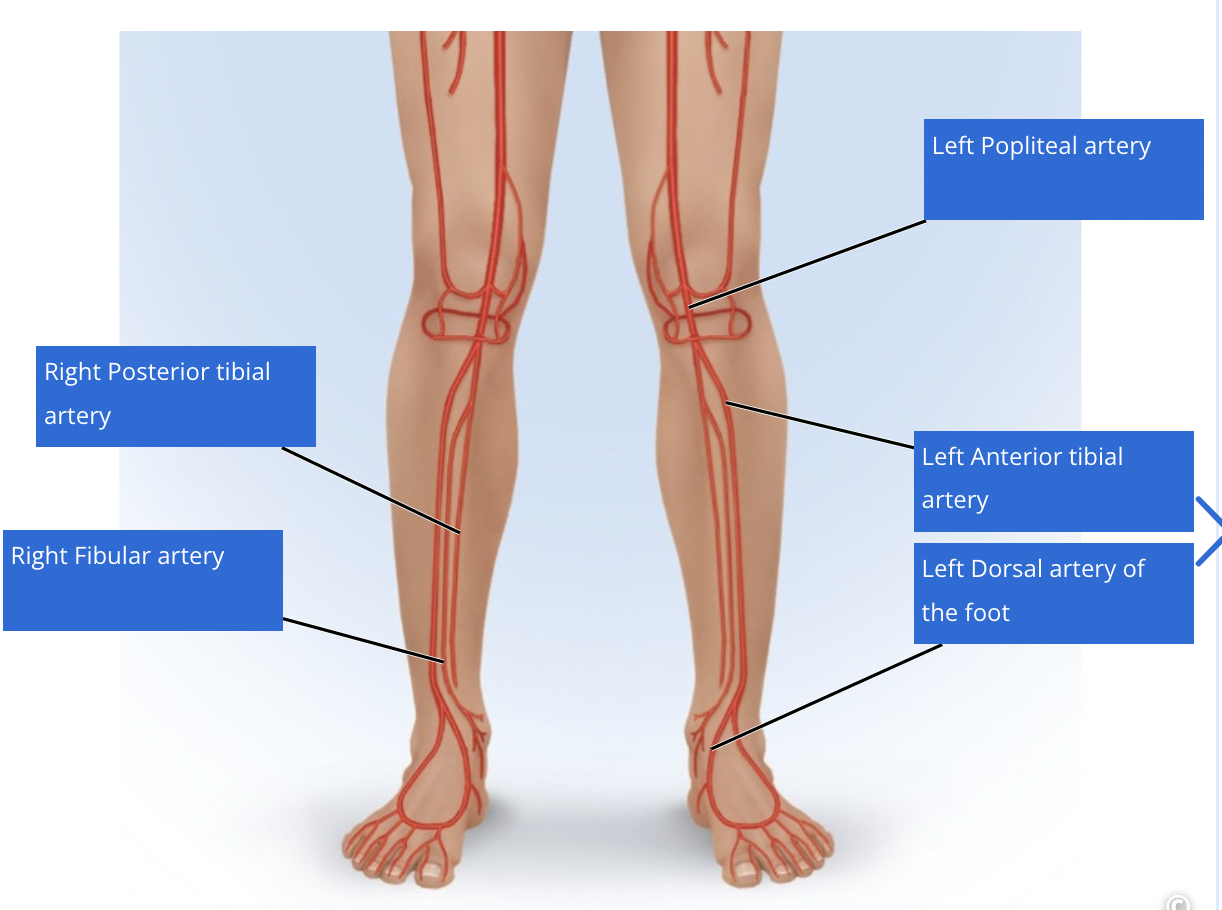
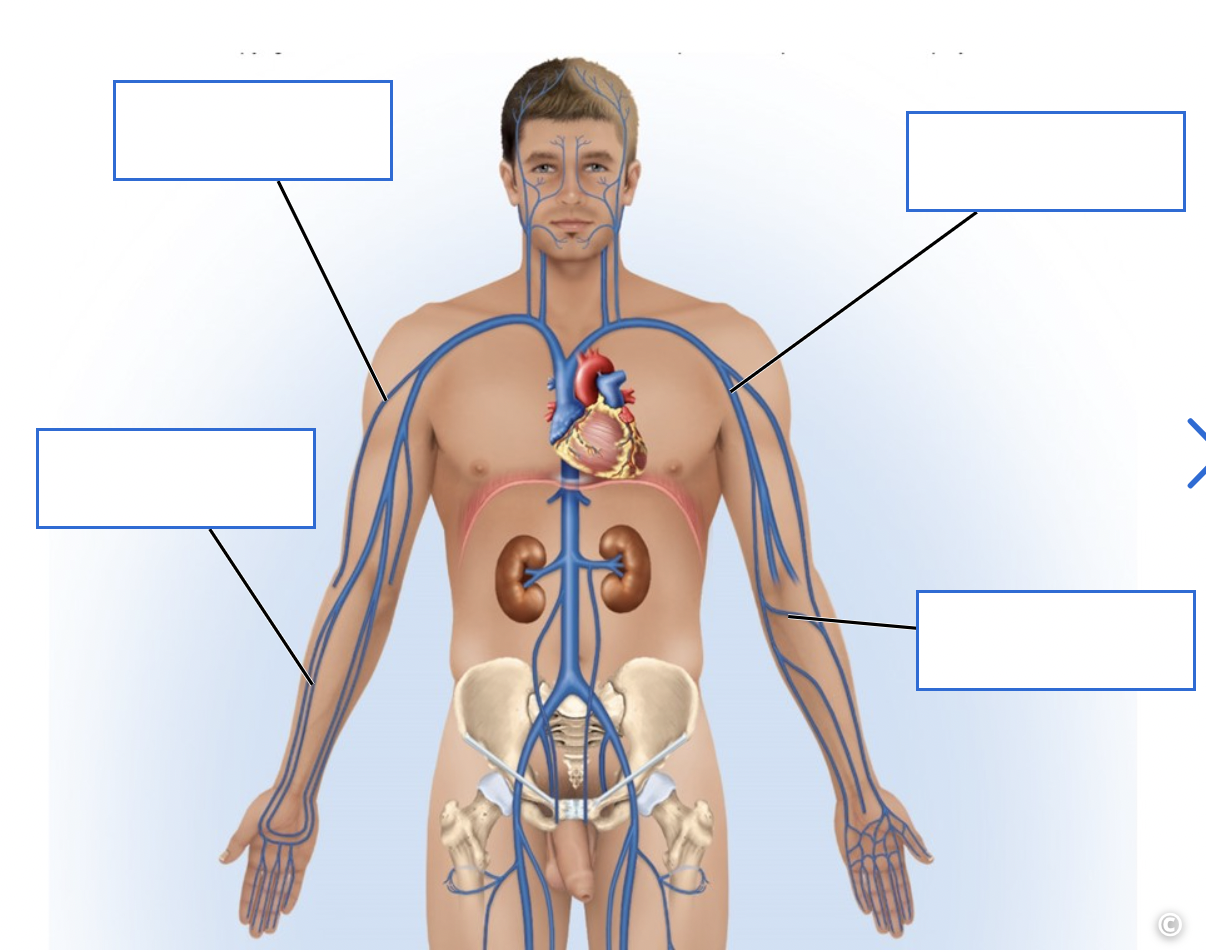
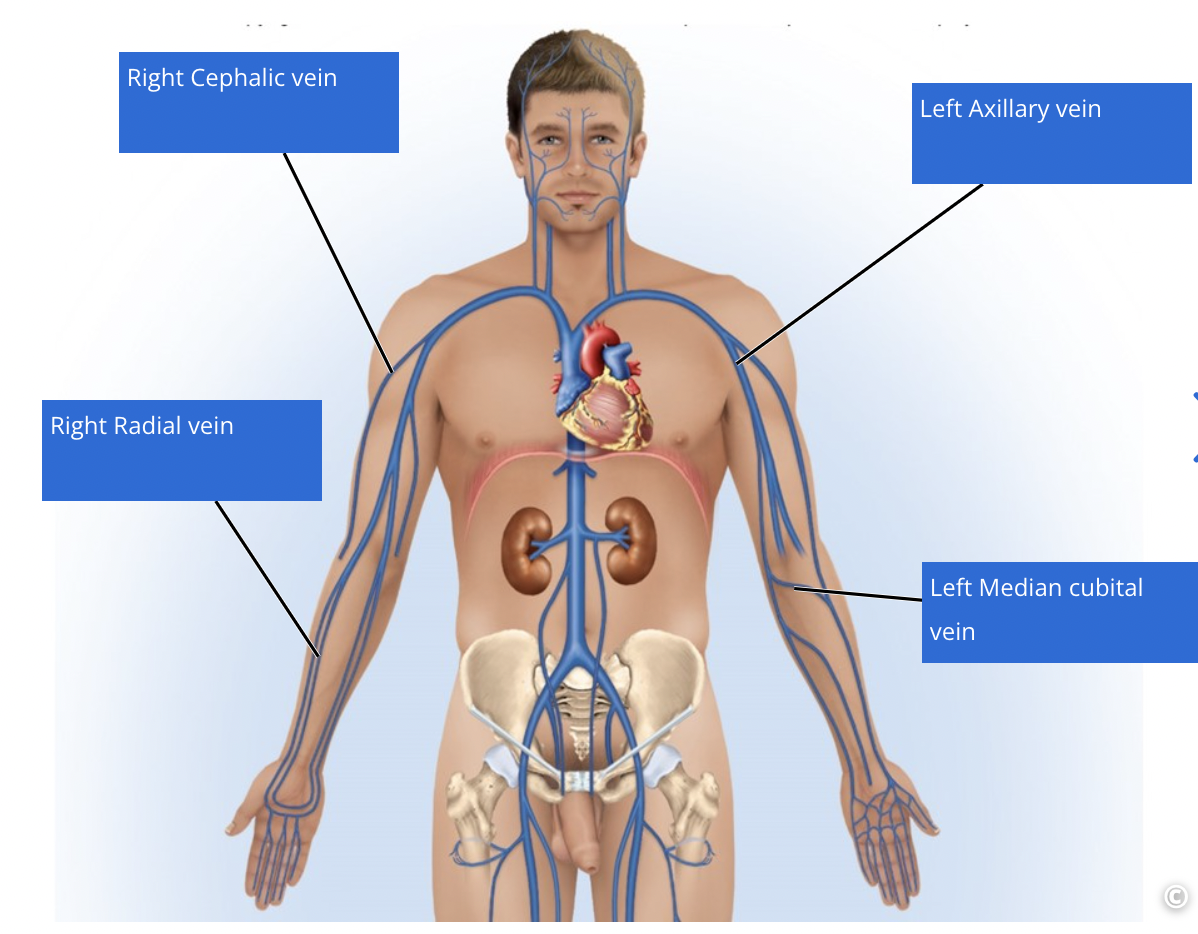
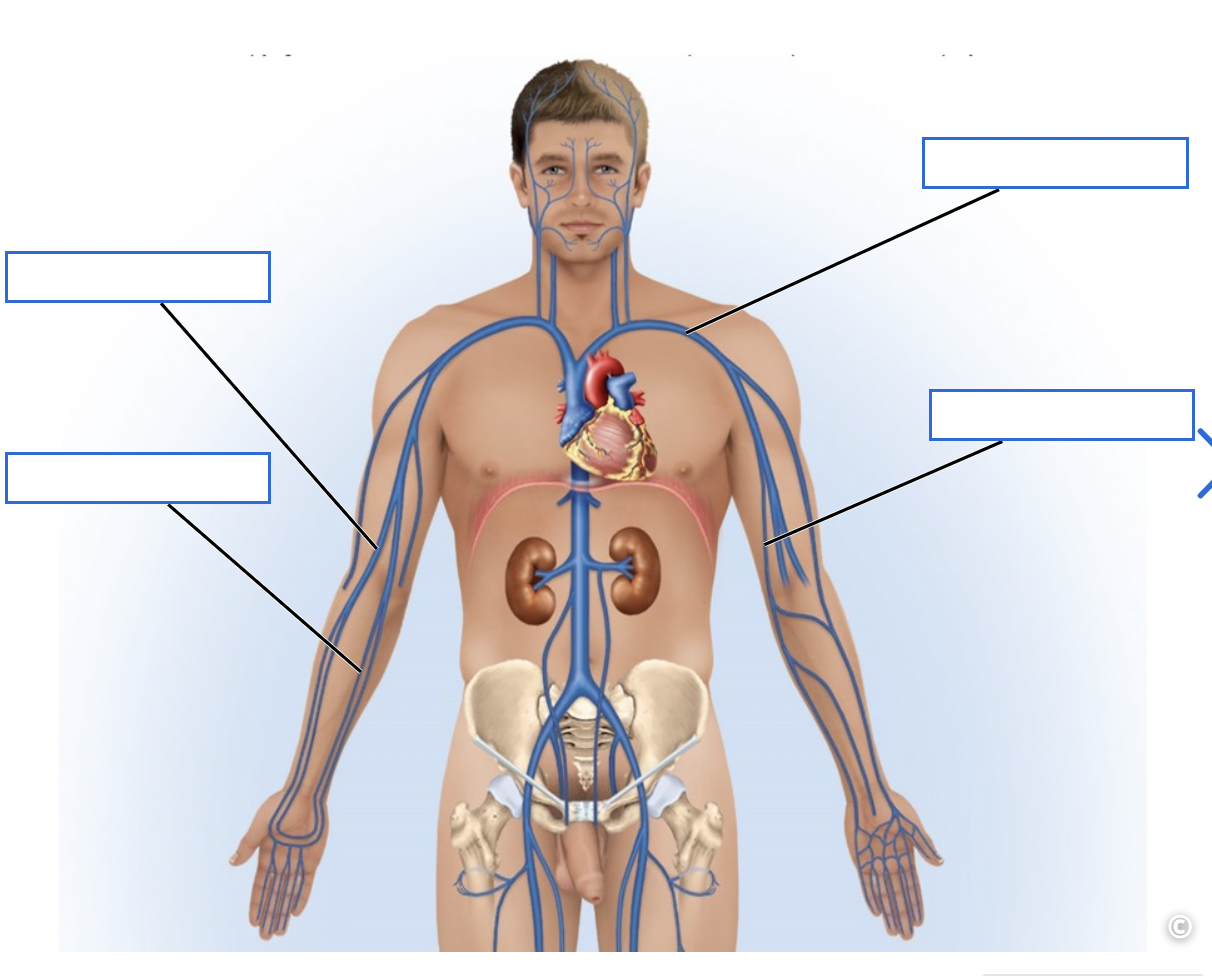
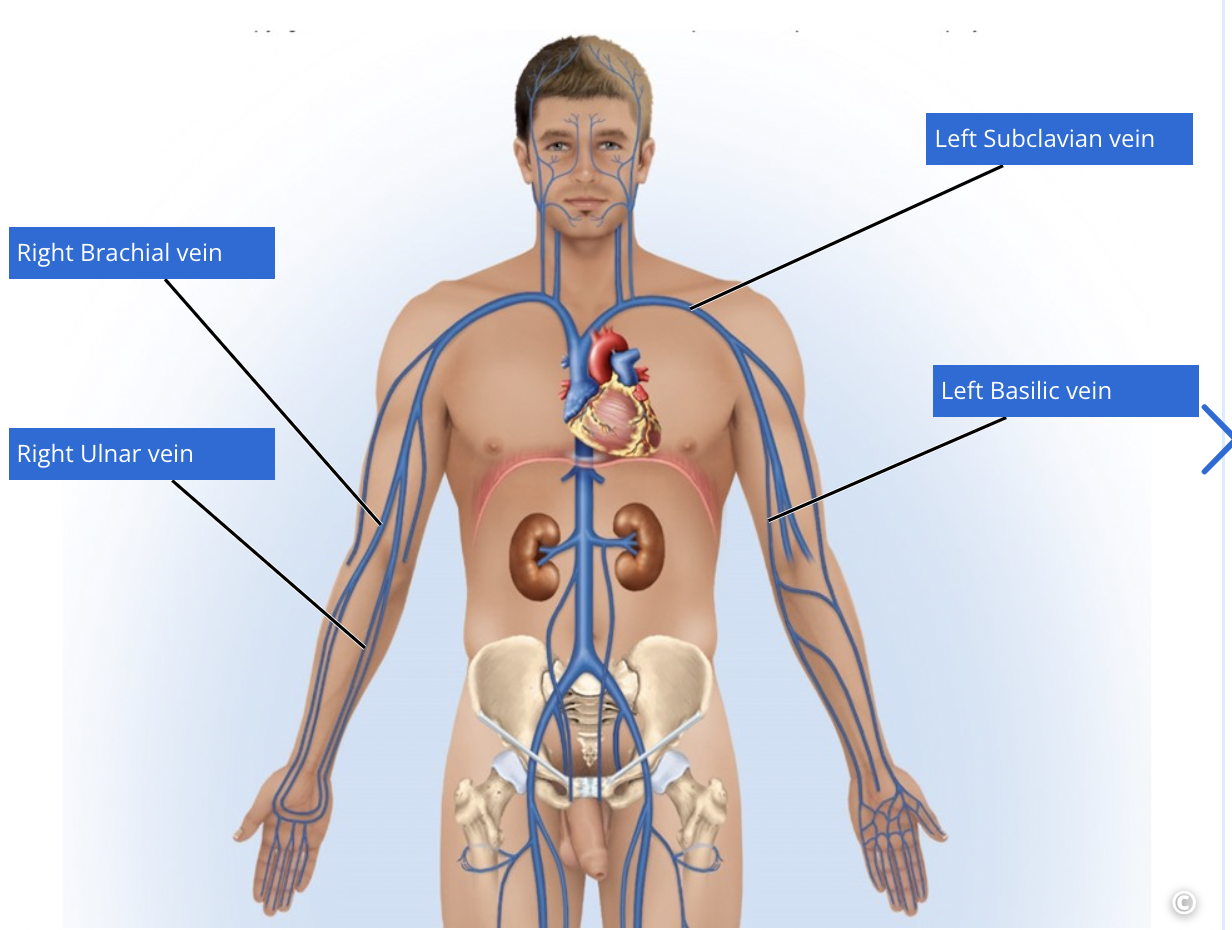
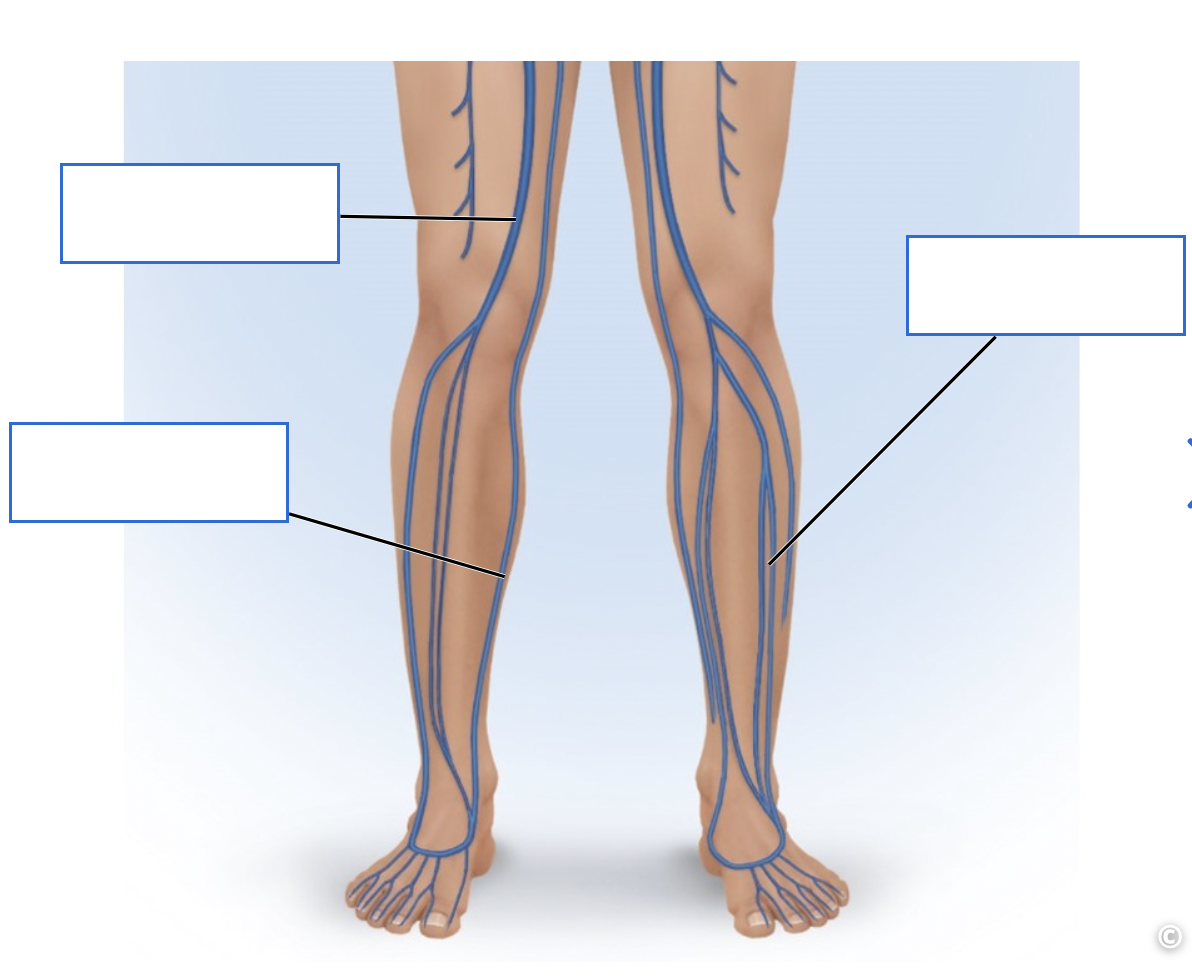
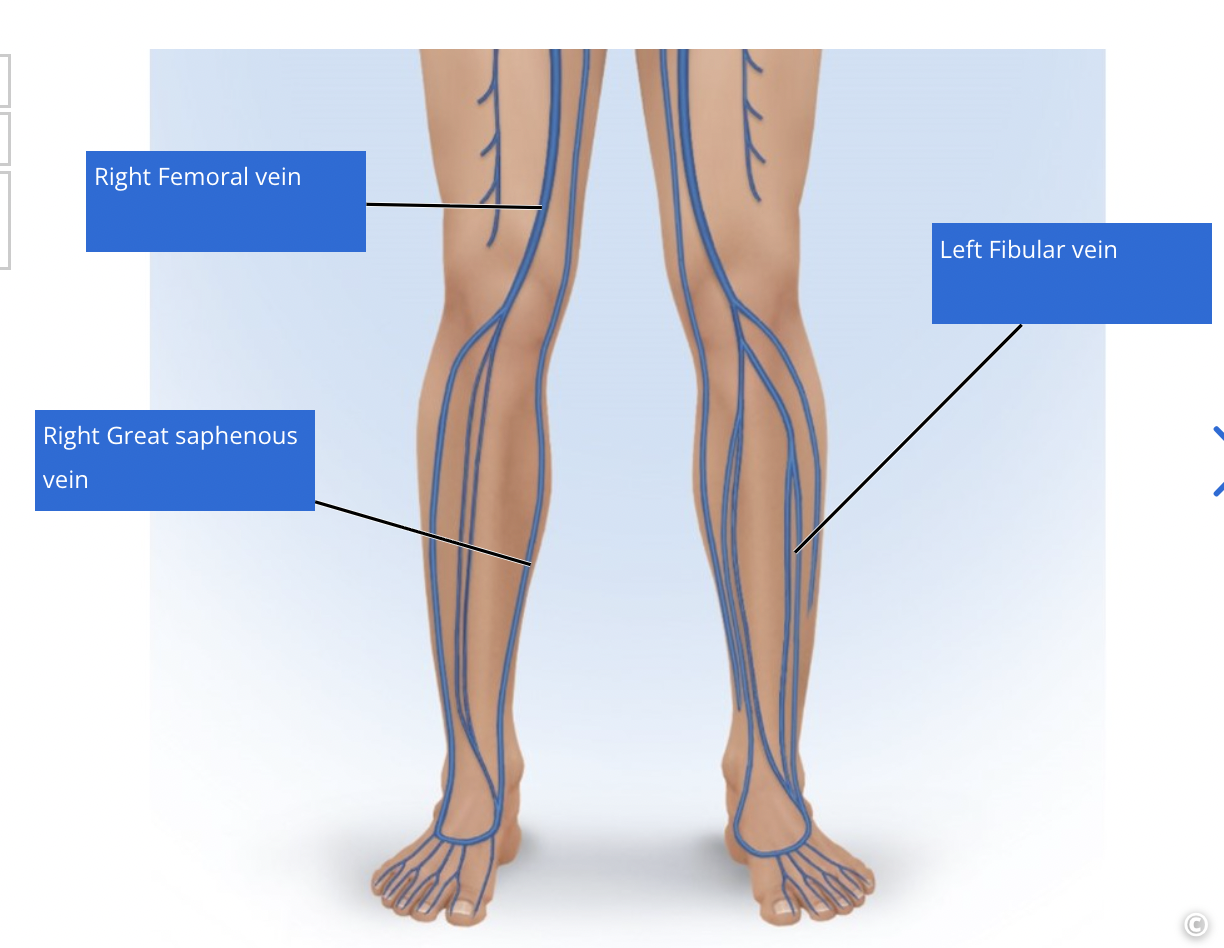
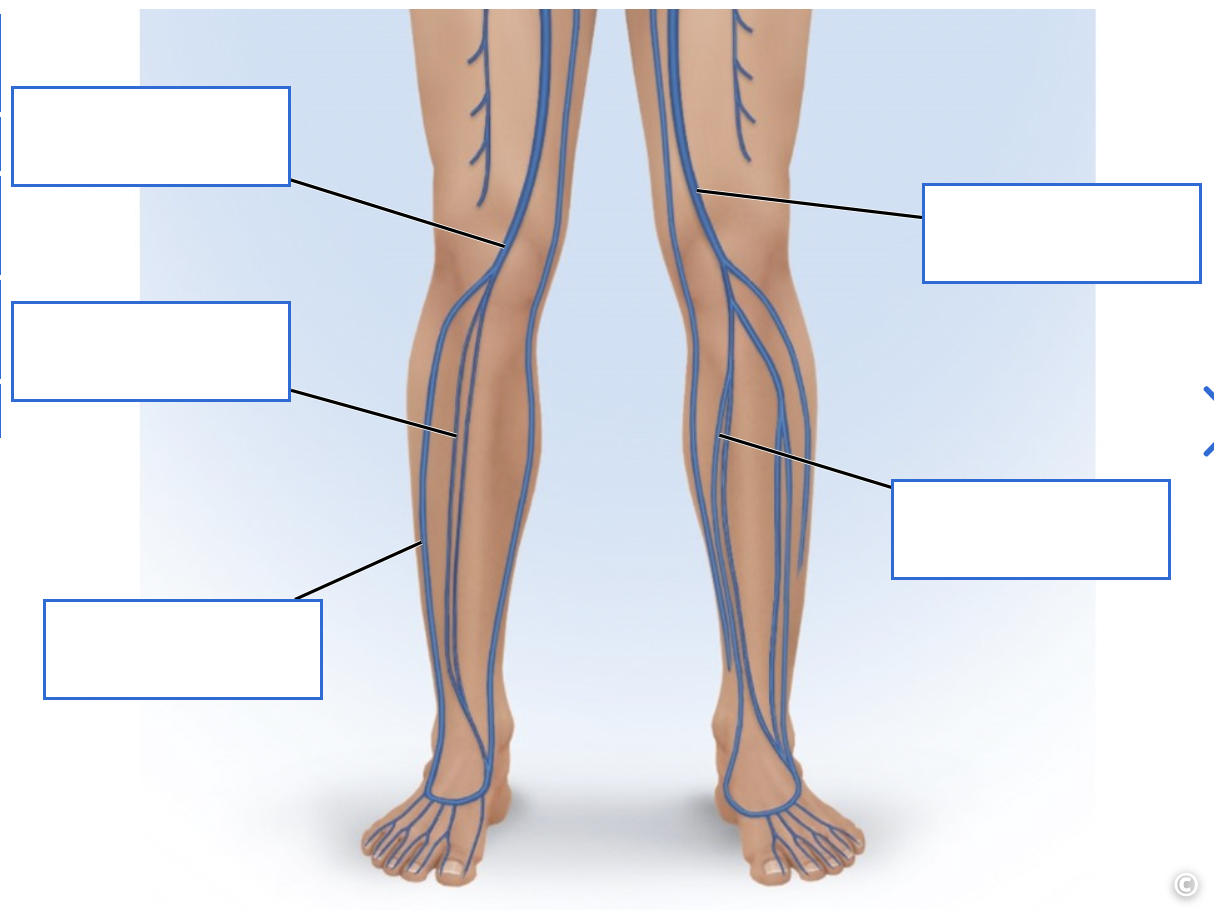
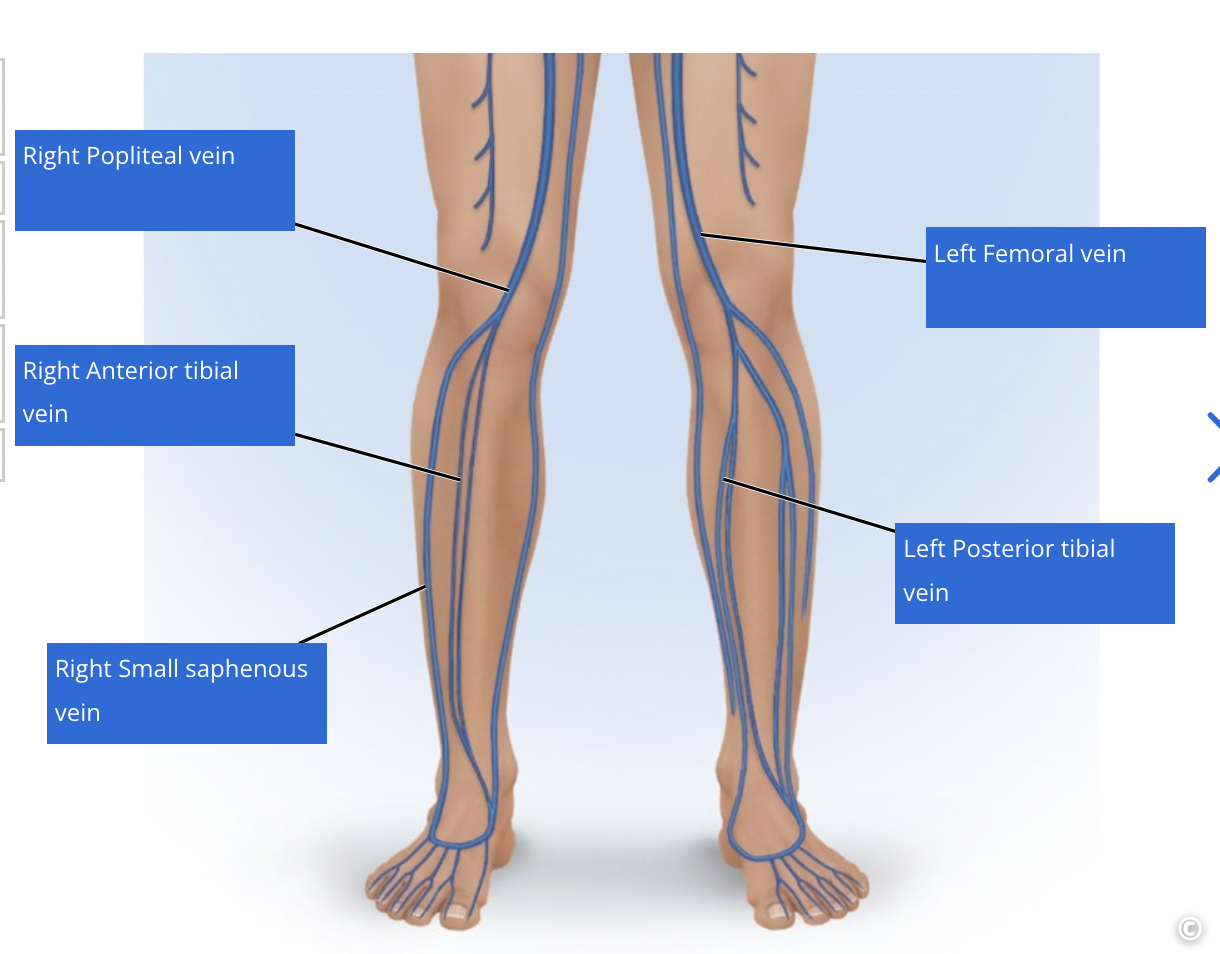
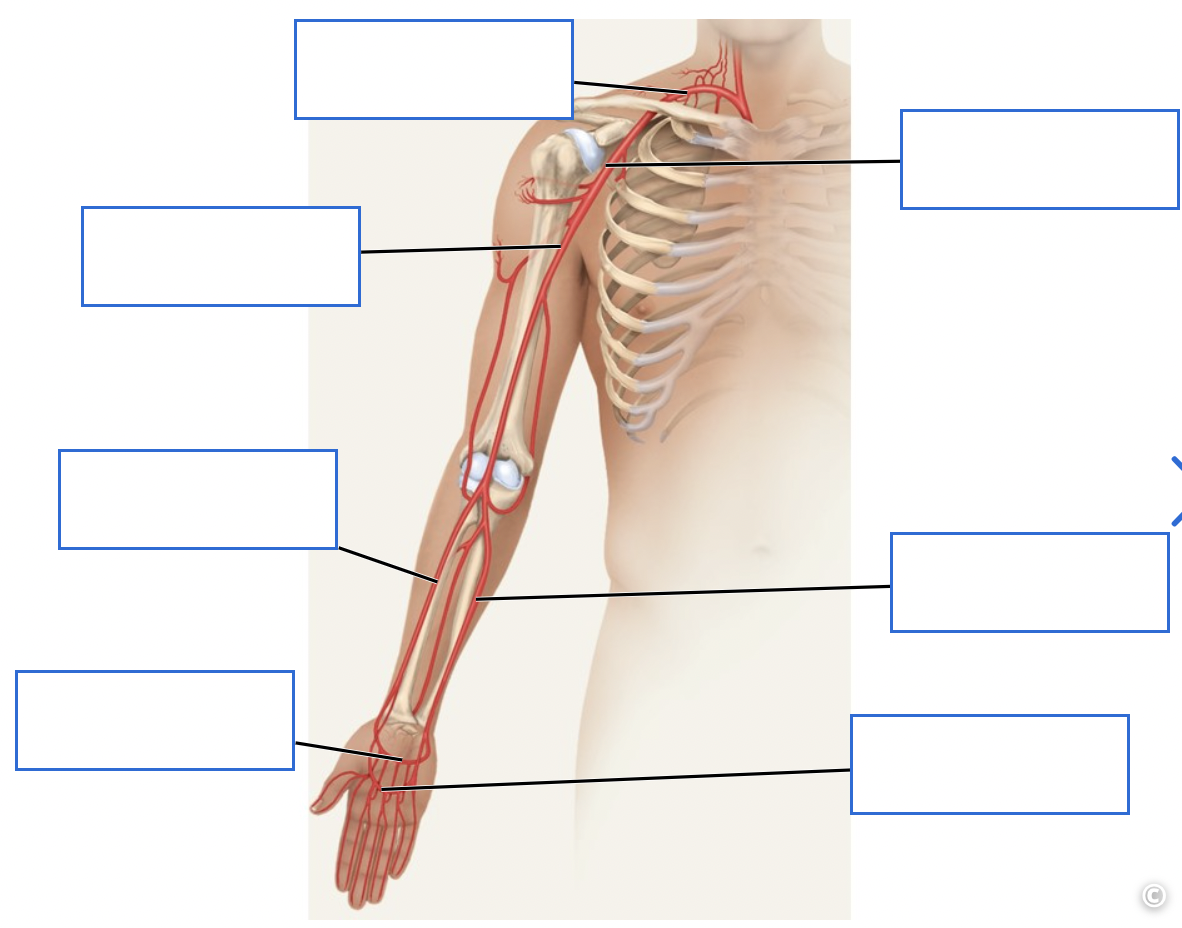
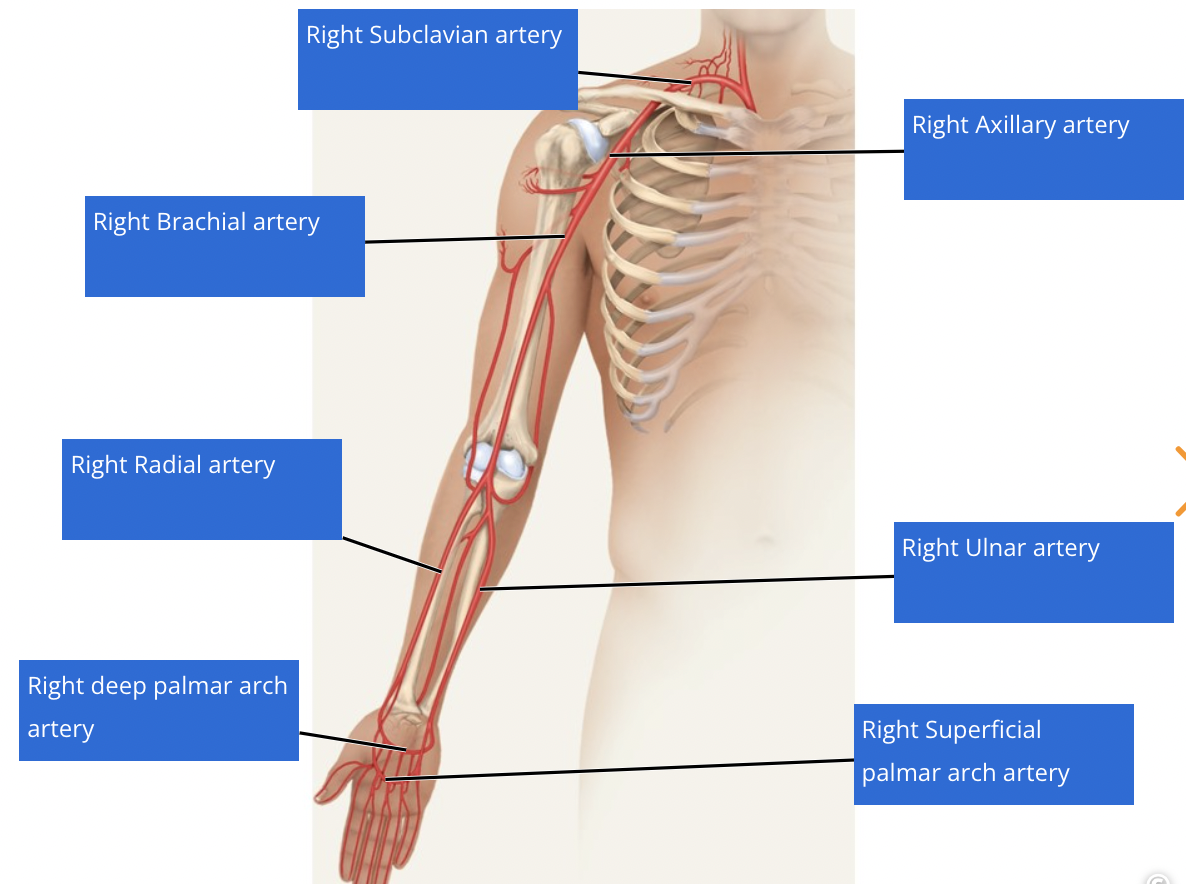
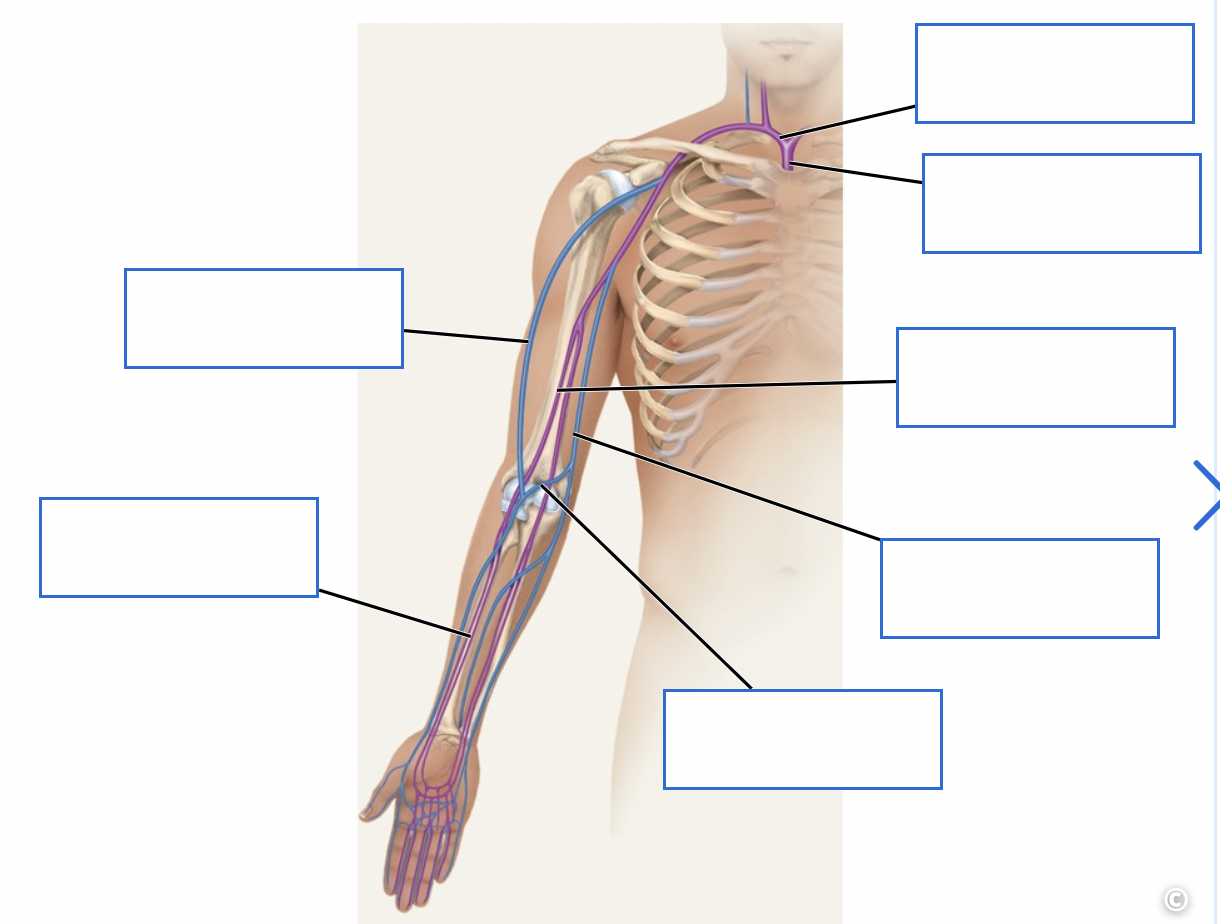
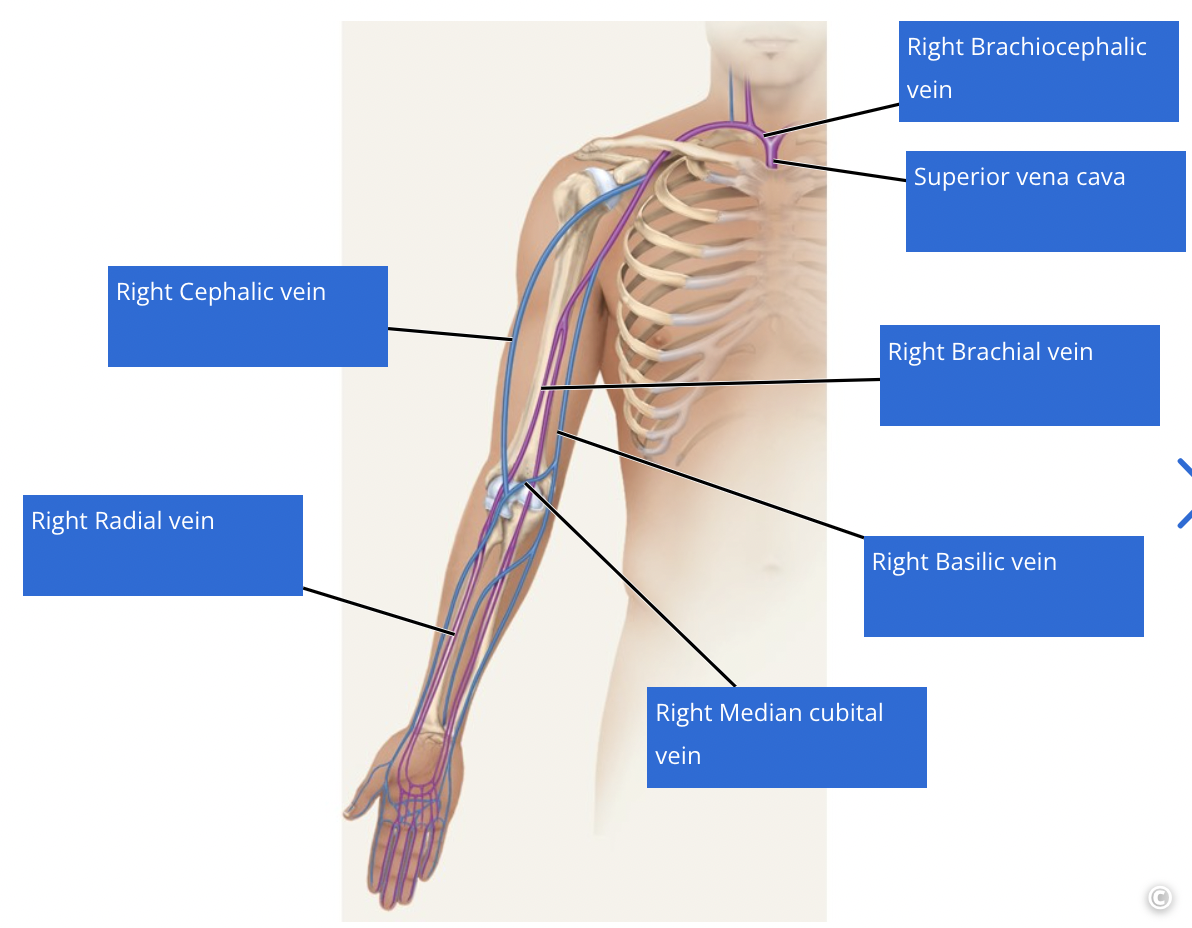
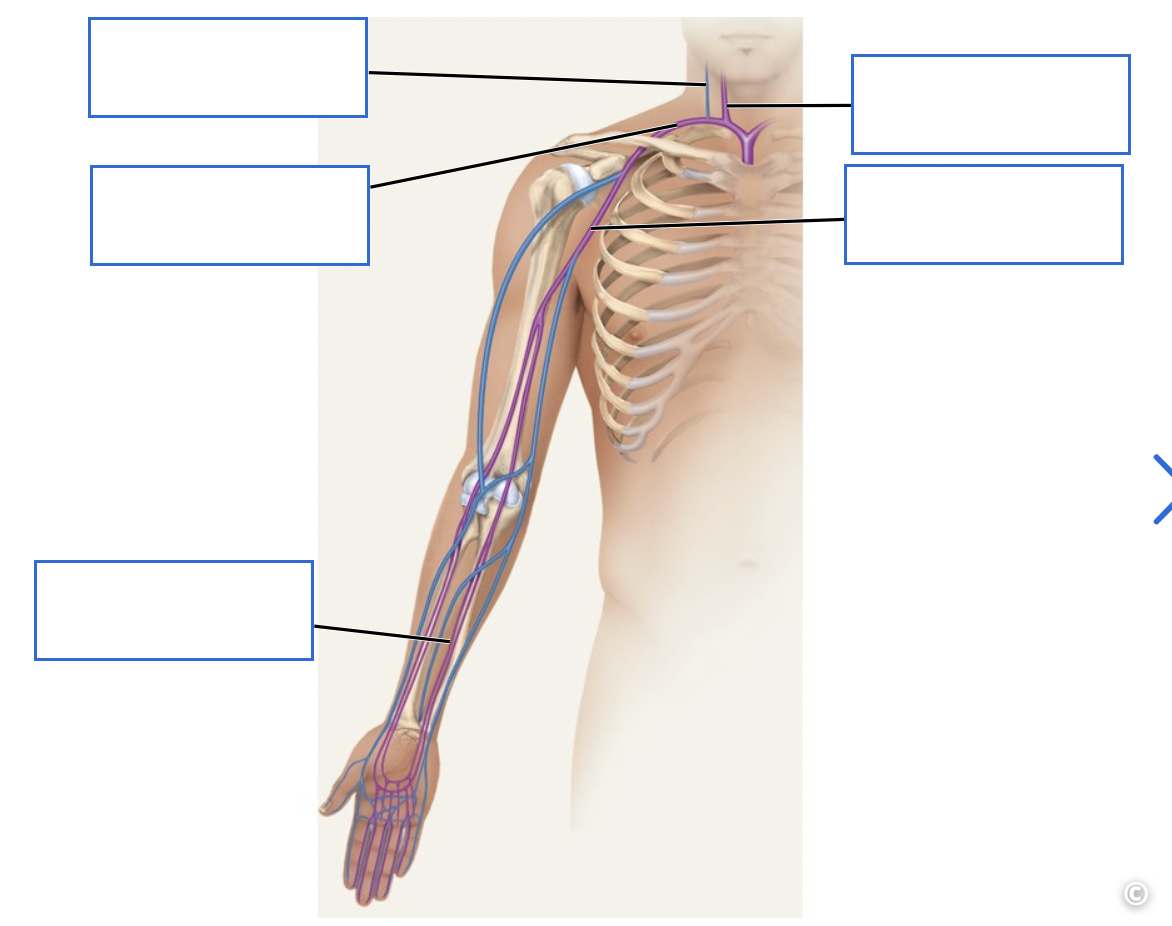
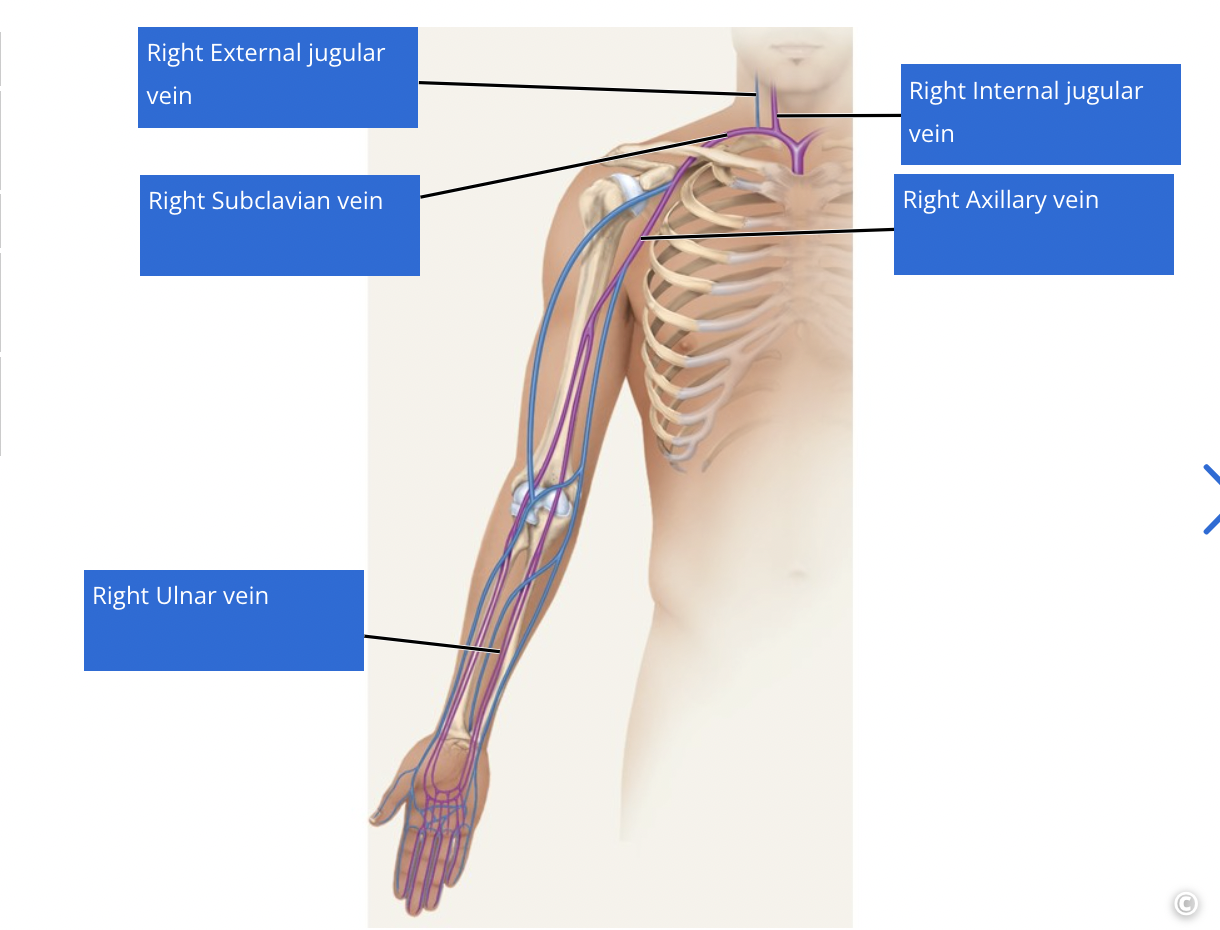
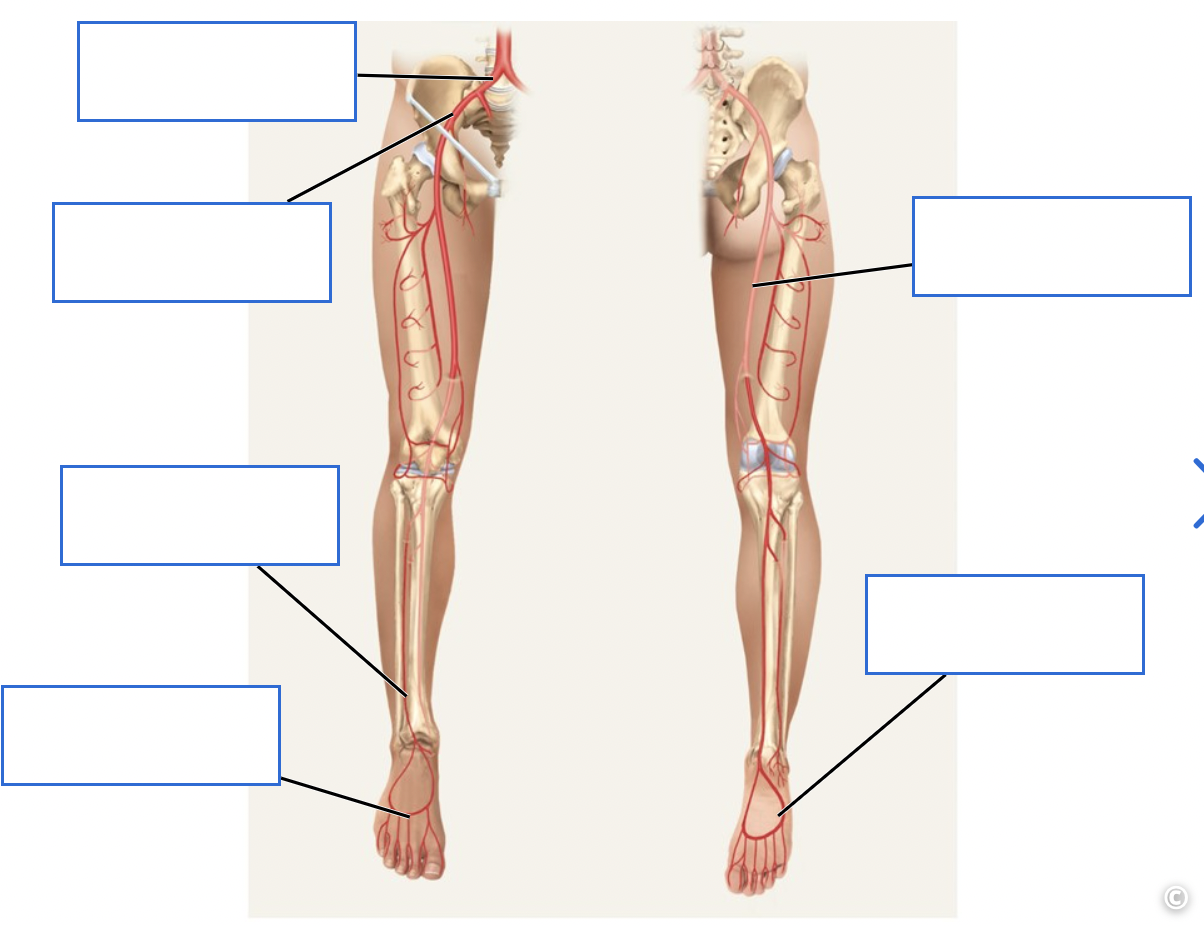
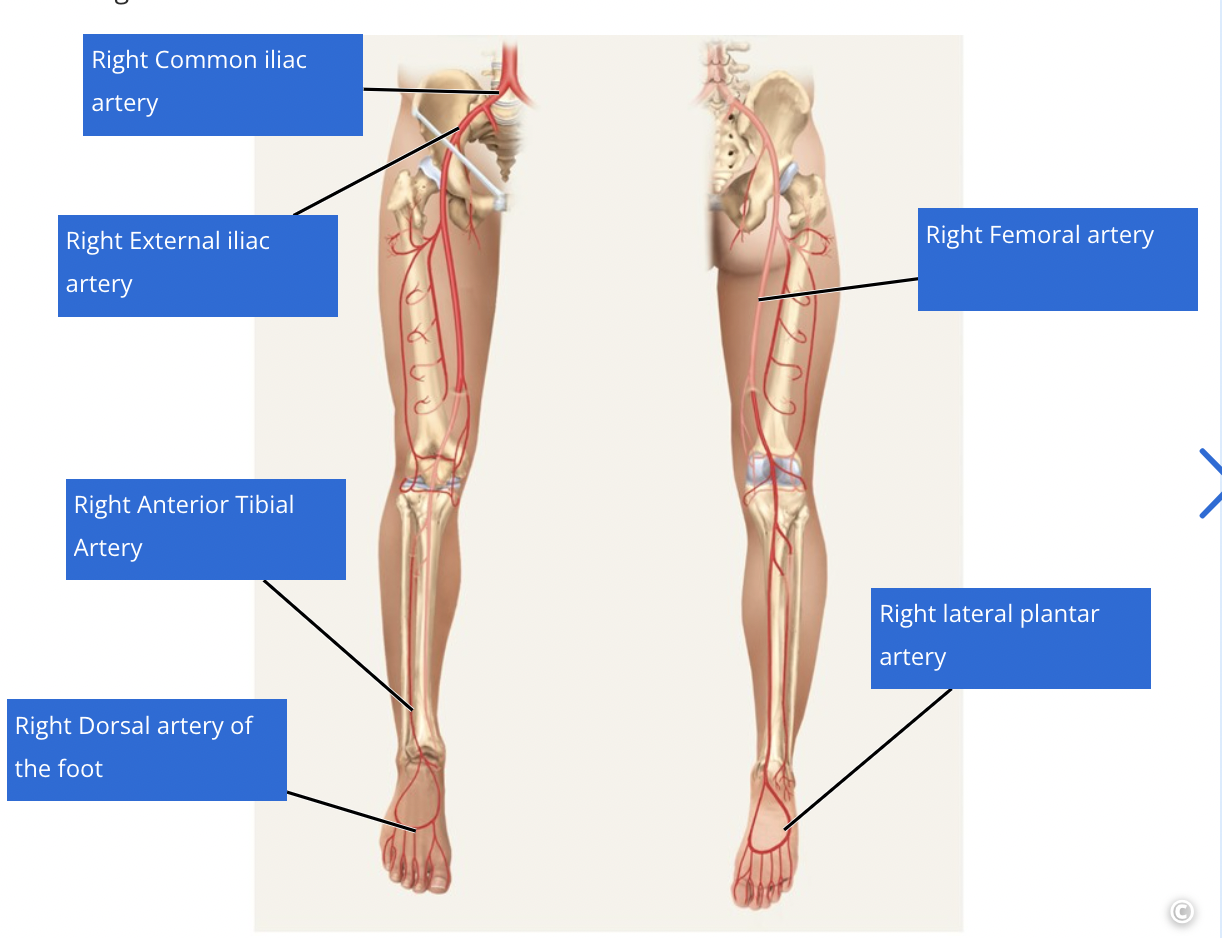
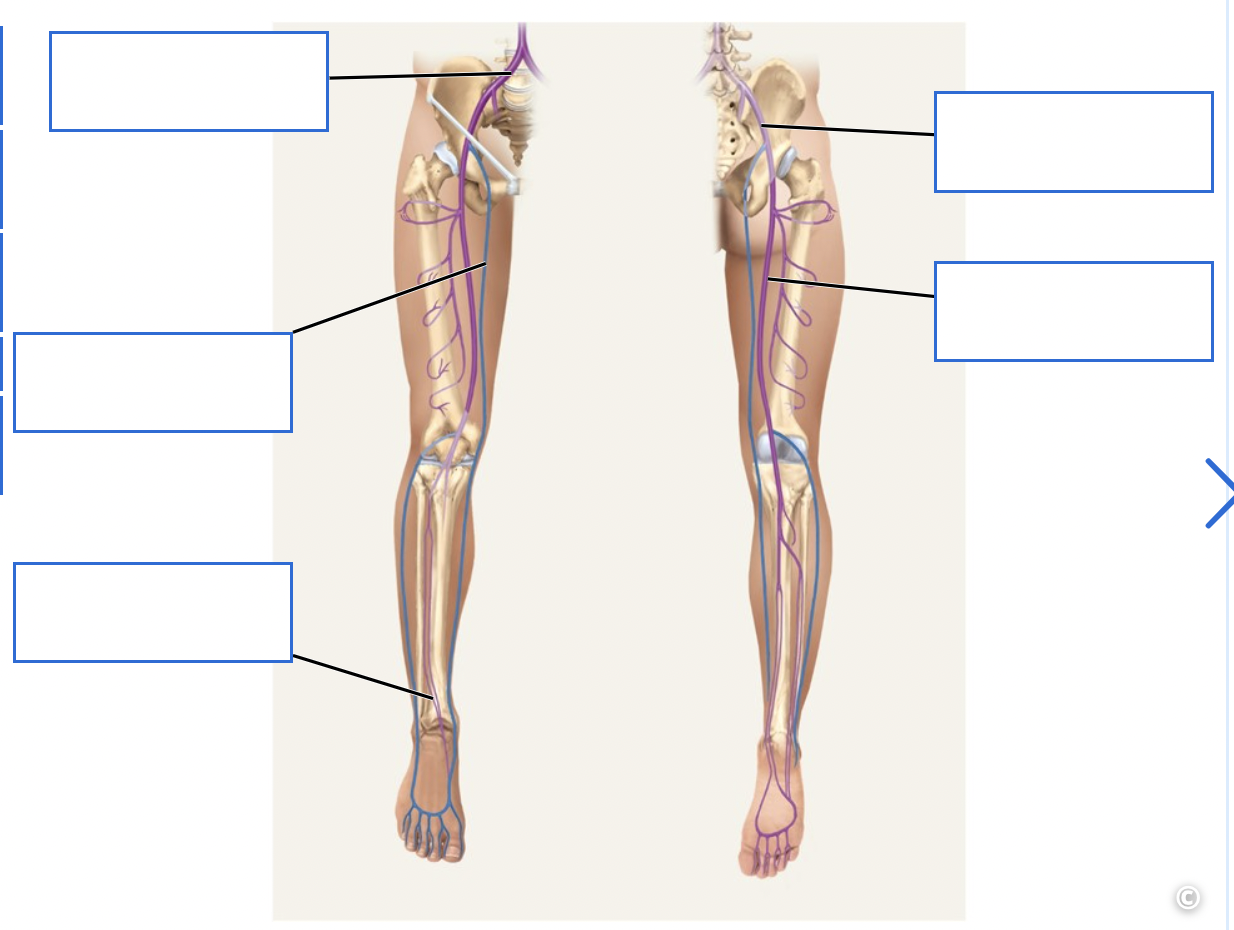
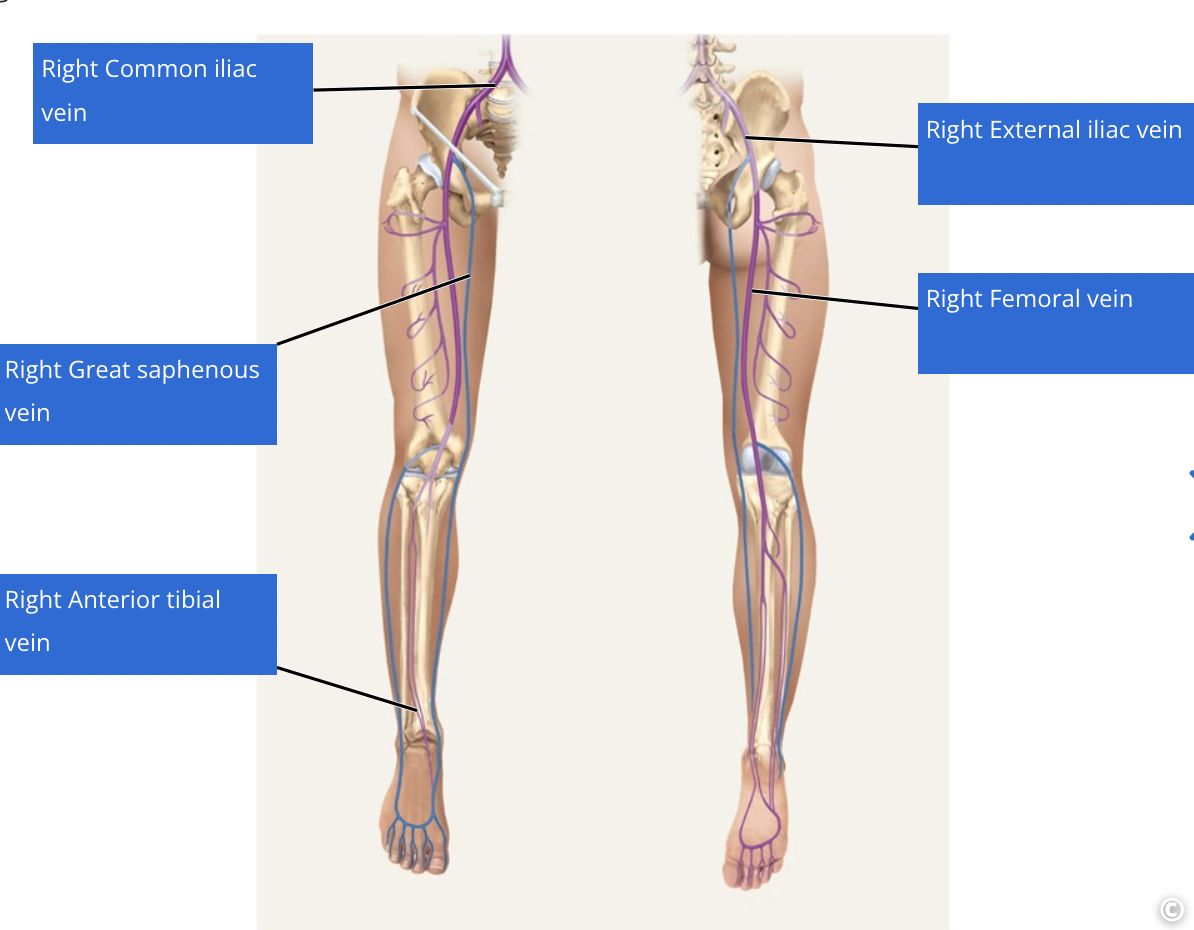
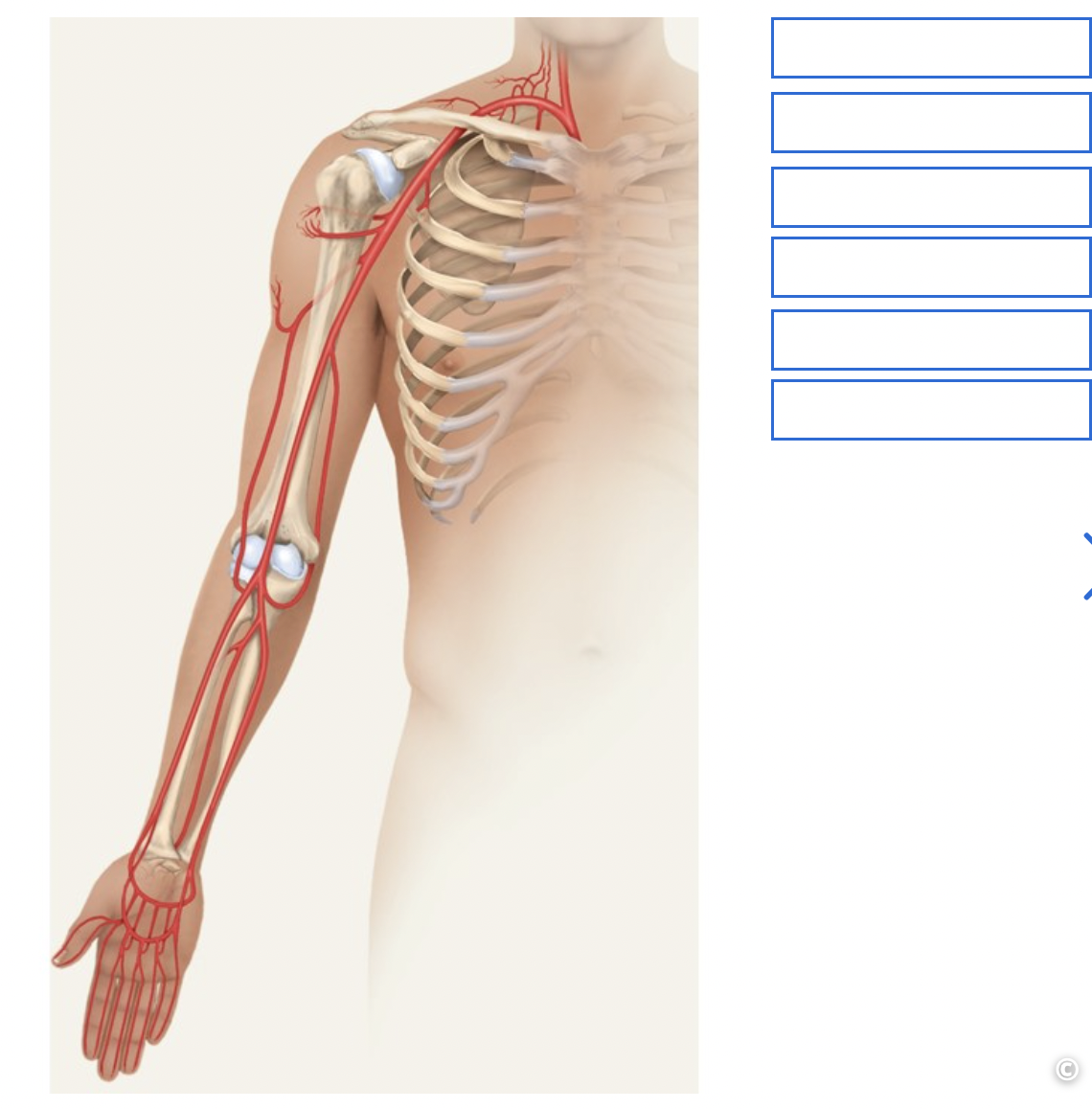
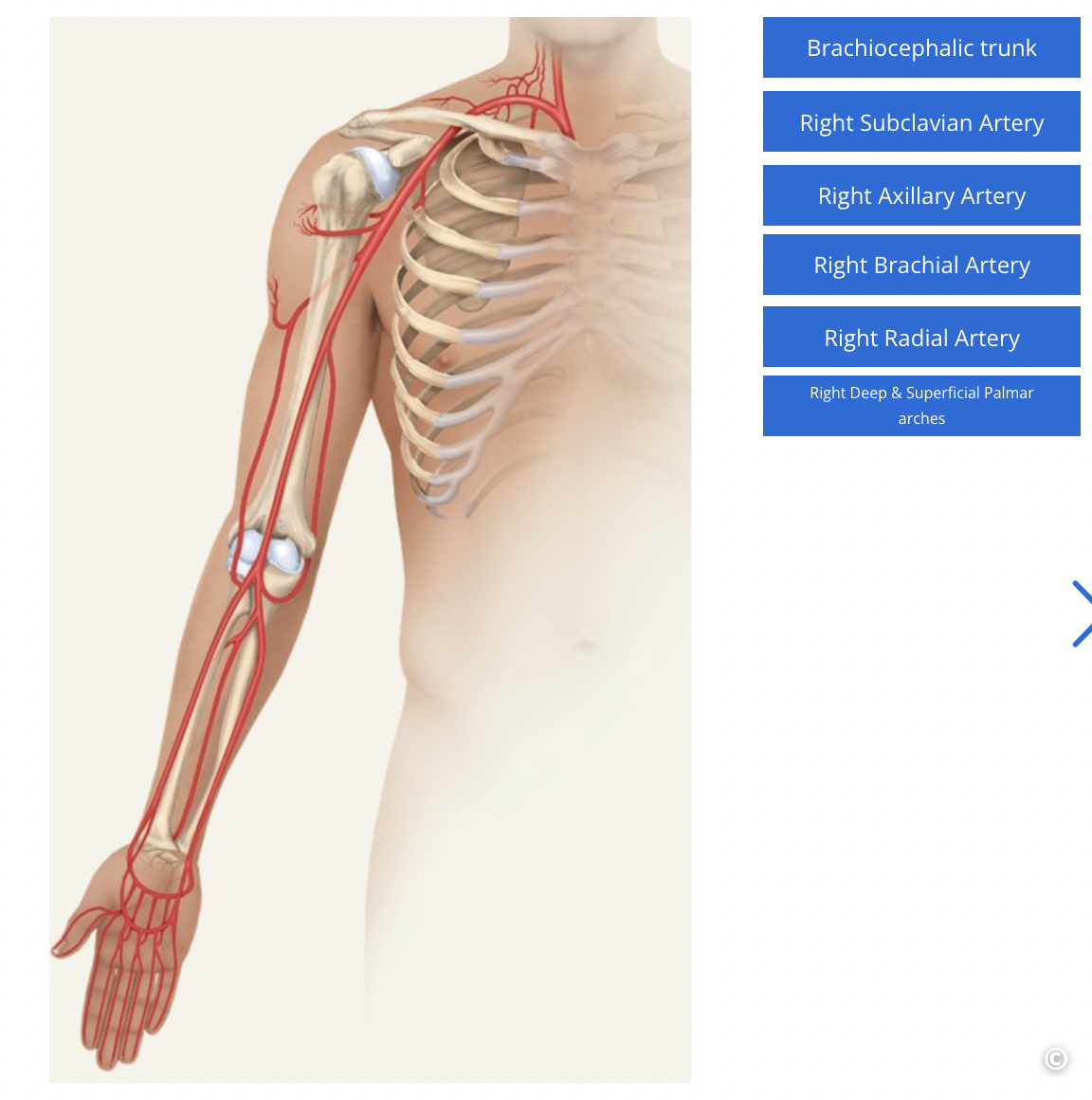
Name the blood vessels that will receive blood directly from the right radial artery
Right deep/superficial palmar arches
Name the blood vessels that will receive blood directly from the left median cubital vein
Cephalic/Basilic vein
True or false: The anterior tibial artery supplies the medial/lateral plantar arteries with blood
FALSE! The anterior tibial artery supplies the dorsal arteries of the feet
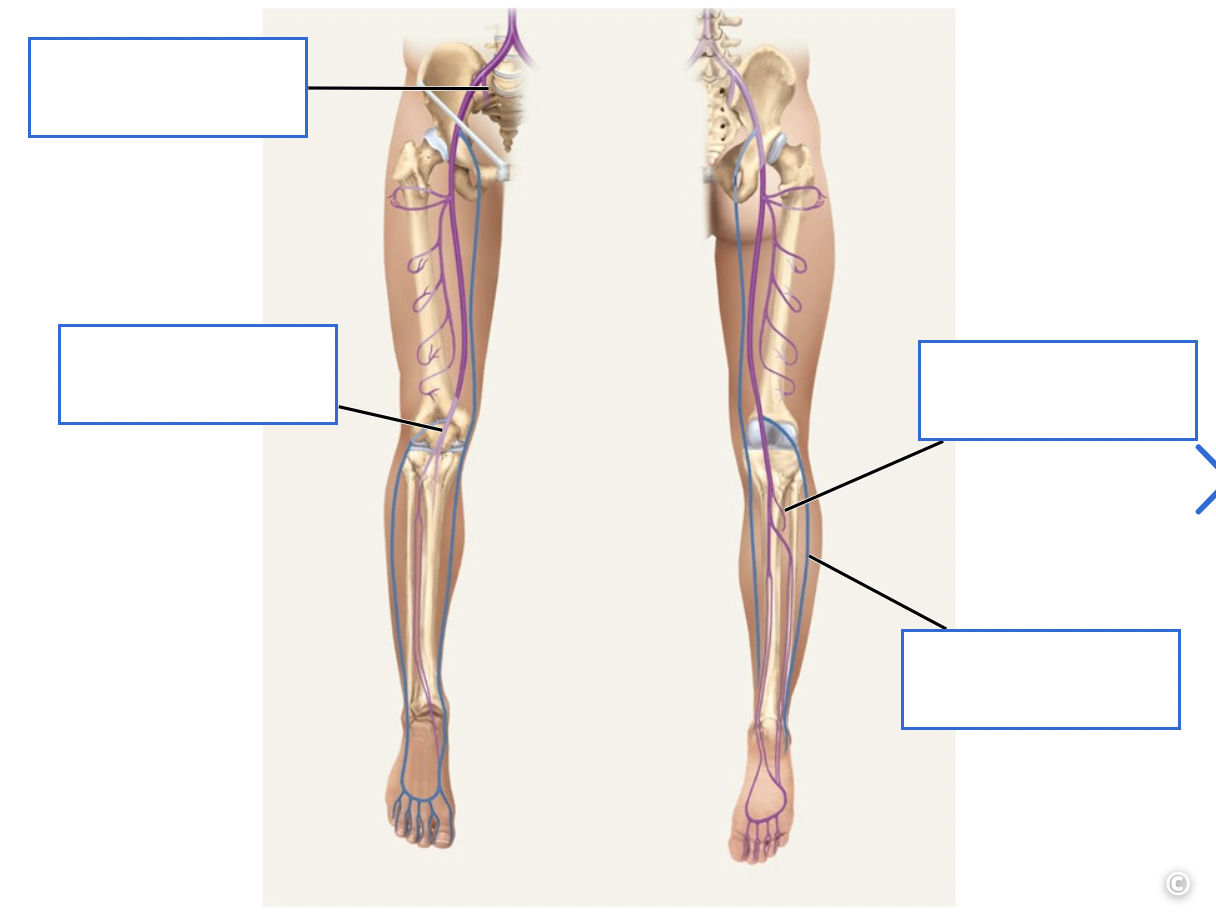
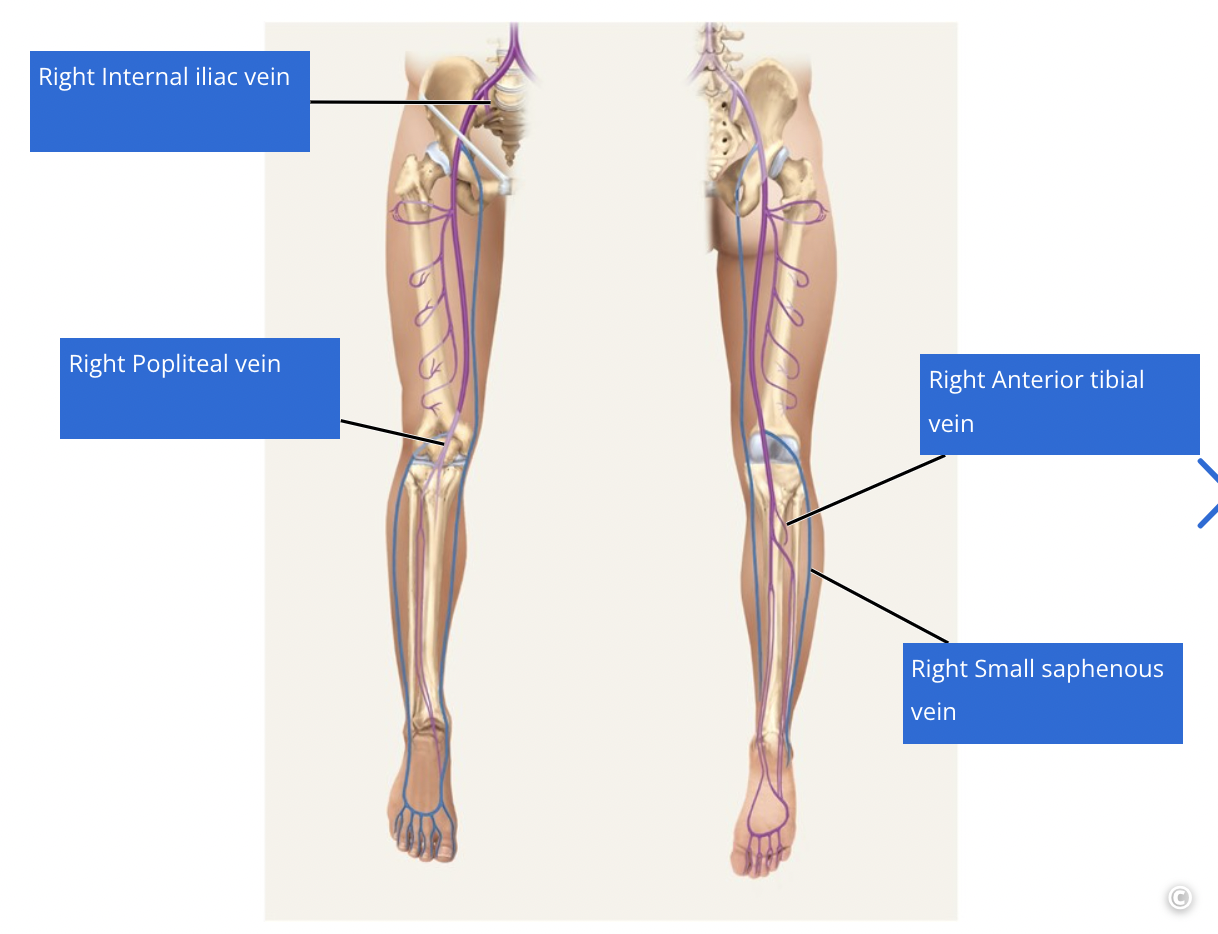
Name the blood vessel that will receive blood directly from the Right posterior tibial veins
Right popliteal vein
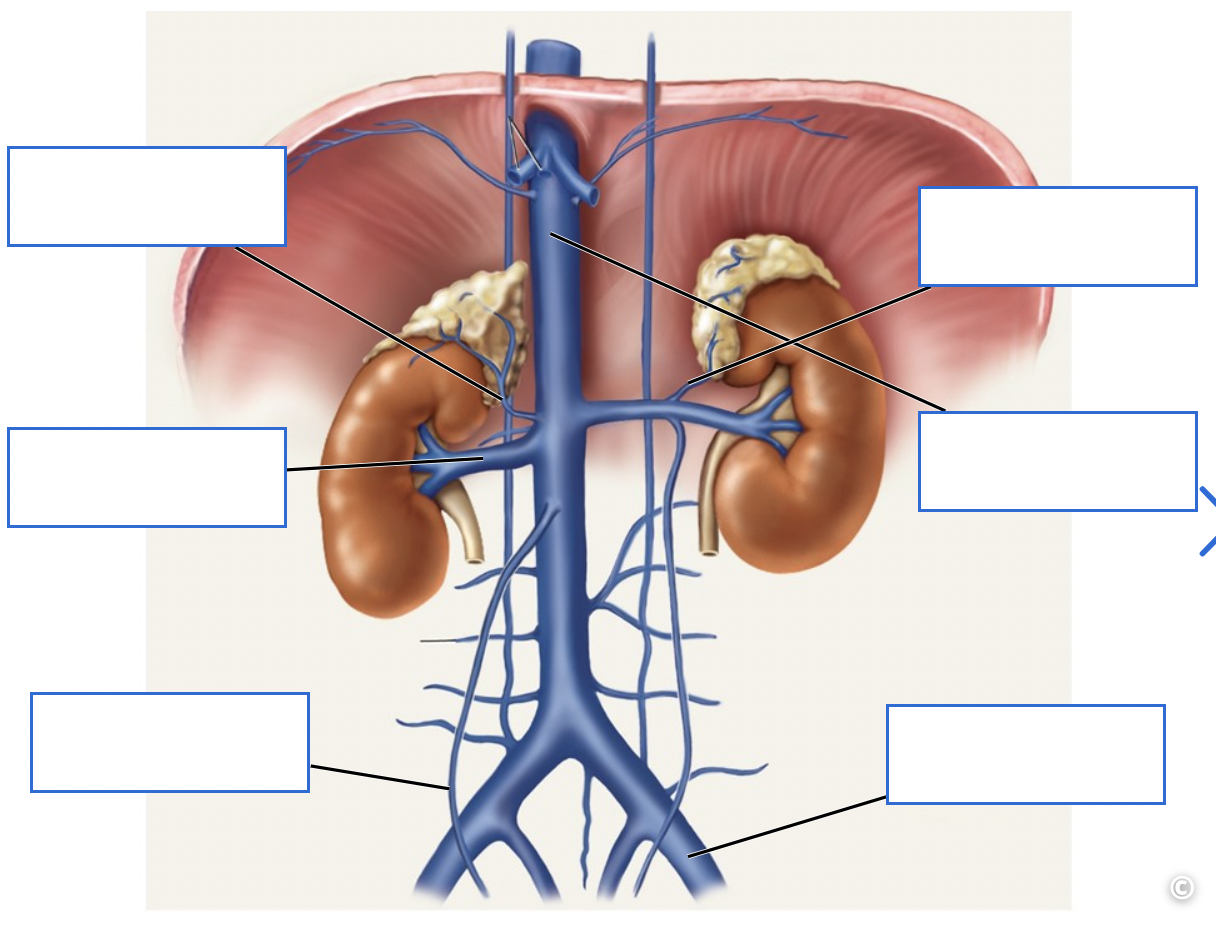
What is the hepatic portal system?
A system of capillaries that allows nutrients and wastes to travel to the liver for processing
True or false: Portal systems begin in capillaries and end in their target organs
False! Begin in capillaries and end in capillaries
What makes up the hepatic portal system?
Hepatic portal vein + veins that drain into it
From which organs’ veins does the liver process waste/nutrients?
pretty much all digestive organs
To where does the processed blood (from the liver) go?
Exits the liver from right/left/middle hepatic veins → inferior vena cava
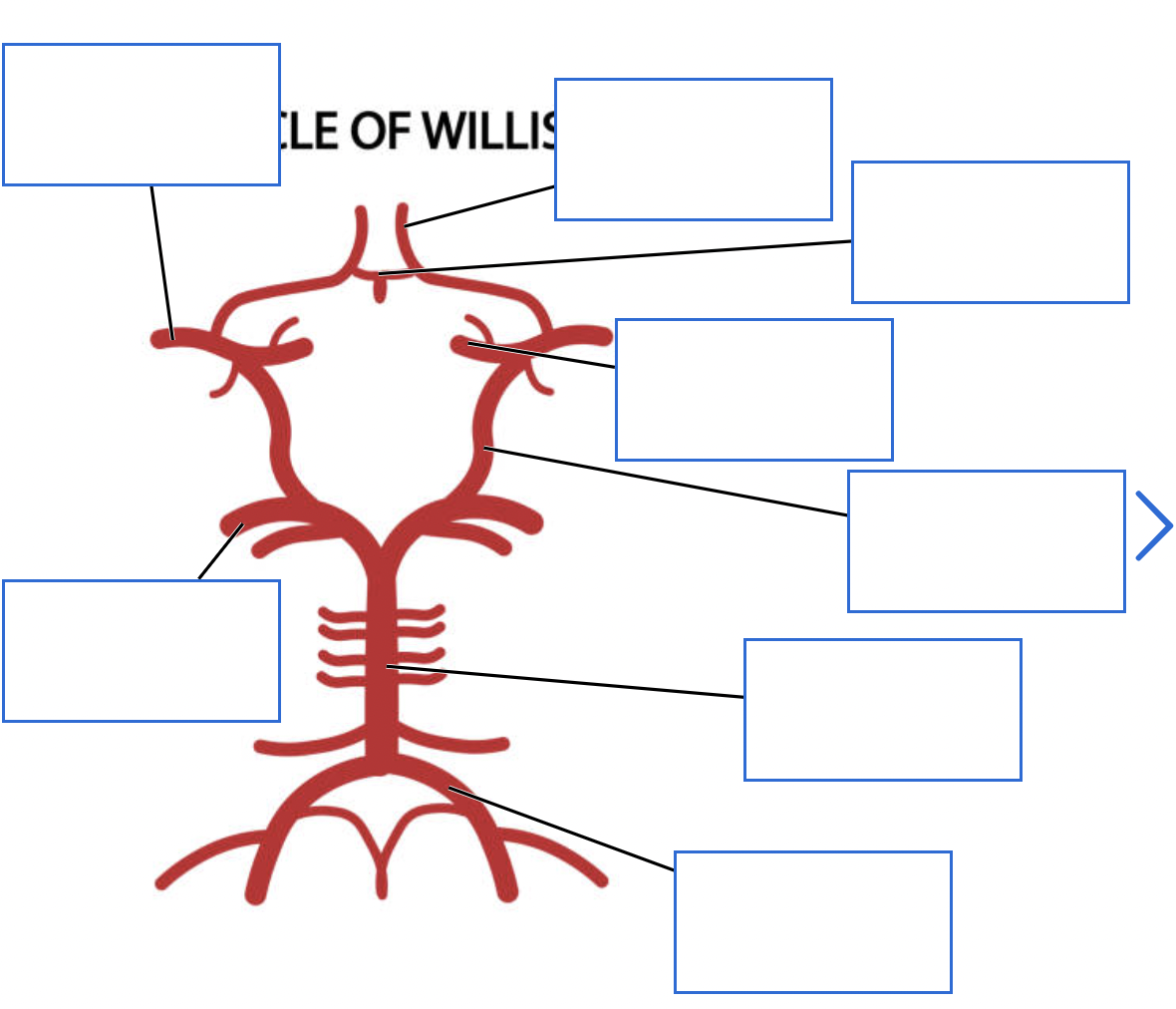
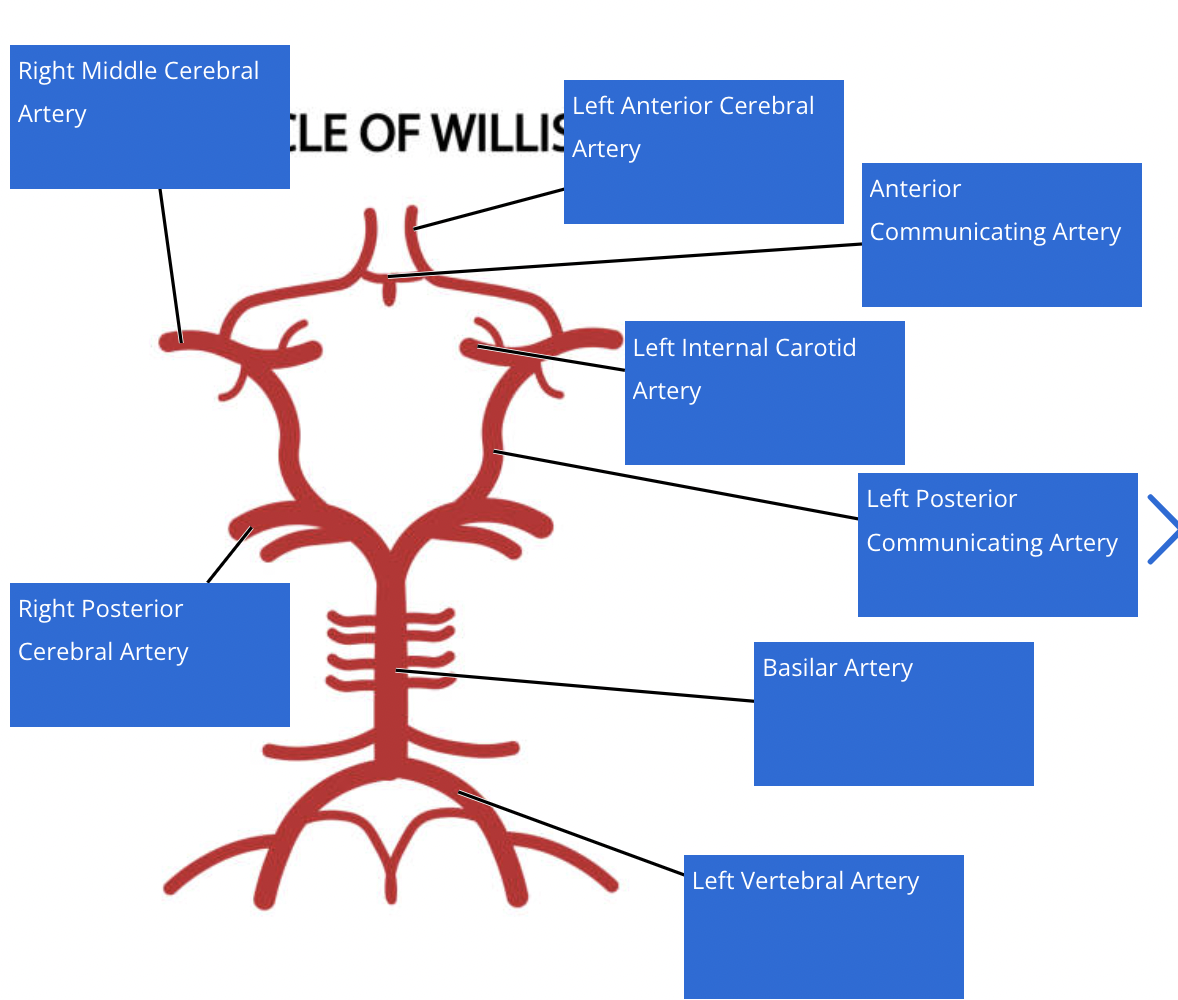
What is the Circle of Willis (arterial circle)?
An anastomosis formed by the branches of the carotid (anterior)/vertebral (posterior) arteries that supply blood to the brain
Where does the oxygen-rich blood from the umbilical vein go in the fetus? Where does the oxygen-depleted blood go?
To the inferior vena cava (counterintuitively!) via ductus venosus → brain/heart
Two arteries: To the mother’s placenta
Where does gas exchange take place in a fetus?
The placenta
What is the foramen ovale? What does it become?
Opening in the interatrial septum allowing blood to flow from right to left atrium
Fossa ovalis
What is the ductus ateriosus? What does it become?
Connects pulmonary trunk to aorta
ligamentum arteriosum
What is the ductus venosus? What does it become?
Umbilical vein allowing oxygenated blood from the placenta to go to the fetus, skipping the liver
ligamentum venosum
 Note
Note  Flashcards (23)