Photosynthesis/cell transport
 Call Kai
 Learn
Learn Practice Test
 Spaced Repetition
 Match
Match Flashcards
 Knowt Play
1/90

There's no tags or description
Looks like no tags are added yet.
Name | Mastery | Learn | Test | Matching | Spaced | Call with Kai |
|---|
No analytics yet
Send a link to your students to track their progress
91 Terms
List the layers of the leaf
Cuticle
Upper epidermis
Chloroplast
Palisade mesophyll
Vein
Air space (spongy mesophyll)
Lower epidermis (guard cells, guard cells pulls stoma open)
Cuticle
Energy is in the form of
ATP
Which type of biomolecule is ATP
Nucleic acid
Three major components of ATP
Base a.k.a adenine (square), sugar a.k.a ribose (pentagon), 3 phosphates (circles)
main examples of cellular processes that involve ATP
Active transport
Muscles
cell signaling
movement
cell division
protein synthesis
In order for ATP to release energy what does it need to do
Break the bond (phosphate groups)
ADP+Phosphate+Energy
ATP (the equation)
When phosphate bond is broken an energy is released what does that form?
ADP
How do living organisms get usable energy in the form of ATP
sun energy converts to chemical energy (ATP)
Two cellular processes needed to make ATP
Photosynthesis
cellular respiration
In what organelle does photosynthesis occur?
Chloroplast
What type of organism photosynthesizes
autotroph
What are the reactants of photosynthesis?
Carbon dioxide, water and sunlight
What are the products of photosynthesis?
Glucose and oxygen
How does water enter a plant?
Through its roots
How does carbon dioxide enter a plant?
Through the stomata (pores)
Equation for photosynthesis:
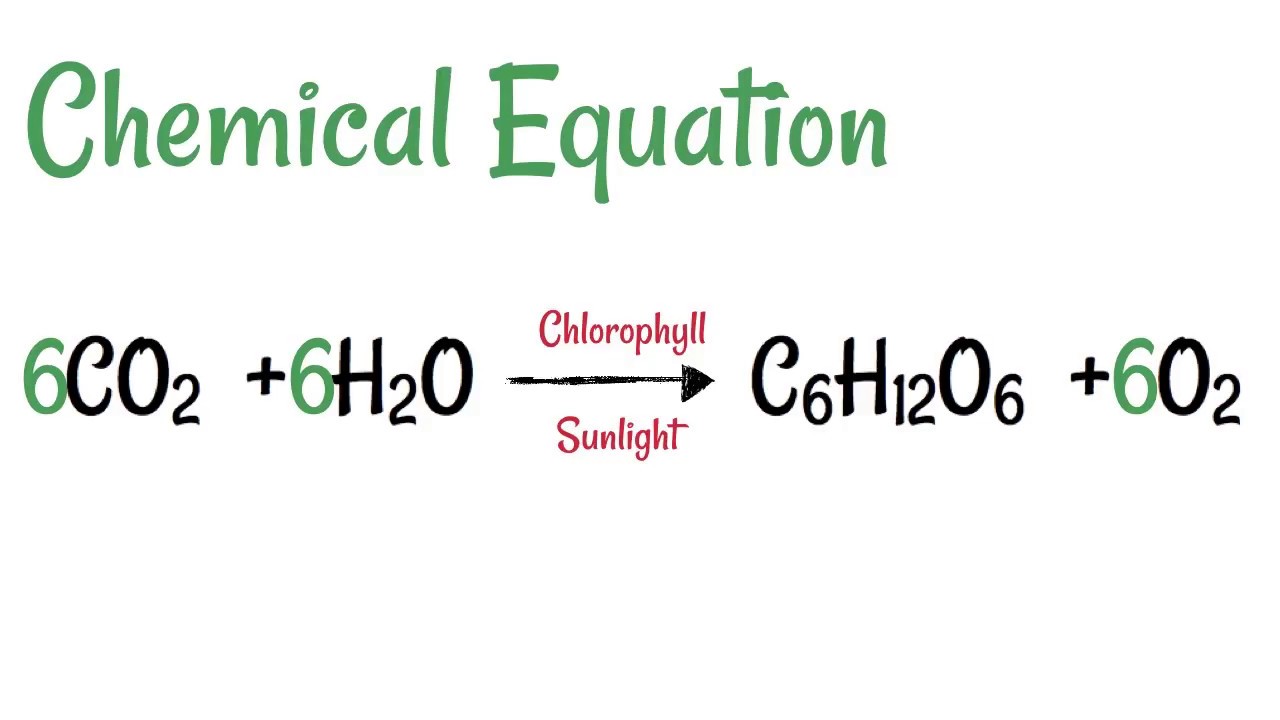
why does photosynthesis matter?
makes glucose which is food (stored energy for later, makes ATP)
The process that makes ATP
cellular respiration
This is where light-dependent reaction occurs, contains pigment in chlorophyll, and is shaped like a pancake
Thylakoids
This is the liquid of the chloroplast, Light-independent reactions (reminds me of the cytoplasm of a cell)
stroma
what happens in light-dependent reactions
sunlight absorbed
water is split
releases oxygen and energy
What happens in light-independent reactions
Uses CO2 from air and energy from light-dependent reactions (because they produce energy)
Produces glucose
C02+ energy=glucose
Which cell contains the stoma?
Guard cells
Alternate name for cellular respiration
Aerobic respiration
Cellular respiration is how
all living things turn food into energy that can actually be used
Cellular respiration reactants
Glucose, oxygen
Cellular respiration products
Carbon dioxide (waste you breathe out), water(waste), and ATP
Cellular respiration equation (photosynthesis equation flipped)
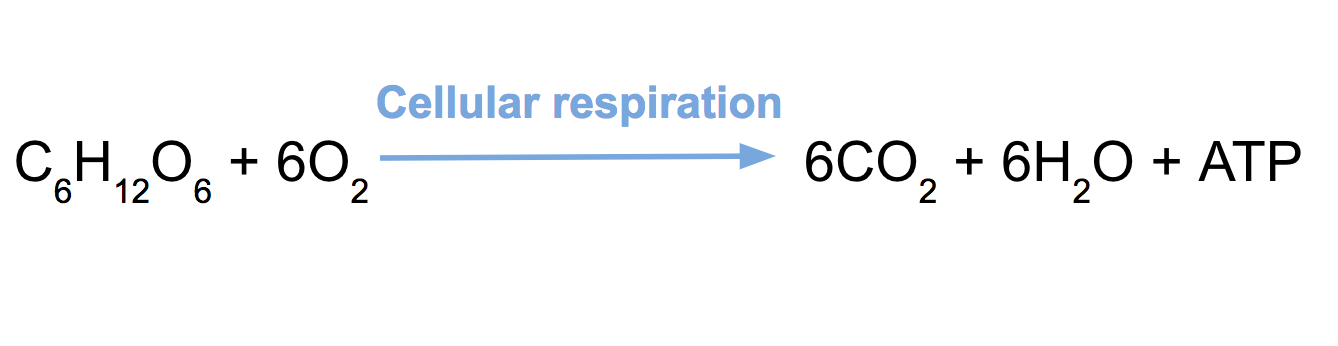
Where does the process of cellular respiration start?
The cytoplasm of the cell
Where is the energy made in cellular respiration?
The mitochondria
In aerobic (with oxygen) how many ATP molecules are made?
36 (36-38)
In aerobic cellular respiration path where is it located?
The mitochondria
Waste in aerobic (produces)
co2 and water
In anaerobic (no oxygen) what is the energy level
2 ATP
Where is the location of anaerobic
cytoplasm ONLY
Anaerobic waste
lactic acid (muscles sore) or alcohol (yeast)
This happens when you sprint you run out of breath
Anaerobic
In the cycle, plants take in carbon and breathe out
oxygen
In the cycle, humans and animals take in oxygen and give out
C02
What is the energy conversion that occurs in both processes?
Light to glucose to ATP(energy)
This results in the production of a couple of ATP molecules + occurs in cytoplasm
Glycolysis
During the process of photosynthesis, energy from the sun is converted into
chemical energy in the bonds of organic chemicals

This equation represents a form of respiration carried on by some types of
Bacteria and yeast

Lack of oxygen and build up of waste in the muscles
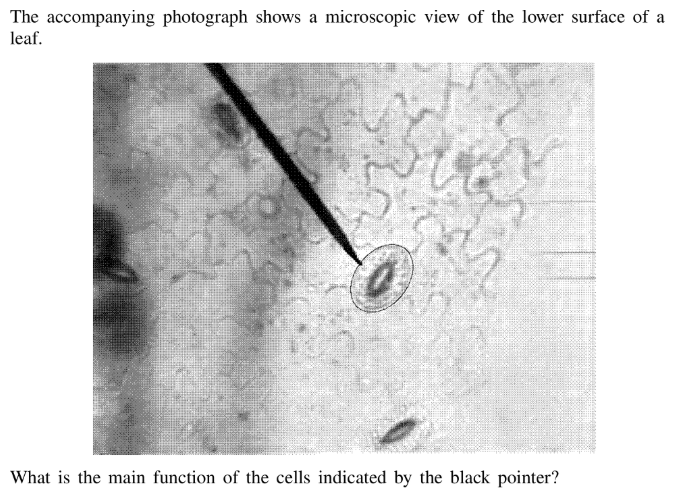
Regulate the rate of gas exchange
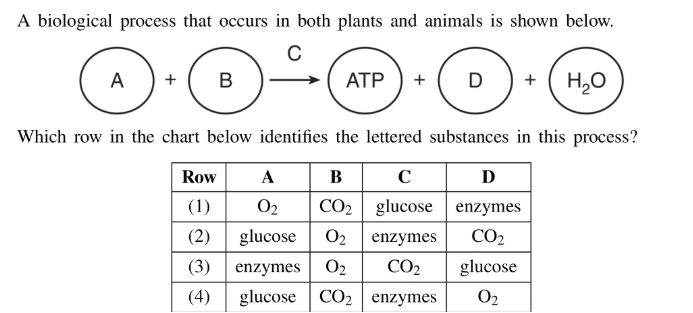
Row 2
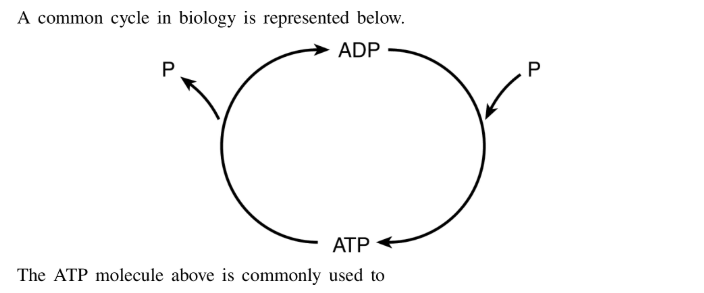
actively transport molecules in organism
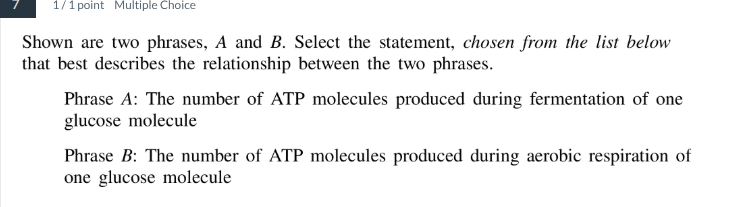
A is LESS than B

chloroplasts (image question)
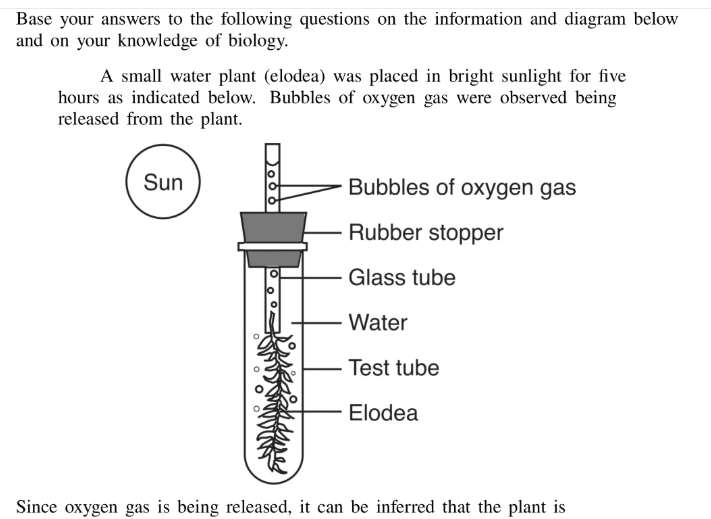
Producing glucose
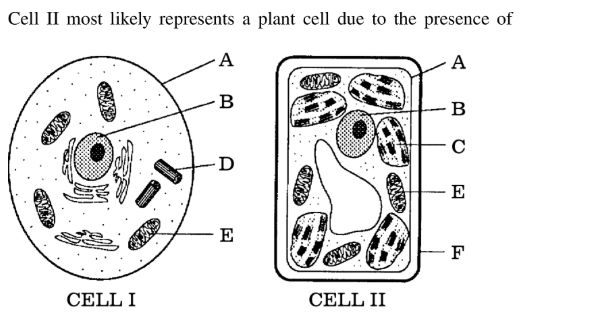
F (cell wall)
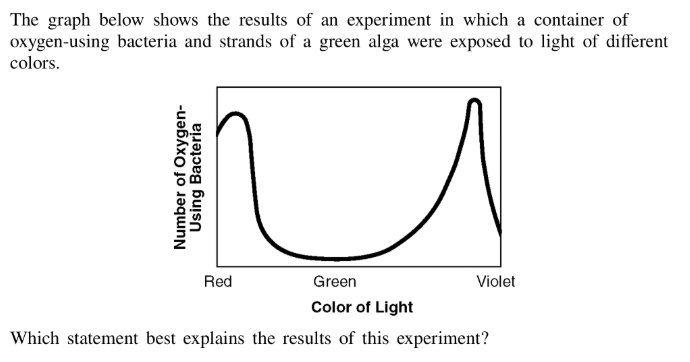
The rate of photosynthesis is affected by variations in the light
In most plants the process of photosynthesis occurs most rapidly when the plants are exposed to equal intensities of
Blue and red light
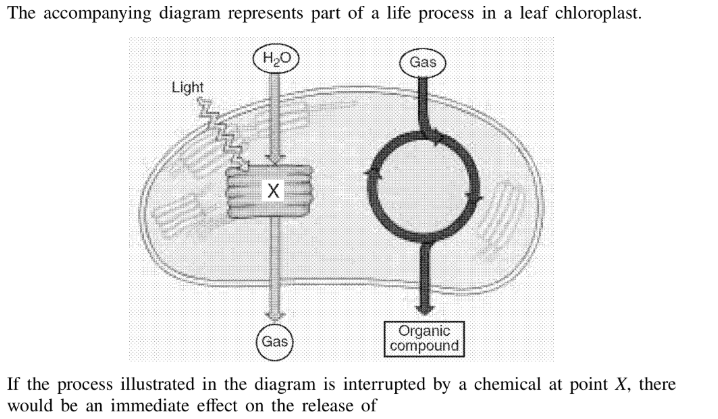
oxygen

Mitochondria
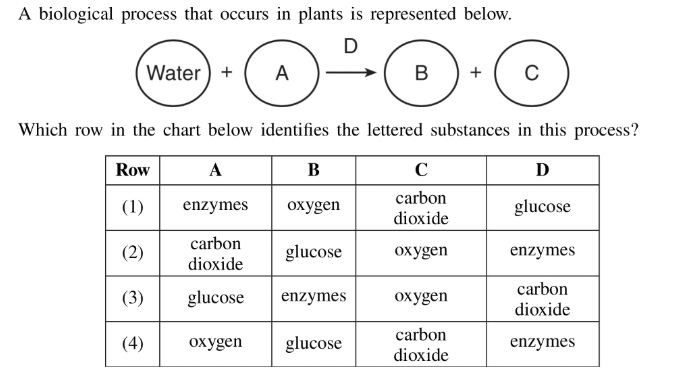
ROW 2
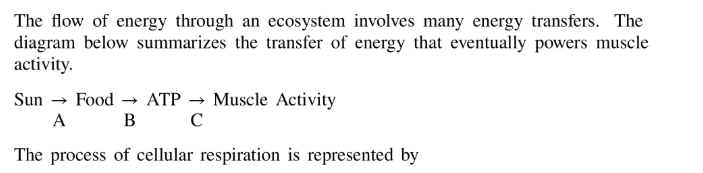
arrow B, only
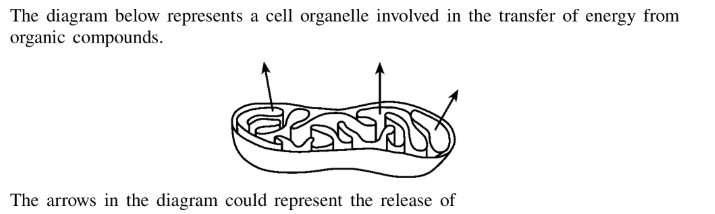
Carbon dioxide from a mitochondrion carrying out respiration
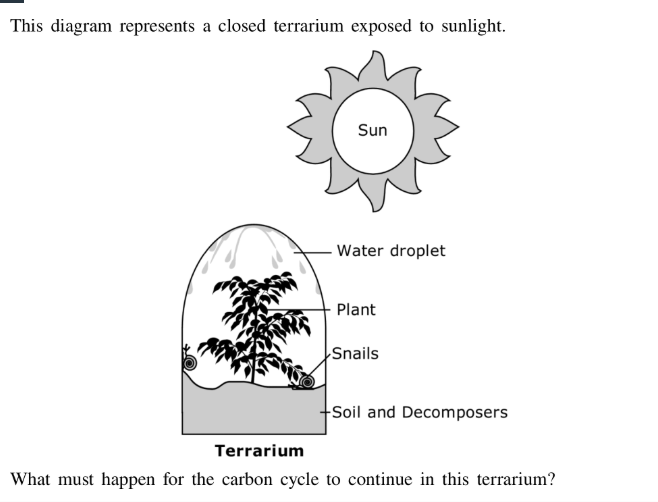
All organisms must continue to exchange gases
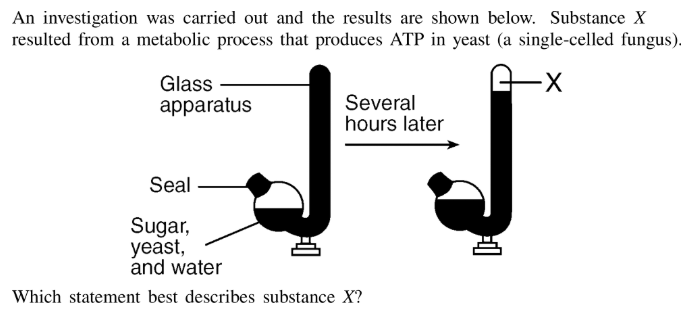
It is carbon dioxide released by respiration
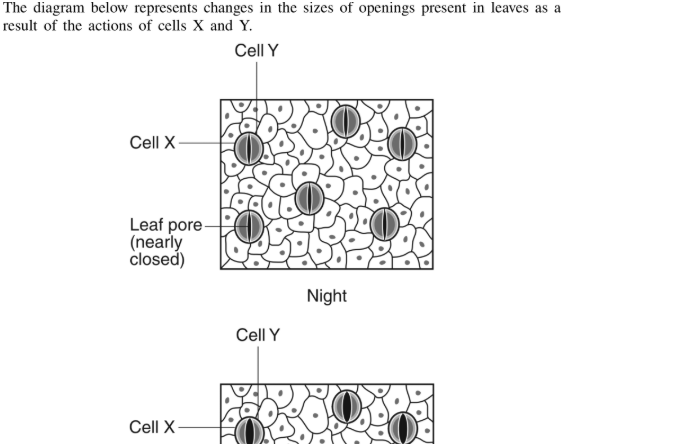
The actions of cells X and Y help the plant to
Maintain homeostasis by controlling water loss
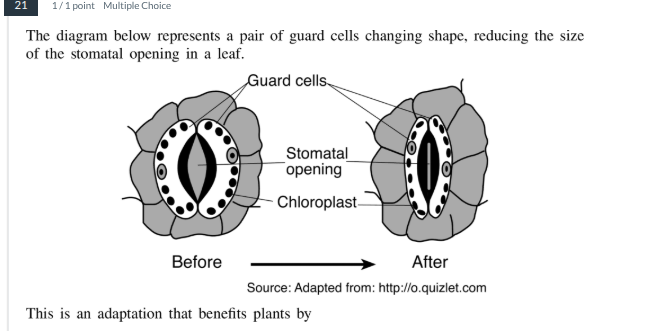
Regulating the flow of water vapor out of the leaves, preventing excess water loss by the plant
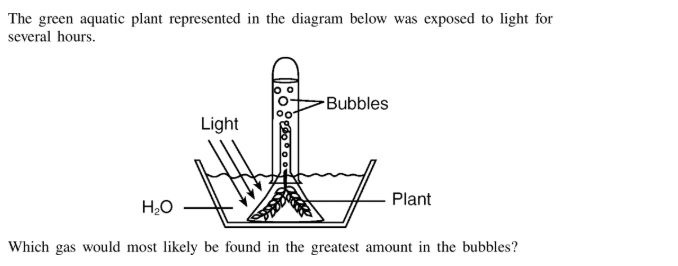
Oxygen
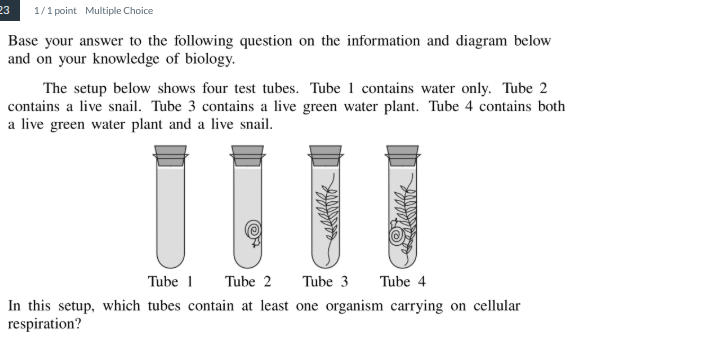
tubes 2, 3, and 4 only
which phrase best describes cellular respiration, a process that occurs continously in the cells of organisms?
Changing of stored chemical energy in food molecules to a form usable by organisms
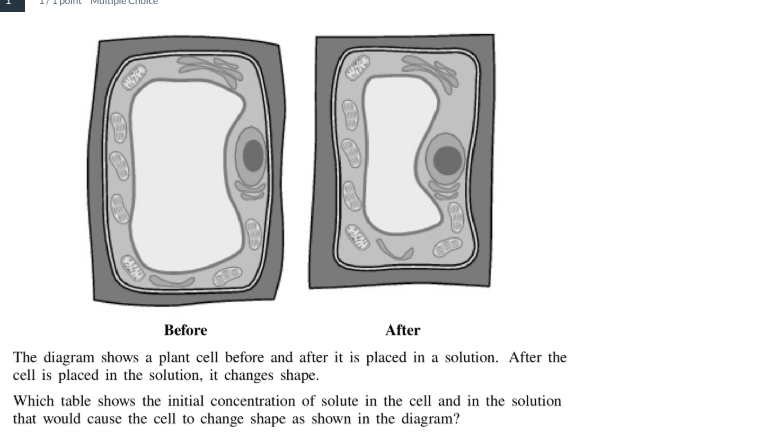


semi-permeable

plasma membrane
Most cell membranes are primarily composed of
proteins and lipids
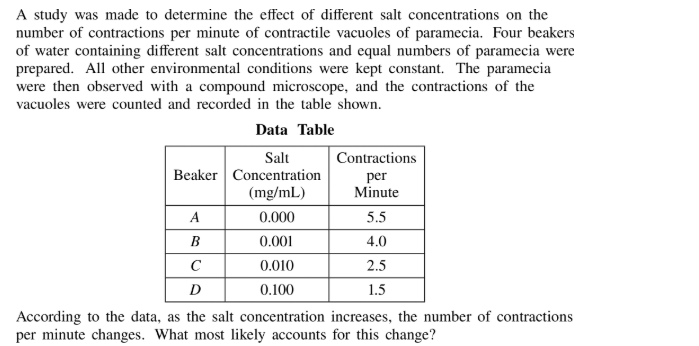
A decrease in water concentration outside the paramecium
which substances may pass through a cell membrane by simple diffusion
Carbon dioxide and water
what best represents the fluid mosaic model of a cell membrane?
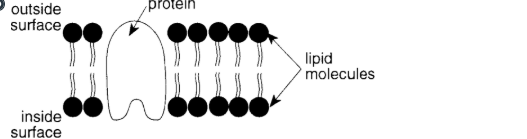
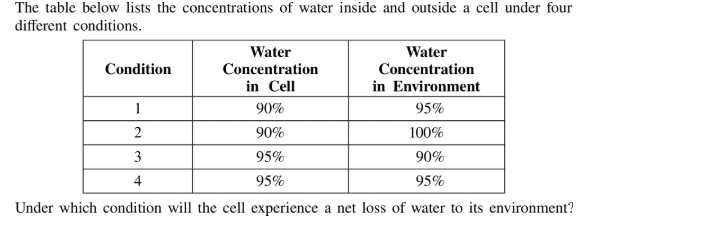
condition 3
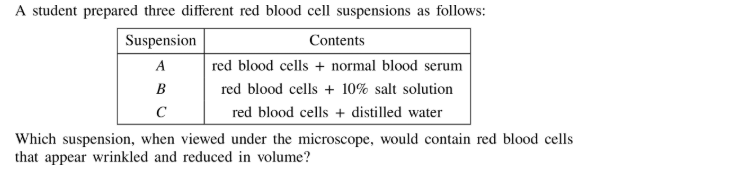
B
which process requires the expenditure of cellular energy
active transport
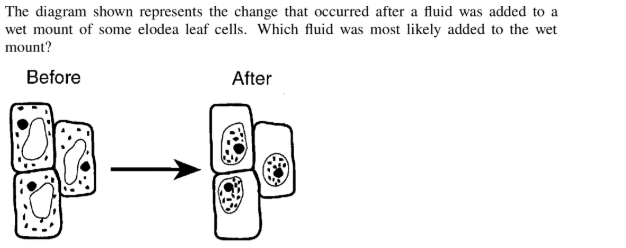
salt solution
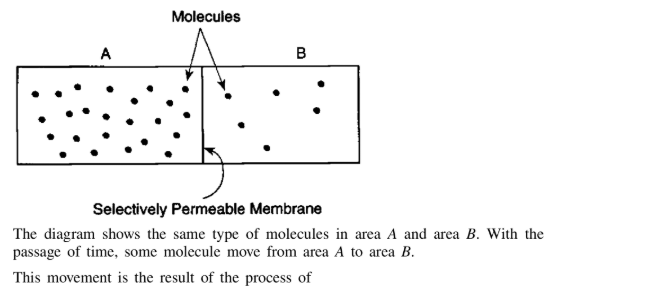
diffusion

active transport
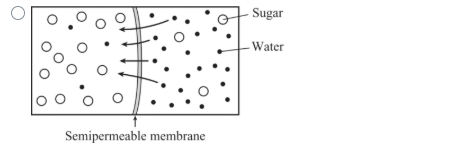
the diagram below that best represents the net movement of molecules on osmosis
The process of osmosis is best illustrated by the movement of
water into root cells
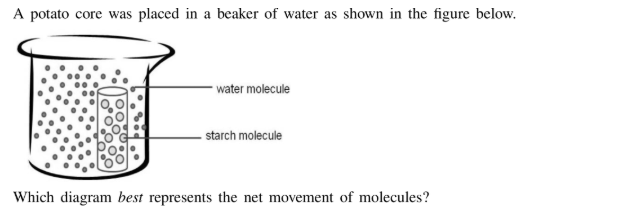
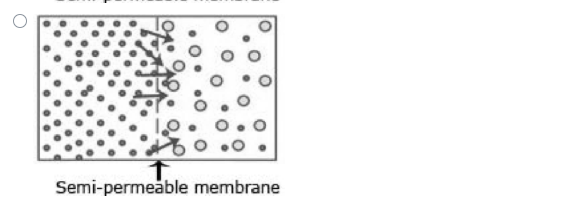

place a bag containing 30% salt solution into a beaker containing 10% salt solution
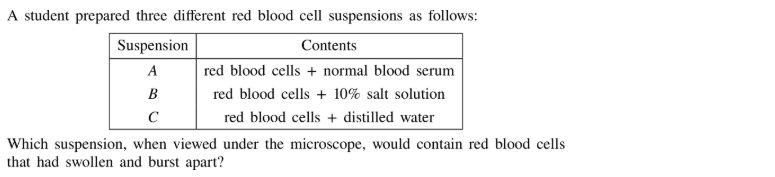
C

osmosis
The cell membrane is made up of a double layer of molecules called
phospholipids (has a charged phosphate head, a glycerol, and two fatty acids chains/tails)
Embedded in the cell membrane and help flow in and out of the cell
protein molecules
Strengthen and keep the cell membrane fluid
cholesterol molecules
Help to identify other cells; attached to cell membrane
carbohydrates
The process of taking large molecules into the cell by engulfing them in a membrane forming a vesicle
Endocytosis
The release of substance out of a cell by the fusion of a vesicle with a membrane
Exocytosis

