Phlyum Platyhelminthes
 Call Kai
 Learn
Learn Practice Test
 Spaced Repetition
 Match
Match Flashcards
 Knowt Play
1/18

There's no tags or description
Looks like no tags are added yet.
Name | Mastery | Learn | Test | Matching | Spaced | Call with Kai |
|---|
No analytics yet
Send a link to your students to track their progress
19 Terms
Phlyum Platyhelminthes
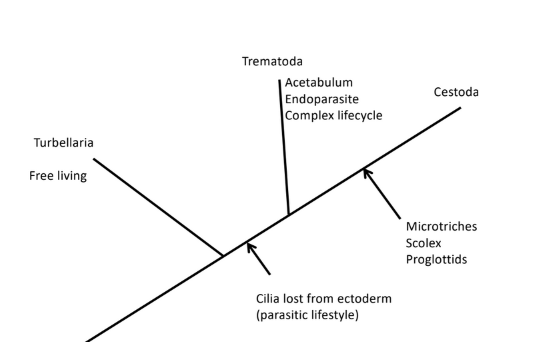
The flat worms; Made up of three different classes; Cl. Turbellaria, Cl. Trematoda, Cl. Cestoda
Features of Ph. Platyhelminthes
Tripbloblastic; 2 ventral solid nerve chords; Bilateral; Protonephridia; Flat; Simultaneous hermaphrodites or monecious; mostly paracitic
General features of Class Turbellaria
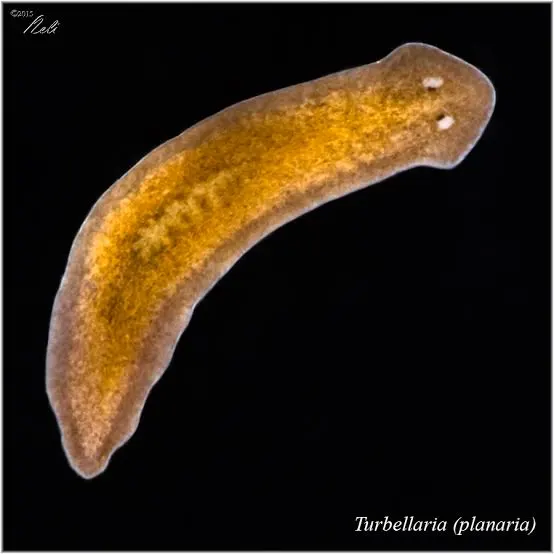
Only free living Class; Marine, freshwater, and terrestrial; cephalized; EX:planaria; Mostly carnivorous; eat sessile invertebrates; they eat by external digestion; Mate with penis fecing
Why is Ph. Platyhemnthese flat
Need to be flat for better gas exhange in marine environments
Structures of Turbellaria
Latter like nervous system with Ceribrial Ganglia; 2 ventral nerve chords; Have Auricles for chemial taste and tactile; Ocelli for detecting light; Crawl using cilia
Protonephridia
remove metabolic wastes from an animal's body; Functions simular to kidneys
Anatomical features of turbellaria
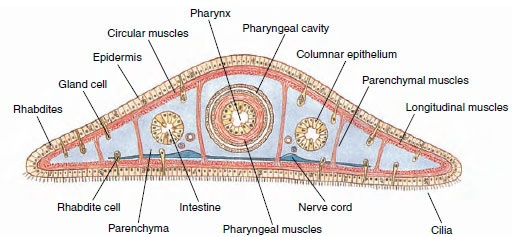
Dorsal ventral flat; Gut is diverticulated/branched to reach all parts of the body; Filled with parenchyma cells; Mucular pharynx located centrally; Circular mucles and longitudinal muscles run along the body; mouth in in the middle
Cl Trematoda
The Flukes; Flat; Have a complex lifecycle with two or more intermediate hosts and one definative host; Water or wet phase is common; Serval larval phases; two rounds of asexual reproduction
Chinese liver fluke
Humans are difiniative host; passed into fresh water snails and fish though human feces; exretory pore is for reproduction
Cl. Cestoda
The Tapeworms; Very long, but not actually segmented, they are Protglottid; Strobilated; Simple lifecycle; Monecious
Strobilated
Parts fall off that are full of eggs
Gravid
Full of eggs; Think pregnat
Beef tape worms
Humans are the difinative host
Pork tape worm
Humans are the intermediate host
Parasitism
One creature benefits to one creatures detrament
mutualism
Both benefit
Commensalism
one creature benefits and one creature doesnt care
Ectoparasite
parasite on the outside of the body; EX: fleas, ticks leech
Endoparasite
On the inside parasites; Flukes or tapeworms

