GCC Exam II Lecture VII

0.0(0)
Studied by 0 people
call kaiCall Kai
learnLearn
examPractice Test
spaced repetitionSpaced Repetition
heart puzzleMatch
flashcardsFlashcards
GameKnowt Play
Card Sorting

1/34

flashcard set

Earn XP

Description and Tags

Lecture 9: Clock, codon usage, protein folding

Last updated 8:14 AM on 4/5/26
Name
Mastery
Learn
Test
Matching
Spaced
Call with Kai

No analytics yet

Send a link to your students to track their progress

35 Terms

1
New cards

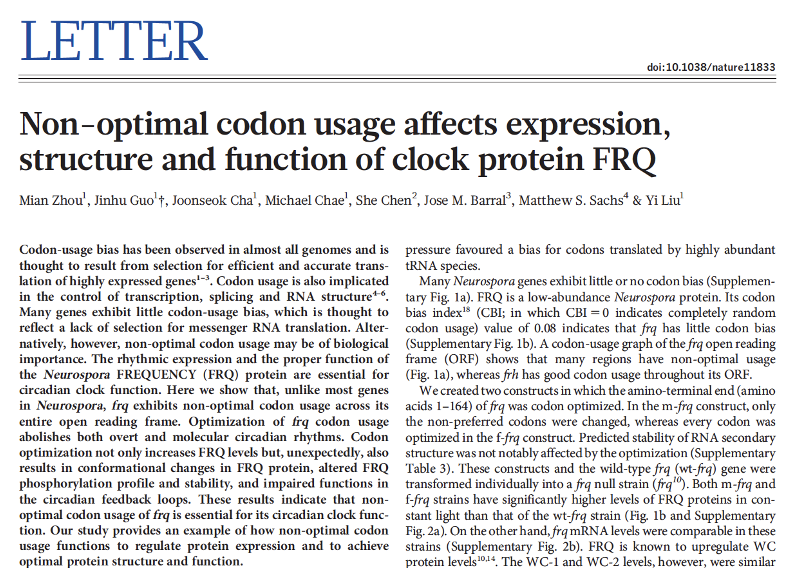
overview paper

read through the purpose
<p>read through the purpose</p>
2
New cards

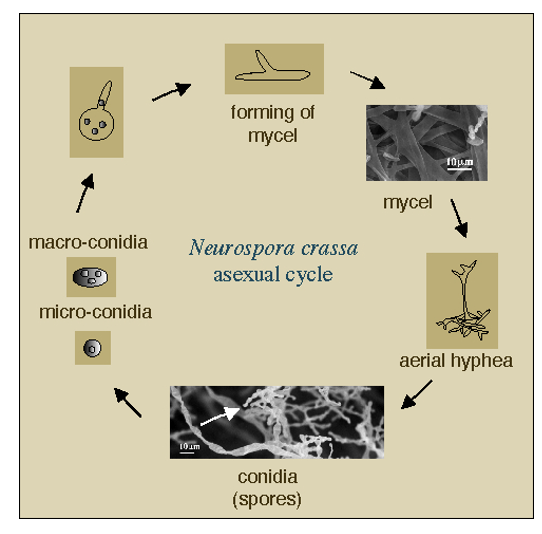
Neurospora crassa as a model system for studying circadian rhythms

Neurospora crassa undergoes an asexual cycle whereby it transitions through different morphological states as it grows.Ā 

  • As the mycel front grows it forms conidia (spores) that can be easily observed.Ā 

<p><span><em>Neurospora crassa </em>undergoes an asexual cycle whereby it transitions through different morphological states as it grows.&nbsp; </span></p><ul><li><p><span>As the mycel front grows it forms conidia (spores) that can be easily observed.&nbsp;</span></p></li></ul><p></p>
3
New cards

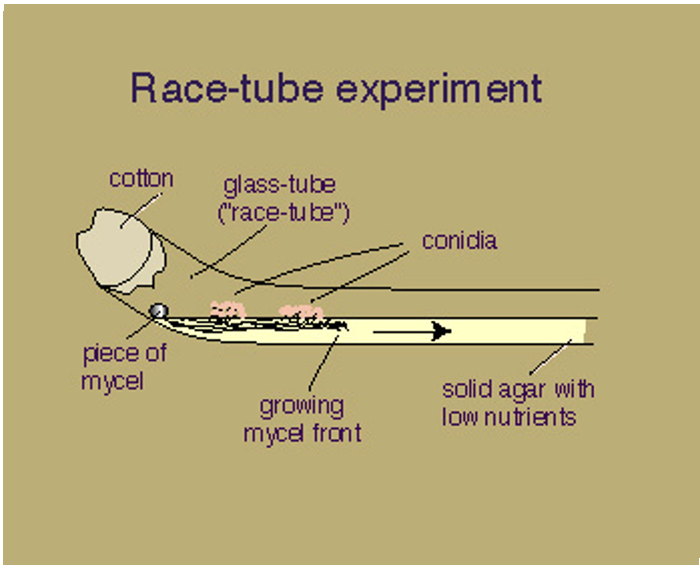
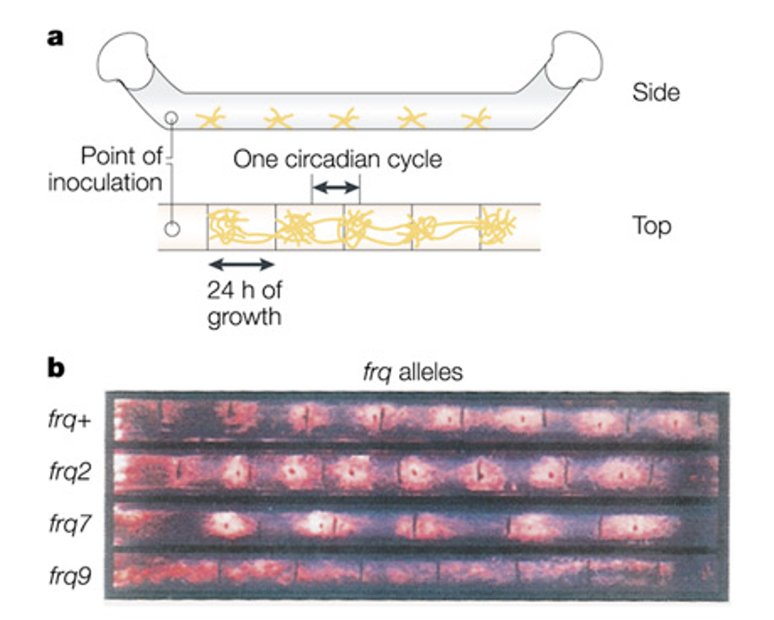
how N. Crassa models circadian rhythms

Conidia formation is regulated by the clock and occurs approximately every 22hr as the mycel front continues.Ā 

  • This can be easily observed in a ā€œrace-tubeā€.

<p><span>Conidia formation is regulated by the clock and occurs approximately every 22hr as the mycel front continues.&nbsp; </span></p><ul><li><p><span>This can be easily observed in a ā€œrace-tubeā€.</span></p></li></ul><p></p>
4
New cards

Frequency (frq),

first clock mutant in Neurospora
<p><span><strong>first clock mutant in Neurospora</strong></span></p>
5
New cards

what does FRQ do in the Neurospora clock

functions in a similar but not identical manner to PER

  • phosphorylated in morning enters and does not create more

  • at night WCC attaches to frq allowing for transcription
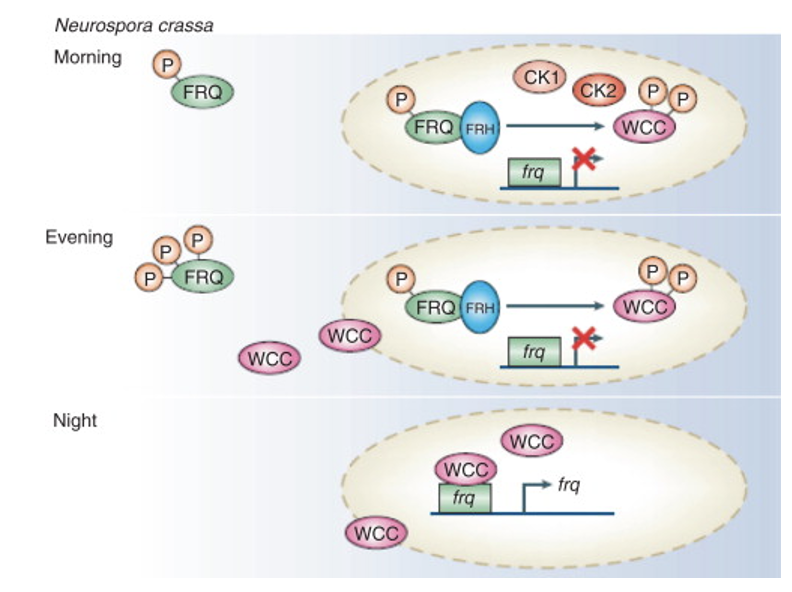
<p>functions in a similar but not identical manner to PER </p><ul><li><p>phosphorylated in morning enters and does not create more </p></li><li><p>at night WCC attaches to frq allowing for transcription</p></li></ul><p></p>
6
New cards

Background for the paper: Simplified view of Eukaryotic protein synthesis

translation simplified
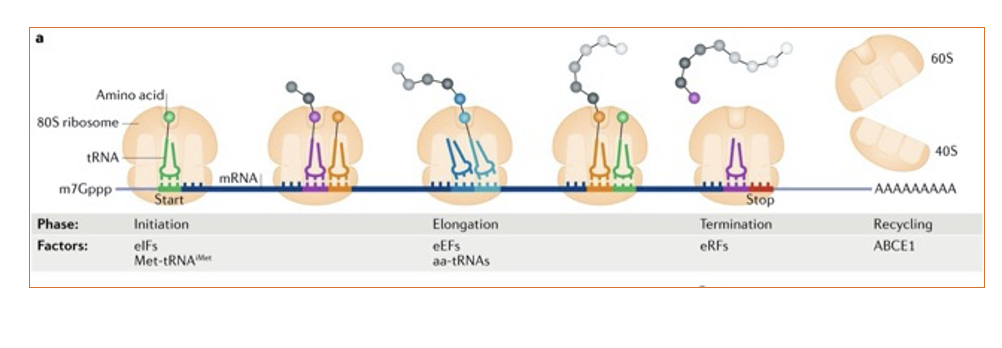
<p>translation simplified</p>
7
New cards

In the paper by Zhou et al they focused on tRNA

anti-codon/codon interactions with the mRNA
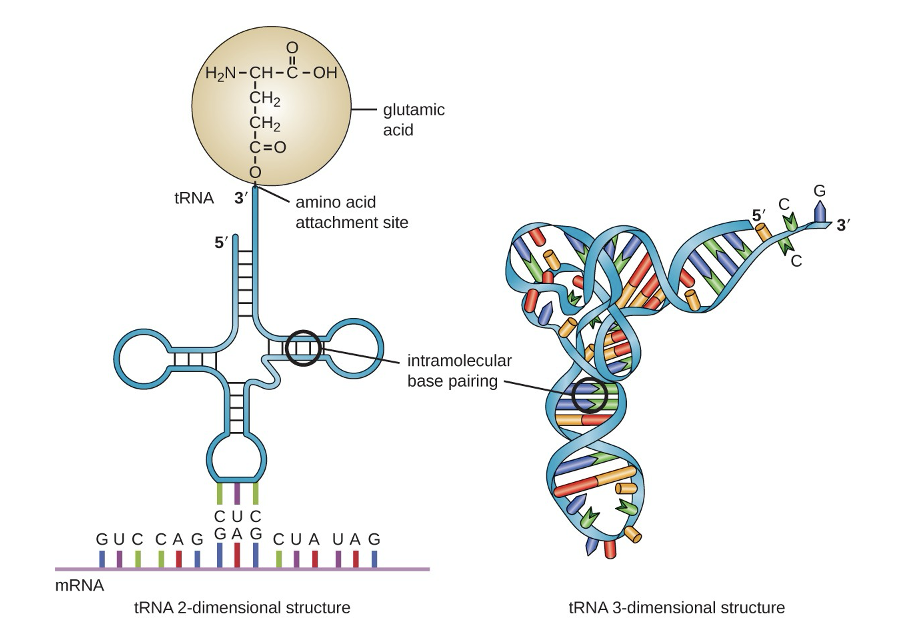
<p><span>anti-codon/codon interactions with the mRNA</span></p>
8
New cards

ā€œalmostā€ universal codon code

Note that the first two bases of a codon for a particular amino acid is highly conserved
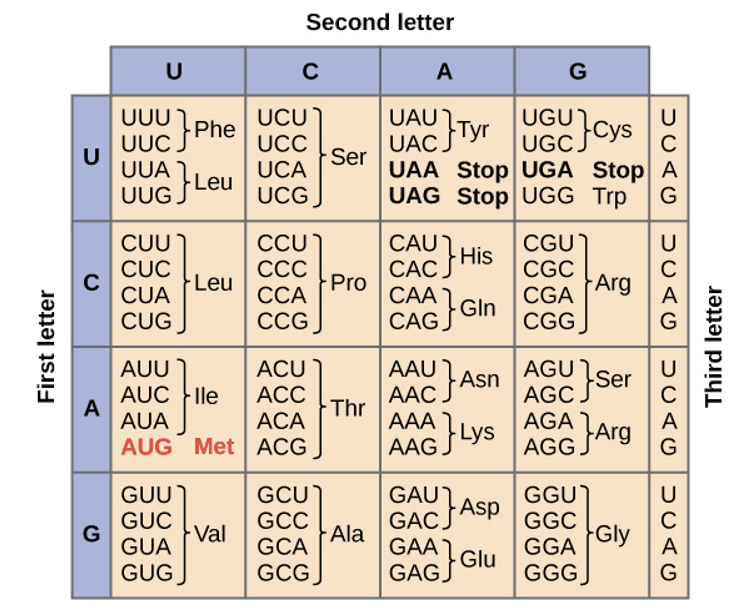
<p><span>Note that the first two bases of a codon for a particular amino acid is highly conserved</span></p>
9
New cards

more on the universal cofon code

differences in stop and other altered codon

  • The universal genetic code is a nearly uniform system where 64 codons map to specific amino acids or stop signals across almost all life. While largely conserved, altered codons exist, where specific codons (often UGA) are reassigned to different amino acids or function differently in organelles or specific species, primarily due to tRNA mutations or editing.
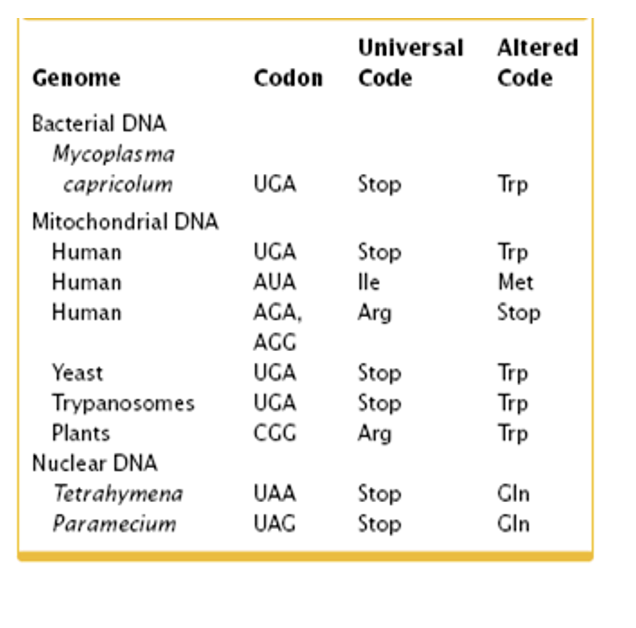
<p>differences in stop and other altered codon</p><ul><li><p><strong><mark data-color="rgba(0, 0, 0, 0)" style="background-color: rgba(0, 0, 0, 0); color: inherit;">The universal genetic code is a nearly uniform system where 64 codons map to specific amino acids or stop signals across almost all life. While largely conserved, altered codons exist, where specific codons (often UGA) are reassigned to different amino acids or function differently in organelles or specific species, primarily due to tRNA mutations or editing</mark></strong>.</p><p></p></li></ul><p></p>
10
New cards

Degeneracy or redundancy of genetic code –

more than 1 codon for an aa

Quick history:

  • The idea of codons was first proposed by Crick and colleagues in 1961

  • Since a codon is three bases, there are 64 possible combinations of codons.Ā  Of the 64, 61 code for amino acids and 3 code for translation stop signals.Ā 

  • Since there are only 20 (actually 21) amino acids that means that many amino acids can be coded by several different codons, hence degeneracy or redundancy in the code (which helps to preserve the integrity of the code by being more resistant to single mutations.
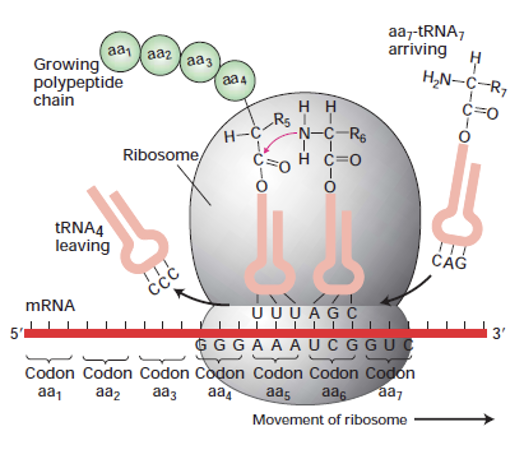
<p><span><strong>more than 1 codon for an aa</strong></span></p><p><span><strong>Quick history:</strong></span></p><ul><li><p><span>The idea of codons was first proposed by Crick and colleagues in 1961</span></p></li><li><p><span>Since a codon is three bases, there are 64 possible combinations of codons.&nbsp; Of the 64, 61 code for amino acids and 3 code for translation stop signals.&nbsp;</span></p></li><li><p><span>Since there are only 20 (actually 21) amino acids that means that many amino acids can be coded by several different codons, hence <strong>degeneracy</strong> or <strong>redundancy</strong> in the code (which helps to preserve the integrity of the code by being more resistant to single mutations.</span></p></li></ul><p></p>
11
New cards

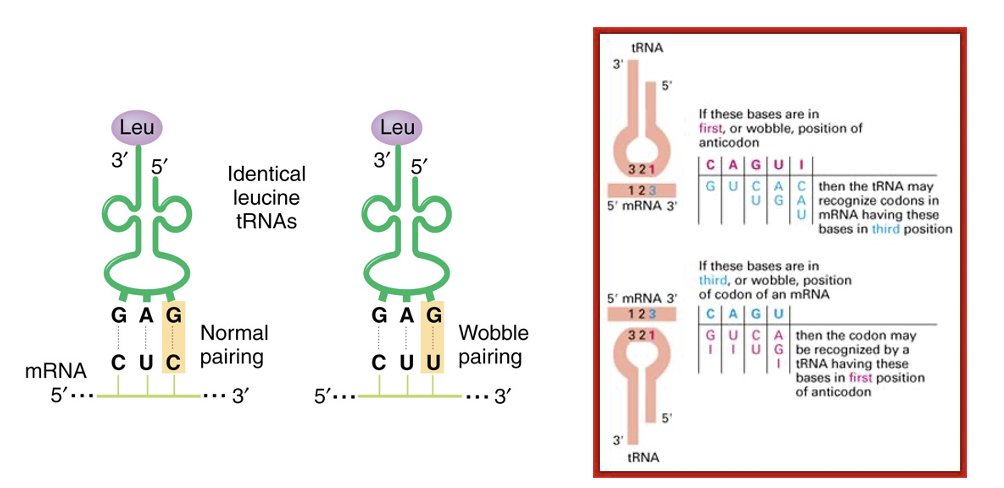
ā€œwobbleā€ hypothesis—total number of tRNAs is less than 61 (most organisms have ~45)

Wobble codon-anticodon interactions are up to 3-fold less efficient compared to those using only Watson-Crick interactions

  • The third base on the codon is less important than the first two and allows for non-Watson-Crick base-pairing (rules for wobble interactions are shown to right and sometimes involve an inosine (I) in the 1st position of the tRNA anticodon)Ā 

<p><span>Wobble codon-anticodon interactions are up to 3-fold less efficient compared to those using only Watson-Crick interactions</span></p><ul><li><p><span>The third base on the codon is less important than the first two and allows for non-Watson-Crick base-pairing (rules for wobble interactions are shown to right and sometimes involve an inosine (I) in the 1<sup>st</sup> position of the tRNA anticodon)&nbsp;</span></p></li></ul><p></p>
12
New cards

wobble hypothesis

better idea of why it doesn’t matter too much

  • explains how one tRNA anticodon can recognize multiple mRNA codons. While the first two codon bases pair strictly with the anticodon, the third base ("wobble position") pairs flexibly, allowing fewer tRNAs to translate all 61 amino-acid-coding codons, reducing the total tRNA required
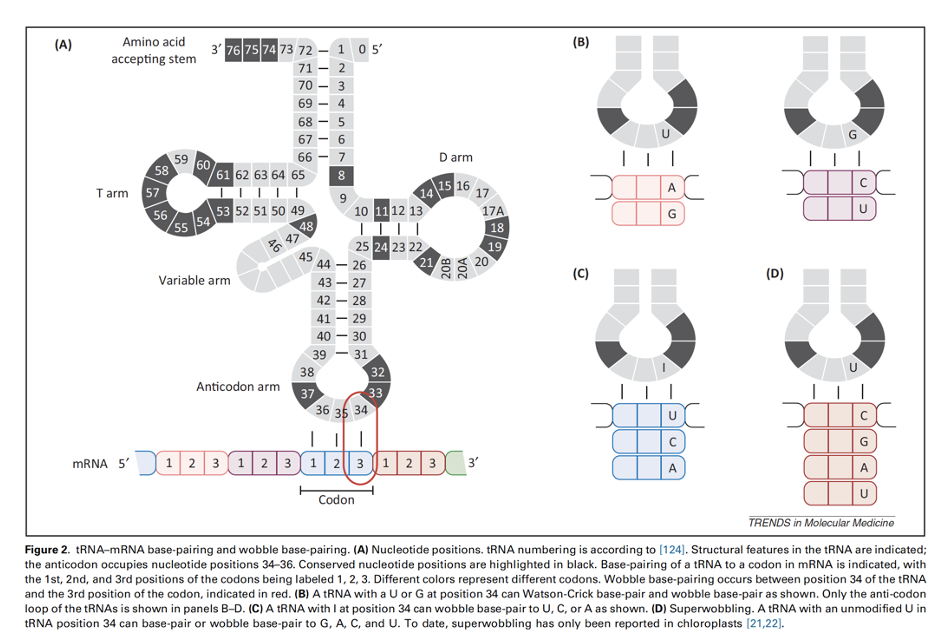
<p>better idea of why it doesn’t matter too much</p><ul><li><p><strong><mark data-color="rgba(0, 0, 0, 0)" style="background-color: rgba(0, 0, 0, 0); color: inherit;">explains how one tRNA anticodon can recognize multiple mRNA codons</mark></strong><span>. While the first two codon bases pair strictly with the anticodon, the third base ("wobble position") pairs flexibly, allowing fewer tRNAs to translate all 61 amino-acid-coding codons, reducing the total tRNA required</span></p></li></ul><p></p>
13
New cards

The number of genes for each tRNA differs between species

If the expression patterns of different tRNAs reflect their gene copy number, then you can imagine that mRNAs containing many codons with low codon/tRNA ratios could have slower translation elongation rates compared to those with high.
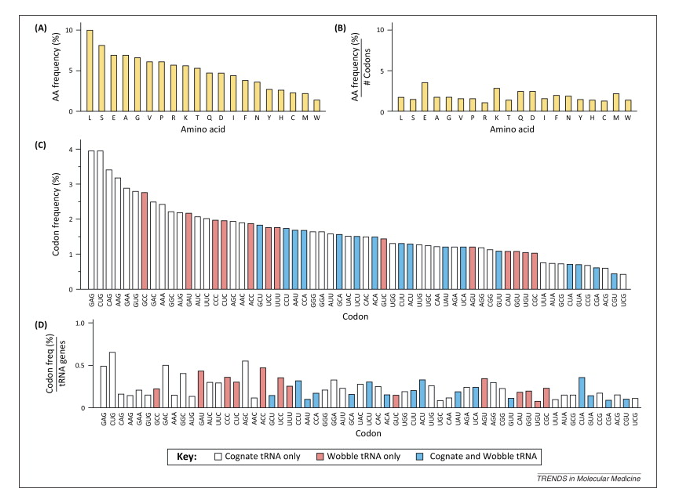
<p><span>If the expression patterns of different tRNAs reflect their gene copy number, then you can imagine that <strong>mRNAs containing many codons with low codon/tRNA ratios could have slower translation elongation rates compared to those with high.</strong></span></p>
14
New cards

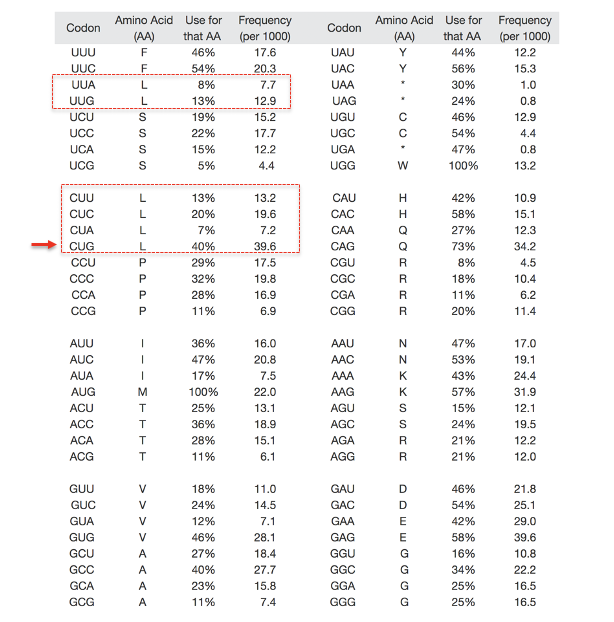
The predicted ratios for the human genome are shown below

Use for that AA means the relative frequency that a particular codon is used for an amino acid in the human genome
<p><span>Use for that AA means the relative frequency that a particular codon is used for an amino acid in the human genome</span></p>
15
New cards

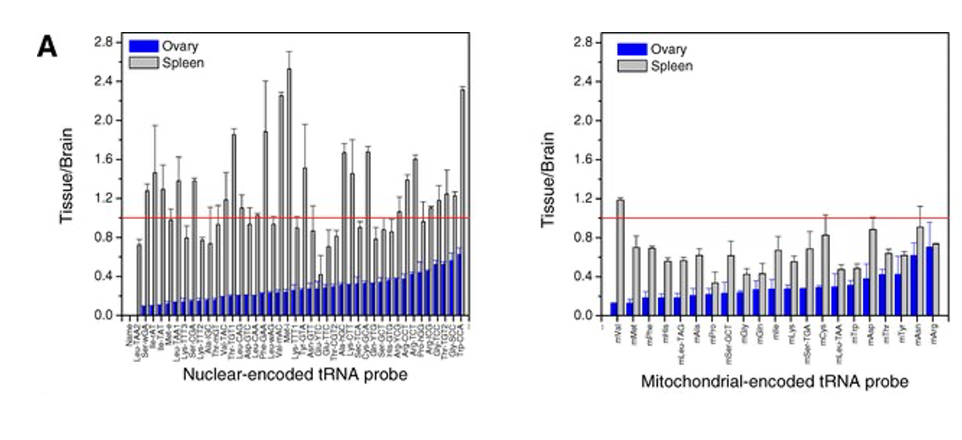
The abundance of tRNA differ depending on tissue, developmental stage, etc

An example for nuclear and mitochondrial encoded tRNAs is shown below for ovary and spleen
<p><span>An example for nuclear and mitochondrial encoded tRNAs is shown below for ovary and spleen</span></p>
16
New cards

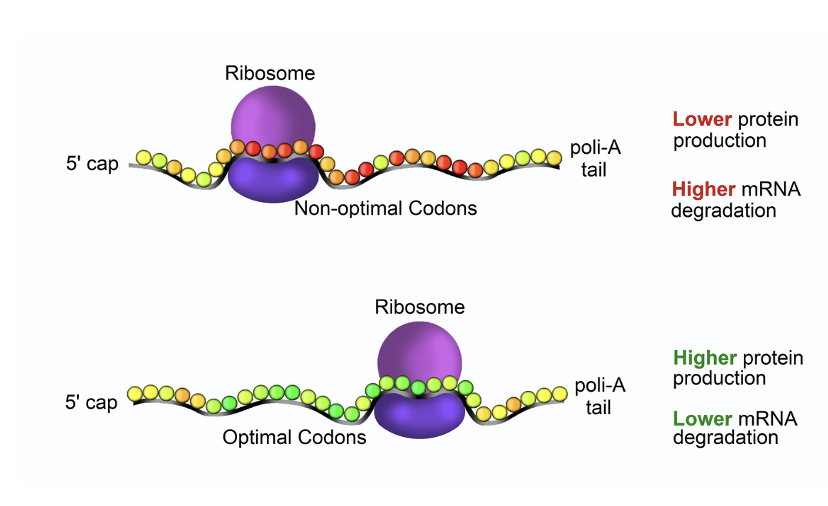
IN GENERAL:Ā  mRNAs with non-optimal codons are associated with

less protein production and higher mRNA degradation
<p><span>less protein production and higher mRNA degradation</span></p>
17
New cards

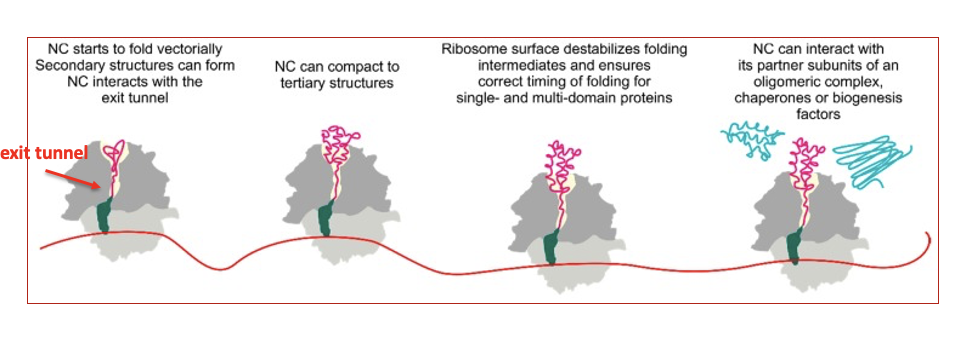
Proteins begin folding as they are being translated, which can affect protein folding

The average rate of protein synthesis is ~20 amino acids/s inĀ E. coliĀ and ~6 amino acids/s in eukaryotic cells.

  • In comparison, experimentally measured rates of spontaneous folding of single-domain globular proteins range from microseconds to hours.Ā 

<p><span>The average rate of protein synthesis is ~20 amino acids/s in&nbsp;<em>E. coli</em>&nbsp;and ~6 amino acids/s in eukaryotic cells. </span></p><ul><li><p><span>In comparison, experimentally measured rates of spontaneous folding of single-domain globular proteins range from microseconds to hours.&nbsp;</span></p></li></ul><p></p>
18
New cards

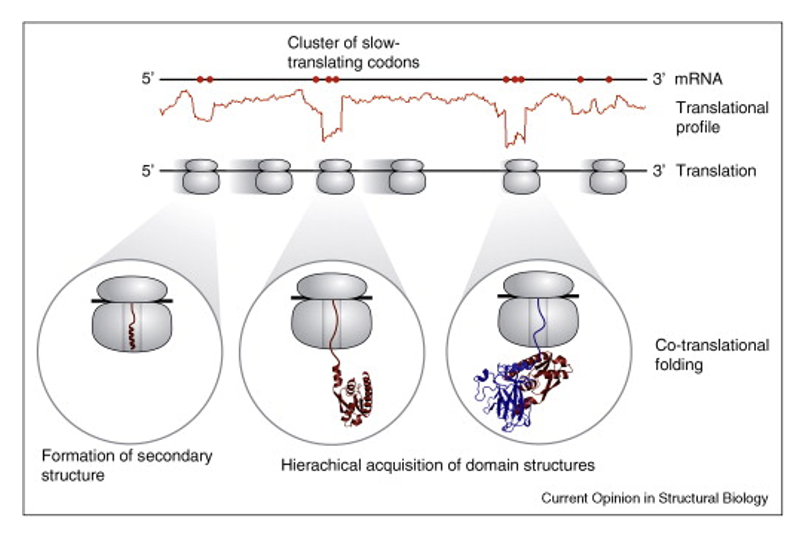
Slow translating codons might give enough time to stabilize a certain structure, whereas fast translating codons

might diminish the chances of a ā€œbadā€ fold!Ā 

  • 75% of proteins in eukaryotes are multi-domain.Ā  Folding domains sequentially as they protrude from the ribosome can ensure a correct overall structure
<p><span>might diminish the chances of a ā€œbadā€ fold!&nbsp;</span></p><ul><li><p><span><em>75% of proteins in eukaryotes are multi-domain.&nbsp; Folding domains sequentially as they protrude from the ribosome can ensure a correct overall structure</em></span></p></li></ul><p></p>
19
New cards

impetus for study - paper discussed

  1. Codon usage optimization for luciferase in Neurospora

  2. Noticed frq open reading frame predominately has non-optimal codons (see below; Supplemental figure 1 from paper).Ā 

  3. This led them to wonder what would happen if they optimized the codon usage for FRQ and tested it for clock function in Neurospora.
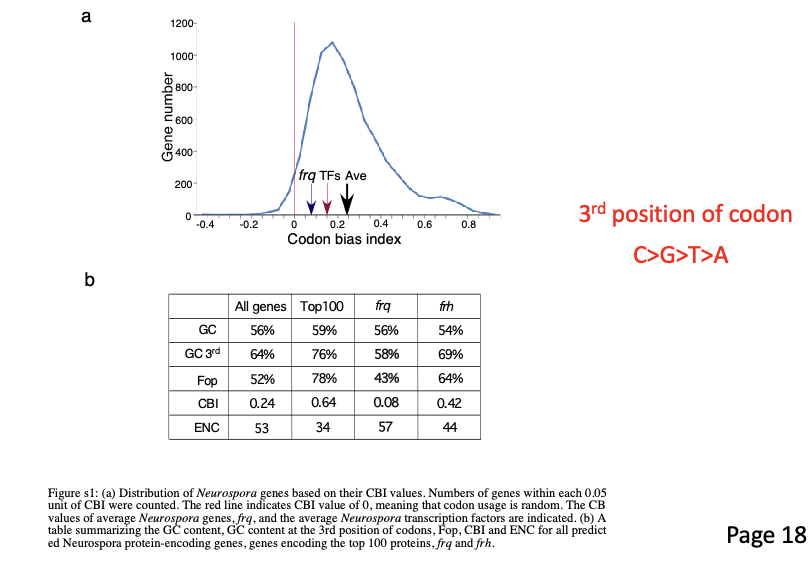
<ol><li><p><span>Codon usage optimization for luciferase in Neurospora</span></p></li><li><p><span>Noticed frq open reading frame predominately has non-optimal codons (see below; Supplemental figure 1 from paper).&nbsp;</span></p></li><li><p><span><strong>This led them to wonder what would happen if they optimized the codon usage for FRQ and tested it for clock function in <em>Neurospora</em></strong>.</span></p></li></ol><p></p>
20
New cards

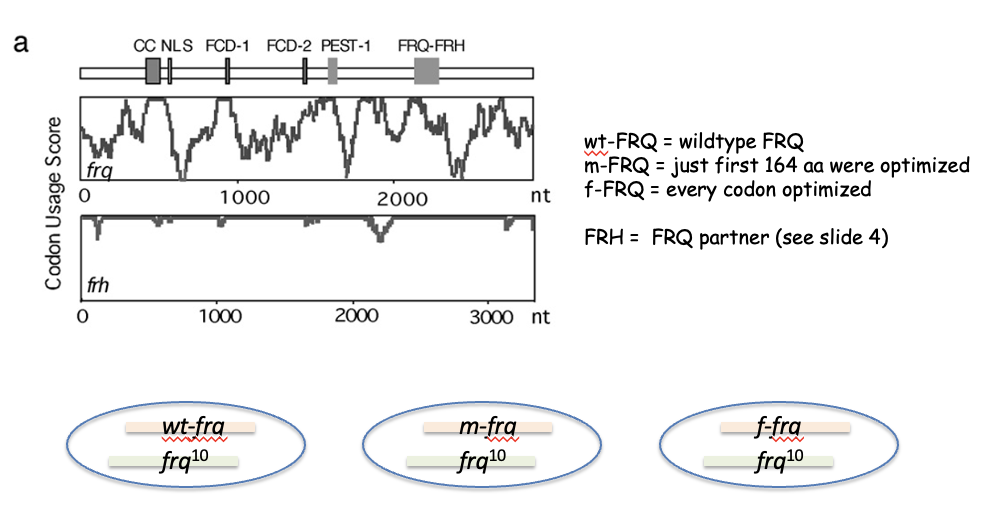
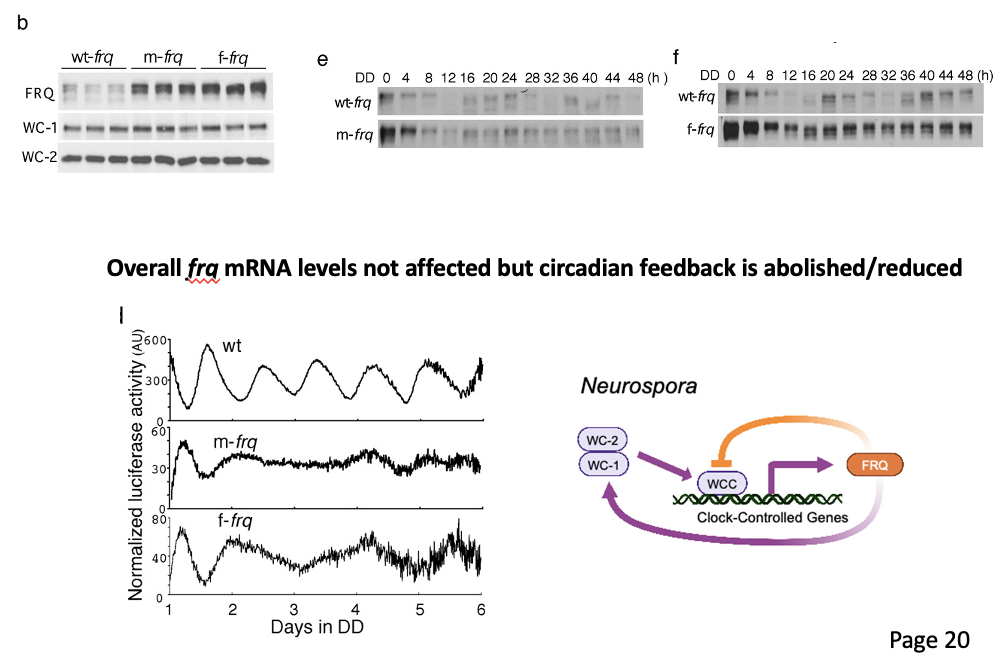
Figure 1AĀ Testing codon optimization ofĀ frqĀ 

wt-FRQ = wildtype FRQ

m-FRQ = just first 164 aa were optimized

f-FRQ = every codon optimized

FRH =Ā  FRQ partner (see slide 4)

<p><span style="font-family: &quot;Comic Sans MS&quot;;">wt-FRQ = wildtype FRQ</span></p><p style="text-align: left;"><span style="font-family: &quot;Comic Sans MS&quot;;">m-FRQ = just first 164 aa were optimized</span></p><p style="text-align: left;"><span style="font-family: &quot;Comic Sans MS&quot;;">f-FRQ = every codon optimized</span></p><p style="text-align: left;"></p><p style="text-align: left;"><span style="font-family: &quot;Comic Sans MS&quot;;">FRH =&nbsp; FRQ partner (see slide 4)</span></p>
21
New cards

higher levels of FRQ protein from

reading frames with optimized codons

  • Overall frq mRNA levels not affected but circadian feedback is abolished/reduced
<p>reading frames with optimized codons </p><ul><li><p><span><strong>Overall <em>frq</em> mRNA levels not affected but circadian feedback is abolished/reduced</strong></span></p></li></ul><p></p>
22
New cards

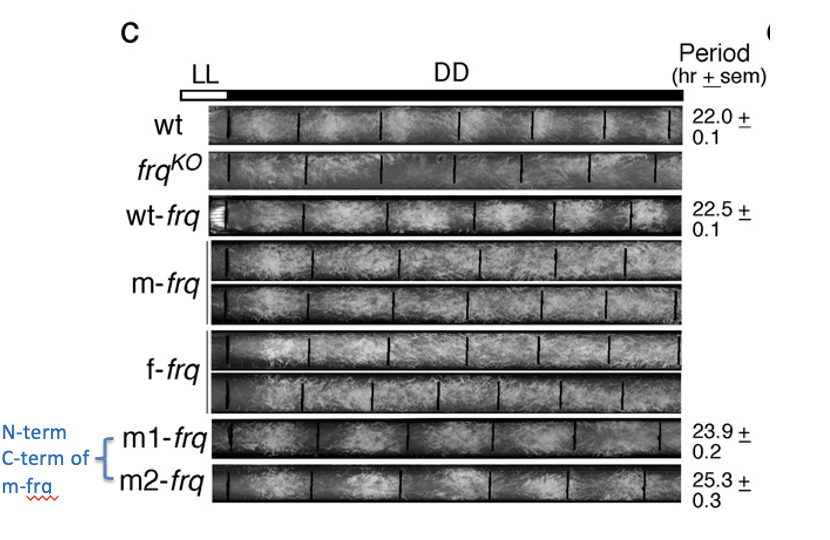
Altered rhythms in neurospora

with codon optimized frq
<p><span><strong>with codon optimized frq</strong></span></p>
23
New cards

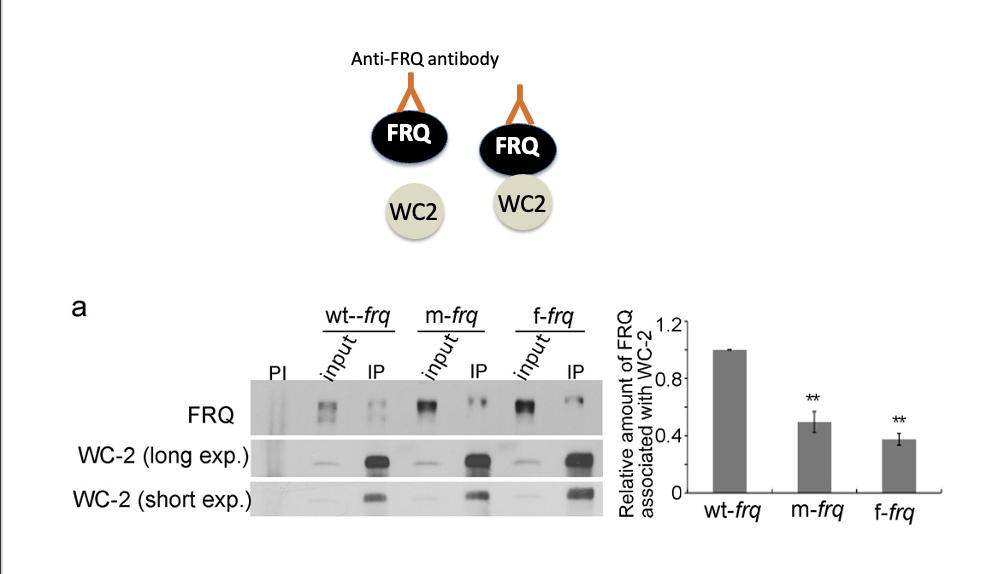
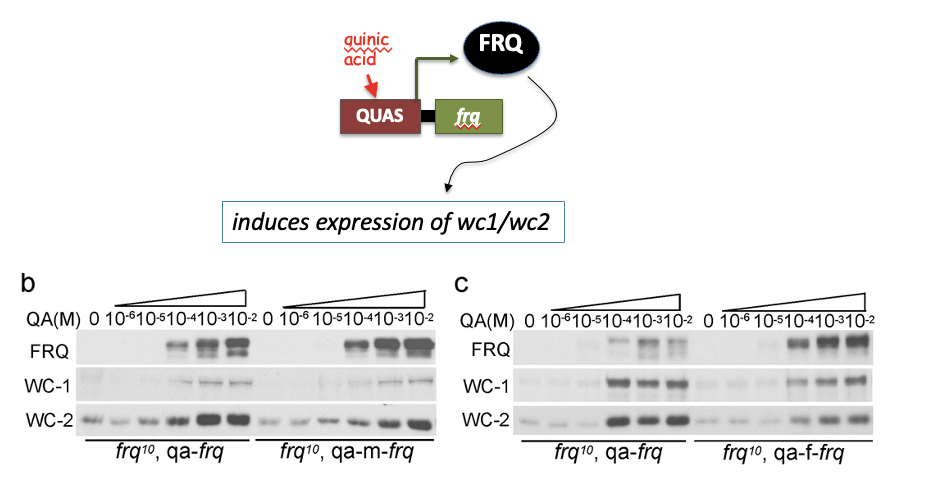
Fig 2:Ā  Codon optimized FRQ has impaired binding to WC complex

f-frq has much less bonding with WC2 with codon optimization
<p>f-frq has much less bonding with WC2 with codon optimization</p>
24
New cards

Fig 2:Ā  Codon optimized FRQ has impaired ability

to stimulate wc1/wc2 expression

  • The impaired FRQ functions despite higher FRQ levels in codon-optimized strains suggest that FRQ’s structural conformation is altered.
<p><span>to stimulate wc1/wc2 expression</span></p><ul><li><p><span>The impaired FRQ functions despite higher FRQ levels in codon-optimized strains suggest that FRQ’s structural conformation is altered.</span></p></li></ul><p></p>
25
New cards

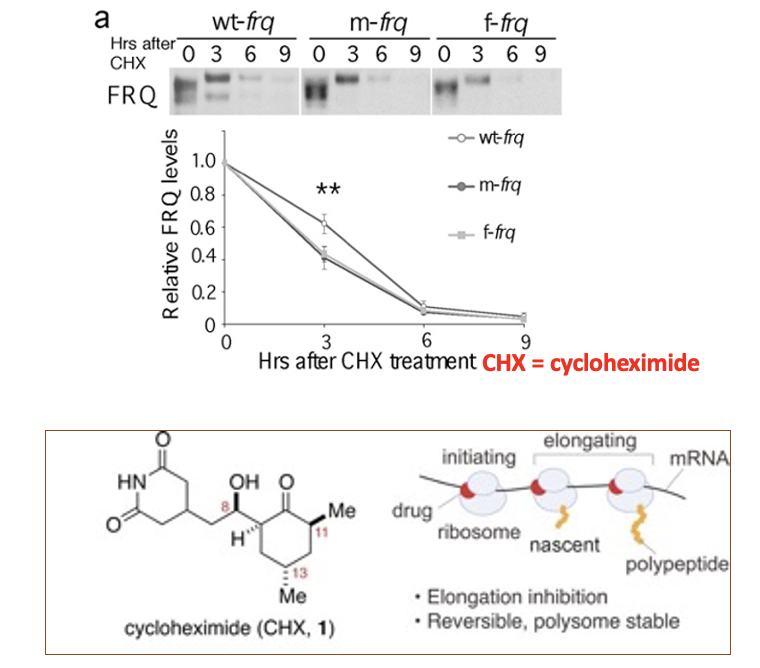
Codon optimized FRQ protein is less

stable compared to wildtype

  • CHX = cycloheximide

<p><span>stable compared to wildtype</span></p><ul><li><p><span><strong>CHX = cycloheximide</strong></span></p></li></ul><p></p>
26
New cards

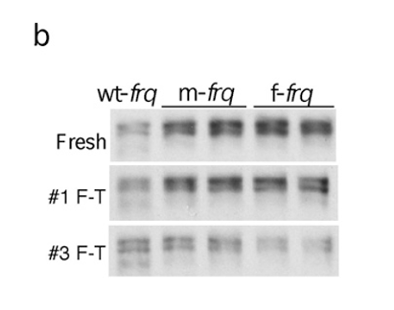
FRQ with optimized codons was more susceptible

to loss after multiple freeze-thaws

27
New cards

Fig 3b. FRQ protein in the codon-optimized strains is less

stable and more sensitive to trypsin digestion.

  • (b) Western blots showing sensitivity of FRQ from codon-optimized strains to freeze-thaw cycles.
<p><span><strong>stable and more sensitive to trypsin digestion. </strong></span></p><ul><li><p><span>(b) Western blots showing sensitivity of FRQ from codon-optimized strains to freeze-thaw cycles.</span></p></li></ul><p></p>
28
New cards

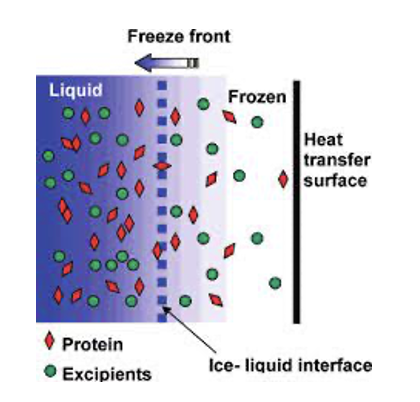
During freezing the formation of ice crystals from the water component of your sample can leave high salt or protein concentrations in the aqueous phase.

This is known as freeze concentration and causes severe stresses to protein stability.

  • It has even been shown to cause protein unfolding at the ice: aqueous interface and the aggregation of unfolded proteins,
<p><span>This is known as freeze concentration and causes severe stresses to protein stability.</span></p><ul><li><p><span> It has even been shown to cause protein unfolding at the ice: aqueous interface and the aggregation of unfolded proteins,</span></p></li></ul><p></p>
29
New cards

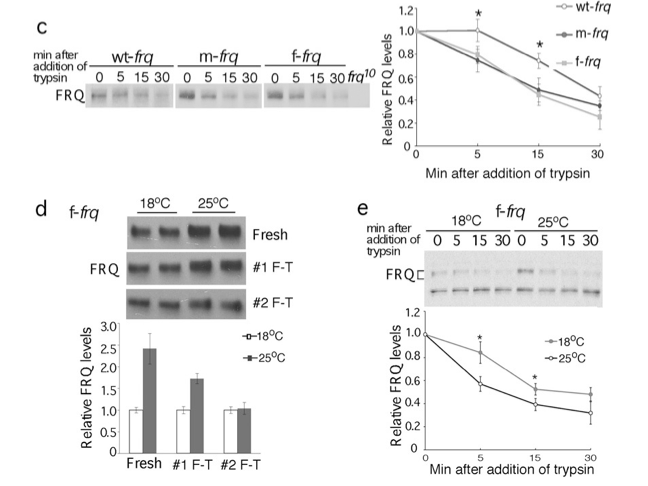
Figures c-e

Sensitivity to limited trypsin digest (panel c)

  • Is codon optimized FRQ less sensitive to freeze-thaw and limited trypsin digestion when produced at lower temperature where translation rates are decreased in Neurospora? (panel d and e)
<p><span><strong>Sensitivity to limited trypsin digest (panel c)</strong></span></p><ul><li><p style="text-align: left;"><span><strong>Is codon optimized FRQ less sensitive to freeze-thaw and limited trypsin digestion when produced at lower temperature where translation rates are decreased in Neurospora? (panel d and e)</strong></span></p></li></ul><p></p>
30
New cards

Fig 3c-e.  Western blots showing sensitivity of FRQ from codon-optimized strains to trypsin (1 µg/ml) digestion

(c). A longer exposure for the wt-frqĀ strain was used in (c). Densitometric analyses of FRQ levels of three independent experiments in are shown.

  • (d & e) Western blots showing that FRQ from the f-frqĀ strain grown at 18°C is more resistant to freeze and thaw cycles (d, n=2) and to trypsin digestion (e, n=4) than that from 25°C. Two asterisks indicate p value <0.01, and one asterisk indicates p value <0.05.
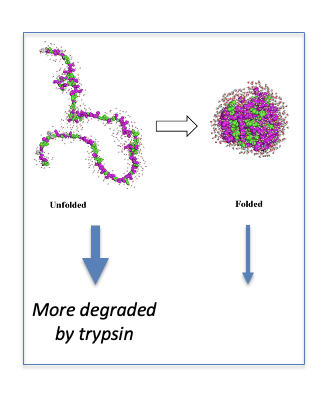
<p><span>(c). A longer exposure for the wt-<em>frq</em>&nbsp;strain was used in (c). Densitometric analyses of FRQ levels of three independent experiments in are shown. </span></p><ul><li><p><span>(d &amp; e) Western blots showing that FRQ from the f-<em>frq</em>&nbsp;strain grown at 18°C is more resistant to freeze and thaw cycles (d, n=2) and to trypsin digestion (e, n=4) than that from 25°C. Two asterisks indicate p value &lt;0.01, and one asterisk indicates p value &lt;0.05.</span></p></li></ul><p></p>
31
New cards

Fig 4. Codon optimization of the middle region of FRQ

impairs FRQ phosphorylation and stabilizes FRQ

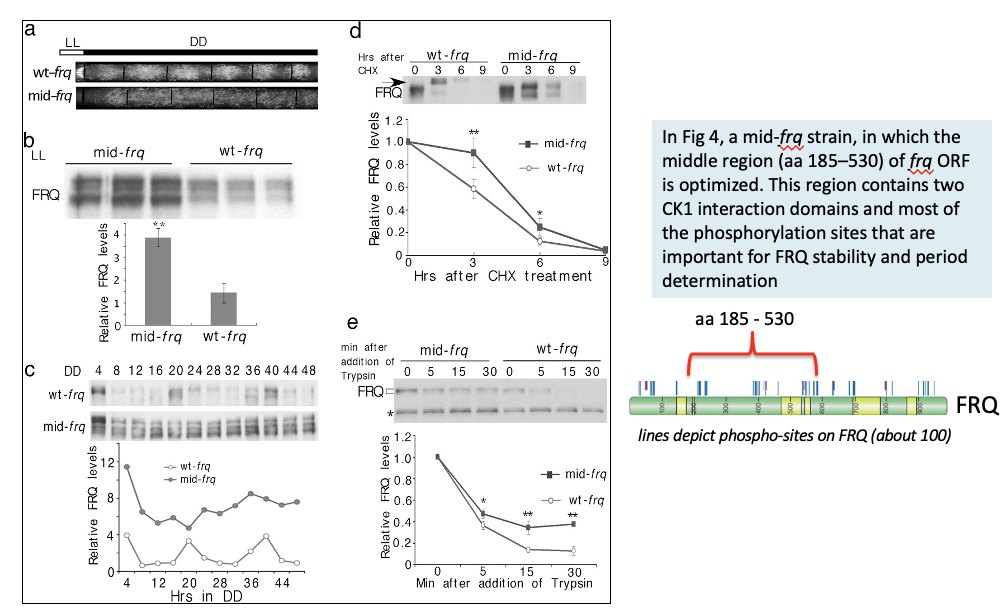
  • In Fig 4, a mid-frqĀ strain, in which the middle region (aa 185–530) ofĀ frqĀ ORF is optimized. This region contains two CK1 interaction domains and most of the phosphorylation sites that are important for FRQ stability and period determination
<p><span>impairs FRQ phosphorylation and stabilizes FRQ</span></p><ul><li><p><span>In Fig 4, a mid-<em>frq</em>&nbsp;strain, in which the middle region (aa 185–530) of&nbsp;<em>frq</em>&nbsp;ORF is optimized. This region contains two CK1 interaction domains and most of the phosphorylation sites that are important for FRQ stability and period determination</span></p></li></ul><p></p>
32
New cards

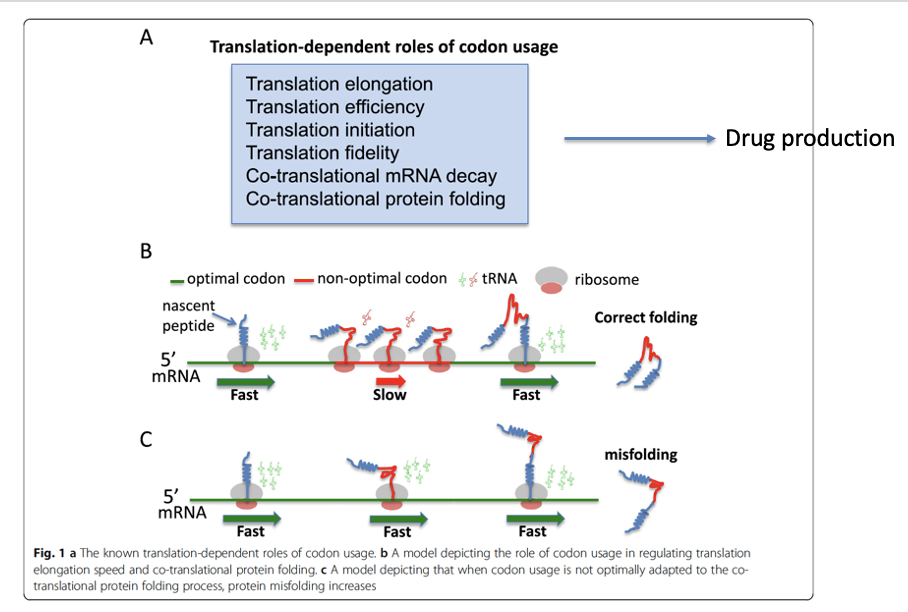
SUMMARY:Ā  The opposite molecular phenotypes of mid-frqĀ and the N-terminal optimized strains indicate that changes in FRQ structural conformation in these strains are due to location-specific codon optimization.

Therefore,Ā frqĀ non-optimal codon usage should be a mechanism that allows the proper folding of FRQ by reducing translation rate in these predicted disordered regions.Ā  Synonymous aa differences in genome might still have effects!
<p><span>Therefore,&nbsp;<em>frq</em>&nbsp;non-optimal codon usage should be a mechanism that allows the proper folding of FRQ by reducing translation rate in these predicted disordered regions.&nbsp; Synonymous aa differences in genome might still have effects!</span></p>
33
New cards

similar findings shown for Drosophilia PERIOD protein

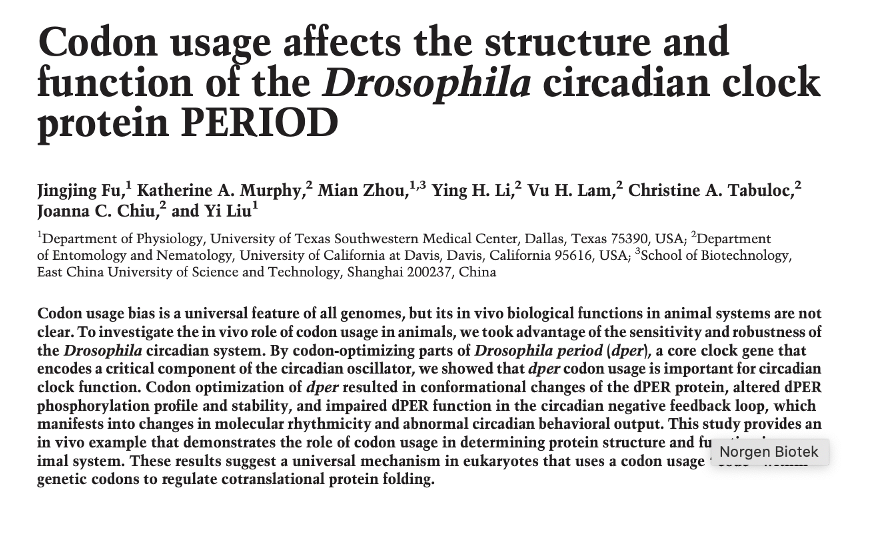
codon usage affects the structure and function of the Drosophilia circadian clock protein PERIOD
<p>codon usage affects the structure and function of the Drosophilia circadian clock protein PERIOD</p>
34
New cards

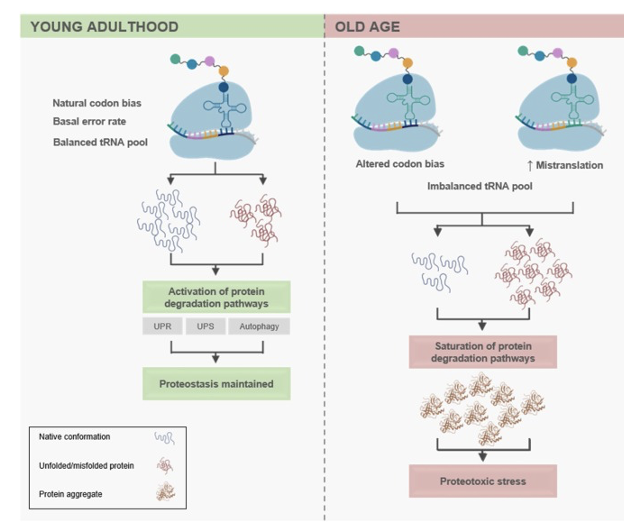
Translation rates change with

age and disease states, leading to more misfolded proteins

  • Age-related alterations in protein synthesis and proteostasis.

  • During aging (right panel), this equilibrium is disrupted by increased mistranslation.

The misfolded/unfolded proteins then accumulate in the cell as protein aggregates (depicted in dark orange), triggering proteotoxic stress
<p><span>age and disease states, leading to more misfolded proteins</span></p><ul><li><p><span>Age-related alterations in protein synthesis and proteostasis.</span></p></li></ul><ul><li><p><span>During aging (right panel), this equilibrium is disrupted by increased mistranslation.</span></p></li></ul><p style="text-align: left;"><span>The misfolded/unfolded proteins then accumulate in the cell as protein aggregates (depicted in dark orange), triggering proteotoxic stress</span></p><p></p>
35
New cards

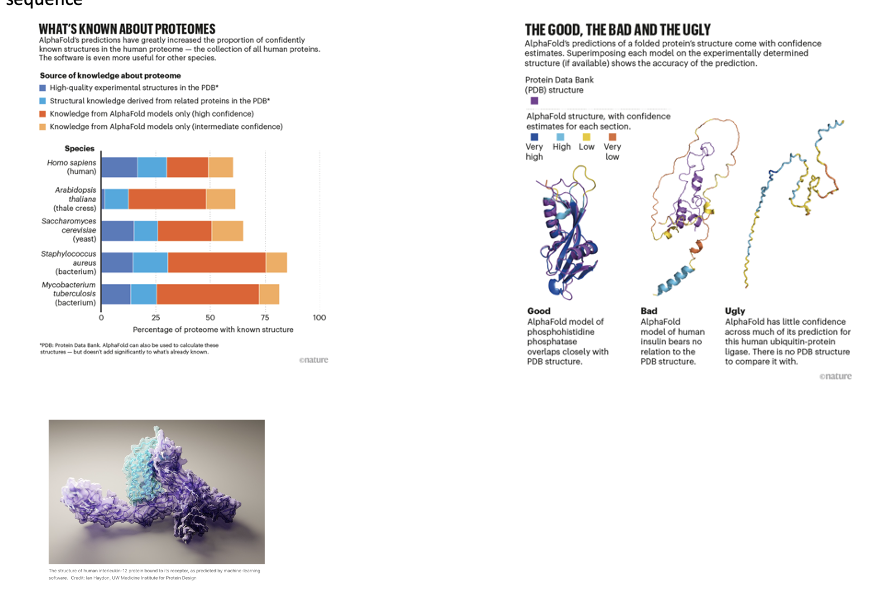
Recent breakthroughs in predicting protein structures

DeepMind a London based company linked to Google uses machine learning AI to predict structures from primary sequence
<p><span><strong>DeepMind</strong> a London based company linked to Google uses machine learning AI to predict structures from primary sequence</span></p>

Explore top notes

note
MCB_410
Updated 369d ago
0.0(0)
note
Chapter Three: The Social Self
Updated 1144d ago
0.0(0)
note
Resistance and V=IR
Updated 1270d ago
0.0(0)
note
Irregular -oir Verbs
Updated 1248d ago
0.0(0)
note
Animal Farm Test
Updated 1256d ago
0.0(0)
note
MCB_410
Updated 369d ago
0.0(0)
note
Chapter Three: The Social Self
Updated 1144d ago
0.0(0)
note
Resistance and V=IR
Updated 1270d ago
0.0(0)
note
Irregular -oir Verbs
Updated 1248d ago
0.0(0)
note
Animal Farm Test
Updated 1256d ago
0.0(0)

Explore top flashcards

flashcards
Week 3 : Deviance Crime and Law
41
Updated 563d ago
0.0(0)
flashcards
Asi Se Dice Level 3: Chapter 3
77
Updated 1243d ago
0.0(0)
flashcards
Wanted: A Just Right Government
28
Updated 1187d ago
0.0(0)
flashcards
Ser Adjectives
38
Updated 1158d ago
0.0(0)
flashcards
UX-Study
131
Updated 1028d ago
0.0(0)
flashcards
Semester 2 Vocab
120
Updated 1160d ago
0.0(0)
flashcards
Duits woordenschat hobbies
36
Updated 1130d ago
0.0(0)
flashcards
Week 3 : Deviance Crime and Law
41
Updated 563d ago
0.0(0)
flashcards
Asi Se Dice Level 3: Chapter 3
77
Updated 1243d ago
0.0(0)
flashcards
Wanted: A Just Right Government
28
Updated 1187d ago
0.0(0)
flashcards
Ser Adjectives
38
Updated 1158d ago
0.0(0)
flashcards
UX-Study
131
Updated 1028d ago
0.0(0)
flashcards
Semester 2 Vocab
120
Updated 1160d ago
0.0(0)
flashcards
Duits woordenschat hobbies
36
Updated 1130d ago
0.0(0)