RHS Honors A&P Unit 4 Transport
 Call Kai
 Learn
Learn Practice Test
 Spaced Repetition
 Match
Match Flashcards
 Knowt Play
1/75

There's no tags or description
Looks like no tags are added yet.
Name | Mastery | Learn | Test | Matching | Spaced | Call with Kai |
|---|
No analytics yet
Send a link to your students to track their progress
76 Terms
blood
Connective tissue made of plasma, erythrocytes, leukocytes, and platelets.
Plasma
Fluid portion of blood
Erythrocyte
a mature red blood cell
Leukocyte
white blood cell
Platelet
small blood fragment that collects at sites of injury to begin the clotting process
Anemia
A condition in which the blood is deficient in red blood cells, in hemoglobin, or in total volume.
Hemocytoblast
stem cells that give rise to all the formed elements of the blood
Formed elements of blood
erythrocytes, leukocytes, platelets
Hemostasis
to stop or control bleeding
Blood types
classified according to the presence, or absence, of certain antigens; four major blood types are A, AB, B, and O
Blood type O
no antigens, anti-A and anti-B antibodies
Blood type A
A antigen and B antibodies
Blood type B
antigen B, antibody A
Blood type AB
A and B antigens, no antibodies
Antigen
A protein that, when introduced in the blood, triggers the production of an antibody
Antibody
A protein that acts against a specific antigen
Rh factor
Refers to the presence or absence of the Rh antigen on red blood cells.
universal donor blood type
Type O
Universal receiver blood type
Type AB
4 chambers of the heart
right atrium, right ventricle, left atrium, left ventricle
Blood flow direction through the vena cava through the heart
right atrium, right ventricle, left atrium, left ventricle
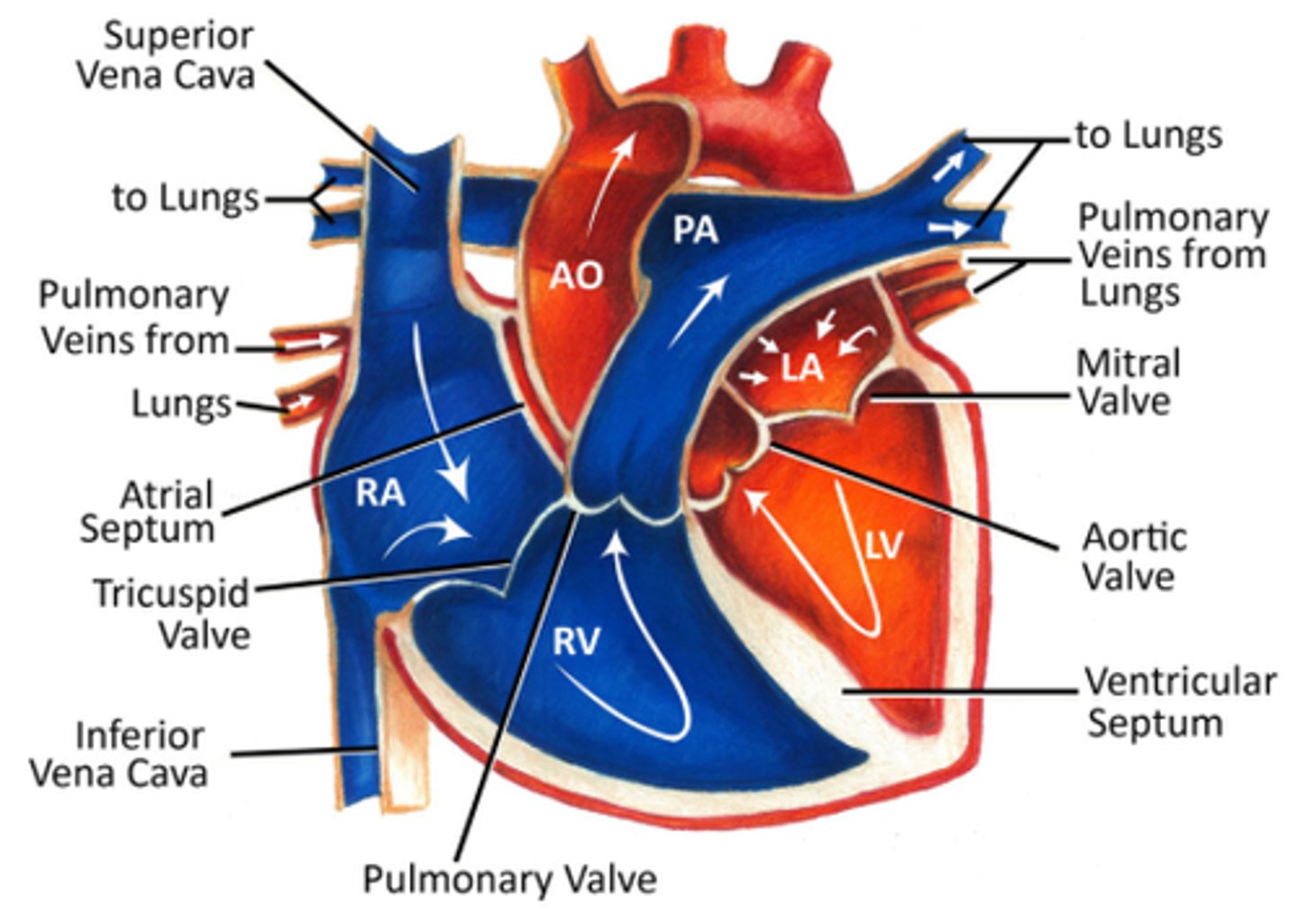
Bicuspid valve
valve between the left atrium and the left ventricle.
tricuspid valve
valve between the right atrium and the right ventricle
aortic semilunar valve
located between the left ventricle and the aorta
pulmonary semilunar valve
heart valve opening from the right ventricle to the pulmonary artery
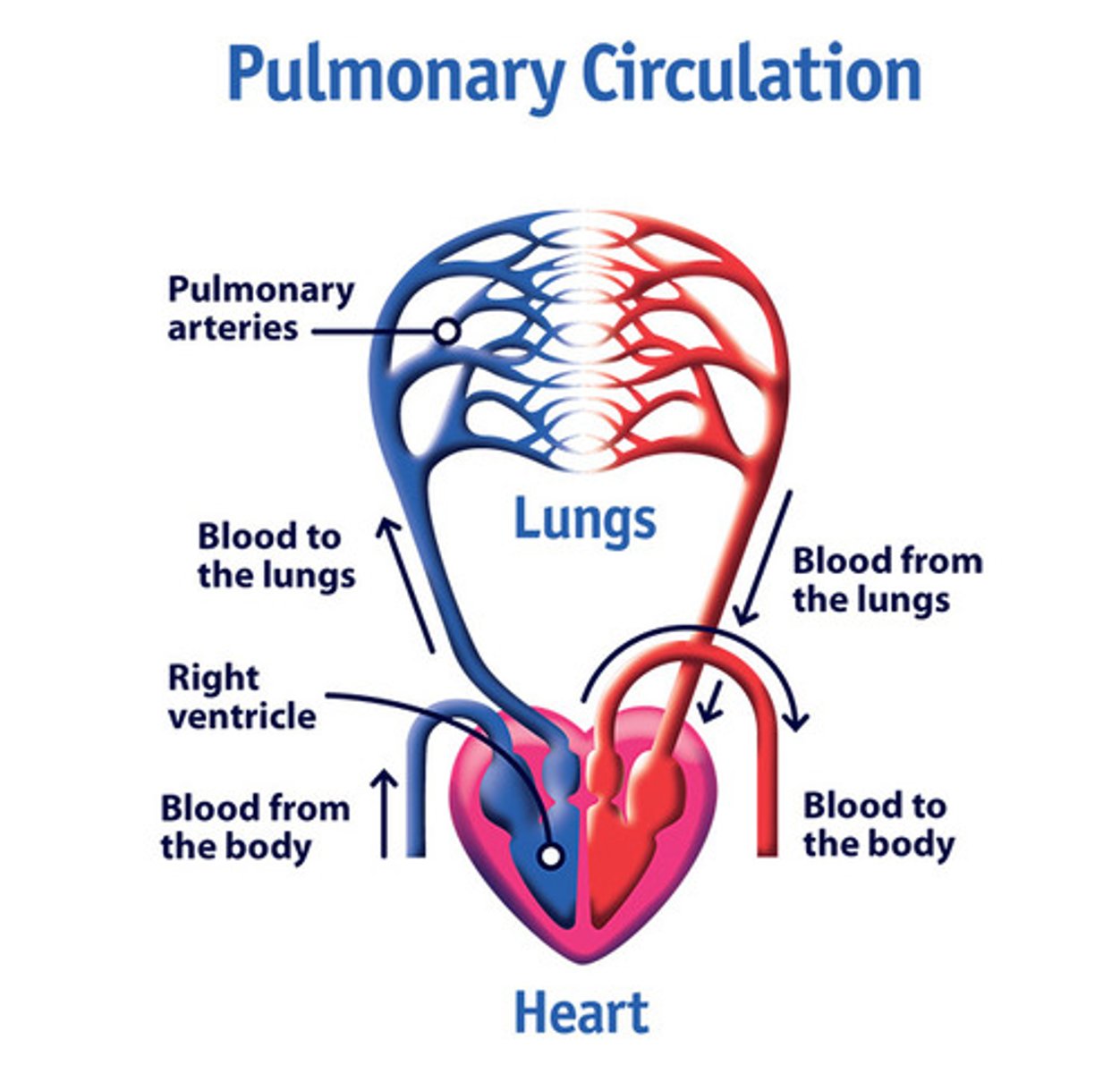
Pulmonary circulation
flow of blood from the heart to the lungs and back to the heart
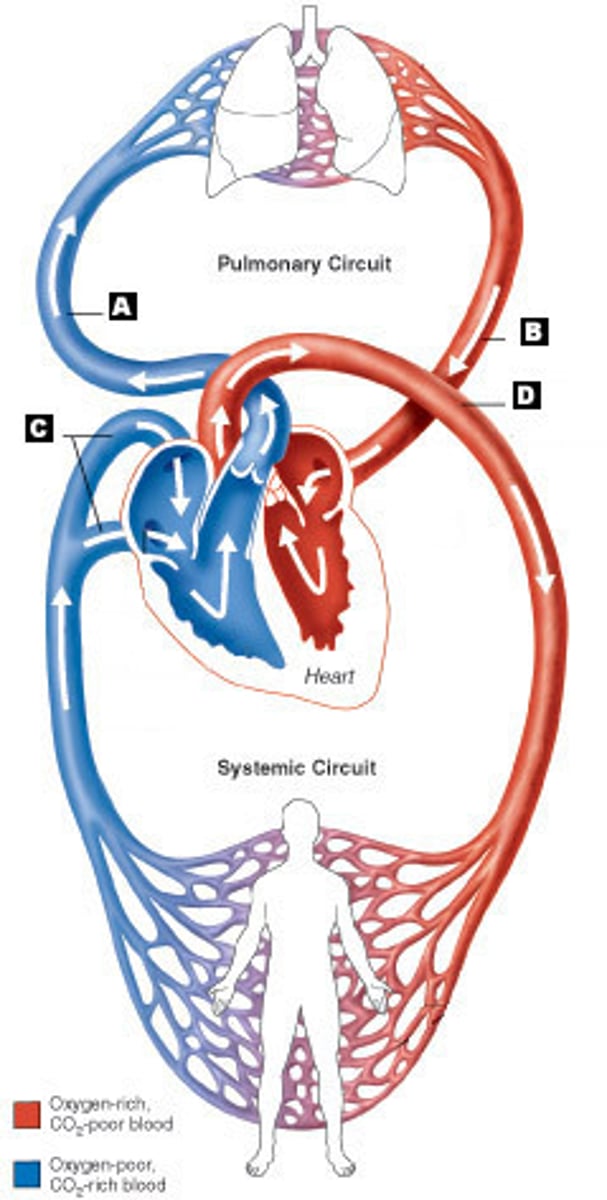
systemic circulation
circulation that supplies blood to all the body except to the lungs
nodal system (intrinsic conduction system)
built into heart tissue; sets the heart's basic rhythm; cross between muscle and nervous tissue; enforces a heart contraction rate
SA node (sinoatrial node)
-pacemaker of the heart
-sets the heartbeat rate
-located in the right atrium
-causes atria to contract
AV node (atrioventricular node)
region of the heart between the right atrium and right ventricle from which electrical impulses spread to the ventricles during a heartbeat
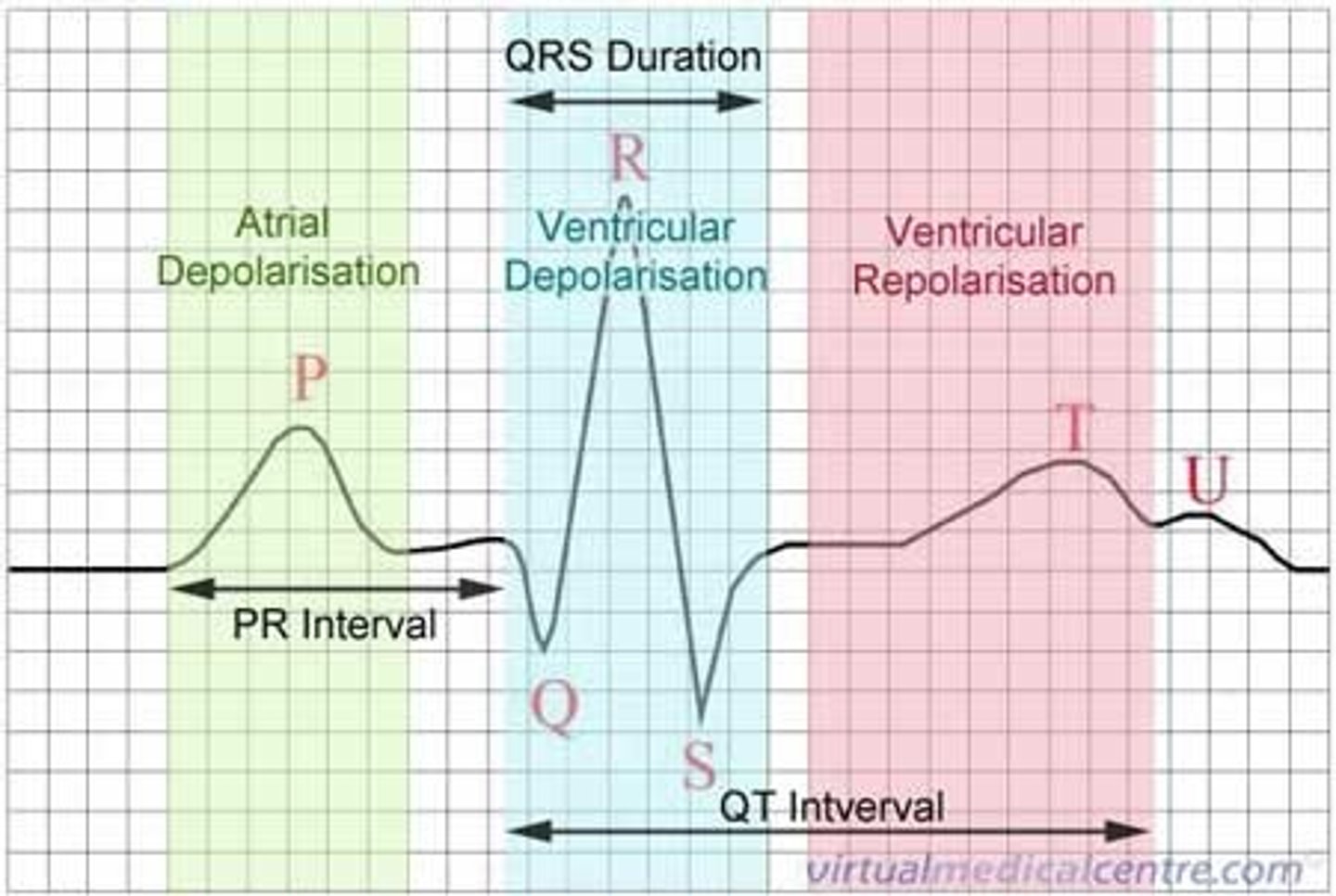
Electrocardiagram (ECG)
A recording of the electrical activity of the heart
Systole
Contraction of the heart
Diastole
Relaxation of the heart
Stoke volume
the amount of blood entering the aorta with each ventricular contraction
Cardiac cycle
A complete heartbeat consisting of contraction and relaxation of both atria and both ventricles
Heart sounds
Lub-dub. 1st- a-v valves close. 2nd- aortic and pulmonary valves close
Heart murmur
an abnormal sound from the heart produced by defects in the chambers or valves
Heart rate
A measure of cardiac activity usually expressed as the number of beats per minute.
arteries
Blood vessels that carry blood away from the heart
Artery structure
arteries have three layers: a smooth inner layer; a strong, muscular layer; and a thin outer layer; connective fibers in artery walls allow for the elasticity needed for the artery to function; arteries are usually larger than veins
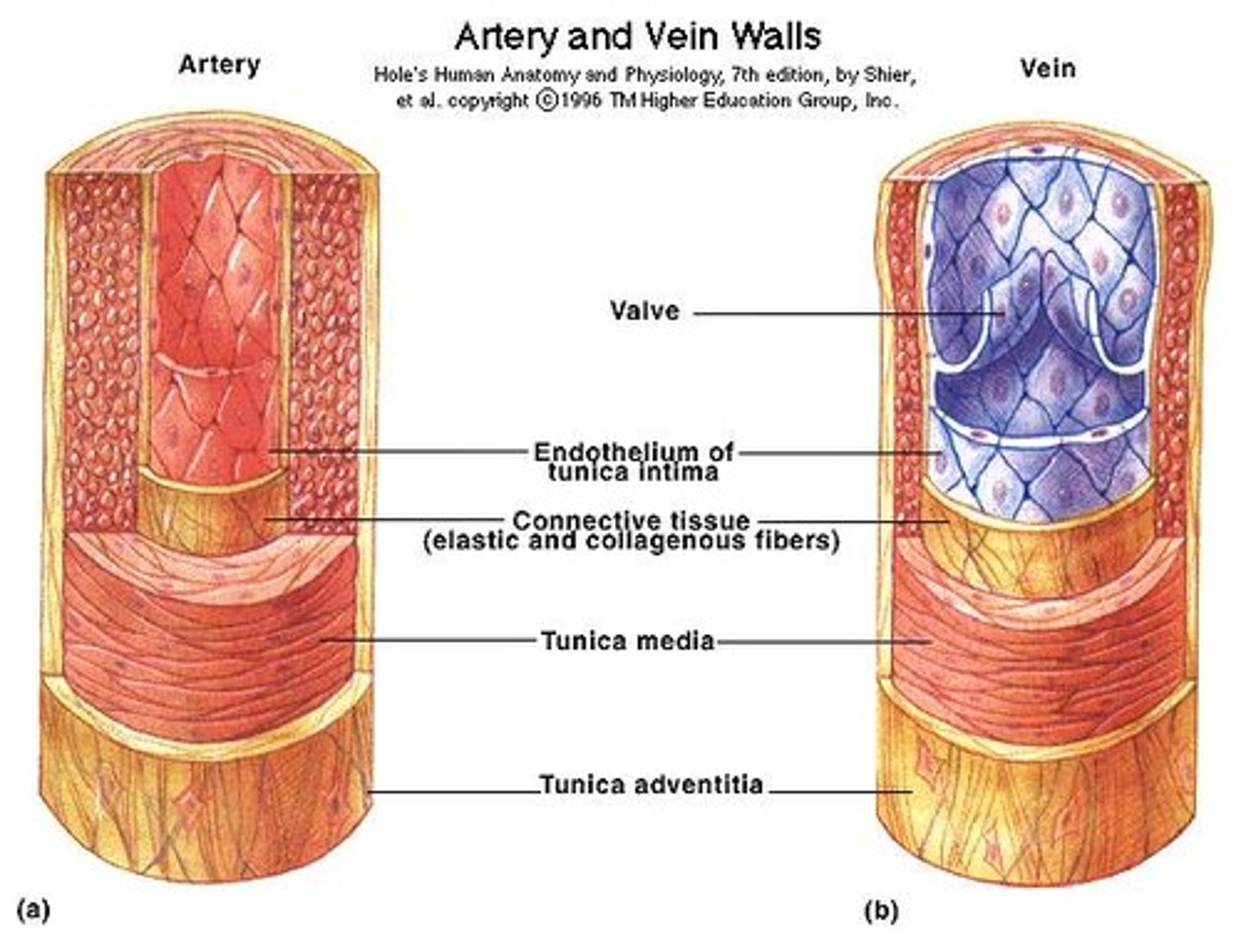
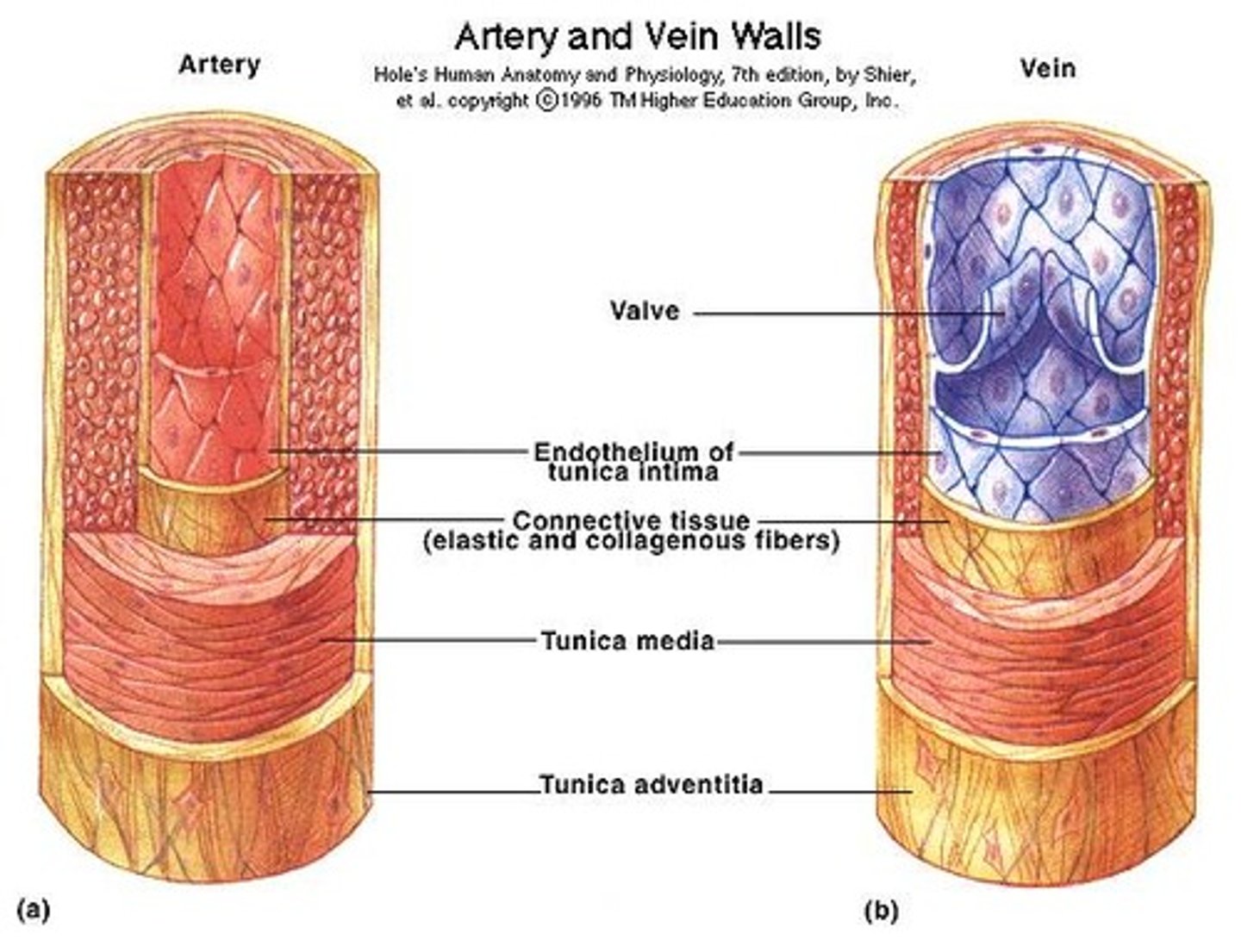
Veins
Blood vessels that carry blood back to the heart
Vein structure
veins also have three layers: a thin outer layer, a middle layer and a smooth inner layer; veins are less muscular than arteries and have less elasticity
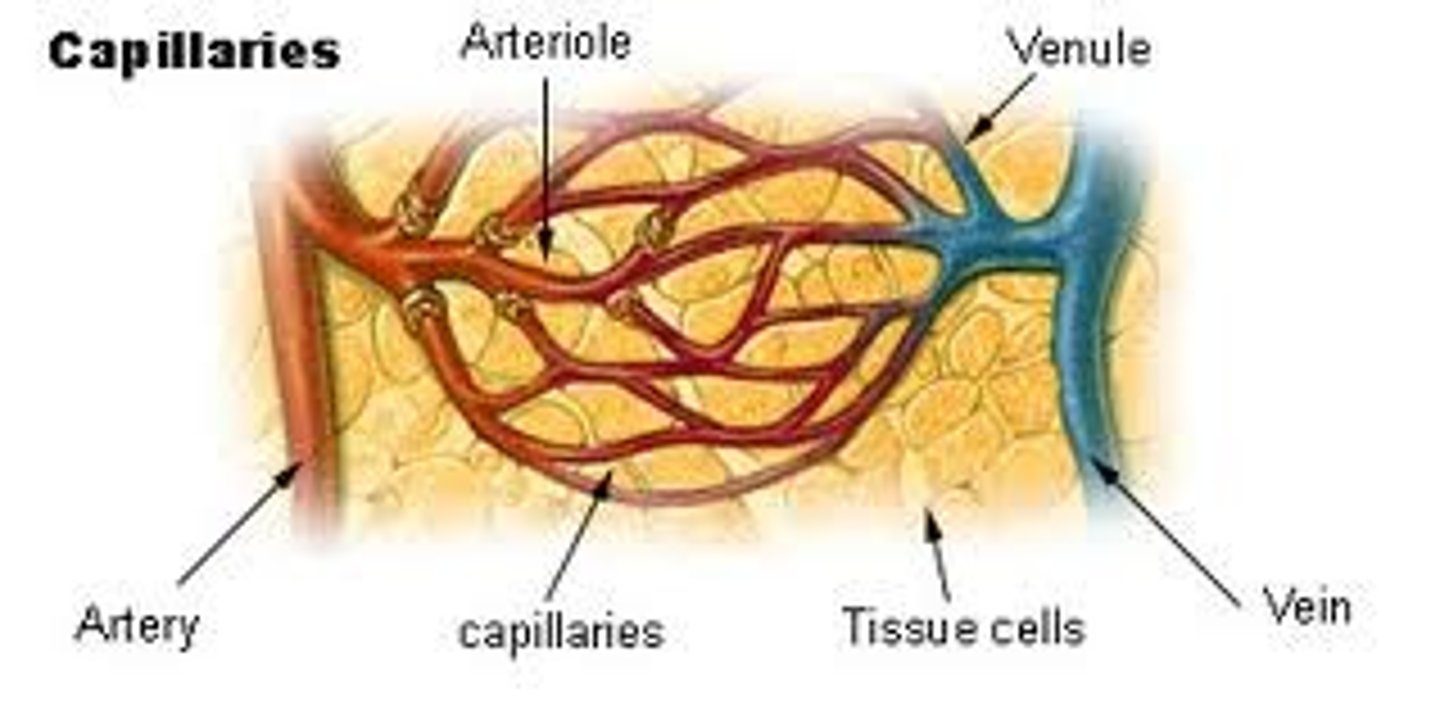
Capillaries
Microscopic vessel through which exchanges take place between the blood and cells of the body
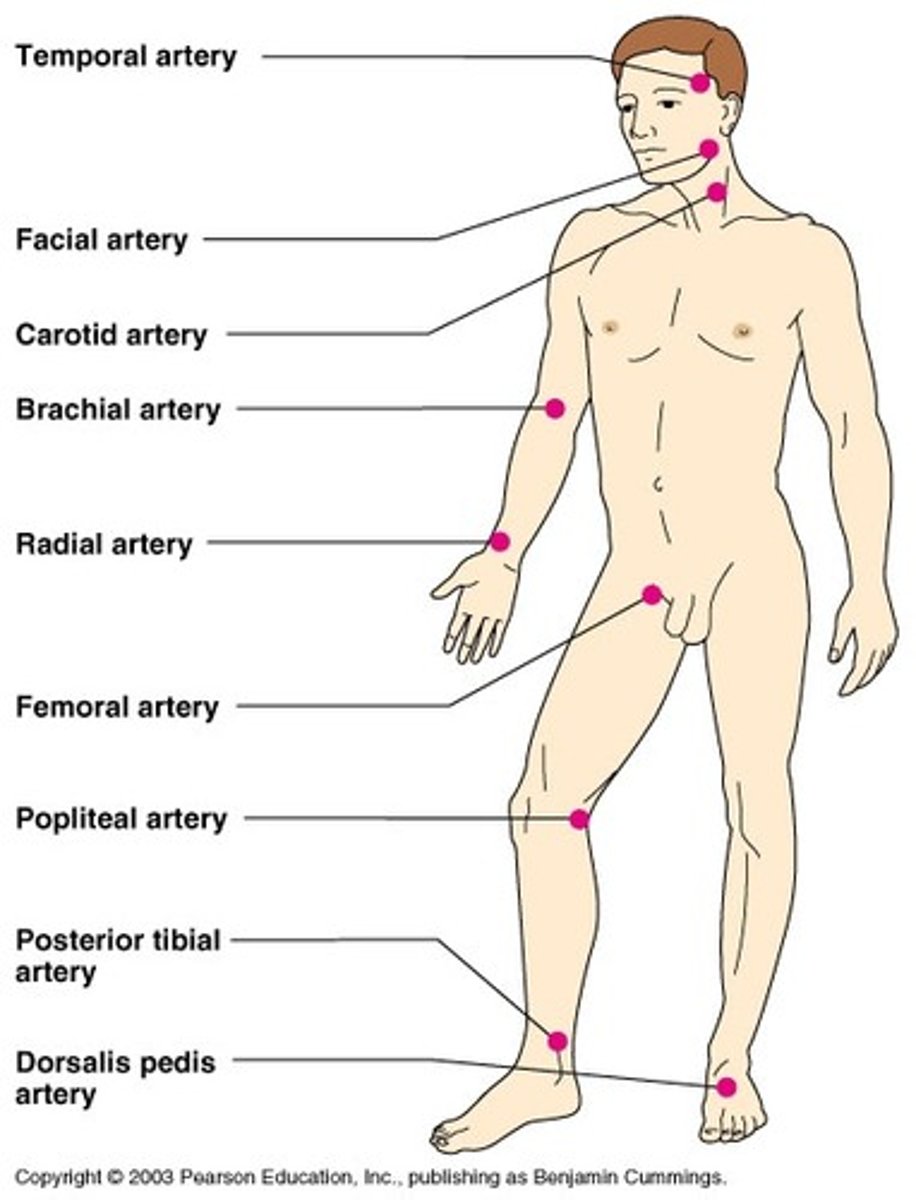
Pulse
Beat of the heart as felt through the walls of the arteries.
Pulse points
1. Common carotid
2. Brachial
3. Radial
4. Femoral
5. Feet
Blood pressure
the pressure that is exerted by the blood against the walls of blood vessels
Hypertension
abnormally high blood pressure
Atherosclerosis
condition in which fatty deposits called plaque build up on the inner walls of the arteries
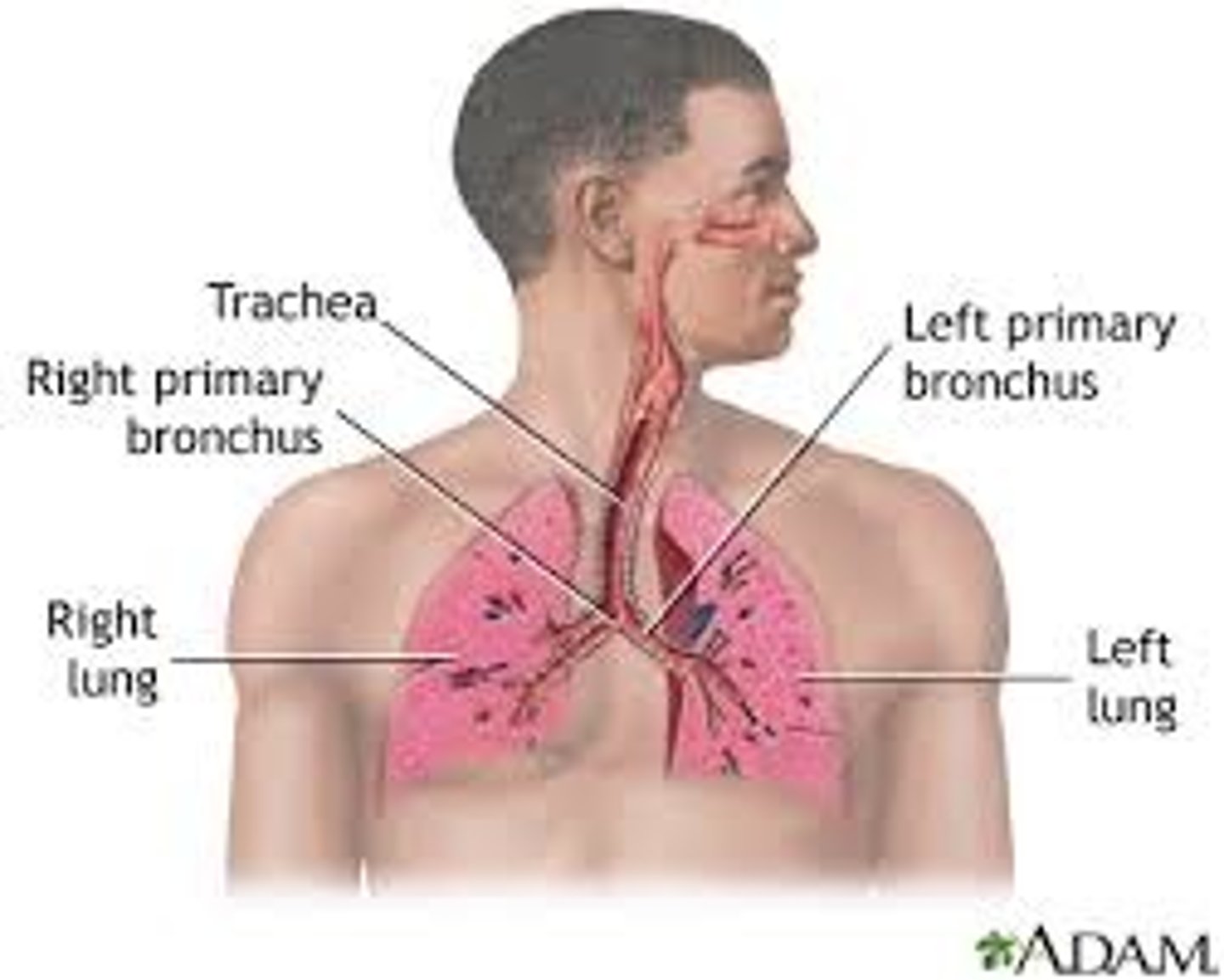
Respiratory system
A system of organs, functioning in the process of gas exchange between the body and the environment, consisting especially of the nose, nasal passages, nasopharynx, larynx, trachea, bronchi, and lungs.
systole and diastole
systole (contraction) and diastole (relaxation)
Hypotension
low blood pressure
120/80 mmHg
What is normal blood pressure?
Nasal cavity
located within and posterior to the nose
respiratory mucosa function
moistens air and traps incoming foreign particles
Conchae
three uneven, scroll-like nasal bones that extend down through the nasal cavity
Conchae function
increases surface area, increases air turbulence within the nasal cavity
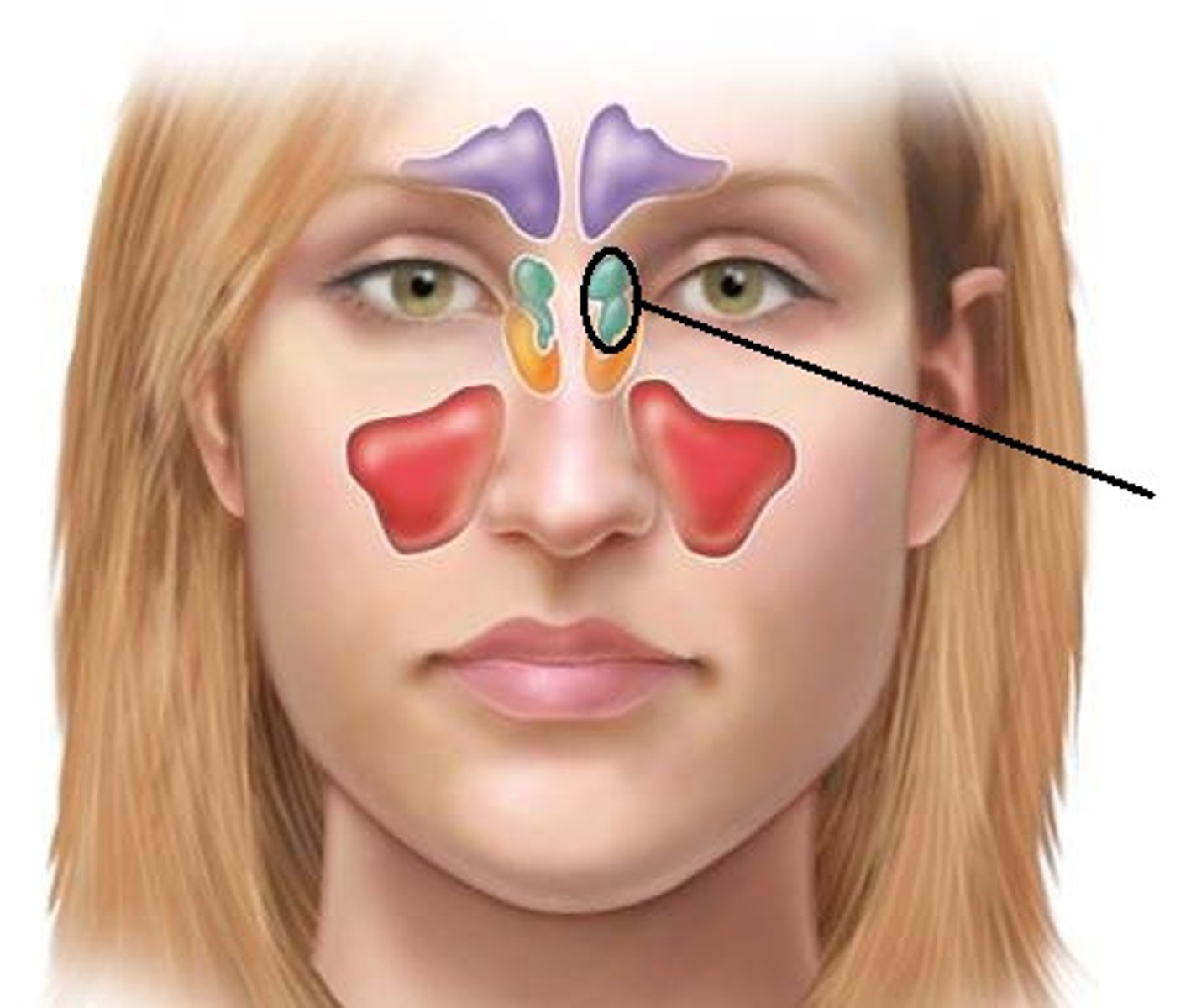
paranasal sinuses function
warm, moisten air, lighten skull
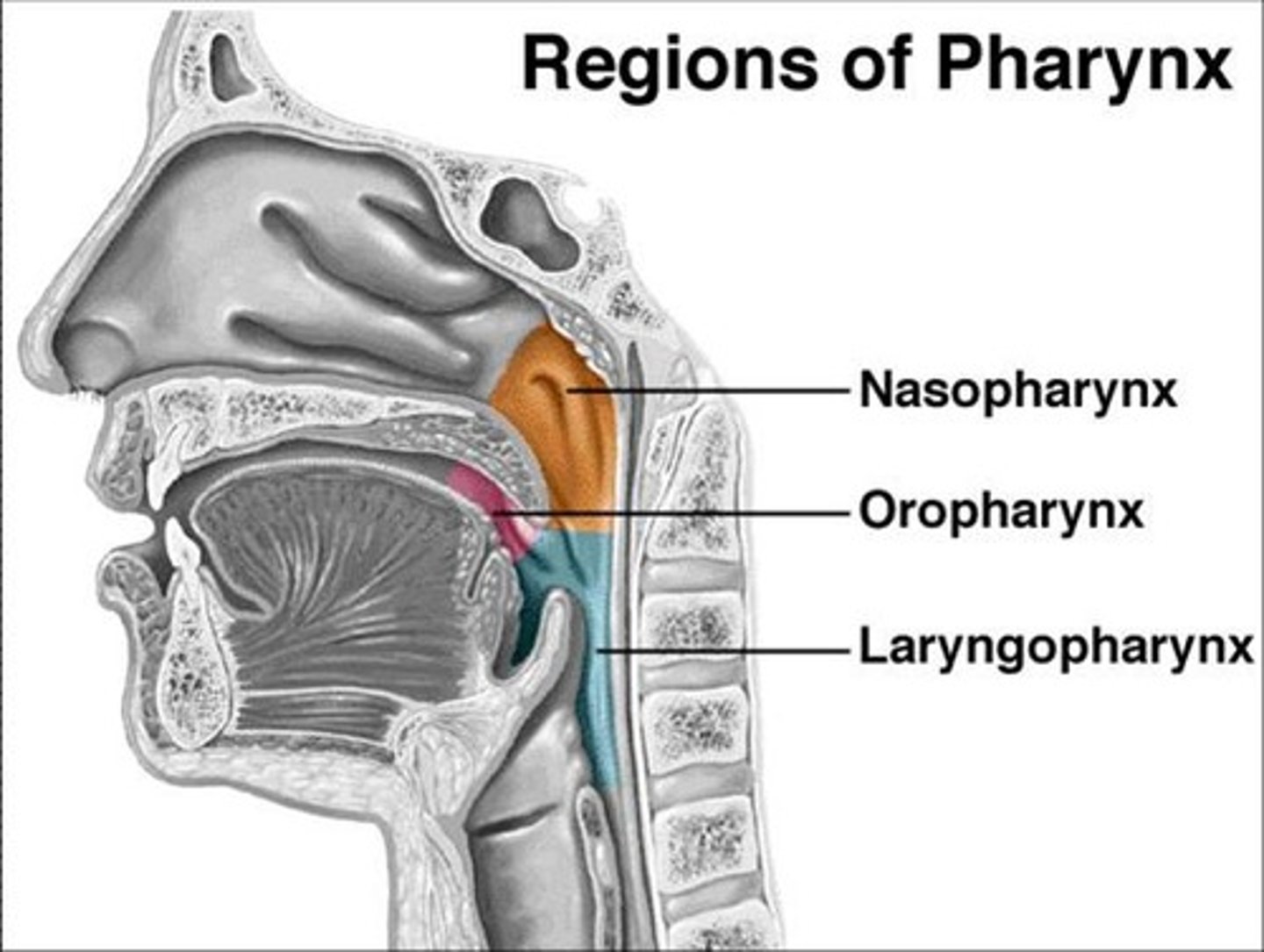
3 regions of the pharynx
1. Nasopharynx
2. Oropharynx
3. Laryngopharynx
Pharynx
throat; passageway for food to the esophagus and air to the larynx
Tonsils function
trap and remove foreign material
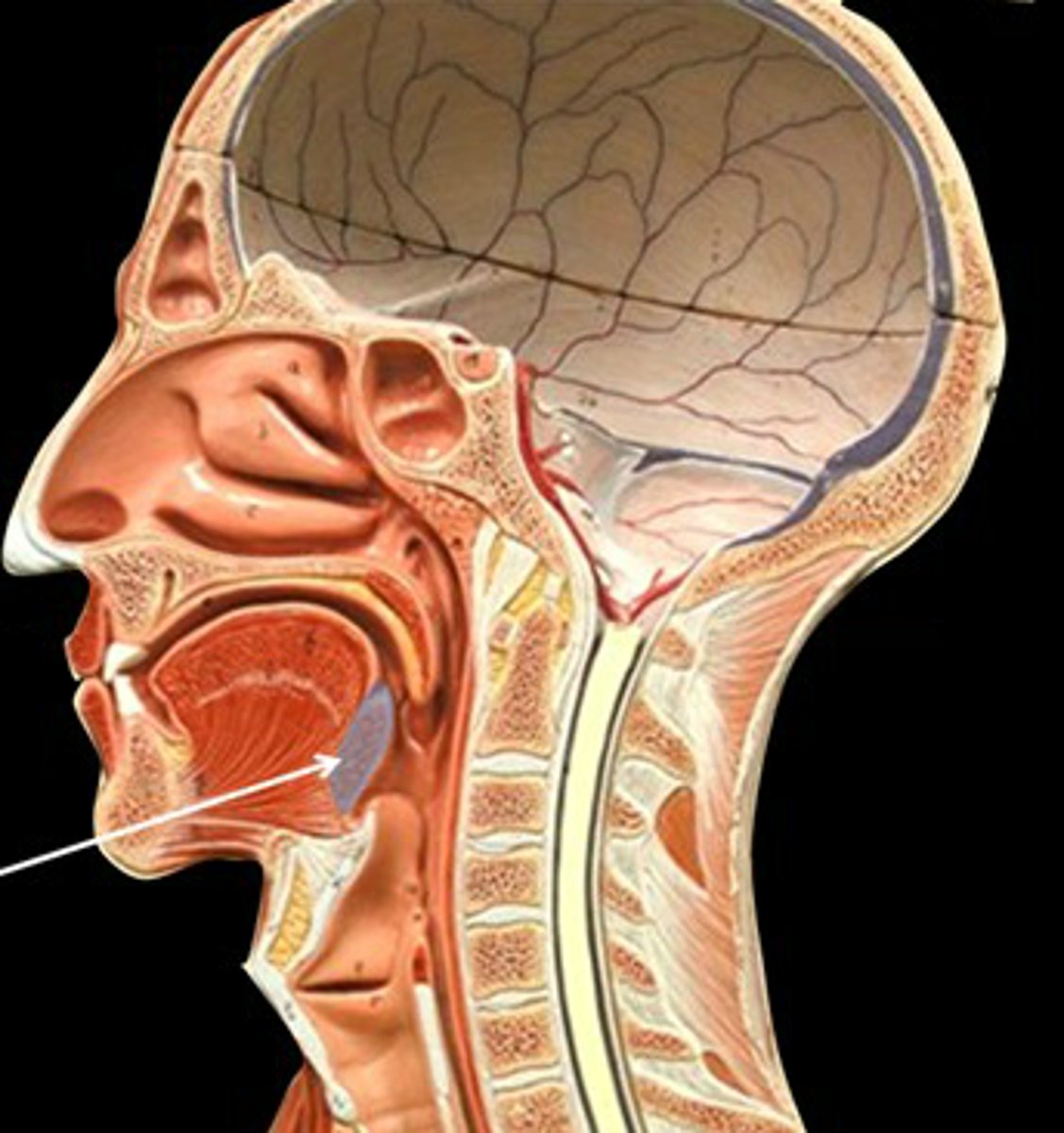
Tonsillitis
acute or chronic inflammation of the tonsils
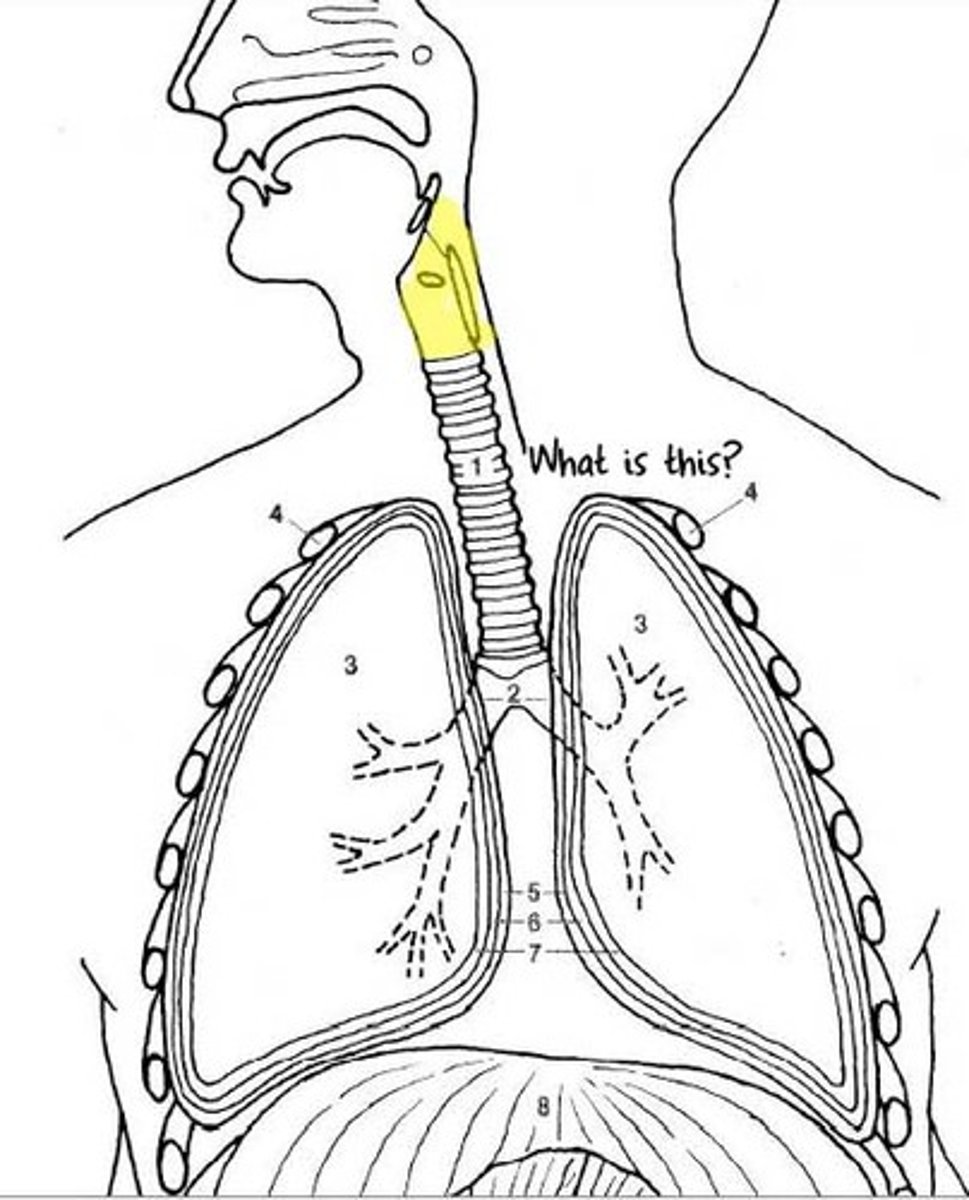
Larynx
voice box; passageway for air moving from pharynx to trachea; contains vocal cords
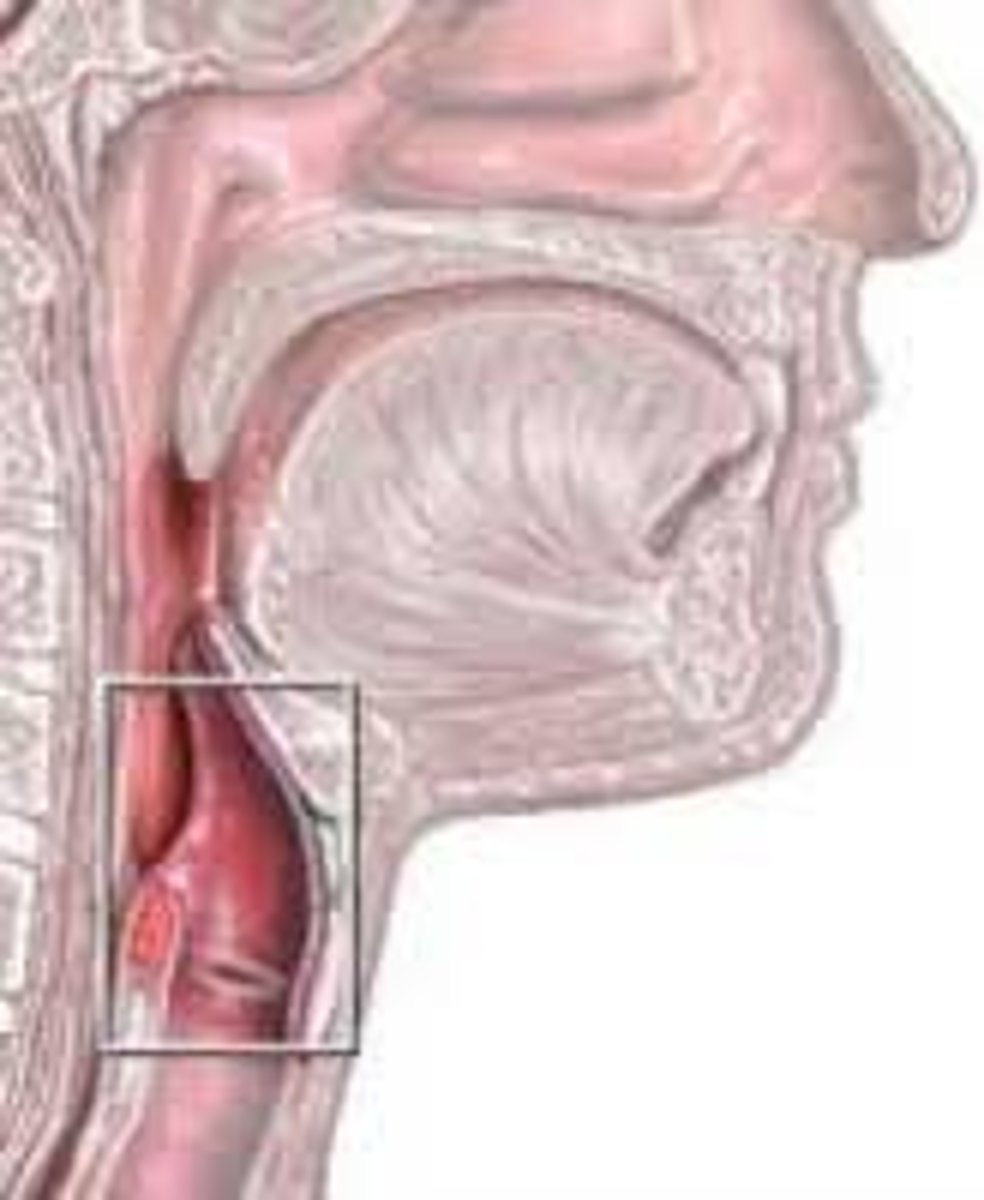
Epiglottis
A flap of tissue that seals off the windpipe and prevents food from entering.
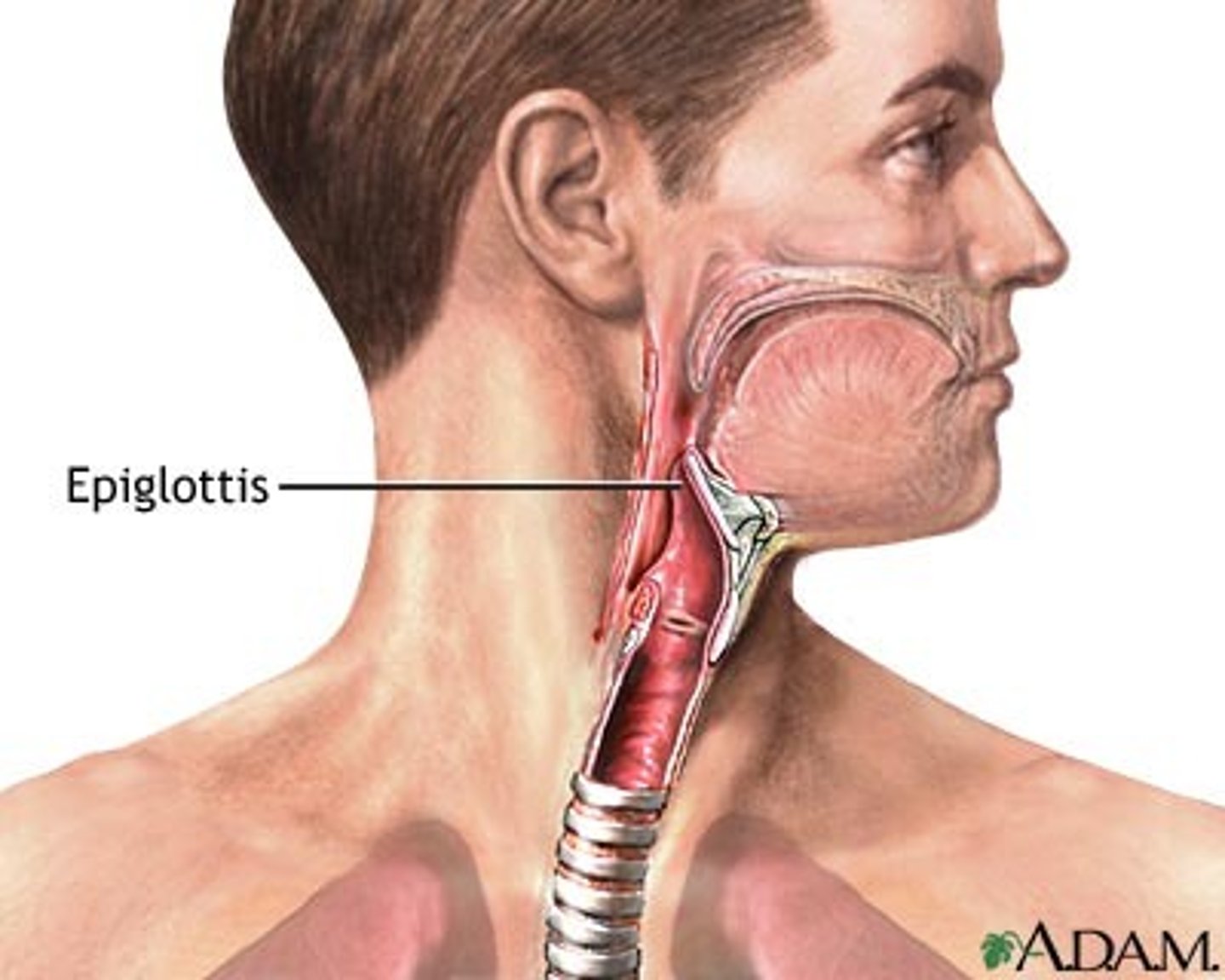
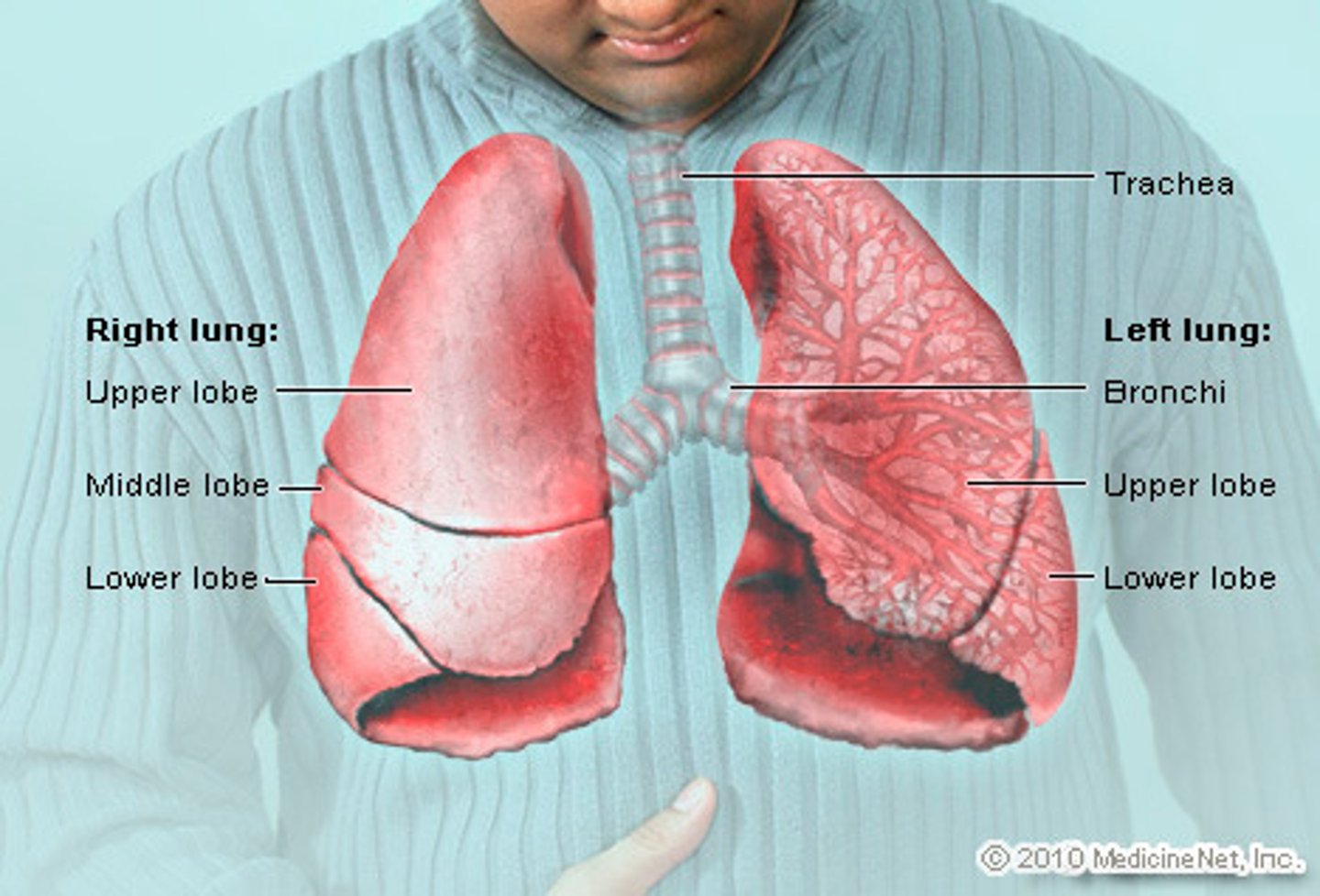
Trachea
a large membranous tube reinforced by rings of cartilage, extending from the larynx to the bronchial tubes and conveying air to and from the lungs; the windpipe.
Trachea cartilage
Also known as a "Windpipe", a c-shaped incomplete rings cartilage on the posterior side, provides strength and flexibility to the trachea - Hyaline cartilage
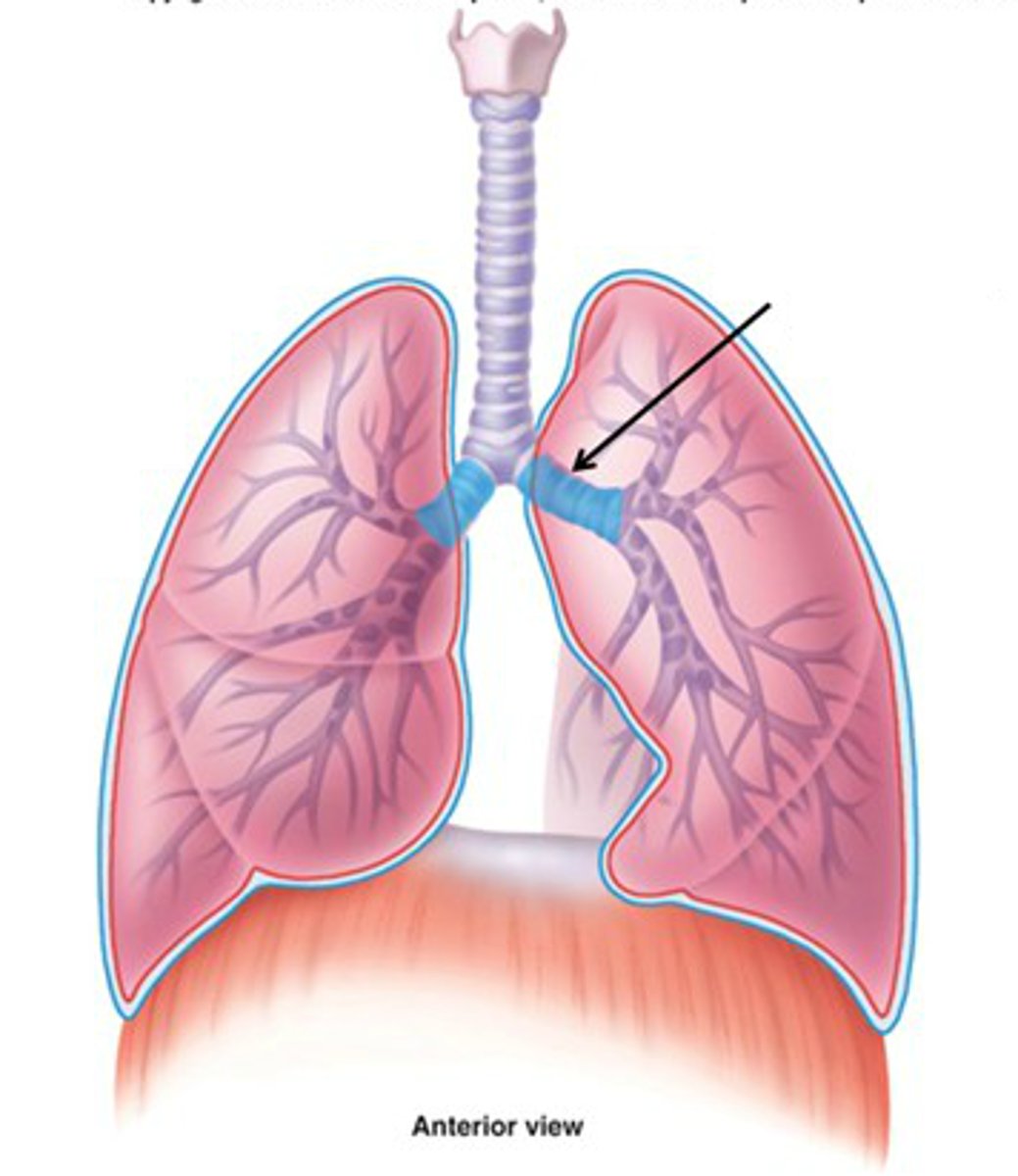
Main bronchi
division of trachea which divide into each lung
Lungs
two spongy organs, located in the thoracic cavity enclosed by the diaphragm and rib cage, responsible for respiration
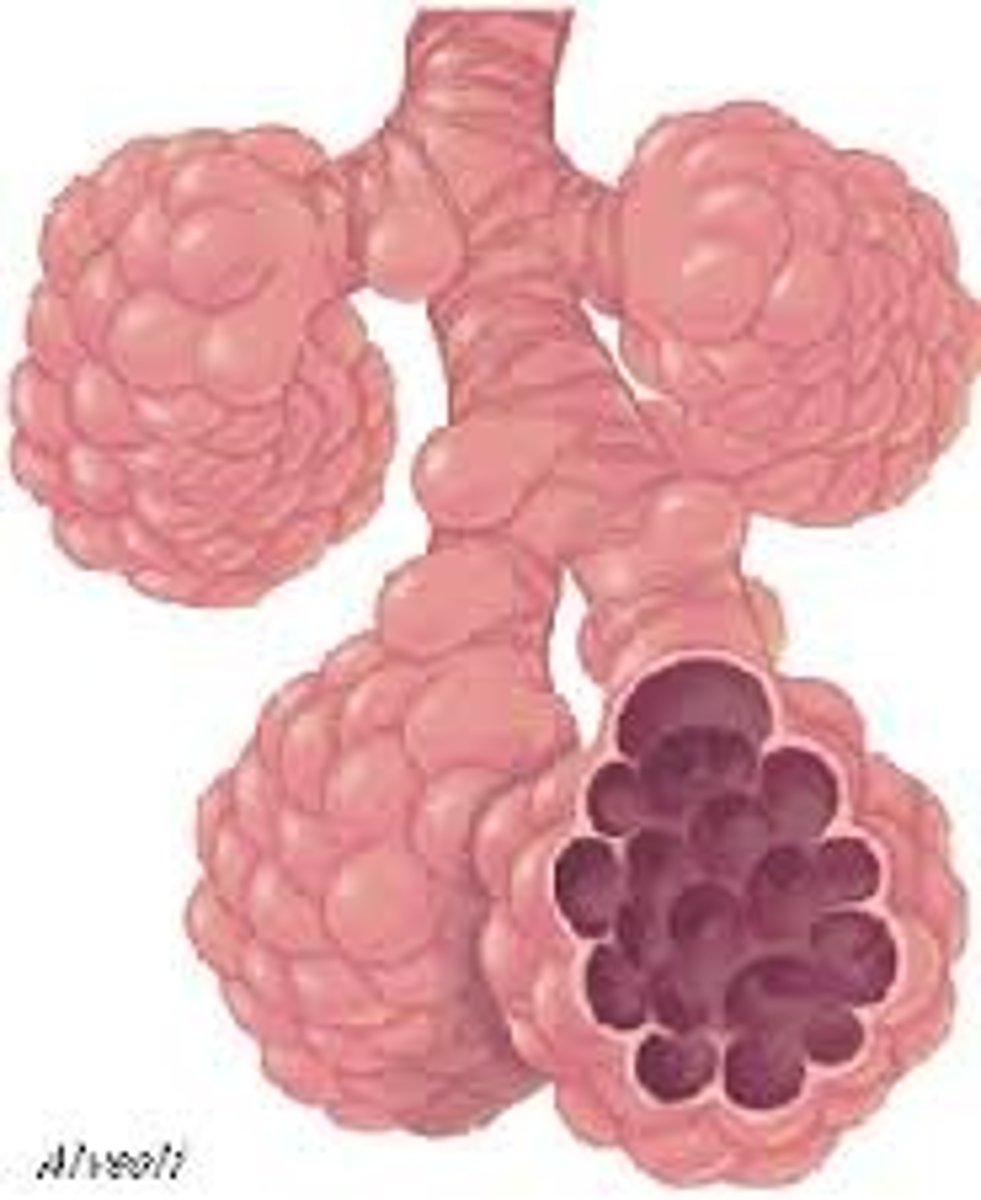
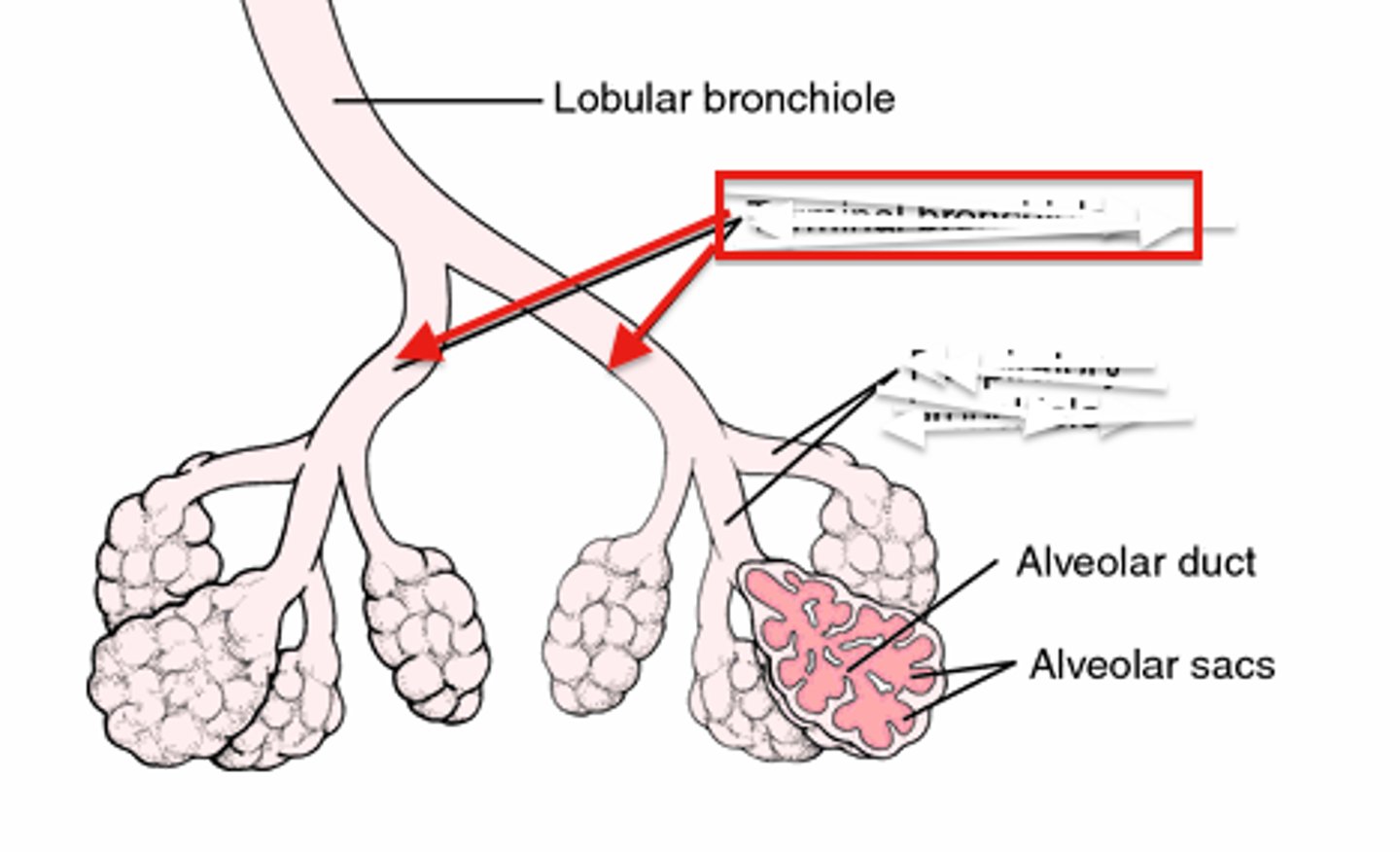
Alveoli
tiny sacs of lung tissue specialized for the movement of gases between air and blood
Bronchioles
smallest branches of the bronchi
4 events of respiratory system
1. Movement of air in and out of the lungs - breathing or
pulmonary ventilation.
2. Gas exchange (diffusion) between the lungs and the blood.
3. Gas transport in blood between the lungs and body cells.
4. Gas exchange (diffusion) between blood and body cells.
Pulmonary ventilation
movement of air into and out of the lungs
External respiration
exchange of gases between lungs and blood
Respiratory gas transport
the process by which oxygen and carbon dioxide are transported to and from the lungs and tissues
Internal respiration
Exchange of gases between cells of the body and the blood
Inspiration (breathing in)
active; diaphragm contracts; increase volume and decrease pressure
Expiration (breathing out)
passive; diaphragm relaxes; decrease volume, increase pressure

