Social & Cognitive - Lecture 3
 Call Kai
 Learn
Learn Practice Test
 Spaced Repetition
 Match
Match Flashcards
 Knowt Play
1/42

Earn XP
Description and Tags
Attachment II
Name | Mastery | Learn | Test | Matching | Spaced | Call with Kai |
|---|
No analytics yet
Send a link to your students to track their progress
43 Terms
hypotheses derived from attachment theory - universality and normativity
all infants will become attached to one or more caregivers.
secure attachment is common
hypotheses derived from attachment theory - continuity
patterns of attachment are stable over the lifespan
hypotheses derived from attachment theory - sensitivity
early attachment security is dependent on caregivers’ responsiveness to children’s signals
being aware of signals & responding appropriately
quality matters not who
hypotheses derived from attachment theory - competence
secure attachment leads to positive outcomes in a variety of domains
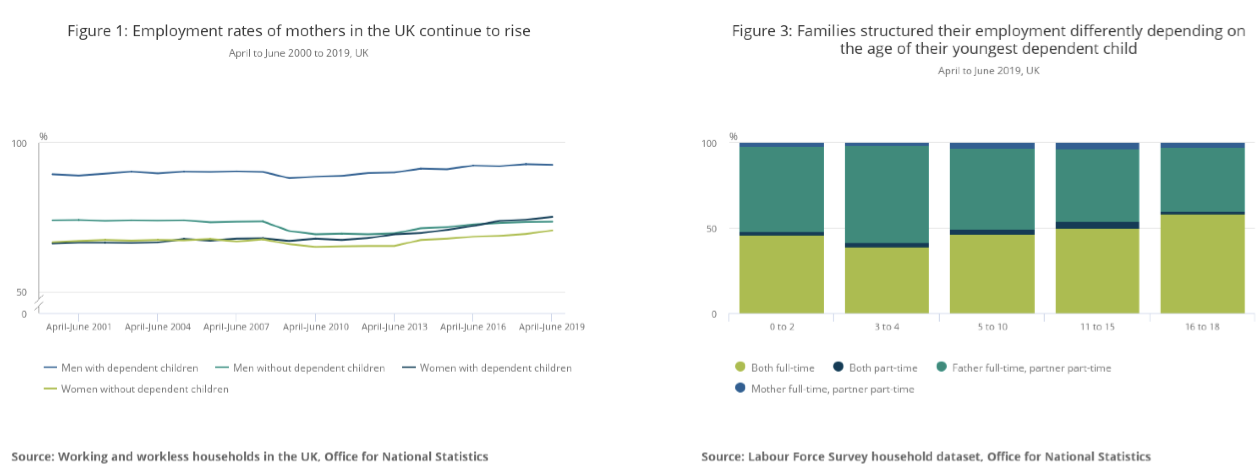
family life in the 21st century - office for national statistics (2020)
caregivers are working
being responsive is not always possible
majority of men in full-time
around 50% of women in full-time
parent primarily at home in attachment
different family forms
single parents
1 in 6 solo parents
1 in 5 father led
older sibling care
adoption, foster
lesbian, gay
1 in 200 same-sex use assisted reproduction (IVF)
grandparents
2 in 3 responsible for providing care
heterosexual, 2 parent
why do we need to study attachment in different family forms - theoretical and practical
theoretical
certain parenting affects a child’s attachment, age of adoption can affect, universality & normativity
help to advance theory, should apply to more individuals/cases
practical
can remove stigma on certain types of caregivers, can influence the law
diversity, inclusivity, generalisability
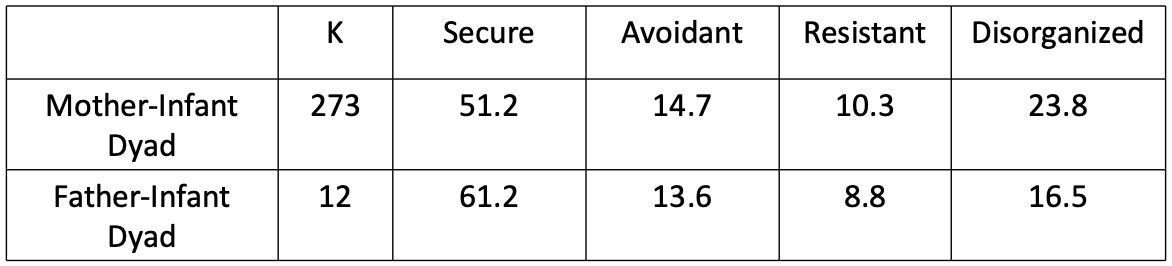
madigan et al. (2023) - does the gender of the caregiver matter?
mothers and fathers
no significant difference in the amount of secure-attached
supports normativity
insecure patterns also significantly different
van den fries et al. (2009) - does the biological relatedness of the caregiver matter?
most data comes from UK & USA (Western) - issue
meta-analysis of 17 studies of adopted children
no difference in security between adopted/non-adopted children (<12 months)
d = 0.08 (N = 524)
some evidence for lower levels of security among adopted children (>12 months)
d = 0.80 (N = 198)
meta-analysis of 11 studies of foster children (N = 300)
no evidence of difference in security between foster children and biologically related children (d = 0.06)
adopted in the first year of life showed no difference compared to biological
may be lower for adopted after
possibly due to institutional care, prior experiences
madigan et al. (2023) - does adoption and fostering matter?
no significant difference in secure attachment
can form attachments
adopted, avoidant - is less likely, may be ‘used’ to feeling neglected
adopted, disorganised - is more likely, possibly due to history before adoption

different combinations of relatedness
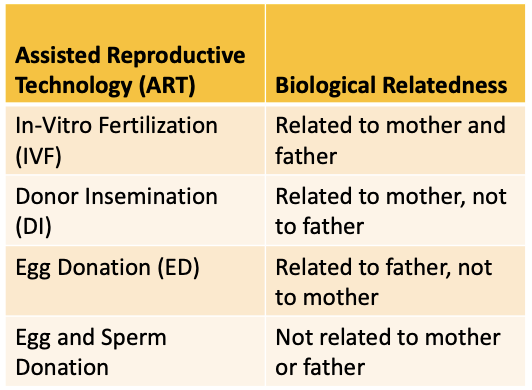
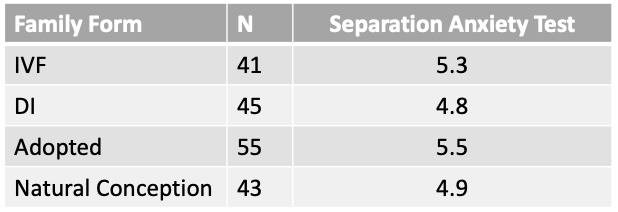
golombok et al. - does adoption and assisted reproduction matter?
women-led families
compared attachment security in 4-8 yo children across different family forms
no difference in secure attachment
affected british legislation
golombok et al. (1997) - does it matter - lgbtq families
3-6 years old
all biologically related
during this time had laws on lesbians
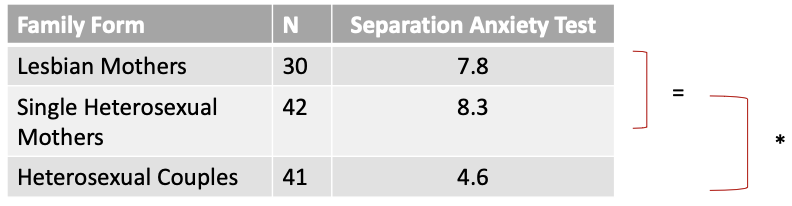
no difference in attachment between lesbian mothers & single heterosexual mothers
stronger attachment in single heterosexual/lesbian mothers than in heterosexual couples
mcconnachie et al. (2020) - does it matter - lgbtq families
10-14 years
more recent, newer laws on lesbian couples
adopted
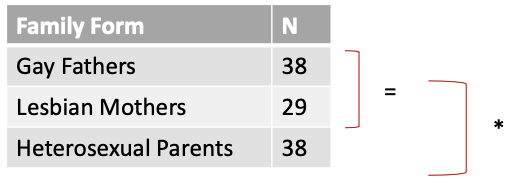
no difference in attachment security between gay fathers and lesbian mothers
difference in heterosexual parents
van rijn et al. (2025) - does the caregiver type matter - same-sex parents
mothers (DI)
fathers (surrogacy)
heterosexual (IVF)
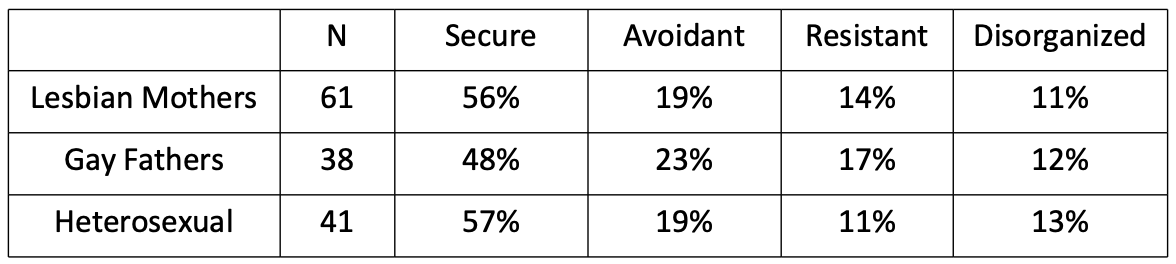
absolutely no difference in attachment
first study using the strange situation for same-sex couples
golombok et al. (2018) - does the type of caregiver matter? - conclusion
“The number, gender, sexual orientation and biological relatedness of parents to their children are less influential in children’s psychological development than are family processes such as the quality of family relationships and the social environment in which children are raised.”
changed british legislation - story is not over yet…
type of caregiver does not matter
supports universality and normativity
deneault et al. - calling for greater research
“a call to represent the current diversity of family forms in attachment research”
<1% of all studies on attachment focus on diverse family forms (need more)
grandparent-child attachment
is a large portion of caregivers so very important
time spent with grandparents and attachment security with grandparent
multi-generational households
co-parents (e.g. live-in grandparents, uncles, aunts)
omission: researchers often don’t ask parents about gender/sexuality
majority of studies in the US & UK
different family forms in different cultures
Feugé et al. (2020) carried out a study of gay fathers and their adopted children. The researchers found that 75% of children in the study were securely attached, and 88% of the fathers in the study exhibited sensitive parenting. Parental sensitivity was positively associated with secure attachment. These results support the _____ hypothesis. The results also suggest that _____ matters more for attachment security than _____.
normativity
sensitive caregiving
caregiver gender or seuxal identity
fearon & roisman (2018) - the sensitivity hypothesis
“Attachment theory makes the bold claim that the causes of variation in attachment security are largely if not entirely environmental, and that caregivers’ sensitivity to infants’ attachment cues and communications is the primary environmental determinant.”
randomisation important so everything is equal
causal theory (experience —> attachment)
ingredients of a causal theory
how strong is the association (needs covariation)
is the association spurious (driven by something else)
what is the temporal order (need to know to establish causal effect)
is caregiver sensitivity the primary environmental cause of attachment security? - how strong is the association
parental sensitivity related to the child’s attachment security
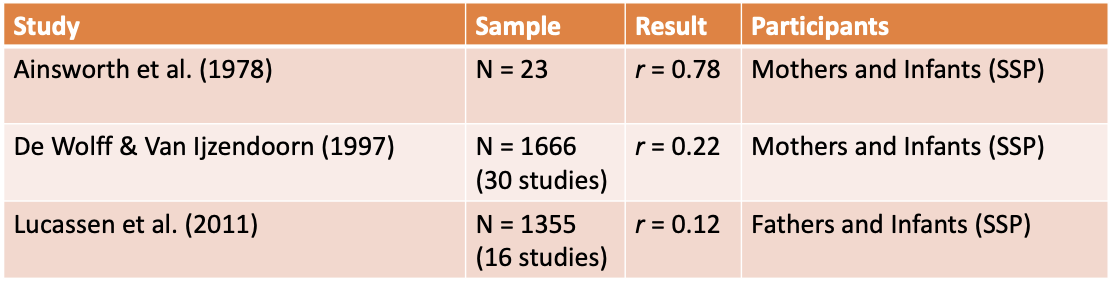
ainsworth et al.
16 hours observation per family
how infants performed in the strange situation
very small sample
enormous +ve result
de wolff & van ijzendoorn
meta-analysis
30 studies, late 70s - late 90s
smaller +ve result but still sig.
lucassen et al.
small +ve result
fathers
many varying estimates about how strongly they relate at age 2
madigan et al. (2024) - child attachment security - paternal and maternal sensitivity
meta-analysis of every single study since 1978
174 studies, 24000 infants
caregiver sensitivity on performance in the strange situation
caregiver sensitivity & child-caregiver attachment: r = .25
mother-child dyads: r = .26 (159 studies)
father-child dyads: r = .21 (22 studies)
no effect of geographical region (but majority of studies European/American)
madigan et al. (2024) - child attachment security - based on the effect size, would you say that sensitivity is the primary determinant?
inconclusive
small effect (still sig.)
other things could be influencing the relationship
it is related, but do not know if the primary determinant
most studies still carried out in US & Canada
is caregiver sensitivity the primary environmental cause of attachment security? - is the association spurious?
could something else explain this
parental sensitivity —> child’s attachment security
environmental influence of child’s attachment security
possible other factor - infant temperament
individual differences in how reactive & fearful
may affect how the parent responds to them
is the association spurious - infant temperament
Temperament: Individual differences in reactivity and self-regulation (Rothbart & Ahadi, 1994)
Tendency to approach/avoid novel stimuli - anxious/fearful
Lability/stability of mood (positive/negative affect) - e.g. crying a lot
Temperament is heritable in infancy and toddlerhood (~50%) (e.g., Goldsmith et al., 1999).
groh et al. - is temperament related to attachment security?
Variation in attachment security is related to caregiving environment OR
Variation in attachment security is related to endogenous characteristics in the child OR
temperament factors
Temperament influences the type of insecure attachment that infants have with insensitive caregivers
a mix of both
temperament can be measured behaviourally (response to a stimulus), social smiling (recording initial reaction)
pulled together all available studies where they measured temperament & attachment security
groh et al. - is the association between attachment and temperament spurious?
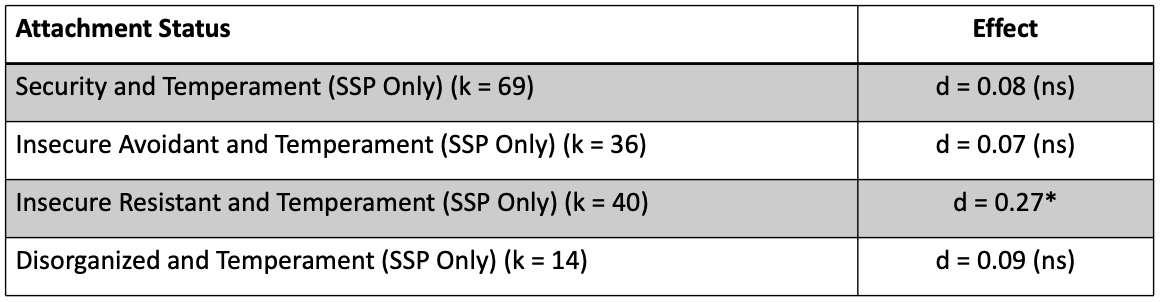
no differences between secure and insecure children in temperament
not influencing factor
challenges idea endogenous characteristics might influence behaviour
insecure resistant and temperament
significant effect size
however still a small effect size
clumping together all insecure children is a strange way to analyse data
madign et al. - is the association spurious - genetics
some may be explained by temperamental factors, but possibly simple passive genetic transmission
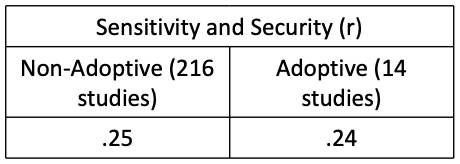
adoptive parents’ sensitivity is associated with child attachment security
e.g. Stams et al. (2002), Juffer et al. (2005), Schoenmaker et al. (2015)
large difference in a no. of studies
do not have as much info
adoptive studies - not biologically related
isn’t just passive genetic transmission, but an environmental association
baker mans-kranenburg et al. - what is temporal order?
in first two years of life, experiences with caregiver lead you to develop a model/view of a caregiver
meta-analysis (K = 70, N = 9957)
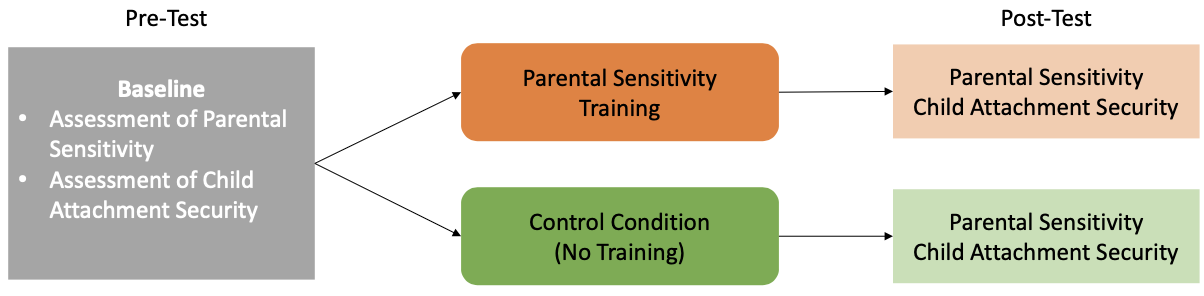
random allocation to two different conditions
intervention - parental sensitivity training
51 RCTs (N=6,282): Intervention improved sensitivity (d = 0.33)
23 RCTs (N=1255): Intervention improved attachment security (d = 0.20)
both small effect sizes
causal evidence between the two
randomisation rules out potential contaminants
a lot of studies haven’t had many long-term follow ups
does the intervention last?
the competence hypothesis - bowlby
“It appears that there is a very strong case indeed for believing that prolonged separation of a child from his mother (or mother substitute) during the first five years of life stands foremost among the causes of delinquent character development”
children getting clinical support for, e.g. criminal behaviours
causal claim
the competence hypothesis - ainsworth
“With secure infants, confidence in theaccessibility and responsiveness ofthat figure enables the child to venture forth to learn about his surroundings… He builds up … a sense of competence, which gives him confidence that he can have an effect on the world around him…”
“people care for me”, “i’m important”
internalising
depressive, anxious symptoms
turn the distress on yourself
externalising
turn our emotional distress outwards onto the world
e.g. aggression, cognitive problems, hyperactivity
fearon et al. - why might attachment matter for mental health?
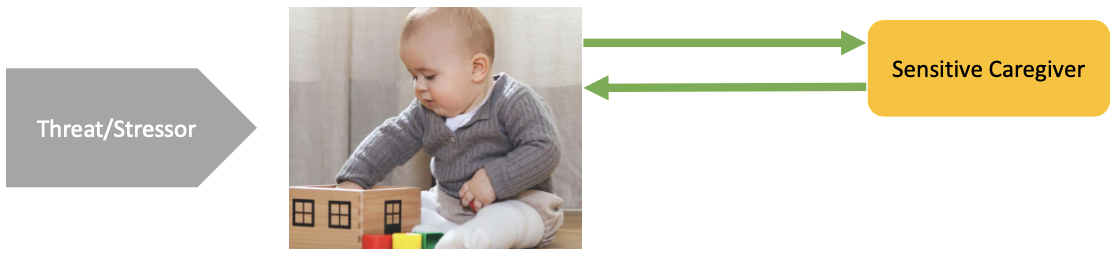
sensitive caregiver
tune into signals & respond appropriately
go to caregiver for comfort & support
working model
view others as available/supportive
view self as worthy of love/care
positive expectations of others
self confidence/self-regulation
security/insecurity & mental health theories
insecure-resistent (fearful of new & social situations) —> internalising
insecure-avoidant (struggling to form intimate relationships) —> externalising
disorganised —> internalising/externalising
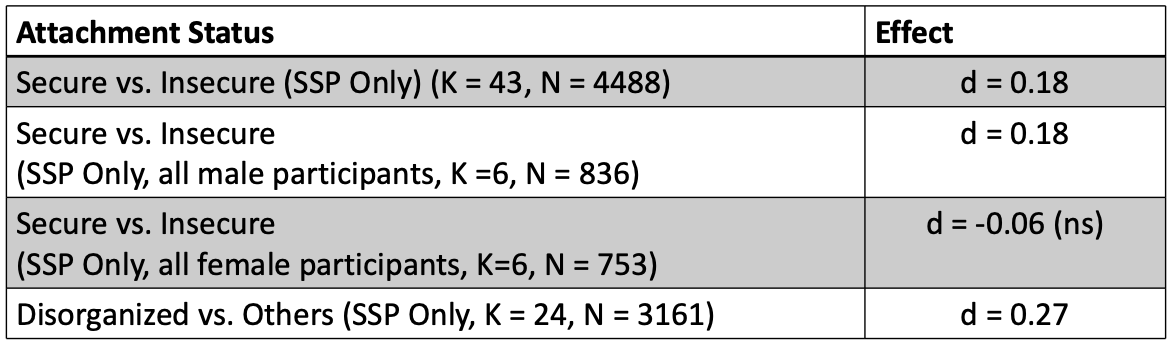
fearon et al. - attachment and externalising problems
to further the table:
avoidant vs. others (SSP only, N = 3054) — d = 0.13
resistant vs. others (SSP only, N = 2910) — d = 0.05
all longitudinal studies using the strange situation
relationship between security at age 10 & mental health problems at age 70
secure vs. insecure / secure vs. insecure (male) / disorganised vs. others - elevated risk of externalising
groh et al. - attachment and internalising problems
meta-analysis
did the same as fearon et al.
went against previously thought, as resistant found a non-significant result
attachment and problems
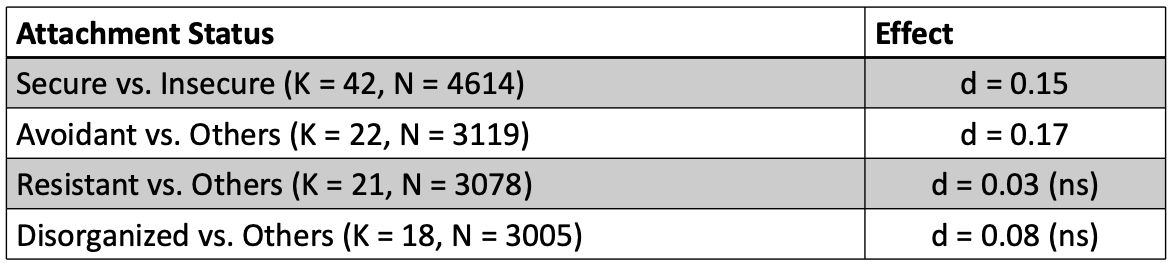
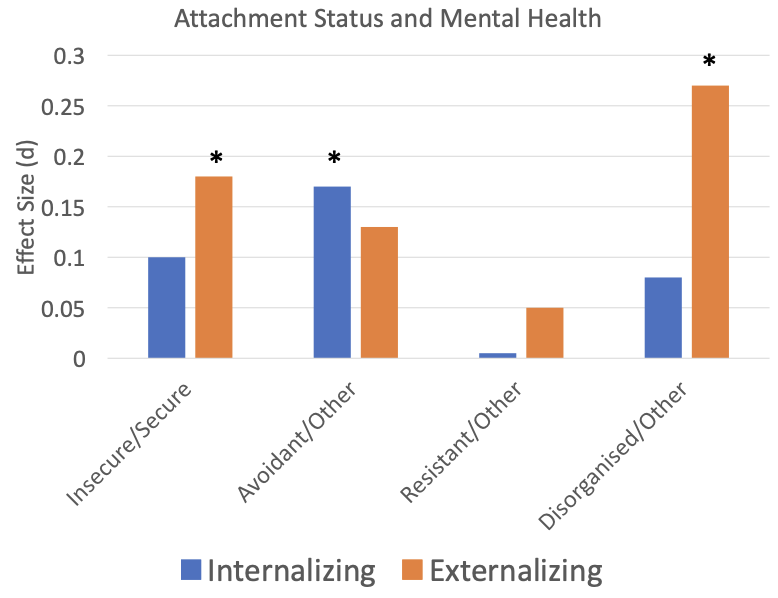
fearon et al. & groh et al. - is attachment related to later mental health?
results:
resistant —> internalising X (not even externalising)
avoidant —> externalising / (some evidence)
disorganised —> internalising X
disorganised—> externalising /
conclusion
attachment is related to both a small degree, but the specificity hypotheses are not consistently supported
considerations about meta-analyses
Confounding factors (e.g., temperament, demographic factors) that could explain outcomes have not been considered.
Focus on biological parents: potential genetic confounds.
Mental health has a high heritability
Studies are not ‘true’ longitudinal designs: direction of association?
have not measured both occasions
No causal evidence: does change in attachment produce a change in outcome?
more elaboration
Specificity
Role of distinct types of insecurity is not clear.
Security is associated with a wide range of outcomes
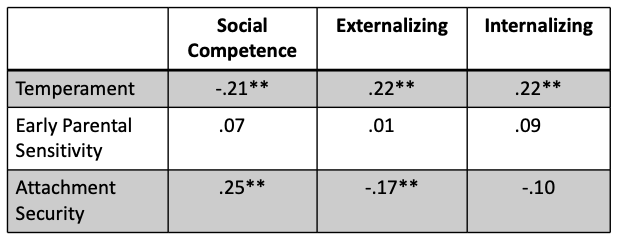
stams et al. - addressing potential confounds
longitudinal study of adopted children
meaured in childhood and followed up at 7/8yo
adoptive parents & children, controlled for confounds (e.g. temperament)
temperament does not play a role in externalising and internalising
early parental sensitivity is not sig. related
attachment security with: social competence & externalising - did have an effect
van ijzendoorn et al. - establishing causal connections - sensitivity and attachment security
Meta-analysis of interventions to improve parental sensitivity.
training studies can improve sensitivity
Intervention improves parental sensitivity (r = .18) and child attachment security (r = .23).
No clear (causal) effect of intervention on child externalising (r = .07).
most studies only included measure of externalising few months or right after training
different a year later?
de klyen & greenberg - considerations about competence hypothesis
Attachment security is unlikely to be a necessary or sufficient cause of mental health problems.
Multiple pathways are likely to exist:
Different risk factors can lead to the same outcome (equifinality)
A given risk factor (e.g., resistant attachment) can give rise to multiple different outcomes (multifinality)
avoidant —> externalising & externalising
The influence of attachment security on mental health may be moderated by other factors.
Links between risk factors and mental health problems may be nonlinear.
The link between attachment and mental health may vary across different points in development.
when it comes to attachment, does the quality of caregiving matter more than the type of caregiver?
evidence using different family forms
responsive/sensitive caregiving
many of the longitudinal studies involve measurement of attachment in infancy only & measurement of mental health at a later timepoint only. what can we conclude from these studies?
cannot really establish temporal connection (need measure of both twice)

