Psychology SAC Unit 2 AOS1
Social Psychology
Person Perception:
Mental processes we use to form impressions and draw conclusions about the personal characteristics of other people.
These are decisions we make based on limited information which are not always accurate.
Factors influencing our impressions:
Physical Cues
Physical Appearance
Body Language
Behaviour
Social Cognition:
This involves how we perceive and think about in order to understand and make judgements about ourselves and others in different situations.
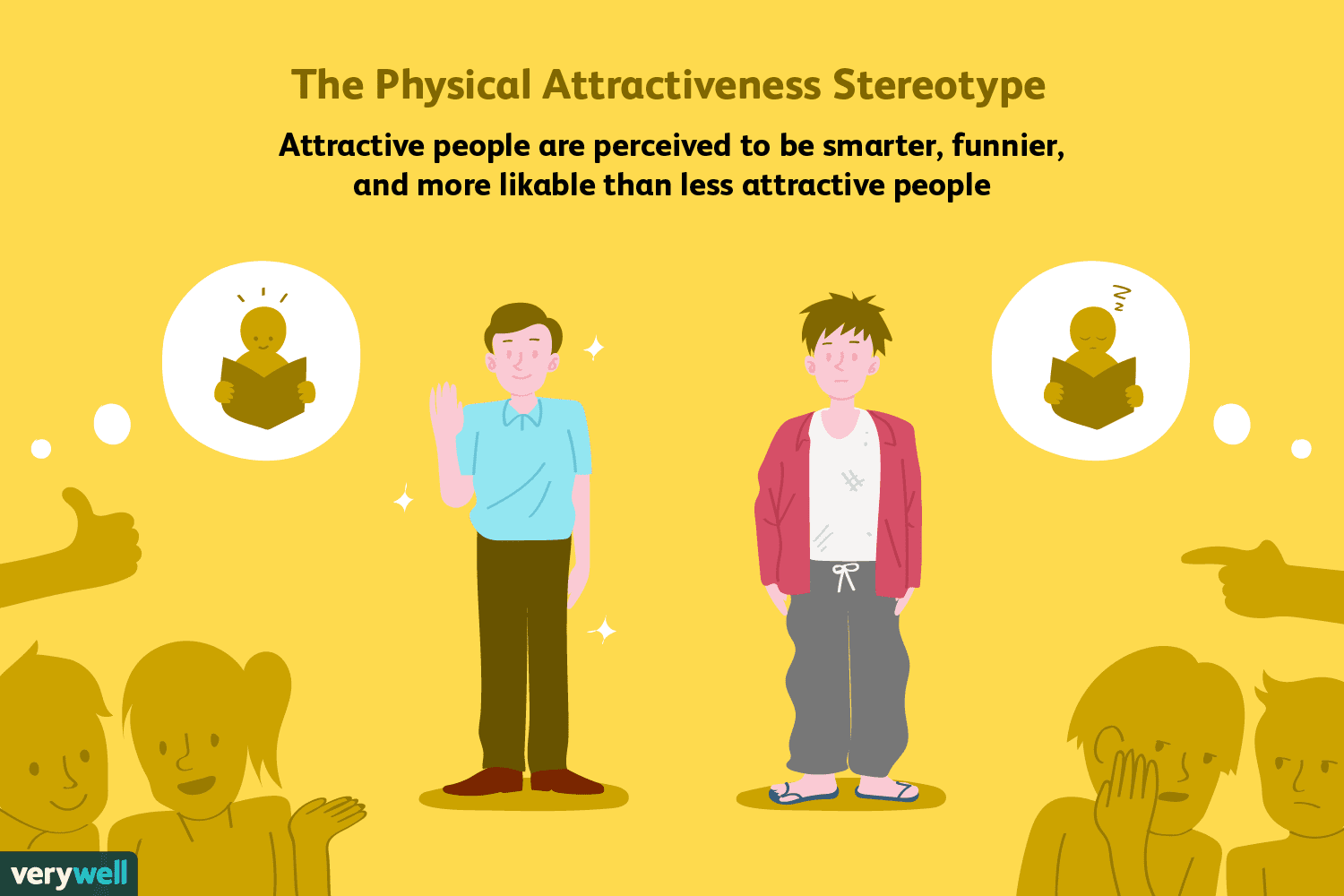
Halo Effect:
Cognitive bias where the impression we form about one quality of a person influences our beliefs and expectation about the person in other qualities.
Non-Verbal Communication
Salience determines which information will most likely grab our attention and have the greatest influence on our perception of people and the world.
Social Categorisation:
Routinely classifying each other into different groups on the basis of common categorisation.
Ingroups Outgroups
Those like us Those different to us
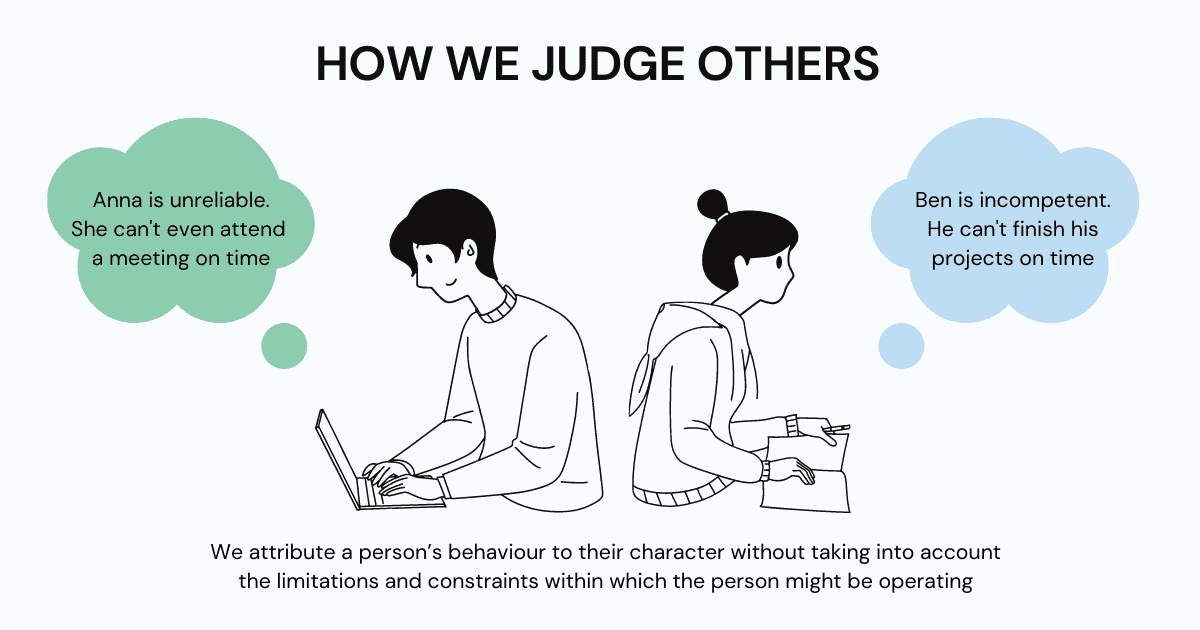
Attributions: - Finding reasons behind behaviour
The process by which people explain the causes of their own and other people's behaviour.
Situational attribution:
Behaviour explained in terms of the situation they are in.
Personal attribution:
Behaviour explained in terms of their personal qualities.
Biases affecting attribution:
Fundamental attribution error:
Overestimating personal qualities and underestimating the situation.
Example: “My friend didn’t text me back because she’s mad.” Not considering the possibility her phone is flat.
Actor-Observer bias:
Attributing our own behaviour to situational causes but attribute other’s behaviour to their personal factors.
Example: “I failed my exam because I had a bad teacher, that student failed because they didn’t study enough though.”
Self-Serving bias:
Taking credit for our successes and attributing failures to situational factors.
Example: “I got a good grade because I worked hard, but I got a bad result on that other test because I had a bad teacher.”
Attitudes - Positive or Negative Evaluations
Attitudes are learned or acquired and always directed towards something.
Tri-Component Model of Attitudes
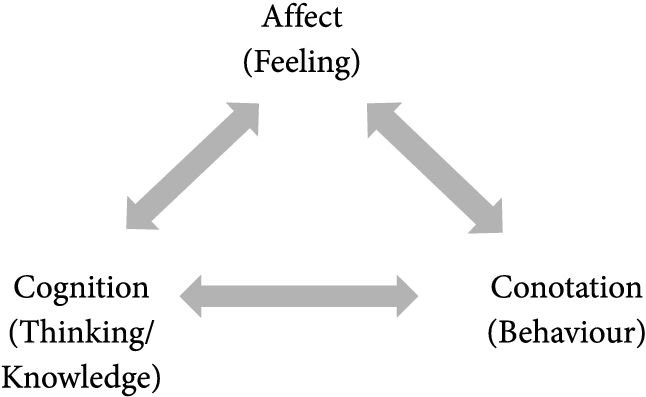
Affective Component (Feeling)
Emotional reactions or feelings one has towards an object, person, group, event or issue.
Behavioural Component (Connotation)
The way an attitude is expressed through our actions.
Cognitive Component (Thinking)
The way attitude is thought about and interpreted.
Factors that influence consistency between attitudes and behaviour
Strength of the attitude
Accessibility of the attitude
The situation we are in
Our personal belief that we can actually perform the behaviour associated with an attitude.
Prejudice
Prejudice: Means prejudgement, involves judgement and is usually considered to be an attitude but the focus is on people.
Prejudice can be positive, but it is mainly negative.
Characteristics of prejudice
One believes they are superior to the minority group.
Believe the minority group is different from them.
They believe they are more powerful than the group.
They are generally more insecure and afraid of what the minority group is capable of.
Types of prejudice
Direct
Majority group openly rejects minority group members, and their views are obvious and recognizable.
Indirect
More subtle and hidden, more likely to be accepted.
Explicit
Consciously held, deliberately thought about.
Implicit
Unconsciously held, person is usually not aware they do so.
Discrimination
Positive or negative behaviour that is directed towards a social group and its members.
Discrimination = Prejudice expressed through behaviour.
Types of Discrimination
Direct discrimination
When someone is treated unfavourably because of a personal characteristic protected by the law.
Indirect discrimination
When there is an unreasonable requirement, condition or practice that disadvantages a person or group of people because of a personal characteristic.
Ways to reduce prejudice
Intergroup contact
Involves increasing direct contact between two groups who are prejudiced against each other.
The contact hypothesis
Proposes that certain types of direct contact between members of different groups can reduce prejudice.
Two different groups must have contact that makes them dependent on each other. This is called mutual interdependence.
Superordinate goals
A goal that cannot be achieved by any one group alone and overrides other existing goals which each group might have.
Equality of status
Equal status between groups.
Cognitive interventions
Changing the way in which someone thinks about prejudice.
Social Influence
The effects of the presence or actions of others, either real or imagined, on the way people think, feel and behave.
Social group
Any collection of two or more people who interact with and influence one another and who share a common goal.
Collective
Any collection of people who exert minimal influence on each other and don’t interact with every other person in the collection.
Aggregation
Collection of people in one location who have no obvious social structure or organisation and who have minimal shared purpose, interdependence or direct interaction.
Culture
The way of life of a particular society or community that sets it apart from other societies or communities.