Plant Biology Exam 3 Lecture 19
 Call Kai
 Learn
Learn Practice Test
 Spaced Repetition
 Match
Match Flashcards
 Knowt Play
1/55

There's no tags or description
Looks like no tags are added yet.
Name | Mastery | Learn | Test | Matching | Spaced | Call with Kai |
|---|
No analytics yet
Send a link to your students to track their progress
56 Terms
Smelling (olfaction)
perception of chemicals by cognate receptors (receptors specialized for a particular chemical)
can plants smell?
plants can perceive chemicals by specific receptors or other sensing mechanisms
dodder and tomato
volatile organic compounds (VOCs) emitted by tomato plants attract dodders (Cuscuta), which then parasitize the tomato plant which will eventually die
dodders have…
evolved mechanisms for perceiving VOCs that allows them too grow into the direction of the source of VOCs (tomato plant).
how do dodders work?
once touching host plant, thigmotropism enables them to wind around it; produce structures called haustoria which grow into tomato vasculature and suck carbs/other nutrients out of host plant’s xylem and phloem.
dodder parasite smells tomato host
a) parasitic plants in genus Cuscuta seedling attaching to tomato plant
b) vines of C. pentagona coil around petiole of tomato leaf
c) growth habit of Cuscuta
d) C. petagona seedling growing toward tomato across paper filter disk
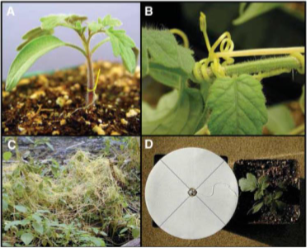
DeMoares and colleagues
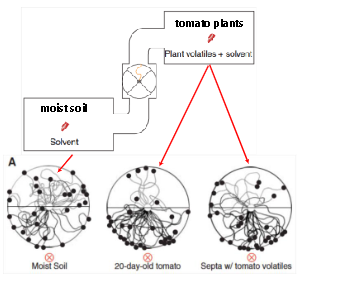
placed dodder seedlings on sections of a round-
shaped paper located close to a tomato plant and tracked the direction of dodder growth
the dodder grows towards the tomato plant and depends on the VOCs. They offered a choice for the dodder to either grow to the plant or to a soil-only control, or to VOCs in solvent or the solvent alone.
dodder and other parasitic plants
Ex. Striga, economically important
perception of fire related chemicals
ex. long leaf-pine only germinates after a fire; seed that grow after fires have fewer competitors, chemicals the seeds perceive = karrikins
karrikins are germination-promoting compounds found in smoke
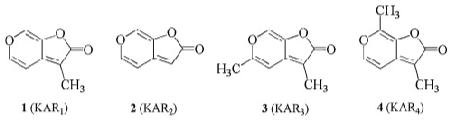
karrikins
cues from smoke that promote germination; following a fire, there can be increased competition between similarly sized seedlings
gravitropism
plants orient themselves on an axis determined by gravity
negative gravitropism
growth away from the center of gravity, upward (shoot)
positive gravitropism
growth of plant roots in the direction of gravitational pull, downward (root)
root gravity
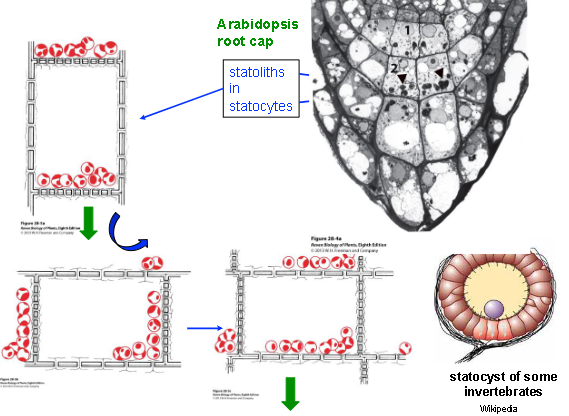
perceive gravity with the help of dynamic statoliths in specialized cells in their root cap (statocytes)
sensing mechanism
mechanism at the side of the statocyte where statoliths accumulate senses the statliths (weight)
auxin
statcyte sensing mechanism triggers distribution of auxin within root tip so that tip grows upward towards center of gravity or the side where statoliths are located
statoliths
statolith brushes against sensory hairs, which leads to action potentials in nerve cells
plant communication
VOCs are general means of communication for plants, airborne signals from emitting parts of the plant to another, perceiving part (intraplant signaling), or from one plant to another conspecific plant or different plant species
plant compounds
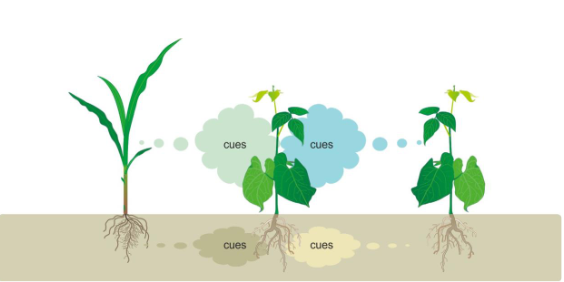
VOCs as defense
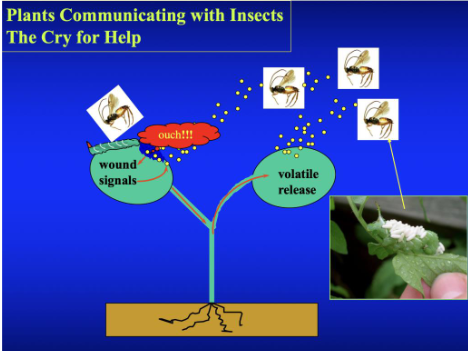
plants emit certain VOCs when they are wounded by herbivores, can attract parasites of herbivores (caterpillars) and eventually kill them, increasing plant fitness
image of VOC defense
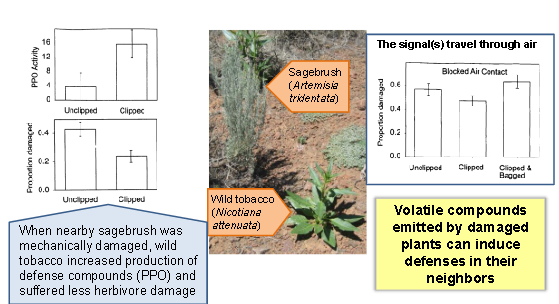
plant-plant interactions with VOCs
VOCs trigger defense responses in plants of a different species
ex. sagebrush emits high levels of VOCs when wounded (methyl jasmonate), which directly turns on defenses against herbivores in many plants
VOCs defense
jasmonate and/or VOCs from sagebrush turn on defenses in tobacco (‘eaves-dropping’) by the receiver plant, because perception of VOCs from another plant happens by chance
are VOCs targetted?
it is not a form of targeted perception or directed communication, since it is not clear whether the emitting plant has an evolutionary adaptive advantage from warning neighboring plants
volatile compounds from damaged plants can initiate defenses in others
seedless vascular plants (SLVPs)
phylum Lycopodiophyta (lycophytes)
phylum Monilophyta (ferns, horsetails, and whisk ferns)
evolution of SLVPs
ancestors of extant SLVPs conquered airspace, leading to a profound change in appearance of land (evolved in Devonian ~400 mil years ago)
how did SLVPs survive on land?
evolution of vascular system (upright growth), roots, stems, and leaves (stems+leaves=shoot)
major distinguishing characteristics of SLVPs
xylem, phloem, NO seeds, sporophyte is dominant generation and gametophyte is reduced.
SLVP growth pattern
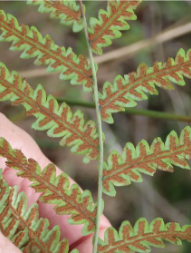
apical meristems at tips of branches and stem, branching in any direction is possible; contain multiple sporangia on sporophyte because of branching pattern (dependent on water for fertilization)
growth and development of SLVPs
dermal tissue (epidermis), vascular tissue (xylem and phloem), ground tissue (organs); emerged in bryophytes, but water/nutrient conducting tissues of bryophytes (hadrom/leptom) are distinct from xylem and phloem
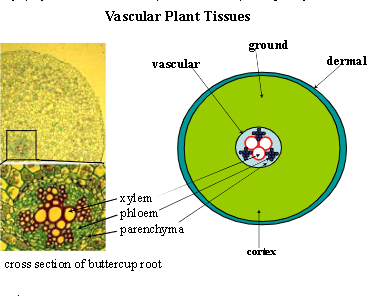
primary growth
close to tips of roots and stems initiated by apical meristem, leads to vertical growth of plant body, produces primary tissue (all plants show primary growth)
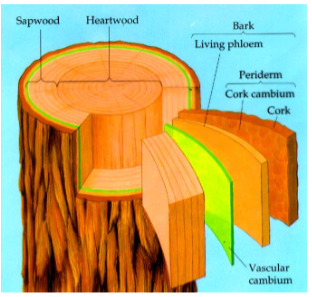
secondary growth
evolved later, increase in diameter (wider) of shoots and roots due to activity of lateral meristems; essential for plants with wide stem/trunk diameter
vascular cambium
produces xylem and phloem
cork cambium
located beneath bark and produces periderm (cork tissue)
diagram of vascular plant tissue
xylem
water and mineral transport, lignified cell wall, all dead cells; unidirectional from roots to leaves
phloem
nutrient transport, mainly carbs, cell walls NOT lignified and cells are alive; cells lack a nucleus and vacuole
SLVP reproduction
alternation of generations, sporic meiosis; SP is dominant in SLVPs (GP in bryophytes)
reproductive evolution
embryophytes —> bryophytes —> SLVPS —> seed plants; the GP is reduced
in angiosperms…
the female GP has 7 cells including egg cell, male GP consists of only 3 cells (2 sperm)
GP and SP in SLVPS
both are free-living and nutritionally independent of each other for most of their life, SP is only dependent on GP during embryo stage
SVLPs as homosporous plants
only one type of spore which is neither female nor male; GP is bisexual bearing male and female gametangia (still need water for fertilization)
Selaginella
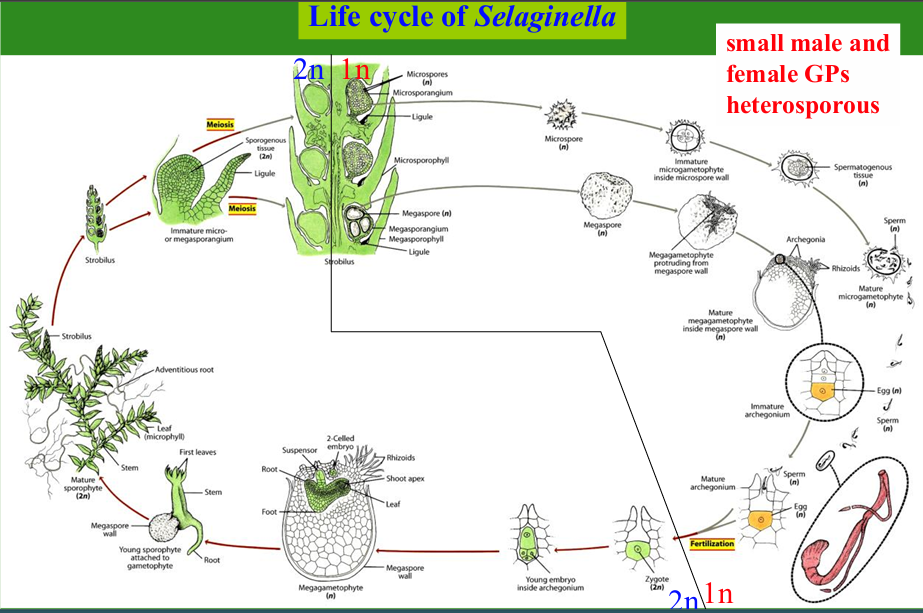
lycophyte, resembles life cycle of seed plants; ahs a heterosporous life cycle; contains microspore and megaspore which produce microgametophytes/megagametophytes
Selaginella reproductive cycle
Sperm and egg cells are produced on different GPs, GPs remain inside mega-/microspore, SP growing out of mega-GP may look like seed of seed plant; mega GP lacks seed coat (new characteristic of seed plants)
why is selaginella unique?
shows the strongest reduction of the GP generation among SLVPs
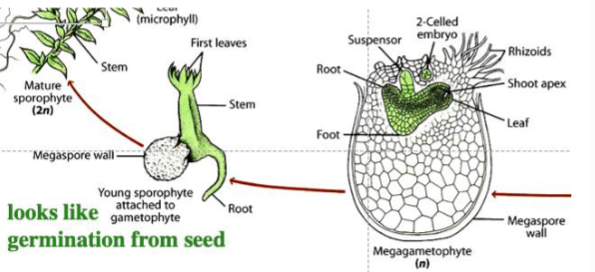
diagram of Selaginella life cycle
evolution of plant life on Earth
Bryophytes (Silurian/Ordovician)
SLVPs (early Devonian ~410 mya)
ferns, lycophytes, horsetails (late Devonian)
gymnosperms (seed plants, late Carboniferous ~300 mya)
flowering plants (Cretaceous ~130 mya)
Rhynia
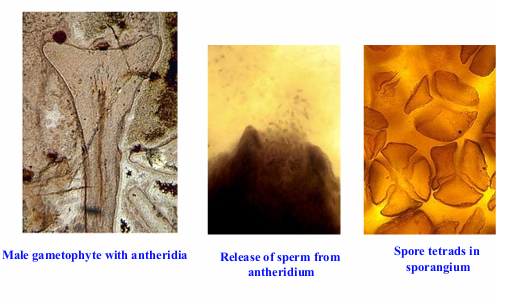
one of the simplest SLVPs, did not have leaves and showed only dichotomous branching (400 mil yrs old), fossils show release of sperm cells from antheridia
how did SLVP become peat?
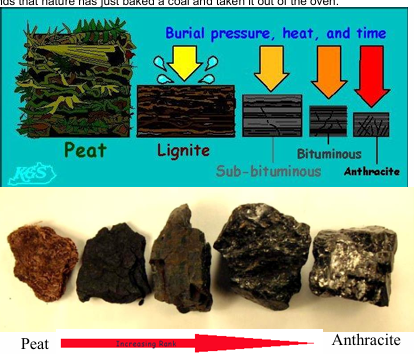
SLVPs growing in coastal swamp forests (tall trees and dense biomass) decomposed only partially (peat), when peat-rich swamps were covered by oceans over time, the ocean deposited sediments on top of the peat
SLVPs formed coal
with the lifting and subsiding of oceans and land masses (plate tectonics), the peat was buried underground resulting in immense heat/pressure which reduced oxygen levels in organic matter which formed anthracite (black coal)
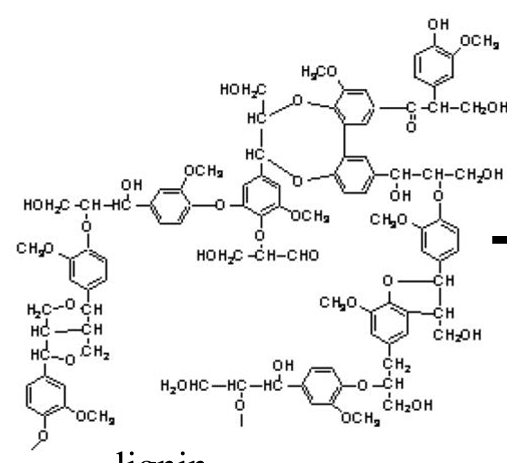
chemical formation of lignin
coal chemical formation
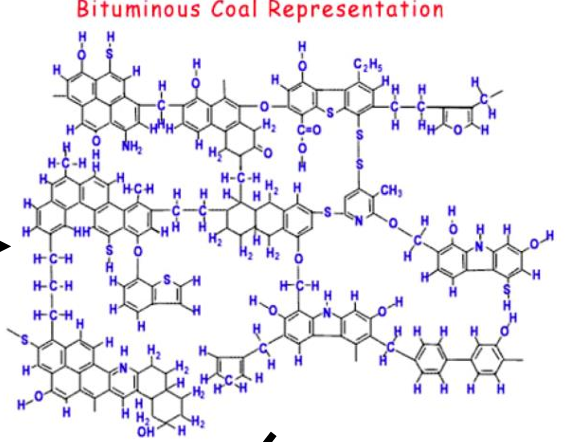
anthracite chemical compound
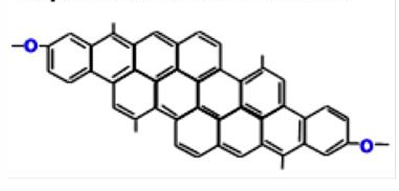
coal requires…
swamp with specific conditions, not rapid flow of water, land must continue to subside, peat must be buried deep for sufficient heat

