ARCHIMATE BUSINESS LAYER NOTATIONS
 Studied by 0 people
 Call Kai
 Learn
Learn Practice Test
 Spaced Repetition
 Match
Match Flashcards
 Knowt Play
1/68

There's no tags or description
Looks like no tags are added yet.
Name | Mastery | Learn | Test | Matching | Spaced | Call with Kai |
|---|
No analytics yet
Send a link to your students to track their progress
69 Terms
A business entity that is capable of performing behavior.
BUSINESS ACTOR
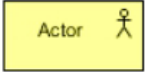
The responsibility for performing specific behavior, to which an actor can be assigned, or the part an actor plays in a particular action or event.
BUSINESS ROLE
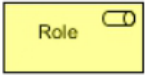
An aggregate of two or more business internal active structure elements that work together to perform collective behavior.
BUSINESS COLLABORATION
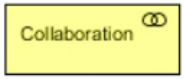
A sequence of business behaviors that achieves a specific outcome such as a defined set of products or business services.
BUSINESS PROCESS
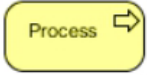
A collection of business behavior based on a chosen set of criteria (typically required business resources and/or competencies), closely aligned to an organization, but not necessarily explicitly governed by the organization.
BUSINESS FUNCTION
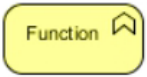
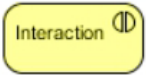
A unit of collective business behavior performed by (a collaboration of) two or more business roles.
BUSINESS INTERACTION
A business behavior element that denotes an organizational state change. It may originate from and be resolved inside or outside the organization.
BUSINESS EVENT

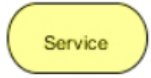
An explicitly defined exposed business behavior.
BUSINESS SERVICE
A point of access where a business service is made available to the environment.
BUSINESS INTERFACE

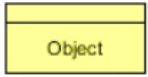
A concept used within a particular business domain.
BUSINESS OBJECT
A coherent collection of services and/or passive structure elements, accompanied by a contract/set of agreements, which is offered as a whole to (internal or external) customers.
PRODUCT
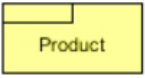
A formal or informal specification of an agreement between a provider and a consumer that specifies the rights and obligations associated with a product and establishes functional and non-functional parameters for interaction.
CONTRACT
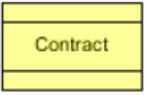
A perceptible form of the information carried by a business object.
REPRESENTATION
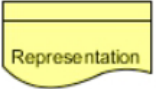
An aggregate of two or more application components that work together to perform collective application behavior.
APPLICATION COLLABORATION
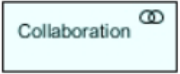
An encapsulation of application functionality aligned to implementation structure, which is modular and replaceable. It encapsulates its behavior and data, exposes services, and makes them available through interfaces.
APPLICATION COMPONENT
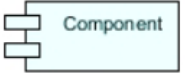
An explicitly defined exposed application behavior.
APPLICATION SERVICE

Automated behavior that can be performed by an application component.
APPLICATION FUNCTION
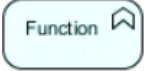
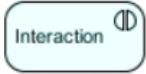
A unit of collective application behavior performed by (a collaboration of) two or more application components.
APPLICATION INTERACTION
A point of access where application services are made available to a user, another application component, or a node.
APPLICATION INTERFACE

A sequence of application behaviors that achieves a specific outcome.
APPLICATION PROCESS
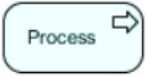
An application behavior element that denotes a state change.
APPLICATION EVENT
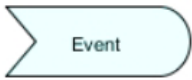
Data structured for automated processing.
DATA OBJECT
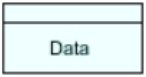
A computational or physical resource that hosts, manipulates, or interacts with other computational or physical resources.
NODE
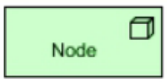
A physical IT resource upon which system software and artifacts may be stored or deployed for execution.
DEVICE
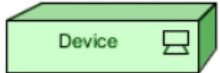
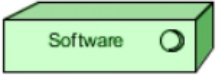
Software that provides or contributes to an environment for storing, executing, and using software or data deployed within it.
SYSTEM SOFTWARE
A point of access where technology services offered by a node can be accessed.
TECHNOLOGY INTERFACE

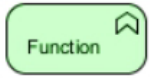
A collection of technology behavior that can be performed by a node.
TECHNOLOGY FUNCTION
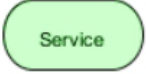
An explicitly defined exposed technology behavior.
TECHNOLOGY SERVICE
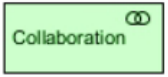
An aggregate of two or more nodes that work together to perform collective technology behavior.
TECHNOLOGY COLLABORATION
A unit of collective technology behavior performed by (a collaboration of) two or more nodes.
TECHNOLOGY INTERACTION
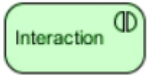
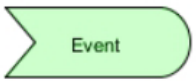
A technology behavior element that denotes a state change.
TECHNOLOGY EVENT
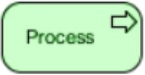
A sequence of technology behaviors that achieves a specific outcome.
TECHNOLOGY PROCESS
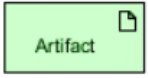
A piece of data that is used or produced in a software development process, or by deployment and operation of a system.
ARTIFACT
A link between two or more nodes, through which these nodes can exchange data or material.
COMMUNICATION PATH

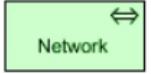
A set of structures that connects computer systems or other electronic devices for transmission, routing, and reception of data or data-based communications such as voice and video.
NETWORK

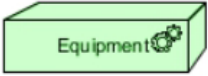
One or more physical machines, tools, or instruments that can create, use, store, move, or transform materials.
EQUIPMENT
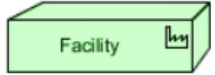
A physical structure or environment.
FACILITY
A physical network used to transport materials or energy.
DISTRIBUTION NETWORK
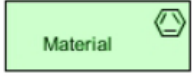
Tangible physical matter or physical elements.
MATERIAL
An asset owned or controlled by an individual or organization.
RESOURCE
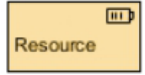
An ability that an active structure element, such as an organization, person, or system, possesses.
CAPABILITY
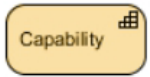
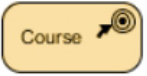
An approach or plan for configuring some capabilities and resources of the enterprise, undertaken to achieve a goal.
COURSE OF ACTION
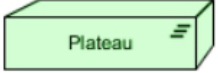
A relatively stable state of the architecture that exists during a limited period of time
PLATEAU
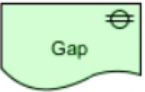
A statement of difference between two plateaus.
GAP
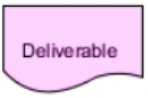
A precisely-defined outcome of a work package.
DELIVERABLE
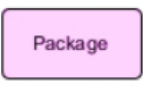
A series of actions identified and designed to achieve specific results within specified time and resource constraints.
WORK PACKAGE
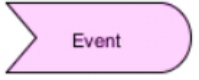
A behavior element that denotes a state change related to implementation or migration.
IMPLEMENTATION EVENT
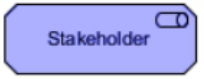
The role of an individual, team, or organization (or classes thereof) that represents their interests in the outcome of the architecture.
STAKEHOLDER
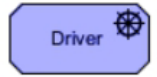
An external or internal condition that motivates an organization to define its goals and implement the changes necessary to achieve them.
DRIVER
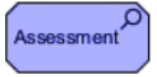
The result of an analysis of the state of affairs of the enterprise with respect to some driver.
ASSESSMENT
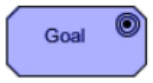
A high-level statement of intent, direction, or desired end state for an organization and its stakeholders.
GOAL
An end result that has been achieved.
OUTCOME
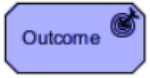
A qualitative statement of intent that should be met by the architecture.
PRINCIPLE
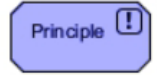
A statement of need that must be met by the architecture.
REQUIREMENT
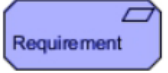
A factor that prevents or obstructs the realization of goals.
CONSTRAINT
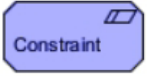
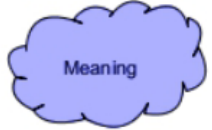
The knowledge or expertise present in, or the interpretation given to, a core element in a particular context.
MEANING
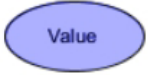
The relative worth, utility, or importance of a core element or an outcome.
VALUE
Indicates that an element consists of one or more other concepts. Represented with a filled diamond.
COMPOSITION

Indicates that an element consists of one or more other concepts. Represented with an unfilled/hollow diamond.
AGGREGATION

Expresses the allocation of responsibility, performance of behavior, or execution.
ASSIGNMENT

Indicates that an entity plays a critical role in the creation, achievement, sustenance, or operation of a more abstract entity.
REALIZATION

Models that an element provides its functionality to another element.
SERVING

Models the ability of behavior and active structure elements to observe or act upon passive structure elements.
ACCESS
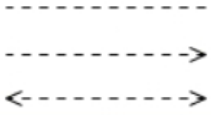
Models that an element affects the implementation or achievement of some motivation element.
INFLUENCE

Indicates that an element is a particular kind of another element.
SPECIALIZATION

Modgls an.unspeclfied relationship, or one that is not represented by another ArchiMate relationship.
ASSOCIATION

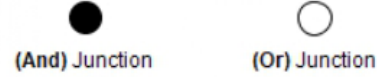
Used to connect relationships of the same type. this can either be AND (filled circle) or OR (unfilled circle).
JUNCTION
Describes a temporal or causal relationship between elements.
TRIGGERING

Transfer from one element to another.
FLOW

 Note
Note  Flashcards (69)