AP AFRICAN AMERICAN STUDIES 2.15-2.24
 Studied by 2 people
 Call with Kai
 Learn
Learn Practice Test
 Spaced Repetition
 Match
Match Flashcards
 Knowt Play
1/27

There's no tags or description
Looks like no tags are added yet.
Name | Mastery | Learn | Test | Matching | Spaced | Call with Kai |
|---|
No study sessions yet.
28 Terms
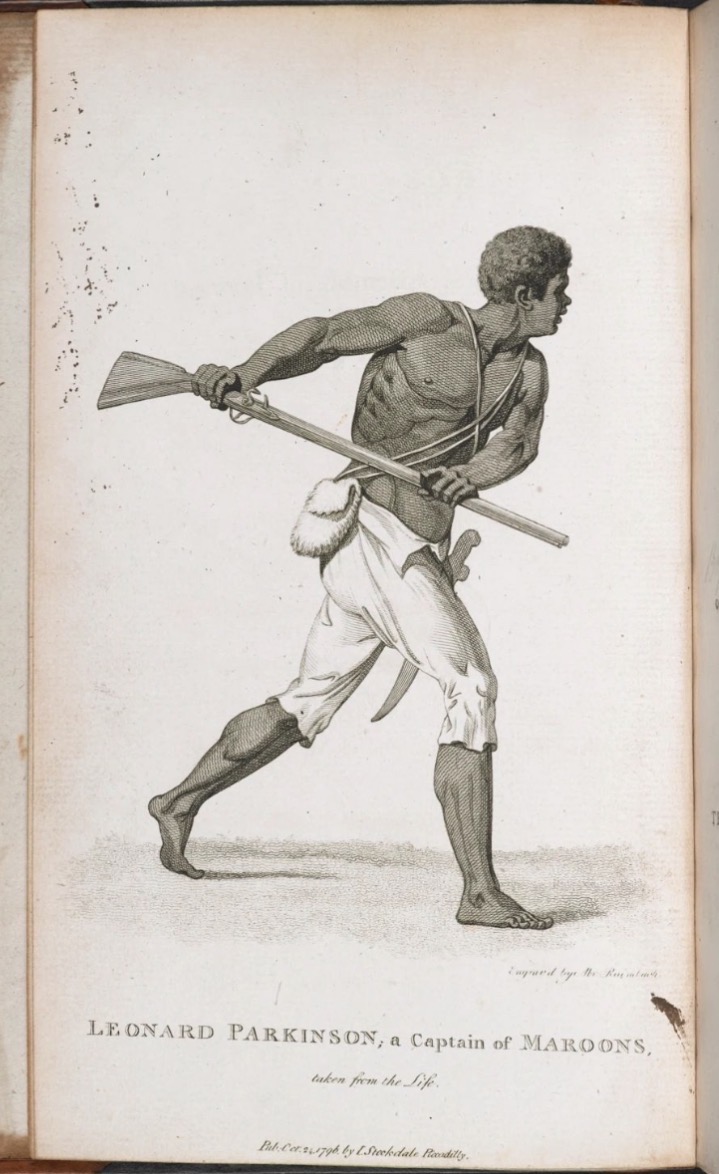
#35 Leonard Parkinson, a Captain of the Maroons by Abraham Raimbach, 1796
This source is an 1796 engraving by Abraham Raimbach that depicts Leonard Parkinson, a captain of the Jamaican Maroons, a community of formerly enslaved Africans who resisted British rule. It highlights Maroon leadership and resistance during conflicts like the Second Maroon War.
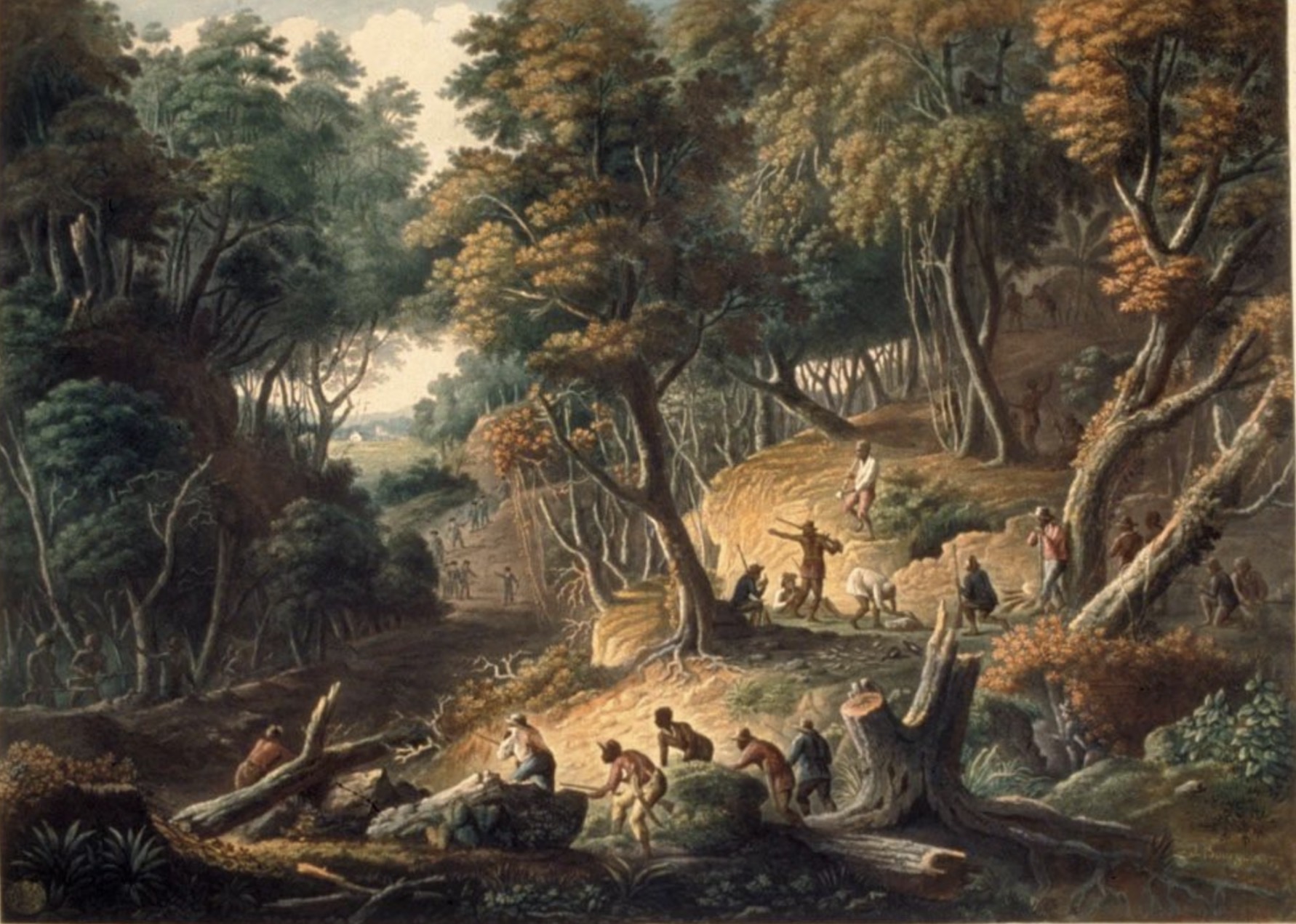
#36 The Maroons in Ambush on the Dromilly Estate in the Parish of Trelawney Jamaica by J. Bourgoin and J. Mergiot, 1801
This source is an 1801 print by J. Bourgoin and J. Mergiot showing Jamaican Maroons hiding in ambush on the Dromilly Estate in Trelawney Parish. It illustrates the Maroons’ use of guerrilla tactics and knowledge of the terrain during their resistance against British forces in the late 18th century.
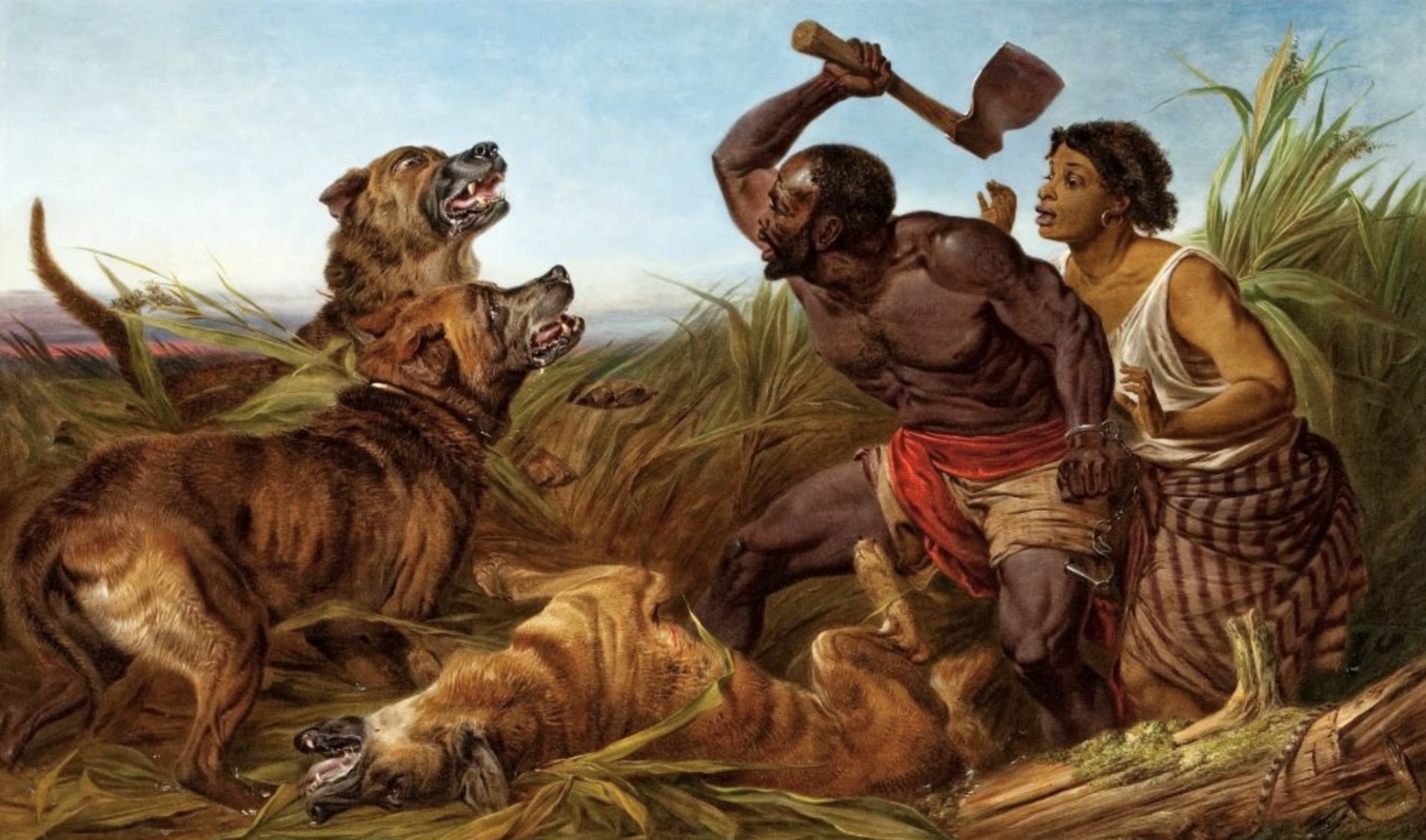
#37 The Hunted Slaves by Richard Ansdell, 1862
The Hunted Slaves (1862) by Richard Ansdell is a 19th-century painting showing enslaved people fleeing with dogs and hunters pursuing them. It dramatizes the brutality of slavery and the violence faced by people trying to escape bondage.
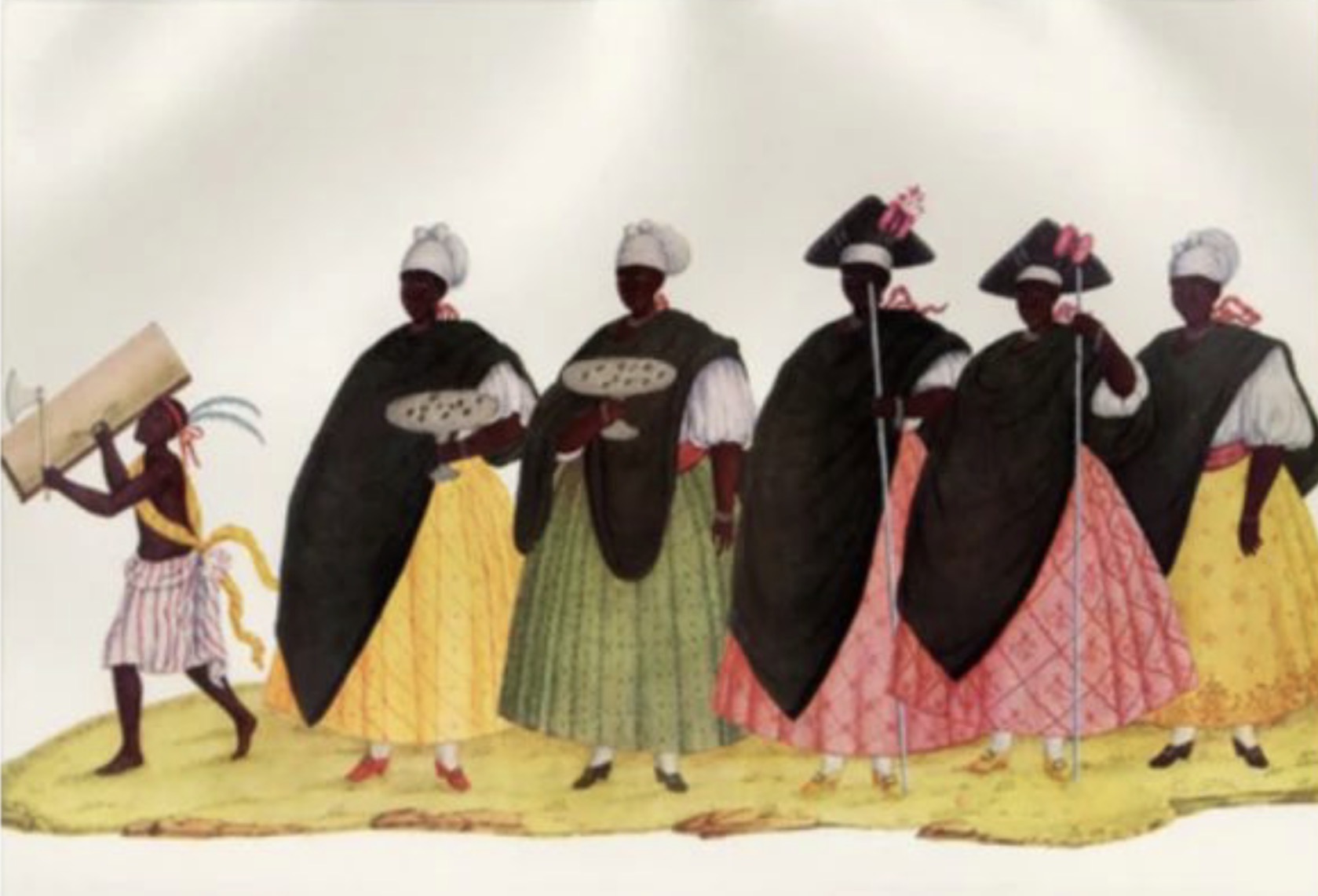
#38 Festival of Our Lady of the Rosary, Rio de Janeiro, Brazil, by Carlos Julião, Circa 1770s
This source, Festival of Our Lady of the Rosary, Rio de Janeiro, Brazil by Carlos Julião (c. 1770s), is an 18th-century depiction of a religious and cultural celebration honoring Our Lady of the Rosary in colonial Rio de Janeiro. It shows how Afro-Brazilian communities blended Catholic devotion with their own traditions during the Portuguese colonial period.

#39 Escravo Mina and Escrava Mina by José Christiano de Freitas Henrique’s Junior, 1864
Escravo Mina and Escrava Mina (1864) by José Christiano de Freitas Henriques Júnior are 19th-century portraits of a Mina man and woman—enslaved Africans from the Mina Coast (West Africa). The images document how people of African origin were depicted in Brazilian art and reflect the presence and identity of enslaved individuals in Brazil before abolition.
#40 Capoeira Players and Musicians on Beach in Salvador da Bahia
This source shows Capoeira players and musicians on a beach in Salvador da Bahia. It depicts people practicing capoeira, an Afro-Brazilian martial art that blends music, dance, and combat, rooted in the culture of enslaved Africans and their descendants in Brazil. The image captures both the physical movement of capoeira and the musical accompaniment (like the berimbau) that is central to the tradition, reflecting how this art form is part of everyday cultural life in Bahia.
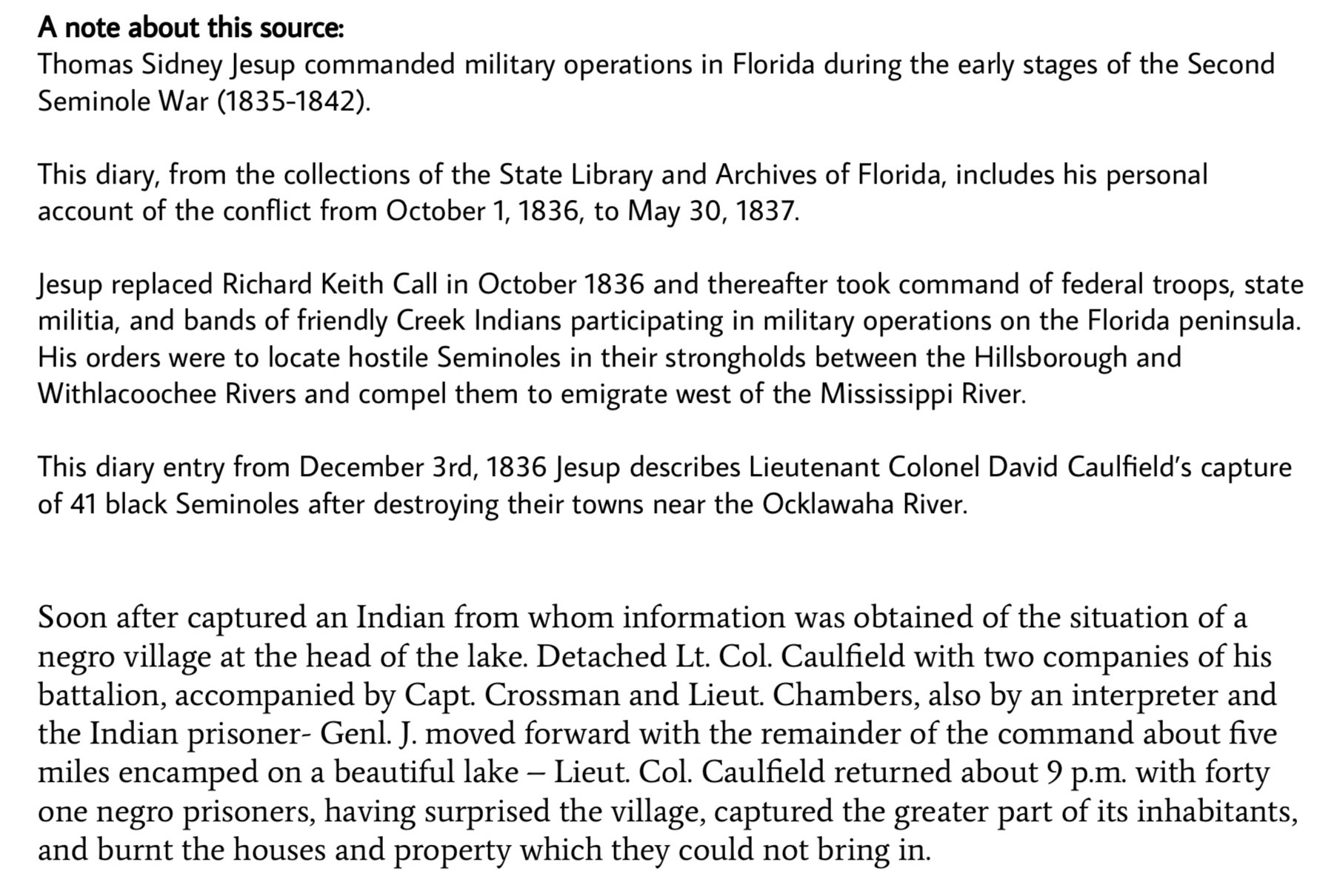
#41 Diary Entry Recounting the Capture of 41 Black Seminoles by Gen. Thomas Sidney Jesup, 1836
This source is a primary document from General Thomas Sidney Jesup’s 1836 diary that describes the U.S. Army’s capture of 41 Black Seminoles—people of African descent living with and allied to the Seminole Indians in Florida—during the Second Seminole War. Jesup’s entry reports that troops surprised a Seminole village, seized most of its inhabitants, and burned their homes and property, showing how the U.S. military targeted Black Seminoles as part of its campaign to force removal and end resistance.
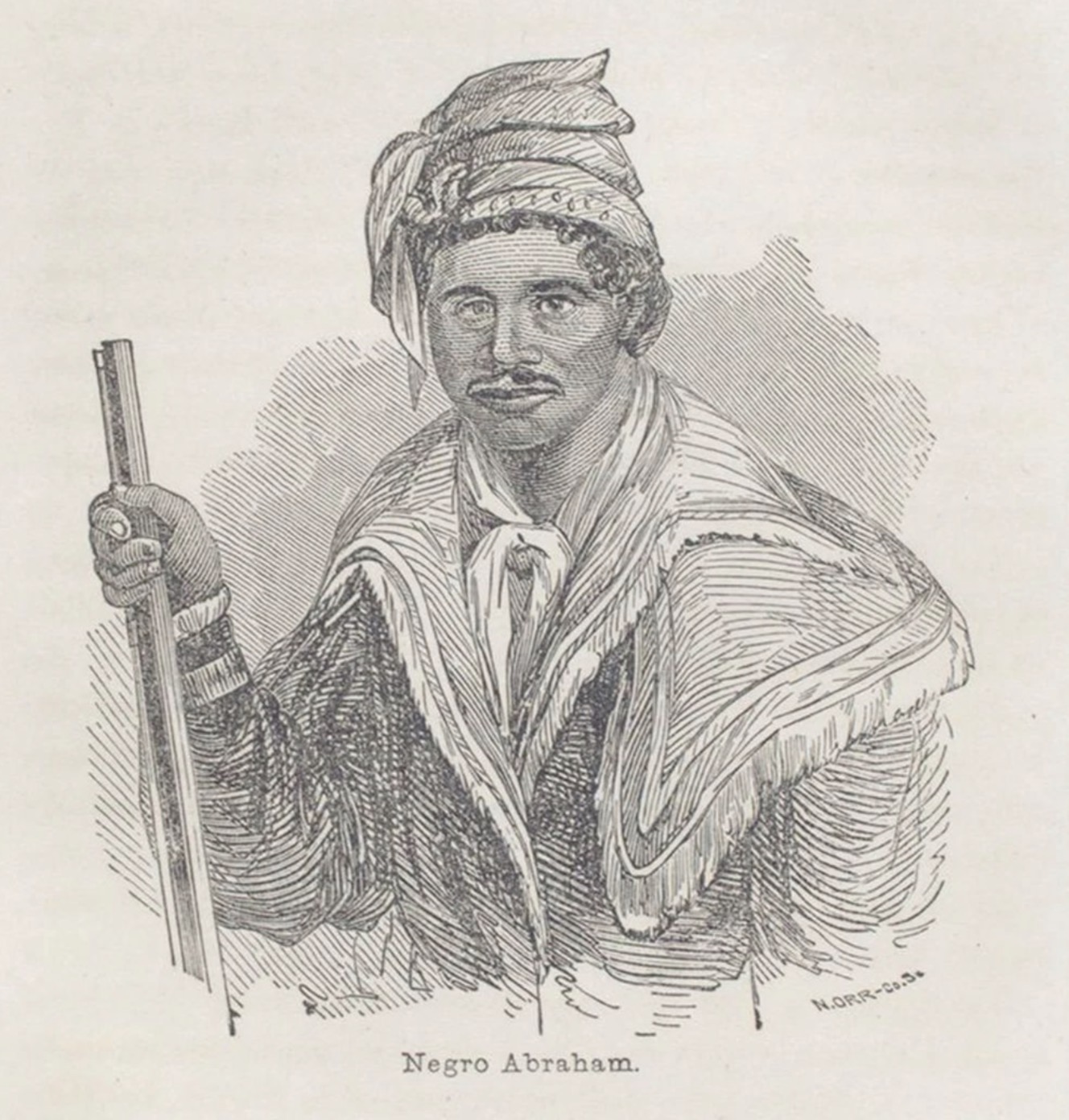
#42 Abraham, a Black Seminole leader, 1863
This source depicts Abraham, a Black Seminole leader as published in 1863. It refers to Abraham, an escaped enslaved person who became a prominent leader and interpreter among the Black Seminoles—a group of formerly enslaved Africans allied with the Seminole Nation in Florida. He played a key role in negotiations and resistance during the Second Seminole War, showing how Black Seminoles fought for freedom and held influence in Indigenous-Seminole society.
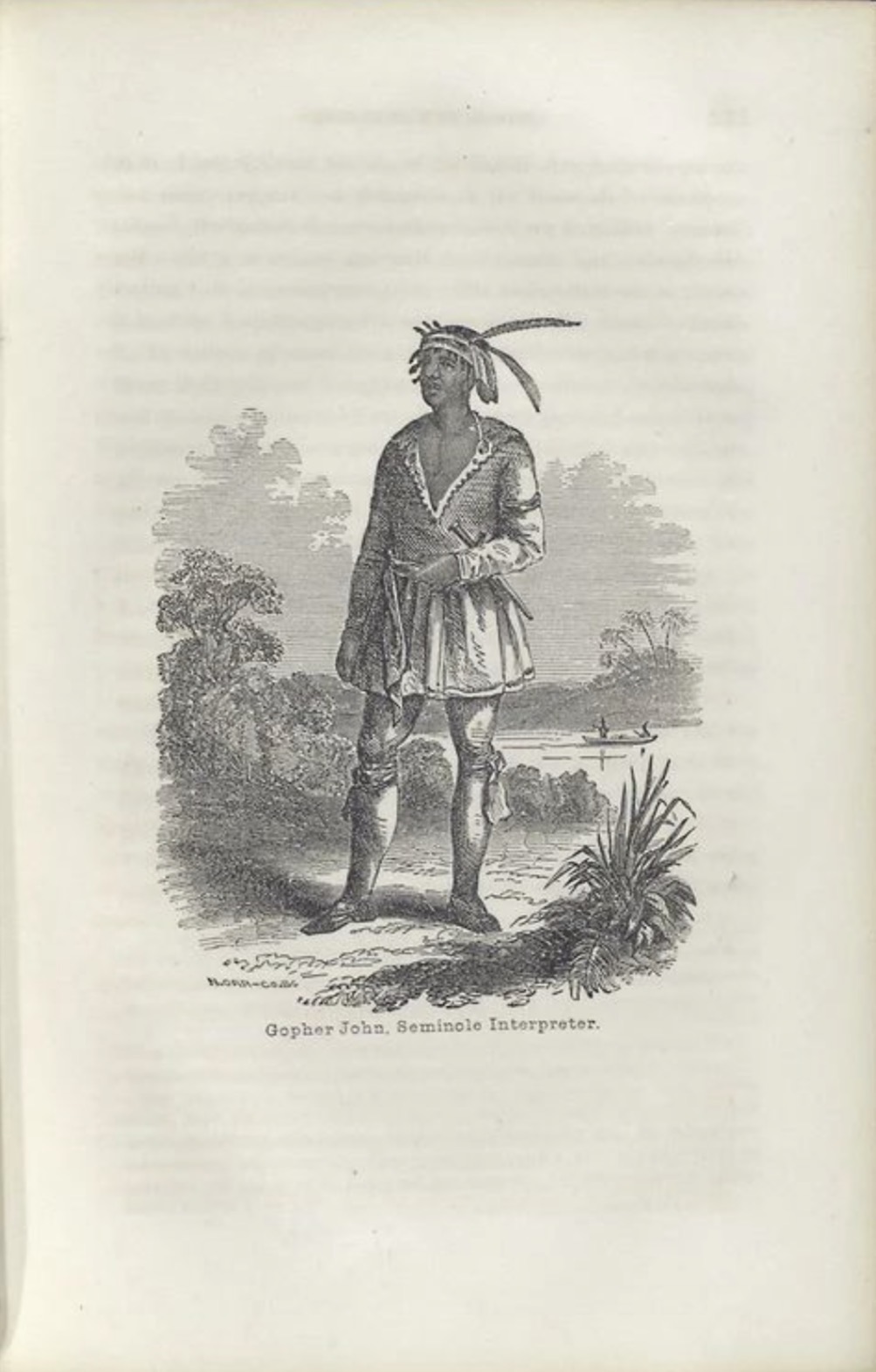
#43 Gopher John, a Black Seminole leader and interpreter, 1863
This source depicts Gopher John, a Black Seminole leader and interpreter (1863). He was also known as John Horse or Juan Caballo—a mixed-heritage (African, Indigenous, and Spanish) figure who became a prominent warrior, negotiator, and cultural intermediary during and after the Second Seminole War. Gopher John used his language skills and leadership to represent Black Seminoles in negotiations with U.S. forces and helped guide his people through conflict, removal, and resettlement.
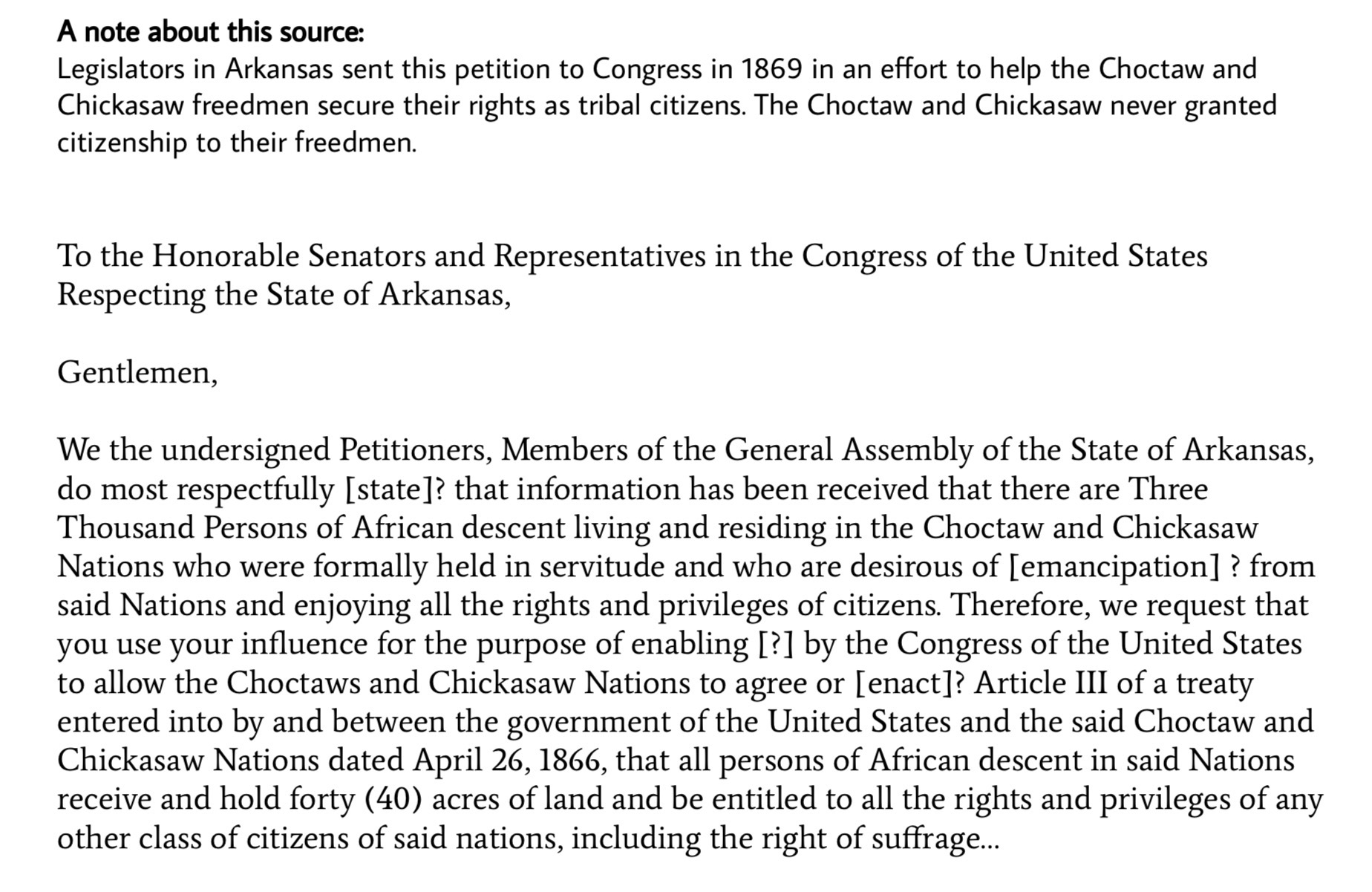
#44 Arkansas Petition for Freedmen’s Rights, 1869
This source, the Arkansas Petition for Freedmen’s Rights (1869), is a post‑Civil War document in which members of the Arkansas General Assembly asked the U.S. Congress to help ensure that formerly enslaved people (“freedmen”) living in the Choctaw and Chickasaw Nations could remain there with full citizenship rights, including land ownership and the right to vote. It reflects efforts during Reconstruction to secure legal and civil rights for African Americans after slavery.
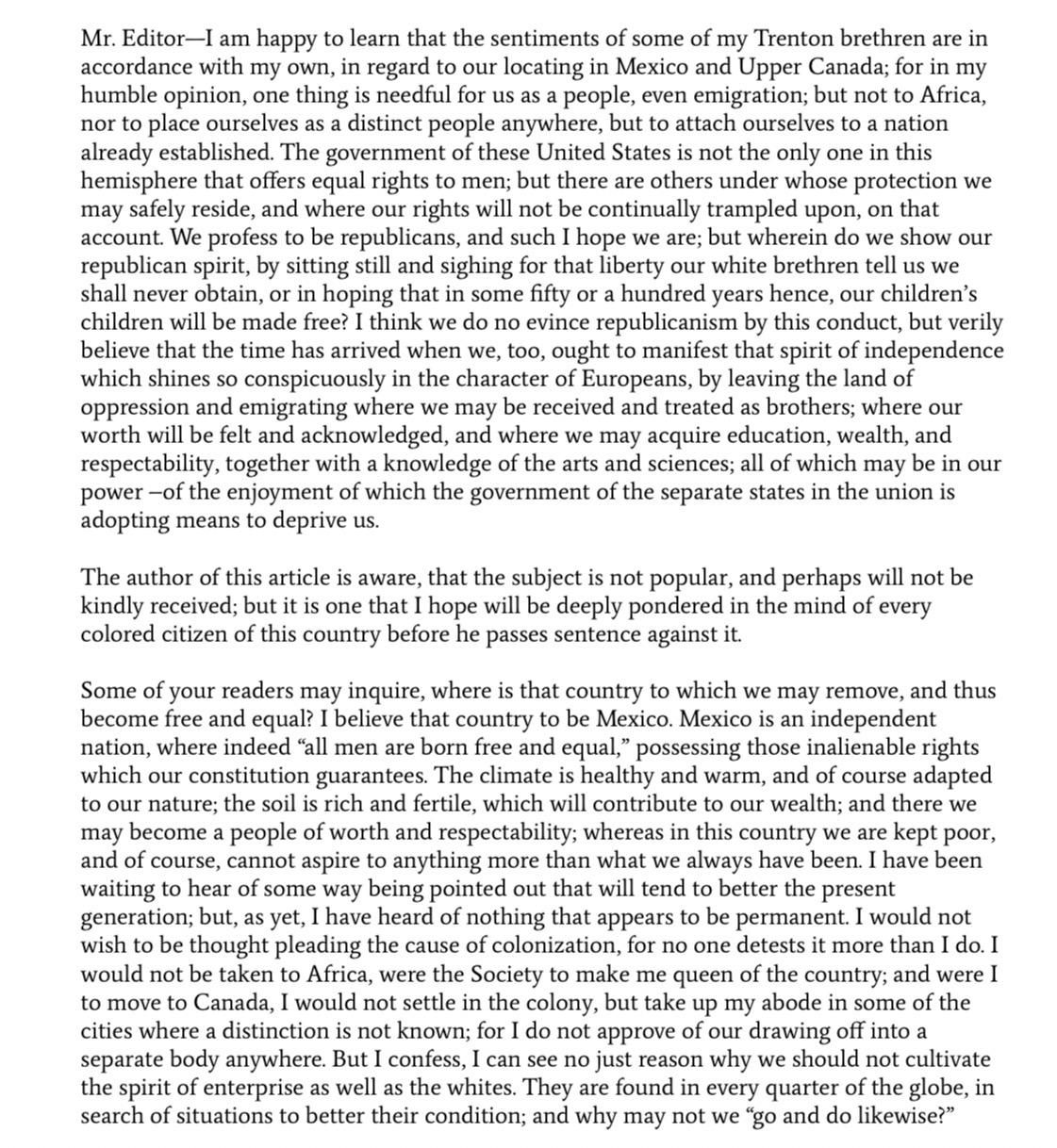
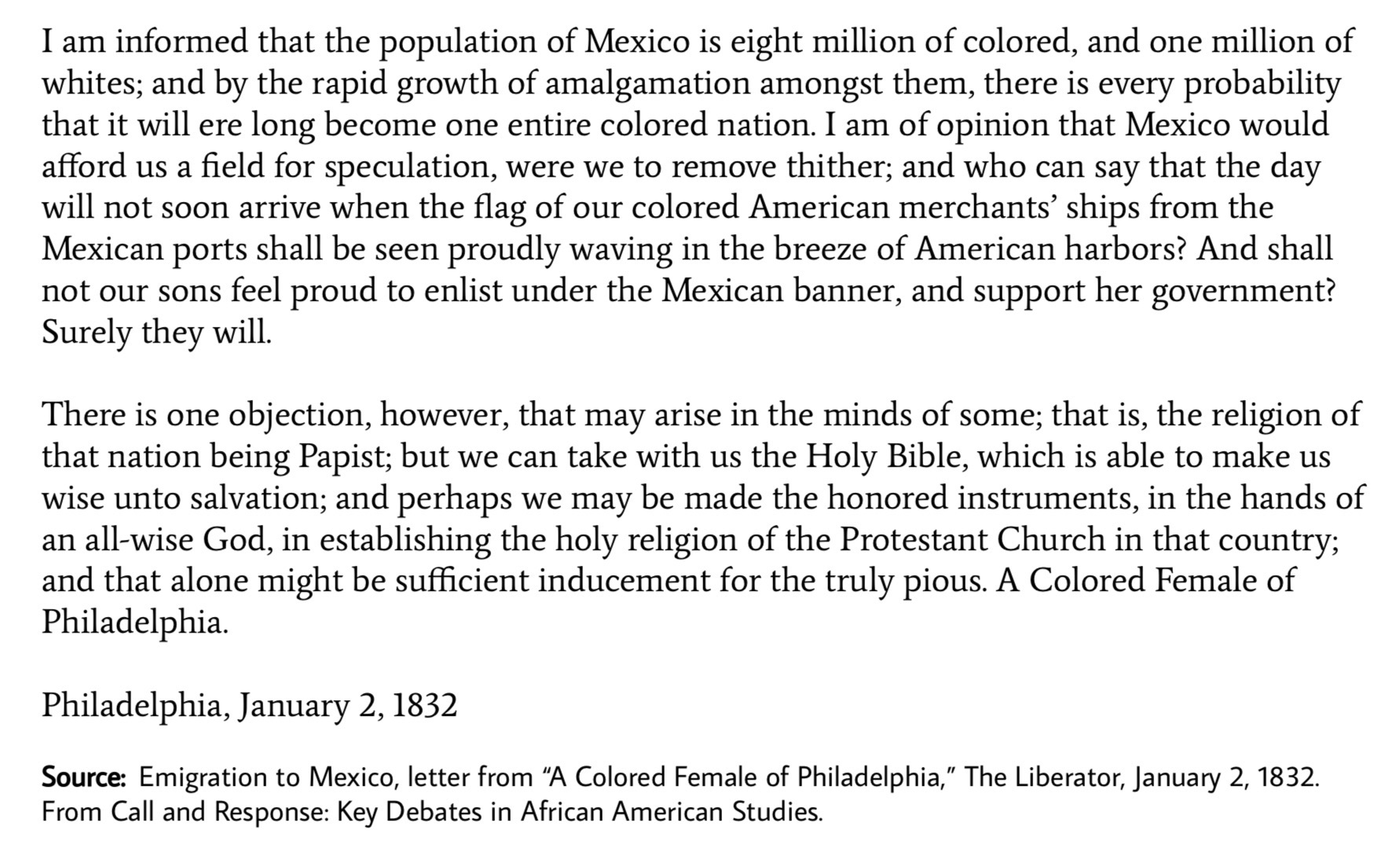
#45 “Emigration to Mexico” by “A Colored Female of Philadelphia,” The Liberator, 1832
This source, “Emigration to Mexico” by “A Colored Female of Philadelphia” (published in The Liberator, 1832), is a first‑hand letter from a free Black woman arguing that African Americans should consider moving to Mexico to escape racial oppression in the United States. She suggests that Mexico, where slavery had been abolished and Black people could live with greater equality and opportunity, might offer a better future than staying in the U.S. or emigrating to Africa.
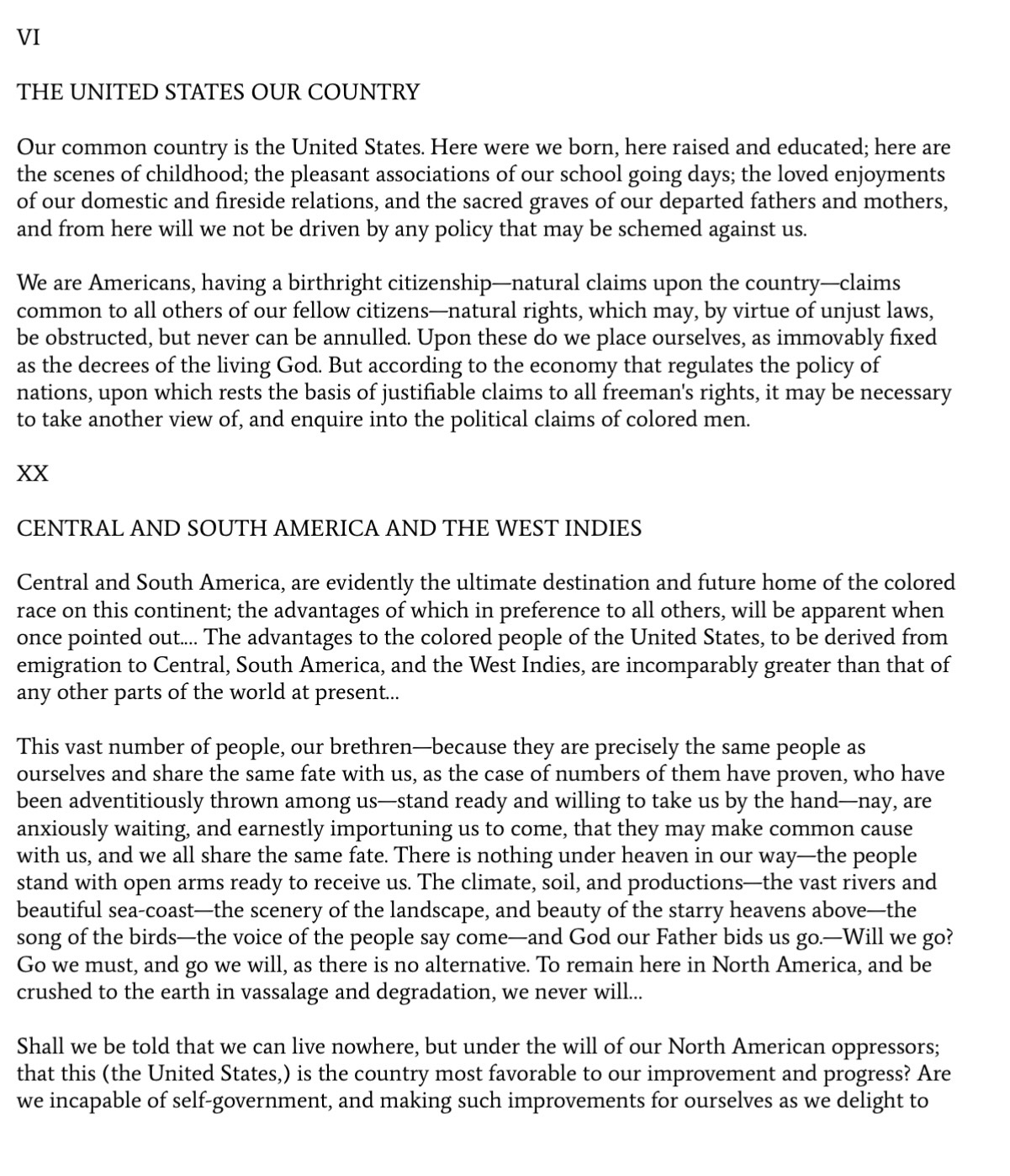
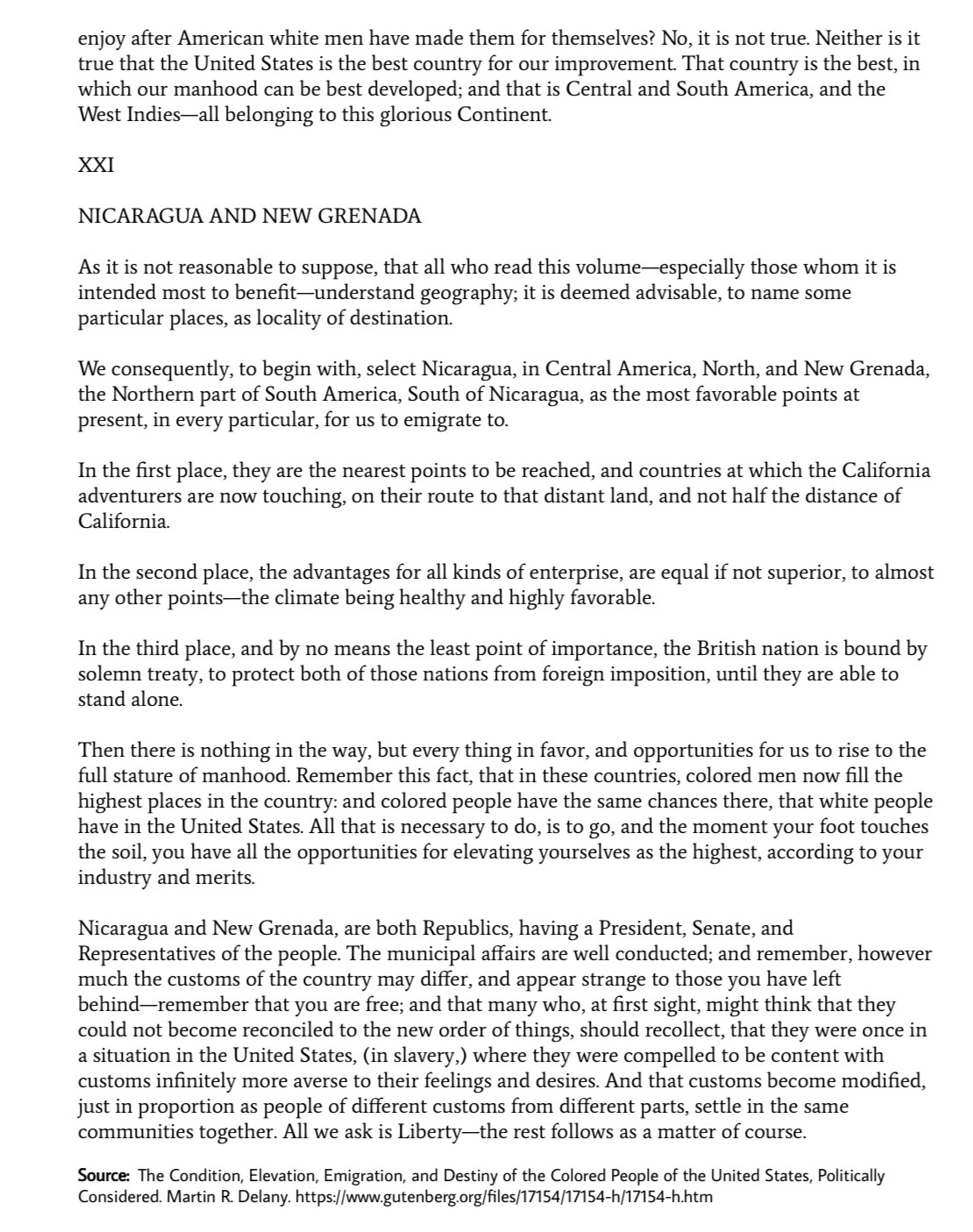
#46 Excerpt from The Condition, Elevation, Emigration, and Destiny of the Colored People of the United States, Politically Considered by Martin R. Delany, 1852
This source is from Martin R. Delany’s 1852 book, in which he argues that African Americans cannot achieve full equality in the U.S. and encourages emigration to places like Central or South America or the West Indies as a way to seek freedom, self-determination, and better opportunities outside American oppression.
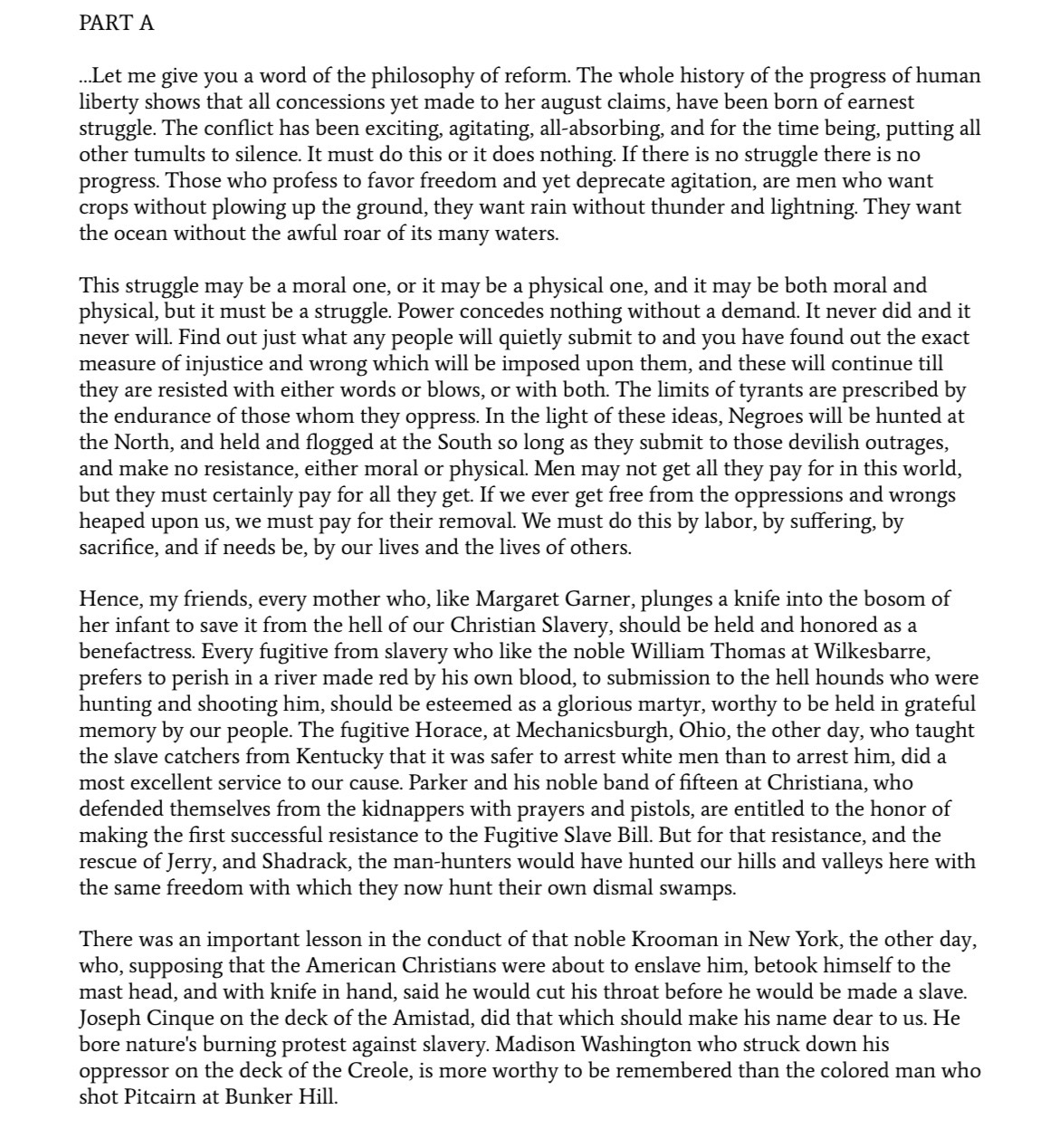
#47 “West India Emancipation” by Frederick Douglass, 1857
This source, “West India Emancipation” by Frederick Douglass (1857), is a speech celebrating the abolition of slavery in the British West Indies in 1834. Douglass uses it to highlight the success of emancipation, inspire hope for freedom in the United States, and argue that African Americans in the U.S. should continue fighting for their own liberation.
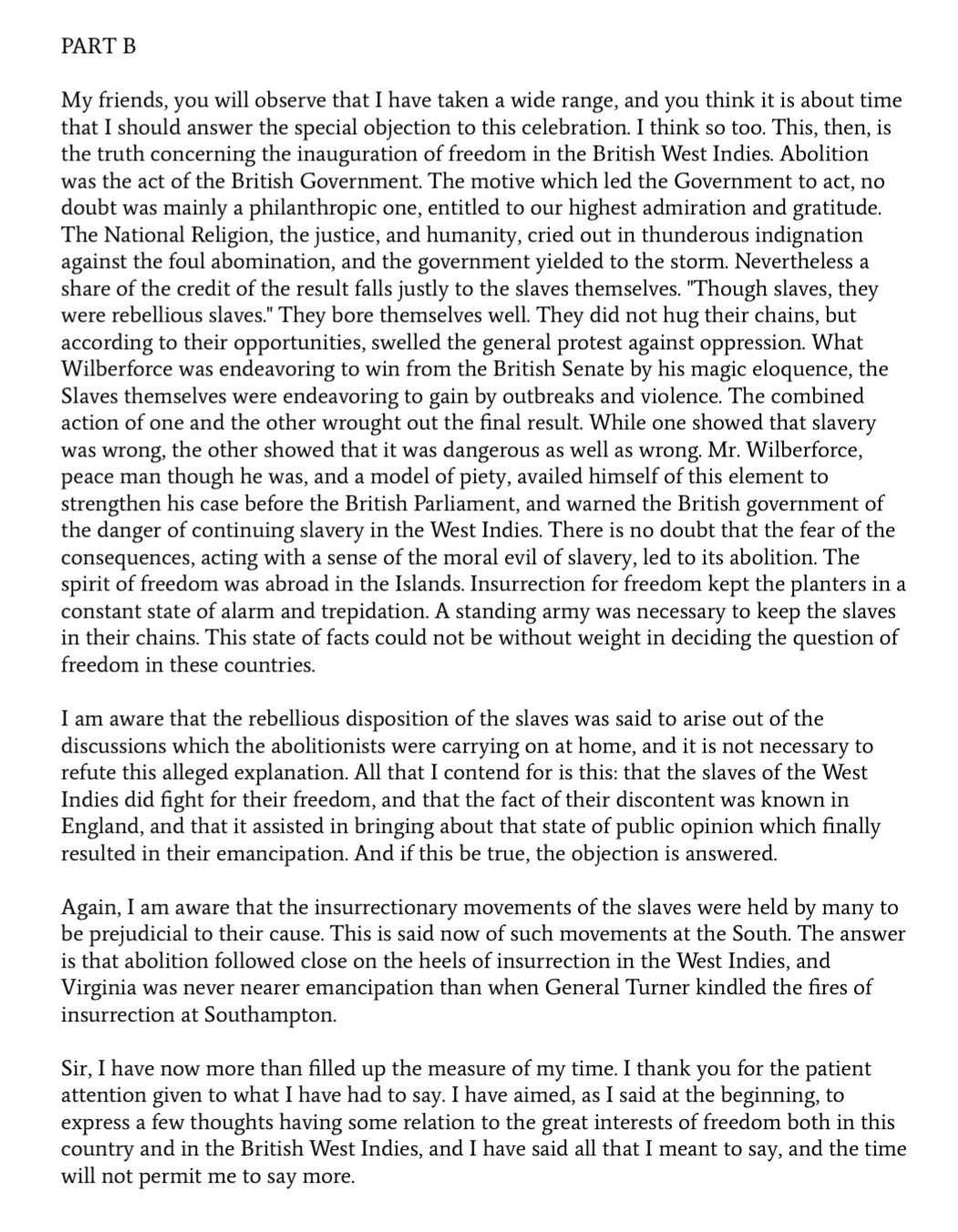
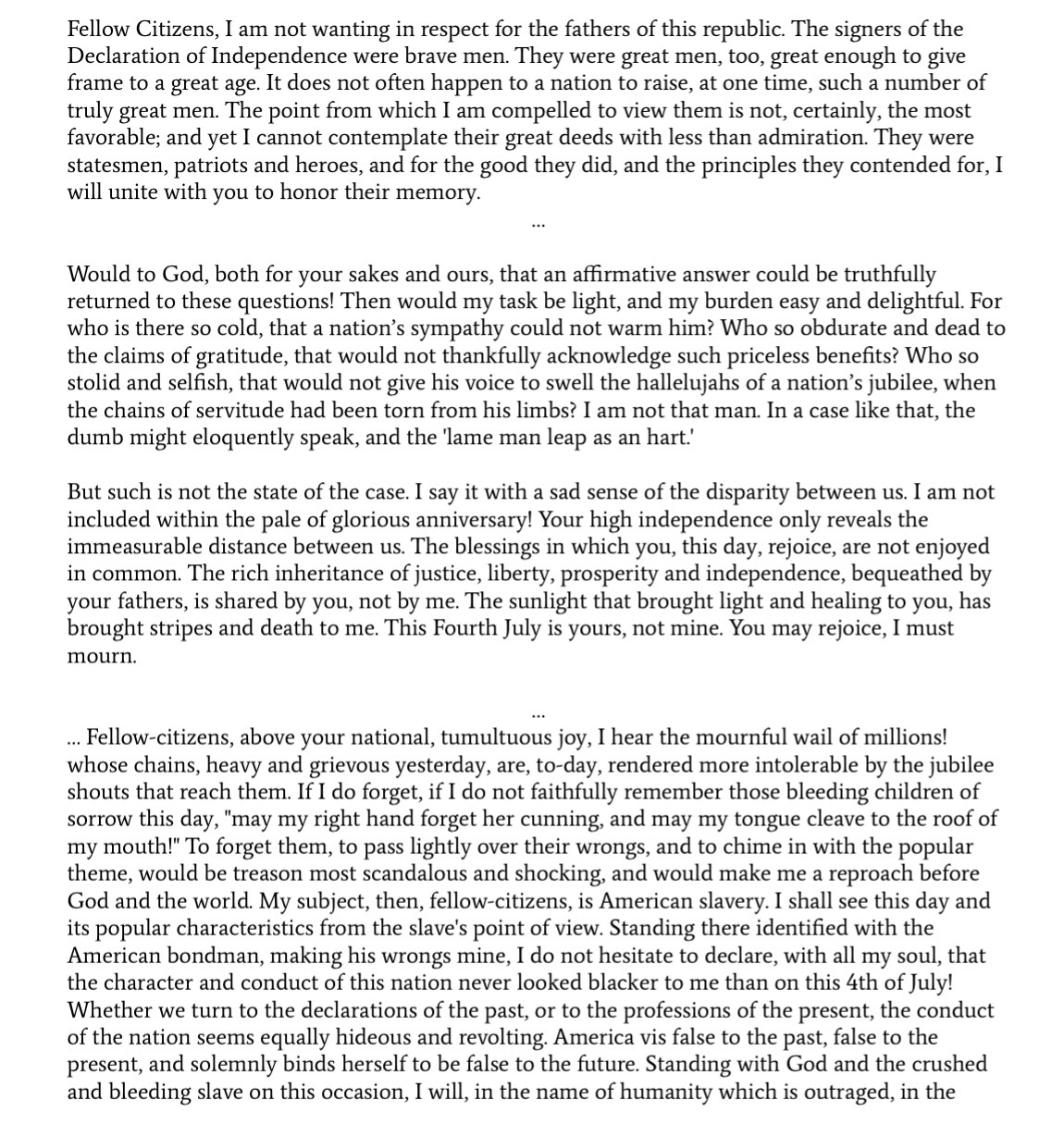
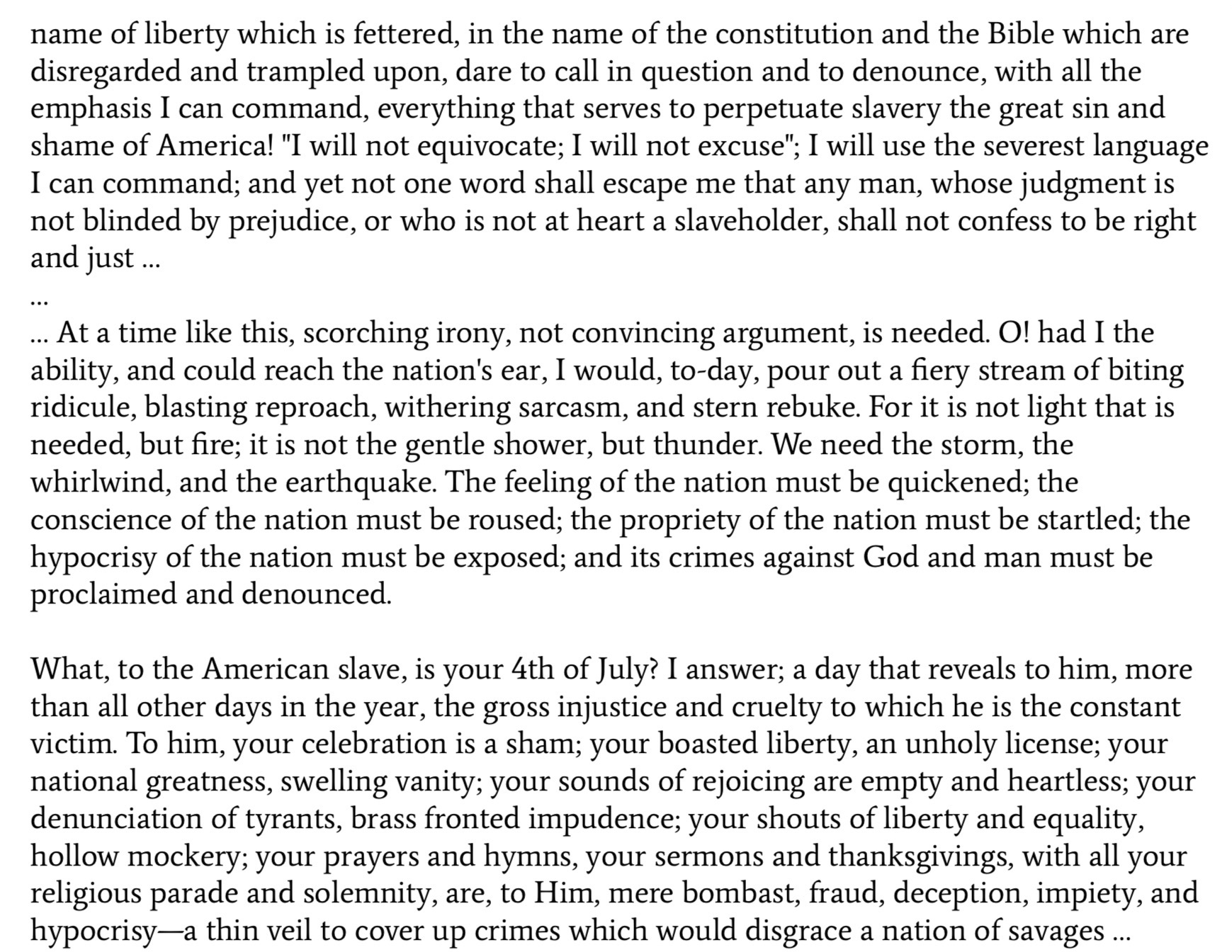
BONUS SOURCE: “What, To The Slave, Is The Fourth Of July” by Frederick Douglass, 1852
This source, “What to the Slave Is the Fourth of July?” by Frederick Douglass (1852), is a speech in which Douglass criticizes the United States for celebrating freedom while millions of African Americans remained enslaved. He exposes the hypocrisy of American independence and calls for justice, equality, and the abolition of slavery.
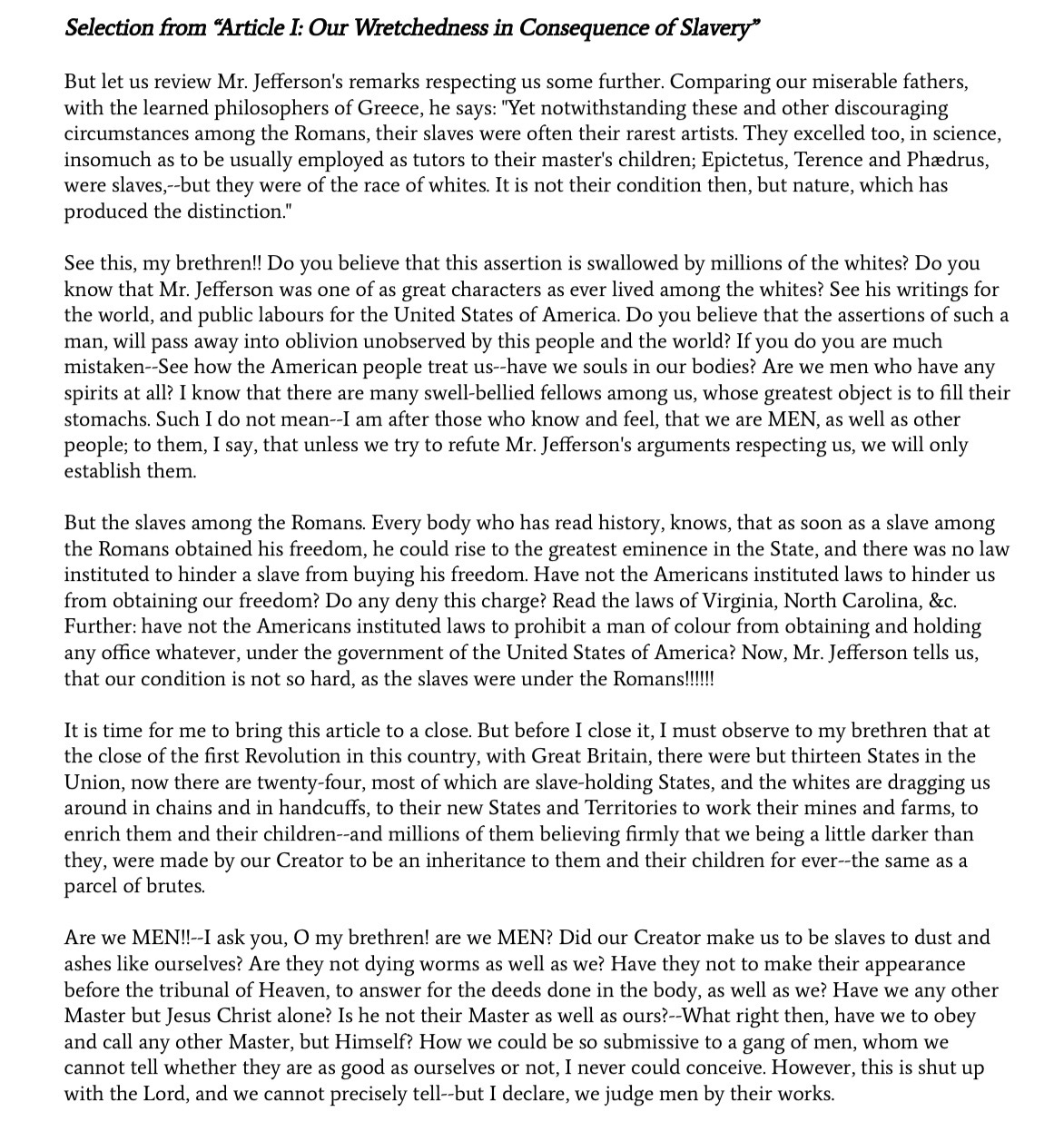
#48 Appeal by David Walker, 1829
This source, Appeal by David Walker (1829), is a radical anti-slavery pamphlet written by a free Black man in Boston. It urges enslaved and free African Americans to resist oppression, denounces slavery and racism in the United States, and calls for immediate emancipation and equal rights, warning that justice will not come without active struggle.
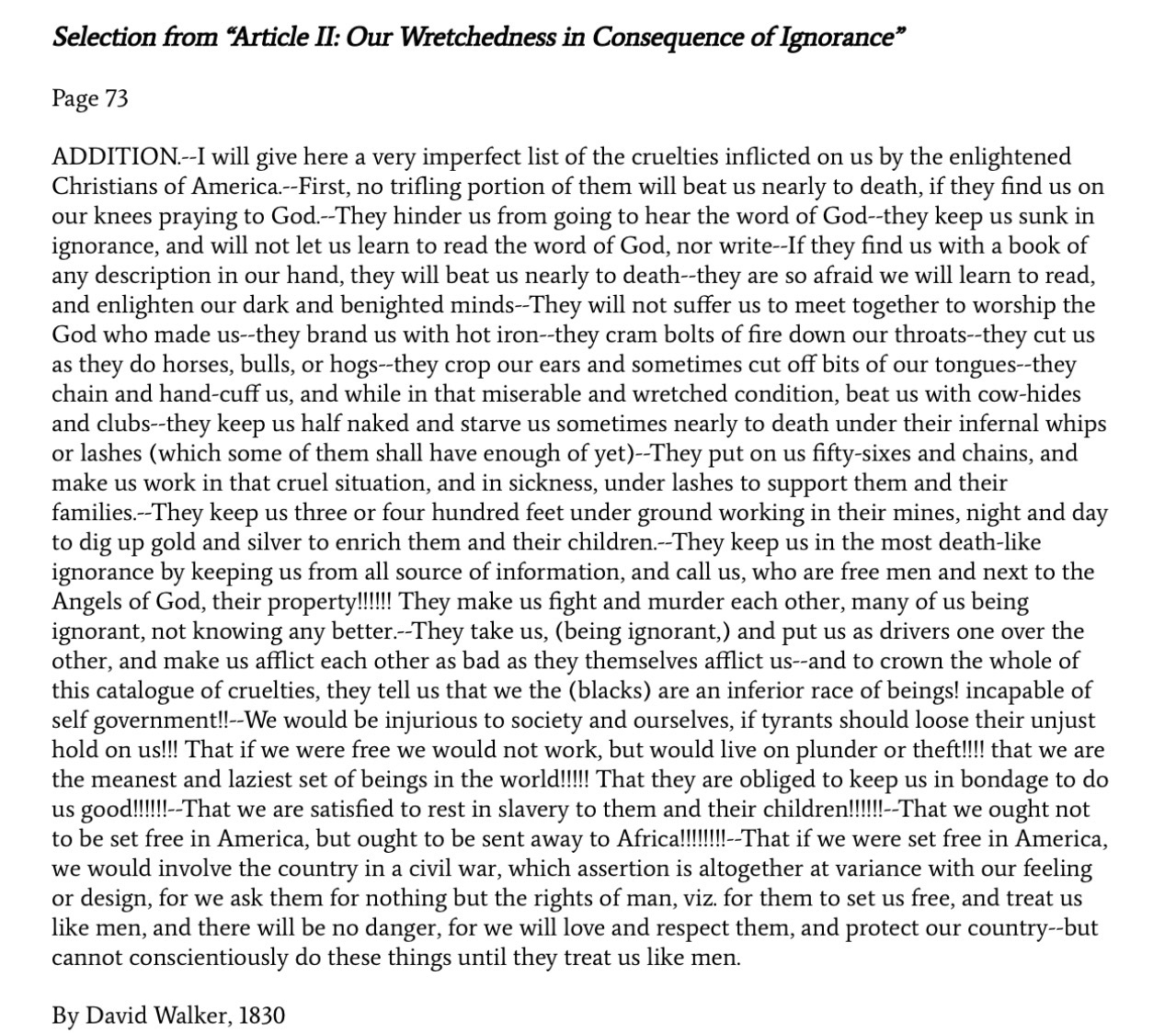
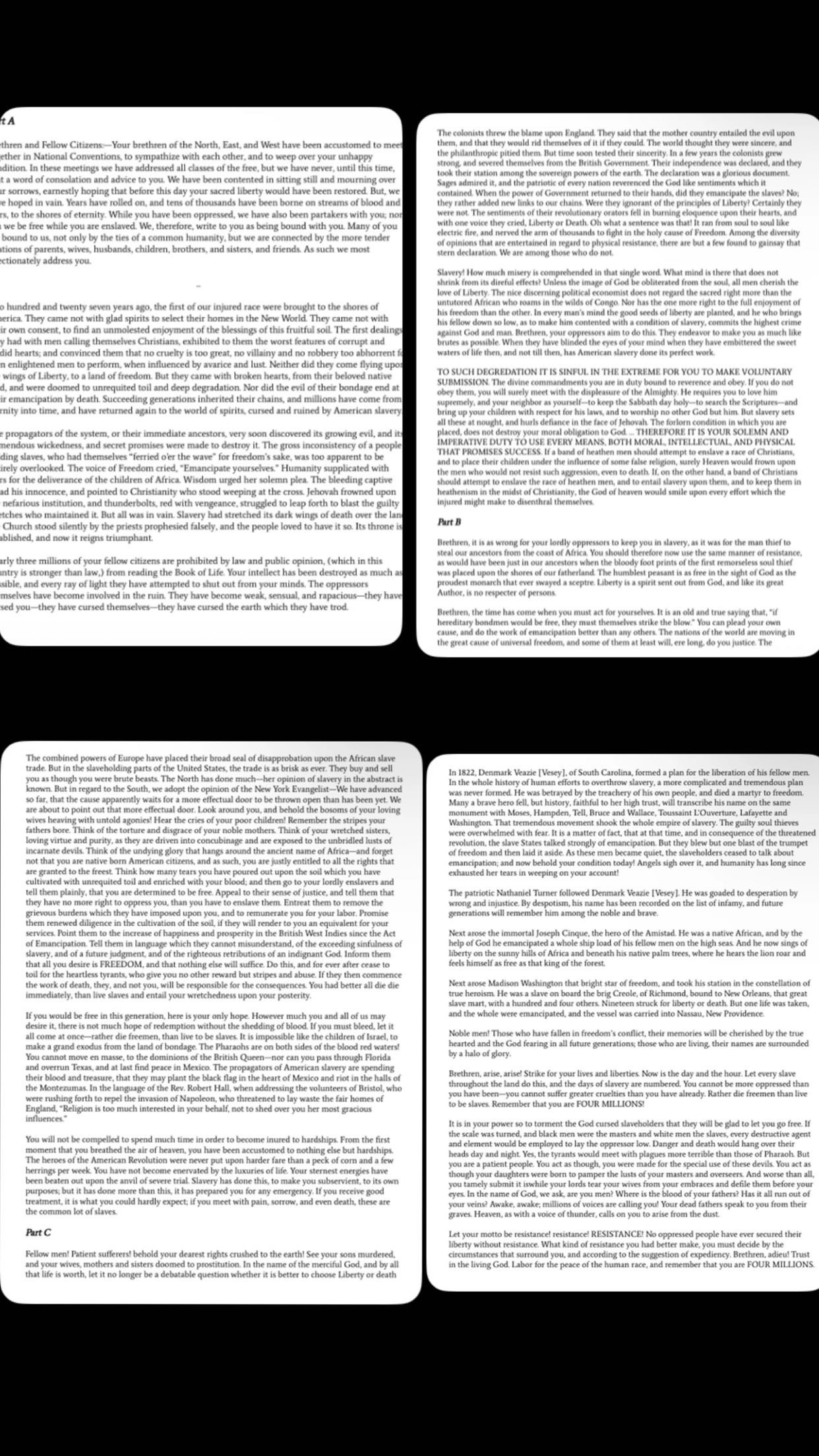
#49 “An Address to the Slaves of the United States” by Henry Highland Garnet, 1843
This source, “An Address to the Slaves of the United States” by Henry Highland Garnet (1843), is a speech urging enslaved African Americans to rise up against their oppressors. Garnet calls for active resistance and self-liberation, arguing that freedom cannot be granted by slaveholders and must be seized by the enslaved themselves.
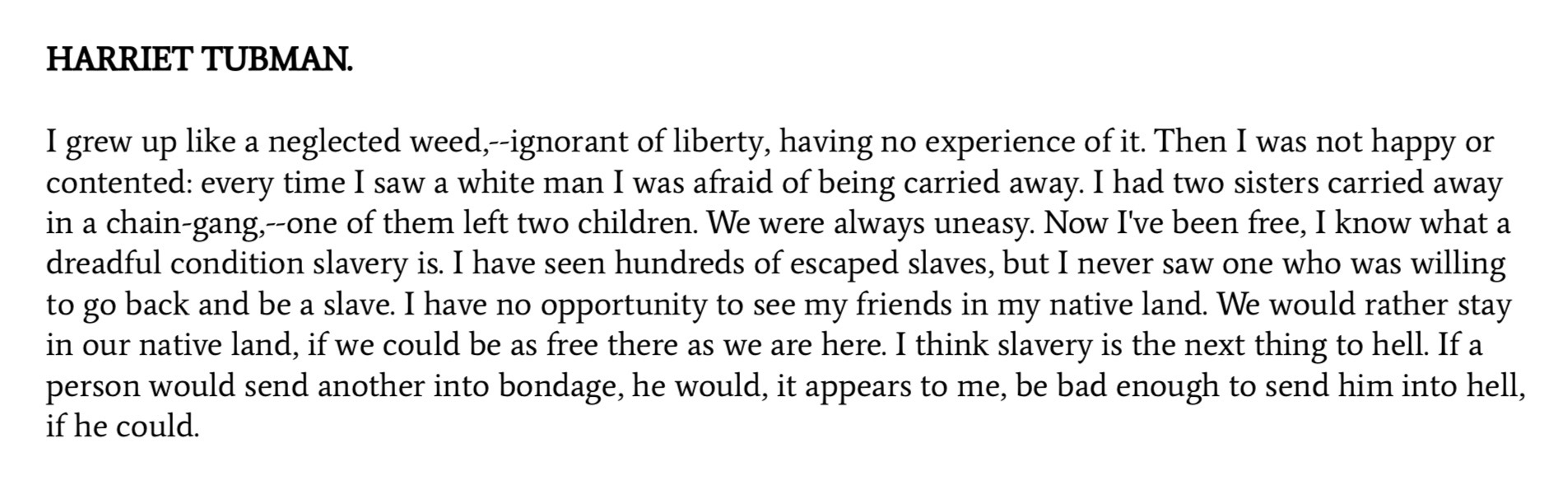
#50 Harriet Tubman’s reflection in The Refugee by Benjamin Drew, 1856 (p. 30)
This source is Harriet Tubman’s reflection as recorded in The Refugee by Benjamin Drew (1856, p. 30). Tubman describes her experiences escaping slavery and helping others flee via the Underground Railroad, highlighting her courage, resourcefulness, and commitment to freedom. It provides a firsthand account of the dangers and strategies involved in resistance to slavery.
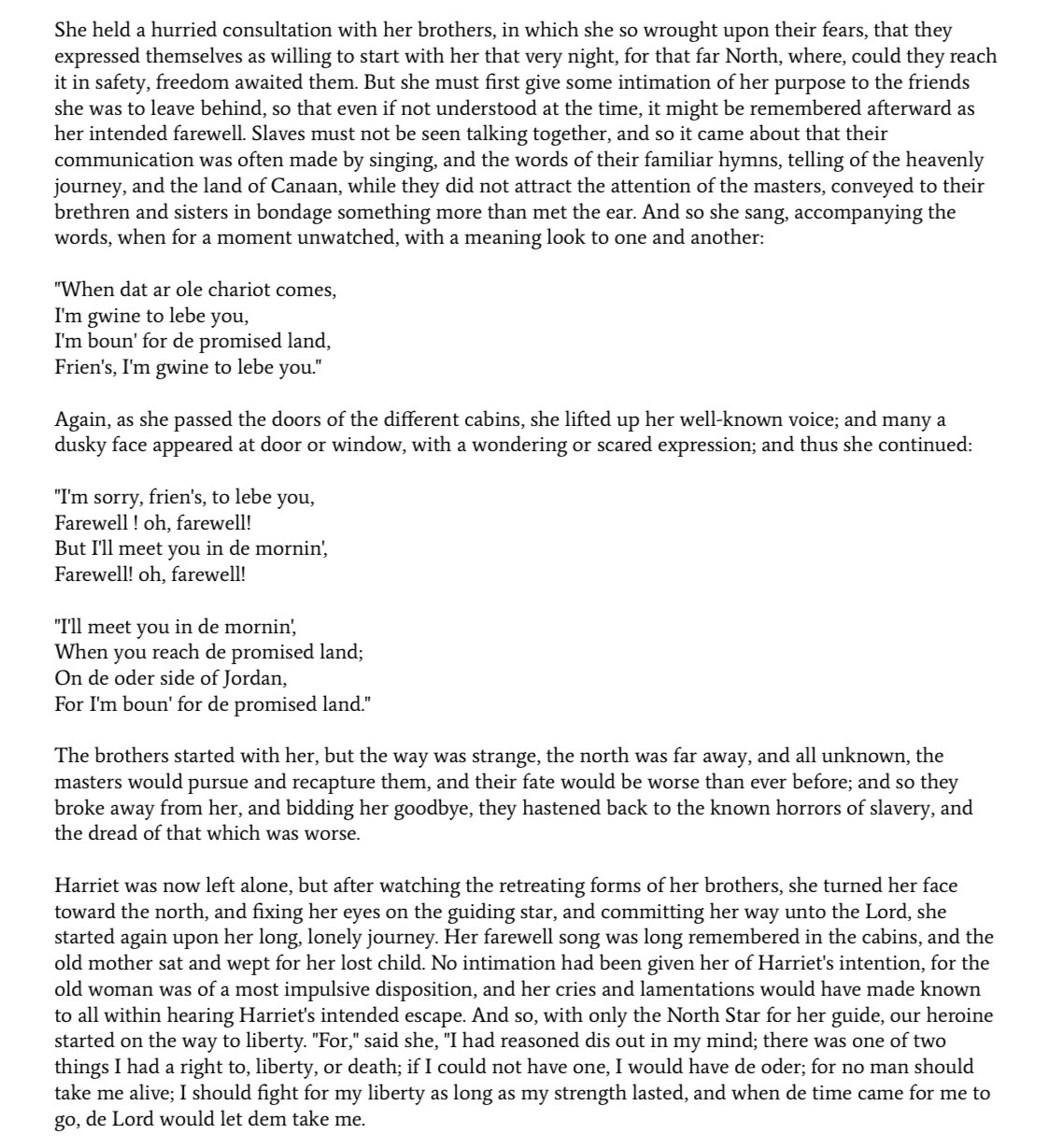
#51 Excerpt from Harriet, the Moses of Her People by Sarah H. Bradford, 1886 (pp. 27-29)
This source is an excerpt from Harriet, the Moses of Her People by Sarah H. Bradford (1886, pp. 27–29), which chronicles Harriet Tubman’s life and achievements. It highlights her bravery, leadership, and dedication in guiding enslaved people to freedom via the Underground Railroad, portraying her as a symbol of courage and resistance against slavery.
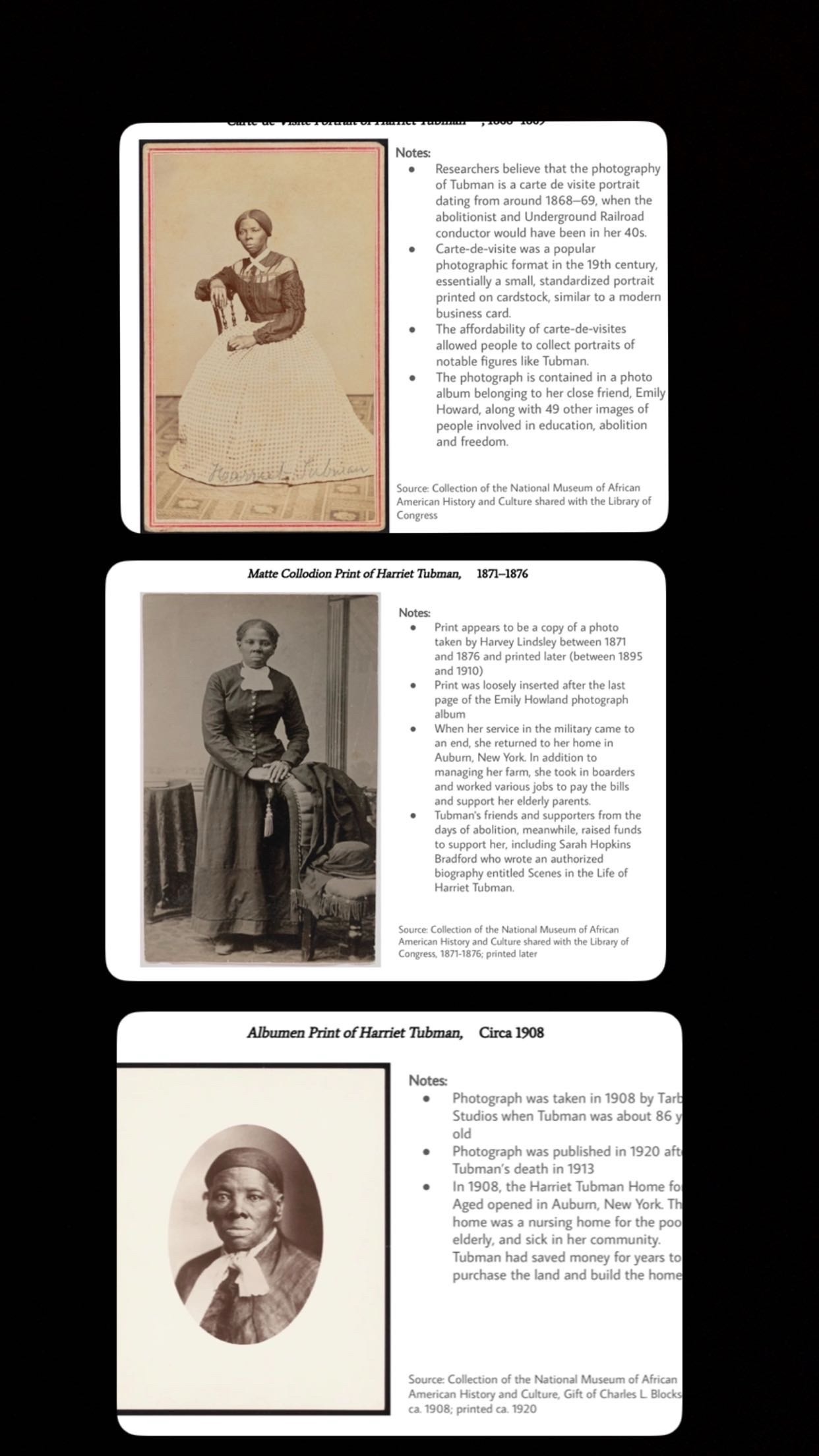
#52 Photographs of Harriet Tubman Throughout Her Life
Carte-de-Visite Portrait of Harriet Tubman (1868–1869): A small photographic print showing Harriet Tubman, emphasizing her status as a celebrated abolitionist and conductor of the Underground Railroad shortly after the Civil War.
Matte Collodion Print of Harriet Tubman (1871–1876): A mid-19th-century photographic portrait capturing Tubman’s dignity and leadership, reflecting her continued recognition as a freedom fighter and advocate for African American rights.
Albumen Print of Harriet Tubman (c. 1908): A later photographic print portraying Tubman in her older years, highlighting her legacy as a heroic figure in the struggle against slavery and her enduring influence in American history.
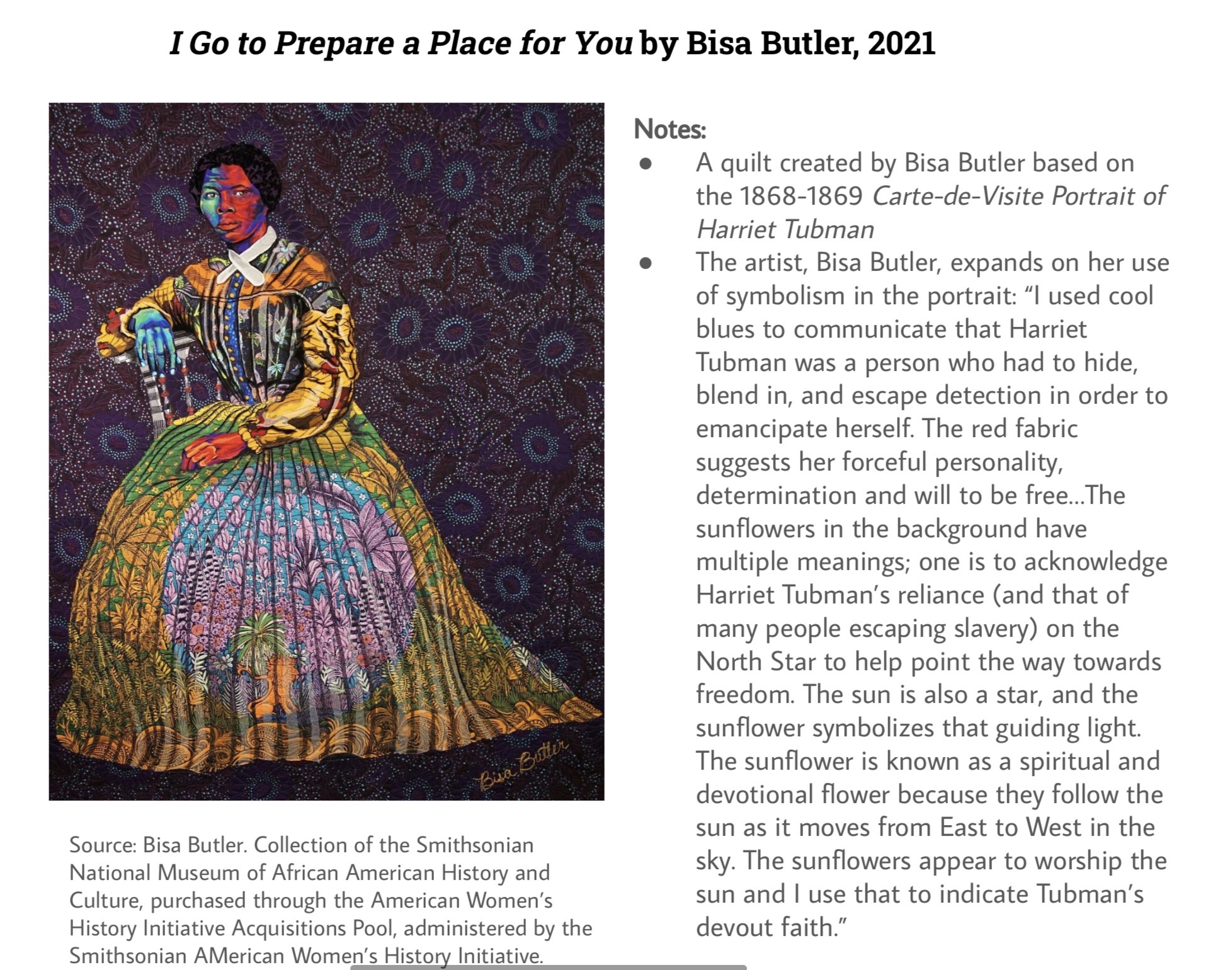
#53 I Go to Prepare a Place for You by Bisa Butler, 2021
This source, I Go to Prepare a Place for You by Bisa Butler (2021), is a textile artwork that uses vibrant fabric and quilting to honor Black lives and history. It highlights community, memory, and resilience, blending portraiture and storytelling to celebrate African American culture and heritage.
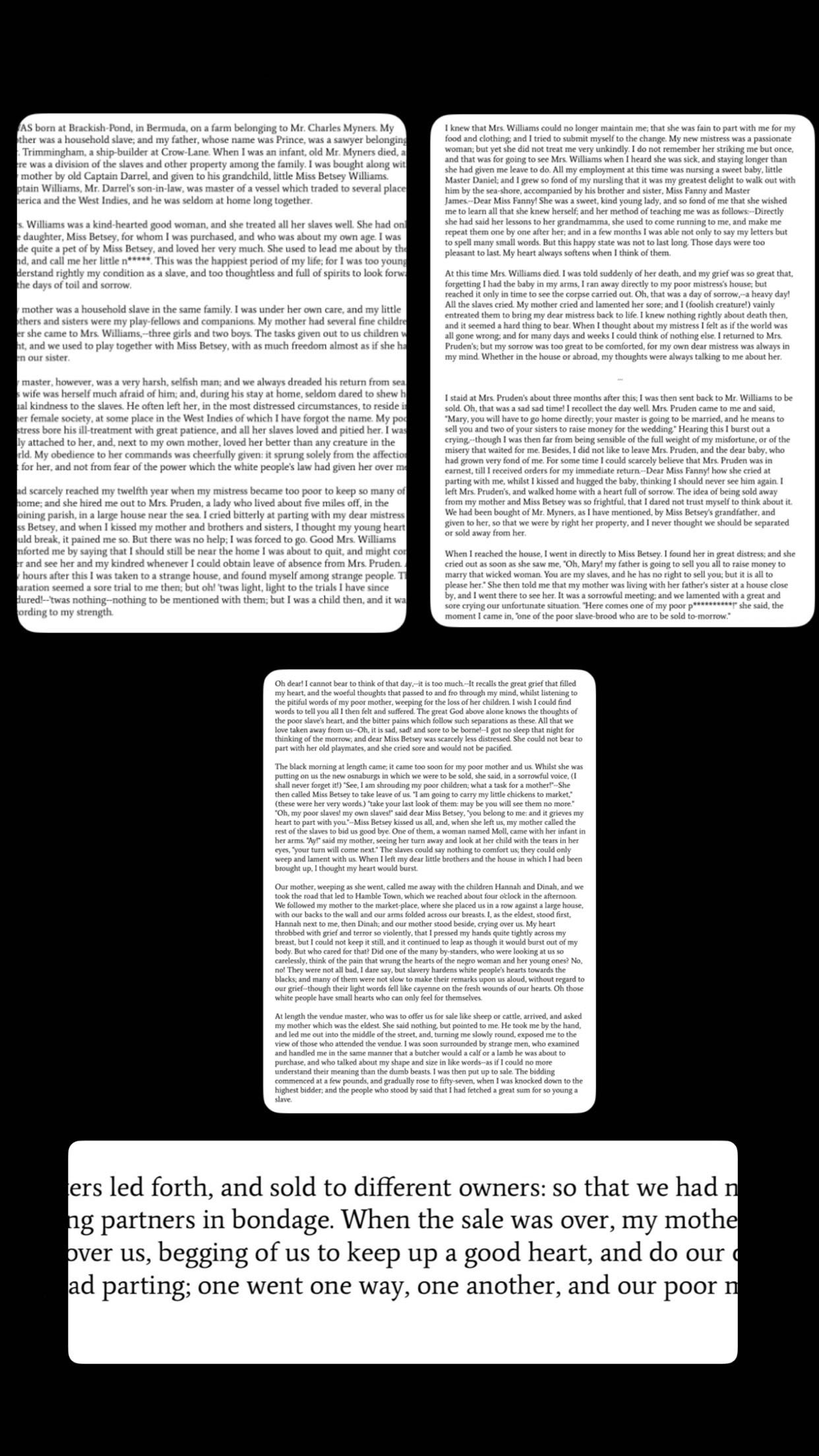
#54 Excerpt from The History of Mary Prince, a West Indian Slave by Mary Prince, 1831
This source, The History of Mary Prince, a West Indian Slave by Mary Prince (1831), is a first-person autobiography in which Prince recounts her life in slavery in the Caribbean. It exposes the brutality and injustice of enslavement and became one of the first narratives by a Black woman to influence the British abolition movement.
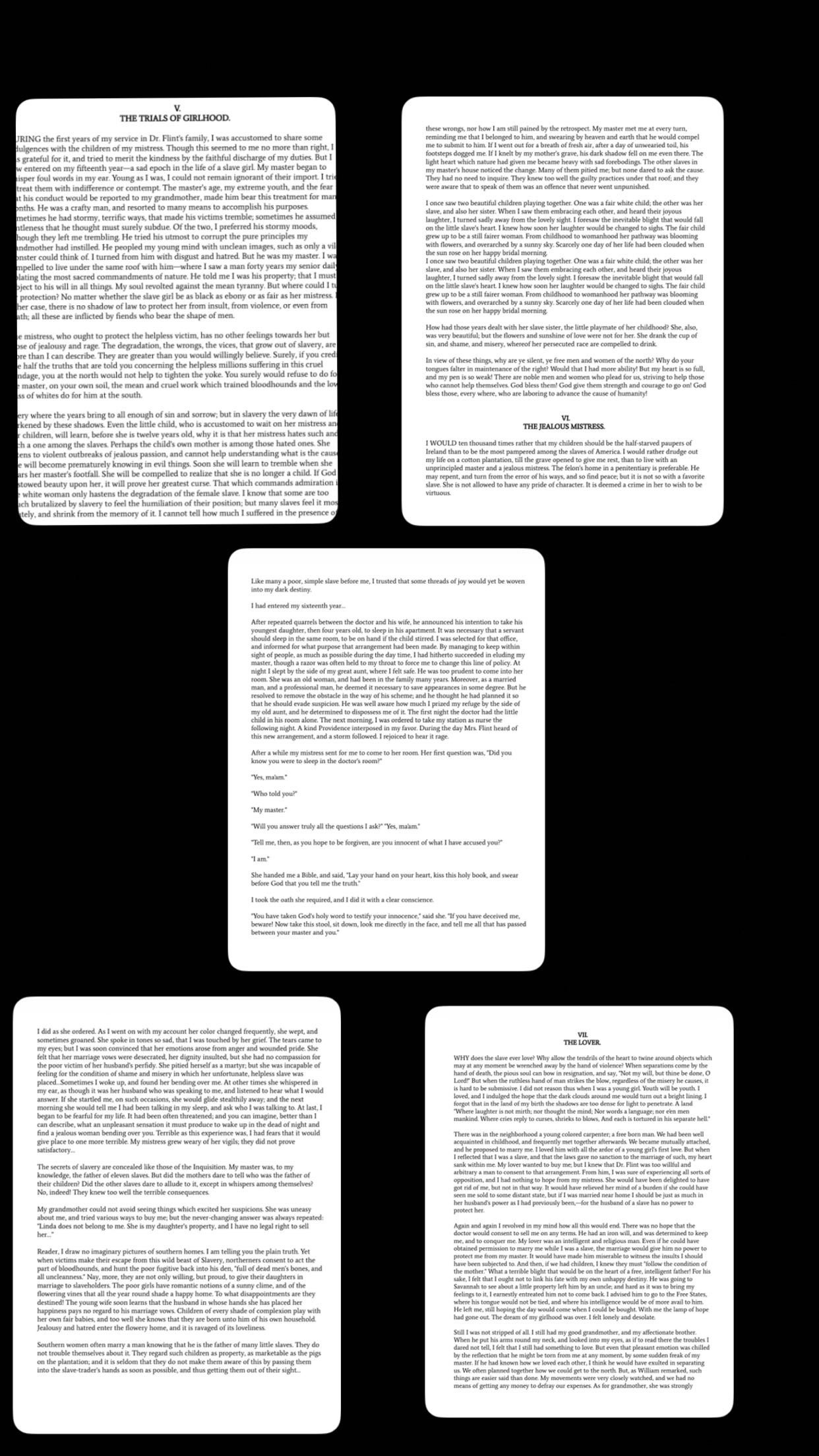
#55 Excerpts from Incidents in the Life of a Slave Girl: Written by Herself by Harriet A. Jacobs, 1860 (sections V-VIII, XIV, XXI)
This source, Incidents in the Life of a Slave Girl by Harriet A. Jacobs (1860, sections V–VIII, XIV, XXI), is a first-person narrative describing Jacobs’ experiences as an enslaved woman in the United States. It reveals the sexual exploitation, family separations, and daily hardships of slavery, highlighting her courage, resistance, and determination to gain freedom.
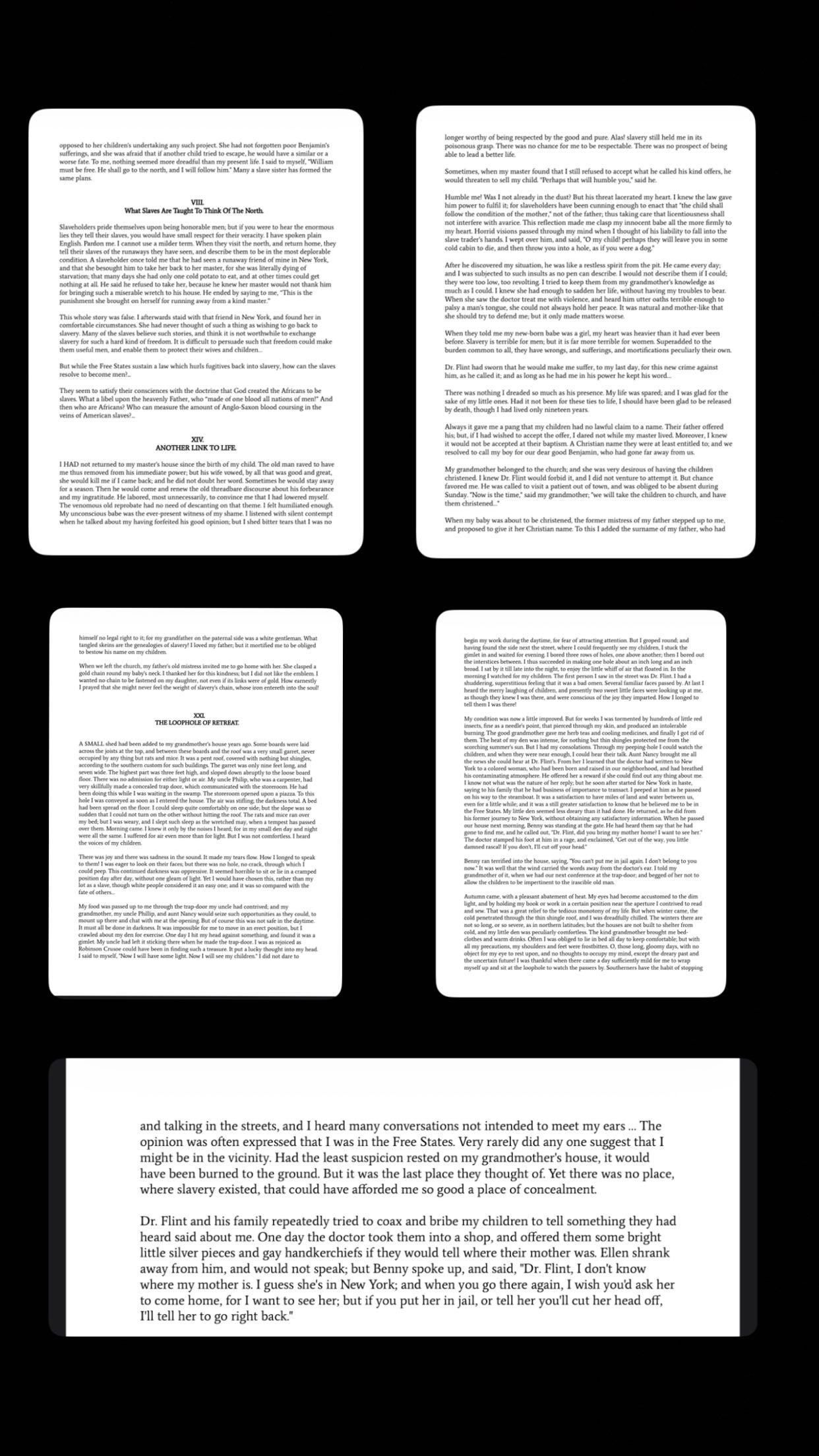
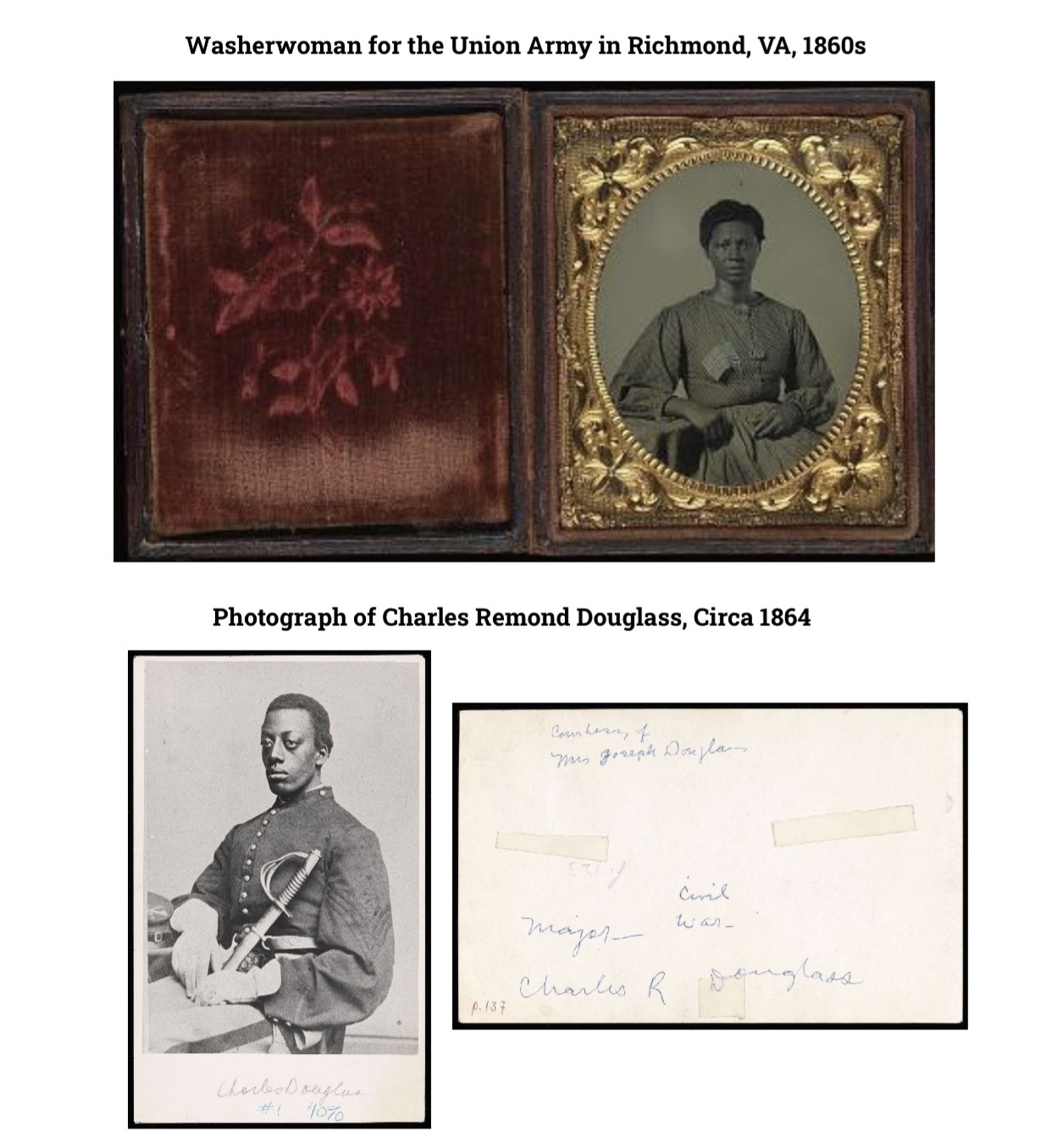
#56 Civil War-Era Photographs
Washerwoman for the Union Army in Richmond, VA, 1860s: A photograph showing a Black woman supporting the Union Army during the Civil War, highlighting the vital roles African Americans played in the war effort beyond combat.
Photograph of Charles Remond Douglass, Circa 1864: A portrait of Charles Remond Douglass, son of Frederick Douglass, showing him as a young African American leader and soldier, reflecting his family’s commitment to abolition and civil rights.
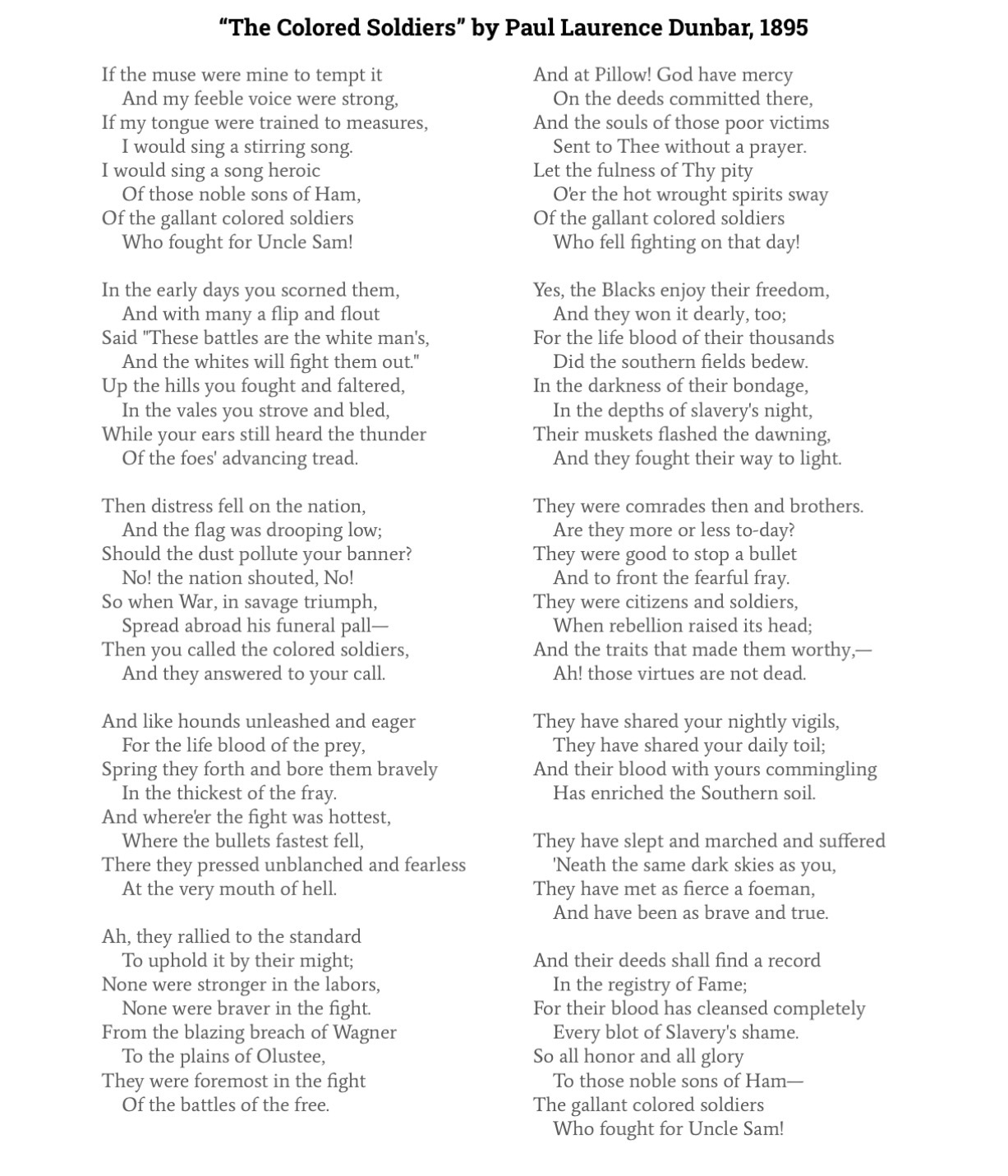
#57 “The Colored Soldiers” by Paul Laurence Dunbar, 1895
This source, “The Colored Soldiers” by Paul Laurence Dunbar (1895), is a poem honoring African American soldiers in the Civil War. It highlights their courage, patriotism, and contributions to the Union cause while acknowledging the challenges and discrimination they faced.
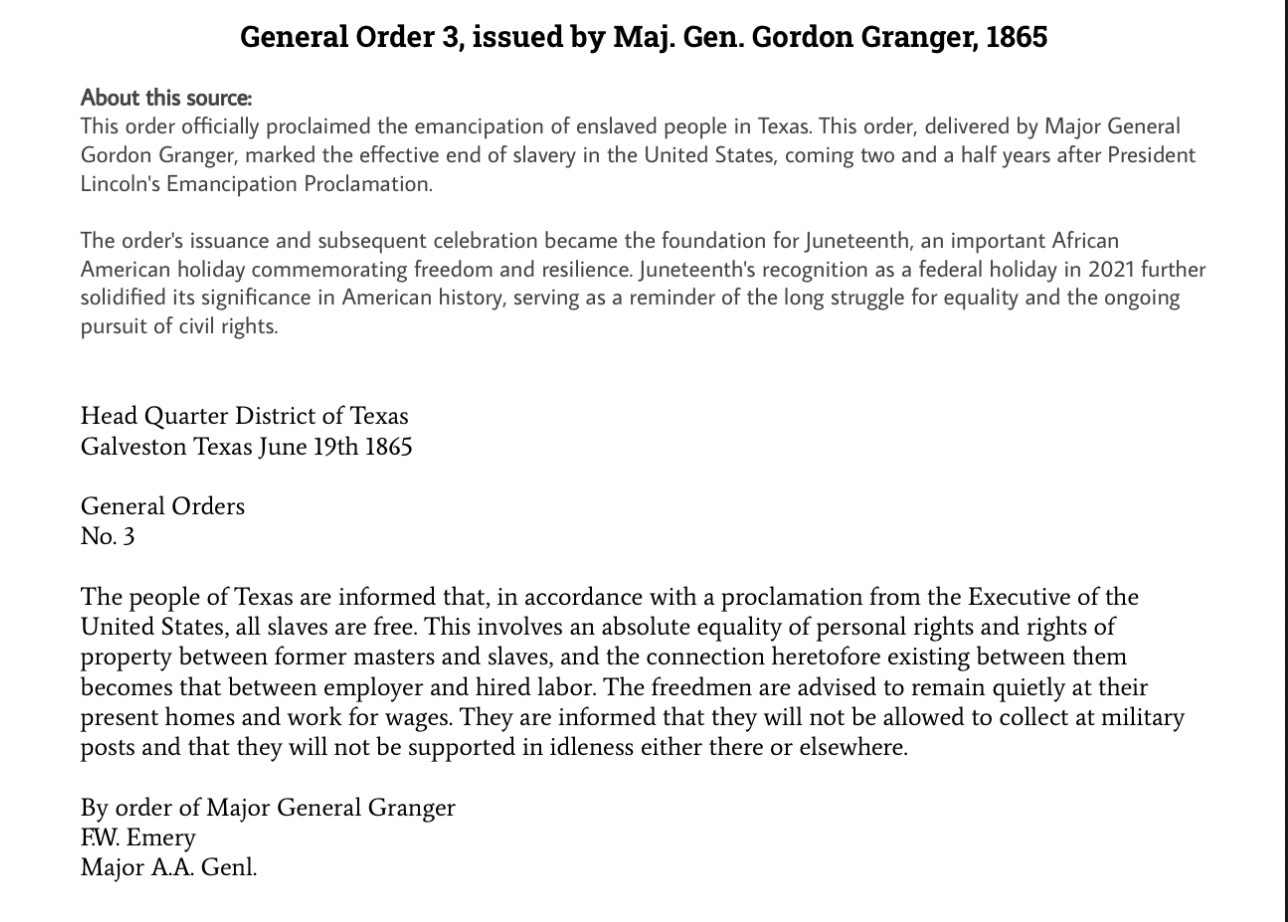
#58 General Order 3, issued by Maj-Gen. Gordon Granger, 1865
This source, General Order No. 3 issued by Major General Gordon Granger in 1865, is the military order that announced the freedom of enslaved people in Texas. It marked the enforcement of the Emancipation Proclamation in the state, symbolizing the official end of slavery in one of the last regions where it persisted.
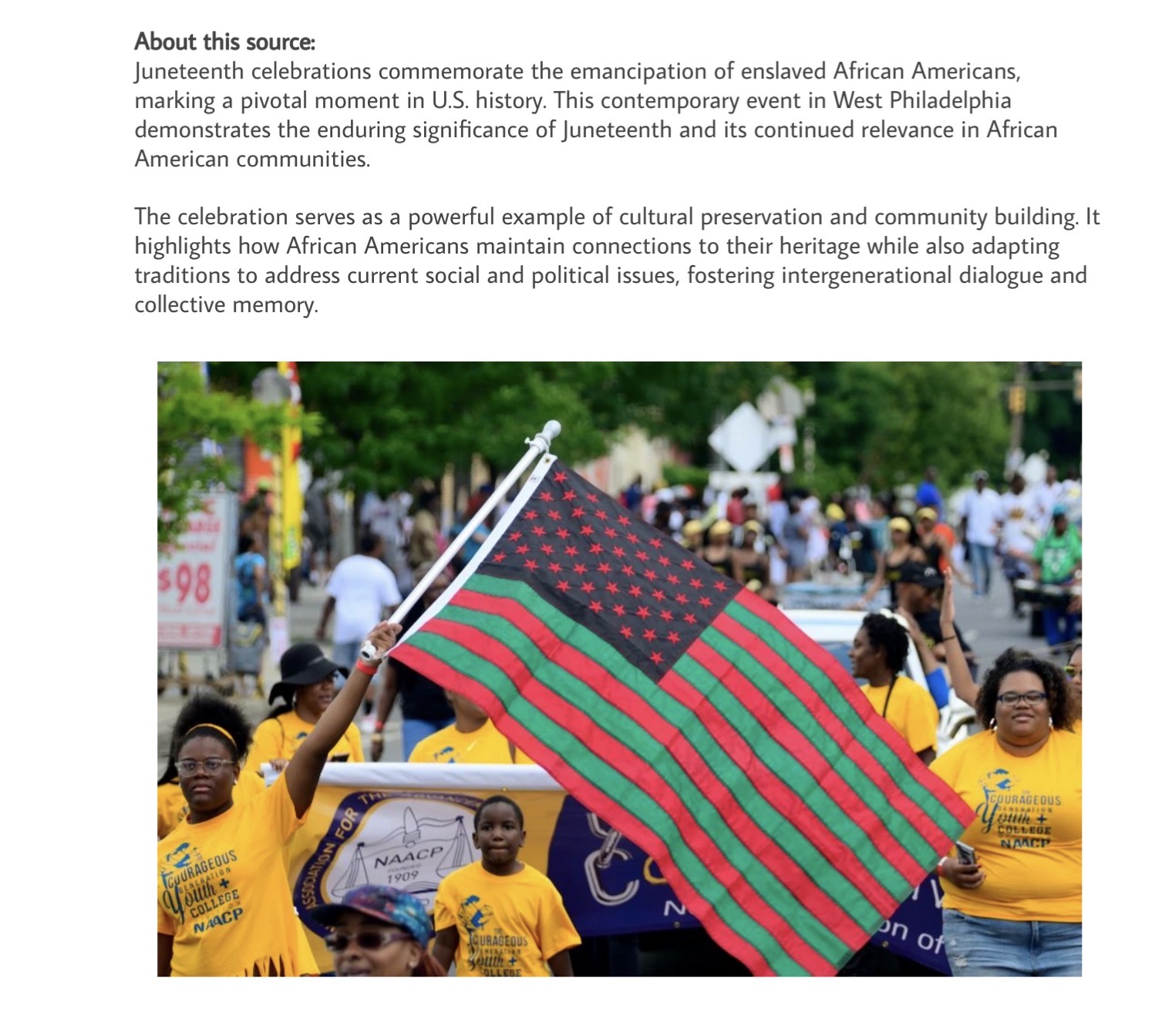
#59 Juneteenth Celebration in West Philadelphia, 2019
This source shows a Juneteenth celebration in West Philadelphia, 2019, highlighting how communities commemorate the end of slavery in the United States. It reflects cultural pride, historical memory, and ongoing recognition of African American freedom and resilience.
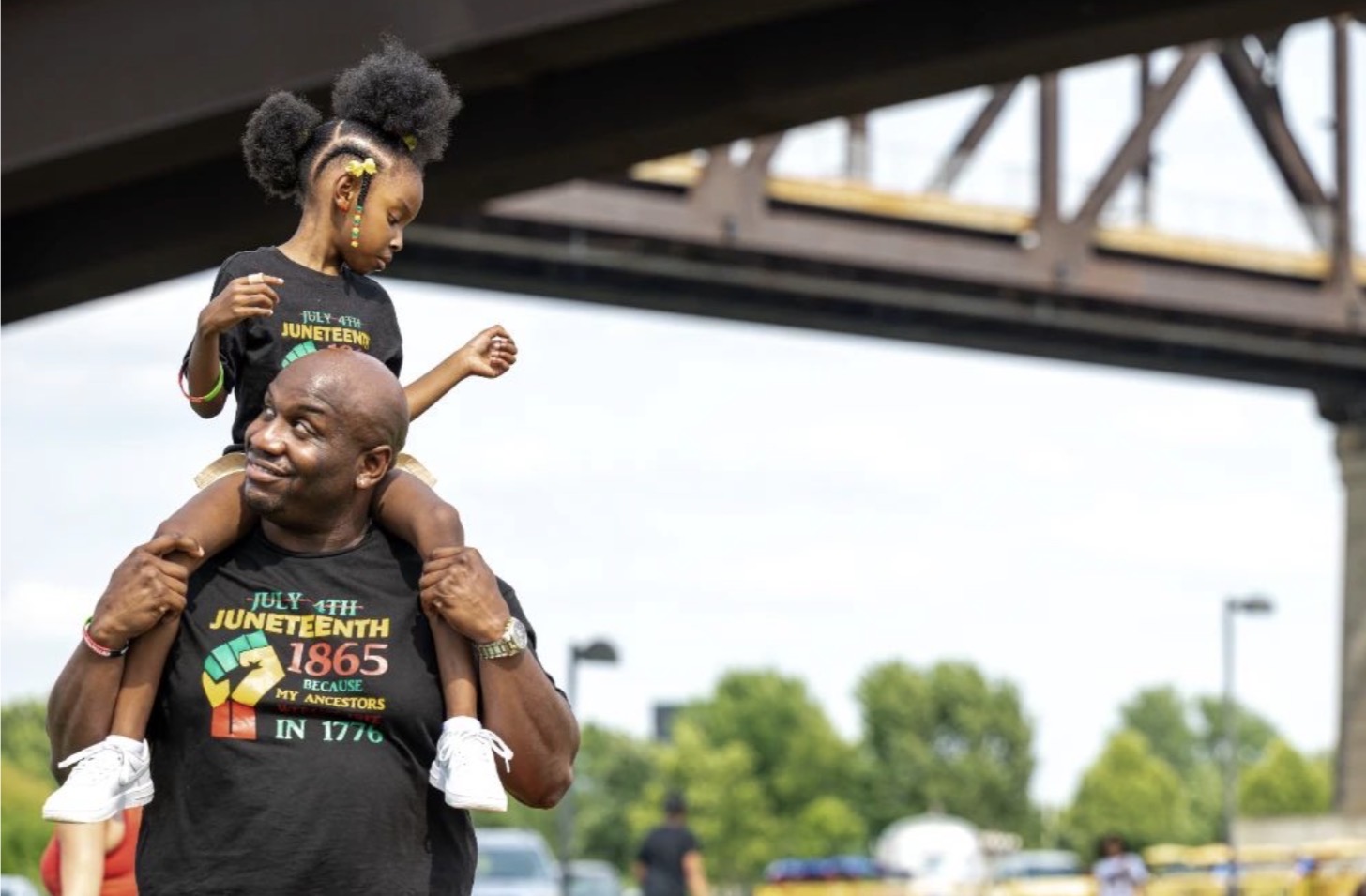
#60 Juneteenth Celebration in Louisville, 2021
This source shows a Juneteenth celebration in Louisville, 2021, demonstrating how people honor the emancipation of enslaved African Americans. It highlights community, cultural pride, and the continued importance of remembering Black history and freedom.
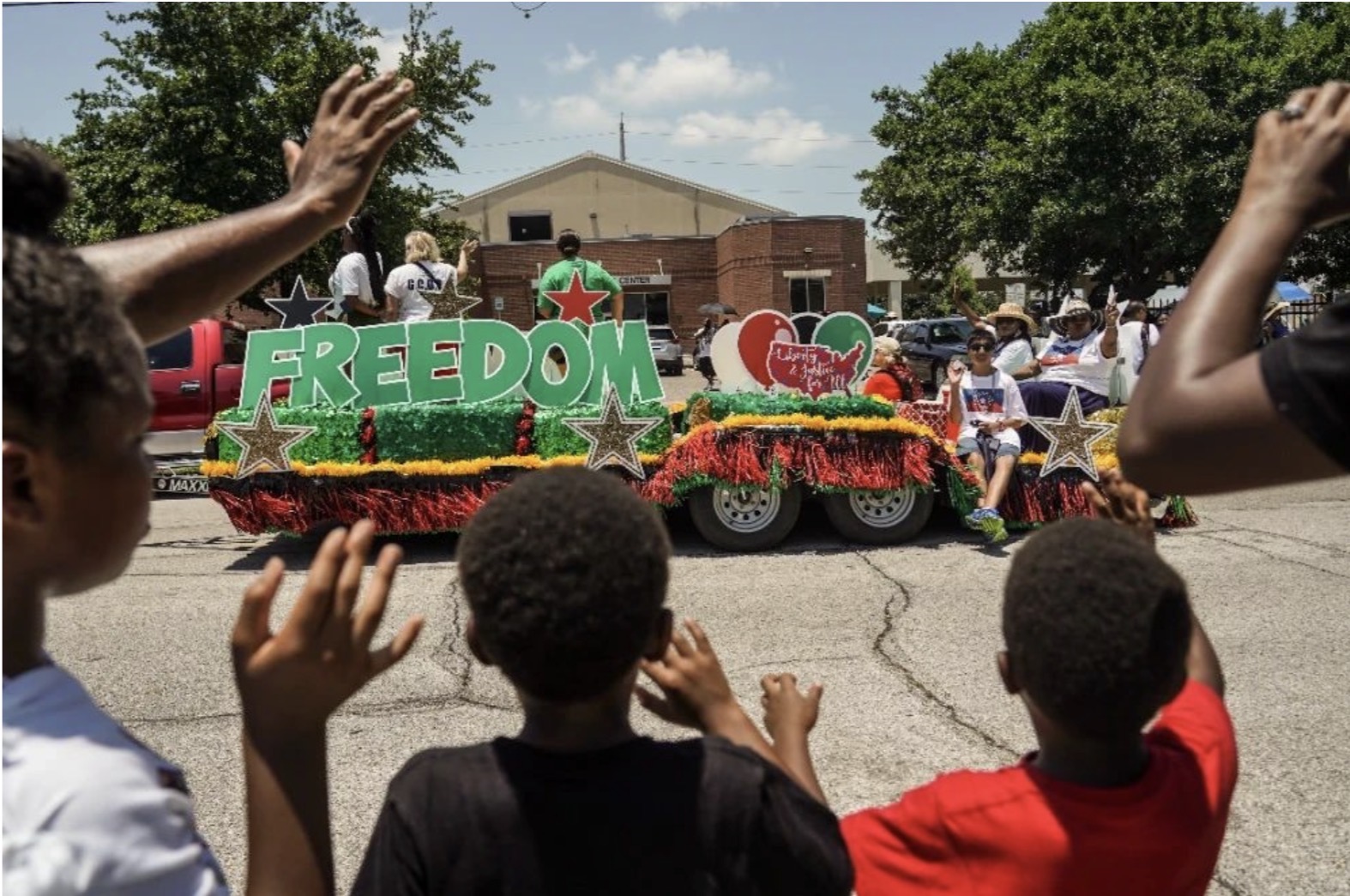
#61 Juneteenth Celebration in Galveston, 2021
This source shows a Juneteenth celebration in Galveston, 2021, marking the anniversary of the 1865 announcement of freedom for enslaved people in Texas. It emphasizes community gathering, cultural heritage, and the ongoing celebration of African American freedom and history.
 Note
Note  Flashcards (61)