B2.2 Organelles and compartmentalization
 Call Kai
 Learn
Learn Practice Test
 Spaced Repetition
 Match
Match Flashcards
 Knowt Play
1/16

There's no tags or description
Looks like no tags are added yet.
Name | Mastery | Learn | Test | Matching | Spaced | Call with Kai |
|---|
No analytics yet
Send a link to your students to track their progress
17 Terms
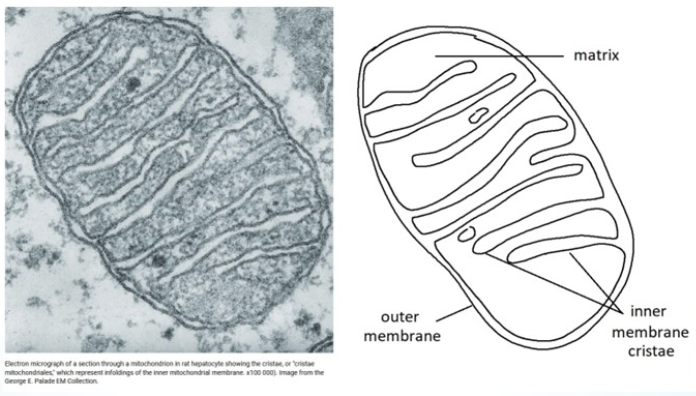
adaptations of the mitochondria
double membrane
compartment of enzymes and substrates of the Krebs cycle in the matrix
cristae of inner membrane
double membrane
creates small volume of intermembrane space
cristae of inner membrane of mitochondria
large surface area to volume ratio, contain ATP synthase enzymes
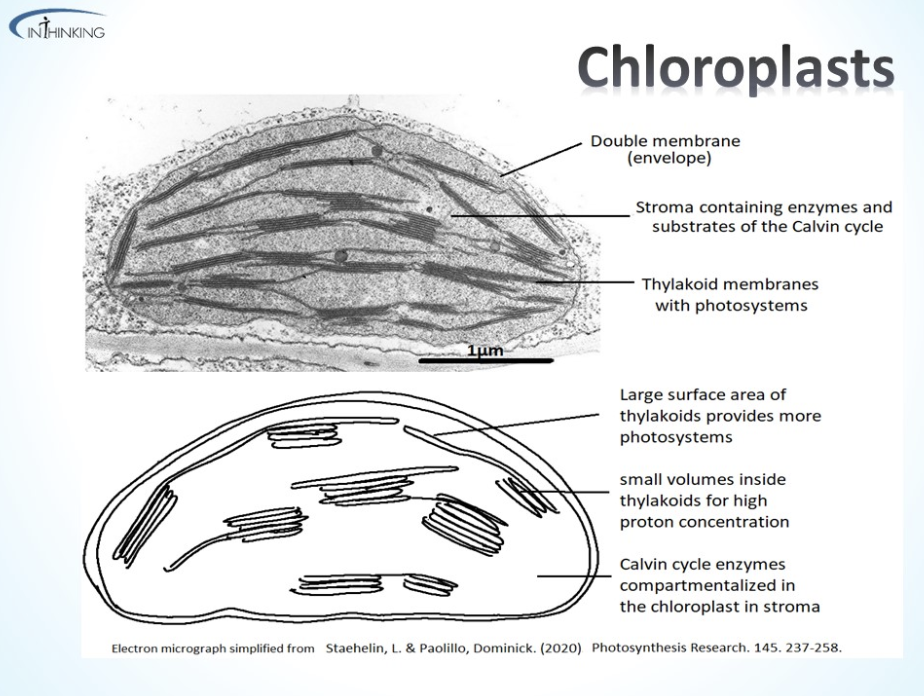
adaptations of the chloroplast
double membrane
stroma in chloroplast
thylakoid exterior
thylakoid interior
stroma in chloroplast
compartmentalized, contains enzymes and substrates of the Calvin cycle
thylakoid membrane
large surface area, provides more photosystems
thylakoid volume
small volume to allow proton accumulation, creating a high concentration in the intra-membrane space
major functions of the nucleus
stores cell’s genetic material
via gene expression, nucleus coordinates cell’s activities, including growth, metabolism, protein synthesis, and division
nucleoplasm
semifluid matrix inside the nucleus
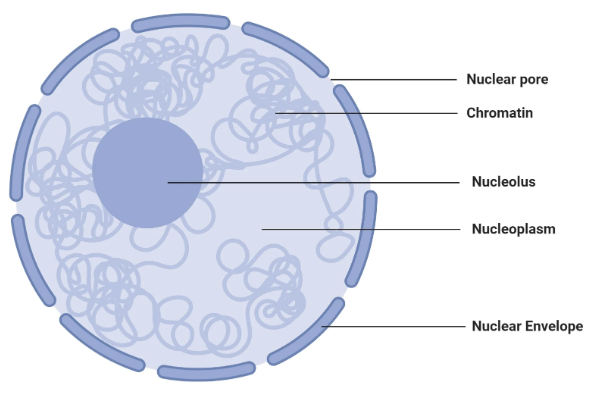
chromatin
DNA within the nucleus in its less condensed form of cell DNA, organizes to form chromosomes during prophase of mitosis or meiosis
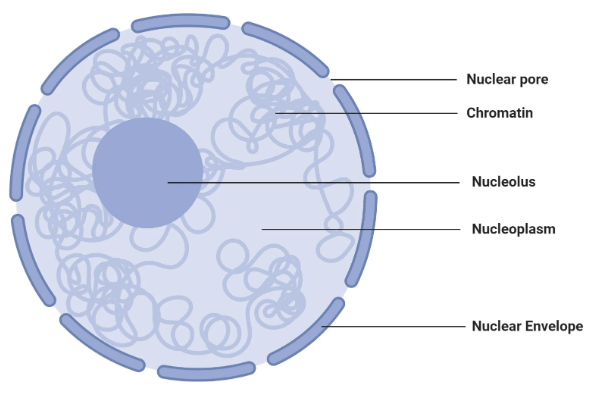
nucleoli
organelles that synthesize ribosomes, one or more within the nucleus
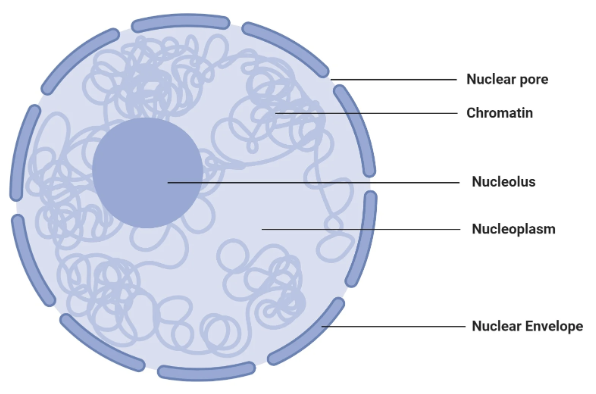
nuclear double membrane
allows pores in nuclear membrane
breaks into several vesicles during mitosis and meiosis
nuclear envelope
two concentric membranes which surround the nucleus: inner nuclear membrane and outer nuclear membrane
outer nuclear membrane continuous with the endoplasmic reticulum
semi-permeable phospholipid bilayers
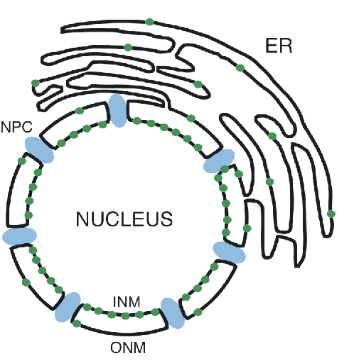
nuclear pore complex
relatively large structure creating selective passageway through which molecules are able to travel between the nucleus and the cytoplasm, much larger than channel proteins
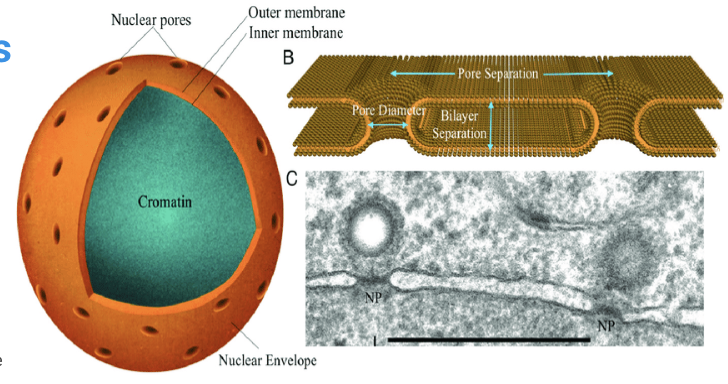
substances imported into the nucleus via nuclear pores
histones, helicase, DNA polymerases, RNA polymerases, transcription factors, splicing factors, many others
proteins responsible for all aspects of genome structure and function are synthesized at ribosomes in cytoplasm
substances exported out of the nucleus via nuclear pores
mRNA, tRNA, ribosomes
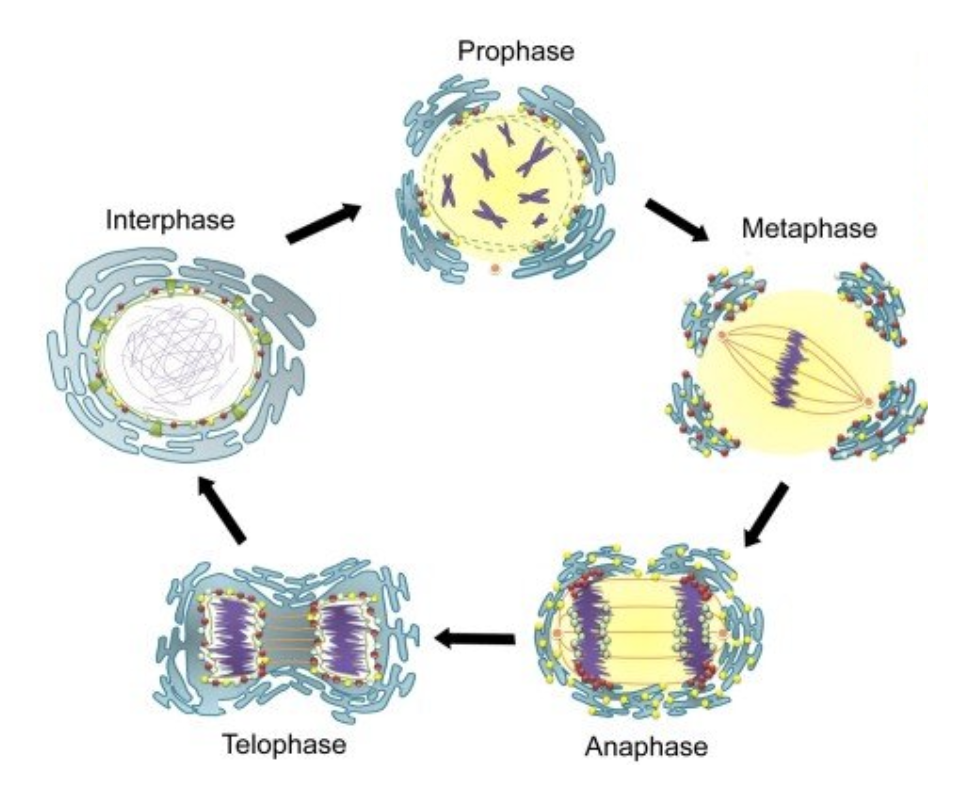
nuclear membrane disassembly and reassembly during cell division
nuclear membrane continuous with RER
during mitosis nuclear pore complexes detach from sections of nuclear membrane
during prophase, nuclear membrane separates into vesicles still connected to the RER, vesicles moved to edge of the cell
separation of vesicles of membrane give space for metaphase spindle
after anaphase, vesicles attach to chromosomes at each pore of the cell
during telophase, vesicles moved around new sets of daughter chromosomes, nuclear membrane and endoplasmic reticulum reformed
nuclear pores reform completing the construction of the new nuclear membranes
chromosomes separate from cytoplasm into two nuclei